


close
Choose Your Site
Global
Social Media
Views: 258 Author: Maiwei Biotech Publish Time: 2026-10-01 Origin: Site


Content Menu
● Define the Products You Will Import
>> Build a Compatibility Matrix Before Requesting Prices
● Verify the Supplier and Its Documents
>> Distinguish Clearance From Registration
● Check Your Importer Obligations by Market
>> United States: Confirm the Initial Importer Role
>> European Union: Identify the Importer and Distributor
>> Other Markets: Confirm Requirements Locally
● Test the Complete Injector Setup
● Run a Controlled Pilot Order
>> Agree on Acceptance Criteria in Writing
>> Inspect the Shipment Before Release
● Plan for Traceability and Complaints
● Compare Total Cost, Not Unit Price Alone
● Work With MAIWEI on a Defined Sourcing Plan
>> Can one syringe fit every injector from the same brand?
>> Does ISO 13485 certification authorize every product for import?
>> Is a CE-marked consumable automatically cleared for the U.S.?
>> What should we request before approving samples?
>> When should an importer review private-label plans?
>> What is the safest way to start with a new supplier?
Importing CT and MRI injector consumables takes more than finding a competitive syringe price. A distributor must match each disposable to a specific injector and clinical workflow, confirm that its regulatory documents cover the exact product, and plan for traceability after delivery. This guide explains how to evaluate high-pressure syringes, connecting tubes, and complete kits before committing to a commercial order.
The same approach applies to angiography consumables, although their technical requirements may differ. Use it as a purchasing framework, not as a substitute for the device instructions for use or the rules in your destination market.
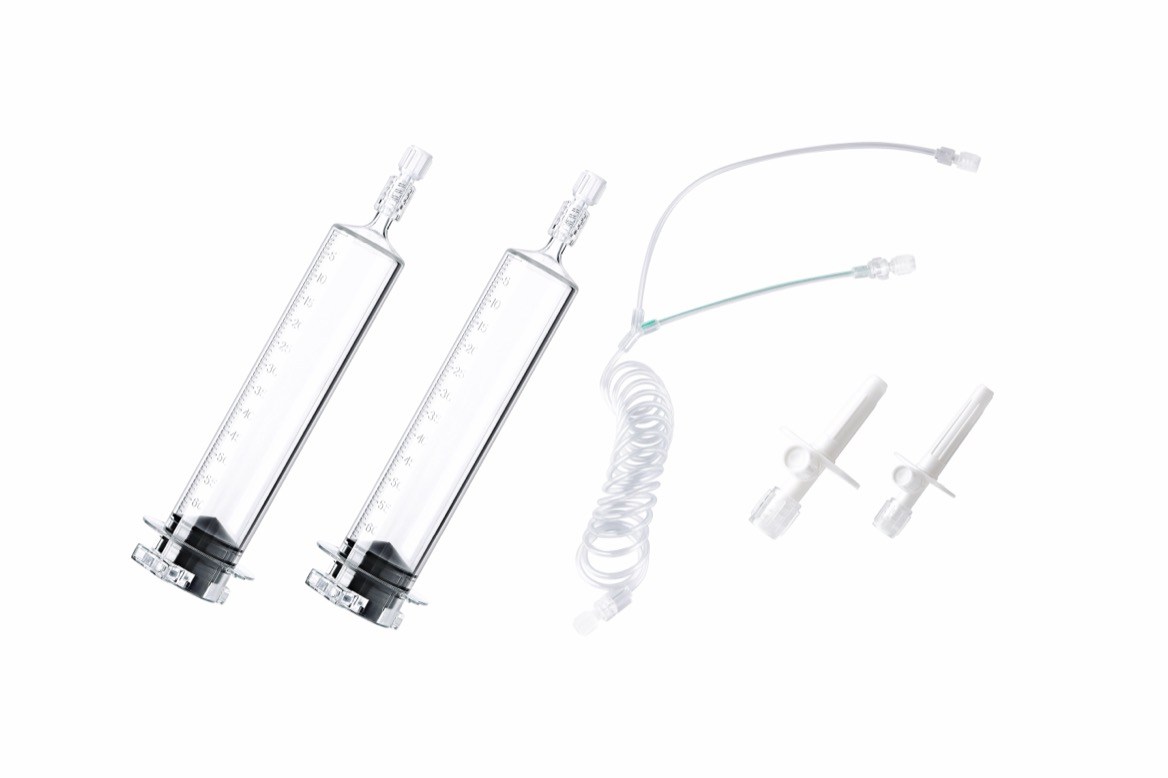
"Injector consumables" is a useful catalog category, but it is too broad for a purchase order. A CT dual-syringe kit, an MRI syringe set, and an angiography pressure tube may differ in fittings, packaging, intended use, and compatible equipment.
Start by listing what your customers actually use. Ask hospitals and imaging centers for the injector manufacturer, model, configuration, and current disposable reference number. Record whether the department needs a syringe alone, a syringe with tubing, or a complete procedure kit. Do not assume that two systems from the same equipment brand accept identical disposables.
For every proposed stock-keeping unit (SKU), create a product specification that identifies:
- Injector fit: Manufacturer, model, equipment configuration, and applicable disposable reference.
- Set contents: Syringe quantity and capacity, tubing length, connectors, valves, and other components.
- Performance limits: The manufacturer's stated pressure and use conditions for the complete configuration.
- Clinical use: CT, MRI, or angiography application, as stated in the product documentation.
- Supply format: Sterile status, single-use designation, packaging unit, and shelf-life information.
- Market identity: Legal manufacturer, catalog number, labeling language, and destination country.
This work prevents a common purchasing error: treating a familiar-looking component as interchangeable with a documented, tested set.
A practical compatibility matrix puts equipment on one axis and proposed consumables on the other. Its purpose is not to declare that an entire brand is compatible. It is to show where evidence exists—and where a question remains open.
| Record for each proposed SKU | What to confirm |
|---|---|
| Injector system | Exact manufacturer, model, and relevant configuration |
| Disposable assembly | All syringe, tube, connector, and valve part numbers |
| Fit evidence | Supplier compatibility documentation and sample evaluation |
| Operating limits | Ratings and instructions for each component and the assembled set |
| Market documents | Product-specific records for the destination country |
| Approval status | Person who reviewed the evidence and date of approval |
If one row is incomplete, mark the SKU pending rather than estimating its suitability from a photograph or sales description. Maintain a revision date: injector configurations and disposable designs can change.
An attractive quotation does not establish who made the device. Ask the supplier to identify the legal manufacturer, production site, exporter, and any separate entity that will appear on the invoice or label. Make sure those names can be reconciled with the documents supplied.
An ISO 13485 certificate provides evidence about a medical-device quality management system. It is not, by itself, permission to sell every item in a catalog. Check its holder, issuing body, validity, covered site, and scope. Then request the records relevant to each product and destination market. ISO describes the standard as a framework for medical-device quality management, including design and manufacturing activities.
A useful initial document request includes the following:
1. Product identification: Catalog number, description, intended use, and set configuration.
2. Quality records: Applicable quality-system certificate and evidence that its scope covers the relevant activities.
3. Market-access records: Declaration, certificate, clearance reference, or other authorization appropriate to the destination and device.
4. Labeling materials: Label artwork, instructions for use, symbols, language versions, and importer details where required.
5. Batch controls: Lot identification, expiry information, and the records needed to trace shipped products.
6. Shipping records: Commercial invoice, packing list, and documents specified by the buyer's customs and regulatory teams.
Request current, legible copies before negotiating an exclusive territory or committing to large inventory. A company-level claim is not a substitute for checking the product that will appear on your order.
For the United States, verify whether the specific device requires a premarket submission and, if so, whether the relevant FDA record matches the product being offered. Search by the supplied 510(k) number, applicant, device name, or product code. The FDA provides a public database for this purpose.
Do not describe a supplier's entire range as "FDA approved" simply because it has a registration number or a clearance associated with one device. FDA registration, device listing, and product-specific premarket clearance are different matters. Ask the supplier to connect the applicable record to the exact catalog numbers in your quotation.
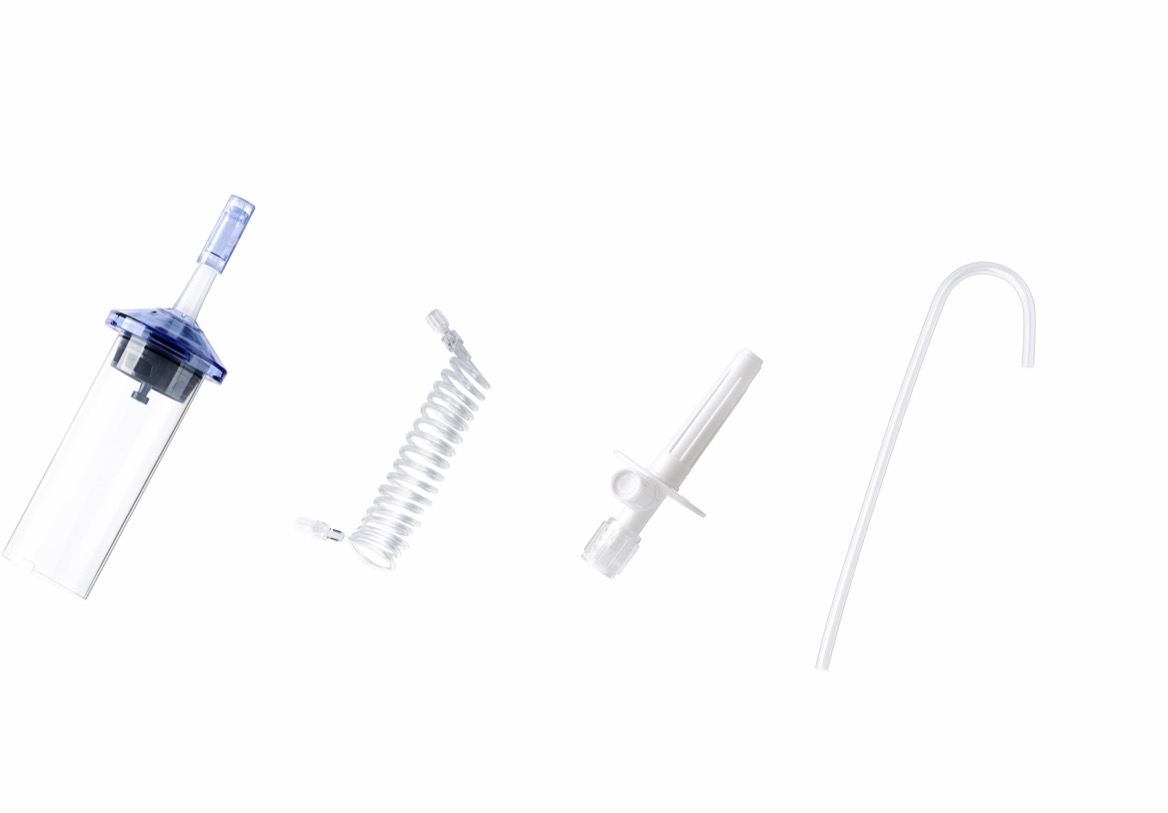
Regulatory duties depend on where the product is placed on the market and what role your business performs. Decide this before your first shipment. A distributor buying from a domestic importer may have different obligations from a company introducing a device from overseas.
The FDA defines an initial importer by its role in furthering the marketing of a foreign manufacturer's device without changing its container or labeling. Initial importers have establishment-registration and other applicable reporting obligations. FDA import review may also check registration, listing, and premarket information where applicable.
Before shipping, agree with your customs and regulatory advisers on the declared device details, responsible parties, and records required at entry. Do not rely on a CE document as evidence that a device may be marketed in the United States; the FDA assesses applicable U.S. requirements separately.
Under the EU Medical Device Regulation, an importer places a device from a third country on the Union market; a distributor is another supply-chain party that subsequently makes a device available. Their duties are related but not identical.
An EU importer should verify, among other applicable requirements, the CE marking, EU declaration of conformity, manufacturer identity, authorized representative where required, labeling, instructions, and UDI where applicable. A distributor also performs defined checks before supplying the device. Private-label arrangements deserve particular attention: placing a device on the market under your own name or trademark can affect which manufacturer obligations apply, subject to the Regulation's conditions.
As of 28 May 2026, the first four EUDAMED modules became mandatory to use, including Actor Registration and UDI/Device Registration. Check the applicable registration and transitional details for the products and operators in your supply chain rather than assuming a certificate alone completes the process.
Do not use a U.S. or EU document checklist as a universal import permit. Ask your local regulatory specialist to identify the device classification, registration route, labeling language, importer responsibilities, and customs documents for each destination. Complete that review before you promise a delivery date to a hospital or OEM customer.
Compatibility is a system-level question. A syringe may appear to fit, yet the proposed combination of syringe, tubing, connectors, and valves may not match the customer's approved setup. A purchasing decision should therefore rest on written product information and a controlled evaluation, not on a single catalog claim.
Request representative samples from the same configuration you intend to buy. Record their part numbers and lots. Have the customer's authorized technical and clinical personnel evaluate them against the injector manufacturer's instructions and the consumable manufacturer's instructions. Do not use an unapproved substitute in patient care.
A sample review should document:
- Physical fit: Loading, plunger engagement, and the intended connection points.
- Assembly: Whether all components needed for the stated workflow are supplied and identified.
- Limits: Whether the planned use stays within the documented ratings of every relevant component.
- Packaging: Seal integrity, labeling readability, and consistency between sample and proposed commercial pack.
- Workflow: Preparation steps, handling, and feedback from personnel qualified to assess the intended use.
Ask how the supplier records design changes. A successful sample from one lot is not a permanent approval of every future configuration. If a component, material, supplier, or label changes, determine whether the compatibility review must be repeated.
A pilot order is more useful than a large opening purchase when the supplier relationship is new. It tests not only the consumable, but also documentation accuracy, shipping performance, packaging durability, and the supplier's response to questions.
Before issuing the order, define which catalog numbers, quantities, label versions, documents, and remaining shelf life you expect. Specify how you will handle substitutions and short shipments. If a kit includes several components, state whether the supplier may change an individual part without prior written approval.
Set a clear route for reporting discrepancies. For example, if the cartons identify one syringe version while the invoice lists another, the receiving team should hold the affected stock until the manufacturer resolves the mismatch. Do not let an urgent customer order become the reason to bypass review.
At receipt, compare the purchase order, invoice, packing list, carton labels, and product labels. Check the quantities and visible package condition. Record lot numbers and expiry dates in a way that allows you to identify which customers received each lot.
Quarantine damaged, incorrectly labeled, or undocumented products under your procedures. Separate a shipping discrepancy from a possible device complaint; each may require a different investigation and response. Retain the evidence your quality team needs, including photographs and the affected identifiers.
A distributor's responsibility does not end when cartons leave its warehouse. Hospitals may ask for a lot history, report a leaking connection, or need an urgent response to a safety notice. Agree with the supplier in advance on the contact point and the information required to investigate.
Your distribution record should connect lot, shipment, customer, and date. Your supplier agreement should also address change notifications, complaint escalation, corrective actions, and the handling of returned or quarantined stock. Define who communicates with customers and regulators when a reportable issue arises under local rules.
Training materials should reflect the actual product instructions. Do not create informal shortcuts for reuse or cross-patient use of single-use components. CDC guidance states that syringes must not be reused for another patient and that infusion or administration sets should be used for one patient only.
The lowest syringe price is not necessarily the lowest-cost distribution program. Compare quotations using the same kit configuration and commercial terms. Otherwise, a lower unit price may simply exclude tubing, documentation support, or packaging your customers expect.
Include these factors in a landed-cost review:
| Cost factor | Question for the buyer |
|---|---|
| Product configuration | Are both quotations for the same usable set? |
| Freight and customs | Who pays, arranges clearance, and bears transit risk? |
| Quality-related losses | What happens to damaged or nonconforming stock? |
| Inventory | How much working capital will the order quantity tie up? |
| Support | Who handles technical questions and complaint investigations? |
Estimate demand by equipment model and customer, not only by an overall annual sales target. A narrow, well-validated starter range may be easier to supply reliably than a broad catalog with uncertain turnover.
MAIWEI INC. presents a range of CT, MRI, and angiography injector consumables, including disposable syringes, connecting tubes, and kits. Its published materials describe sample evaluation, compatibility support, and OEM services. These are starting points for a supplier discussion—not replacements for product-specific document review or customer-side testing.
If you are building a distribution program, send MAIWEI your injector model list, target country, estimated demand, and required kit configurations. Ask for a matching SKU proposal, compatibility information, applicable regulatory documents, samples, and a quotation. Review the complete package before approving a pilot order.
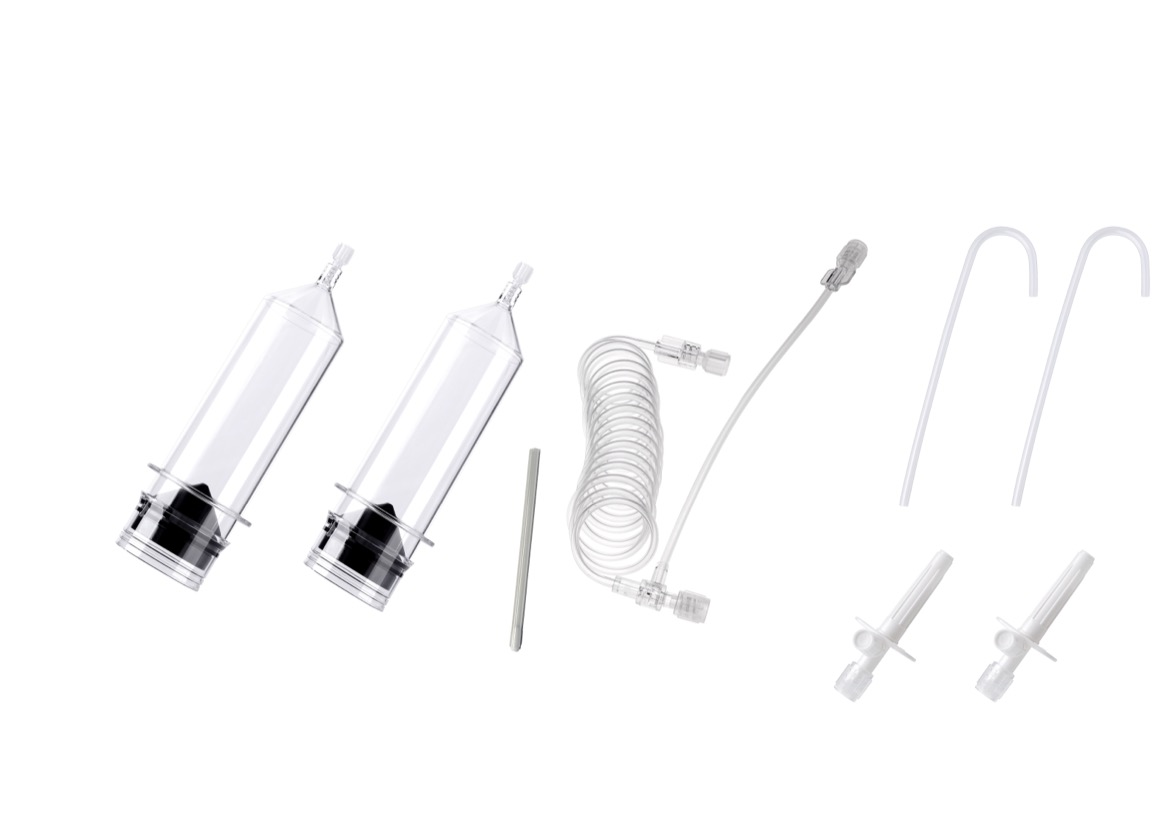
No assumption of brand-wide compatibility is safe. Check the exact injector model, configuration, disposable reference, and manufacturer documentation. Record the result in your compatibility matrix.
No. ISO 13485 concerns a medical-device quality management system. Market access also depends on the particular device and destination. Check the certificate's scope and request product-specific records.
No. The FDA does not recognize another country's authorization as a replacement for applicable U.S. requirements. Verify the relevant U.S. device records separately.
Request the proposed SKU and complete configuration, intended-use information, compatibility documentation, instructions for use, packaging details, and applicable market documents. Evaluate samples against the same specification you will use for the commercial order.
Before finalizing labels or placing an order. A change in the name or trademark under which a device is marketed can affect regulatory responsibilities, particularly in the EU. Define the legal manufacturer and labeling arrangement in writing.
Qualify the supplier and documents, evaluate representative samples, then place a controlled pilot order with written acceptance criteria. Expand the range only after you have reviewed the delivered products, traceability records, and supplier response.
1. MAIWEI INC., [CT Syringe, MRI Syringe, Angiographic Syringe Manufacturer] — company-published product range, sample evaluation, and service information. Company claims should be verified against current product documents.
2. International Organization for Standardization, [ISO 13485:2016 — Medical devices: Quality management systems] — scope and purpose of the quality-management standard.
3. U.S. Food and Drug Administration, [Search the Releasable 510(k) Database] — checking device-specific clearance records.
4. U.S. Food and Drug Administration, [Importing Medical Devices and Radiation-Emitting Electronic Products into the U.S.] — initial-importer definition and import requirements.
5. U.S. Food and Drug Administration, [Importing Medical Devices] — import review, registration, listing, and premarket information.
6. U.S. Food and Drug Administration, [Who Must Register, List and Pay the Fee] — establishment and initial-importer distinctions.
7. European Parliament and Council, [Regulation (EU) 2017/745 on Medical Devices] — importer and distributor duties, and provisions relevant to own-brand supply.
8. European Commission, [EUDAMED Overview] — mandatory use of the first four modules from 28 May 2026.
9. U.S. Centers for Disease Control and Prevention, [Preventing Unsafe Injection Practices] and [Safe Injection Practices to Prevent Transmission of Infections to Patients] — single-patient use and injection-safety guidance.