


close
Choose Your Site
Global
Social Media
Views: 230 Author: Maiwei Biotech Publish Time: 2026-09-10 Origin: Site


Content Menu
● Understand the OptiVantage Injector Workflow First
>> Why "Compatible" Must Be Clearly Defined
● Choose the Correct Syringe Volume and Configuration
>> 200 mL Empty Syringes for Flexible CT Workflow
>> Prefilled Versus Empty Syringe Workflows
● Match the Pressure Connecting Tube to the Procedure
>> Tubing Length Is a Clinical Workflow Decision
>> Check the Entire Fluid Path
● A Practical Syringe Selection Checklist
>> Step 1: Identify the Exact Injector Configuration
>> Step 2: Define the Required Disposable Kit
>> Step 3: Review Product Documentation
>> Step 4: Conduct a Controlled Evaluation
● Common Purchasing Mistakes to Avoid
>> Choosing by Appearance Instead of Documentation
>> Mixing Components Without Validation
>> Treating Certifications as a Shortcut
● Why Manufacturing Control Matters
>> 1. What syringe size is commonly used with Guerbet OptiVantage CT injector systems?
>> 2. Can any 200 mL syringe be used with an OptiVantage injector?
>> 3. How should I select a pressure connecting tube?
>> 4. Why is air removal important during CT contrast injection setup?
>> 5. Are ISO 13485 and FDA 510(k) the same thing?
>> 6. What should distributors request from a contrast injector consumables manufacturer?
>> 7. Can one disposable kit be used across CT, MRI, and angiography injectors?
Selecting a Guerbet OptiVantage-compatible syringe is not simply a purchasing decision. It directly affects CT contrast-delivery workflow, connection security, protocol consistency, inventory management, and patient-care readiness. For radiology departments, distributors, and imaging-center procurement teams, the right high-pressure syringe and pressure connecting tube must match the intended injector configuration, the clinical protocol, and the instructions supplied with the device and disposable set.
MAIWEI INC. develops and manufactures high-pressure injector syringes, pressure connecting tubes, quick-fill tubes, transfer tubes, and related consumables for CT, MRI, and angiography applications. Our product portfolio is designed for compatibility with a range of mainstream injector platforms, including systems used in CT contrast administration. With ISO 13485 quality-system certification, CE-marked product offerings, and FDA-cleared product lines, MAIWEI supports hospitals, distributors, and OEM partners in more than 60 countries and regions.
For users of Guerbet OptiVantage systems, the key is to choose a syringe kit based on verified platform compatibility, required volume, tubing configuration, workflow design, and applicable local labeling—not on visual similarity alone.
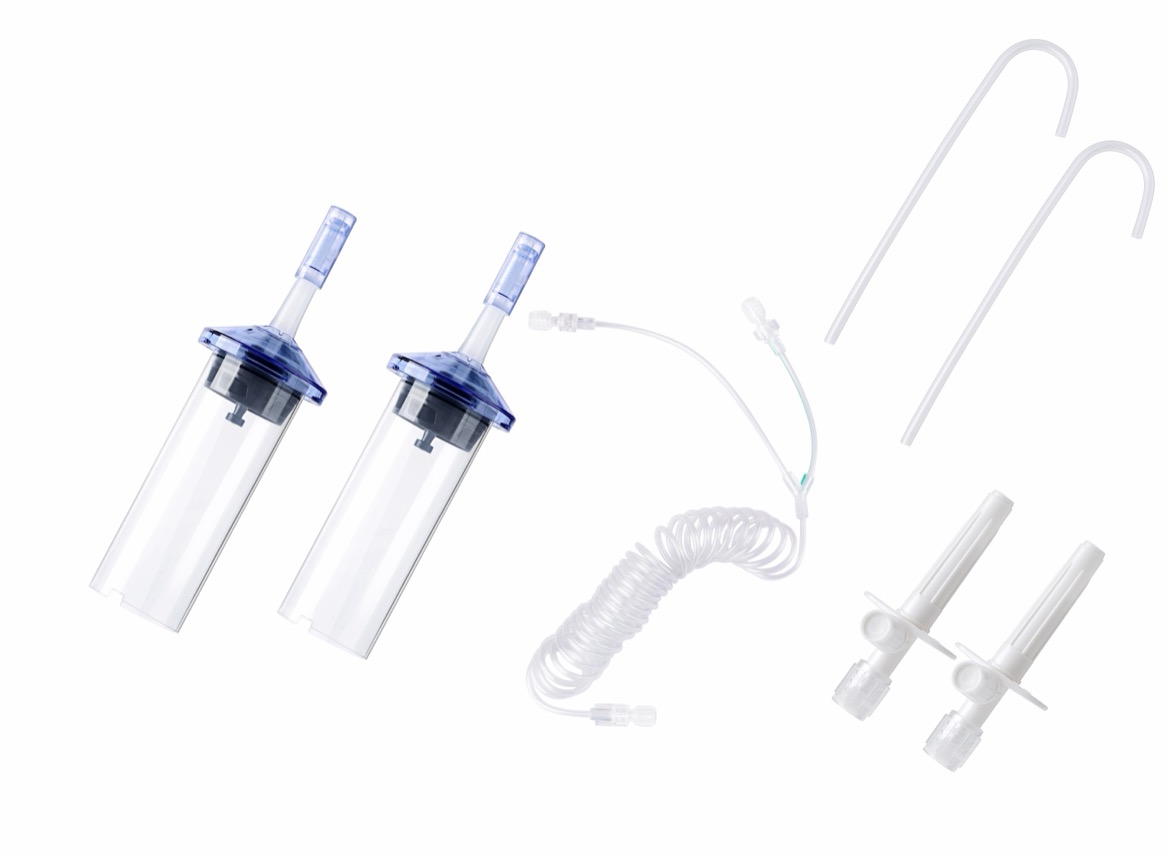
Guerbet OptiVantage is a CT contrast-delivery platform designed to inject radiopaque contrast media into a patient's vascular system to support diagnostic CT imaging. FDA documentation for the OptiVantage DH identifies it as a contrast delivery system intended for CT use, and the platform has historically accommodated both 200 mL front-loading empty syringes and selected prefilled syringe formats.
In practical radiology workflow, a dual-head injector configuration typically enables separate management of contrast media and saline. That capability can support protocols involving a contrast bolus followed by saline, depending on the facility's approved procedures and the injector's configuration.
However, an injector's capability does not automatically determine which disposable is appropriate. The disposable component must be selected for the exact combination of:
- Injector model and generation
- Single-patient or multi-patient workflow
- Syringe capacity
- Pressure-rating requirements
- Tubing length and connector design
- Contrast-media preparation method
- Local regulatory status and approved labeling
- Hospital infection-control procedures
A syringe that physically appears to fit a power injector may still be unsuitable if its locking interface, pressure performance, connector geometry, intended use, or labeling does not match the clinical setup.
The word "compatible" is often used too broadly in procurement conversations. In clinical imaging, it should mean that the disposable has been specifically designed, validated, and labeled for use with the intended injector platform or equivalent interface—not merely that it can be placed into the injector head.
A robust compatibility assessment should consider:
| Compatibility factor | What the buyer should verify | Why it matters |
|---|---|---|
| Injector platform | Exact injector family and configuration | Different platforms may use different syringe mounting systems |
| Syringe capacity | Required contrast and saline volume | Capacity must support the planned protocol without unnecessary waste |
| Drive interface | Flange, plunger, barrel geometry, and locking design | A secure fit is essential during powered injection |
| Tubing interface | Luer connection, patient-line design, and accessory fit | Mismatched connections can disrupt setup or create leakage risk |
| Pressure performance | Product-specific rated pressure and intended use | The disposable must be suitable for the programmed injection conditions |
| Sterility and use conditions | Single-use or multi-use labeling | These conditions affect infection-control handling and replacement timing |
| Regulatory documentation | Market-specific certifications and device documentation | Procurement teams need traceable evidence for their region |
Expert perspective: In high-pressure imaging applications, compatibility is a systems question. The syringe, connector, tubing, injector head, protocol parameters, and user procedure must work together as one controlled setup.
For many OptiVantage-related CT workflows, buyers commonly evaluate 200 mL empty syringe configurations. FDA materials associated with the OptiVantage DH describe accommodation of a 200 mL front-loading empty syringe as well as certain prefilled syringe styles.
The best configuration depends on how contrast media are supplied and handled in the department.
A 200 mL empty syringe may be a practical option for facilities that prepare contrast media from bottles or vials according to approved departmental procedures. This format can offer flexibility for a broad range of CT studies, particularly when a department uses varying contrast volumes across routine body imaging, vascular imaging, or patient-specific protocols.
When assessing a 200 mL syringe kit, confirm:
- The syringe is specified for the intended Guerbet OptiVantage-compatible setup.
- The barrel material and plunger system are suitable for powered contrast injection.
- The syringe locks securely into the injector drive.
- The filling arrangement suits the facility's workflow.
- The included tube length supports patient positioning and table movement.
- The pressure rating aligns with the approved injector and protocol settings.
- The product is sterile and labeled for the intended use.
There is no universal "best" format. The correct choice depends on operational priorities, approved contrast-media supply arrangements, and local protocols.
| Workflow approach | Potential operational benefit | Key evaluation point |
|---|---|---|
| Empty high-pressure syringe | Flexible filling volumes and contrast sourcing | Requires disciplined filling, purging, and aseptic handling |
| Prefilled syringe workflow | May simplify preparation and reduce filling steps | Must use an injector and syringe combination approved for that format |
| Single-patient disposable set | Straightforward patient-specific replacement | Requires dependable stock availability |
| Multi-patient system | Can reduce repeated setup in approved workflows | Requires strict adherence to system-specific instructions and replacement intervals |
Published clinical literature on pressure injectors emphasizes that operating procedures should address major risks such as contrast extravasation and air embolism. It specifically highlights the importance of clearing air from syringes and pressure tubing, checking the injection site and catheter patency, allowing sufficient line slack during table movement, and maintaining communication with the patient.
That is why the best syringe choice is not determined by volume alone. It is determined by whether the entire disposable arrangement supports a repeatable and safe workflow.
The syringe is only one part of the contrast-delivery pathway. A pressure connecting tube, extension line, quick-fill tube, or patient line must be evaluated with equal care.
A high-pressure tubing assembly should be selected based on the injector setup and the facility's approved protocol. Critical characteristics typically include tubing length, connector type, pressure rating, priming behavior, packaging format, and whether the line is intended for single-patient or multi-patient use.
Longer tubing may provide greater flexibility when the injector is positioned farther from the patient or when the CT table must move during scanning. However, length should never be chosen simply for convenience.
The appropriate tube length should help the team achieve all of the following:
- Unrestricted patient-table movement
- No excessive tension on the intravenous line
- Clear line routing and visual inspection
- Reliable connection between syringe and patient access
- A manageable setup with minimal looping or snagging
A review of pressure-injector practice notes that sufficient play in the IV line, tubing, and injector system should be allowed during concurrent table movement. This operational detail is easy to overlook during purchasing, yet it can strongly influence daily usability.
Before purchasing a syringe-and-tubing kit, evaluate the full fluid path from contrast source to patient connection:
1. Confirm the syringe-to-injector interface.
2. Confirm the syringe-to-tubing connector.
3. Confirm the tubing-to-patient-line connection.
4. Verify whether a quick-fill tube, spike, straw, or transfer tube is required.
5. Review the device instructions for allowable accessories and setup sequence.
6. Ensure the approved procedure includes a complete air-removal step.
7. Confirm the replacement interval and single-use or multi-use limitations.
This approach prevents a common procurement problem: purchasing individually compatible-looking components that do not form a validated, convenient, and traceable disposable set.
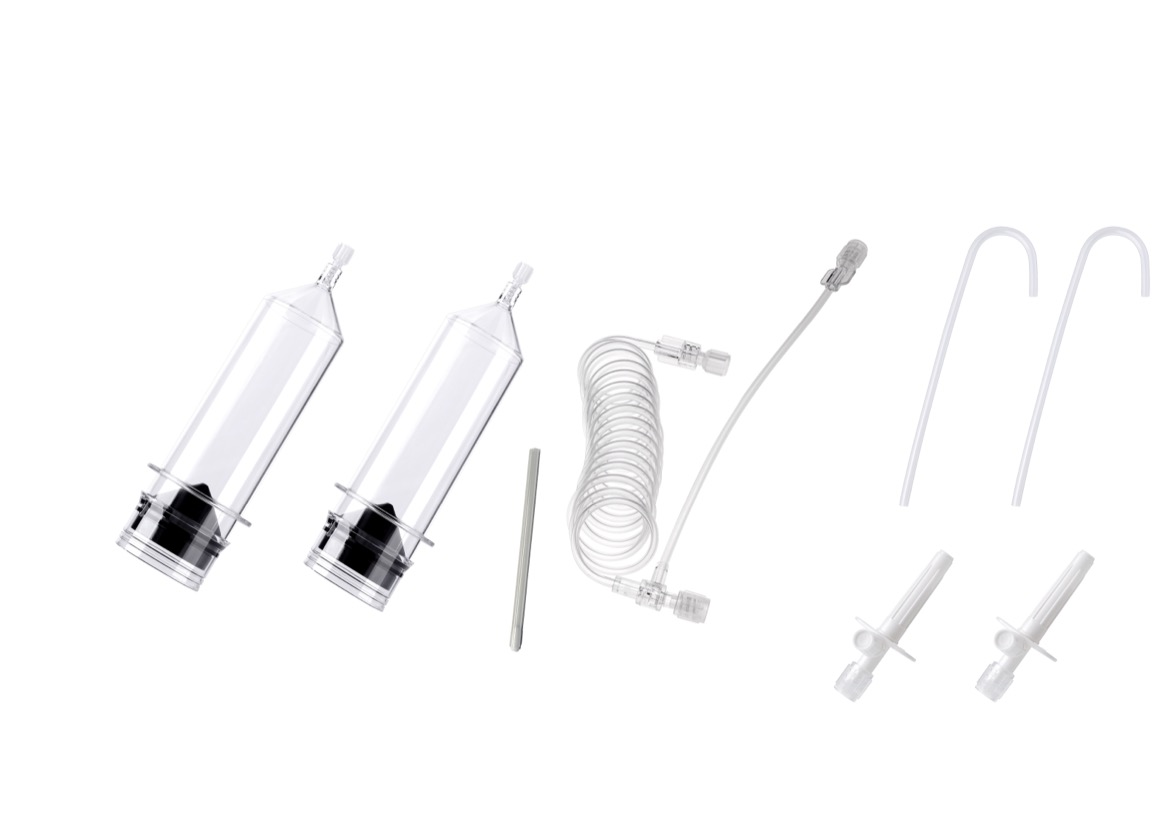
Radiology purchasing teams can reduce uncertainty by using a standardized pre-purchase checklist. This is especially valuable for distributors managing multiple injector brands or OEM buyers developing private-label product portfolios.
Do not begin with a broad request such as "Guerbet syringe" or "OptiVantage tubing." Record the exact injector model, head configuration, and existing consumable reference where available.
Ask:
- Is the injector a dual-head CT system?
- Is the department using an empty-syringe or prefilled-syringe workflow?
- Is the workflow single-patient or multi-patient?
- Are there existing part numbers on the department's current disposable packaging?
- Is a specific tubing length required?
A complete kit may include one or more of the following:
- High-pressure syringe
- Pressure connecting tube
- Coiled extension tube
- Quick-fill tube
- Spike
- Transfer tube
- Patient line
- Protective cap or accessory connector
The right kit should minimize unnecessary component changes during setup while remaining consistent with the site's established protocol.
For each candidate product, request and review:
- Product specification sheet
- Instructions for use
- Compatibility statement
- Sterility and shelf-life information
- Packaging configuration
- Lot-traceability information
- Regulatory documentation applicable to the intended market
- Quality-system documentation
ISO 13485 is an internationally recognized quality-management standard for medical-device design and manufacture. The FDA's Quality Management System Regulation also incorporates ISO 13485:2016 by reference. For buyers, this makes documented quality processes an important supplier-assessment factor, although certification alone does not replace product-specific verification.
Before converting an entire department or distributor catalog, evaluate the proposed syringe kit in a controlled process consistent with facility policy.
The evaluation should include:
- Fit and removal from the injector head
- Connection security
- Ease of filling and purging
- Visibility of fluid and air bubbles
- Tube routing during table movement
- Staff feedback from qualified users
- Packaging usability
- Documentation and traceability review
Important: Final clinical-use decisions should always follow the injector manufacturer's instructions, the disposable product's labeling, local regulations, and the healthcare facility's policies.
Transparent syringe barrels, similar capacities, and familiar Luer-style connectors can create a false sense of interchangeability. A syringe should be purchased because its compatibility and intended use are documented—not because it looks similar to another product.
Some buyers focus entirely on the syringe barrel. Yet the pressure connecting tube is part of the high-pressure fluid path and must be suitable for the intended procedure. A well-matched syringe paired with an unsuitable tube does not create a well-matched system.
Combining a syringe from one supplier with tubing, spikes, or transfer accessories from another may introduce uncertainty. Unless the combination is documented and approved for the intended application, it should not be assumed to be interchangeable.
Certifications and regulatory clearances are essential supplier-evaluation indicators, but they do not answer every compatibility question. Buyers should still confirm the exact product reference, intended use, market authorization, and platform-specific documentation.
The technically correct syringe may still create avoidable operational friction if it is difficult to load, fill, purge, label, or connect. In busy CT environments, small workflow improvements can support more consistent preparation and reduce avoidable interruptions.
A high-pressure injector syringe is a precision disposable used within a high-consequence clinical workflow. Manufacturing consistency affects factors such as barrel clarity, dimensional fit, plunger movement, connection geometry, packaging integrity, and lot traceability.
At MAIWEI INC., we focus on research, development, and production of contrast injector consumables for CT, MRI, and angiography. Our solutions include high-pressure syringes, pressure connecting tubes, quick-fill tubes, spikes, transfer tubes, and related accessories. We serve hospital, distributor, and OEM customers with an emphasis on stable supply, traceable production, and product configurations tailored to mainstream injector platforms.
For buyers, a dependable supplier relationship should provide more than a catalog listing. It should provide:
- Clear compatibility communication
- Consistent product specifications
- Complete technical documentation
- Reliable batch traceability
- Appropriate regulatory support
- Responsive OEM and private-label capabilities
- Packaging options aligned with distribution needs
FDA's 510(k) database includes a clearance for Shenzhen Maiwei Biotech Co., Ltd. covering products including high-pressure syringes, pressure connecting tubes, quick-fill tubes, spikes, and transfer tubes. Buyers should confirm the specific clearance, product configuration, and market status relevant to their purchasing region and intended use.
The right syringe for a Guerbet OptiVantage contrast injector system is the one that is documented for the intended platform, appropriate for the planned contrast-delivery workflow, properly matched with its pressure tubing, and supported by clear product documentation.
Do not let purchasing decisions depend on appearance, a generic compatibility claim, or the lowest unit price alone. Instead, assess the complete disposable pathway: injector interface, syringe volume, connector design, tubing configuration, pressure requirements, workflow needs, labeling, regulatory status, and supplier traceability.
If you are sourcing Guerbet OptiVantage-compatible high-pressure syringes, CT pressure connecting tubes, or custom OEM contrast injector consumables, contact MAIWEI INC. to request product specifications, compatibility information, samples, and a tailored supply proposal for your market.
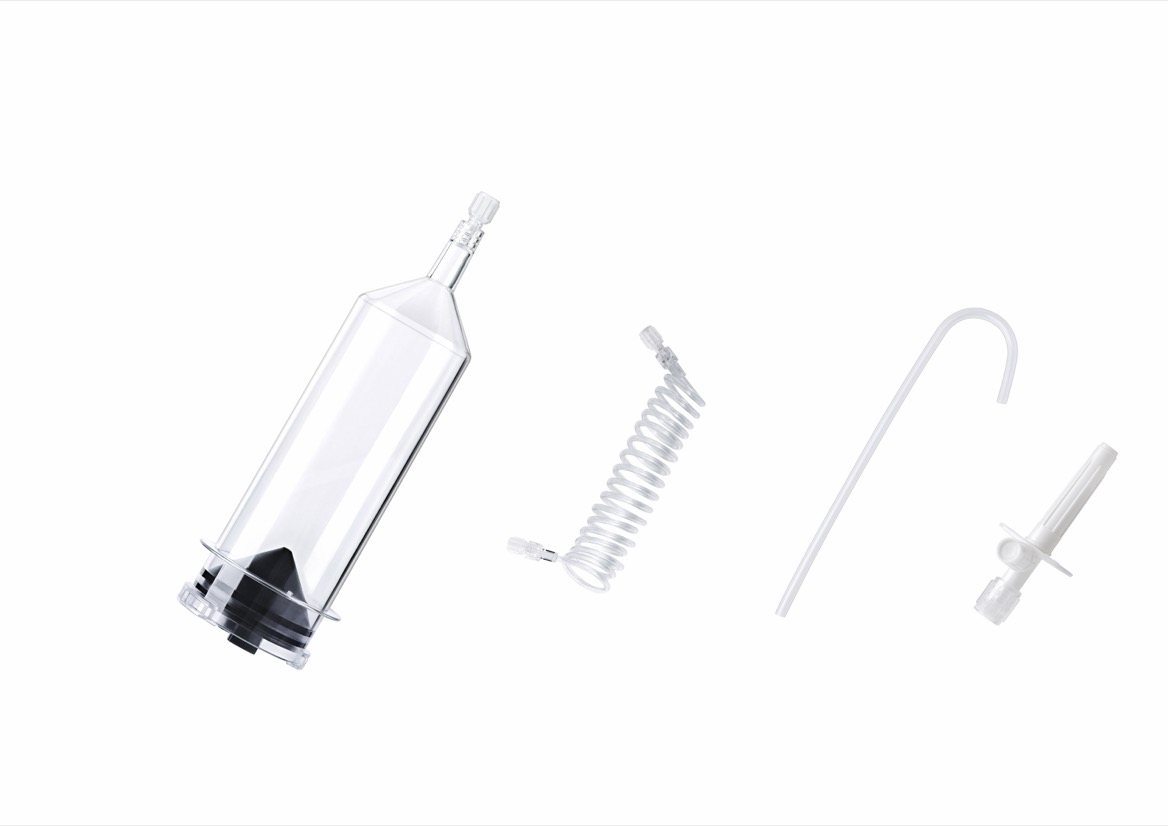
A 200 mL empty syringe is commonly associated with OptiVantage-related CT workflows, while certain prefilled syringe formats have also been described in FDA documentation. The correct option depends on the exact injector configuration, the contrast-media workflow, and approved product labeling.
No. Equal volume does not guarantee compatibility. The syringe must have the correct drive interface, plunger geometry, locking design, intended use, pressure performance, and documented compatibility for the relevant injector platform.
Select the tube according to the approved injector setup, required length, connection type, intended procedure, pressure specification, and single-use or multi-use labeling. The tube should allow safe routing without excessive tension during patient-table movement.
Air in the syringe or pressure tubing can create avoidable risk. Standard operating procedures for pressure injection emphasize clearing air from the syringe and tubing before injection and maintaining correct line orientation during setup.
No. ISO 13485 relates to a manufacturer's quality-management system. FDA 510(k) clearance is a U.S. regulatory pathway for specific medical devices. Both can be relevant to supplier assessment, but neither should replace product-specific compatibility and labeling review.
Distributors should request product specifications, instructions for use, compatibility information, regulatory documents for their destination market, sterility details, packaging data, shelf-life information, lot traceability procedures, and OEM/private-label options where needed.
Not automatically. CT, MRI, and angiography systems may differ in injector mechanics, pressure conditions, syringe interfaces, tubing requirements, and intended-use labeling. Choose consumables specifically documented for the applicable modality and injector platform.
1. U.S. Food and Drug Administration. [K042744: OptiVantage DH Power Injection System—Special 510(k) Summary].
2. U.S. Food and Drug Administration. [K063503: OptiVantage DH Injector System With Enhanced Communication].
3. Guerbet. [OptiVantage Multi-use].
4. Indrajit, I. K. et al. [Pressure Injectors for Radiologists: A Review and What Is New]. *Indian Journal of Radiology and Imaging*.
5. International Organization for Standardization. [ISO 13485:2016—Medical Devices: Quality Management Systems].
6. U.S. Food and Drug Administration. [Quality Management System Regulation].
7. U.S. Food and Drug Administration. [K253048: High Pressure Syringe; Pressure Connecting Tube; Quick Fill Tube; Spike; Transfer Tube].
8. Tirri, A. et al. [Safety and Performance of OptiVantage, a CT Contrast Media Injection System, in Routine Multi-Patient Use].