


close
Choose Your Site
Global
Social Media
Views: 247 Author: Maiwei Biotech Publish Time: 2026-09-06 Origin: Site


Content Menu
● Why High Pressure Syringe Compatibility Matters
● What Compatible Really Means
>> Clinical Workflow Compatibility
● Major Contrast Injector Categories
● Compatibility Checklist Before You Order
>> Step 1: Identify the Exact Injector Model
>> Step 2: Confirm the Required Consumable Configuration
>> Step 3: Compare Technical Specifications
>> Step 4: Review Product Documentation
>> Step 5: Conduct a Controlled Evaluation
● Common Compatibility Mistakes to Avoid
>> Ordering by Brand Name Only
>> Matching Only by Syringe Capacity
>> Choosing Solely on Unit Price
● Expert Perspective: Compatibility Is a System Decision
● How MAIWEI Supports Compatible Injector Consumables
● Final Recommendation for Buyers
>> 1. Are all high-pressure syringes interchangeable?
>> 2. How do I find the correct compatible syringe for my CT injector?
>> 3. Can CT injector consumables be used for MRI applications?
>> 4. What information should I send to a high-pressure syringe manufacturer?
>> 5. Why is the patient line important when selecting a syringe?
>> 6. What should distributors check before importing compatible contrast injector consumables?
>> 7. Does ISO 13485 certification guarantee that every product fits every injector?
Selecting the right high pressure syringe, connection tubing, and disposable consumables is not simply a purchasing decision. For CT, MRI, and angiography departments, it directly affects workflow consistency, injector performance, inventory control, and—most importantly—safe contrast-media delivery.
As a manufacturer focused on CT, MRI, and angiography high-pressure injector consumables, MAIWEI INC. works with hospitals, distributors, and OEM partners that need dependable alternatives compatible with widely used contrast injector platforms. Our product range includes high-pressure syringes, patient lines, connection tubes, filling devices, and related accessories designed for use with many mainstream injector systems.
This guide explains how to evaluate contrast injector syringe compatibility, how to distinguish CT, MRI, and angiography consumables, and how procurement teams can reduce risk when sourcing compatible high-pressure injector disposables.
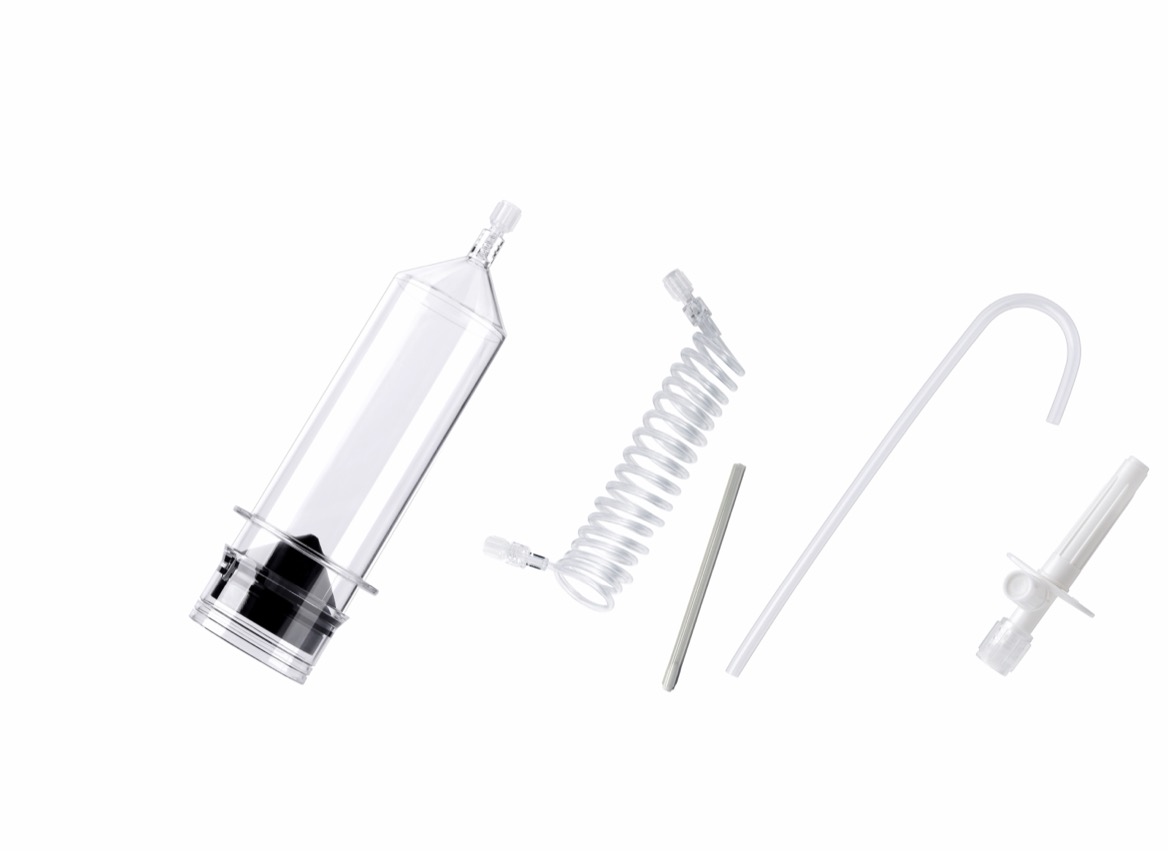
Contrast injector consumables are engineered to work as part of a complete fluid-delivery system. A disposable syringe may look similar to another product, but small differences in barrel geometry, plunger design, locking structure, connector dimensions, pressure capability, and material performance can affect the way it works with an injector.
For imaging departments, the goal is not merely to find a syringe that "fits." The goal is to select a compatible consumable system that supports reliable operation throughout the planned imaging workflow.
A well-matched high-pressure syringe and tubing configuration can help teams achieve:
- Stable injector loading and recognition
- Reliable connection between syringe and patient line
- Controlled contrast-media and saline delivery
- Efficient preparation between examinations
- Clear product traceability
- Lower risk of supply interruption
- More predictable inventory planning
- Consistent support for staff training and workflow standardization
Pressure injectors are used across CT, MR, and interventional imaging environments to administer contrast media in controlled protocols. These applications can involve different flow-rate expectations, pressure settings, fluid paths, room conditions, and accessory configurations. A product intended for one modality should not automatically be considered suitable for another.
For example, MRI environments introduce unique safety and labeling considerations because devices and accessories used around the scanner must be assessed for their behavior in the MR environment. The U.S. Food and Drug Administration provides guidance on testing and labeling medical devices for MR safety and compatibility.
The word compatible is often used too broadly in medical imaging procurement. In a clinical setting, compatibility should be understood as a documented and controlled relationship between a disposable consumable and a specified injector platform or system configuration.
A compatible high-pressure syringe is not defined by one factor alone. It should be assessed across the complete use scenario.
Mechanical compatibility concerns whether the syringe or accessory can be correctly installed into the injector system.
Key points include:
- Syringe barrel dimensions
- Flange and locking features
- Plunger engagement design
- Injector-head mounting geometry
- Connector type and thread configuration
- Patient-line connection interface
- Priming accessory design
- Filling spike or transfer-device fit
If the syringe cannot be seated properly, locked securely, or engaged correctly by the injector drive mechanism, it should not be used.
CT, MRI, and angiography injector workflows may involve high-pressure delivery conditions. The disposable system must be suitable for the pressure range and injection parameters defined in its labeling and instructions for use.
Procurement teams should verify:
- Maximum pressure rating
- Approved flow-rate range
- Contrast-media and saline configuration
- Single-head or dual-head injector application
- Tubing pressure capability
- Connection security under planned pressure conditions
- Air-management and priming requirements
Do not rely on visual similarity. Two products with the same nominal capacity may have different pressure ratings or intended applications.
The fluid path includes every component that comes into contact with contrast media or saline, including syringes, patient tubing, transfer sets, spikes, check valves, and connectors.
The full fluid path should be reviewed for:
- Intended contrast-media use
- Approved saline use
- Sterility status
- Single-use designation
- Tubing length and configuration
- Check-valve orientation
- Luer-lock or proprietary connector interface
- Air-removal process
- Leakage prevention features
A mismatch in one component can affect the performance of the entire system.
A product may be mechanically compatible but still create operational difficulties. For example, a syringe may fit an injector head but require a different loading sequence, priming method, tubing path, or disposal process than the clinical team normally uses.
Before conversion, imaging departments should consider:
- Whether the preparation sequence is familiar to staff
- Whether the accessory set supports the existing protocol
- Whether the tubing length is appropriate for room layout
- Whether the syringe capacity matches routine examination volume
- Whether staff can identify the product clearly
- Whether the packaging supports efficient preparation
- Whether the hospital can maintain lot-level traceability
The best compatible consumable is one that supports both the injector and the people who operate it.
Compatibility should first be evaluated by imaging modality. CT, MRI, and angiography systems have different clinical workflows and may use different syringe designs, pressure capabilities, and accessory sets.
| Imaging application | Typical injector configuration | Common disposable components | Main procurement concern |
|---|---|---|---|
| CT contrast injection | Single-head or dual-head contrast and saline delivery | High-pressure syringes, saline syringes, patient tubing, filling devices | Correct syringe fit, pressure capability, protocol efficiency |
| MRI contrast injection | MR-environment-specific injector workflow | MRI syringe sets, tubing, adapters, saline accessories | Appropriate labeling, MR workflow suitability, correct setup |
| Angiography and interventional imaging | High-pressure injection for vascular imaging procedures | Angiographic syringes, high-pressure tubing, manifold-related accessories | Pressure performance, secure fluid path, procedural configuration |
| Multi-patient or bulk-delivery workflows | System-specific delivery platform | Dedicated day sets, bottle spikes, patient sets, disposable fluid-path components | Strict model-specific consumable configuration |
Many modern contrast delivery systems use highly specific disposable architectures. For instance, FDA-cleared contrast injector systems may use defined disposable combinations such as syringes, patient sets, bottle spikes, or multi-patient fluid-management components.
This is why a hospital should always identify the exact injector platform before requesting a compatible replacement product.
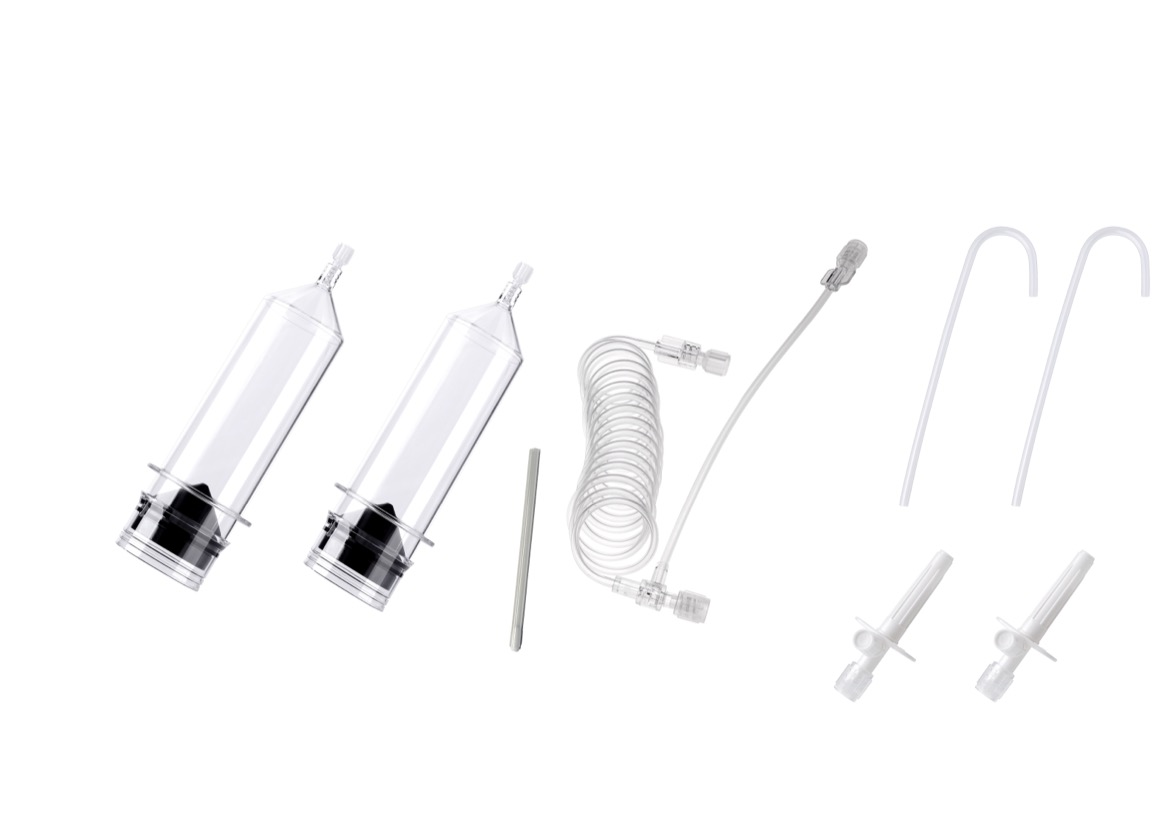
A compatibility review should be performed before purchasing, tendering, converting suppliers, or introducing a private-label consumable program.
Start with the injector—not the syringe currently in stock.
Record:
- Injector brand
- Full injector model name
- Injector head configuration
- CT, MRI, or angiography application
- Software or hardware generation where relevant
- Current disposable reference number
- Existing syringe capacity
- Existing patient-line configuration
A general brand name alone is not enough. One manufacturer may have several injector generations with different disposable requirements.
Ask whether the department needs:
- Empty high-pressure syringes
- Prefilled syringe-compatible accessories
- Single-head syringe sets
- Dual-head contrast and saline syringe sets
- Patient tubing
- Coiled tubing
- Straight tubing
- Filling spikes
- Transfer devices
- Check valves
- Manifolds
- Extension lines
- Angiography-specific pressure tubing
The product should be evaluated as a complete system configuration, not as an isolated component.
The purchasing team should compare the supplier's documentation with the hospital's required configuration.
A practical comparison should include:
| Verification item | Why it matters |
|---|---|
| Injector platform and model | Prevents using a product designed for another injector generation |
| Syringe volume | Supports the planned contrast-media and saline protocol |
| Pressure rating | Helps verify suitability for the intended injection parameters |
| Connector configuration | Ensures appropriate syringe-to-line and line-to-patient connection |
| Tubing length | Affects setup convenience and room workflow |
| Sterility status | Supports infection-control and clinical-use requirements |
| Single-use labeling | Helps prevent unintended reuse |
| Material information | Supports internal review of contrast-media contact materials |
| Packaging format | Affects storage, preparation speed, and waste management |
| Lot traceability | Supports quality control and post-market follow-up |
A professional supplier should be prepared to provide appropriate product documentation based on the destination market and customer requirements.
Depending on the product and market, this may include:
- Product catalog and technical data sheet
- Instructions for use
- Compatibility list
- Declaration of conformity
- Sterilization information
- Packaging specification
- Shelf-life information
- Quality-system documentation
- Registration or clearance information where applicable
- Sample evaluation support
- Lot and traceability information
MAIWEI INC. maintains a quality-focused manufacturing approach supported by certifications including ISO 13485, CE, and FDA 510(k)-related regulatory documentation for applicable products. ISO 13485 is an internationally recognized quality-management standard for organizations involved in the design and manufacture of medical devices.
A sample evaluation should follow the hospital's own approval process and clinical governance requirements.
The evaluation may include:
1. Verifying product identification and labeling.
2. Confirming correct syringe loading.
3. Checking injector engagement and locking.
4. Reviewing priming and air-removal steps.
5. Inspecting all connections before operation.
6. Confirming the intended tubing route.
7. Testing workflow usability under approved conditions.
8. Recording feedback from radiology staff.
9. Reviewing packaging, storage, and disposal procedures.
10. Approving the product only after the relevant internal review.
A controlled evaluation is especially important when changing suppliers, introducing an alternative brand, or developing an OEM consumables program.
In our experience working with global distributors and imaging consumables buyers, the same procurement errors appear repeatedly. These errors can delay product introduction, complicate staff training, and create avoidable purchasing risk.
"Compatible with Brand X" is not sufficient information. The buyer should identify the precise injector model and disposable configuration.
Different injector generations can require different syringe locking systems, plunger structures, tubing interfaces, or accessory combinations.
A 200 mL syringe is not universally interchangeable with every 200 mL injector syringe. Capacity does not confirm mounting geometry, pressure suitability, plunger compatibility, or labeling.
The syringe and patient line must be assessed together. A correct syringe paired with an unsuitable patient line can create workflow or connection problems.
MRI consumables require modality-specific consideration. Products used near the MR scanner environment should be evaluated according to their intended use and labeling. FDA guidance emphasizes the importance of testing and communicating device safety information for the MR environment.
Even when a compatible disposable is approved, radiology personnel need clear instructions for loading, priming, connecting, and disposing of the product.
A short in-service session can prevent errors during the transition period.
The lowest piece price may not be the lowest total cost. A more useful evaluation considers product consistency, packaging efficiency, supply stability, documentation quality, complaint handling, and delivery reliability.
Experienced imaging procurement teams evaluate high-pressure injector consumables as part of a broader system. That system includes the injector, contrast protocol, staff workflow, stock management, training process, and supplier support.
From a manufacturer's perspective, compatibility development should involve more than reverse-engineering a physical shape. It should include design control, material selection, functional verification, packaging evaluation, traceability, and ongoing quality monitoring.
For hospitals and distributors, the most reliable approach is to work with a supplier that can explain:
- Which injector models a product is designed to support
- Which accessories are required for each configuration
- What usage limitations apply
- How the product should be stored and handled
- Which documents are available for review
- How complaints and quality feedback are managed
- How supply continuity is supported across markets
This is particularly important for distributors serving multiple hospitals. A clear compatibility matrix can reduce ordering mistakes and make sales support more efficient.
MAIWEI INC. develops and manufactures medical imaging consumables for CT, MRI, and angiography applications. Our portfolio includes high-pressure syringes, connection tubing, patient lines, filling accessories, and related disposable products designed to support multiple mainstream contrast injector platforms.
Our goal is to help imaging departments, distributors, and OEM customers build a dependable consumables supply program.
Hospitals often need stable quality, predictable supply, and clear product identification. We support this through:
- Compatible syringe and tubing configurations
- Product documentation for review
- Sample support for evaluation programs
- Traceability-oriented production management
- Packaging options suited to clinical workflows
- Assistance with identifying relevant product configurations
Distributors need products that are easy to position, document, and support across multiple customer accounts.
MAIWEI can support distributor programs with:
- Compatible product portfolios
- Brand-neutral or private-label opportunities
- Product specifications and catalogs
- Packaging customization options
- Technical communication support
- Long-term manufacturing cooperation
OEM customers may require customized labeling, packaging, product configuration, and regulatory documentation support.
A successful OEM program begins with a detailed technical discussion covering:
- Target injector platforms
- Destination markets
- Required regulatory pathway
- Packaging and label language
- Product reference numbers
- Forecast volume
- Quality agreement expectations
- Change-control requirements
The safest way to source a compatible high-pressure syringe is to begin with the exact injector model, not with a generic product description.
Before placing an order, verify the intended application, syringe capacity, pressure specification, connector configuration, tubing requirement, labeling, documentation, and internal approval process. Then evaluate the complete disposable system under controlled conditions.
MAIWEI INC. can help you identify an appropriate CT, MRI, or angiography high-pressure injector consumable configuration for your injector platform. Share your injector brand, exact model, current disposable reference number, application, target market, and estimated purchasing volume to receive a compatibility review and product recommendation.
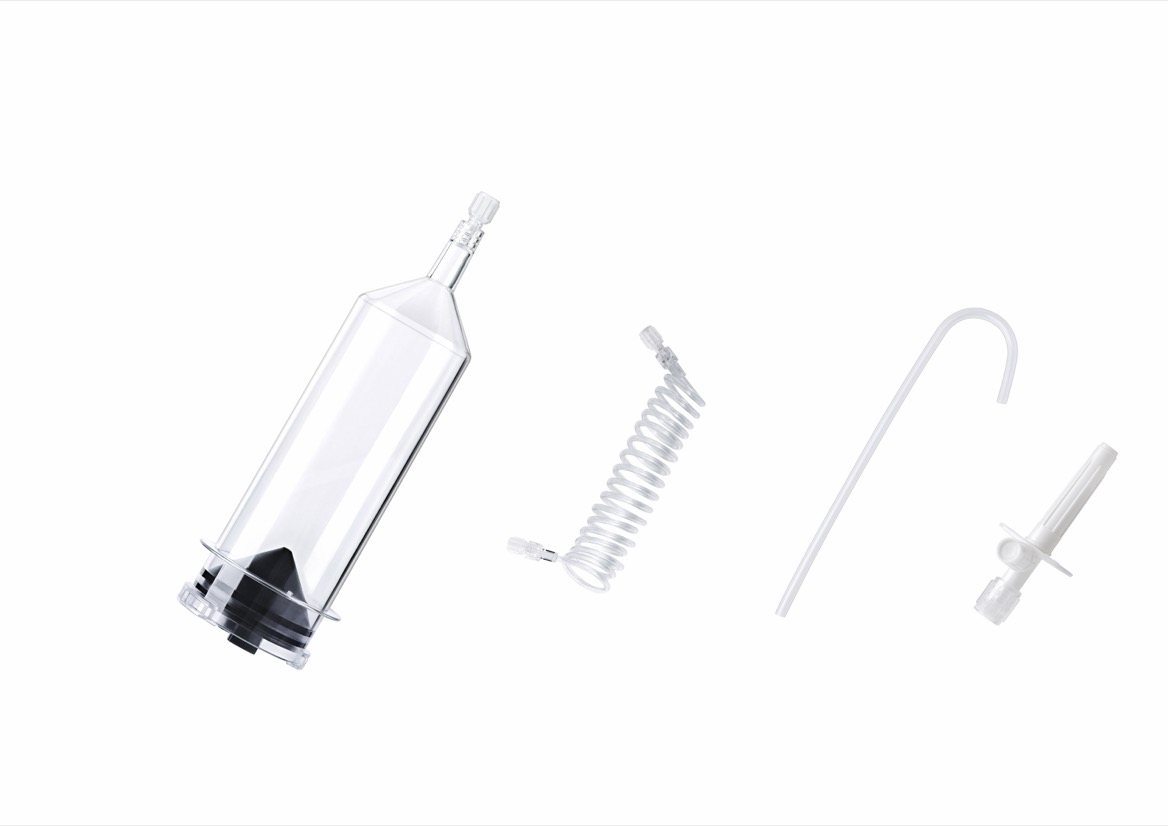
No. High-pressure syringes are not universally interchangeable. Even syringes with the same capacity may differ in mounting geometry, plunger design, pressure capability, connector configuration, and intended injector platform. Always confirm the exact injector model and product documentation.
Identify the CT injector brand, complete model name, current syringe reference number, syringe volume, and required patient tubing configuration. Then provide this information to the supplier for a documented compatibility review.
Not automatically. MRI applications have different workflow and environmental requirements. Products intended for MRI use should be selected according to their labeling, instructions for use, and the specific MR injector configuration.
Send the injector brand and model, application type, photos of the current syringe and tubing if available, existing product reference number, required volume, target country, estimated annual demand, and any packaging or labeling requirements.
The patient line forms part of the complete fluid-delivery path. Its connector design, pressure rating, length, check valve, and intended use must be appropriate for the syringe and injector system. A correct syringe alone does not guarantee a correct configuration.
Distributors should review product registration requirements, labeling language, quality documents, sterilization information, packaging, shelf life, traceability, technical specifications, and compatibility documentation for the target market.
No. ISO 13485 demonstrates that a manufacturer operates a medical-device quality-management system. It does not mean that every product is compatible with every injector. Product-level compatibility must still be verified.
1. U.S. Food and Drug Administration. [510(k) Premarket Notification: CT Expres 3D Contrast Media Delivery System]
2. U.S. Food and Drug Administration. [Testing and Labeling Medical Devices for Safety in the Magnetic Resonance Environment]
3. International Organization for Standardization. [ISO 13485:2016 — Medical Devices Quality Management Systems]
4. International Organization for Standardization. [ISO 13485 — Medical Devices]
5. U.S. Food and Drug Administration. [510(k) Clearance Documentation for Contrast Media Injector Systems]
6. Indrajit, I. K. [Pressure Injectors for Radiologists: A Review and What Is New]