


close
Choose Your Site
Global
Social Media
Views: 268 Author: Maiwei Biotech Publish Time: 2026-11-01 Origin: Site


Content Menu
● What Does CT Injector Syringe Compatibility Actually Mean?
● Step 1: Identify the Exact CT Injector Model
>> Build an Injector-to-Syringe Compatibility Matrix
● Step 2: Verify Mechanical Fit and Injector Engagement
● Step 3: Check Pressure and Flow Across the Entire Fluid Path
>> Ask About Test Conditions, Not Just Maximum Ratings
● Step 4: Confirm Syringe Volume and Complete Kit Contents
● Step 5: Separate Quality Certification from Product Authorization
>> ISO 13485: Review the Manufacturing Quality-System Scope
>> FDA 510(k): Verify the Actual Cleared Device
>> CE Marking: Check the Applicable Product Documentation
● Step 6: Review Sterility, Shelf Life, and Traceability
● Step 7: Evaluate Samples Before Releasing a Bulk Order
>> Use a Controlled, Nonclinical Evaluation
● A Practical Decision Framework: Approve, Hold, or Reject
● An Illustrative Mixed-Fleet Purchasing Scenario
● Protect Compatibility After Supplier Approval
● Request a Model-Specific Review from MAIWEI INC.
>> Can the same CT injector syringe fit every model from one brand?
>> Is matching syringe capacity enough to confirm compatibility?
>> Does ISO 13485 certification prove syringe compatibility?
>> Should buyers evaluate only the syringe or the complete kit?
>> Can sample testing replace regulatory documentation?
>> What should accompany a bulk-purchase inquiry?
Checking CT injector syringe compatibility before bulk purchasing requires more than matching a brand name or syringe volume. Buyers need to verify the exact injector model, syringe interface, pressure rating, tubing configuration, intended use, and supporting documentation.
From a procurement perspective, the most useful principle is simple: compatibility must be demonstrated for the complete injection setup—not inferred from appearance, a certificate, or a supplier's general product description.
For hospitals, distributors, and OEM buyers, a structured review helps prevent unsuitable inventory, installation problems, and avoidable interruptions. This guide explains what to check, which evidence to request, and how to establish purchasing acceptance criteria.
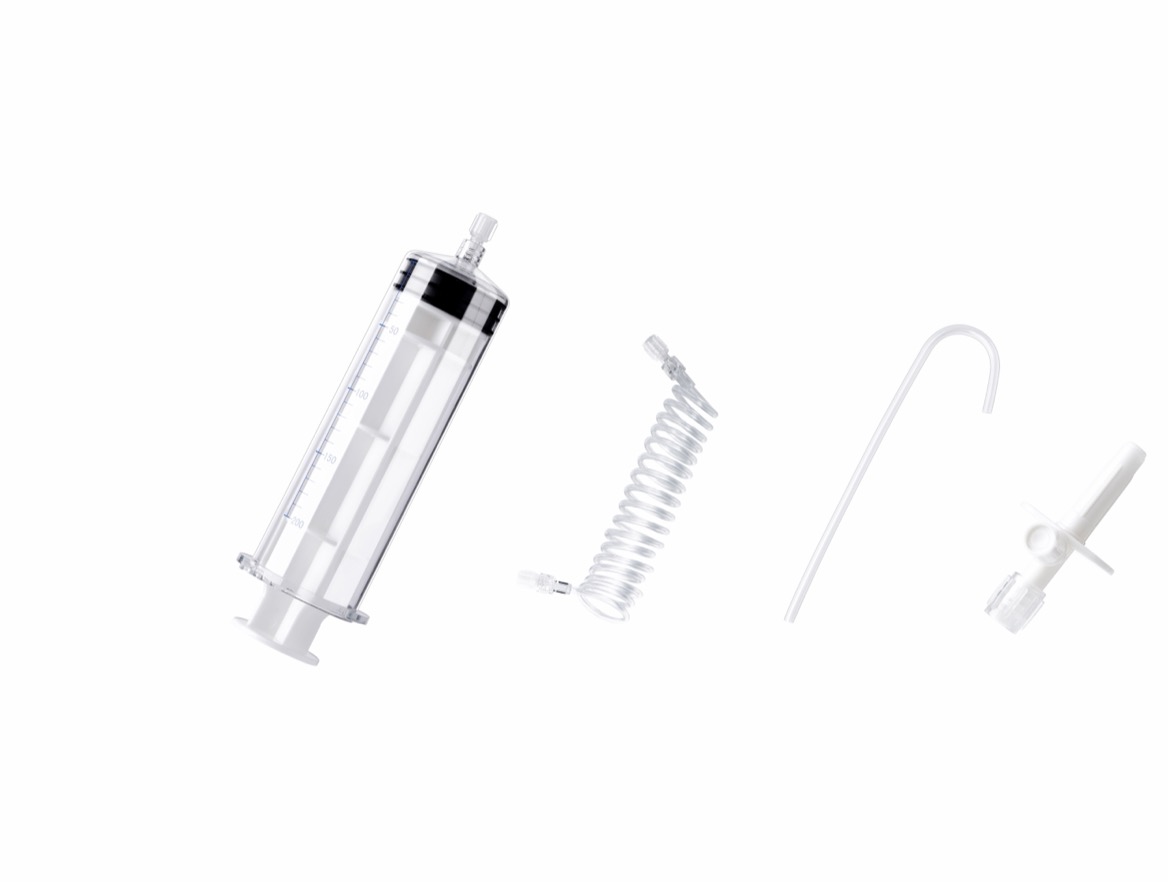
A compatible CT injector syringe must function within the requirements of the specified injector and its labeled application.
That involves several connected checks:
- Mechanical fit: correct mounting geometry and plunger engagement.
- Operating compatibility: suitable volume, pressure, and flow conditions.
- Fluid-path compatibility: appropriate tubing, connectors, and accessories.
- Workflow compatibility: correct loading, filling, priming, and removal.
- Regulatory suitability: documentation covering the supplied product and destination market.
A syringe that attaches to the injector has passed only one part of the assessment. Physical fit alone does not establish reliable delivery, leak resistance, or suitability for clinical use.
Likewise, compatibility with a manufacturer's CT injector does not automatically establish compatibility with its MRI or angiography equipment.
Start with the equipment installed at the intended customer site—not the supplier's catalog.
Record:
1. Injector manufacturer and full model name.
2. Relevant injector-head configuration or generation.
3. Single-head or dual-head arrangement.
4. Existing syringe and disposable-kit references.
5. Current instructions for use and any applicable equipment updates.
Photographs of the equipment label and existing consumable packaging can help resolve naming ambiguities. However, they supplement rather than replace written specifications.
For distributors supplying multiple hospitals, a compatibility matrix makes purchasing decisions traceable.
| Item to verify | Information to record | Evidence to request |
|---|---|---|
| Injector identity | Full model and configuration | Equipment label and manual |
| Proposed syringe | Supplier SKU and capacity | Product specification and labeling |
| Mounting interface | Flange, locking features, plunger connection | Drawings and applicable validation |
| Operating limits | Pressure, flow, volume, temperature restrictions | Instructions and relevant test reports |
| Complete kit | Tubing, connectors, spikes, accessories | Controlled kit specification |
| Market eligibility | Destination and product identity | Applicable regulatory documentation |
Avoid entries such as "compatible with major brands." The matrix should identify the precise supplier SKU and intended injector model.
Mechanical compatibility includes more than barrel diameter.
Review the mounting flange, locking mechanism, syringe length, outlet orientation, and plunger interface. Where the equipment uses syringe detection or automated loading features, confirm that the proposed disposable supports the applicable functions.
Ask the supplier:
- Does this syringe require an adapter?
- Is that adapter permitted for the intended configuration?
- Does the injector recognize and engage the syringe correctly?
- Are loading and removal procedures documented?
- What evidence supports the claimed model compatibility?
A sensible purchasing rule is to reject undocumented modifications. Forcing a syringe into position, altering a flange, or improvising an adapter is not a valid compatibility check.
Qualified personnel should assess installation according to the relevant instructions before any clinical introduction.
Do not evaluate the syringe's pressure rating in isolation.
The planned setup can include the syringe, extension tubing, connectors, valves, and patient-access device. Each component must be suitable for its intended role and operating conditions.
For procurement screening, treat the lowest applicable component limit as a constraint—not as permission to operate the complete assembly at that value. The injector instructions, component labeling, and clinical protocol may impose additional restrictions.
A statement such as "high-pressure resistant" provides little purchasing assurance without supporting details.
Request information about:
- The pressure rating and its stated units.
- Applicable maximum flow conditions.
- Whether testing covers the assembled kit or individual components.
- Leakage and connection-security evaluation.
- Relevant fluid and temperature conditions.
- Performance evidence supporting the labeled shelf life.
Contrast characteristics, tubing dimensions, and flow settings can affect injection resistance. Therefore, a headline pressure figure should not replace configuration-specific review.
Never conduct an improvised burst test in a clinical area. Any nonclinical evaluation should follow an approved procedure with suitable equipment and qualified supervision.
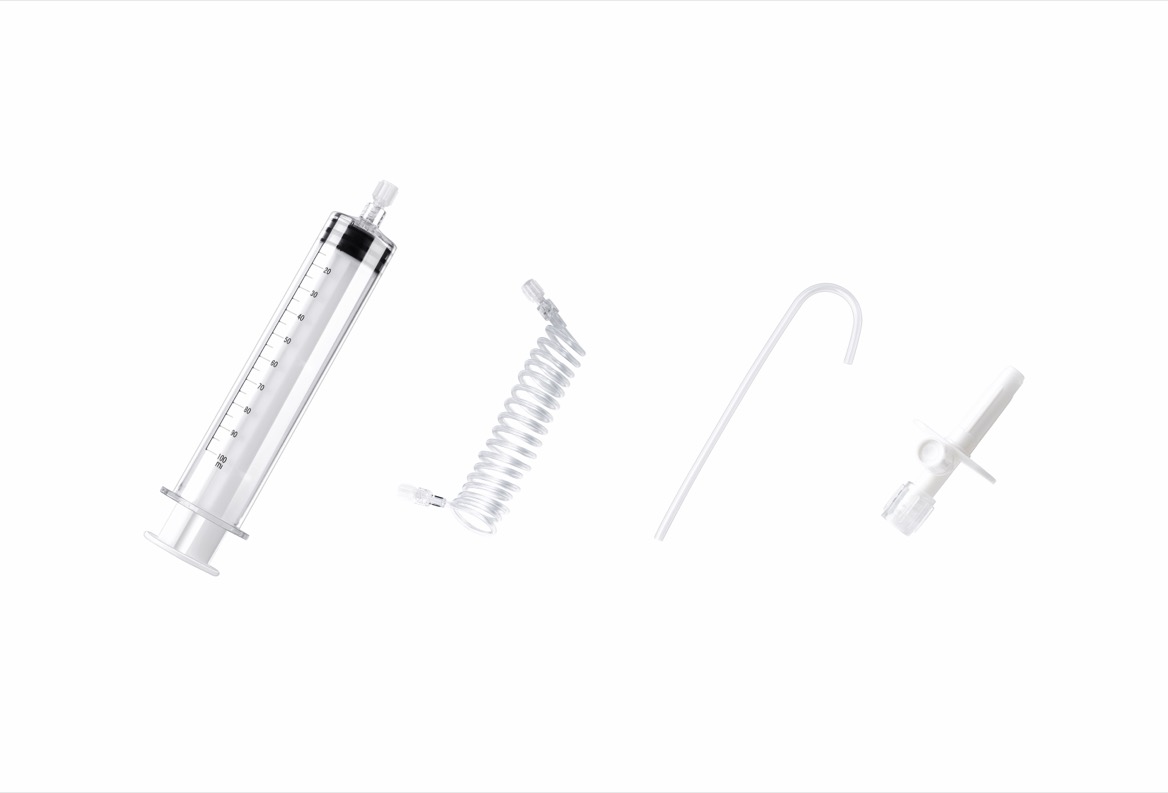
Two kits with the same nominal syringe volume may contain different accessories.
Check the quantity and specification of every component:
- Syringes and their respective capacities.
- Contrast and saline connections.
- Connecting-tube length and configuration.
- Filling spikes or other transfer accessories.
- Valves, caps, and additional connectors.
This is particularly important when comparing quotations. A lower-priced kit may exclude an accessory included in the current product.
Manufacturer catalogs also distinguish between named systems and specific disposable-kit references. Bayer, for example, lists a Stellant FLEX dual-spike kit with two 150 mL syringes and specified patient tubing. Such detail illustrates why "a CT syringe kit" is not a sufficiently precise purchasing description.
That example does not establish interchangeability with another system or validate any third-party replacement.
Certificates matter, but they answer different questions.
ISO 13485 concerns quality management systems for medical devices. Review the certificate's legal entity, manufacturing location, scope, validity, and issuing organization.
It does not independently prove that a particular syringe fits a particular injector.
A 510(k) clearance concerns a device's substantial equivalence to a legally marketed predicate. It should not be described as blanket FDA approval of a manufacturer's entire catalog.
Ask for the applicable clearance number and compare the database record and supporting documents with the supplied product.
FDA establishment registration or device listing alone is not equivalent to 510(k) clearance.
Request the EU Declaration of Conformity and, where applicable, the relevant notified-body certificate.
Have the responsible regulatory reviewer confirm that the documentation covers the product and intended market. Do not assume that a certificate covering one device family covers every consumable offered by the supplier.
Bulk purchases create storage and distribution exposure. Compatibility review should therefore include the condition in which products will reach users.
Verify:
- Sterilization method and supporting validation.
- Sterile-barrier packaging specifications.
- Labeled shelf life and storage conditions.
- Lot identification and expiry-date format.
- Minimum remaining shelf life at delivery.
- Complaint handling and recall communication.
Ask how shelf-life claims address both packaging integrity and device performance. An intact-looking pouch alone does not establish that every relevant performance requirement remains satisfied.
Follow single-use labeling. A disposable syringe should not be treated as reusable merely because it appears undamaged after use.
For distributors, ensure that traceability remains intact when cartons are divided among customers.
Samples should represent the intended commercial product.
Confirm that the evaluated SKU, materials, packaging, accessories, and labeling match what the supplier will deliver. Record any difference between evaluation samples and production units.
A practical evaluation sequence is:
1. Review documentation before opening samples.
2. Check product identity, packaging, and expiry information.
3. Have qualified personnel assess loading and engagement.
4. Evaluate filling and priming using an approved nonclinical procedure.
5. Assess relevant operating conditions within labeled limits.
6. Document observations and resolve discrepancies.
7. Obtain the required internal approval before clinical introduction.
Define acceptance criteria before testing. These may address secure mounting, documented device recognition where applicable, leakage, correct kit contents, and acceptable operation under the approved evaluation protocol.
One successful demonstration is not equivalent to comprehensive manufacturer validation. Sample evaluation supplements—not replaces—technical and regulatory evidence.
A simple decision framework prevents commercial pressure from overruling unresolved technical issues.
| Decision | Example condition | Purchasing action |
|---|---|---|
| Approve | Required evidence and evaluation meet predefined criteria | Release the specified configuration |
| Hold | Model mapping, labeling, or documentation remains unclear | Request clarification before ordering |
| Reject | Confirmed mismatch, unsuitable limits, or unresolved safety-critical discrepancy | Exclude the proposed configuration |
Do not average away critical failures. An attractive price, acceptable packaging, and valid quality-system certificate cannot compensate for an incompatible mounting interface.
Keep the decision record linked to the exact SKU, document revision, and approved kit configuration.
Consider a distributor supplying two hospitals with different CT injector models.
The supplier offers one "universal" syringe based on its volume and brand-family description. Instead of accepting the claim, the buyer creates separate compatibility records for each hospital.
The review confirms adequate documentation for one configuration but leaves the second unresolved. The buyer approves only the supported configuration and holds the other pending evidence.
This is an illustrative procurement scenario, not a reported customer case. Its lesson is practical: compatibility approval belongs to a defined configuration, not an entire customer account or equipment brand.
Initial approval is only useful if subsequent deliveries remain consistent.
Include change-notification requirements in the purchasing agreement. Relevant changes may involve materials, dimensions, tooling, manufacturing location, sterilization, packaging, labeling, or supplied accessories.
Also define:
- Approved product and kit references.
- Prohibition of unapproved substitutions.
- Incoming inspection requirements.
- Minimum remaining shelf life.
- Complaint-investigation responsibilities.
- Conditions requiring renewed evaluation.
Compare total purchasing cost rather than unit price alone. Freight, excluded accessories, evaluation work, expiry exposure, and unusable stock can change the commercial outcome.
These are buyer-specific costs; avoid assuming universal savings percentages.
MAIWEI INC. develops and manufactures high-pressure injector consumables for CT, MRI, and angiography, including syringes, connecting tubes, and related accessories.
The company reports ISO 13485 certification, CE marking and FDA 510(k) credentials for applicable products, and exports to more than 60 countries and regions. These company-provided statements should be checked against current, product-specific documentation during procurement.
Before requesting a bulk quotation, send MAIWEI INC. your injector's full model name, current consumable reference, required kit configuration, destination market, and estimated order volume.
Request a written compatibility mapping, applicable regulatory documents, and representative samples. This creates a clearer basis for evaluating suitability before committing to inventory.
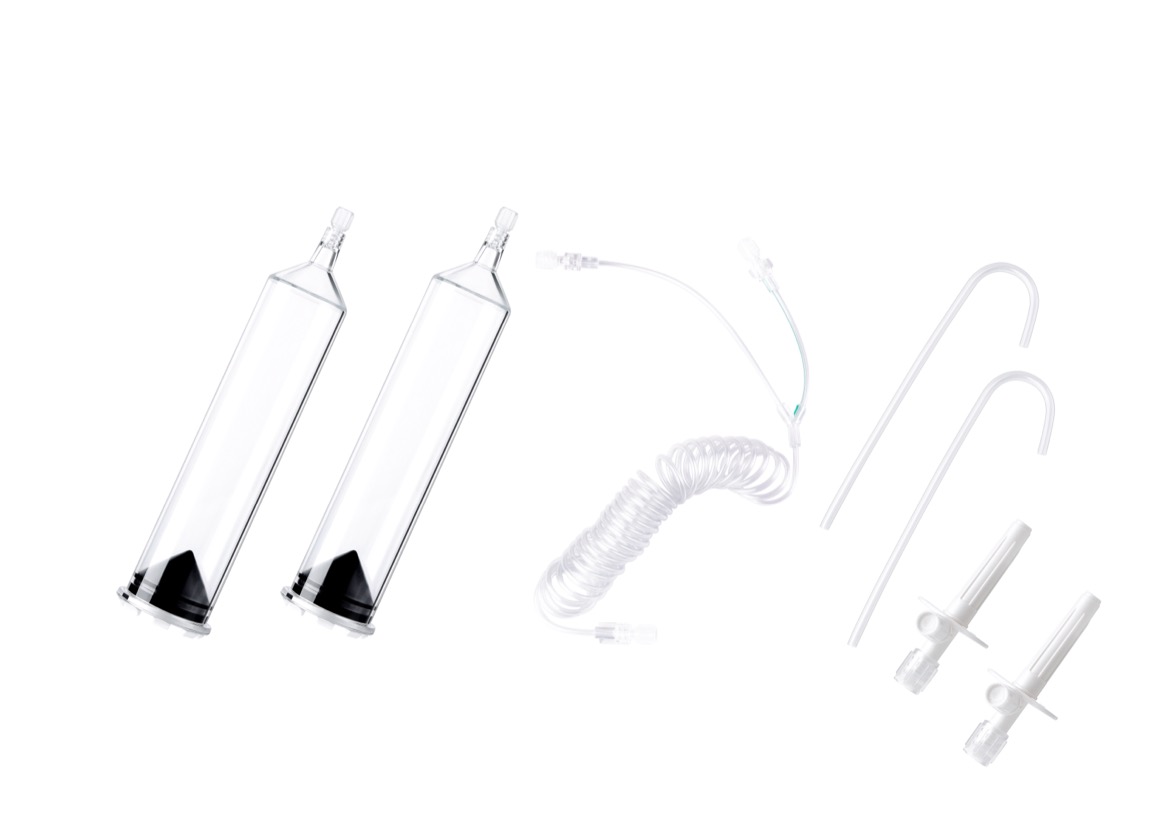
No. Models can differ in mounting geometry, plunger engagement, operating requirements, and disposable configuration. Obtain evidence for the exact injector and syringe combination.
No. Capacity is only one specification. Review the interface, operating limits, complete fluid path, instructions, and supporting documentation.
No. It addresses the manufacturer's quality management system. Model-specific compatibility requires separate technical evidence.
Review the complete intended setup. Tubing, connectors, accessories, and patient-access components can introduce separate limitations.
No. Samples help assess a proposed configuration, but they do not replace applicable market requirements, labeling, or manufacturer validation.
Provide the injector model, existing product reference, required volumes, tubing configuration, destination market, order quantity, and documentation requirements.
1. International Organization for Standardization. [ISO 13485:2016 — Medical devices: Quality management systems—Requirements for regulatory purposes]. Explains the scope of medical-device quality management requirements. [iso]
2. U.S. Food and Drug Administration. [Medical Device Safety and the 510(k) Clearance Process]. Explains substantial equivalence and the distinction between clearance and approval pathways. [fda]
3. U.S. Food and Drug Administration. [Search the Releasable 510(k) Database]. Provides a method for checking device-specific clearance records. [fda]
4. Bayer Radiology. [Syringes & Disposables]. Provides named disposable-kit configurations, including the Stellant FLEX example. [radiologysolutions.bayer]
5. U.S. Food and Drug Administration. [Shelf Life of Medical Devices]. Discusses factors and activities used to establish medical-device shelf life. [fda]
6. U.S. Food and Drug Administration. [Reprocessing Single-Use Medical Devices: Information for Health Care Facilities]. Explains single-use devices and regulatory requirements for reprocessing. [fda]