


close
Choose Your Site
Global
Social Media
Views: 298 Author: Maiwei Biotech Publish Time: 2026-11-05 Origin: Site


Content Menu
● What Is the Plunger Seal on a Contrast Injector Syringe?
● Before Checking the Syringe Plunger Seal
>> Confirm Exact-Model Compatibility
>> Inspect Packaging and Maintain Sterility
>> Keep the Patient Disconnected
● How to Check the Plunger Seal: A Practical Inspection Sequence
>> 1. Examine the Barrel and Visible Seal
>> 2. Load the Syringe According to Its Instructions
>> 3. Observe Movement During Approved Filling
>> 4. Look for Fluid Bypassing the Plunger Seal
>> 5. Prime and Check the Entire Fluid Path
>> 6. Make a Clear Release-or-Reject Decision
● Plunger Seal Inspection: Findings and Appropriate Responses
● Why a Pressure Alarm Does Not Prove Seal Failure
>> Do Not Confuse Seal Leakage With Extravasation
● What to Do When You Suspect Plunger Seal Failure
>> Preserve Evidence Without Creating Another Hazard
● An Industry Lesson: Observe During Filling, Not Only Afterward
● How Hospitals and OEM Buyers Can Strengthen Seal Quality Controls
● Get Product-Specific Support From MAIWEI INC.
>> Can I Check a Contrast Injector Syringe Seal by Hand?
>> Does a Dry Syringe Exterior Mean the Seal Is Intact?
>> Is Fluid Between Visible Seal Ribs Always a Failure?
>> Can I Repair a Leaking Disposable Plunger Seal?
>> What Pressure Should I Use to Test the Seal?
>> Should I Check Again After an Operator Handover?
To check the plunger seal on a contrast injector syringe, inspect its visible position and condition, then watch for leakage or abnormal movement during the manufacturer-approved filling and priming sequence. Keep the patient disconnected throughout preparation. If fluid bypasses the seal, damage is visible, or performance is uncertain, replace the syringe rather than attempting a repair.
A reliable contrast injector syringe inspection involves more than looking for drips. It requires checking the correct syringe–injector combination, maintaining sterility, removing air, and recognizing when a suspected seal problem may actually involve another component.
This guide provides an inspection framework for trained imaging professionals working with CT, MRI, and angiography consumables. It does not replace the current instructions for use supplied with the syringe and injector.
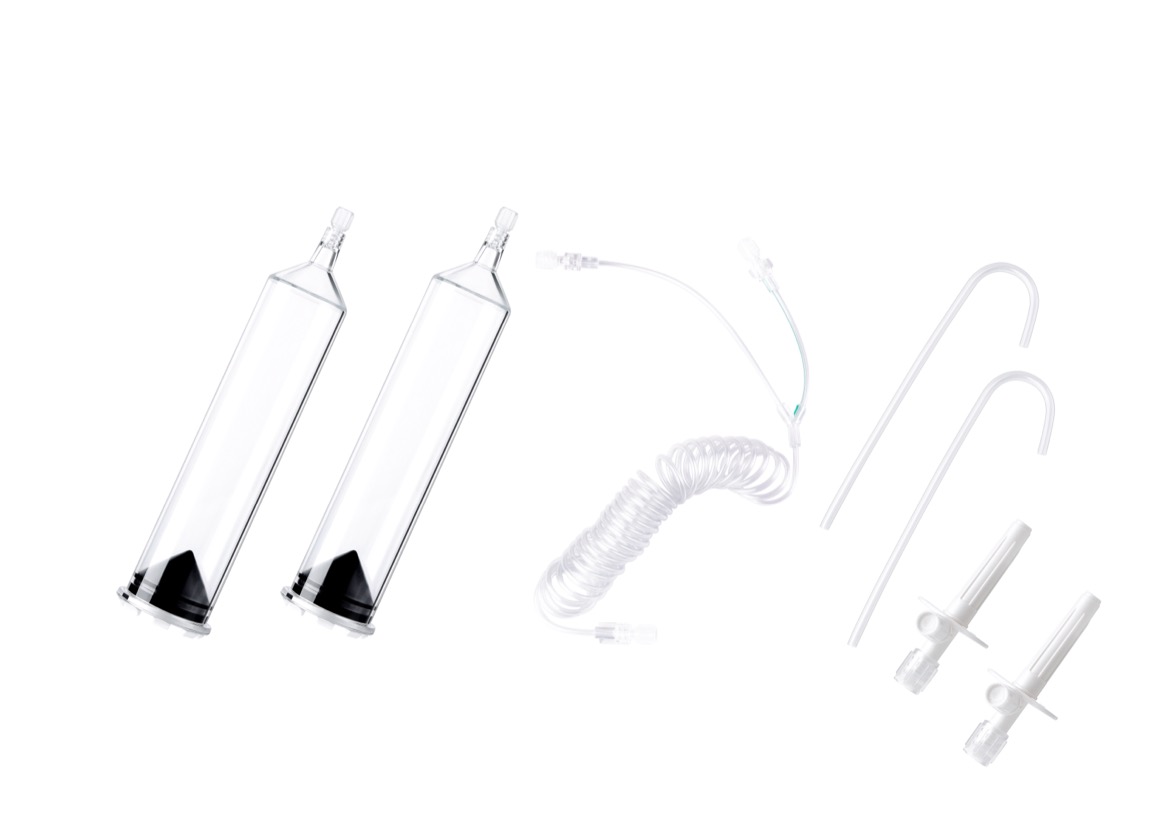
The plunger seal is the sealing element that contacts the inside wall of the syringe barrel. It separates the fluid-containing chamber from the space behind the plunger and moves as the injector advances or retracts the syringe plunger.
Its appearance varies by product. Some designs have visible sealing ribs; others use different profiles or integrated constructions. Do not assume every acceptable seal must look identical.
Three components should remain distinct:
- Syringe plunger seal: maintains the fluid barrier inside the barrel.
- Injector piston or drive ram: transfers mechanical movement to the syringe plunger.
- Syringe mounting interface: holds the syringe in the correct position.
A mounting problem can interfere with operation without proving that the plunger seal itself is defective. Likewise, fluid around the injector head may come from a spill or connector leak rather than internal seal bypass.
Check the syringe product code against the intended injector model and configuration. Similar barrel dimensions do not establish compatibility.
Verify:
- Injector manufacturer and exact model.
- Syringe capacity and product reference.
- Required adapters or pressure jackets.
- Permitted operating conditions.
- Compatible connecting tubes and accessories.
Some injector instructions explicitly restrict use to designated syringes. Resolve any conflict between compatibility claims and the injector's current instructions through your facility's approved technical and purchasing process.
Check the sterile barrier, expiration date, labeling, and storage requirements before opening.
Do not use a syringe with damaged packaging, uncertain sterility, or visible product damage. Open and handle it using the specified aseptic technique.
Do not remove the plunger, touch the internal seal, or insert an instrument into the barrel for a closer inspection. An inspection should not create the contamination or damage it is intended to prevent.
Perform filling, priming, and preparation checks before connecting the patient, following the applicable instructions.
Never improvise a seal test by blocking the outlet and pressurizing the syringe. There is no universal bedside test pressure, holding time, or acceptable leakage allowance for all contrast injector syringes.
Under adequate lighting, inspect the visible seal through the barrel without compromising sterility.
Look for:
- An obviously displaced or tilted seal.
- Visible tears, distortion, or irregular sealing edges.
- Foreign material or unexpected particles.
- Barrel cracks or other visible damage.
- An abnormal gap compared with the product's documented design.
Visibility may be limited by the barrel, plunger position, or syringe construction. If you cannot confidently assess a suspicious finding, set the syringe aside for replacement and review.
Do not mistake normal molding features or the expected shape of a particular seal for damage. Product-specific illustrations and training are more reliable than comparisons with a different syringe brand.
Install the syringe using the prescribed loading sequence. Confirm that it is seated and retained correctly and that the injector piston engages as intended.
Where a pressure jacket is required, inspect and install it according to the injector manual.
Do not force a syringe into position. Unexpected resistance during loading may indicate incorrect alignment, an incompatible product, or another mechanical issue. It is not a reason to apply additional force.
Use only the specified filling controls and procedure. Watch the plunger and visible fluid chamber as filling progresses.
Stop if you notice:
- Abnormal jerking or hesitation.
- Unexpected resistance.
- Seal distortion or displacement.
- An unexplained injector warning.
- Fluid moving behind the sealing boundary.
Do not repeatedly cycle an empty syringe merely to assess how the seal "feels." Manual manipulation and dry cycling are not substitutes for the manufacturer's preparation procedure.
During filling and priming, inspect the visible area behind the seal.
Fluid entering the normally non-fluid side of the barrel is a concerning finding. However, normal fluid contact with the forward-facing portion of the seal should not automatically be classified as leakage.
The useful question is: has fluid crossed the intended sealing boundary?
Distinguish internal bypass from external contamination. A splash on the barrel can look like internal fluid when viewed from one angle. If the source remains uncertain, do not continue toward patient use while attempting to prove the syringe acceptable.
Complete the manufacturer-approved air-removal sequence for the syringe, connectors, and tubing.
Use the specified injector-head orientation. Do not transfer positioning instructions from one injector model to another.
Visually check the accessible fluid path for trapped air. A syringe that appears dry around its plunger seal can still contain air or have a separate connection problem.
If bubbles persist or reappear, stop preparation and investigate the complete setup. Recurrent bubbles alone do not identify a defective plunger seal.
Proceed only when preparation satisfies the applicable instructions and no unresolved abnormality remains.
A routine check should establish that:
1. The correct syringe is installed.
2. No visible damage or suspected seal bypass is present.
3. Filling and priming behave normally.
4. Connections are secure as specified.
5. Air removal is complete.
6. Required injector checks and confirmations are satisfied.
Passing these observations does not independently certify pressure integrity. It supports a preparation decision within an approved workflow.
| Observation | What it may indicate | Appropriate response |
|---|---|---|
| Visible seal tear or displacement | Suspected syringe defect | Reject the syringe |
| Fluid behind the intended sealing boundary | Possible internal bypass | Stop preparation and replace |
| Wetness near the outlet connector | Connection leak, damage, or spill | Identify the source and follow the instructions |
| Abnormal movement during filling | Loading, compatibility, syringe, or drive issue | Stop; assess rather than force |
| Reappearing air bubbles | Air entry or incomplete preparation | Reassess the entire fluid path |
| Pressure-limit warning | A system or fluid-path issue | Follow the injector troubleshooting procedure |
| Uncertain internal appearance | Insufficient evidence for acceptance | Set aside and obtain review |
These observations guide investigation; they are not a validated diagnostic test for determining the root cause of every injector problem.
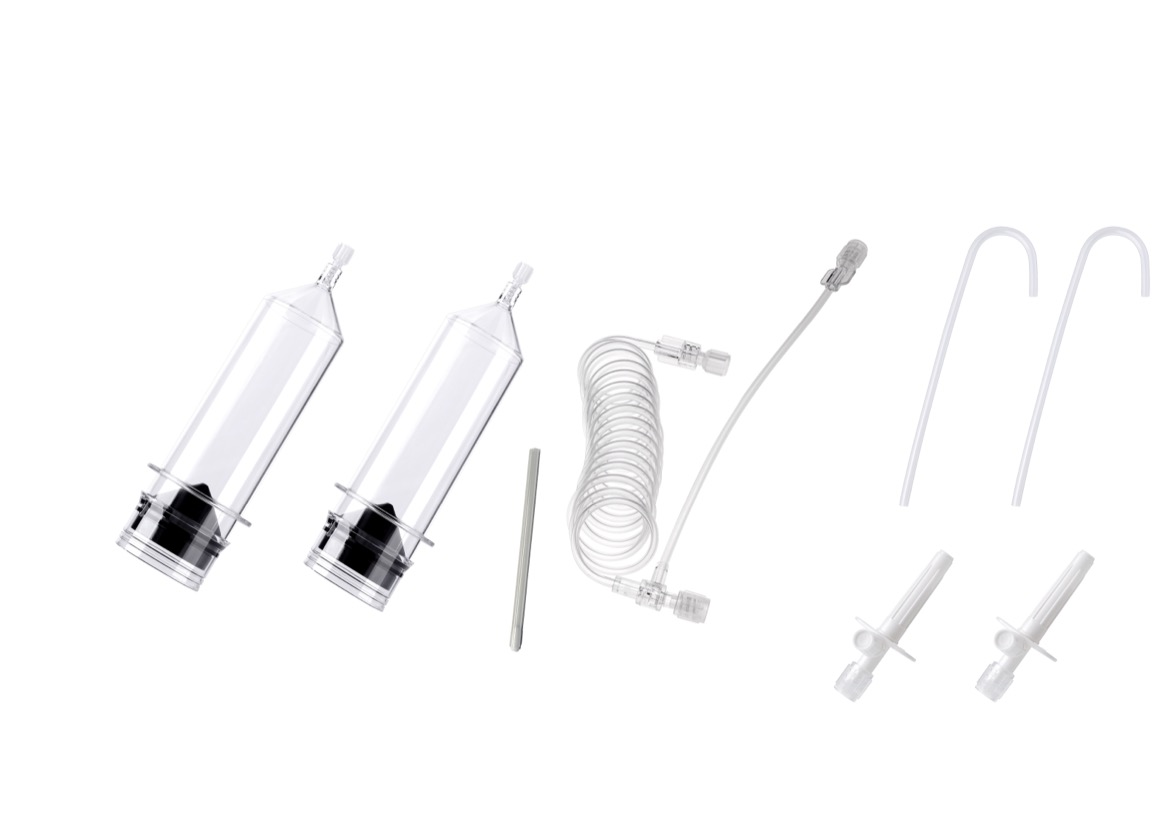
From a quality-assurance perspective, the most useful distinction is between an observation and its explanation.
"Pressure limit reached" is an observation. "The plunger seal failed" is a proposed explanation that requires supporting evidence.
Pressure behavior depends on the injection setup, including flow settings, fluid properties, tubing, catheter characteristics, and potential restrictions. An alarm should therefore trigger the prescribed system-level response, not an automatic diagnosis of a defective syringe.
Similarly, an absence of alarms does not prove that every disposable component is acceptable.
Plunger seal leakage occurs at the syringe. Extravasation involves injected fluid escaping the intended vascular pathway into surrounding tissue.
A satisfactory syringe inspection does not establish that vascular access is suitable or that extravasation cannot occur. Access assessment, patient observation, and injection monitoring remain separate clinical responsibilities.
Stop preparation or injection using the applicable injector procedure. If the patient is connected or injection has started, follow the facility's immediate clinical response protocol.
Do not try to:
- Push a displaced seal back into position.
- Add lubricant.
- Remove and reinstall the plunger.
- Continue at a lower pressure to "work around" leakage.
- Reuse a single-use syringe after suspected failure.
Replace affected components according to the instructions and local procedure.
If fluid has reached the injector interface, follow the manufacturer's cleaning and assessment requirements. Ask biomedical engineering or authorized service personnel to review the equipment when indicated.
After immediate safety needs are addressed, document:
- Syringe product code and lot number.
- Injector model.
- Stage at which the problem appeared.
- Visible leakage location.
- Relevant messages or operating settings.
- Whether patient use occurred.
- Photographs, when permitted.
Retain packaging and affected components only under the facility's contaminated-device handling and complaint-investigation procedures.
A published medication-safety alert described reports from three hospitals of fluid passing beyond syringe stopper ribs into barrel surfaces exposed to air. The reported leakage appeared during aspiration rather than only after filling.
These reports concerned parenteral syringes generally. They do not establish a failure rate for contrast injector syringes or identify a specific contrast-injector product defect.
The practical lesson is narrower: inspect dynamically during preparation. Looking only at a filled syringe may miss when and how an abnormality develops.
For internal training, consider a clearly labeled hypothetical scenario: fluid appears behind a syringe seal during filling, before patient connection. Staff stop preparation, replace the syringe, and document the lot. This illustrates an appropriate escalation pathway without presenting an invented clinical case as evidence.
Clinical inspection is the last checkpoint, not a replacement for manufacturing validation.
For supplier qualification, request product-specific documentation covering:
- Exact-model compatibility.
- Applicable pressure and leakage verification.
- Plunger movement or operating-force requirements.
- Sterilization and packaging validation.
- Shelf-life support.
- Traceability and complaint handling.
- Relevant regulatory documentation.
Review the tested conditions and acceptance criteria, not simply whether a supplier says "tested."
Incoming inspection can check packaging, labeling, and accessible physical features. It should not involve opening sterile production stock or conducting improvised pressure tests without an approved sampling plan.
ISO 13485 certification concerns a quality-management system. CE documentation and U.S. 510(k) clearance have their own product-specific scope. None should be treated as proof that every catalog item fits every injector.
MAIWEI INC. develops and manufactures high-pressure syringes, connecting tubes, and related consumables for medical imaging applications.
Before ordering for a hospital, distribution program, or OEM project, send MAIWEI your injector manufacturer, exact model, syringe capacity, and intended application. Request the proposed product reference, current instructions, compatibility documentation, and applicable regulatory records.
For a suspected plunger seal issue, provide the lot number and photographs through the appropriate complaint channel. Product-specific evidence is more useful than a general description such as "the syringe leaked."
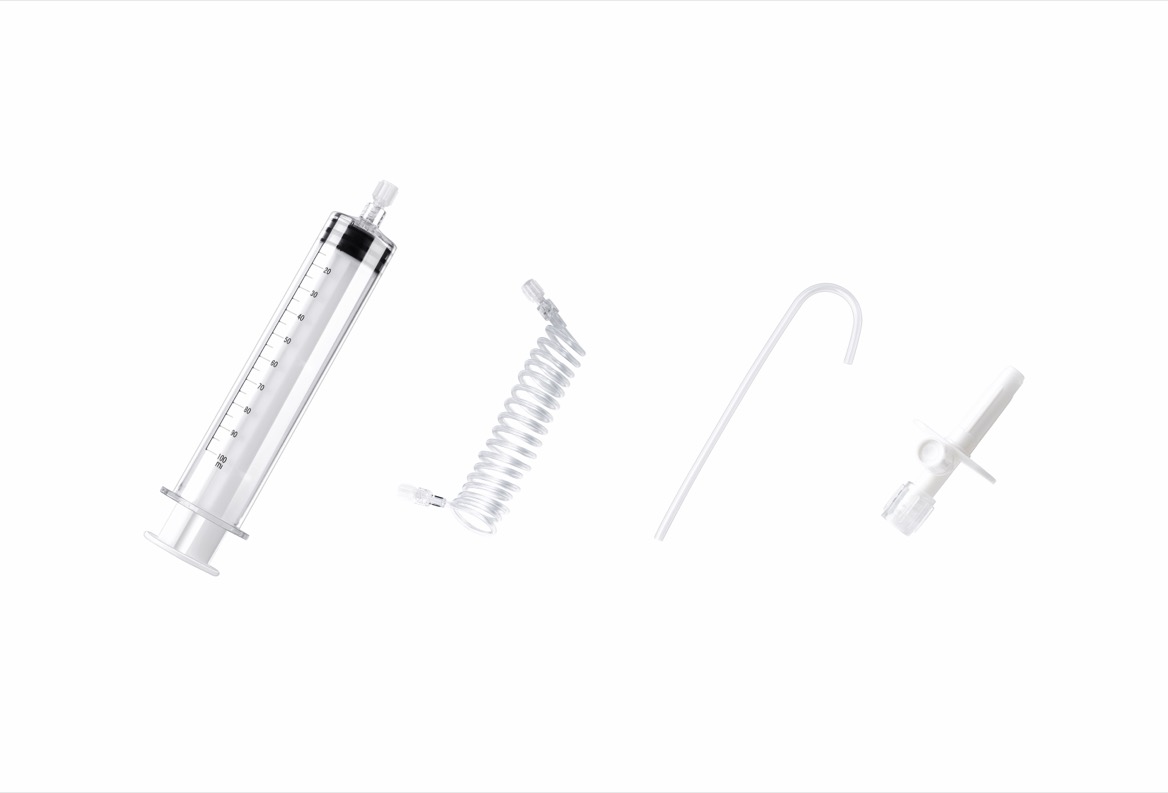
Only perform handling steps permitted by the product instructions. Do not remove the plunger, manipulate the seal, or force movement to assess tightness. Observe performance during the approved loading, filling, and priming sequence.
No. An exterior check cannot independently establish internal sealing performance. Also inspect the visible seal area and observe preparation. A dry exterior does not replace air removal or the required injector checks.
Not necessarily. Seal designs differ, and fluid contact must be interpreted against the intended construction. Fluid crossing into the normally non-fluid side is concerning. If the appearance is unclear, replace the syringe and request product-specific guidance.
Do not attempt a bedside repair. Lubricating, reseating, or exchanging parts can introduce contamination or alter performance. Replace the syringe and follow the facility's reporting process.
There is no universal pressure for a user-created seal test. Follow only a documented procedure applicable to that exact product. Manufacturing verification and service testing are not automatically appropriate for clinical preparation.
The incoming operator should verify preparation status under the facility's handover procedure, including air removal and unresolved abnormalities. Do not assume a syringe is ready merely because another person loaded it.
1. Bayer. [MEDRAD® Mark 7 Arterion Injection System: Operation Manual]. Product-specific information on syringe restrictions, preparation, filling, purging, and inspection. Its instructions should not be generalized to other injector systems. [radiology.bayer]
2. National Coordinating Council for Medication Error Reporting and Prevention. [Observe for Possible Fluid Leakage When Preparing Parenteral Syringes]. National Alert Network alert, September 15, 2016. Source for the three-hospital reports and leakage observed during aspiration; not contrast-injector-specific incidence data. [nccmerp]
3. Indrajit, I. K., et al. [Pressure Injectors for Radiologists: A Review and What Is New]. 2015. Background on pressure-injection systems, operating considerations, and fluid-path preparation. [pmc.ncbi.nlm.nih]
4. U.S. Food and Drug Administration. [510(k) Premarket Notification K253048]. Applicant: Shenzhen Maiwei Biotech Co., Ltd. Decision date: April 16, 2026. Lists high-pressure syringe and associated consumables; clearance scope must be evaluated against the specific product. [accessdata.fda]
5. Bayer. [MEDRAD® Stellant: Boost Your Image]. Manufacturer information addressing syringe compatibility and the possible consequences of using incompatible syringes. [radiology.bayer]
6. U.S. Food and Drug Administration. [MAUDE Report: MEDRAD MR Injector / Solaris Injector]. Includes manufacturer-reproduced warnings on air removal and operator handover. An individual adverse-event report does not establish causation or event frequency. [accessdata.fda]