


close
Choose Your Site
Global
Social Media
Views: 241 Author: Maiwei Biotech Publish Time: 2026-09-20 Origin: Site


Content Menu
● Why Supplier Selection Matters in Medical Imaging Distribution
● High Pressure Syringe Supplier vs. General Medical Consumables Vendor
● Start With Product Compatibility, Not Product Appearance
>> Questions to Ask About Syringe Compatibility
>> Match the Product to the Clinical Workflow
● Verify Regulatory Status and Quality-System Evidence
>> Documents a Distributor Should Request
>> Avoid the "Certificate-Only" Trap
● Evaluate Manufacturing Capability and Process Control
>> What to Look for During a Factory Review
>> Why Traceability Protects Your Distribution Business
● Compare Product Quality Beyond Unit Price
● Assess Supply Reliability and International Delivery Capability
>> Ask These Supply-Chain Questions
● Examine OEM and Private-Label Flexibility
● Use a Practical Supplier Qualification Scorecard
● A Five-Step Selection Process for Distributors
>> 1. Define Your Target Market
>> 2. Create a Technical Requirement Sheet
>> 3. Screen Documentation Before Ordering Samples
>> 4. Conduct Product Trials and Supplier Review
>> 5. Start With a Controlled Launch
● Common Warning Signs When Choosing a Supplier
● Partner With a Supplier That Supports Your Growth
● FAQ
>> 1. What is a high pressure syringe used for?
>> 2. How do I verify high pressure syringe compatibility?
>> 3. Why is ISO 13485 important when selecting a medical consumables supplier?
>> 4. Does FDA 510(k) mean every syringe product from a supplier can be sold in the United States?
>> 5. What should I inspect when receiving the first shipment?
>> 6. Can a distributor request private-label high pressure syringe products?
>> 7. What is the most important factor when choosing a high pressure syringe supplier?
Selecting a reliable high pressure syringe supplier is not simply a purchasing decision. For a medical device distributor, it is a decision that affects clinical safety, customer retention, regulatory exposure, inventory continuity, and long-term profitability. The best high pressure syringe manufacturer should supply more than disposable syringes and connecting tubes—they should provide validated compatibility, stable quality, responsive documentation, and a dependable supply partnership.
For distributors serving CT, MRI, and angiography departments, high pressure injector consumables are mission-critical products. A delayed shipment, incompatible syringe, leaking connecting tube, incomplete certificate, or poorly controlled production batch can disrupt contrast-enhanced imaging workflows and damage the distributor's reputation with hospitals. That is why a qualified high pressure syringe supplier must be evaluated as a medical device partner rather than a low-cost commodity vendor.
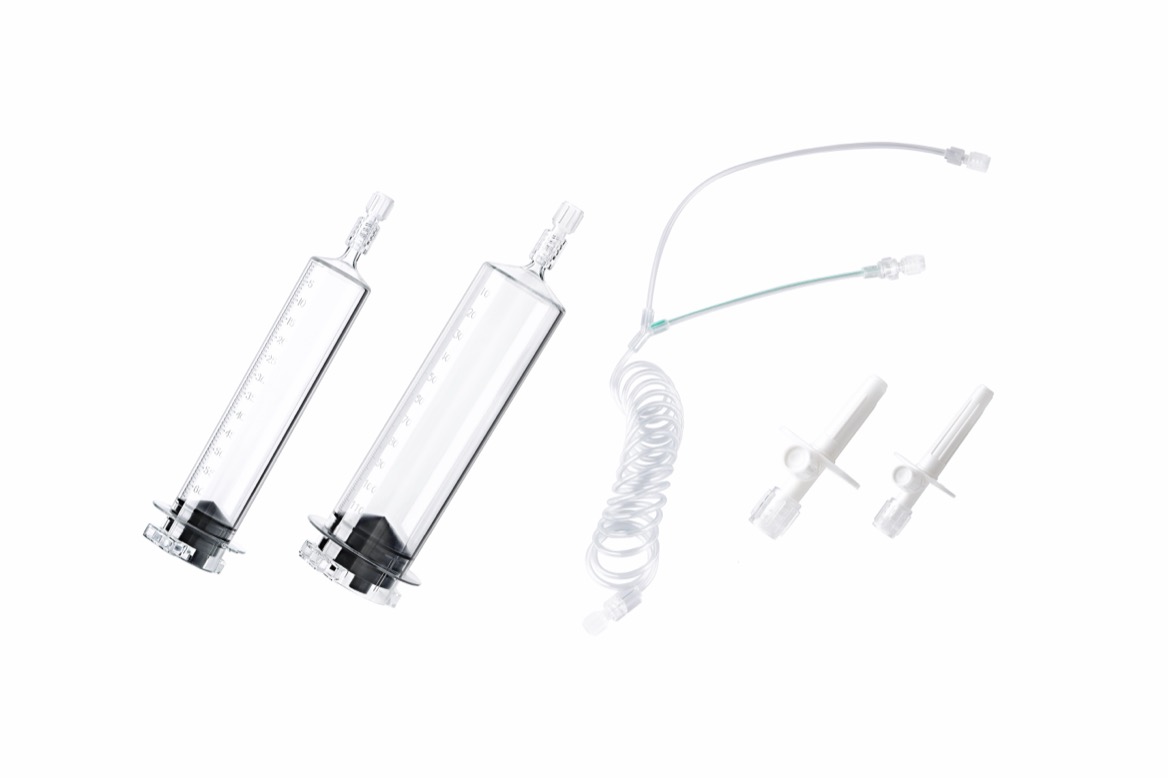
MAIWEI INC. develops and manufactures high pressure injector consumables for CT, MRI, and angiography applications, including high pressure syringes, connecting tubes, and related accessories. With ISO 13485, CE, and FDA 510(k) credentials, the company supports distributors, hospitals, and OEM customers across more than 60 countries and regions.

In medical imaging, injector consumables operate under pressure, interface with contrast media delivery systems, and directly support examination workflows. The distributor's responsibility does not end when a carton reaches the hospital warehouse. Customers expect consistent performance during every scan.
A distributor may lose business because of issues that appear small at first:
- A syringe does not fit the installed injector model correctly.
- A connecting tube leaks during contrast delivery.
- A disposable component has inconsistent dimensions between batches.
- The sterile barrier is damaged during international transportation.
- Product labeling does not match local registration requirements.
- The manufacturer cannot provide technical documents quickly enough for a tender or audit.
- A replacement order is delayed because the supplier lacks inventory planning.
For this reason, the comparison between a high pressure syringe supplier and a general medical consumables trader is important. A supplier that understands injector systems, radiology workflows, material performance, quality controls, and regulatory documentation can help a distributor grow more safely and predictably.
Not all suppliers offer the same level of technical depth. Some companies source products from multiple factories and focus mainly on price and shipping. Others control product development, production, inspection, packaging, and technical support as a specialized manufacturer.
The following table shows the practical differences distributors should assess.
| Evaluation Area | Specialized High Pressure Syringe Supplier | General Medical Consumables Vendor |
|---|---|---|
| Product knowledge | Understands CT, MRI, and angiography injector applications | May have limited knowledge of injector systems |
| Compatibility support | Can provide model-specific compatibility information | May offer only broad or unclear compatibility claims |
| Manufacturing control | Often manages molding, assembly, inspection, packaging, and traceability | May rely on third-party factories with limited visibility |
| Regulatory documentation | More likely to maintain product-specific certificates and technical files | Documentation may be incomplete or slow to obtain |
| Quality consistency | Uses defined inspection criteria and batch control | Quality may vary by factory, order, or sourcing channel |
| OEM capability | Can support customized packaging, labeling, product configuration, and specifications | Often limited to private-label packaging only |
| Complaint handling | Can investigate root causes with engineering and production teams | May only coordinate between buyer and factory |
| Long-term supply planning | Can forecast components and production capacity | May face higher risks of sourcing interruption |
A specialized supplier is not automatically the right choice in every situation. However, when the products are used in contrast-enhanced imaging procedures, distributors should prioritize technical reliability, compliance readiness, and supply continuity over the lowest unit price.
Two high pressure syringes can look similar but perform differently inside a specific injector system. Compatibility involves more than shape, capacity, or connector position. It may depend on barrel dimensions, plunger force, locking geometry, pressure resistance, tubing connections, packaging configuration, and the intended use described in the product documentation.
Before selecting a supplier, ask for clear compatibility information for the injector systems used by your customers. A reliable manufacturer should be able to explain which products are designed for which equipment platforms and how the compatibility has been evaluated.
Use these questions during supplier qualification:
1. Which CT, MRI, and angiography injector models is the syringe compatible with?
2. Is the product intended as a compatible alternative or an original-equipment component?
3. What syringe capacities are available?
4. What are the maximum pressure specifications for the syringe and connecting tube?
5. Are the syringe, tubing, spike, and accessories supplied as a complete procedure kit or as individual components?
6. Does the product support saline and contrast media delivery where applicable?
7. Are operating instructions available in English and other required languages?
8. Can the manufacturer provide technical drawings, compatibility lists, or test summaries under an appropriate confidentiality arrangement?
Do not rely solely on product photos. A visual match does not prove functional compatibility. Your sales, regulatory, and quality teams should review the compatibility statement before product registration, tender participation, or hospital delivery.
A distributor should also understand the workflow of the target imaging department. CT, MRI, and angiography procedures differ in equipment environment, contrast delivery patterns, patient throughput, and accessory requirements.
For example:
- CT injector consumables may require high-volume syringe configurations and pressure-rated connecting tubes for contrast-enhanced CT examinations.
- MRI injector consumables must be matched carefully to MRI injector systems and the operating environment of the imaging suite.
- Angiography injector consumables may require product configurations appropriate for vascular imaging procedures and specialized injector interfaces.
- Dual-head injector kits may include separate syringes or connections for contrast media and saline.
- Single-use procedure packs can simplify hospital inventory control and reduce the risk of component mismatch.
The best supplier asks about your target device models, hospital usage habits, local registration pathway, and preferred packaging format before recommending a product.
Certificates matter, but distributors should examine what the certificates actually cover. A serious medical device supplier should provide current, product-relevant evidence rather than only displaying logos on a website or brochure.
ISO 13485 is a quality-management standard specifically designed for organizations involved in medical device design, production, storage, distribution, and associated services. It is intended to help organizations demonstrate their ability to consistently meet applicable customer and regulatory requirements.
In the United States, a 510(k) is a premarket submission used to demonstrate that a device is substantially equivalent to a legally marketed device that is not subject to premarket approval. It should not be treated as a universal approval label for every product configuration sold by a supplier.
In the European Union, medical devices that conform to the applicable requirements of the Medical Device Regulation generally bear CE marking before being placed on the market. The regulation also requires manufacturers to retain technical documentation and relevant conformity records for defined periods.
Before approving a high pressure syringe supplier, request a controlled document package that may include:
- ISO 13485 certificate, including certification body and scope.
- CE certificate or declaration of conformity, where applicable.
- FDA 510(k) information for the relevant product, where applicable.
- Product catalog and model list.
- Instructions for use.
- Product specifications and technical data sheets.
- Sterilization method information.
- Shelf-life and storage requirements.
- Packaging specifications.
- Biocompatibility or material-related documentation where appropriate.
- Product labeling samples.
- Lot number and traceability policy.
- Complaint-handling and corrective-action process.
- Product liability insurance details, where required by your market.
- Country-specific registration support materials.
A professional supplier should understand that these documents are needed for distributor qualification, government tenders, hospital procurement, import clearance, and local registration activities.
A certificate alone does not guarantee that every shipment will meet your commercial requirements. It is possible for a supplier to hold a valid quality certificate while still performing poorly in areas such as responsiveness, packaging quality, lead time, engineering support, or change notification.
Therefore, evaluate both compliance evidence and operational behavior.
A practical rule is simple: if a supplier cannot explain a document, identify the covered product, clarify the validity period, or provide a controlled copy when needed, treat that as a warning sign.
A reliable high pressure syringe manufacturer should be able to explain how product quality is controlled from raw materials to final shipment. You do not need to inspect every machine personally, but you should understand the system behind the product.
For high pressure injector consumables, manufacturing quality commonly depends on:
- Medical-grade raw material selection.
- Mold design and molding-process stability.
- Dimensional inspection.
- Assembly accuracy.
- Leak and pressure-related testing.
- Clean production conditions.
- Sterilization validation and release control.
- Packaging integrity.
- Batch traceability.
- Final visual inspection.
- Retention samples and complaint investigation.
If you can visit the facility—or conduct a remote audit—focus on evidence rather than presentation.
Ask to see:
- Incoming material inspection records.
- In-process inspection procedures.
- Finished-product inspection standards.
- Calibration records for key measuring equipment.
- Batch production records.
- Sterilization release documentation.
- Packaging-seal inspection procedures.
- Nonconforming-product controls.
- Complaint records and corrective-action examples.
- Change-control procedures for materials, molds, packaging, and suppliers.
A trustworthy manufacturer will not claim that defects never occur. Instead, it will show how it detects, contains, investigates, corrects, and prevents recurring problems.
Traceability is especially important when a hospital reports a quality concern. Your customer may need to identify the product lot, delivery date, procedure pack, and affected inventory quickly.
A capable supplier should be able to trace:
Finished Product Lot→Production Record→Component Lot→Inspection Record→Shipment Record
This allows the distributor to respond professionally, isolate potentially affected stock, communicate with hospitals, and protect patient safety.
Without traceability, a small complaint can become a much larger commercial and reputational problem.
Price is important, but purchase price is only one part of the distributor's total cost. Lower-priced injector consumables may become expensive if they generate returns, emergency air shipments, customer complaints, hospital trial failures, or tender disqualification.
When comparing quotations, calculate the broader business impact.
| Cost Factor | Low Initial Price Supplier | Reliable High Pressure Syringe Supplier |
|---|---|---|
| Unit purchase price | Often lower | May be moderately higher |
| Product consistency | Can vary between lots | More stable through controlled processes |
| Regulatory support | May be limited | Usually more organized and responsive |
| Complaint risk | Potentially higher | Reduced through defined quality controls |
| Emergency replacement cost | More likely | Less likely with stable quality and planning |
| Hospital confidence | Can be difficult to build | Easier to maintain with reliable performance |
| Long-term margin protection | Vulnerable to claims and discounting | Better supported by trust and repeat orders |
A useful procurement question is not "Who offers the cheapest syringe?" It is:
"Which supplier gives us the lowest total commercial risk over the next three years?"
That question changes the conversation from unit cost to sustainable distribution value.
Medical imaging departments cannot simply pause procedures because a distributor runs out of injector consumables. Hospitals often maintain limited storage space and expect distributors to replenish stock reliably.
For distributors, supply reliability includes:
- Manufacturing capacity.
- Raw-material availability.
- Forecast planning.
- Production lead time.
- Safety-stock strategy.
- Export documentation.
- Packaging protection.
- Shipment visibility.
- Response to urgent orders.
- Ability to manage seasonal demand or tender-driven volume increases.
Before signing a distribution agreement, ask the supplier:
- What is the standard production lead time?
- What is the minimum order quantity by product model?
- Can the supplier maintain safety stock for regular customers?
- How are raw material shortages managed?
- Can mixed product containers be supported?
- What export documents are available?
- How is outer-carton strength validated for international shipping?
- What is the process for urgent replacement shipments?
- Can the supplier provide monthly production and delivery forecasts?
- Does the supplier have experience shipping to your country or region?
MAIWEI INC.'s experience serving customers in more than 60 countries and regions can be valuable for distributors that need consistent export coordination, product documentation, and communication across different markets. However, each distributor should still confirm product registration requirements, import rules, labeling language, and local market obligations before launch.
Many distributors want to build a local brand rather than only resell generic products. This is where OEM capability becomes a strategic advantage.
A capable OEM high pressure syringe supplier may support:
- Private-label packaging.
- Distributor brand names.
- Customized outer cartons.
- Multilingual labels.
- Customized instructions for use.
- Market-specific kit configurations.
- Product coding and barcode requirements.
- Customized syringe or tubing combinations.
- Tender-specific packaging quantities.
- Confidential product-development discussions.
However, distributors should clearly distinguish between cosmetic customization and technical customization.
Changing carton artwork may be relatively simple. Changing product dimensions, materials, connectors, pressure performance, sterilization configuration, or intended use may require engineering review, validation work, regulatory assessment, and longer lead times.
The supplier should explain this difference honestly before promising an OEM timeline.
A structured scorecard helps prevent purchasing decisions based only on price, personal relationships, or attractive brochures. Your team can assign a score from 1 to 5 for each category.
| Qualification Category | Suggested Weight | What to Evaluate |
|---|---|---|
| Product compatibility | 20% | Injector model fit, procedure configuration, technical clarity |
| Regulatory documentation | 15% | Certificates, declarations, labeling, registration support |
| Quality-system maturity | 15% | ISO 13485 scope, audits, traceability, complaint process |
| Product performance | 15% | Samples, trial feedback, pressure resistance, leakage control |
| Supply reliability | 15% | Capacity, lead time, safety stock, export experience |
| Commercial terms | 10% | Pricing, payment terms, MOQ, warranty, exclusivity |
| Technical support | 5% | Response quality, training, engineering access |
| OEM capability | 5% | Packaging, labeling, customization feasibility |
A supplier with the lowest quotation may score poorly in documentation, capacity, or complaint response. A supplier with a slightly higher quotation may generate a much stronger total score and a more reliable long-term partnership.
List the countries, hospital segments, injector brands, and product configurations you plan to serve. Determine whether you need CT, MRI, angiography, or multi-modality injector consumables.
Include product capacity, pressure requirements, compatible injector models, connector type, sterile status, packaging format, labeling language, and expected annual volume.
Request certifications, product information, instructions for use, compatibility statements, and available test information. This avoids spending time evaluating products that cannot support your registration or tender needs.
Evaluate samples with appropriate clinical, engineering, quality, or procurement stakeholders. Review ease of installation, fit, packaging, labeling, and user feedback. Where possible, assess the supplier's manufacturing and quality processes.
Begin with a defined product range, agreed forecast, documented complaint process, and clear commercial terms. Monitor first shipments closely before expanding to additional hospitals, regions, or product families.
This phased approach reduces risk while allowing the supplier relationship to prove itself in real operating conditions.
A distributor should proceed carefully if a potential supplier:
- Makes broad compatibility claims without technical evidence.
- Refuses to share controlled copies of certificates or declarations.
- Cannot identify product lot numbers or trace shipment records.
- Changes prices frequently without explanation.
- Gives inconsistent answers about lead time.
- Promises every certification but cannot link it to a specific model.
- Provides product samples that differ from mass-production packaging.
- Has no defined complaint-response timeline.
- Avoids discussions about product recalls, corrective actions, or quality incidents.
- Offers extremely low prices that appear disconnected from regulatory, sterilization, and quality-control costs.
The goal is not to reject a supplier because it is imperfect. The goal is to identify whether the supplier is transparent, technically capable, and prepared to solve problems responsibly.
The right high pressure syringe supplier helps a medical device distributor compete on more than price. It allows you to offer reliable CT, MRI, and angiography injector consumables with stronger documentation, stable performance, controlled supply, and credible customer support.
For distributors looking to build a durable imaging-consumables portfolio, MAIWEI INC. offers high pressure syringes, connecting tubes, and related consumables designed for compatibility with multiple mainstream injector systems. With medical device quality credentials, international market experience, and OEM support capabilities, MAIWEI can help you evaluate product configurations that fit your target customers and local market needs.
Contact MAIWEI INC. to request a compatibility list, product catalog, sample evaluation plan, and documentation package for your medical imaging distribution business.
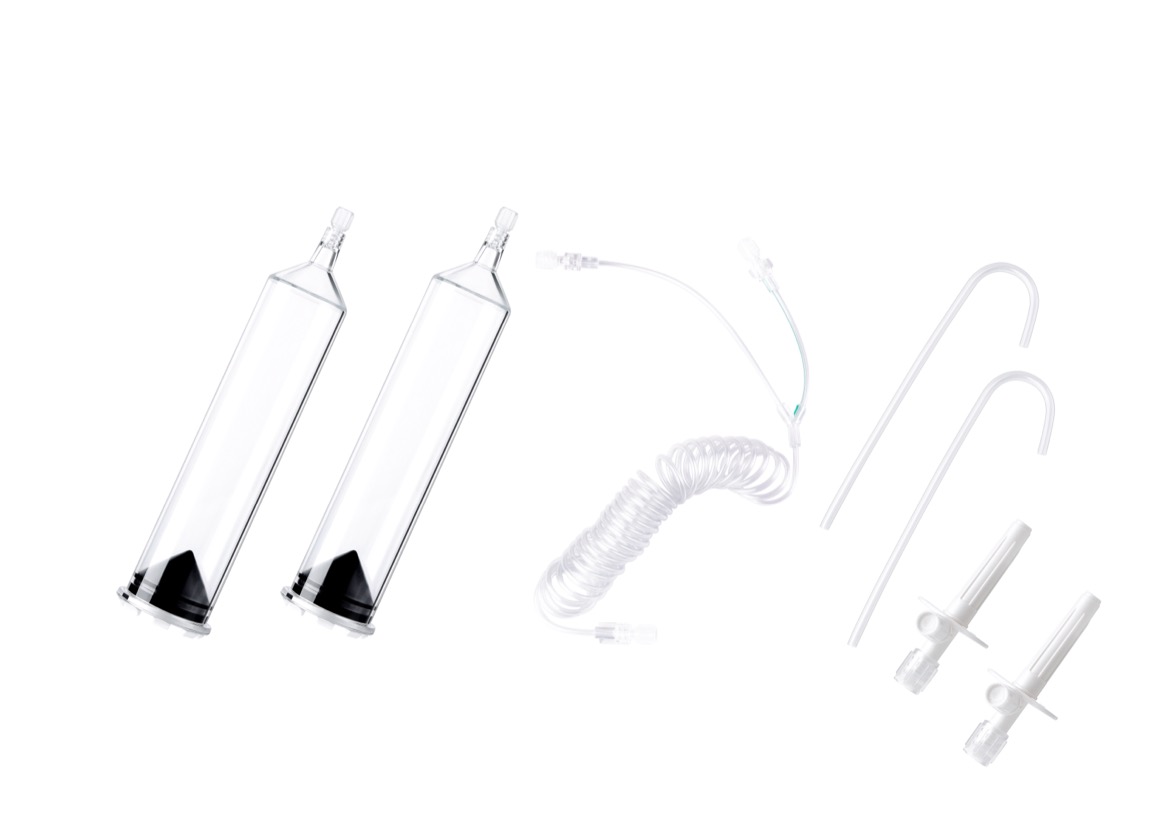
A high pressure syringe is used with compatible medical imaging injector systems to deliver contrast media, saline, or both during procedures such as CT, MRI, and angiography examinations. The exact application depends on the injector system, product configuration, intended use, and instructions for use.
Request a product-specific compatibility list from the supplier. Confirm the injector brand and model, syringe capacity, connector design, pressure specification, kit configuration, and intended use. Do not confirm compatibility based only on product images or verbal statements.
ISO 13485 indicates that a manufacturer has implemented a medical device quality-management system designed to consistently meet applicable customer and regulatory requirements. It is a useful qualification factor, but distributors should also review product-specific documents, traceability, complaint handling, and actual manufacturing controls.
No. A 510(k) relates to a specific premarket submission and the device covered by that submission. Distributors should confirm the exact product, model, intended use, labeling, and commercial arrangement before making market claims or importing products into the United States.
Check the product model, quantity, lot number, expiry date, sterile barrier condition, outer-carton integrity, labeling, instructions for use, packing list, certificates, and any agreed shipment documents. Retain records and samples according to your internal quality procedures.
Yes, many manufacturers can support private-label packaging and distributor branding. However, technical changes to the device or its intended use may require additional engineering, validation, and regulatory evaluation. Confirm the scope, cost, lead time, and documentation responsibilities before starting an OEM project.
The most important factor is the supplier's ability to deliver consistent, documented, compatible, and traceable products over time. Price matters, but a distributor should balance price against product performance, regulatory support, supply reliability, technical responsiveness, and customer risk.
1. International Organization for Standardization. [ISO 13485:2016 — Medical devices — Quality management systems — Requirements for regulatory purposes]
2. International Organization for Standardization. [ISO 13485 — Medical devices]
3. U.S. Food and Drug Administration. [Quality Management System Regulation]
4. U.S. Food and Drug Administration. [510(k) Premarket Notification Database]
5. U.S. Food and Drug Administration. [Guidance for the Content of Premarket Notification 510(k) Submissions for Piston Syringes]
6. European Union. [Regulation (EU) 2017/745 on Medical Devices]
7. European Commission. [Medical Devices: New Regulations]