


close
Choose Your Site
Global
Social Media
Views: 264 Author: Maiwei Biotech Publish Time: 2026-10-24 Origin: Site


Content Menu
● First Response: What to Do When an Injector Syringe Leaks
● Distinguish Equipment Leakage From Contrast Extravasation
● High Pressure Injector Syringe Leakage: Identify the Location
● Common Causes of Contrast Injector Syringe Leakage
>> Incorrect or Damaged Connections
>> Syringe, Injector, or Accessory Mismatch
>> Pressure or Flow Conditions Outside the Validated Setup
>> Damage, Storage Problems, or Compromised Packaging
● A Step-by-Step Troubleshooting Workflow
>> Step 1: Preserve the Injection Record
>> Step 2: Inspect the Complete Fluid Path
>> Step 3: Verify the Entire Component Combination
>> Step 4: Replace Affected Disposables
>> Step 5: Recheck Before Any Further Injection
● Use Pressure Traces as Evidence, Not a Diagnosis
● Investigating Repeated Leakage: A Practical Quality Framework
● Build a Useful Manufacturer Complaint Report
● Prevent Leakage Through Better Preparation and Purchasing
● Request a Model-Specific Consumables Review From MAIWEI INC.
>> Can I tighten a leaking injector connection and continue?
>> Does leakage always mean the syringe is defective?
>> Can high injection pressure cause leakage?
>> Is a saline test enough to prove that the system will not leak?
>> Should I lower the flow rate after a leak?
>> When should the injector be removed from service?
To troubleshoot leakage in a high pressure injector syringe, stop the injection, assess the patient, and identify where fluid is escaping before replacing affected components. Never tighten a connection under pressure or continue injecting through a leaking disposable set. In CT, MRI, and angiography, safe troubleshooting begins with safety, not an attempt to finish the examination.
A wet syringe does not automatically mean the syringe barrel has failed. Fluid may originate from a connector, extension tube, filling accessory, or another point along the fluid path.
From a manufacturing-quality perspective, the most useful question is: Where did the leak begin, and under what conditions? This guide explains how trained imaging professionals can investigate that question while following the applicable instructions for use and local clinical procedures.
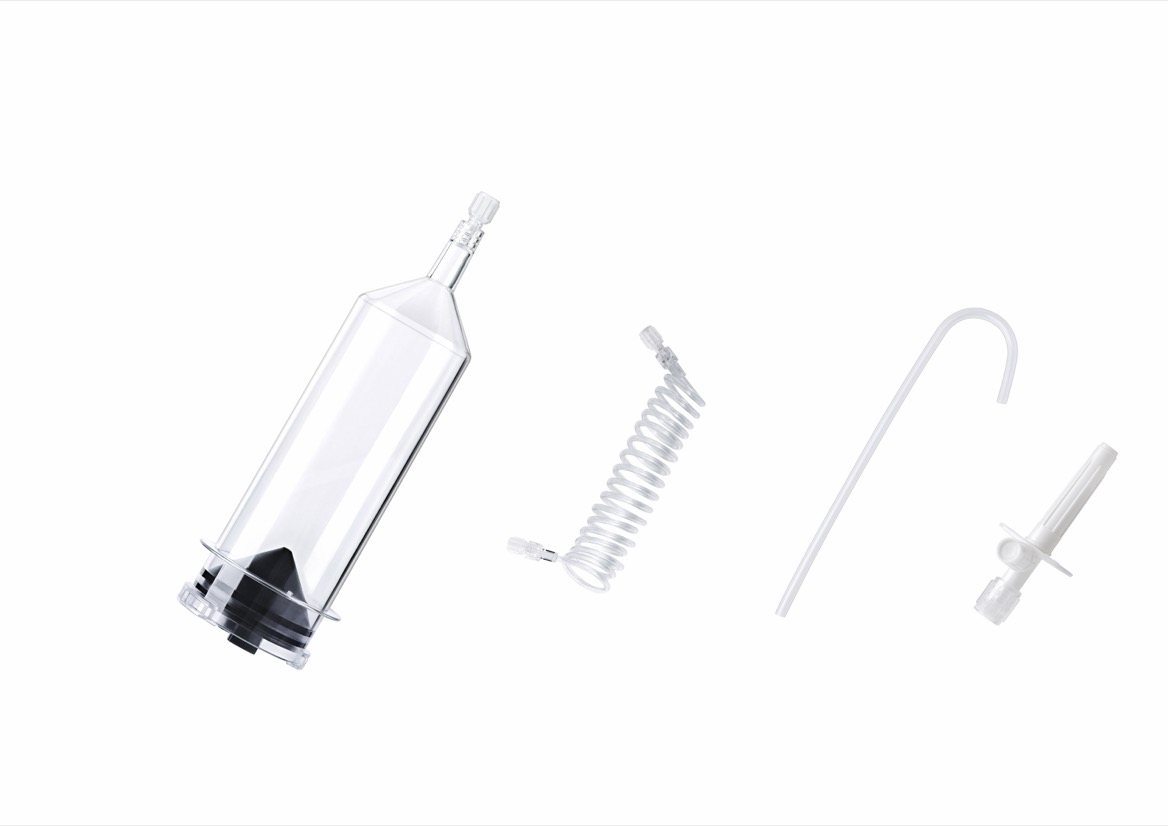
Treat visible leakage as a reason to stop and reassess the complete injection setup.
1. Stop the injection using the system's designated controls.
2. Assess the patient and vascular access site immediately.
3. Follow the injector's instructions for safely disarming the system and relieving residual pressure.
4. Do not disconnect, adjust, or tighten pressurized components.
5. Replace leaking or potentially contaminated disposable components according to their labeling.
6. Document the event and escalate equipment concerns appropriately.
Keep the patient disconnected during air purging and equipment troubleshooting. Do not perform improvised pressure tests on a patient-connected system.
This article supports troubleshooting; it does not replace device-specific instructions, professional training, or clinical judgment.
External leakage and contrast extravasation require different investigations.
External leakage occurs when fluid escapes from the syringe, tubing, or connections. You may see droplets, wet surfaces, or fluid collecting around the injector.
Extravasation occurs when injected fluid escapes from the vessel into surrounding tissue. Possible findings include swelling, pain, tightness, or altered sensation near the access site.
Both can occur during an interrupted injection. Finding a wet connector does not eliminate the need to assess the patient.
If extravasation is suspected, stop injecting and activate the facility's assessment and management pathway. Progressive pain, impaired perfusion, sensory changes, or skin injury require prompt clinical escalation. Do not resume injection simply because the external leak has been corrected.
The location provides a starting point, not a confirmed diagnosis. Fluid can travel along tubing or collect beneath components, making the apparent source misleading.
| Observed location | Possible explanation | Appropriate next step |
|---|---|---|
| Syringe-to-tubing connection | Incomplete engagement, damaged connector, or incompatible components | Stop, depressurize as instructed, and replace affected components |
| Syringe barrel or tip | Crack, deformation, or physical damage | Remove the syringe from use |
| Behind the plunger | Suspected seal failure or unsuitable syringe installation | Replace the syringe and inspect the interface |
| Tubing or bonded junction | Damaged tubing or joint failure | Replace the affected disposable set |
| Injector housing | Spill migration or possible internal contamination | Follow cleaning instructions and seek authorized service when needed |
| Patient access site | Access-device leakage or possible extravasation | Obtain clinical assessment before proceeding |
Record the first visible wet point when possible. Do not recreate the leak merely to obtain a clearer photograph.
An incompletely engaged connection may leak when the system becomes pressurized. Cross-threading, damaged locking features, or excessive force can also compromise the connection.
Follow the component manufacturer's assembly instructions. There is no universal number of turns or tightening torque suitable for every injector connector.
Do not use tools, tape, adhesive, or an extra adapter to compensate for a poor fit. A connection that requires unusual force deserves investigation.
Physical fit does not establish compatibility.
A syringe may appear to mount correctly while differing in its flange, plunger interface, dimensions, or supported operating conditions. Connecting tubing and accessories also need verification.
Check:
- Exact injector model and applicable configuration.
- Syringe catalog number and intended application.
- Required adapter or pressure jacket, where applicable.
- Tubing and connector specifications.
- Relevant labeling and locally applicable authorization.
A general statement such as "compatible with major brands" is not sufficient for clinical selection. Some injector instructions restrict the permitted disposables; those restrictions must be respected.
The pressure required to deliver fluid depends on the complete fluid path, including flow rate, fluid properties, tubing, and vascular access.
A kink or obstruction can increase resistance. However, leakage alone does not prove that excessive pressure caused the failure.
Check the recorded injection conditions against every component's permitted operating conditions. Do not increase the pressure limit to overcome an unexplained alarm.
There is no universal pressure setting for CT, MRI, and angiography consumables. A rating documented for one product cannot be transferred to another.
Inspect packaging and disposables before use. Look for cracks, deformation, damaged connectors, and evidence that the sterile barrier has been compromised.
Check expiration dates and labeled storage conditions.
Reject questionable components rather than attempting to prove that they will work. Do not reuse or reprocess a product labeled for single use.
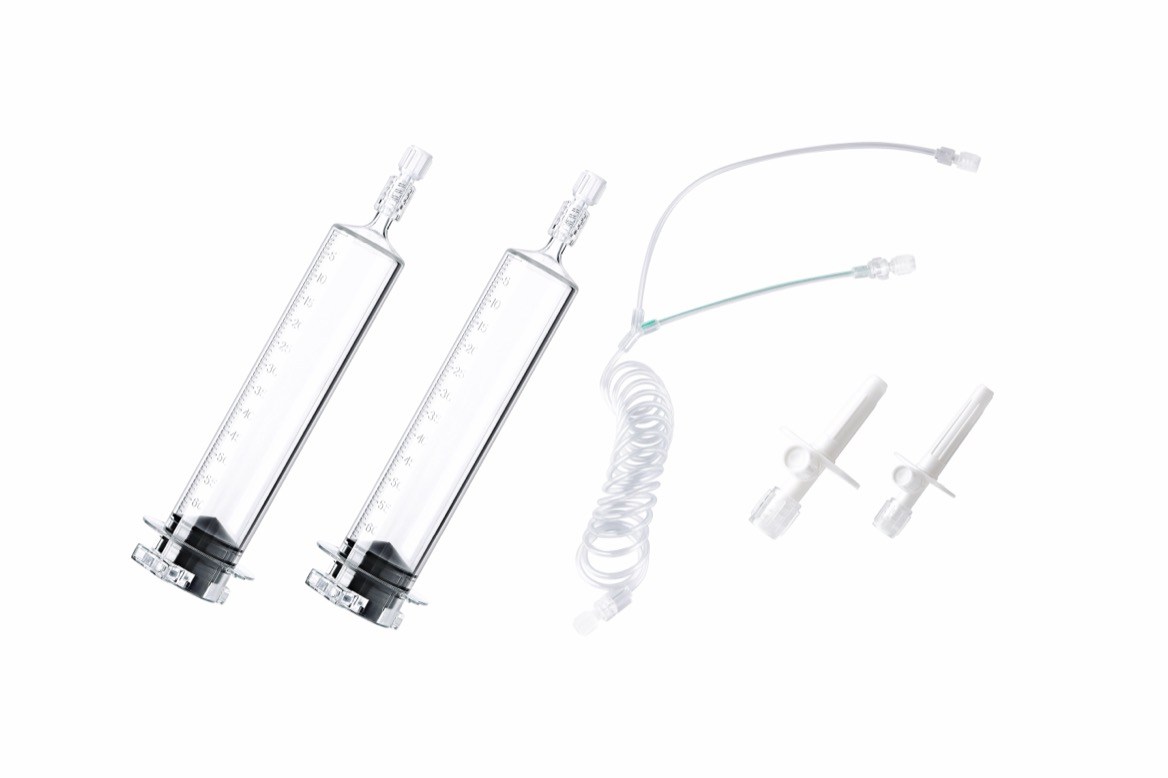
After addressing immediate patient needs, save available information before resetting the examination.
Useful details include:
- Programmed flow rate, volume, and pressure limit.
- Displayed pressure history and alarm messages.
- Injection phase when leakage appeared.
- Reported delivered volume.
- Contrast product and relevant preparation conditions.
Distinguish programmed values from recorded delivery. Neither necessarily proves how much contrast reached the circulation when external leakage occurred.
Once the system is safely depressurized and isolated from the patient, inspect from the syringe toward the patient connection.
Look for loose fittings, damaged locking features, cracks, kinks, compressed tubing, and tension caused by routing or table movement.
Use visual findings to guide replacement and escalation. Do not dismantle sterile disposable assemblies or manipulate suspected damage to reproduce failure.
Compare the installed components with the applicable instructions and compatibility documentation.
Check each item individually. The syringe, tubing, connector, and catheter may have different restrictions.
A successful previous injection is not proof that an undocumented combination is acceptable. Likewise, a high-rated syringe does not establish that every downstream component can tolerate the same conditions.
Remove damaged, leaking, or potentially contaminated components from clinical use. Follow the product instructions when deciding whether an individual item or the complete set requires replacement.
Do not repair a leaking syringe, lubricate its seal, or recover fluid from a compromised assembly for reuse.
If contrast has entered the injector, follow the manufacturer's spill procedure. Internal contamination may require authorized service rather than routine surface cleaning.
Prepare replacement components using aseptic technique. Prime and inspect the fluid path according to the device instructions, with the patient disconnected during air removal.
Before restarting, confirm:
- Correct installation and compatible components.
- No visible damage or leakage.
- Complete air removal.
- Suitable vascular access and an appropriate protocol.
- Clinical approval to proceed after an interrupted injection.
The supervising clinical team should decide whether further contrast administration or repeat imaging is appropriate.
A pressure trace adds context, but it does not independently identify the failure mechanism.
An abrupt pressure change with visible fluid loss may support a connection problem. Rising pressure before an alarm may suggest increased resistance. Similar patterns can have different explanations.
Review the trace alongside photographs, component identifiers, installation details, and patient findings.
Avoid concluding that a syringe is defective solely because an alarm occurred. Equally, do not dismiss a visible leak because the recorded pressure remained below the programmed limit. Pressure monitoring does not replace inspection.
Repeated events need a structured investigation rather than repeated replacement alone.
The following is an illustrative framework, not a reported clinical case.
Suppose several incidents involve the same syringe catalog number. Compare the incidents with uneventful uses:
| Comparison | Question it helps investigate |
|---|---|
| Same lot across multiple injectors | Is there a possible lot-related pattern? |
| Different lots on one injector | Does the equipment interface require inspection? |
| Same tubing across different syringes | Could a downstream component be involved? |
| Events after a workflow change | Did assembly or handling change? |
| Events during particular protocols | Are operating conditions relevant? |
These comparisons generate hypotheses, not proof of causation.
Quality personnel should coordinate any controlled evaluation with the manufacturer. Do not deliberately reproduce failures during patient care. Retain affected items only under approved infection-control, biohazard, and complaint-handling procedures.
"Your syringe leaked" rarely provides enough information for a meaningful investigation.
A stronger report includes:
- Product name, catalog number, lot number, and expiration date.
- Injector model and relevant configuration.
- Tubing, connector, and access-device details.
- Exact leak location and when it appeared.
- Injection settings, alarms, and available pressure records.
- Photographs, obtained safely and without patient identifiers.
- Patient impact and immediate corrective actions.
- Whether related events involved other lots or equipment.
Ask the supplier what evidence it needs and how potentially contaminated samples should be handled.
For internal tracking, define the event consistently. Separating assembly leakage, confirmed component damage, and suspected extravasation makes trend review more useful than combining every incident into one category.
Prevention begins before the syringe reaches the scanner room.
Standardize model-specific component selection and assembly training. Keep compatibility documentation accessible. Include packaging inspection, connection checks, tubing routing, and air inspection in preparation procedures.
Procurement teams should request product-specific documentation rather than relying on broad certification statements.
ISO 13485 certification concerns a quality management system. CE documentation and United States 510(k) clearance have defined scopes. None establishes universal compatibility or guarantees that leakage cannot occur.
For hospitals, distributors, and OEM buyers, the practical objective is a documented match between the product, injector, application, and destination-market requirements.
MAIWEI INC.'s stated focus includes high pressure injector syringes, connecting tubes, and related CT, MRI, and angiography consumables.
For product selection or a leakage investigation, contact MAIWEI with the injector model, disposable catalog numbers, intended application, and required operating conditions. For an incident, also provide the lot number and available injection records.
Request the applicable instructions, compatibility information, pressure specifications, and market-specific regulatory documentation before evaluation or purchase. This creates a clearer basis for technical review than selecting consumables by appearance or price alone.
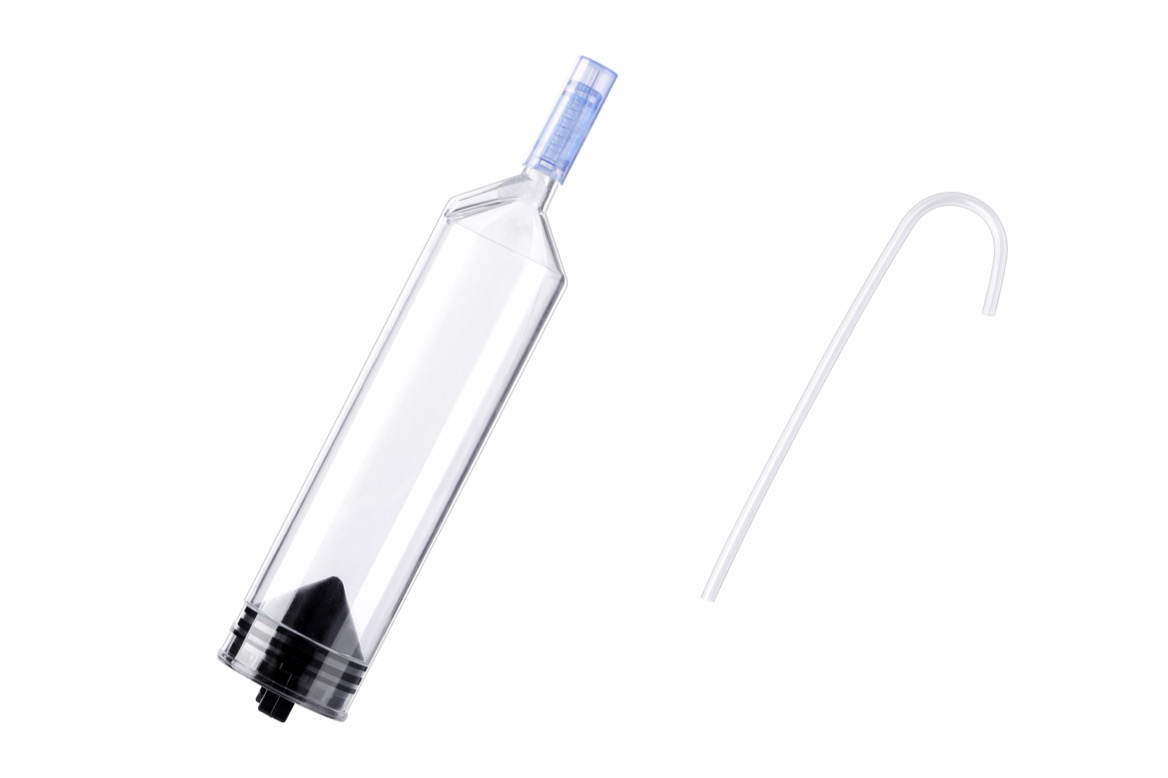
Do not tighten it while pressurized. Stop, assess the patient, and follow the system's depressurization instructions. Replace affected components as required. A temporarily dry connection does not establish that the assembly is safe.
No. Possible causes include connection problems, incompatible components, physical damage, or issues elsewhere in the fluid path. Investigate the location and operating conditions before assigning a cause.
Conditions beyond a component's validated limits can compromise safety. However, a leak can also occur within the displayed pressure limit because of damage or assembly problems. Review both specifications and physical evidence.
No. A permitted saline check supports preparation or access assessment, but it does not guarantee performance under every subsequent injection condition. Continue following the full inspection and preparation procedure.
Not as a substitute for correcting the problem. Replace affected components and investigate first. Any protocol change requires clinical authorization and must remain within the applicable device and access limits.
Escalate unexplained recurrent leakage, damaged interfaces, persistent faults, or suspected internal fluid ingress to biomedical engineering or authorized service. Follow the manufacturer's criteria before returning the equipment to clinical use.
- American College of Radiology. *Manual on Contrast Media*. Relevant chapters: "Injection of Contrast Media," "Extravasation of Contrast Media," and "Contrast Media Warming." Clinical guidance supporting patient assessment and contrast-administration considerations. [Access the manual]. [acr]
- Bayer HealthCare. *MEDRAD Stellant CT Injection System with Certegra Workstation: Operation Manual*. Relevant sections include warnings, preparation, air removal, occlusion response, disposable removal, and cleaning. Publicly accessible copy; users should obtain the current manual applicable to their equipment and market. [Read the manual]. [manualslib]
- U.S. Food and Drug Administration. *Examples of Medical Device Misconnections*. Supports tracing the complete fluid path and checking connections; it is not an injector-specific leakage protocol. [Read the safety resource]. [fda]
- U.S. Food and Drug Administration. *510(k) Summary K182289: Sterile High-pressure Angiographic Syringes for Single-use*. Illustrates product-specific compatibility, liquid-leakage testing, and pressure specifications. This record concerns Shenzhen Baoan Medical Supplies, not MAIWEI, and does not establish specifications for other products. [Read the clearance documentation]. [accessdata.fda]
- MAIWEI Europe. *CT Syringes: Product Listings*. Manufacturer-associated product information illustrating injector-specific syringe selection; not independent clinical evidence. [View the product listings]. [maiwei-eu]