


close
Choose Your Site
Global
Social Media
Views: 241 Author: Maiwei Biotech Publish Time: 2026-09-13 Origin: Site


Content Menu
● Why Manufacturer Selection Matters in Contrast Injection
● The Core Comparison: Product Quality vs. Manufacturer Capability
● 1. Verified Regulatory Readiness and Quality Systems
>> What to Request From a High Pressure Syringe Manufacturer
● 2. Injector Compatibility Must Be Specific, Not General
>> Questions to Ask Before Ordering
● 3. Pressure Resistance, Leak Prevention, and Connector Integrity
>> Key Product Performance Areas
>> Expert Insight: Test the Complete System
● 4. Material Selection and Manufacturing Consistency
>> What Good Material Control Looks Like
>> Why Consistency Is More Valuable Than a Low Sample Price
● 5. Sterilization, Packaging, and Shelf-Life Evidence
>> Packaging Is Part of Product Performance
● 6. Technical Documentation and Responsiveness
>> Documentation That Helps Buyers Move Faster
● 7. Supply Reliability, Capacity, and Global Delivery Capability
>> A Useful Supplier Scorecard
● 8. How to Qualify a High Pressure Syringe Manufacturer
>> Step 1: Define Your Application
>> Step 2: Request a Documentation Package
>> Step 3: Review Samples in Real Workflow Conditions
>> Step 4: Conduct a Supplier Audit
>> Step 5: Start With a Controlled Purchase
● Choosing the Right Long-Term Partner
● FAQ
>> 1. What is a high pressure syringe used for?
>> 2. How do I verify high pressure syringe compatibility?
>> 3. Why is ISO 13485 important when selecting a medical syringe manufacturer?
>> 4. Does FDA 510(k) clearance mean a product is approved for every market?
>> 5. What should I inspect when testing high pressure syringe samples?
>> 6. Why are high-pressure connecting tubes important?
>> 7. Can a manufacturer provide OEM high pressure syringe solutions?
Selecting a high pressure syringe manufacturer is not simply a purchasing decision. For hospitals, imaging centers, distributors, and OEM partners, it is a decision that can affect injection reliability, workflow continuity, regulatory readiness, inventory efficiency, and patient-care confidence.
In CT, MRI, and angiography environments, a high pressure syringe is part of an integrated injection pathway. The syringe, connecting tube, adapter, injector interface, contrast media protocol, and clinical operating process must work together consistently. Therefore, buyers should evaluate not only unit price, but also the manufacturer's engineering capability, quality controls, compatibility evidence, sterilization validation, traceability, and long-term service capacity.
For procurement teams that need dependable CT injector syringes, MRI injector syringes, angiographic injector syringes, and high-pressure connecting tubes, the right supplier should offer far more than a catalog. The ideal partner should provide verifiable manufacturing discipline, application knowledge, responsive documentation support, and a stable supply model.
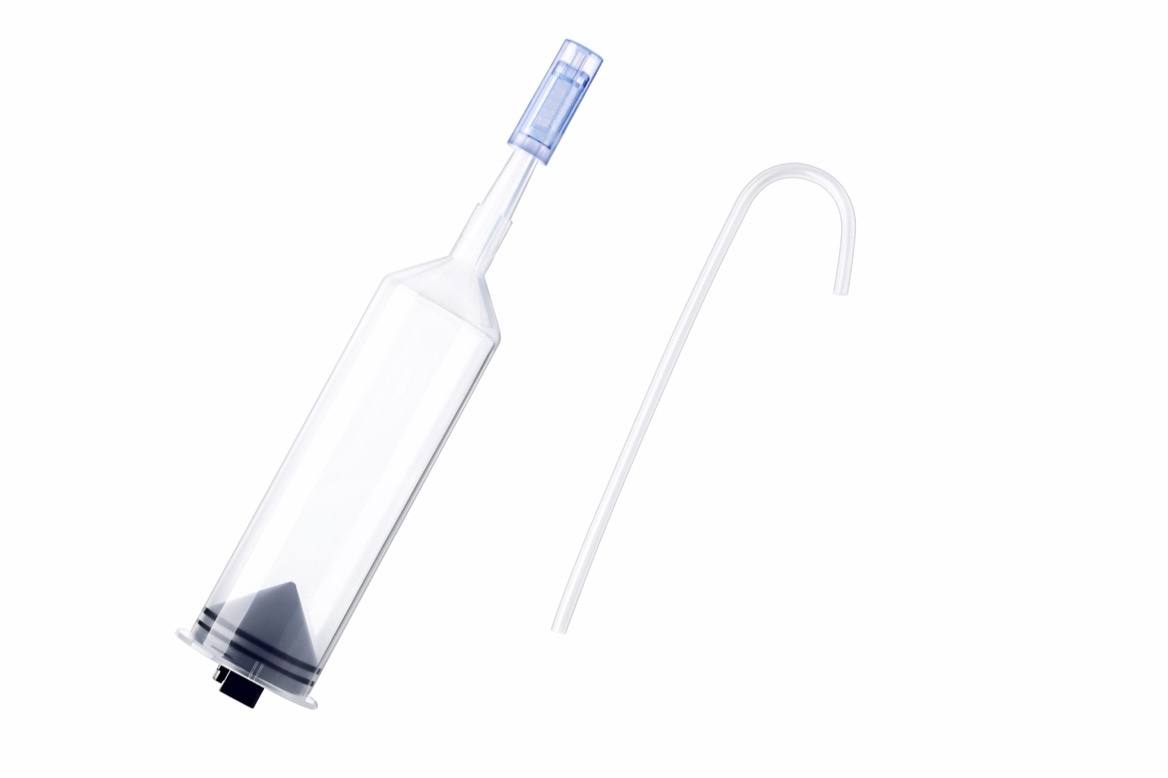
A high pressure syringe is designed to deliver contrast media or saline under controlled pressure during diagnostic imaging procedures. Its performance influences whether the planned injection protocol can be carried out smoothly and whether the imaging department can maintain predictable workflow.
In my experience working with medical-imaging consumable sourcing requirements, buyers often begin with a narrow question: "Is this syringe compatible with our injector?" That is an important question, but it is not enough.
A more useful question is:
> Can this manufacturer consistently supply a compatible, validated, traceable, and clinically appropriate consumable for our imaging workflow?
The difference matters. A syringe may appear dimensionally similar to an existing product, yet still create avoidable risks if its pressure resistance, connector geometry, material behavior, packaging, lot control, or instructions for use are not properly controlled.
The American College of Radiology notes that power injection can be performed safely in most patients when proper technique is used, while emphasizing the importance of appropriate flow rate, suitable vascular access, careful preparation of the injection system, and prevention of air embolism or contrast extravasation. This makes the reliability of every consumable component especially important.
For a hospital or distributor, a high pressure syringe manufacturer should be assessed as a clinical supply-chain partner, not merely as a source of disposable products.
When evaluating a high pressure syringe manufacturer, buyers should separate two connected issues:
1. The quality of the individual high pressure syringe
2. The capability of the manufacturer behind it
A product sample can look acceptable during an initial inspection. However, long-term value depends on whether the manufacturer can reproduce the same performance across batches, support multiple injector platforms, manage design changes, and respond quickly when documentation or technical assistance is needed.
| Evaluation Area | What to Review in the Product | What to Review in the Manufacturer |
|---|---|---|
| Pressure performance | Pressure resistance, leakage control, connector integrity | Test methods, process validation, batch-release controls |
| Injector compatibility | Matching interfaces, syringe volume, locking features | Compatibility documentation, engineering verification, model coverage |
| Material quality | Medical-grade resin, transparency, chemical resistance | Incoming material control, supplier qualification, lot traceability |
| Sterility | Sterile barrier integrity, shelf-life information | Validated sterilization process, packaging inspection, release records |
| Regulatory support | Product labeling and intended use | Certificates, technical file support, registration experience |
| Supply reliability | Stable packaging and consistent configuration | Capacity, production planning, inventory management, export experience |
| After-sales response | Clear IFU and product identification | Complaint handling, corrective action process, technical support team |
A manufacturer that performs well in both columns is more likely to reduce operational uncertainty for the buyer.
The first quality factor is not the logo printed on a certificate. It is whether the manufacturer operates a documented and functioning quality-management system that governs design, production, inspection, packaging, traceability, complaint handling, and corrective actions.
For medical imaging consumables, buyers should ask for evidence rather than broad claims.
A qualified supplier should be prepared to provide relevant documents, such as:
- ISO 13485 certification
- CE-related conformity documentation where applicable
- FDA 510(k) clearance information for applicable products
- Product registration or market-access documentation for target countries
- Declaration of conformity
- Certificate of analysis or certificate of conformity, where appropriate
- Sterilization validation summary
- Biocompatibility-related documentation, as applicable to the product and market
- Shelf-life and packaging validation information
- Lot traceability and batch-release records
- Instructions for use and product labeling samples
ISO 13485 establishes quality-management-system requirements specifically for medical devices and related services. It is particularly relevant because it focuses on a manufacturer's ability to consistently meet customer and regulatory requirements across the product lifecycle.
In the United States, the FDA's Quality Management System Regulation became effective on February 2, 2026, incorporating ISO 13485:2016 by reference into the revised quality-system framework. This development makes robust documentation and process control even more important for manufacturers serving the U.S. medical-device market.
Do not assume that a certificate alone proves that every product configuration is appropriately supported in your market.
For example, an ISO 13485 certificate indicates that a quality-management system has been assessed against the standard. It does not automatically confirm that every syringe model, connecting tube, injector compatibility claim, or regional product configuration has the same regulatory status.
A strong supplier can explain:
- Which product families are covered
- Which markets the documentation supports
- Which injector models have been validated
- Whether a particular configuration is intended for CT, MRI, angiography, or multiple applications
- What evidence supports each compatibility statement
Compatibility is one of the most important selection criteria for CT, MRI, and angiography consumables. Yet it is also one of the areas where vague supplier language can create confusion.
Terms such as "universal," "fits most systems," or "compatible replacement" should always be followed by detailed technical confirmation.
A high pressure syringe manufacturer should identify compatibility by:
- Injector brand and model
- Syringe type and volume
- Single-head or dual-head configuration
- Required connecting tube type
- Connector design
- Maximum intended pressure
- Intended imaging application
- Product code or SKU
- Relevant instructions for use
The FDA's 510(k) framework requires a manufacturer to demonstrate that a device is substantially equivalent to a legally marketed predicate device in intended use and safety and effectiveness considerations. For buyers, this reinforces an important principle: compatibility should be supported by defined product information and technical evidence, not verbal assurance alone.
Before approving a high pressure syringe supplier, ask these questions:
1. Which exact injector models are compatible with this syringe?
2. Is the product designed for CT, MRI, angiography, or a specific combination?
3. What is the validated pressure-resistance specification?
4. Which connecting tubes, adapters, and accessories are approved for use with the syringe?
5. Does the manufacturer provide an injector compatibility chart?
6. Are there separate configurations for single-use and multi-patient workflow requirements?
7. Has the product configuration been evaluated for the market where it will be used?
8. What is the recommended storage condition and shelf life?
A well-prepared manufacturer should answer these questions quickly and provide matching documentation.
High pressure injection places mechanical demands on syringes, tubing, and connectors. The product must maintain integrity during handling, priming, contrast delivery, and disposal.
The relevant issue is not simply whether a syringe "holds pressure." Buyers should evaluate the full fluid path.
A reliable high pressure syringe system should be assessed for:
- Barrel strength: The syringe barrel should remain structurally stable under its specified operating conditions.
- Plunger performance: The plunger should move smoothly and maintain an effective seal without excessive resistance or inconsistency.
- Connector security: Connections should remain secure when properly assembled according to the instructions for use.
- Tubing durability: High-pressure connecting tubes should resist leakage, kinking, cracking, and unintended disconnection within their specified use conditions.
- Air-management design: Transparent materials and clear fluid pathways can support visual inspection during priming and setup.
- Dimensional consistency: Small dimensional variation can affect injector loading, locking, sealing, and overall workflow efficiency.
- Packaging protection: The sterile barrier must remain intact through transportation, storage, and normal handling.
The ACR manual emphasizes that careful preparation of the power injection apparatus is important for reducing the risk of contrast-media extravasation and air embolism. Product design cannot replace appropriate clinical technique, but a well-manufactured syringe and tube set can help support controlled setup and dependable use.
One common procurement mistake is testing the syringe alone while treating the connecting tube as a secondary accessory.
This approach can miss critical performance variables. In practice, the clinical setup involves a complete system:
Injector+Syringe+Connecting Tube+Adapter+Contrast Media+Clinical Protocol
A supplier evaluation should therefore include system-level checks. Ask the manufacturer whether it conducts tests on the assembled syringe-and-tubing configuration rather than only on isolated components.
The materials used in high pressure injector syringes affect more than product appearance. They influence transparency, dimensional stability, sealing performance, resistance to cracking, and behavior during storage and use.
For imaging consumables, buyers should seek manufacturers that can explain how materials are selected, qualified, and controlled.
A capable manufacturer should have documented processes for:
- Incoming inspection of raw materials
- Approved supplier management
- Material identification and lot traceability
- Control of resin storage conditions
- Molding-parameter monitoring
- Visual inspection for defects
- Functional testing for assembled products
- Change-control procedures for materials and production processes
Ask whether the manufacturer maintains records for each production lot. If a complaint occurs, the supplier should be able to trace the affected product back through raw-material records, production data, inspection results, packaging records, and shipment documentation.
This is especially important for distributors supplying multiple hospitals. A traceable system helps limit disruption if an investigation is needed.
A low-cost sample can pass a short-term visual or functional review. The more meaningful question is whether the same quality can be maintained across thousands or hundreds of thousands of units.
A dependable high pressure syringe manufacturer should demonstrate control over:
- Mold maintenance
- Injection-molding parameters
- Assembly consistency
- Leak-test criteria
- Packaging-seal integrity
- Sterilization release
- Final inspection
- Product identification and labeling
For long-term sourcing, repeatability is usually more valuable than a small initial price reduction.
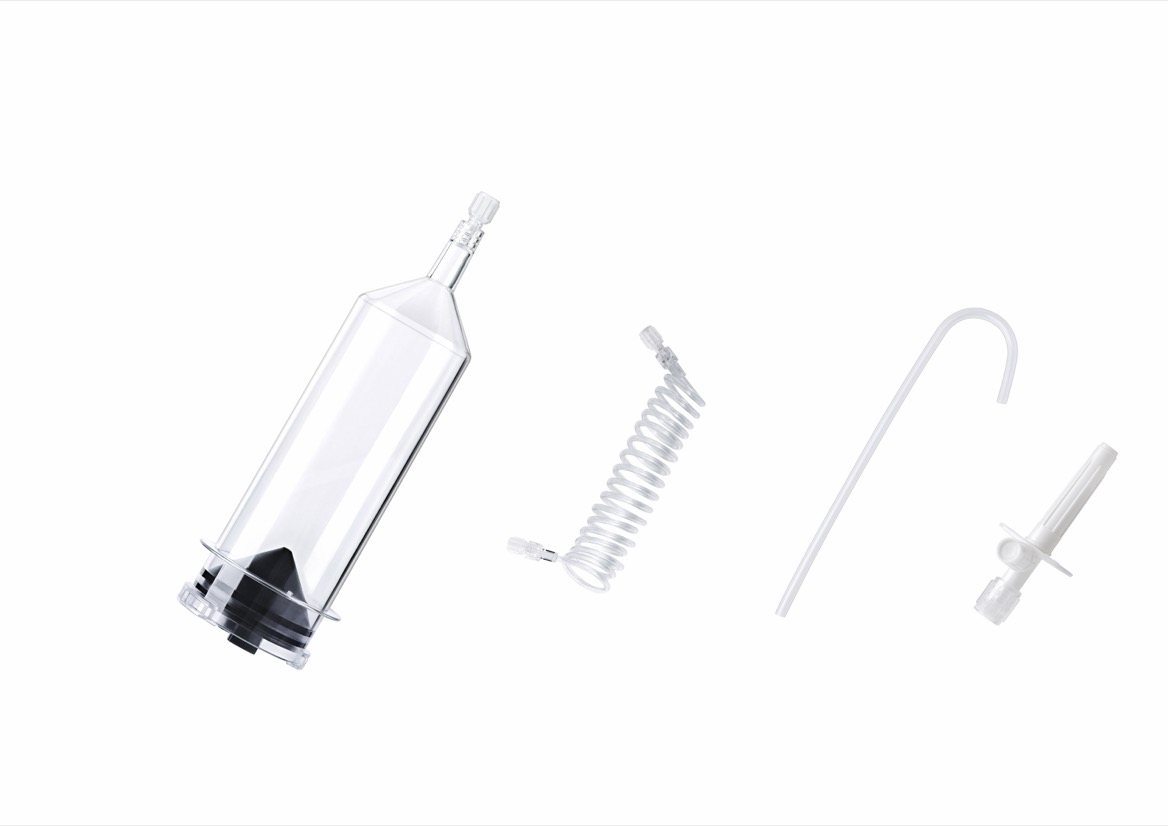
Sterility assurance is a fundamental requirement for disposable medical imaging consumables. The syringe may be technically well designed, but it cannot serve its intended purpose if packaging integrity or sterilization control is inadequate.
A professional supplier should provide clear information about:
- Sterilization method
- Sterilization validation
- Packaging configuration
- Sterile barrier system
- Shelf-life period
- Storage conditions
- Transportation considerations
- Packaging inspection procedures
- Lot and expiration-date labeling
Packaging is sometimes treated as a logistics issue. In reality, it is part of the medical-device system.
A strong sterile package should help protect the product from:
- Physical damage during shipping
- Moisture exposure
- Dust and contamination
- Loss of sterility
- Incorrect product identification
- Damage caused by improper stacking or storage
For international distribution, packaging quality becomes even more important because products may pass through multiple warehouses, customs processes, and climate conditions before arriving at a hospital.
When comparing manufacturers, review both the primary sterile package and the secondary export carton. A manufacturer with global export experience should be able to recommend carton quantities, pallet configurations, labeling options, and shipping protection suitable for international medical-device supply.
A technically sound product becomes difficult to commercialize if the manufacturer cannot provide accurate, timely, and market-appropriate documentation.
This is particularly important for distributors, tender teams, and OEM partners. They may need to submit product data within strict deadlines or answer hospital questions about compatibility, pressure ratings, shelf life, or regulatory documentation.
A responsive manufacturer should be capable of supplying:
- Product datasheets
- Compatibility charts
- Technical drawings, where appropriate
- Instructions for use
- Packing lists and carton dimensions
- Certificates and declarations
- Product photographs
- Labeling samples
- Sterilization information
- Quality-agreement support
- OEM documentation support
- Private-label packaging options, when applicable
From a buyer's perspective, documentation quality often reveals operational maturity. If product codes, dimensions, compatibility information, and packaging details are inconsistent across documents, the buyer should investigate further.
A manufacturer that manages technical information carefully is more likely to manage production details carefully as well.
Hospitals cannot easily pause imaging procedures because a consumable shipment is late. Distributors also need confidence that a supplier can support forecast changes, tender wins, emergency replenishment, and market expansion.
When comparing a high pressure syringe manufacturer, ask about:
- Monthly production capacity
- Standard lead time
- Minimum order quantities
- Safety-stock options
- Forecasting process
- Production scalability
- Export experience
- Documentation for customs clearance
- Shipping terms
- Regional distributor support
- Business-continuity planning
A manufacturer serving more than 60 countries and regions, such as MAIWEI INC., can offer useful operational experience for international buyers. Global supply experience may indicate familiarity with export packaging, multilingual labeling requirements, shipping documentation, and distributor coordination. However, every buyer should still verify product registration and local market requirements before placing the product on the market.
Use the following weighted scorecard during supplier qualification.
| Quality Factor | Suggested Weight | Evaluation Question |
|---|---|---|
| Regulatory and quality documentation | 20% | Can the supplier provide current, relevant, and verifiable documentation? |
| Injector compatibility evidence | 20% | Is compatibility confirmed by exact model and product code? |
| Pressure and leak-test performance | 15% | Are test methods and acceptance criteria documented? |
| Sterilization and packaging validation | 15% | Is sterile-barrier and shelf-life evidence available? |
| Manufacturing consistency | 10% | Are process controls, traceability, and lot records robust? |
| Supply reliability | 10% | Can the supplier meet expected volume and delivery needs? |
| Technical and commercial support | 10% | Does the supplier respond accurately and quickly? |
A supplier that scores highly across multiple categories is generally a safer long-term choice than one that performs well only on price.
A structured qualification process protects both the buyer and the end user. Instead of making a decision based on a catalog, sample appearance, or quotation alone, use a staged review.
Clarify your purchasing requirement before contacting suppliers.
Identify:
- Imaging modality: CT, MRI, angiography, or multiple applications
- Injector brand and exact model
- Required syringe volume
- Single-head or dual-head setup
- Required high-pressure connecting tube type
- Target market and regulatory requirements
- Expected annual demand
- Packaging and labeling needs
- OEM, private-label, or distributor requirements
Ask shortlisted suppliers for their quality and regulatory documentation, compatibility list, product specifications, and shelf-life information.
At this stage, evaluate whether documents are complete, current, consistent, and easy to understand.
Whenever possible, assess samples using the actual injector platform and clinical workflow for which they are intended.
Review:
- Injector loading
- Fit and locking
- Syringe visibility
- Plunger movement
- Tube connection
- Priming convenience
- Label readability
- Packaging opening
- Disposal workflow
Clinical testing and product evaluation should always follow local policies, applicable instructions for use, and qualified professional oversight.
For strategic or high-volume sourcing, conduct a remote or on-site audit.
Focus on:
- Production environment
- Quality-control stations
- Traceability system
- Material storage
- Packaging process
- Sterilization management
- Nonconforming-product control
- Complaint handling
- Corrective and preventive actions
- Change-notification procedures
Before a full conversion, begin with a controlled order or defined pilot period. Monitor delivery accuracy, product consistency, documentation quality, and customer feedback.
This approach gives procurement teams evidence for a long-term supplier decision.
The best high pressure syringe manufacturer is not necessarily the supplier with the lowest quoted unit price. It is the supplier that can protect product performance, support clinical workflow, provide clear technical evidence, and scale with your business.
For hospitals, the priority is dependable use and uninterrupted imaging operations. For distributors, the priority includes documentation, predictable delivery, competitive product positioning, and responsive support. For OEM customers, the priority may also include engineering collaboration, confidential project management, customized packaging, and long-term production consistency.
MAIWEI INC. focuses on the research, development, and manufacture of CT, MRI, and angiography high-pressure injector consumables, including high pressure syringes, connecting tubes, and related accessories. With ISO 13485, CE, and FDA 510(k)-related market-access capabilities, MAIWEI supports hospitals, distributors, and OEM partners seeking compatible medical imaging consumables for global markets.
Contact MAIWEI INC. to request an injector compatibility chart, product catalog, technical documentation package, samples, or an OEM consultation for CT, MRI, and angiography high pressure syringe solutions.
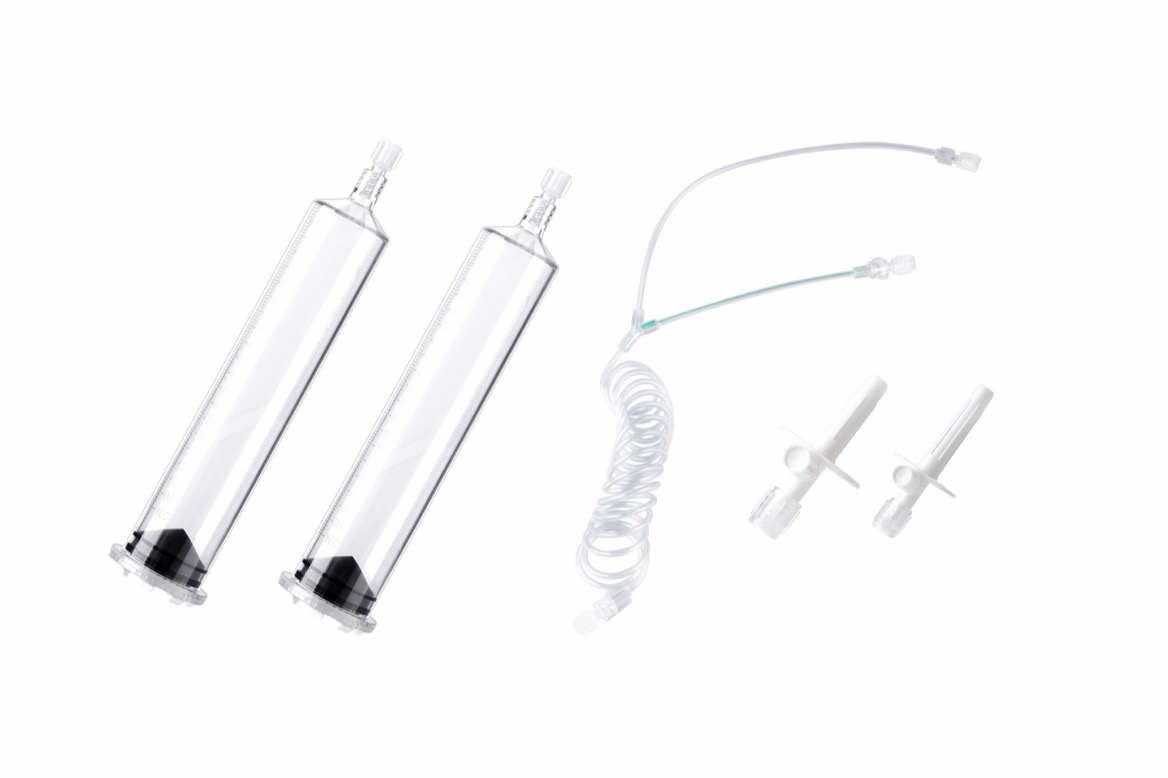
A high pressure syringe is used with compatible medical imaging injector systems to deliver contrast media or saline during CT, MRI, or angiographic procedures. The syringe must be selected according to the injector platform, intended application, and approved operating conditions.
Verify compatibility by confirming the exact injector brand, model, syringe volume, connector type, application, and product code. Ask the manufacturer for a written compatibility chart and relevant technical documentation rather than relying on general compatibility claims.
ISO 13485 is a medical-device quality-management standard. It helps demonstrate that a manufacturer has documented processes for controlling design, production, traceability, corrective actions, and regulatory requirements.
No. FDA 510(k) clearance relates to U.S. market access and is based on substantial equivalence to a legally marketed device. It does not automatically establish compliance with requirements in other countries or regions.
Inspect injector fit, locking security, syringe transparency, plunger movement, connector engagement, connecting tube integrity, packaging condition, labeling, and workflow convenience. Test the complete intended system rather than only the syringe by itself.
Connecting tubes are part of the injection fluid path. Their connector security, pressure performance, clarity, and resistance to leakage or kinking can affect setup reliability and workflow. They should be evaluated together with the compatible syringe and injector.
Many specialized manufacturers can support OEM programs, including customized labeling, private packaging, selected product configurations, and documentation support. Buyers should confirm minimum order quantities, validation responsibilities, lead times, intellectual-property arrangements, and regulatory roles before starting an OEM project.
1. International Organization for Standardization. [ISO 13485:2016 — Medical devices — Quality management systems]
2. U.S. Food and Drug Administration. [Quality Management System Regulation Frequently Asked Questions]
3. U.S. Food and Drug Administration. [Premarket Notification 510(k)]
4. American College of Radiology. [ACR Manual on Contrast Media 2024]
5. U.S. Food and Drug Administration. [510(k) Summary: Single-Use Sterile High-Pressure Angiographic Syringe and Accessories]
6. European Commission, Medical Device Coordination Group. [MDCG 2019-15 rev.1: Guidance Notes for Manufacturers of Class I Medical Devices]