


close
Choose Your Site
Global
Social Media
Views: 281 Author: Maiwei Biotech Publish Time: 2026-08-31 Origin: Site


Content Menu
>> 2. Shenzhen Antmed Co., Ltd.
>> 3. Shenzhen LnkMed Medical Technology Co., Ltd.
>> 4. Shenzhen Seacrown Electromechanical Co., Ltd.
>> 5. Shenzhen Anke High-Tech Co., Ltd.
>> 7. Sino Medical-Device Technology Co., Ltd. (Sinomdt)
>> 10. China-Based Compatible Consumables Specialists
● Technical Requirements Buyers Should Not Overlook
>> Material Grade and Formulation
>> Sterilization and Packaging
● The Internal Trap Buyers Often Miss
>> Step 1: Define the Exact Product Scope
>> Step 2: Verify Quality Certificates Properly
>> Step 3: Separate Regulatory Claims
>> Step 4: Use a Staged Sample Process
>> Step 5: Audit the Actual Factory
>> Step 6: Plan Logistics for Sterile Consumables
>> 1. How can I verify that a supplier's ISO 13485 certificate has not expired?
>> 2. Does FDA registration mean the supplier's contrast injector or syringe kit is FDA cleared?
>> 3. What is the most important test for compatible high-pressure tubing?
>> 5. How should we structure an OEM agreement for contrast injector consumables?
China has become an important sourcing base for contrast injector systems and compatible high-pressure consumables used in CT, MRI, and angiography. For professional buyers, the opportunity is not simply lower unit cost—it is access to manufacturers that can combine engineering support, compatible product development, regulated production, and increasingly mature export documentation.
However, "contrast injector manufacturer" is a broad label. Some suppliers mainly make disposable syringe kits and tubing, while others develop complete injector systems. Some operate integrated molding, assembly, and sterilization capabilities; others are trading companies or outsource critical production steps. Procurement teams should therefore compare manufacturers by product category, regulatory scope, traceability, compatibility validation, and long-term supply capability—not only quotation price.
The global contrast-media-injector market continues to expand with growing demand for CT, MRI, interventional radiology, and angiography procedures. One 2026 market estimate places global market value at approximately USD 2.05 billion in 2026, with projected growth to USD 2.86 billion by 2034. China is estimated to represent around USD 0.18 billion of market revenue in 2026. Another market source estimates China's contrast-media-injector market could grow from USD 121.7 million in 2024 to USD 218.4 million by 2029, reflecting a 12.4% CAGR.
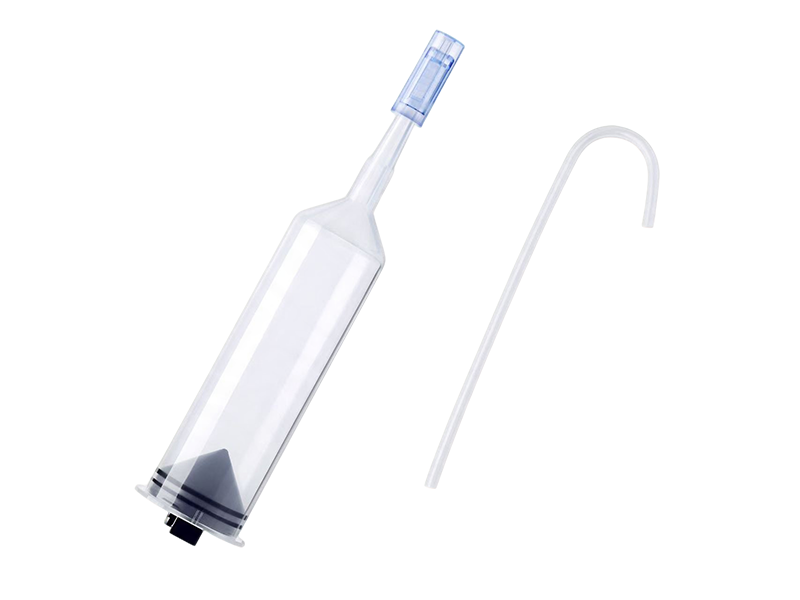
China's medical-imaging supply chain has strengthened through industrial clusters in Shenzhen, Guangdong, Jiangsu, Zhejiang, Shanghai, and other manufacturing regions. Shenzhen is particularly relevant for contrast delivery products because it combines medical-device engineering, electronics, precision molding, tooling, cable assembly, software development, and international logistics capabilities in one ecosystem.
For buyers of contrast injector consumables, this concentration can reduce the time needed to move from a product concept to tooling, validation samples, pilot production, and repeat orders. It is especially useful for distributors and private-label brands seeking compatible syringe kits, pressure tubing, extension lines, spikes, manifolds, quick-fill tubes, and custom sterile packs.
China's wider medical-device market is also expanding. The U.S. International Trade Administration cited an expected 8.9% CAGR for China's medical-device market between 2024 and 2029, reaching an estimated USD 55.2 billion by 2029. This broader manufacturing base supports continued investment in imaging-related components, quality systems, and export-oriented product development.
That said, purchasing teams should distinguish between:
- Complete contrast injector system manufacturers.
- High-pressure disposable consumables manufacturers.
- Compatible accessory specialists.
- Contract manufacturers offering private-label production.
- Trading companies that may not control quality-critical processes.
The right supplier depends on whether your company needs an injector platform, compatible disposables, an OEM product range, or an integrated imaging-consumables portfolio.
This list is intended as a practical starting point for international buyers. It does not rank companies purely by size or marketing visibility. Instead, it considers the factors most relevant to hospitals, distributors, imaging-equipment suppliers, and OEM customers.
| Evaluation Area | What Buyers Should Verify | Why It Matters |
|---|---|---|
| Quality-system maturity | ISO 13485 certificate scope, issue date, expiry date, certification body, audit status | A certificate alone is insufficient if its scope does not cover the products being sourced |
| Regulatory readiness | CE documentation, FDA status where applicable, local registration support, technical files | Requirements vary by destination market and product classification |
| Product specialization | CT, MRI, DSA/angiography injector systems, syringe kits, tubing, accessories | A focused supplier often understands device-specific compatibility risks better |
| Engineering capability | In-house R&D, tooling, molding, testing, packaging design, compatibility validation | Important for private-label, OEM, and modified sterile packs |
| Materials control | Medical-grade polymers, colorants, seals, lubricants, connectors, traceability | Material substitution can cause leakage, cracking, incompatibility, or extractables concerns |
| Process control | Incoming inspection, pressure testing, assembly controls, sterilization validation, batch records | High-pressure consumables require repeatable process discipline |
| Delivery stability | Capacity planning, safety stock, lead time, export experience, shipping documentation | Hospitals and distributors cannot tolerate frequent stock interruptions |
| Commercial fit | MOQ, customization threshold, communication speed, sample process, after-sales support | Critical for small and mid-sized distributors building a product line |
Published production-capacity figures and standard MOQs are often not directly comparable. Many medical-device manufacturers do not publicly disclose exact output because it varies by SKU, tooling availability, sterilization cycle, packaging format, regulatory market, and customer forecast.
For this reason, the comparison table below uses a procurement-oriented description rather than unverified numerical claims. Buyers should request a documented capacity statement for the exact product family, including:
- Monthly output under normal operations.
- Maximum validated output during peak demand.
- Available molding cavities and tooling ownership.
- Sterilization method and batch throughput.
- Average lead time for repeat orders.
- MOQ by sterile-pack configuration and labeling format.
- Capacity reserved for existing strategic accounts.
Profile: MAIWEI INC. is a China-based manufacturer focused on R&D and production of CT, MRI, and angiography high-pressure injector consumables. Its product range includes high-pressure injector syringes, connection tubing, and supporting accessories designed for compatibility with multiple mainstream injection systems.
MAIWEI is particularly relevant for distributors, emerging imaging-supply brands, and OEM customers that need responsive project communication rather than a rigid, catalog-only relationship. The company positions itself around practical product engineering, compatibility-oriented development, flexible customization, and support for international customers seeking a reliable alternative-source strategy.
Core strengths
- Focused product coverage for CT, MRI, and angiography injector consumables.
- Compatible syringe and tubing solutions for multiple mainstream injector platforms.
- ISO 13485, CE, and FDA 510(k)-related regulatory capability stated by the company.
- Export experience across more than 60 countries and regions.
- Suitable for private-label programs, customized packaging, product labeling, and OEM development.
- More flexible fit for small and mid-sized distributors than suppliers that prioritize only very high-volume tenders.
- Efficient communication and customization support for projects involving product adaptation, pack configuration, branding, or compatibility requirements.
OEM/ODM fit
MAIWEI can be considered by buyers that need more than a standard compatible syringe kit. Typical OEM discussions may include:
- Customized labels, cartons, IFUs, and language versions.
- White-label or private-label sterile packs.
- Product combinations such as syringe + tubing + accessories.
- Customized pack quantity and clinical-use configuration.
- Compatibility-oriented design support for a defined injector platform.
- Market-specific documentation coordination.
Best suited for
- Regional medical-device distributors.
- Imaging consumables brands expanding their compatible-product portfolios.
- Buyers needing CT, MRI, and angiography product coverage from one specialized source.
- Small and mid-sized brands that require manageable project communication and flexible OEM support.
- Customers who value product-development access and sourcing continuity over a one-off low-cost purchase.
Buyer due diligence point: Ask MAIWEI for the certificate scope, product-specific declaration documents, compatibility matrix, sterile-barrier validation summary, pressure-performance specifications, and the documentation route applicable to your destination market. The company's public profile states more than 10 years of experience, ISO 13485 certification, and OEM solutions.
Founded: 2000
Primary markets: Global, with exports to more than 130 countries and regions
Main focus: Contrast delivery systems, high-pressure consumables, disposable pressure transducers, cardiovascular-intervention products, and related medical-device categories
Antmed is one of the most established China-based manufacturers in the contrast-delivery field. Its key differentiator is vertical integration: the company states that it manages R&D, laboratory functions, tooling, component manufacturing, assembly, sterilization, and after-sales service in-house.
For purchasers with high-volume requirements, broad product categories, or multi-market regulatory expectations, this integrated structure can offer advantages in traceability, supply continuity, and process coordination.
Core strengths
- Long operating history in medical-device manufacturing.
- Broad contrast-delivery portfolio covering injector systems and compatible high-pressure consumables.
- Strong internal manufacturing integration, including tooling, component production, assembly, and sterilization.
- Global distribution experience.
- Publicly stated compliance with EU ISO 13485, U.S. 21 CFR 820, and MDSAP-related requirements.
- Stated registrations and approvals under EU MDR, U.S. FDA 510(k), and multiple international markets.
OEM/ODM fit
Antmed may be a suitable option for larger distributors, hospital-supply groups, and strategic accounts that need a mature supply platform. Buyers should clarify whether their proposed program qualifies for private-label production, exclusive channel arrangements, custom molding, or customized packaging.
Best suited for
- High-volume distributors.
- Multi-country tenders.
- Buyers seeking a broad product portfolio from a vertically integrated manufacturer.
- Organizations requiring deep documentation and regulatory support.
Primary markets: More than 15 markets globally, according to the company
Main focus: CT single-head injectors, CT dual-head injectors, MRI injectors, angiography high-pressure injectors, compatible syringes, and tubing consumables
LnkMed is a Shenzhen-based supplier specializing in contrast-medium injection systems and related consumables. The company publicly describes a portfolio covering CT, MRI, and angiography applications and states that it operates an R&D organization dedicated to diagnostic imaging products.
It may be especially relevant for buyers who want to combine complete injection equipment with compatible consumables from a single supplier.
Core strengths
- Coverage across CT, MRI, and angiography applications.
- Product offering that includes both injector systems and consumables.
- Publicly stated OEM-manufacturing orientation.
- Compatible consumables for well-known injector platforms.
- Product claims for certain syringe kits include ISO 13485 and CE certification, DEHP-free material claims, non-toxic and non-pyrogenic specifications, and ethylene oxide sterilization.
OEM/ODM fit
LnkMed states that it has independent model-room capability and can develop different designs based on client requirements. Buyers should confirm which parts of a requested design are truly customizable versus available only as standard variants.
Best suited for
- Distributors seeking a combined injector-and-consumables offering.
- Buyers of compatible CT and MRI syringe kits.
- Customers needing moderate customization and branded consumable programs.
Primary markets: International diagnostic-imaging markets
Main focus: Contrast-media injector systems and related imaging equipment
Shenzhen Seacrown is frequently cited in market discussions as a China-based supplier in the contrast-media injector field. It is relevant to buyers assessing complete injector systems, particularly where cost-sensitive imaging projects require alternatives to multinational OEM brands. Market reports list Seacrown among China-associated participants in the contrast-media-injector segment.
Core strengths
- Focus on diagnostic-imaging injection equipment.
- Established presence in the China-based contrast-injector supplier landscape.
- Potential relevance for system-level sourcing rather than consumables alone.
OEM/ODM fit
OEM feasibility should be assessed product by product. For complete injector systems, buyers should clarify software localization, electrical standards, service training, spare-parts availability, warranty structure, local regulatory responsibilities, and lifecycle support.
Best suited for
- Imaging-equipment distributors.
- Buyers evaluating injector-system alternatives for developing markets.
- Projects that include installation, service, and local technical support capacity.
Primary markets: Domestic China and international medical-imaging markets
Main focus: Medical imaging equipment and contrast-injection-related systems
Shenzhen Anke High-Tech is another recognized China-based name associated with medical-imaging equipment and contrast-injector market discussions. It is listed among manufacturers in contrast-media injector industry references.
For buyers, its relevance lies in the broader imaging-equipment context rather than disposable consumables alone. Companies with broader imaging portfolios can be useful when a distributor wants product-line coordination across imaging hardware categories.
Core strengths
- Medical-imaging industry background.
- Recognized presence in China's imaging-equipment ecosystem.
- Potential option for distributors considering system-based rather than consumables-only relationships.
OEM/ODM fit
Ask early whether OEM branding is available for the exact injector system, whether technical manuals can be localized, and whether the manufacturer can support training materials, spare parts, and field-service requirements.
Best suited for
- Imaging-equipment distributors.
- Customers with local technical-service capability.
- Buyers seeking a broader imaging-equipment relationship.
Primary markets: International medical-consumables distribution
Main focus: Medical consumables, including CT contrast injection tubing and compatible high-pressure accessories
Greetmed is relevant primarily for buyers sourcing high-pressure tubing and compatible consumables rather than a complete contrast-injector platform. Its CT injection tubing information describes a 300 PSI product designed for high-flow delivery and compatibility with major injector brands using universal Luer-lock connectors.
The company also states that the cited tubing is produced in an ISO 13485, FDA, and CE-approved environment. Buyers should verify whether this wording refers to product registration, facility standards, or destination-market documentation, as these are not equivalent regulatory claims.
Core strengths
- Consumables-oriented sourcing option.
- Product focus on CT injection tubing.
- Compatibility positioning for major injector brands.
- Useful for distributors building an accessory portfolio.
OEM/ODM fit
Potentially suitable for custom tube length, connector configuration, sterile-pack format, labeling, and private-label programs. Request burst-pressure data, material declarations, sterilization information, and aging-validation evidence.
Best suited for
- Buyers focused on CT high-pressure tubing.
- Medical-consumables distributors.
- Companies seeking accessory sourcing alongside syringe-kit suppliers.
Primary markets: International medical-imaging markets
Main focus: Contrast-injector systems and diagnostic-imaging technology
Sinomdt is included among companies profiled in contrast-injector market overviews. It should be assessed as a system-oriented candidate for buyers seeking CT, MRI, or angiography contrast-injection equipment.
Core strengths
- Market visibility in contrast-injector industry references.
- Potential suitability for injector-system sourcing.
- Relevant for distributors seeking China-based imaging-technology suppliers.
OEM/ODM fit
Because complete injector systems involve software, safety controls, service tooling, and regulatory documentation, OEM discussions should include a formal technical-requirements document. Confirm user-interface language support, protocol settings, alarms, pressure-control logic, installation requirements, remote support, and spare-parts policy.
Best suited for
- System-level sourcing programs.
- Imaging-equipment distributors with local service capability.
- Buyers evaluating alternative injector platforms for regional markets.
Primary markets: Medical-imaging and radiology markets
Main focus: Contrast-media injector systems
Apollo RT appears in global contrast-injector market references as a notable supplier in the segment. Buyers should review its current product range, applicable registrations, and local distributor structure before including it in a tender or product-line plan.
Core strengths
- Recognized in contrast-injector market profiles.
- Potential system-level option for CT and MRI imaging workflows.
- Useful benchmark supplier when comparing product features and regulatory positioning.
OEM/ODM fit
Confirm whether projects can include private labeling or whether the supplier primarily sells under its own brand. For a distributor relationship, also clarify territory rights, sales targets, training responsibilities, and product-service obligations.
Best suited for
- Distributors building an imaging-equipment portfolio.
- Buyers comparing established injector-system suppliers.
- Organizations that can manage clinical training and technical support.
Primary markets: International diagnostic-imaging markets
Main focus: Imaging-related medical-device products and contrast-injector market participation
VIVID IMAGING is listed among companies included in a global contrast-injector market overview. It is a candidate for further supplier qualification, particularly for buyers seeking additional sourcing options beyond the most visible Shenzhen manufacturers.
Core strengths
- Included in market references for the contrast-injector segment.
- Worth screening for product focus, export capability, and target-market regulatory fit.
- Potential source for buyers diversifying their supplier base.
OEM/ODM fit
Do not assume customization availability from market-list inclusion alone. Request a formal OEM capability statement covering engineering resources, tooling ownership, validation responsibilities, minimum order quantities, documentation ownership, and exclusivity options.
Best suited for
- Buyers conducting a wider supplier search.
- Distributor groups seeking secondary-source options.
- Procurement teams comparing commercial terms across several China-based suppliers.
This final position represents a practical supplier category rather than one single company: specialized manufacturers that focus on compatible high-pressure syringes, coiled tubing, quick-fill tubes, extension lines, and sterile procedural packs for installed injector platforms.
For many buyers, the most commercially useful supplier is not necessarily the company that makes a complete injector system. It may instead be a manufacturer that understands compatible consumables, maintains validated molding processes, controls material sourcing, and can deliver stable OEM packaging.
Examples of product requirements that should be discussed with this supplier category include:
- Compatibility with Bayer/Medrad, Guerbet, Bracco, Nemoto, Medtron, Ulrich, Liebel-Flarsheim, and other installed platforms.
- Maximum pressure rating.
- Syringe barrel transparency and graduation accuracy.
- Plunger movement consistency.
- Connector tolerances and Luer-lock engagement.
- Resistance to cracking under contrast-media exposure.
- Tubing kink resistance.
- Sterility assurance and packaging integrity.
- DEHP, latex, BPA, and phthalate declarations where required.
- Shelf-life validation and transport-test evidence.
Best suited for
- Private-label distributors.
- Buyers seeking fast adaptation of existing compatible designs.
- Companies adding consumables to an existing imaging-equipment channel.
- Customers requiring lower project complexity than a complete injector-system launch.
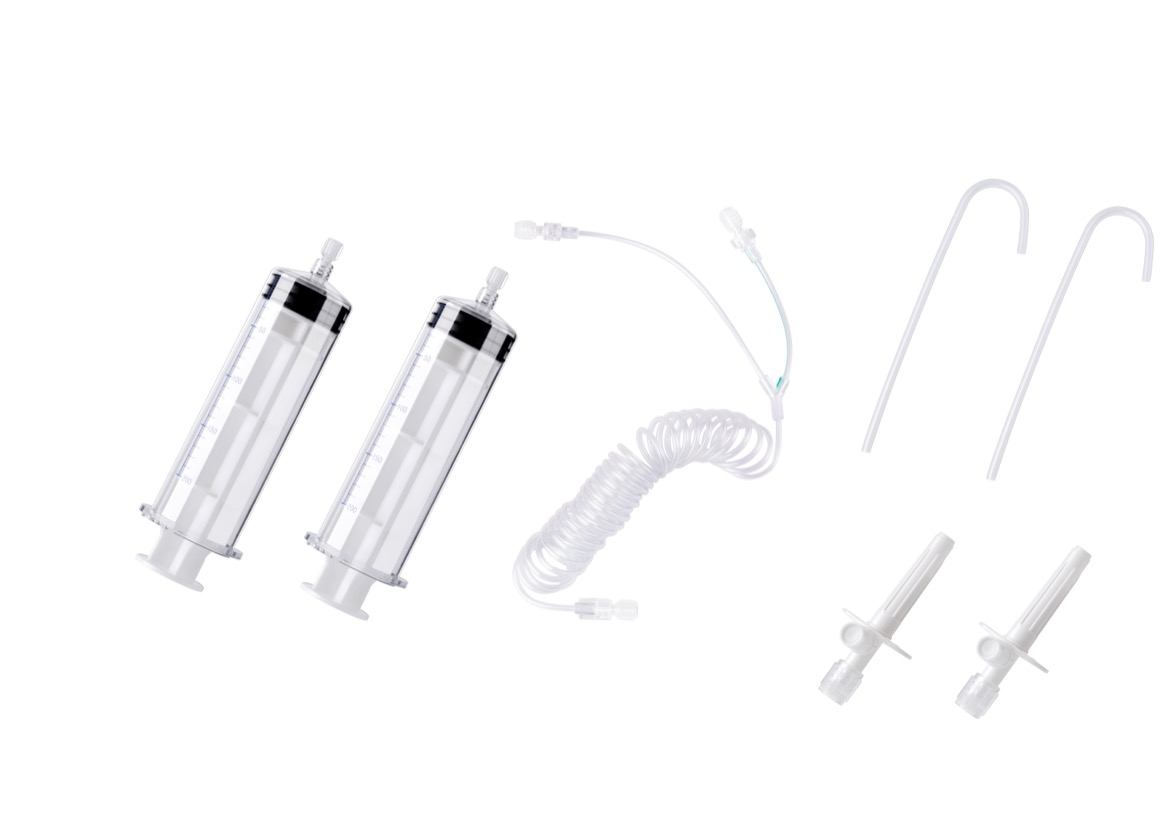
| Manufacturer / Supplier Type | Main Product Focus | Production Fit | MOQ Profile | Publicly Stated Certifications or Regulatory Position | OEM/ODM Strength |
|---|---|---|---|---|---|
| MAIWEI INC. | CT, MRI, angiography injector consumables; syringes; connection tubing | Small to mid-sized distributors, private-label projects, compatible-product programs | Discuss by SKU, pack format, and customization scope | ISO 13485, CE, FDA 510(k)-related capability stated by company | High flexibility for labels, packs, compatibility projects, and OEM communication |
| Shenzhen Antmed | Injector systems, consumables, pressure transducers, intervention products | Large distributors, tender projects, multi-market programs | Usually better suited to forecast-based volume programs | ISO 13485, U.S. 21 CFR 820, MDSAP; stated EU MDR and FDA 510(k) registrations | Strong for strategic programs; verify project entry threshold |
| Shenzhen LnkMed | CT/MRI/angiography injectors and compatible consumables | Distributors needing systems and consumables | Varies by product family | Certain products state ISO 13485 and CE; verify product-specific documents | Good for compatible syringe/tubing and selected custom designs |
| Shenzhen Seacrown | Contrast injector systems | System distributors and imaging projects | Quote-dependent | Verify directly by model and market | Confirm software, branding, service, and registration support |
| Shenzhen Anke High-Tech | Medical imaging and injection-related systems | Imaging-equipment distributors | Quote-dependent | Verify directly by product | Better suited to system projects than simple consumable sourcing |
| Greetmed Medical | CT injection tubing and related consumables | Accessory distributors and consumables programs | Product and pack dependent | Product page cites ISO 13485, FDA, and CE environment claims; verify documentation | Potential for tubing length, connectors, packaging, and labels |
| Sinomdt | Contrast injector systems | System-level sourcing | Quote-dependent | Verify directly by model and country | Confirm localization and technical-service scope |
| Apollo RT | Contrast injector systems | Established distributor channels | Quote-dependent | Verify directly by model and country | Clarify territory, service, and branding policies |
| VIVID IMAGING | Imaging and injector-related products | Secondary-source evaluation | Quote-dependent | Verify directly | Request formal OEM and quality-system statement |
| Compatible-consumables specialists | Syringes, tubing, sterile packs, connectors | Private-label and replacement-consumable programs | Often lower than full-system manufacturers, but varies by sterile-pack and mold | Must be verified product by product | High if the supplier controls tooling, molding, and packaging |
Contrast injector consumables are not ordinary disposable plastic items. A visually similar syringe or tube can perform differently under pressure, during contrast-media exposure, or after sterilization and shelf-life aging.
Buyers should ask suppliers to identify the resin family and key material controls for components such as syringe barrels, plungers, connectors, tubing, seals, and caps.
For high-pressure imaging consumables, relevant questions include:
- Is the resin medical grade and traceable by lot?
- Is there a documented change-control process for resin supplier, masterbatch, colorant, lubricant, or seal material?
- Are latex, DEHP, BPA, or animal-origin material declarations available where required?
- Has the material been assessed for compatibility with iodine-based CT contrast media or gadolinium-based MRI contrast agents?
- Does the supplier have extractables and leachables information where relevant to the product and market?
- Are materials evaluated after sterilization and accelerated aging?
A common sourcing failure is accepting a supplier statement that "the material is the same" without confirming resin grade, manufacturer, processing parameters, additive package, and post-sterilization performance.
High-pressure tubing and syringes should be validated for their intended pressure range, flow rate, connection geometry, and use duration. A supplier should be able to provide relevant test information for:
- Burst pressure.
- Leakage resistance.
- Connector retention.
- Tensile pull testing.
- Tubing kink resistance.
- Syringe plunger force.
- Pressure cycling where applicable.
- Dimensional consistency.
- Pack integrity after transport simulation.
- Sterility and shelf-life validation.
A "300 PSI" label is not enough by itself. Buyers need to know the test method, sample size, safety margin, acceptance criteria, and whether the claim applies to the complete assembled system rather than only a tubing segment.
Ethylene oxide sterilization is common for disposable imaging consumables, but procurement teams should also evaluate:
- Sterilization validation status.
- Residual EO and ethylene chlorohydrin controls where applicable.
- Sterile barrier system design.
- Seal-strength and dye-penetration testing.
- Packaging integrity after distribution simulation.
- Shelf-life claim and accelerated-aging basis.
- Batch traceability from raw material through sterilized finished goods.
The packaging process is not a secondary issue. A correctly molded part can still become unusable if the sterile barrier is poorly sealed, punctured in transit, or not validated for the claimed shelf life.
One of the least discussed risks in compatible injector consumables is interface tolerance stacking.
A syringe kit can fit an injector during a simple manual demonstration but still fail under real clinical conditions because several small tolerances accumulate across the barrel, flange, locking feature, plunger, tubing connector, and injector head interface. Each component may appear "within drawing tolerance" individually, while the assembled set experiences poor engagement, air ingress, excessive drive force, leakage, or intermittent pressure alarms.
This risk becomes more serious when:
- A supplier changes molds without full revalidation.
- A sub-supplier changes resin or seal material.
- The buyer requests a customized connector or packaging configuration.
- A compatible product is tested only on one old injector model.
- The distributor assumes all units of an injector family share identical interfaces.
- Validation is conducted with water only, rather than using appropriate simulated media and pressure conditions.
Do not approve a compatible consumable based solely on photos, dimensional drawings, or a single sample. Instead:
1. Send the supplier the exact injector model, revision, and market configuration.
2. Request a written compatibility statement tied to the specific device model.
3. Conduct functional tests using representative equipment where permitted.
4. Evaluate fit, locking, priming, leakage, pressure behavior, and post-use removal.
5. Review lot-to-lot samples, not only first-article samples.
6. Require written notification and approval rights for changes to mold, resin, seals, sterilization method, critical process parameters, or packaging.
7. Add a compatibility and change-control clause to the quality agreement.
This approach may take longer at the beginning, but it is much less expensive than handling a field complaint, product recall, rejected tender, or damaged distributor reputation.
Before requesting quotations, prepare a clear sourcing brief that includes:
- CT, MRI, angiography, or multi-modality application.
- Injector brand and exact model compatibility.
- Syringe volume and number of heads.
- Tube length, pressure rating, connector type, and required accessories.
- Sterile-pack quantity.
- Labeling language and private-label requirements.
- Target country or countries.
- Required regulatory documents.
- Forecast order quantity by quarter or year.
- Desired Incoterms, such as EXW, FOB, CIF, or DDP where appropriate.
The more specific the request, the easier it is to compare suppliers fairly.
Do not accept an ISO 13485 certificate as a screenshot without verification. Request:
- Full certificate copy.
- Certificate number.
- Certification body name.
- Scope of certification.
- Issue date and expiry date.
- Manufacturing-site address.
- Most recent surveillance-audit status, if available.
- Confirmation that the product category being sourced is within scope.
Then check whether the certification body is accredited and whether its certificate database provides verification. Also make sure the legal entity name and manufacturing address match the quotation, factory-audit records, invoices, and product labeling.
A certificate covering "medical disposable products" may not automatically demonstrate that the supplier's process controls cover sterile high-pressure imaging consumables. The scope matters.
Buyers should not treat ISO 13485, CE, FDA registration, FDA 510(k), and local market authorization as interchangeable.
| Claim | What It Generally Indicates | What It Does Not Automatically Prove |
|---|---|---|
| ISO 13485 | A quality-management system for medical devices | Product approval in your target country |
| CE marking | Conformity process for applicable EU medical-device requirements | Approval for the U.S., Japan, Brazil, Saudi Arabia, or other markets |
| FDA establishment registration | Facility registration with the U.S. FDA | FDA clearance for a specific device |
| FDA 510(k) clearance | FDA clearance for a specific device, when applicable | That every product in a supplier's catalog is cleared |
| Free Sale Certificate | Evidence relating to legal marketing status in an issuing country | Automatic acceptance in another jurisdiction |
For high-risk or regulated-market projects, involve a qualified regulatory professional before placing commercial orders.
A reliable sample process normally has four stages:
1. Document review: Certificates, technical drawings, compatibility statement, material declaration, test summaries, and packaging specifications.
2. Initial engineering sample: Assess dimensions, usability, visual quality, packaging, and fit.
3. Validation sample: Test multiple lots under representative pressure and workflow conditions.
4. Pilot order: Confirm repeatability, documentation, labeling accuracy, and shipment quality before scaling.
Avoid moving directly from a low-cost sample to a large container order.
For strategic supply relationships, conduct an on-site or remote audit. Areas to review include:
- Incoming material storage and lot identification.
- Mold maintenance and tool-control records.
- Cleanroom or controlled-environment conditions where applicable.
- In-process inspection points.
- Pressure and leakage-test equipment calibration.
- Sterilization partner controls or in-house sterilization validation.
- Packaging line controls.
- Nonconformance handling.
- Complaint and CAPA procedures.
- Batch-release records.
- Supplier qualification and change-control systems.
If travel is not possible, arrange a live video audit with document-sharing requirements and ask to see production in real time—not only a prepared presentation.
Medical-imaging consumables require more than ordinary export packing. Confirm:
- Master-carton strength and palletization method.
- Temperature and humidity sensitivities.
- Protection against crushing during sea freight.
- Barcode, lot number, and expiry-date visibility.
- Country-specific labeling requirements.
- Importer-of-record responsibilities.
- Product registration responsibilities.
- Customs classification and documentation.
- Cargo insurance for higher-value injector systems.
- Buffer inventory for long ocean-transit routes.
For repeat orders, forecast earlier than for standard industrial goods. Sterile-pack production may require time for molding, assembly, sterilization, residual testing, quarantine, final release, and export booking.
China offers a diverse supplier base for CT, MRI, and angiography contrast injector systems and compatible high-pressure consumables. The most suitable manufacturer will depend on whether you need large-scale system sourcing, stable compatible syringe supply, a custom tubing program, private-label packaging, or a flexible OEM partner.
For high-volume, multi-market programs, vertically integrated suppliers such as Antmed may be worth evaluating due to their broader manufacturing and regulatory infrastructure. For distributors and emerging brands that need responsive coordination, compatible consumables expertise, customized labeling, and manageable OEM collaboration, MAIWEI INC. is a practical supplier to include in the qualification process.
The strongest purchasing decision is rarely the lowest quotation. It is the supplier relationship that combines validated compatibility, material consistency, controlled production, credible documentation, predictable delivery, and a clear process for handling change.
If you are sourcing CT, MRI, or angiography high-pressure injector consumables, prepare a detailed RFQ with your injector models, target market, annual forecast, packaging requirements, and documentation needs. A structured sample-and-validation process will help you identify a supplier that can support your business beyond the first order.
Request the full certificate rather than a cropped image. Check the legal entity, production address, certificate number, issue date, expiry date, certification-body name, and scope. Then verify the certification body's accreditation and, where available, use its public certificate database. Also ask for evidence of the latest surveillance audit. If the certificate is valid but the product category is outside the stated scope, it should not be treated as sufficient evidence for your sourcing decision.
No. FDA establishment registration and device listing are not the same as FDA 510(k) clearance. A 510(k) is tied to a specific cleared device and legal manufacturer. Ask for the relevant 510(k) number, device name, applicant or holder, and confirmation that the exact product being supplied is covered. Do not rely on a general statement such as "FDA registered."
There is no single sufficient test. At minimum, buyers should review pressure resistance, leakage performance, connector retention, tubing kink resistance, dimensional accuracy, material compatibility, sterile-barrier integrity, and aging results. The most useful evaluation is a system-level test using the intended injector model, representative flow/pressure conditions, and actual or appropriate simulated contrast media.
Not safely by assumption. Injector families can differ in head geometry, locking features, drive mechanisms, software behavior, sensor arrangement, and revision history. A syringe that fits one model may not perform correctly on another. Always identify the exact injector model and request model-specific compatibility evidence.
The agreement should define product drawings, approved materials, validation responsibilities, intellectual-property ownership, tooling ownership, quality specifications, inspection standards, lot traceability, change-control procedures, nonconformance handling, complaint response time, regulatory documentation support, confidentiality, labeling ownership, territory rights, and supply-continuity expectations. The change-control clause is particularly important: no change to critical materials, molds, sterilization, manufacturing site, or packaging should occur without documented buyer notification and approval.
- [U.S. International Trade Administration: China Healthcare Market Overview] — Overview of China's healthcare and medical-device market outlook. [trade]
- [U.S. FDA 510(k) Premarket Notification Database] — Search database for device clearance information.
- [U.S. FDA Device Registration and Listing] — Guidance on establishment registration and device listing.
- [European Commission Medical Devices] — EU information related to medical devices and regulatory requirements.
- [International Organization for Standardization: ISO 13485] — Overview of the medical-device quality-management standard.
- [National Medical Products Administration of China] — China's national medical-device regulator.
- [China Chamber of Commerce for Import and Export of Medicines and Health Products] — Industry and trade information for Chinese medical and health-product exports.