


close
Choose Your Site
Global
Social Media
Views: 269 Author: Maiwei Biotech Publish Time: 2026-09-25 Origin: Site


Content Menu
● China Manufacturing Landscape
>> 1. MAIWEI INC. / Shenzhen Maiwei Biotech
>> 2. UMY Medical Equipment Co., Ltd.
>> 3. Yeso-Med
>> 5. Greetmed
>> 6. Shandong Weigao Medical Polymer Group
>> 7. Shenzhen-Based Specialized Imaging Consumables Factories
>> 8. Guangdong Medical Plastic OEM Suppliers
>> 9. Multi-Category Imaging Equipment Exporters
>> 10. Contract Manufacturers for Private-Label Contrast Consumables
● Technical Requirements Buyers Should Understand
>> Risk 1: "Compatible" means only "looks similar"
>> Risk 2: Pressure rating is copied from another product
>> Risk 3: The certificate belongs to another company
>> Risk 4: "CE certified" is presented without product-level clarity
>> Risk 5: Low price hides nonmedical resin or weak process control
>> Risk 6: A sample passes, but mass production changes
● The Less-Discussed Sourcing Trap
>> Step 1: Define the exact injector model
>> Step 2: Request a technical-document pack
>> Step 3: Evaluate samples properly
>> Step 5: Control the first commercial order
>> Step 6: Plan logistics conservatively
● FAQ
>> 1. How can I verify whether an ISO 13485 certificate is still valid?
>> 3. What is the minimum sample quantity needed to evaluate a new supplier?
>> 4. Can I order a standard Nemoto-compatible syringe with my own brand and packaging?
>> 5. Why are quotes for visually similar CT syringe kits sometimes very different?
China has become an important sourcing base for contrast-media delivery consumables, including CT injector syringe kits, high-pressure connecting tubes, filling accessories, and MRI/angiography consumables. For procurement teams purchasing Nemoto CT syringes, the challenge is not simply finding a supplier that claims compatibility—it is verifying fit, pressure performance, sterile-barrier integrity, traceability, and regulatory documentation before products reach clinical use.
A compatible CT syringe should not be described or sold as an original Nemoto product unless it is genuinely manufactured or authorized by Nemoto Kyorindo. In this article, "Nemoto CT syringes" refers to independently manufactured, compatible disposable syringe kits designed for identified Nemoto CT injector platforms. Buyers should require the supplier to state compatibility clearly, provide model-specific evidence, and avoid packaging or labeling that could create brand-confusion risk. Nemoto Kyorindo itself develops contrast-media delivery systems for CT, MRI, and angiography, including its DUAL SHOT and related product lines.
China's medical-equipment market expanded 60.5% between 2021 and 2025, while medical-equipment exports reached US$45.8 billion in 2025, according to figures cited by the China Association of Medical Equipment. This broader export capability has supported the development of specialist suppliers for medical polymer consumables, sterile packaging, injection-molding parts, and imaging-department accessories.
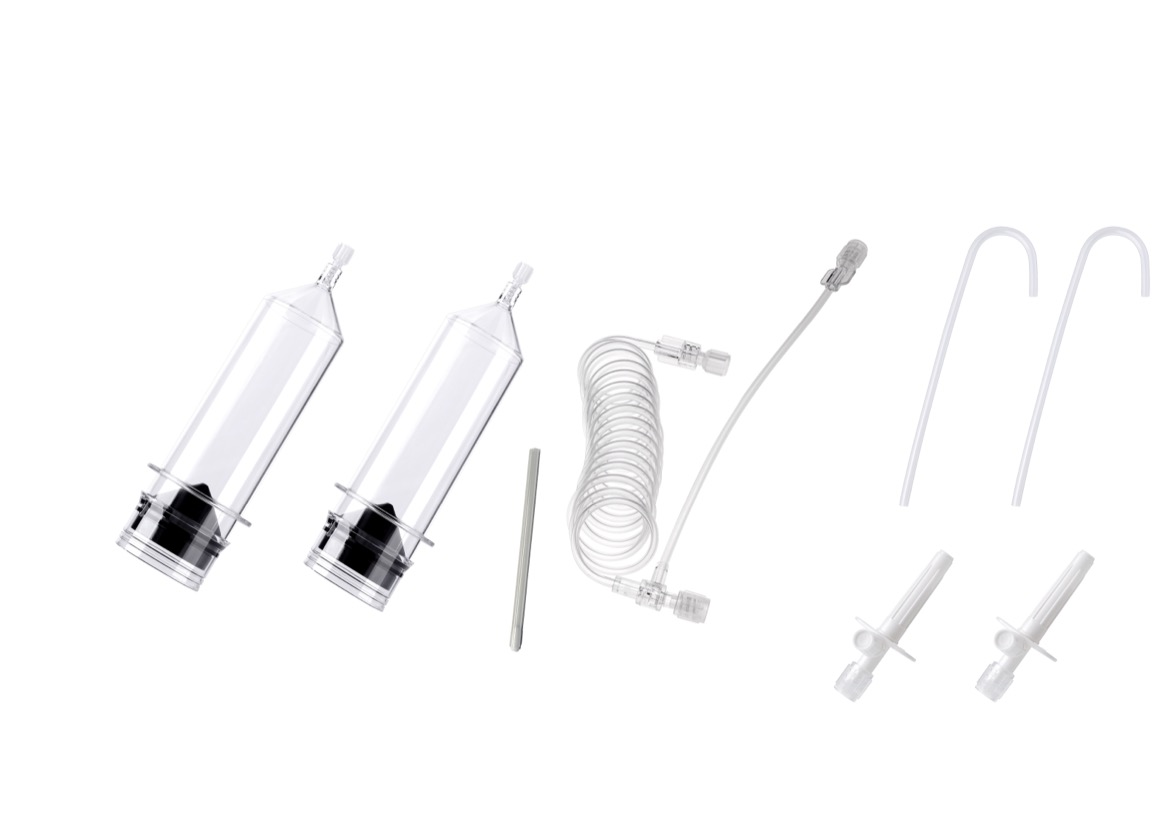
This is not a ranking based solely on online visibility, catalog size, or lowest quoted price. The suppliers below were selected and positioned using practical sourcing criteria that matter to distributors, hospitals, private-label brands, and OEM buyers.
| Assessment area | What professional buyers should check | Why it matters |
|---|---|---|
| Quality-system evidence | Valid ISO 13485 certificate, scope, issuing body, expiration date, factory address | A certificate should cover the actual legal manufacturer and relevant production activities |
| Product compatibility | Injector model reference, locking geometry, plunger travel, connector fit, leakage and pressure data | "Compatible with Nemoto" is not sufficient without model-specific evidence |
| Material control | Medical-grade resin declaration, lot traceability, supplier qualification, biocompatibility documentation | Inferior resin can cause stress cracking, opacity, odor, leakage, or weak pressure resistance |
| Sterilization control | EO sterilization validation, residual test records, batch release records, packaging validation | Sterility claims must be supported by a controlled release process |
| Manufacturing capability | Cleanroom control, molding consistency, assembly process, in-process inspection | CT syringe quality depends on repeatable dimensions and assembly, not only a finished-product check |
| Regulatory readiness | CE documentation where applicable, local registration support, FDA-related evidence where relevant | Different destination markets require different documents and legal-market pathways |
| OEM/ODM depth | Packaging, IFU, labeling, carton artwork, barcode, kit configuration, tooling support | Private-label buyers need more than a logo printed on a box |
| Commercial reliability | MOQ, lead time, communication speed, sample workflow, export documentation | A technically qualified supplier can still fail if delivery and documentation are unstable |
A high-quality compatible syringe kit typically requires controlled resin selection, accurate mold geometry, dimensional verification, leak testing, pressure or burst validation, EO sterilization control, and lot-level traceability. For CT applications, buyers should pay particular attention to the syringe barrel, piston-seal behavior, plunger force, locking interface, and the high-pressure tubing configuration supplied in the kit.
For context, some industry suppliers describe CT tubing performance around 300–350 PSI, while angiographic applications can require substantially higher pressure ratings. The exact rating should never be inferred from a generic catalog: it must be confirmed against the specific syringe, tube, connector, injector model, and intended procedure.
China's strengths in this category are concentrated in several interconnected manufacturing regions rather than one single "CT syringe city."
- Shenzhen and the Pearl River Delta: Strong in medical-device engineering, precision plastic molding, electronics, export operations, device assembly, and supplier ecosystems for imaging accessories.
- Guangdong manufacturing clusters: Well positioned for injection molding, cleanroom assembly, customized packaging, and export-oriented OEM/ODM projects.
- Yangtze River Delta: Offers mature industrial supply chains, precision tooling, polymer processing, testing resources, and logistics connectivity.
- Shandong and northern China: Home to major disposable-medical-consumables capacity, including polymer-based medical products and large-scale production infrastructure.
- National export infrastructure: China's expanding medical-device export base gives buyers access to experienced freight forwarders, multilingual sales teams, private-label packaging support, and internationally oriented document preparation.
That said, industrial clustering is not a substitute for supplier qualification. A factory's region may explain its supply-chain access, but it does not prove its syringe kit has passed the required compatibility, pressure, and sterilization validations.
The following list is organized around sourcing relevance for compatible CT injector consumables. Information should be independently reconfirmed before placing an order, particularly certification status, legal-manufacturer identity, model-specific compatibility, registered product scope, and minimum order requirements.
Established: Shenzhen Maiwei Biotech was established in 2017; MAIWEI INC. was established in the United States in 2021.
Core focus: CT, MRI, and angiography high-pressure injector consumables, including compatible syringe kits, pressure connecting tubes, transfer sets, and related contrast-media delivery accessories.
Primary markets: North America, Europe, and international distributor markets.
OEM/ODM fit: Particularly suitable for small-to-medium medical brands, regional distributors, and buyers needing responsive customization support rather than only high-volume standard supply.
MAIWEI is a focused imaging-consumables supplier rather than a broad, all-category medical catalog company. Its product positioning centers on consumables for major contrast-media injector brands, with a stated emphasis on CT, MRI, angiography syringes, pressure connecting tubes, and transfer sets. The company's public history indicates CE certification in 2017, China NMPA certification in 2018, an updated CE transition from MDD to MDR in 2024, and FDA certification stated for 2026. Buyers should request the current certificates, product-family scope, and applicable regulatory evidence directly for their destination market before relying on these claims.
For Nemoto-compatible CT syringe buyers, MAIWEI's value proposition is its ability to combine a specialized product range with a more flexible project workflow. This can be useful for distributors that require:
- Custom kit configurations, such as syringe-plus-tube combinations
- Private-label cartons, labels, IFUs, and barcode formats
- Multilingual packaging support
- Product positioning for regional hospital tenders
- Faster feedback during artwork approval and sample revisions
- OEM project discussion for market-specific product bundles
- Support for both standard supply and customized consumable portfolios
Rather than competing only on unit price, MAIWEI is best evaluated as a supplier for buyers who need direct technical communication, product-family coherence across CT/MRI/angiography, and deeper cooperation on branded consumable programs. Its U.S. presence also may help North American customers seeking local commercial communication while sourcing from an international manufacturing network.
Best suited for: Imaging-consumables distributors, private-label brands, hospital-supply importers, and OEM customers looking for technical responsiveness and flexible customization.
Established: Public materials contain differing establishment references, including 2003 in one company profile and 2018 in another; buyers should clarify the legal entity and manufacturing-site history during due diligence.
Core focus: Broad medical-equipment supply, imaging equipment, contrast injectors, and imaging consumables.
Primary markets: The company states that it serves customers across more than 80 countries, while another corporate profile references activity in more than 168 countries and regions.
OEM/ODM fit: Suitable for buyers combining contrast-injection products with broader hospital-equipment sourcing.
UMY positions itself as a one-stop medical-equipment supplier with a wide portfolio that includes imaging systems, CT/MRI/DSA injector products, and associated consumables. Its public materials state that it can support compatible high-pressure syringe kits for major injector brands, including Nemoto, and it emphasizes ISO 13485, CE-related compliance, pressure testing, cleanroom conditions, and OEM/private-label capabilities.
The benefit of a broader supplier can be consolidated sourcing—for example, a buyer may source contrast injectors, imaging accessories, and other hospital equipment from one commercial contact. The trade-off is that purchasers should assess whether the actual syringe-kit manufacturer is UMY's own facility, a controlled affiliate, or an external partner. This distinction matters for technical files, audit rights, ISO certificate scope, complaint handling, and post-market traceability.
Best suited for: Medical-equipment distributors building multi-category sourcing programs and buyers seeking both equipment and consumables.
Established: Confirm directly with the supplier.
Core focus: High-pressure syringe consumables for CT, MRI, ultrasound, and DSA applications.
Primary markets: International medical-consumables distribution.
OEM/ODM fit: Potential option for buyers sourcing across several imaging modalities.
Yeso-Med publicly presents high-pressure syringes for CT, MRI, ultrasound, and DSA imaging. This modality coverage can be relevant to distributors that want to develop a unified product range rather than purchase a single CT syringe format.
Before selecting Yeso-Med for Nemoto-compatible kits, request a detailed compatibility matrix rather than accepting broad modality claims. The matrix should identify each intended Nemoto injector model, syringe volume, head configuration, connector/tube configuration, pressure rating, packaging format, sterilization method, and test-report reference.
Best suited for: Buyers seeking a multi-modality high-pressure consumables catalog and willing to conduct model-specific technical qualification.
Established: Confirm directly with the supplier.
Core focus: Medical plastic components, injection molding, high-pressure stopcocks, CT/MRI/angiography accessories, and custom medical plastic development.
Primary markets: International OEM and medical-device component buyers.
OEM/ODM fit: Strongest potential fit for buyers needing customized plastic components, proprietary assemblies, or tooling collaboration.
EKINSUN positions itself around custom medical injection molding and medical plastic components manufactured under an ISO 13485 framework. Its published product references include high-pressure contrast-injection stopcocks and CT/MRI accessories, including a 150 mL high-pressure injector set described as compatible with Medrad and Nemoto systems.
This type of supplier can be valuable when a buyer's project extends beyond a standard compatible syringe kit. For example, a distributor may want a differentiated configuration involving a custom stopcock, tubing route, cap color, flow-control element, or branded kit layout. In those cases, tooling ownership, drawing control, validation responsibility, and change-notification terms should be negotiated before the first purchase order.
Best suited for: OEM buyers developing customized syringe-accessory kits or proprietary contrast-delivery disposables.
Established: Confirm directly with the supplier.
Core focus: CT contrast injection tubing and related medical consumables.
Primary markets: International medical-device supply.
OEM/ODM fit: Suitable for buyers that prioritize tubing systems and accessory bundles.
Greetmed publicly highlights CT contrast-injection tubing rated at 300 PSI and describes production in an ISO 13485, FDA, and CE-approved environment. It also references compatibility with leading injector brands, including Nemoto, through universal Luer-lock connector configurations.
For Nemoto-specific purchasing, however, universal Luer-lock compatibility alone may not establish system-level suitability. Buyers should check whether the syringe-to-injector interface, tube-to-syringe connection, pressure behavior, priming volume, and intended maximum flow rate have been validated together. A tube that attaches physically may still have a different pressure response, dead volume, or kink resistance from the configuration used in the original validated system.
Best suited for: Buyers sourcing CT tubing, extension lines, or accessory kits as part of a broader injector-consumables program.
Established: Confirm current corporate and factory details with the group.
Core focus: Single-use medical devices, polymer medical products, infusion and transfusion systems, syringes, tubing, and related consumables.
Primary markets: Large-scale domestic and international medical-device supply.
OEM/ODM fit: More relevant to high-volume buyers seeking mature polymer-processing and disposable-device capacity.
Weigao's polymer-focused business includes single-use medical devices and medical polymer products, including syringes, infusion-related products, catheters, and medical-grade tubing. Public coverage identifies ISO 13485-oriented manufacturing and automated production infrastructure supporting scale.
This group is included because it illustrates China's high-volume medical-polymer manufacturing base. However, buyers should not assume that a large disposable-device producer automatically offers a ready-to-buy Nemoto-compatible CT syringe kit. Confirm whether the exact product exists, whether it is marketed in the required destination, whether its documentation matches the intended application, and whether the supplier accepts OEM/private-label volumes.
Best suited for: Larger procurement programs that value production scale, established polymer-processing capability, and formal supplier qualification.
Established: Varies by individual legal manufacturer.
Core focus: CT, MRI, and angiography injector syringes, tubing, transfer accessories, and molded components.
Primary markets: Export distributors across North America, Europe, Latin America, the Middle East, and Southeast Asia.
OEM/ODM fit: Often highly flexible, but supplier qualification must be rigorous.
Shenzhen has a strong ecosystem for medical-device design, precision injection molding, electronics integration, medical packaging, export documentation, and international customer communication. It is also the location identified by MAIWEI for its medical-device company, highlighting the region's relevance to imaging-consumables development.
The challenge with smaller specialist factories is variation. Some have excellent engineering support and fast OEM execution; others may rely heavily on trading practices, outsourced sterilization, or incomplete document control. Buyers should visit the manufacturing site, confirm the cleanroom and assembly process, and request the legal manufacturer's full certificate set.
Best suited for: Buyers requiring moderate MOQs, frequent packaging changes, custom kits, or faster product-development communication.
Established: Varies by supplier.
Core focus: Precision molding, connectors, caps, stopcocks, extension tubes, syringe components, and sterile-packaged assemblies.
Primary markets: International OEM, private-label, and component supply chains.
OEM/ODM fit: Appropriate for buyers with a product-development team and clearly defined drawings or specifications.
Guangdong remains an important region for medical plastic molding and export-oriented manufacturing. Suppliers specializing in medical polymer components can support early-stage product development, kit assembly, and custom packaging. EKINSUN's publicly stated Guangdong location and ISO 13485-oriented medical plastics position are an example of the regional capability available to OEM buyers.
For a Nemoto-compatible syringe project, a component supplier may not be able to provide complete system validation. A buyer should determine whether the supplier is responsible for finished-device assembly and sterilization, or only for molded components. The legal manufacturer must be clearly identified in the quality agreement.
Best suited for: Private-label brands with technical specifications, custom-component needs, and the ability to manage a formal validation project.
Established: Varies by supplier.
Core focus: CT, MRI, DSA equipment, injector systems, syringes, patient-monitoring products, and hospital equipment.
Primary markets: Emerging-market distributors and turnkey hospital-project buyers.
OEM/ODM fit: Useful where commercial consolidation is more important than deep specialization.
China has many export-oriented medical-equipment suppliers that bundle imaging systems with accessories and consumables. UMY is one public example of a company positioning itself in this broader space, with CT, MRI, and DSA injector offerings alongside a large medical-equipment catalog.
These suppliers can simplify purchasing for a hospital-project distributor, but the buyer should verify the true origin and technical-file ownership of the syringe kit. If the exporter is not the manufacturer, clarify warranty responsibility, lot-release documentation, complaint handling, and change-control procedures.
Best suited for: Turnkey project buyers, medical-equipment distributors, and importers looking for consolidated commercial purchasing.
Established: Varies by supplier.
Core focus: Contract manufacturing of syringe kits, pressure tubing, stopcocks, filling accessories, and sterile-packaged consumables.
Primary markets: International distributors, brand owners, and medical-device OEMs.
OEM/ODM fit: Ideal only where the factory has proven quality-system maturity and clear validation responsibility.
For larger buyers, contract manufacturing can offer a pathway to exclusive product configurations, regional brand ownership, custom labels, and controlled packaging. The opportunity is attractive, but it requires a different procurement model from buying catalog products.
A successful contract-manufacturing agreement should include:
- Product drawings and controlled specifications
- Tooling ownership and maintenance obligations
- Approved resin grades and alternate-material restrictions
- Validation plan and acceptance criteria
- Sterilization ownership and release responsibilities
- Packaging validation requirements
- Product-change notification period
- Lot traceability and complaint-investigation process
- Regulatory-document ownership and right of access
- Nonconforming-product and field-action responsibilities
Best suited for: Established brands and distributors with technical, regulatory, and quality teams capable of managing a controlled OEM program.
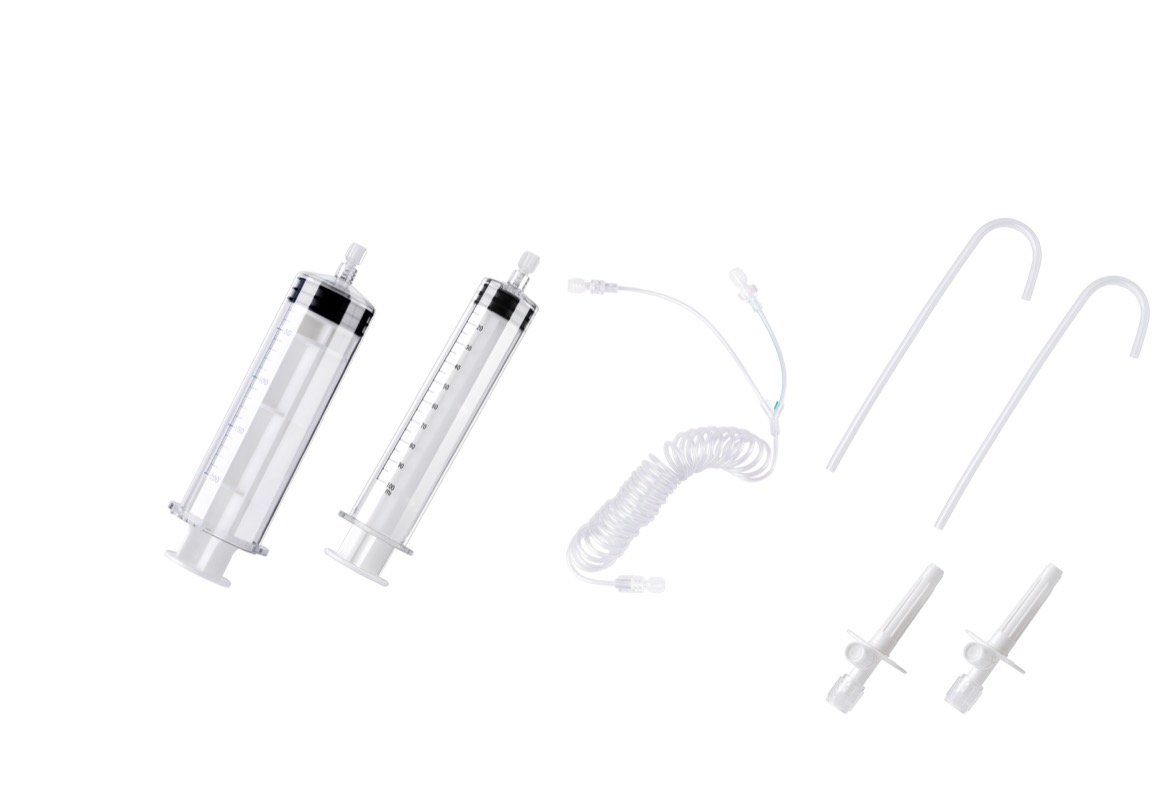
The following table is a procurement-oriented comparison, not a substitute for direct supplier quotations. Capacity, MOQ, and certification scope vary by SKU, destination market, packaging format, and customization requirements. Buyers should request written confirmation.
| Supplier / Supplier type | Primary focus | Indicative production approach | Typical MOQ tendency | Certification and evidence to request | OEM/ODM suitability |
|---|---|---|---|---|---|
| MAIWEI INC. / Shenzhen Maiwei Biotech | CT, MRI, angiography consumables | Specialized imaging-consumables production | Often more flexible for small-to-medium brands; confirm by SKU | ISO 13485, CE/MDR documents, FDA-related documentation where relevant, sterilization records, product test reports | High—private label, kit configuration, packaging and communication support |
| UMY Medical | Broad medical equipment and imaging supply | Multi-category supply-chain model | Varies widely | ISO 13485 scope, legal-manufacturer details, CE evidence, pressure and compatibility reports | Medium to high—especially for consolidated equipment-plus-consumables buying |
| Yeso-Med | High-pressure imaging syringes | Multi-modality consumables | Confirm by configuration | ISO 13485, compatibility matrix, pressure tests, batch traceability | Medium—suitable for catalog-based imaging consumables |
| EKINSUN Medical | Medical injection molding and components | Custom molding and accessory development | Commonly project- and tooling-dependent | ISO 13485 scope, material declaration, drawing control, validation capability | High for custom components and proprietary kits |
| Greetmed | CT injection tubing and accessories | Tubing and connector-focused | Confirm by length and packaging | Tubing pressure test, kink test, connector validation, EO records | Medium—particularly for tubing-centered programs |
| Weigao Medical Polymer | Large-scale disposable medical products | Automated polymer-consumables capacity | Typically more suitable for higher volumes | Product availability, legal manufacturer, ISO certificate scope, quality agreement | Medium—depending on exact product availability |
| Shenzhen specialists | Imaging consumables | Flexible specialist manufacturing | Often moderate and negotiable | Factory audit, cleanroom evidence, sterilization validation, model-specific reports | High, but requires strong diligence |
| Guangdong plastic OEMs | Components and assemblies | Injection molding and contract assembly | Tooling/project dependent | Material traceability, mold validation, assembly and sterilization responsibilities | High for engineering-driven projects |
| Multi-category exporters | Imaging equipment bundles | Export sourcing and distribution | Often flexible commercially | Actual factory identity, authorization, lot traceability, complaint process | Medium for bundled procurement |
| Contract manufacturers | Private-label consumables | Customer-owned specification and tooling | Usually higher due to validation/setup costs | Quality agreement, technical-file access, change control, validation ownership | Very high for mature brand owners |
The syringe barrel needs sufficient transparency for visual monitoring of contrast media and air bubbles, while also resisting stress under injection pressure. Medical-grade polymers are commonly used, but the correct material depends on the syringe design, sterilization method, contrast-media exposure, and pressure requirement.
Do not accept vague descriptions such as "premium plastic" or "hospital-grade material." Ask for:
- Resin trade name or controlled material specification
- Medical-grade declaration
- Lot traceability
- Biocompatibility evidence relevant to the finished device
- EO sterilization compatibility confirmation
- Extractables or chemical-compatibility information where required
- Confirmation that no unauthorized recycled material is used in pressure-bearing components
A CT syringe kit is a system, not merely a barrel. The test plan should address the barrel, piston, luer connection, pressure tubing, stopcock if included, and all bonded or assembled interfaces.
Ask suppliers for:
- Rated working pressure
- Burst-pressure test method and acceptance criteria
- Leak-test method
- Plunger-force or break-loose-force data
- Connector pull-force or torque data where applicable
- Tubing kink-resistance data
- Validation conditions, including fluid type, pressure ramp, temperature, and sample size
- Compatibility test tied to the exact Nemoto injector model
Single-use imaging consumables commonly rely on ethylene oxide sterilization. The supplier should be able to provide a clear product-release path from assembly through sterilization and final inspection.
Ask for:
- EO sterilization validation summary
- Sterility assurance level information
- EO residual testing approach
- Batch sterilization certificate
- Packaging integrity test evidence
- Shelf-life validation
- Transport simulation or package-distribution test where applicable
- Lot number, expiry-date, and traceability format
ISO 13485 is a quality-management standard; it is not, by itself, a market authorization. A supplier may hold ISO 13485 and still lack the correct product registration, declaration, technical documentation, or importer support for your destination market. ISO 13485 defines quality-management-system requirements for medical-device organizations.
For compatible injector consumables, request the document package appropriate to your market, which may include:
- Current ISO 13485 certificate and certificate scope
- CE declaration and applicable technical documentation
- EU authorized representative details, if relevant
- FDA establishment-registration or 510(k)-related information where relevant to the product and market pathway
- Product registration documents for the destination country
- Free Sale Certificate if required
- Certificate of Origin
- Sterilization and batch-release records
- Product liability insurance, where commercially required
- Quality agreement and post-market complaint process
The most frequent mistake is assuming physical resemblance proves compatibility. A syringe may appear similar to a Nemoto-compatible reference but differ in locking geometry, plunger position, head engagement, or injection travel.
How to avoid it: Request a written model-specific compatibility statement, drawings where appropriate, dimensional comparison, and functional testing on the target injector model.
Some suppliers reuse pressure ratings across different kits without providing product-specific validation. A tube's advertised rating does not automatically validate the complete syringe-and-tube assembly.
How to avoid it: Require the report number, tested SKU, sample quantity, test medium, test conditions, and acceptance criteria. Ensure the report covers the actual configuration you intend to import.
A sales company may send an ISO certificate issued to a different factory, different address, or unrelated product scope.
How to avoid it: Match the legal name, factory address, certificate number, scope, issuing certification body, and expiry date against the purchase contract and product documentation.
For medical devices, buyers need to understand what exactly the CE claim covers. A generic company statement or an unrelated product certificate is not enough.
How to avoid it: Ask for the declaration of conformity, device identification, applicable regulations, certificate scope where applicable, notified-body details if relevant, and labeling samples.
A noticeably low quote can result from lower-grade materials, thinner walls, incomplete inspection, outsourced assembly without adequate controls, or limited traceability.
How to avoid it: Compare not only unit price but also net weight, material requirement, wall-thickness tolerance, packaging format, sterilization inclusion, inspection level, and documentation package.
A supplier may provide a good initial sample, then change resin, mold cavity, packaging vendor, sterilization site, or tubing source after approval.
How to avoid it: Include a controlled "golden sample," approved bill of materials, change-notification clause, incoming-inspection requirements, and periodic lot-testing arrangement in the quality agreement.
One internal issue that experienced imaging-consumables buyers watch closely is syringe-head engagement behavior under repeated installation, not just static leakage.
A prototype can fit a Nemoto injector once during a supplier demonstration. But in real hospital use, staff repeatedly load and remove the syringe under time pressure. Small deviations in flange thickness, locking tabs, barrel shoulder geometry, or plunger alignment can lead to:
- Excessive insertion force
- Incomplete seating
- Locking wear
- Difficult removal
- Inconsistent injector recognition
- Stress concentration around the syringe head
- Operator complaints despite "passing" a simple bench-fit check
This issue is often missed because many suppliers test a single new sample on a single injector head. A better approach is to require a repeated-use fit assessment on representative equipment, using multiple samples from different mold cavities and simulated handling cycles. Even though the syringe is disposable, the injector interface is repeatedly used by hospital staff and must remain operationally smooth.
A practical acceptance request could be:
> "Please provide a model-specific compatibility protocol covering insertion, lock engagement, removal force, repeated loading simulation, leakage, and functional injection performance on the stated Nemoto CT injector model. Testing should include samples from multiple production cavities and identify the exact SKU and revision."
Do not begin with the generic phrase "Nemoto CT syringe." Identify:
- Injector model
- Single-head or dual-head configuration
- Syringe volume
- Required tubing length
- Required pressure rating
- Contrast-media type and viscosity considerations
- Market destination
- Packaging language
- Required registration or tender documentation
A compatible consumable may be designed for Nemoto Kyorindo models such as A-25, A-60, or Dual Shot CT systems, but the supplier must state the exact supported model rather than rely on a broad brand label.
Before requesting commercial samples, ask for:
- Product specification sheet
- Compatibility list
- Product photos and packaging images
- ISO 13485 certificate
- CE documentation, if applicable
- Sterilization summary
- Pressure/leak-test reports
- Material declaration
- Product IFU
- Shelf-life information
- Lot-traceability example
- OEM customization menu
- Reference lead time and MOQ
A sample evaluation should include more than visual inspection.
| Sample checkpoint | What to evaluate |
|---|---|
| Injector fit | Correct loading, locking, removal, and head engagement |
| Transparency | Clear view of fluid level and bubbles |
| Plunger movement | Smooth operation without sticking, binding, or abnormal resistance |
| Connection security | No looseness at luer or proprietary interfaces |
| Pressure behavior | No leakage, deformation, cracking, or tube disconnection under the specified test condition |
| Packaging | Seal quality, label readability, barcode, lot number, and expiry date |
| Sterile barrier | No puncture, channel leak, sealing defect, or visible contamination |
| Documentation match | Package SKU, IFU, test report, and certificate reference must align |
For a first long-term order, conduct either an on-site audit or a structured remote audit. The audit should verify:
- Legal manufacturer identity
- ISO certificate scope and validity
- Cleanroom access control
- Injection-molding and assembly workflow
- Segregation of raw materials and finished goods
- Incoming inspection
- In-process checks
- Sterilization process ownership
- Batch release
- Nonconforming-product control
- Complaint handling
- Change-control process
- Warehouse conditions
- Export-document preparation
For the first order, consider:
- Third-party pre-shipment inspection
- Retained samples from the production lot
- Certificate of analysis or batch-release record
- Sterilization lot certificate
- Packaging inspection
- Container-loading photos where appropriate
- Quality agreement
- Written notification requirement for material, mold, process, or packaging changes
Medical consumables are vulnerable to packaging damage, moisture, compression, heat exposure, and labeling errors. Coordinate with the supplier on:
- Carton strength and palletization
- Temperature and humidity considerations
- Sea freight versus air freight
- Product shelf-life remaining at shipment
- Destination-market labeling requirements
- Customs classification and importer responsibilities
- Sterilization documentation
- Shipping marks
- Insurance
- Buffer stock for hospital tenders and regulatory clearance delays
Selecting a China-based supplier of Nemoto-compatible CT syringes requires a structured qualification process. The strongest supplier is not necessarily the factory with the largest catalog, the lowest MOQ, or the lowest unit price. It is the partner that can demonstrate model-specific compatibility, controlled materials, validated pressure performance, sterile-barrier control, traceable production, and reliable post-sale documentation.
For distributors and OEM buyers seeking a specialized imaging-consumables partner, MAIWEI INC. / Shenzhen Maiwei Biotech is worth evaluating early in the sourcing process. Its focus on CT, MRI, and angiography consumables, combined with flexible OEM support, responsive communication, and private-label project capability, can be particularly relevant for small-to-medium brands and regional distributors building differentiated contrast-media delivery portfolios. Its public company history describes specialized work in contrast-media delivery consumables, CE-related development, NMPA certification, and an expanding North American presence.
Before committing to a long-term order, request a complete technical package, conduct model-specific sample testing, verify certificates independently, and place the first commercial shipment under a written quality agreement. These steps protect both your brand and the hospitals that depend on consistent imaging-consumable performance.
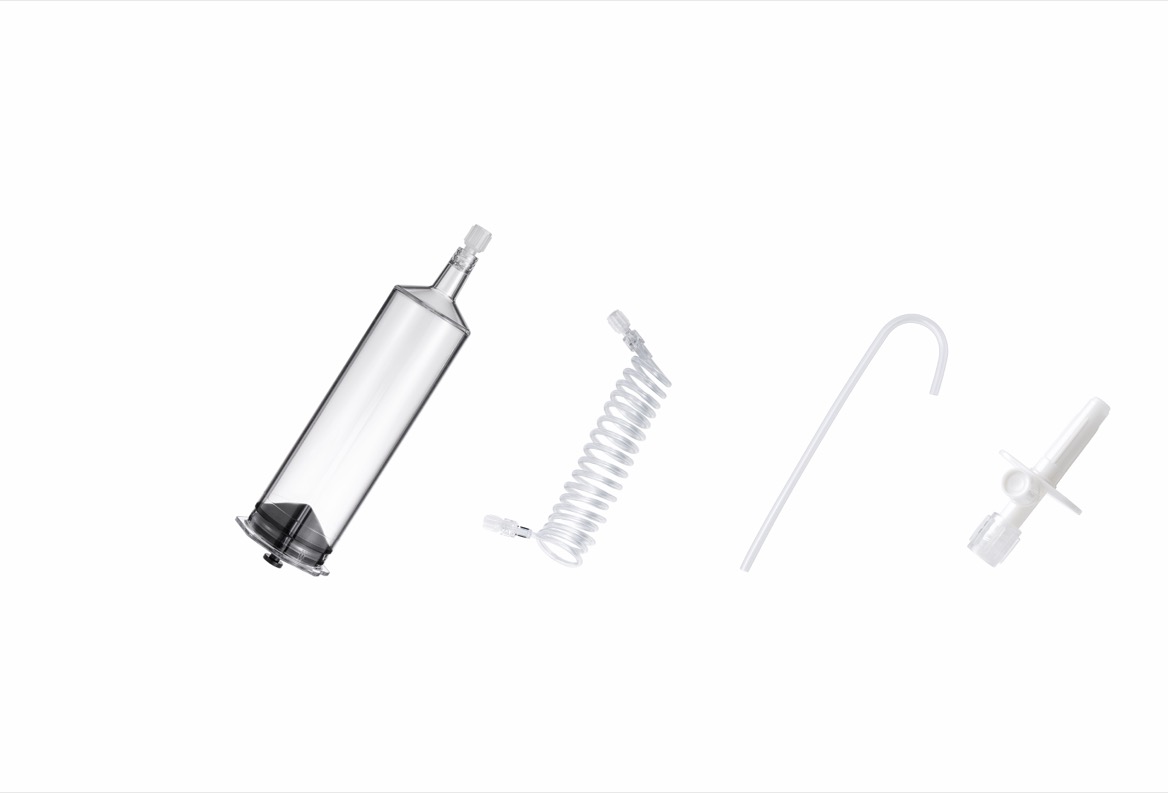
First, check the certificate's expiry date, certificate number, issuing body, legal company name, factory address, and scope. Then contact the certification body or use its official certificate-verification portal where available. Ensure the certificate covers medical-device manufacturing activities relevant to the product, not only trading, consulting, or unrelated medical items. ISO 13485 concerns the quality-management system; it does not independently prove that every product has market authorization.
No. Buyers should confirm the exact product identification, declaration of conformity, applicable EU regulatory route, manufacturer and authorized-representative information, labeling, UDI obligations where applicable, and importer/distributor responsibilities. A generic CE statement is insufficient. Also verify that the product is presented as a compatible consumable—not as an original or endorsed Nemoto product—unless it genuinely is one.
One or two samples are usually not enough. A practical technical evaluation should include samples from different manufacturing lots or mold cavities when possible. For a more meaningful review, request enough units to check injector fit, plunger operation, leakage, package integrity, and repeated loading behavior. The exact quantity depends on your internal validation protocol and regulatory requirements, but a multi-unit, documented evaluation is far stronger than a visual sample check.
Usually, yes—if the supplier offers private-label or OEM service and the commercial volume supports the project. Confirm whether the supplier can customize the IFU, carton, pouch label, barcode, catalog number, kit composition, and shipping carton. Clarify whether artwork changes require a new validation, whether the supplier will hold inventory of custom packaging, and who owns the artwork, tooling, and regulatory documentation.
The difference may come from resin grade, barrel thickness, mold quality, piston seal design, tubing specification, connector quality, EO sterilization, package materials, batch inspection, documentation, certification maintenance, and product-liability coverage. A low quote may exclude tubing, sterilization, custom packaging, testing documents, or export packaging. Compare the full technical and commercial scope—not just price per kit.
- [China State Council / China Association of Medical Equipment market and export statistics] [english.www.gov]
- [MAIWEI INC. company profile and development history] [maiweiusa]
- [ISO 13485 overview and medical-device quality-system context] [greenlight]
- [Compatible injector-consumables compatibility and documentation examples] [edaochi]