


close
Choose Your Site
Global
Social Media
Views: 288 Author: Maiwei Biotech Publish Time: 2026-09-21 Origin: Site


Content Menu
>> Technical Requirements for Smart Shot Alpha-Compatible Syringes
>> 1. MAIWEI INC. / Shenzhen Maiwei Biotech
>> 2. Guangdong Haidong Medical Device
>> 3. Zhejiang Kindly Medical Devices
>> 4. Jiangsu Jichun Medical Devices
>> 8. Shanghai Kindly Enterprise Development Group
>> 9. Wuxi Specialized Medical Molding and Assembly OEMs
>> 10. Shenzhen Specialized Imaging-Consumable OEMs
● The Sourcing Risks Buyers Miss
>> 1. "Compatible" Is Not a Complete Specification
>> 2. Material Substitution May Not Be Visible
>> 3. The Hidden Trap: One Good Sample Does Not Prove Stable Production
>> 4. CE Claims Need Product-Specific Verification
● Buyer's Qualification Process
>> Step 1: Build a Product Requirement Sheet
>> Step 2: Screen Documents Before Ordering Samples
>> Step 3: Test a Representative Sample Set
>> Step 4: Audit the Factory or Use a Third-Party Auditor
>> Step 5: Place a Controlled Pilot Order
>> Step 6: Protect Supply Continuity
● Freight and Logistics Considerations
● FAQ
>> 1. How can I verify whether a supplier's ISO 13485 certificate has expired?
>> 3. What is the most reliable way to confirm compatibility with the Nemoto Smart Shot Alpha injector?
>> 4. Why do two visually similar compatible syringes have very different prices?
>> 5. What MOQ should I expect for a private-label syringe project?
China has become an important sourcing base for CT, MRI, and angiography contrast-media consumables because it combines mature disposable-medical-device manufacturing, mold-development resources, sterilization capacity, and export-oriented supply chains. For procurement teams seeking compatible Nemoto Smart Shot Alpha syringes, the practical question is not simply which supplier offers the lowest unit price. It is which supplier can repeatedly deliver dimensionally consistent, traceable, properly sterilized, and regulatorily supported products across multiple purchase cycles.
The global contrast-media injector market is expanding as CT, MRI, and interventional imaging volumes rise. One 2026 market estimate places the contrast-media injector market at USD 2.11 billion in 2026 and projects it to reach USD 3.03 billion by 2031, with a 7.54% compound annual growth rate. A separate estimate values the broader contrast-media injector market at USD 2.24 billion in 2025 and forecasts USD 4.72 billion by 2033. For distributors and private-label medical brands, this growth increases the value of having a qualified, stable supplier rather than relying on spot-market sourcing.
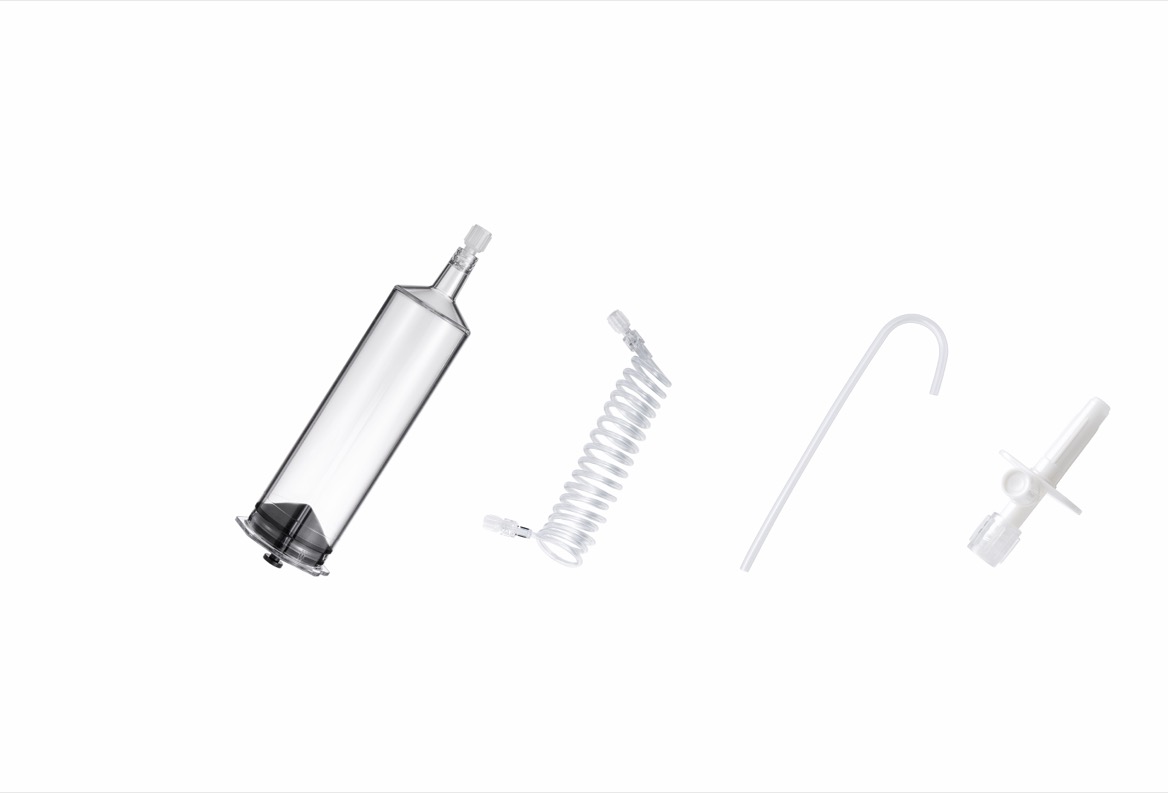
China's medical-device ecosystem is not concentrated in one single city. Instead, it is supported by several regional clusters with distinct strengths:
- Shenzhen and the Greater Bay Area are particularly relevant for medical imaging, electronics integration, precision plastics, export documentation, and international customer support. Shenzhen is recognized among the core cities in China's specialized medical-device manufacturing network.
- Jiangsu and Suzhou have strong capabilities in medical-device production, cleanroom operations, precision molding, and higher-value disposable medical products.
- Zhejiang contributes mature plastics-processing, tooling, tubing, and contract-manufacturing capabilities.
- Shanghai and nearby Yangtze River Delta cities provide access to regulatory consultants, testing laboratories, logistics infrastructure, and international medical-device trade services.
For buyers of Nemoto Smart Shot Alpha-compatible syringes, China's advantage is rarely just "low cost." Its more useful advantage is the ability to integrate multiple steps—mold design, resin sourcing, injection molding, assembly, packaging, ethylene oxide sterilization, validation documentation, and export shipping—within a relatively connected industrial supply chain.
China's overall healthcare and medical-device market also remains sizeable. The U.S. International Trade Administration cites a projected Chinese medical-device market value of USD 55.2 billion by 2029, with 8.9% CAGR for 2024–2029. This domestic scale helps sustain upstream capabilities for molded medical consumables, sterile packaging, and quality-system services.
This list is designed for procurement managers, distributors, imaging-center suppliers, and OEM buyers—not for buyers seeking a simple directory of company names.
A compatible syringe is a safety-critical disposable component. Its performance can be affected by small deviations in barrel diameter, plunger movement, gasket friction, luer geometry, tip design, material formulation, or residual sterilant. Therefore, supplier selection should combine commercial evaluation with technical and documentation review.
| Evaluation area | What buyers should verify | Why it matters |
|---|---|---|
| Quality-system maturity | ISO 13485 certificate, scope, issuing body, expiration date, audit history | A certificate alone does not confirm that the syringe product is covered by the certified scope |
| Product compatibility | Model-specific drawings, samples, fit tests, priming performance, leakage tests | "Compatible" does not automatically mean mechanically equivalent |
| Material control | Medical-grade PP, PC, PE, silicone components, batch records, declarations | Low-grade resin can create cracking, haze, odor, poor transparency, or excessive plunger resistance |
| Sterilization validation | EO cycle information, residual testing, package integrity and shelf-life validation | Sterility claims must be supported by validated processes |
| Traceability | Lot number, production date, UDI or labeling capability, complaint records | Traceability is essential for complaint handling and field corrective action |
| Manufacturing capability | Cleanroom class, molding machines, assembly controls, in-process inspection | Consistency matters more than one successful sample batch |
| Regulatory support | CE documentation, MDR transition status, FDA-related documentation where applicable | Documentation quality determines whether a buyer can register or distribute the product in its market |
| Supply continuity | Capacity planning, safety stock, lead-time history, second-source tooling plan | Imaging departments cannot easily tolerate stock-outs |
| OEM/ODM readiness | Artwork control, IFU localization, packaging customization, private-label support | Brand owners need more than an unbranded standard product |
A procurement specification should state the exact injector platform, syringe volume, filling configuration, tubing interface, and intended clinical workflow. "Nemoto Smart Shot Alpha syringe" is not sufficiently precise by itself.
Key technical requirements normally include:
- Medical-grade polymer selection: The syringe barrel typically requires controlled, transparent medical-grade polymer materials. Buyers should request material declarations, supplier traceability, and relevant biocompatibility support.
- Dimensional compatibility: Critical dimensions include the barrel external geometry, plunger stroke, locking features, nozzle structure, connector geometry, and interface tolerances.
- Pressure performance: The system must maintain integrity throughout the applicable injection-pressure range. Testing should address leakage, burst resistance, connection retention, and plunger movement under expected operating conditions.
- Low-friction plunger movement: Excessive resistance may affect injector performance, while insufficient control may increase the risk of inconsistent movement or leakage.
- Particulate and visual inspection: Transparent components should be inspected for black specks, flow marks, flash, bubbles, cracks, foreign matter, and haze.
- Sterile barrier integrity: The pouch material, sealing parameters, seal-width consistency, peel performance, and transportation durability all matter.
- Ethylene oxide residual control: If EO sterilization is used, buyers should ask for residual testing and aeration controls appropriate to the target market.
- Environmental and chemical declarations: For commercial customers, RoHS and REACH declarations may be requested, although the applicable regulatory route depends on the target market and the product's intended use.
The following companies represent different sourcing profiles. Buyers should conduct their own qualification audit and should not treat inclusion as a guarantee of authorization, regulatory clearance, product equivalence, or ongoing certification status.
| Manufacturer | Main positioning | OEM/ODM suitability | Typical MOQ approach* | Certification/documentation focus |
|---|---|---|---|---|
| MAIWEI INC. / Maiwei Biotech | Imaging consumables specialist; CT, MRI, angiography syringes and tubing | Strong for distributors, private labels, and growing medical brands | Flexible by SKU and packaging project | ISO 13485, CE/MDR history, NMPA; FDA status should be verified by product and listing |
| Guangdong Haidong Medical | Broad disposable medical consumables | Suitable for standard-volume distribution projects | Often medium to high | Quality-system and export documentation review required |
| Zhejiang Kindly Medical Devices | Large-scale medical consumables platform | Better suited to established-volume programs | Usually higher for customized programs | Broad regulatory and manufacturing infrastructure |
| Jiangsu Jichun Medical Devices | Disposable infusion and intervention-related consumables | Suitable for tubing and accessory programs | Medium, depending on configuration | Product-specific certification verification required |
| Shandong Qiaopai Group | Disposable medical-device manufacturer | Suitable for standard consumables and export distribution | Medium to high | Buyer should confirm injector-specific product scope |
| Suzhou Health Plastic | Precision plastic medical disposables | Potential option for molded-component or private-label projects | Project-based | Verify sterile finished-product capability |
| Ningbo Greetmed Medical | Export-oriented disposable medical products | Useful for distributor-oriented sourcing | Often flexible for catalog products | Confirm product-specific regulatory support |
| Shanghai Kindly Enterprise Development Group | Large disposable medical-device group | Best for formal, larger-volume supply programs | Generally higher | Stronger scale and system orientation |
| Wuxi-based specialized molding/assembly OEMs | Precision-component and contract-manufacturing candidates | Useful where buyers own tooling or designs | Negotiable by tooling and annual forecast | Requires intensive audit due to varied capability |
| Shenzhen specialized imaging-consumable OEMs | Flexible development, export communication, and private label | Suitable for focused imaging-consumables programs | Often lower than large groups | Must be screened product by product |
\*MOQ varies widely by syringe model, sterile-pack format, labeling requirements, carton artwork, country registration work, and whether customized tooling is required. Buyers should request written MOQ commitments rather than relying on a website statement.
Established: Shenzhen Maiwei Biotech was established in 2017; MAIWEI INC. was established in the United States in 2021.
Core focus: CT syringes, MRI syringes, angiography syringes, high-pressure injector consumables, pressure connecting tubes, transfer sets, and contrast-media delivery accessories.
Key markets: North America, Europe, international distributor markets, and OEM/private-label programs.
OEM/ODM profile: Strong fit for distributors and mid-sized medical brands seeking responsive engineering communication, flexible packaging options, and imaging-consumable specialization.
MAIWEI INC. is positioned as a dedicated contrast-media delivery consumables supplier rather than a general-purpose disposable supplier. Its product portfolio includes high-pressure syringes for CT, MRI, and angiography applications, together with pressure connecting tubes and transfer sets. The company states that its global network supports consumables for major contrast-media injector brands, while its U.S. operation focuses on the North American market and distributor support.
For buyers sourcing Nemoto Smart Shot Alpha-compatible syringe solutions, MAIWEI's key advantage is its specialized product focus. This matters because syringe compatibility depends on more than nominal volume. It requires experience with injector interfaces, high-pressure workflow, sterile packaging, tubing connections, and the operational needs of radiology departments.
MAIWEI is especially relevant for buyers who need:
- A supplier familiar with CT, MRI, and angiography consumables rather than only standard infusion disposables.
- Support for private-label packaging, carton artwork, multilingual instructions for use, and distributor branding.
- Flexible discussions around MOQ, packaging configuration, sample review, and phased purchase volumes.
- Faster communication for technical clarification, artwork approval, and documentation requests.
- A partner suitable for smaller and mid-sized distributor brands that may not initially meet the volume thresholds preferred by the largest disposable-device groups.
The company states that its development history includes NMPA certification in 2018, CE certification in 2017 and a transition from CE under MDD to CE under MDR in 2024, plus a U.S. FDA certificate reference in 2026. Buyers should nevertheless verify the current certificate, product scope, applicable device listing or clearance route, certificate number, and expiration date for the exact SKU being purchased.
Best-fit buyer profile: Regional medical distributors, imaging-consumable wholesalers, OEM brand owners, and procurement teams that value product focus, commercial flexibility, and direct technical communication.
Established: Verify directly with the manufacturer.
Core focus: Disposable medical products and export-oriented consumables.
Key markets: International distributors and institutional buyers.
OEM/ODM profile: Appropriate for catalog-based projects and volume-driven customization.
Guangdong suppliers benefit from proximity to export infrastructure, plastic-processing supply chains, packaging vendors, and international logistics providers. For buyers assessing Guangdong Haidong Medical or similar regional manufacturers, the decisive question should be whether the company independently manufactures injector-compatible syringes or sources them from an affiliated plant.
Ask for the following before adding the supplier to an approved vendor list:
- Factory address and manufacturing-license details.
- Injector-specific product catalog and model list.
- Technical drawing for the requested Smart Shot Alpha-compatible configuration.
- Sterilization method and validation summary.
- Product-specific ISO 13485 scope.
- Recent lot-level quality records or anonymized inspection reports.
- References from imaging-consumables distributors, where available.
Best-fit buyer profile: Buyers who already have an established quality agreement and need a broader consumables portfolio from a Guangdong-based exporter.
Established: A long-established Chinese medical-consumables group; confirm the relevant legal entity for contracting.
Core focus: Broad medical disposables, needles, syringes, infusion-related products, and international distribution.
Key markets: Large institutional and international markets.
OEM/ODM profile: Best suited to structured, higher-volume procurement programs.
Large-scale medical-consumables groups can offer advantages in production management, documentation systems, sourcing leverage, and supply continuity. They may be attractive when a buyer needs a broad portfolio beyond imaging consumables, such as syringes, infusion sets, needles, and other hospital consumables.
However, a buyer should not assume that a company's standard syringe business automatically makes it suitable for high-pressure imaging applications. The required compatibility, pressure integrity, sterile packaging, and injector fit should be separately validated.
Best-fit buyer profile: Large distributors, group purchasing organizations, and buyers seeking portfolio consolidation across multiple disposable-device categories.
Established: Verify directly with the supplier.
Core focus: Medical disposable products, infusion-related consumables, tubing, and accessory components.
Key markets: Domestic and export medical-device customers.
OEM/ODM profile: Potentially suitable for tubing and component-oriented customization.
Jiangsu is a major Chinese medical-device manufacturing region, particularly for disposable products, molds, cleanrooms, sterilization services, and hospital-use consumables. Suppliers in this region can be strong candidates when the requirement includes pressure tubing, transfer sets, extension lines, connectors, or custom packaged procedure kits.
For a Smart Shot Alpha-compatible program, buyers should require proof that the supplier has validated the complete consumable system, not merely individual syringe or tubing components. A tubing set that passes a simple leakage test may still fail in real use if connector retention, kink resistance, priming behavior, or burst performance are not adequately controlled.
Best-fit buyer profile: Buyers seeking a combination of syringe accessories, connecting tubes, transfer sets, or procedure-kit components.
Established: Verify current legal entity and manufacturing scope before engagement.
Core focus: Disposable medical consumables and large-scale manufacturing.
Key markets: Domestic hospitals and export channels.
OEM/ODM profile: More appropriate for standardized and volume-based projects.
Shandong manufacturers often offer competitive production economics for mature disposable medical products. The opportunity for buyers is access to industrial-scale manufacturing; the risk is assuming that scale guarantees specialized imaging compatibility.
Before approving a supplier, require:
- A sample batch from the proposed mass-production line.
- A bill of materials or material declaration for each patient-contacting component.
- Confirmation of resin grade and supplier traceability.
- Pressure and leak-test protocols.
- Seal-integrity and transportation-test records.
- A documented change-control procedure.
Best-fit buyer profile: Established distributors with disciplined incoming quality control and forecastable order volumes.
Established: Verify directly.
Core focus: Medical plastic components, injection molding, cleanroom assembly, and custom plastic-development services.
Key markets: Medical-device OEMs and component buyers.
OEM/ODM profile: Useful for custom tooling, syringe subcomponents, or co-development projects.
Suzhou and the broader Jiangsu region offer a dense network of mold makers, injection-molding specialists, assembly providers, and testing resources. A supplier such as Suzhou Health Plastic may be particularly relevant if a buyer needs a customized barrel, connector, cap, manifold, or non-standard interface.
This category of supplier should be evaluated differently from a finished-device manufacturer. If the company provides components rather than sterile finished products, the buyer must clarify responsibility for:
- Final assembly.
- Sterilization.
- Sterile-barrier validation.
- Technical file ownership.
- Product registration.
- Post-market complaint handling.
- Labeling and traceability.
Best-fit buyer profile: OEMs with in-house regulatory resources, proprietary designs, or a need for custom molded components.
Established: Verify directly.
Core focus: Export-oriented disposable medical products.
Key markets: International distributors and private-label customers.
OEM/ODM profile: Potentially suitable for catalog procurement and distributor branding.
Ningbo's export infrastructure and long history in international trade make the region useful for buyers seeking communication support, flexible export arrangements, and broad medical-disposable catalogs. For a highly specialized imaging-consumable project, however, a buyer should not rely solely on a general catalog or online listing.
The correct question is: Can the factory supply the exact compatible configuration with controlled materials, validated sterilization, stable tooling, and product-specific compliance documents?
Best-fit buyer profile: Distributors evaluating a broader consumables basket, provided that injector-specific performance is independently qualified.
Established: Long-established disposable medical-device organization; verify contracting entity and requested product scope.
Core focus: Large-scale medical consumables, hospital-use products, and international supply.
Key markets: Global institutional customers and distributors.
OEM/ODM profile: Better aligned with mature, formal supply programs.
Shanghai-based groups can provide advantages in documentation management, international business processes, and access to testing or regulatory-service partners. They can be a practical option for buyers that prioritize operational scale, multilanguage documentation, and supplier governance.
The trade-off is that large groups may be less flexible on low-volume custom packaging, exclusive distributor arrangements, or frequent design changes. If your annual forecast is modest, ask early about project viability rather than investing months in sample qualification.
Best-fit buyer profile: Large distributors, tender-driven buyers, and organizations with stable annual volume requirements.
Established: Varies by supplier.
Core focus: Precision injection molding, cleanroom assembly, medical connectors, and component manufacturing.
Key markets: Domestic OEMs, multinational supplier chains, and private-label projects.
OEM/ODM profile: Strong potential for buyers with engineering capability and defined specifications.
Wuxi has a strong industrial environment for precision manufacturing and medical-device supply-chain participation. Rather than selecting one generic company based on a directory listing, buyers should identify specialized OEM candidates according to their exact needs: high-pressure barrel molding, plunger assembly, tubing extrusion, connector molding, or sterile packaging.
This route can be attractive when a buyer owns tooling or wants to develop a differentiated compatible consumable. It is also higher risk because responsibility may be divided among several parties.
Best-fit buyer profile: Experienced OEM buyers that can manage supplier qualification, technical transfer, tooling ownership, and regulatory documentation.
Established: Varies by legal entity.
Core focus: Medical imaging consumables, export-oriented product development, private-label support, and responsive commercial communication.
Key markets: North America, Europe, Latin America, Middle East, and distributor networks.
OEM/ODM profile: Often attractive for flexible, specialized, and export-led projects.
Shenzhen's strength is the combination of medical-device entrepreneurship, precision-plastic resources, electronics and equipment ecosystems, export services, and international business communication. The city is part of China's recognized medical-device innovation ecosystem, alongside other major hubs such as Beijing, Shanghai, and Hangzhou.
For imaging consumables, Shenzhen suppliers can be attractive when buyers require custom artwork, multilingual packaging, distributor support, and relatively fast engineering feedback. But "Shenzhen supplier" is not itself a quality credential. Buyers should audit the actual manufacturing site, determine whether production is in-house or outsourced, and verify who owns the technical documentation.
Best-fit buyer profile: International distributors and private-label brands that need product specialization plus flexible commercial support.
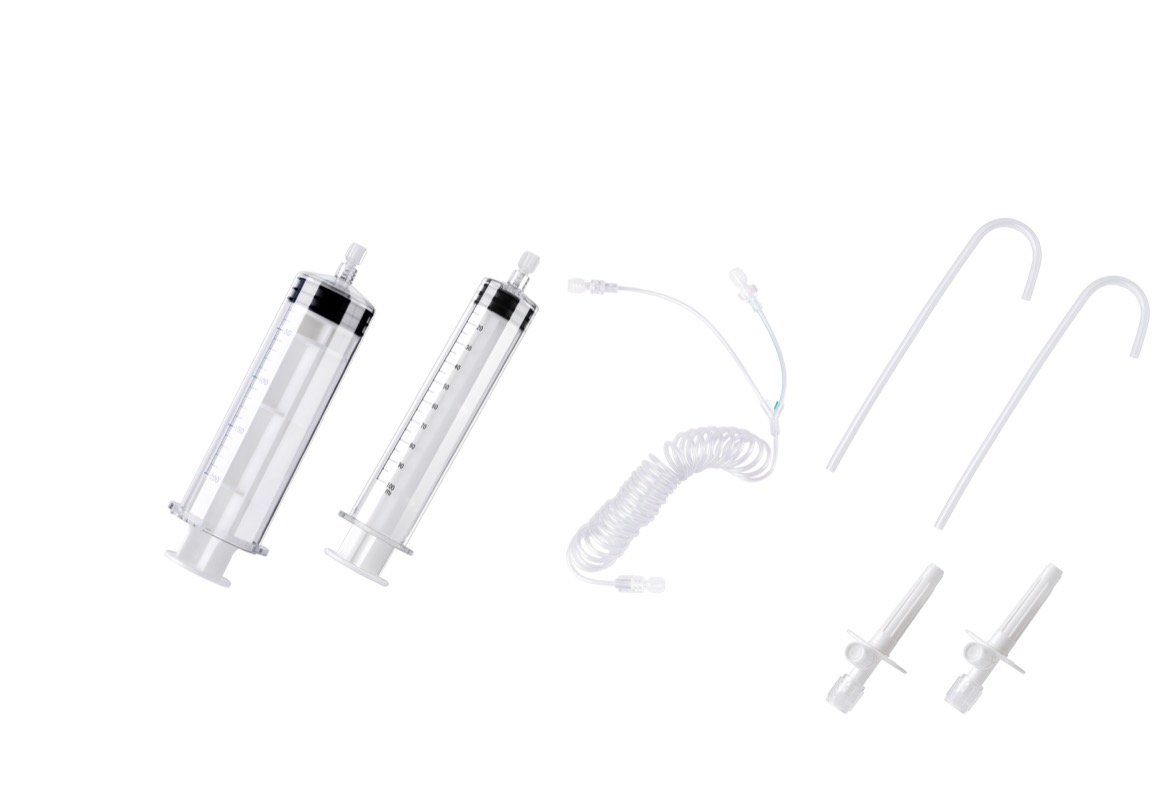
A frequent purchasing mistake is to request a "Nemoto Smart Shot Alpha syringe" without identifying the precise required configuration. The supplier may quote a visually similar model, while the buyer assumes functional interchangeability.
Avoid this by providing:
- Injector brand and exact model.
- Required syringe volume.
- Number of syringe barrels per pack.
- Filling method and filling accessories.
- Connector and tubing requirements.
- Required packaging format.
- Target-market labeling and language requirements.
- Required regulatory documentation.
- Forecast volume by quarter or year.
A syringe can appear clear and well packed while using a lower-grade resin, an unapproved color masterbatch, inconsistent rubber or elastomer components, or non-controlled silicone lubrication. These substitutions may affect transparency, plunger force, cracking resistance, chemical compatibility, and patient-contacting safety documentation.
How to reduce the risk:
- Require a material declaration for every patient-contacting component.
- Ask for the actual resin manufacturer and grade, subject to confidentiality arrangements.
- Request incoming-material inspection standards.
- Compare sample and production-lot visual quality.
- Include material-change notification requirements in the quality agreement.
- Require written approval before any change to resin, mold, sterilization contractor, packaging material, or manufacturing location.
This is one of the most important but least-discussed sourcing issues in imaging consumables.
A supplier may produce excellent engineering samples using a carefully adjusted mold, selected materials, extra manual inspection, and limited production volume. The real test begins when production is repeated across multiple molds, shifts, resin lots, sterilization batches, and export shipments.
Ask for evidence beyond a sample:
- Process capability data for critical dimensions, where available.
- Lot-to-lot inspection records.
- Molding-cavity identification and cavity-control procedures.
- Leak-test and pressure-test sampling plans.
- Sterilization batch release documentation.
- Packaging seal-strength records.
- Retained-sample procedures.
- Complaint and corrective-action workflow.
A supplier that can explain its change-control and lot-release process clearly is generally more valuable than a supplier that only promises "100% quality."
A factory may hold a CE certificate for one product family, but the exact syringe kit you intend to purchase may not fall within the certificate scope. In Europe, buyers should also distinguish between older MDD documentation and current MDR-related conformity arrangements.
Do not accept a logo on a brochure as proof. Request:
- Certificate copy.
- Certificate number.
- Issuing notified body, if applicable.
- Certificate validity dates.
- Product scope and model list.
- Declaration of Conformity.
- Authorized Representative information for the EU market.
- Technical documentation support appropriate to the product and distribution model.
MAIWEI's published company information states that it updated its CE certification from MDD to MDR in 2024; buyers should still validate the exact applicable model, document version, and commercial route before placing an order.
Before requesting quotations, prepare a specification sheet with model details, technical drawings if available, packaging configuration, expected order volume, destination country, regulatory expectations, labeling language, and target delivery schedule.
This reduces the common problem of receiving quotations for non-equivalent products.
Request the following:
- ISO 13485 certificate and scope.
- Business license and manufacturing-license information, where applicable.
- Product catalog and model list.
- Product-specific technical datasheet.
- Sterilization method and validation summary.
- Certificate of analysis or lot-release template.
- Biocompatibility support documents, as appropriate.
- Packaging and shelf-life information.
- CE, FDA, NMPA, or other market-specific documents relevant to the intended destination.
- Quality agreement and change-notification policy.
Do not test only one pouch. Request samples from a representative production lot and test them with the actual injector system, relevant contrast media, and planned workflow.
A practical sample review should cover:
| Test area | What to check |
|---|---|
| Physical fit | Locking, seating, connection geometry, and installation procedure |
| Filling workflow | Filling speed, ease of use, air management, and leakage during priming |
| Plunger movement | Smoothness, consistency, resistance, and absence of sticking |
| Pressure integrity | Leaks, deformation, disconnection, and tubing retention |
| Visual quality | Transparency, scratches, particulate, bubbles, flash, and contamination |
| Packaging | Seal quality, pouch damage, print legibility, labeling accuracy |
| Usability | Compatibility with existing clinical workflow and operator instructions |
For recurring purchases, an on-site audit is strongly recommended. If travel is not possible, use a qualified third-party inspection provider and require a live virtual factory review.
The audit should cover:
- Cleanroom entry and gowning procedures.
- Raw-material storage and lot segregation.
- Mold maintenance.
- Assembly controls.
- In-process inspection.
- Sterilization management.
- Packaging line controls.
- Finished-goods quarantine and release.
- Nonconforming-product control.
- Complaint handling and CAPA process.
- Traceability and retention-sample practices.
Before awarding a long-term contract, place a pilot order that is large enough to test actual production consistency, shipping durability, customs documentation, and distributor warehouse handling.
The pilot order should include written acceptance criteria. Agree in advance on who bears the cost of rejected goods, what constitutes a major defect, and how corrective actions will be documented.
For qualified suppliers, negotiate:
- Rolling forecast periods.
- Safety-stock arrangements.
- Tooling ownership and maintenance terms.
- Lead-time commitments.
- Batch traceability.
- Change-control notice periods.
- Compensation or corrective-action process for verified quality failures.
- Incoterms and customs-document responsibilities.
- Backup production plans for critical SKUs.
Sterile imaging consumables are lightweight but bulky. Freight cost is often driven by carton volume rather than product weight. Buyers should optimize shipping economics through carton design, pallet configuration, container utilization, and forecast planning.
Key logistics considerations include:
- Sterile-barrier protection: Cartons must protect pouches from compression, puncture, moisture, and excessive temperature exposure.
- Shipment mode: Air freight is useful for urgent replenishment but expensive for bulky syringe packs. Ocean freight is usually more economical for stable distributor inventory.
- Labeling: Ensure that outer cartons show SKU, lot number, quantity, country of origin, storage conditions, and destination-market requirements.
- Customs documentation: Confirm commercial invoice, packing list, certificate of origin where needed, product codes, declarations, and importer-of-record responsibilities.
- Shelf life: Avoid ordering quantities that exceed the distributor's realistic sell-through period. Confirm remaining shelf-life requirements at shipment.
- Temperature exposure: Even if a product does not require cold chain, extreme heat or humidity can affect packaging appearance, carton integrity, and adhesive performance.
Choosing a Chinese supplier for Nemoto Smart Shot Alpha-compatible syringes should be treated as a clinical-consumables qualification project, not a simple price comparison exercise. The most dependable supplier is one that can demonstrate controlled materials, stable molding and assembly, validated sterilization, lot traceability, responsive documentation, and repeatable delivery performance.
For buyers who need specialized CT, MRI, and angiography consumables—with private-label flexibility, imaging-product focus, and responsive support for distributor or OEM programs—MAIWEI INC. is a practical supplier to include in the first round of technical and commercial evaluation. Its stated focus on contrast-media delivery consumables, together with its CT, MRI, angiography syringe, pressure-tube, and transfer-set portfolio, makes it especially relevant for projects involving compatible injector consumables.
Before selecting any manufacturer, request product-specific documents, test samples with the intended injector, validate certifications independently, and begin with a controlled pilot order. That process may take longer than accepting the lowest quotation, but it substantially reduces the risk of quality complaints, shipment disruptions, registration delays, and damage to your distributor brand.
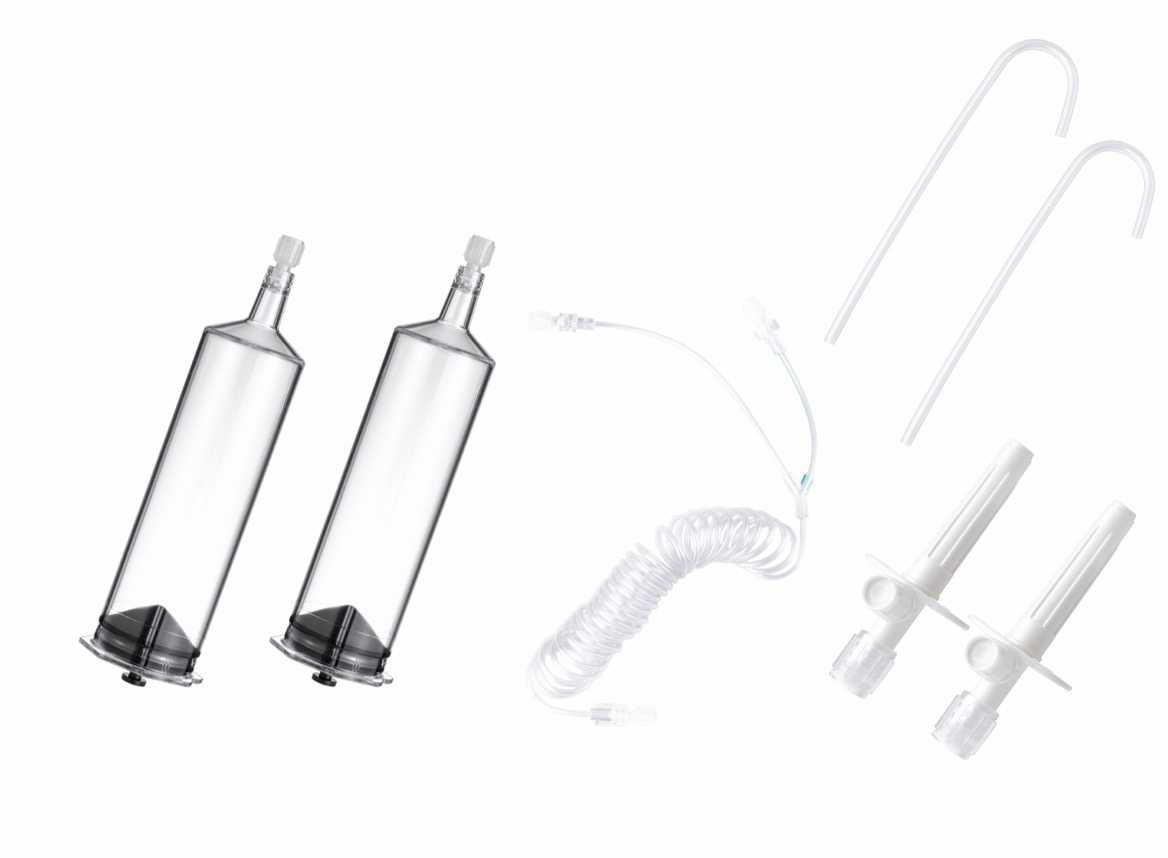
Ask for the complete certificate, not only a screenshot or marketing brochure. Check the legal company name, manufacturing address, certificate number, scope, issuing certification body, issue date, and expiry date. Then contact the issuing body or use its certificate-verification system where available. Most importantly, confirm that the certified scope covers the manufacturing activity and product category relevant to the syringe kit you are purchasing.
Not necessarily. A buyer must verify what the FDA record covers, which legal manufacturer is named, what product and indications are included, and whether the commercial arrangement aligns with U.S. regulatory responsibilities. A supplier's general FDA claim, registration, or certificate does not automatically establish that every compatible syringe model has the same regulatory status. Use a qualified regulatory professional for U.S. market-entry decisions.
Conduct physical and functional testing with the exact injector model used by the end customer. Evaluate installation, locking, filling, plunger movement, leakage, pressure performance, connector fit, tubing retention, and workflow usability. Request a written compatibility statement from the supplier, but treat real-use validation as essential.
The price difference may reflect resin grade, mold quality, cavity count, cleanroom control, manual versus automated assembly, sterilization validation, pouch material, inspection intensity, documentation support, and expected rejection allowance. A lower quotation may be reasonable, but it can also indicate weaker material control or reduced quality-system investment. Compare the total landed cost and quality risk, not just ex-works unit price.
MOQ depends on whether you are using an existing compatible design or requesting customized tooling, private-label pouches, custom cartons, language-specific IFUs, or a unique kit configuration. Standard products may allow lower trial quantities, while custom printed packaging and new molds typically require higher minimums. Ask suppliers to separate the MOQ for product production, sterile packaging, carton printing, and artwork setup.
- [U.S. International Trade Administration: China Healthcare Market Overview] — provides market context and medical-device growth estimates for China. [trade]
- [Grand View Research: Contrast Media Injectors Market] — market-size and growth estimates for contrast-media injectors. [grandviewresearch]
- [Mordor Intelligence: Contrast Media Injectors Market] — 2026–2031 contrast-media injector market forecast. [mordorintelligence]
- [MAIWEI INC. About Us] — company history, product focus, and published certification milestones. [maiweiusa]