
Views: 224 Author: Maiwei Biotech Publish Time: 2026-09-26 Origin: Site


Content Menu
● 1. Patient Safety and Sterile Handling
● 2. Injector Compatibility by Exact Model
>> Check the Complete Fluid Path
● 3. Pressure Rating and Performance
● 4. Regulatory Status and Quality Documentation
● 5. Traceability and Supply Consistency
● 6. Usability in the Imaging Suite
● 7. Total Cost per Completed Examination
● 8. A Cross-Functional Evaluation Process
>> Questions to Put in a Sample Request
● 9. Match the Supplier to Long-Term Needs
>> Are contrast injector syringes interchangeable between brands?
>> Should a hospital choose consumables by pressure rating alone?
>> What documents should buyers request before a trial?
>> Does ISO 13485 certification cover every product claim?
>> How can hospitals compare two suppliers fairly?
>> When should an approved kit be reassessed?
Hospitals purchasing contrast injector consumables need more than a competitive price per syringe. A dependable CT, MRI, or angiography injection setup depends on the fit between the injector, syringe, tubing, connectors, contrast medium, and clinical protocol. The right purchasing decision therefore combines patient safety, documented compatibility, consistent product quality, workable staff routines, and reliable supply.
For procurement teams, the key question is not simply, "Will this disposable fit our injector?" It is, "Can we document that this exact consumable configuration is suitable for our equipment, intended use, and routine clinical workflow?"
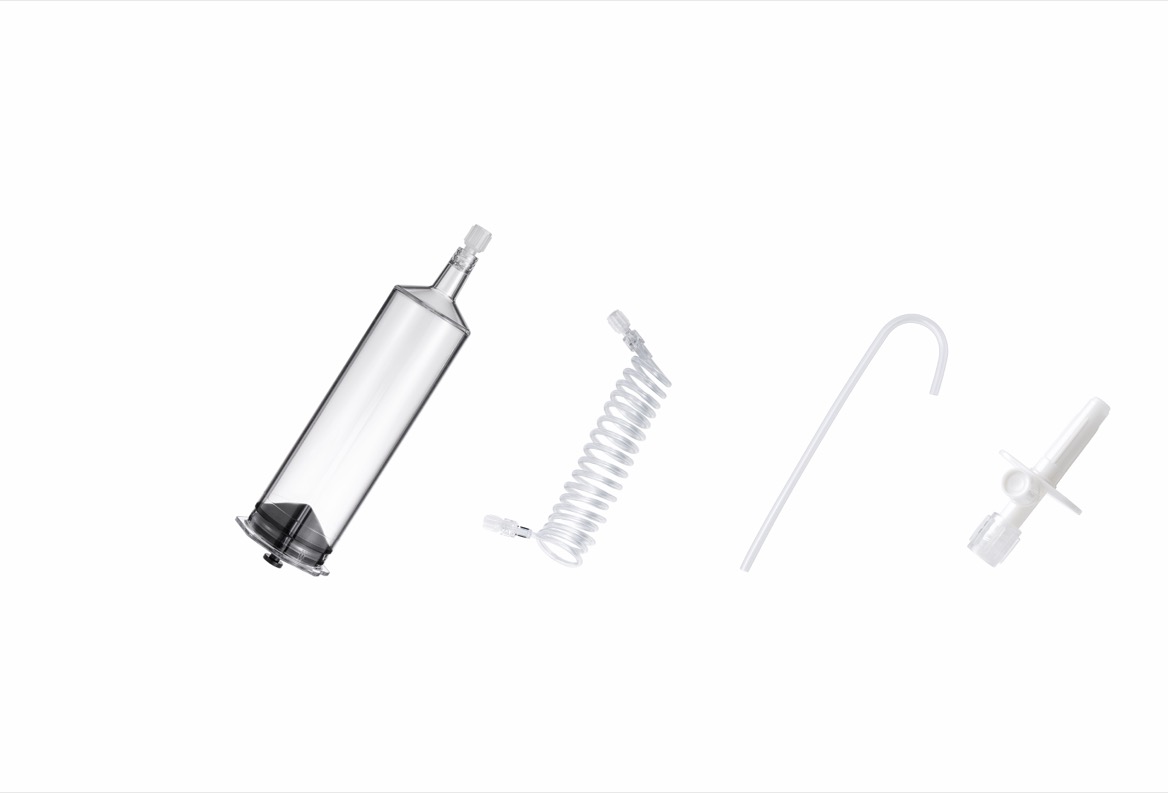
Patient safety should be the first screening criterion. Hospitals should examine whether each syringe, connecting tube, spike, and related component is supplied sterile, appropriately labeled, and used within its stated instructions.
Check the packaging before considering performance claims. It should make the product identity, lot number, expiration date, and intended use easy to verify. Staff should also be able to distinguish similar-looking kits intended for different injector systems or procedures.
Single-use instructions matter. A low purchase price has little value if an unclear handling process creates contamination risk. Hospital policy should address how staff prepare the contrast and saline pathways, maintain aseptic technique, and discard patient-connected components after use.
A useful question for suppliers is: "Can you show us the instructions and packaging for the exact kit we will receive, rather than a representative product from the same range?" This reveals practical details that a catalog photograph may miss.
"Compatible with major injector brands" is a starting point, not sufficient purchasing evidence. The hospital needs confirmation for its specific injector model, the proposed syringe model, and every accessory used in the fluid path.
Ask the supplier for a compatibility matrix that identifies:
- Injector manufacturer and exact model.
- Syringe and tubing part numbers.
- Syringe capacity and single- or dual-head configuration.
- Required filling accessories and connector arrangement.
- Applicable instructions for use and any stated limitations.
This distinction is particularly important in hospitals operating several generations of equipment. Two injectors from the same manufacturer may use different syringe interfaces or setup steps. Likewise, a syringe that mounts correctly does not automatically validate a separately selected pressure connecting tube.
The most useful evidence is configuration-specific: a documented combination that biomedical engineering and radiology staff can review against the installed injector and intended procedure.
A purchasing review should follow the route from filling accessory to syringe, tubing, connector, and patient access device. Confirm that each junction can be assembled as instructed and that staff can prime the line, identify trapped air, and disconnect the setup without unnecessary difficulty.
If a component is substituted, repeat the relevant compatibility review. A change to the tube, valve, or connector can alter the evaluated configuration even when the syringe remains the same.
Pressure ratings should be checked for the entire assembled setup, not the syringe in isolation. Hospitals should compare the stated limits of the syringe and pressure tubing with the injector settings and planned procedures. They should not assume that a component used for routine CT injections is suitable for an angiographic protocol.
Request product-specific performance information, including pressure limits and evidence of relevant testing. During evaluation, watch for leakage, disconnection, tubing kinks, difficult plunger movement, or behavior that interrupts a normal injection.
Pressure capacity alone does not determine safe administration. Clinical teams must also follow local protocols for flow rate, vascular access, catheter selection, and patient monitoring. Product selection should support those protocols, not replace them.
For a mixed-modality department, the practical approach is to list CT, MRI, and angiography applications separately. This helps prevent staff from treating visually similar consumables as interchangeable.
A supplier's regulatory statement should be checked against the exact product and destination market. Ask for the legal manufacturer's name, the relevant product identifiers, the scope and validity of its ISO 13485 certificate, and market-specific conformity documents where applicable.
These documents answer different questions. ISO 13485 concerns the manufacturer's medical-device quality management system. A CE-marked product needs documentation appropriate to the applicable European requirements. A U.S. 510(k) clearance identifies devices and indications covered by that decision; it is not a blanket endorsement of every item sold by the company.
For example, a publicly available U.S. 510(k) decision, K253048, identifies Shenzhen Maiwei Biotech Co., Ltd. and specific high-pressure syringes, pressure connecting tubes, spikes, transfer tubes, and quick-fill tubes. Its stated use concerns connection to legally marketed angiographic injectors for contrast media or saline. Buyers should still verify that the part number, compatible injector, and instructions for use match their proposed purchase.
A strong supplier can provide a coherent document set rather than asking the hospital to infer coverage from a certificate logo.
Hospitals need a way to identify affected stock quickly when a complaint, packaging issue, or product change arises. Confirm that the supplier can connect a finished kit to its production lot and provide a practical process for investigating field feedback.
Ask how the manufacturer controls changes to materials, molds, connectors, packaging, or sterilization processes. Even a small adjustment can matter to a department that has qualified one particular configuration.
Supply planning deserves the same attention. Review lead times, shelf life on delivery, minimum order quantities, replacement arrangements, and how the supplier communicates shortages. For multi-site health systems, confirm whether the same documented kit can be supplied consistently to every location.
The goal is predictable replenishment of the qualified product, not merely access to a similar item when the preferred stock runs out.
Radiographers and technologists encounter problems that may not appear in a specification sheet. A kit may meet its stated dimensions yet be awkward to prepare during a busy shift.
Include frontline staff in the assessment. Ask them to evaluate how clearly the instructions describe assembly, how easily the syringe seats in the injector, whether the tubing layout suits the room, and how straightforward it is to prime and inspect the fluid path.
Also consider packaging. Can staff identify the correct kit quickly? Does opening it support an orderly setup? Are similar products distinguishable at the point of use?
A smoother setup is valuable only when it preserves the required checks. Ease of use should never become a reason to skip inspection, priming, or confirmation of the intended patient connection.
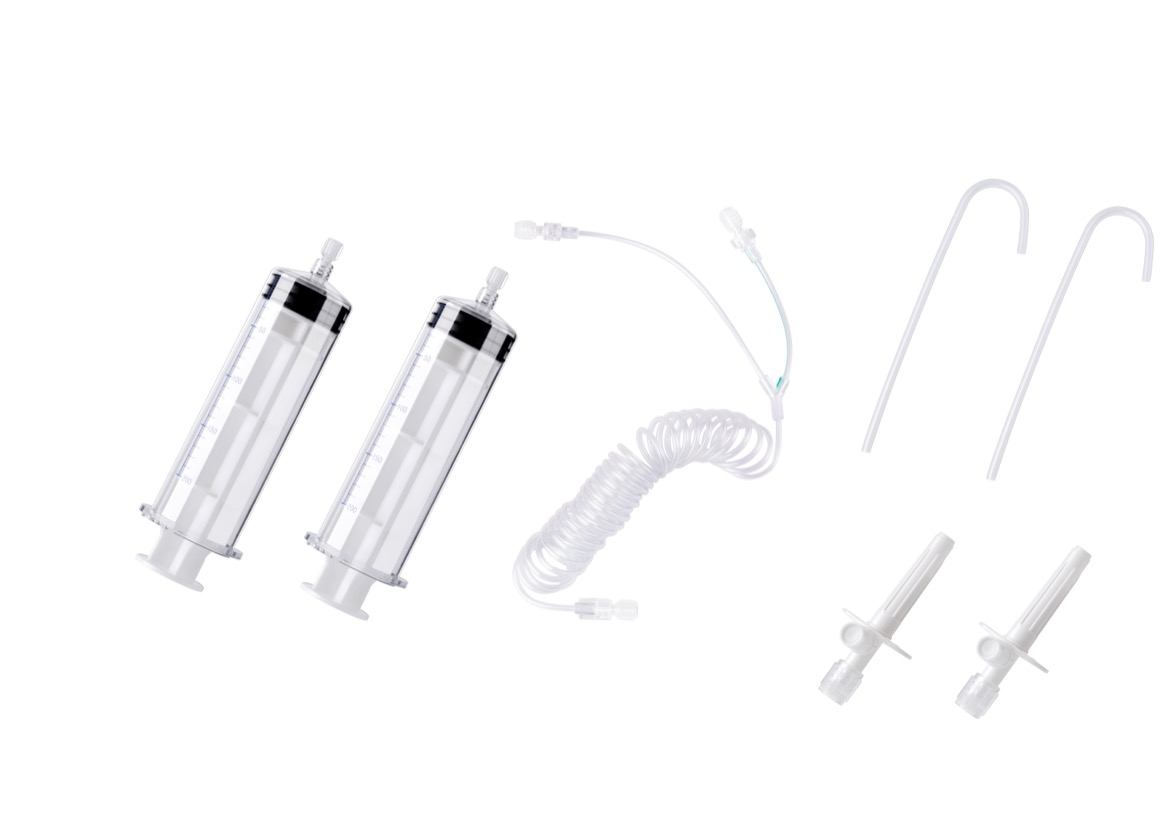
The cheapest unit price may not produce the lowest operating cost. Compare quotations using the cost per completed examination, including all components routinely needed for one procedure.
| Cost factor | Question to ask |
|---|---|
| Consumables | What syringe, tubing, and filling accessories are required per setup? |
| Waste | How often do opened kits become unusable or need replacement? |
| Staff time | Does setup or troubleshooting add work during routine use? |
| Interruptions | What happens if a kit does not fit, leaks, or is unavailable? |
| Supply terms | Do freight, minimum orders, or shelf life change the effective cost? |
Use your hospital's own purchasing and workflow data rather than a supplier's generic savings estimate. A modest difference in unit price may be outweighed by repeated setup problems or avoidable stock variation.
For procurement, this also creates a fairer comparison between complete kits and individually priced components. First define the configuration that clinical staff will actually use; then price that configuration consistently across bidders.
One of the most effective ways to close purchasing gaps is a documented, cross-functional trial. Procurement, radiology, infection prevention, and biomedical engineering should agree on the evaluation criteria before requesting samples.
1. Map installed equipment. Record injector brands, exact models, modalities, and currently approved consumable configurations.
2. Screen documents. Check intended use, compatibility information, product identification, quality documents, and the instructions for use.
3. Review samples. Assess packaging, labeling, completeness, and setup with the actual injector and accessories.
4. Evaluate routine use. Have trained staff follow local procedures and record fit, priming, connection, and workflow observations.
5. Document exceptions. Note mismatches, damaged packaging, unclear instructions, and any issues requiring supplier investigation.
6. Approve specific configurations. Record the accepted part numbers and define who must review future substitutions.
This process gives purchasing teams a defensible decision record. It also prevents a broad statement such as "brand compatible" from being mistaken for approval of every kit in a product family.
Ask suppliers to label samples with the exact proposed commercial part numbers and provide the corresponding instructions. Request the compatibility matrix, pressure specifications, packaging and shelf-life details, and a contact for technical questions.
If the supplier proposes an alternative component during the trial, document it as a separate configuration. Do not merge results from different syringes or tubing sets into one approval decision.
A hospital buying contrast injector disposables needs more than a shipment. It needs timely answers when equipment changes, staff report a fitting concern, or purchasing teams plan an additional imaging suite.
Evaluate whether the supplier can provide technical documentation, explain model-level compatibility, investigate complaints, and notify customers about relevant product changes. Distributors and OEM customers should also clarify labeling, documentation, and support responsibilities across the supply chain.
MAIWEI INC. offers contrast injector consumables for CT, MRI, and angiography through the wider Maiwei product network, including high-pressure syringes and connecting tubes. As with any manufacturer, hospitals should request the documentation for the specific products and installed injectors under consideration before making a purchasing decision.
Hospitals make stronger contrast injector consumable decisions when they assess safety, exact-model compatibility, pressure performance, documentation, usability, supply continuity, and actual operating cost together. A structured sample evaluation turns supplier claims into observations that clinical and purchasing teams can review.
If your hospital or distribution team is assessing MAIWEI products, send your injector model list, intended procedures, and required kit configurations to MAIWEI INC. Request a model-specific compatibility review, relevant product documents, and evaluation samples before placing a volume order.
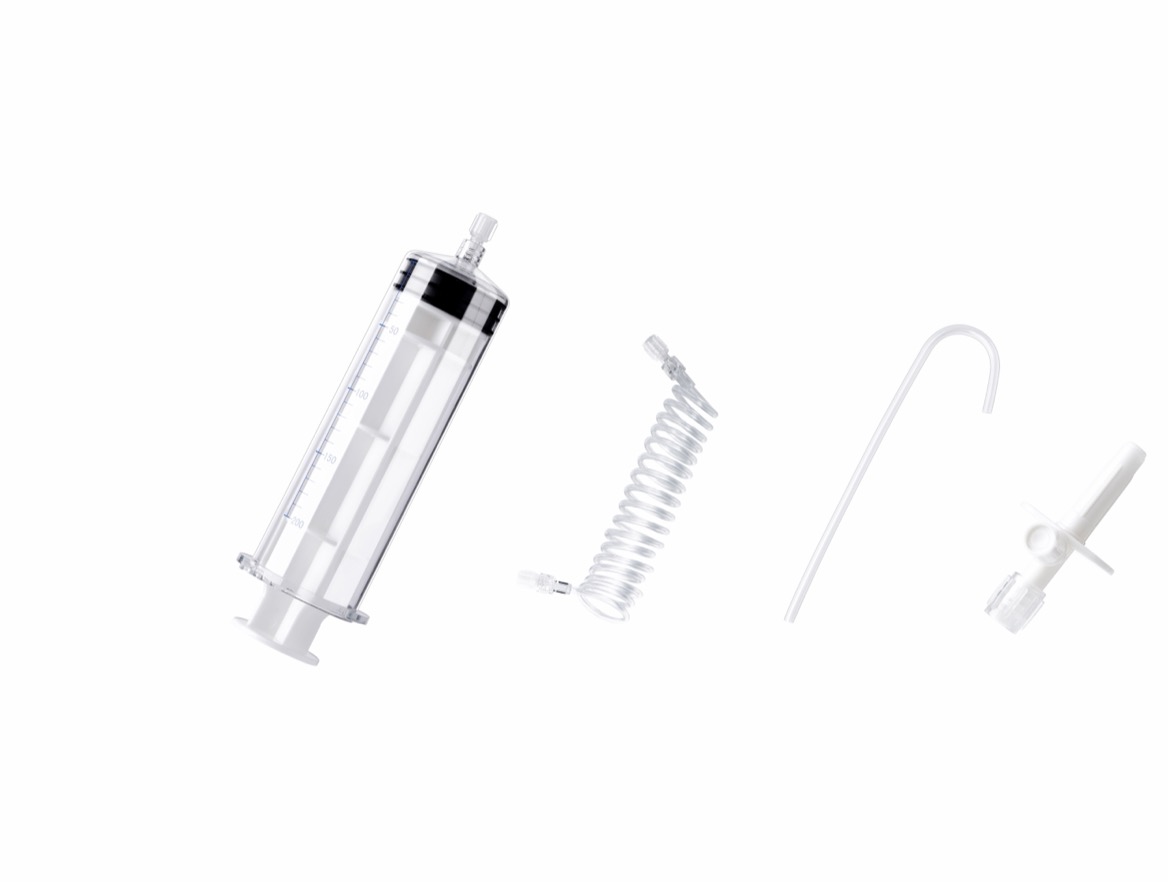
Not automatically. Check the exact injector model, syringe part number, accessories, and instructions for use. A general brand-level compatibility claim is not enough to approve a clinical configuration.
No. Pressure rating is one requirement among several. The complete fluid path must match the intended equipment and procedure, while staff follow the hospital's clinical protocols.
Request product specifications, instructions for use, exact-model compatibility information, applicable quality and market-access documents, and details for identifying production lots. Ask for documents covering the proposed part numbers.
No. It relates to a medical-device quality management system. Buyers should check the certificate's manufacturer, site, scope, and validity separately from product-specific regulatory and compatibility information.
Define the same usable configuration for both, evaluate samples with the installed equipment, and compare documented results. Include all required components and operational effects when calculating cost per completed examination.
Reassess it when the injector model changes, a component is substituted, the supplier changes a relevant product specification, or staff report a recurring fit or setup problem. Keep the approved part-number list current.
1. U.S. Food and Drug Administration. [510(k) Premarket Notification K253048]. Applicant, device description, and substantial-equivalence decision dated April 16, 2026. [accessdata.fda]
2. U.S. Food and Drug Administration. [K253048 decision letter, indications for use, and 510(k) summary]. Product configurations, compatibility information, pressure specifications, and testing described in the submission. [accessdata.fda]
3. Centers for Disease Control and Prevention. [Safe Injection Practices to Prevent Transmission of Infections to Patients]. Guidance on aseptic technique and single-patient use of injection and administration equipment. [cdc]
4. University of California, San Francisco, Department of Radiology. [CT and X-ray Contrast Guidelines Information]. Clinical workflow and vascular-access considerations for contrast administration. [radiology.ucsf]
5. International Organization for Standardization. [ISO 13485:2016 — Medical devices: Quality management systems]. Description and scope of the quality management standard. [iso]
6. European Commission. [Notified bodies for medical devices]. Overview of notified bodies and their conformity-assessment role. [health.ec.europa]
7. MAIWEI INC. [Company website] and [About Us]. Company-provided product, service, and organizational information. [maiweiusa]

