


close
Choose Your Site
Global
Social Media
Views: 289 Author: Maiwei Biotech Publish Time: 2026-10-09 Origin: Site


Content Menu
● Why Syringe Connections Leak
>> Incomplete Connector Engagement
>> Excessive Tightening and Connector Damage
>> Incompatible Syringes and Tubing
>> Pressure and Downstream Resistance
>> Pulling, Twisting, and Table Movement
>> Manufacturing, Storage, and Handling Defects
>> Stop and Assess the Patient
● Preventing Repeat Connection Leaks
>> Use a Pre-Injection Checklist
>> Investigate Without Premature Blame
>> Capture Useful Incident Data
>> Qualify Suppliers Beyond Certificates
>> Why does the connection leak only during injection?
>> Should I tighten a leaking connector?
>> Is syringe leakage the same as extravasation?
>> Can warmer contrast prevent connection leaks?
>> Does a pressure alarm prove excessive pressure caused the leak?
>> What should buyers request after repeated leaks?
Contrast leaking from the syringe and tubing connection usually indicates an incomplete seal, damaged connector, incompatible component, or an assembly exposed to pressure or mechanical stress beyond its intended conditions. The correct response is not simply to tighten the connection. It is to stop the injection, protect the patient, and identify why the connection failed.
For CT, MRI, and angiography teams, leakage can interrupt an examination, waste contrast, contaminate equipment, and compromise the intended contrast delivery. A small droplet deserves attention because visual inspection alone cannot establish whether the fluid pathway remains safe.
From a manufacturing and procurement perspective, the connection must be evaluated as part of a complete system: syringe, tubing, connectors, injector, and vascular access device. This guide explains likely causes, practical warning signs, and a structured approach to preventing repeat incidents.
It supports trained professionals and purchasing teams. It does not replace the applicable device instructions, institutional procedures, or clinical judgment.
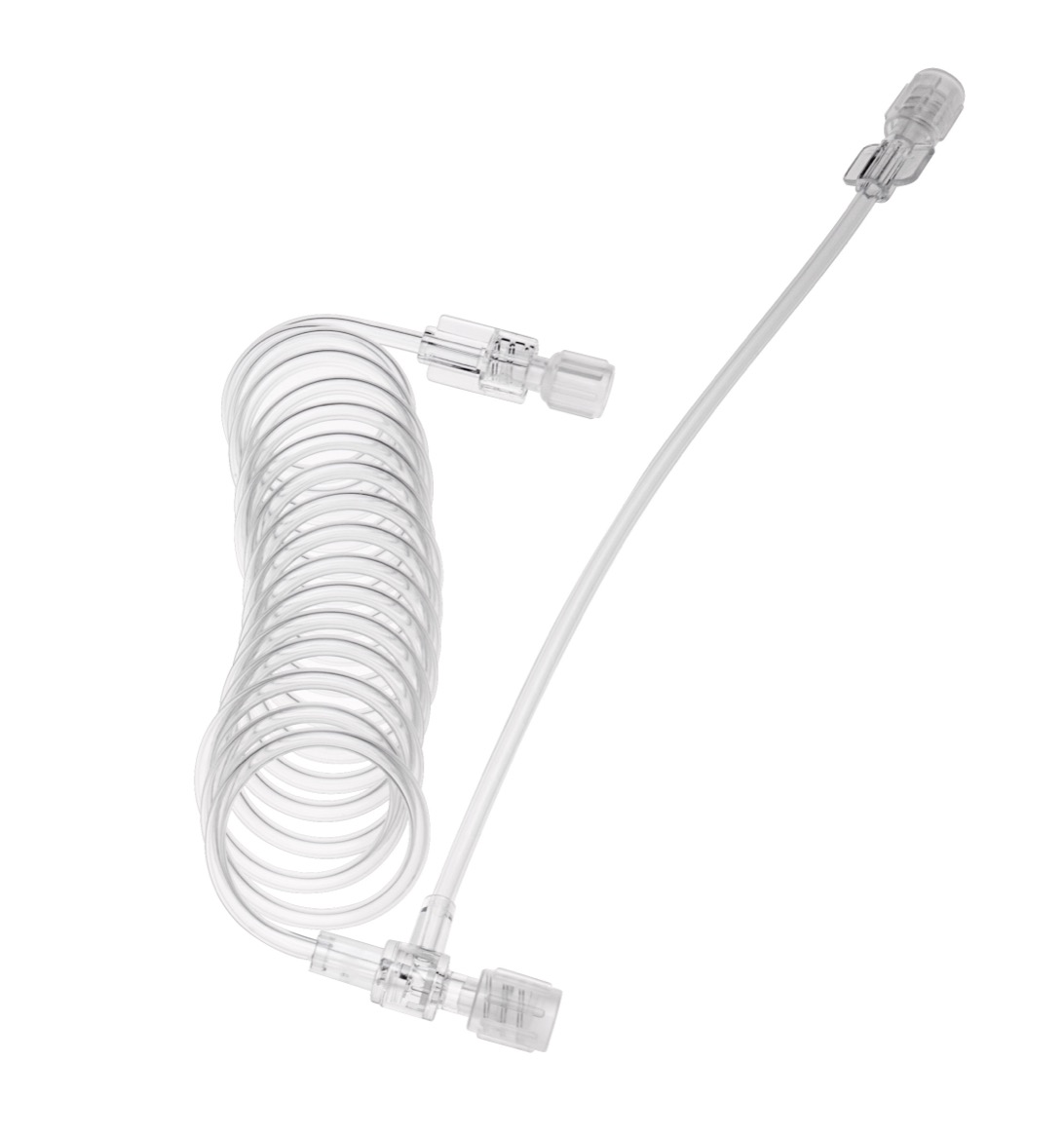
A connection may look assembled without being correctly seated. In a typical Luer-lock connection, the mating surfaces establish the fluid seal, while the locking mechanism helps maintain engagement.
Misalignment, incomplete engagement, or cross-threading can prevent the surfaces from fitting as intended. The joint may remain dry during filling but leak when injection pressure rises.
A useful inspection principle is alignment before tightening. If engagement feels abnormal, do not force the components together. Replace suspect disposables and follow the product-specific assembly instructions.
More force does not automatically create a better seal. Excessive tightening can damage plastic components, distort the connection, or aggravate an existing defect.
Potential warning signs include:
- Cracks around the syringe outlet or locking collar.
- Distorted threads or an uneven connector position.
- A connector that feels unusually loose after assembly.
- Visible damage where the tubing joins its connector.
Do not use tools, adhesive, tape, or improvised reinforcement to repair a disposable connection. A damaged component requires replacement, not a stronger grip.
There is no universal tightening torque appropriate for every contrast injector consumable.
A connector that physically attaches is not necessarily suitable for the intended injection system. Similar appearance does not establish pressure capability, model compatibility, or acceptable performance as a complete assembly.
Compatibility checks should include:
- Exact injector model and applicable accessories.
- Syringe and tubing catalog numbers.
- Connector configuration and intended application.
- Pressure ratings and operating limitations.
- Current instructions and local market authorization.
A general claim such as "compatible with major injectors" is insufficient for a clinical purchasing decision.
Some injector manuals restrict the disposables that may be used. Supplier claims should therefore be checked against both the consumable documentation and the injector manufacturer's instructions. An unresolved contradiction should not be treated as permission to proceed.
Contrast injector tubing leakage may become apparent when resistance increases elsewhere in the fluid pathway. Possible contributors include a kinked tube, an incorrectly positioned valve, unsuitable vascular access, or a restricted catheter.
Contrast viscosity, tubing dimensions, catheter characteristics, and flow rate also influence the pressure needed to deliver fluid.
The important distinction is rating versus actual pressure. A consumable's pressure rating is an operating limit, not a recommended injection setting. The approved configuration must satisfy the requirements of every component involved.
Do not raise the injector pressure limit to overcome an unexplained restriction. Investigate the cause and follow the authorized clinical protocol.
A connection can experience stress even when the programmed injection parameters remain unchanged. Tubing caught on equipment, insufficient slack, or movement between the injector and patient can pull or twist the joint.
Check the line with the patient and equipment in their intended positions. Ensure that anticipated scanner movement does not place tension on the connectors.
This is particularly important when a connection appears secure during preparation but becomes wet after repositioning.
Avoid introducing unnecessary adapters or extensions. Every added component changes the assembly and requires its own compatibility assessment.
Potential component-related causes include molding defects, damaged sealing surfaces, or failure at the tubing-to-connector bond. Packaging damage and handling conditions may also warrant investigation.
However, a single leak does not establish a manufacturing defect.
A credible conclusion requires evidence: the exact leak location, product identification, operating conditions, and examination of the affected assembly. Repeated incidents involving the same configuration or lot should trigger a formal quality review.
If leakage occurs during injection, stop delivery using the injector's prescribed controls. Notify the responsible clinical professional and assess the patient and vascular access site.
External equipment leakage and contrast extravasation are different events. Extravasation means contrast has escaped the vessel into surrounding tissue.
| Observation | Possible concern | Immediate priority |
|---|---|---|
| Fluid around the syringe outlet | Connector seal or syringe damage | Stop and inspect the assembly |
| Fluid at the tubing bond | Tubing or bonded-joint failure | Replace affected components |
| Pain or swelling at the access site | Possible extravasation | Initiate the clinical assessment pathway |
| Rising pressure with little flow | Restriction or unsuitable configuration | Investigate before restarting |
| Wetness after table movement | Mechanical tension or another leak source | Trace the source and check routing |
These observations guide assessment; they do not confirm a diagnosis. External leakage does not exclude a simultaneous patient-side problem.
Do not disconnect, tighten, or manipulate a connection while it remains pressurized. Stop the injector and follow its instructions for safely managing residual pressure.
Do not simply wipe away the fluid and resume the injection.
Replace damaged or suspect disposable components according to the applicable instructions and institutional policy. Treat uncertain sterility as a reason to replace the affected fluid-path components.
If fluid has reached the injector or electrical equipment, follow the equipment-specific spill and cleaning procedure. Do not apply an arbitrary disinfectant to sensitive interfaces.
Any decision to continue requires clinical oversight. The responsible team should assess how much contrast may have reached the patient, whether the intended bolus was interrupted, and whether the examination remains diagnostically adequate.
Before an authorized restart:
1. Verify the replacement components and their compatibility.
2. Assemble and prime the fluid pathway as instructed.
3. Expel air with the patient disconnected, following the device procedure.
4. Reassess vascular access according to the clinical protocol.
5. Confirm tubing routing and injection settings.
6. Obtain the required clinical authorization.
Do not automatically repeat the full contrast dose. The injector's recorded delivery information requires interpretation when fluid may have escaped outside the intended pathway.
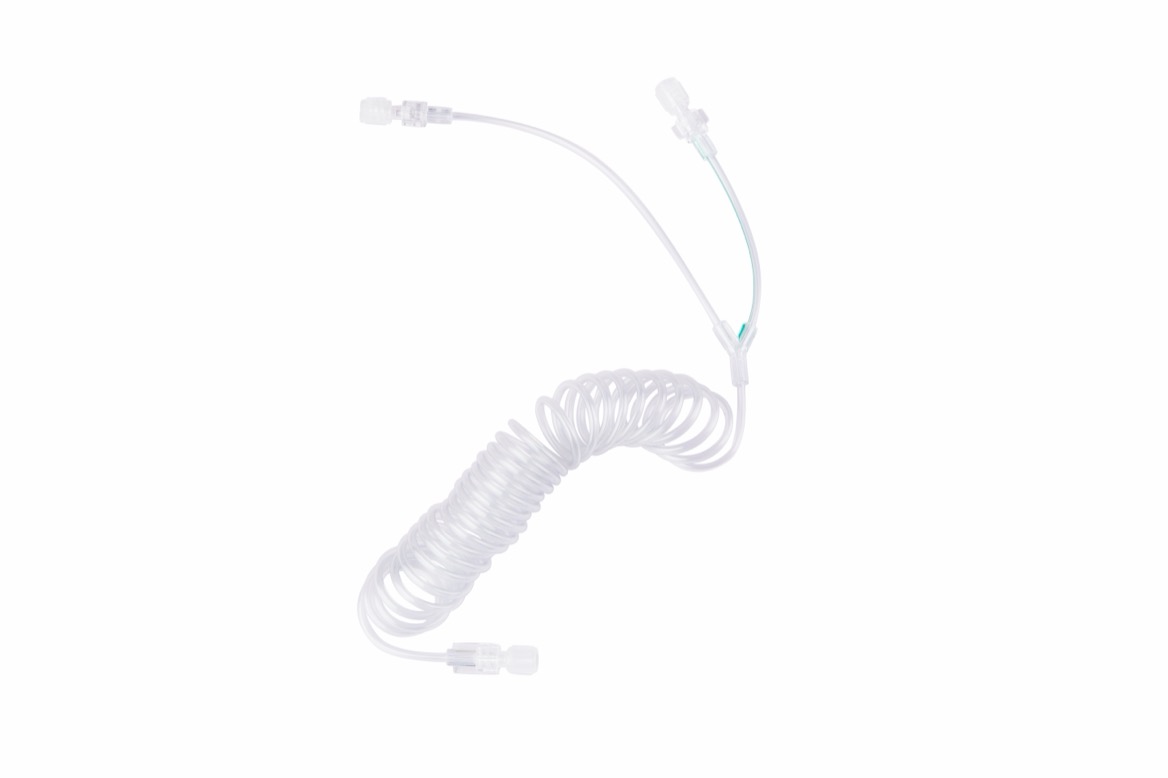
A short, consistent checklist helps teams identify preventable problems without relying on memory alone.
- Verify the injector model and disposable catalog numbers.
- Inspect packaging, expiry information, and visible component condition.
- Assemble connections using the specified technique.
- Confirm that the syringe is correctly installed.
- Prime the complete pathway and inspect for air.
- Check valves, tubing routing, and potential restrictions.
- Confirm vascular access suitability and prescribed parameters.
- Recheck connections after relevant repositioning.
A successful saline check does not prove that the assembly will behave identically during contrast delivery. Contrast viscosity and the actual protocol can produce different operating conditions.
Staff should understand both how to assemble the set and why particular checks matter.
The visible droplet may not identify the original failure. Fluid can track along a connector or tubing surface before collecting elsewhere.
After the system has been made safe, record where fluid first appeared. Distinguish the syringe outlet, connector interface, tubing bond, and another upstream or downstream source.
For example, fluid collecting near the locking collar may originate from a crack in the syringe tip rather than incomplete locking engagement.
Photographs can support investigation when taken according to institutional policy and without exposing patient information. They supplement inspection; they do not replace it.
Consider this hypothetical scenario: a department reports leakage after switching to a longer extension set. No obvious connector damage is visible.
Several explanations remain possible: a different component rating, increased flow resistance, altered routing, assembly differences, or an unrelated product defect.
The appropriate response is a controlled investigation, not an immediate conclusion that the supplier or operator caused the problem.
Qualified personnel should review the configuration and, where appropriate, conduct non-patient testing under an approved procedure. Do not deliberately recreate a suspected failure on a patient.
Change one variable at a time where practicable, and document the conditions. This makes the results more useful for corrective action.
"Tubing leaked" gives a manufacturer little information. A structured incident report should capture:
| Information | Investigative value |
|---|---|
| Injector model and software details, if relevant | Defines the operating system |
| Syringe and tubing catalog numbers | Identifies the exact configuration |
| Lot numbers and expiry dates | Supports traceability |
| Contrast product and relevant handling conditions | Helps interpret viscosity-related factors |
| Flow rate, pressure limit, and recorded pressure | Describes injection conditions |
| Leak location and timing | Narrows the failure mechanism |
| Patient and equipment movement | Identifies possible mechanical stress |
| Other incidents and units used | Provides context for recurrence |
Preserve affected components according to biohazard, institutional, and supplier procedures. Do not return contaminated devices without an agreed handling process.
Track connector leakage separately from patient extravasation. Combining them produces misleading incident statistics.
For hospitals, distributors, and OEM buyers, documentation should answer a practical question: does this exact consumable support the intended configuration?
Ask suppliers for model-specific compatibility information, pressure specifications, current instructions, traceability arrangements, and relevant performance evidence.
Quality-system certification, CE documentation, and U.S. regulatory clearance address different requirements. None is a blanket guarantee that every product combination is appropriate.
The public U.S. record for Shenzhen Maiwei Biotech lists 510(k) K253048 for high-pressure syringes, pressure connecting tubes, and associated filling components, with a substantially equivalent decision dated April 16, 2026. Procurement teams should verify that the selected product falls within the applicable documentation rather than describing all company products as universally cleared.
MAIWEI INC. serves hospitals, distributors, and OEM customers seeking CT, MRI, and angiography consumables. For a configuration review, provide the exact injector model, current syringe and tubing codes, intended protocol, and destination market.
Contact MAIWEI INC. to request model-specific product documentation and discuss sample evaluation before placing a volume order. For an existing leak complaint, include lot details and an incident description so the review addresses the actual failure.
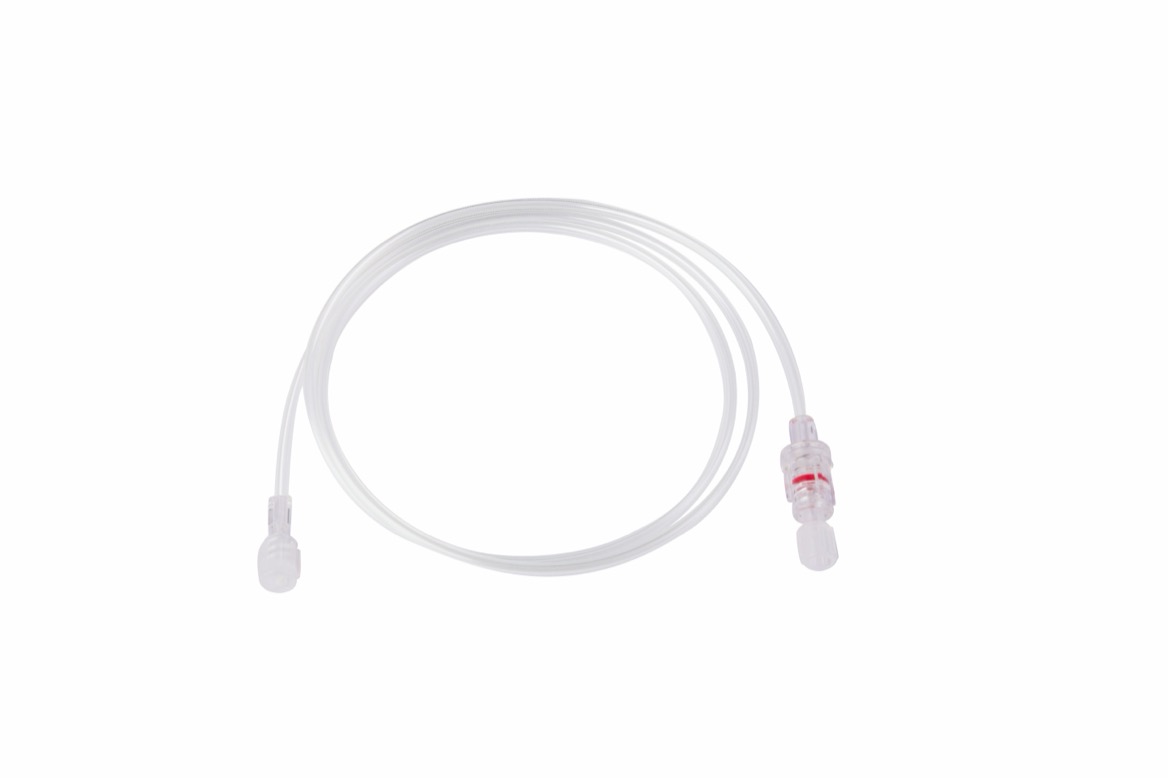
Injection can expose an incomplete seal, damaged connector, or unsuitable component to conditions not present during filling. Higher pressure, downstream resistance, or mechanical tension may reveal the problem. The timing is useful evidence, but it does not identify the cause by itself.
Do not adjust it while the system is operating or pressurized. Stop delivery, follow the safe handling procedure, and inspect the assembly. Replace suspect components as instructed. Forcing a damaged or misaligned connector can make the problem worse.
No. Syringe or tubing leakage occurs outside the intended equipment fluid pathway. Extravasation occurs when contrast escapes a blood vessel into surrounding tissue. Both require attention, and an external leak does not eliminate the need to assess the patient.
Appropriate warming can reduce the viscosity of iodinated contrast and the pressure needed for delivery. It cannot repair a damaged seal or establish compatibility. Follow the contrast product's labeling and institutional policy rather than using warming as a leak remedy.
No. An alarm indicates a system condition that needs interpretation. It does not establish the original failure mechanism. Review the recorded pressure, component specifications, possible restrictions, and leak location together. A leak should not be dismissed because no alarm occurred.
Request a documented complaint investigation, lot review, relevant inspection or testing findings, and corrective-action information where warranted. Provide the configuration and operating data. If a batch-related problem is suspected, follow institutional procedures for isolating stock pending review.
1. Bayer HealthCare. [MEDRAD Stellant CT Injection System with Certegra Workstation: Operation Manual]. Relevant sections include warnings, pressure limiting, response to occlusions, injection preparation, disposable removal, and spill management. Manufacturer manual hosted by ManualsLib; consult the current version applicable to the installed system. [manualslib]
2. Bayer Medical Care. [MEDRAD Stellant CT Connector Tubing: Instructions for Use]. LP-96-T-CV; document 86645629, Revision A, March 6, 2019. Product-specific reference for preparation, priming, and disposable handling; not a universal instruction for other tubing sets. [manualslib]
3. American College of Radiology. [ACR Manual on Contrast Media, 2024]. Relevant guidance covers contrast injection, vascular access, viscosity, warming, and extravasation. This is the 2024 edition, not a claim that it is the latest edition. [geiselmed.dartmouth]
4. University of California, San Francisco, Department of Radiology and Biomedical Imaging. [CT and X-ray Contrast Guidelines Information]. Relevant sections address practical administration, access assessment, and patient monitoring. The page identifies an August 22, 2025 update for its IV contrast guidance. [radiology.ucsf]
5. U.S. Food and Drug Administration. [510(k) Premarket Notification K253048]. Applicant: Shenzhen Maiwei Biotech Co., Ltd. Devices: high-pressure syringe, pressure connecting tube, quick fill tube, spike, and transfer tube. Decision: substantially equivalent; April 16, 2026. [accessdata.fda]
6. MAIWEI INC. [About Us]. Source for the company's role within the global Maiwei network, contrast-delivery consumable focus, and customer-support positioning. Company-provided information should be distinguished from independent clinical evidence. [maiweiusa]