


close
Choose Your Site
Global
Social Media
Views: 288 Author: Maiwei Biotech Publish Time: 2026-10-29 Origin: Site


Content Menu
● What Causes Uneven Syringe Plunger Movement?
● Syringe Plunger Friction: Break-Loose Force Versus Glide Force
>> Why the Plunger May Hesitate at the Start
>> How Stick-Slip Motion Develops
● Why Contrast Media and Tubing Affect Plunger Movement
>> Contrast Viscosity Changes the Required Pressure
>> Narrow or Restricted Pathways Increase Resistance
● Can Injector Settings Make the Plunger Slow Down?
>> Pressure Limiting Can Change Delivery
>> Loading and Drive Engagement Also Matter
● How to Troubleshoot Uneven Syringe Plunger Movement Safely
>> 1. Stop and Assess the Situation
>> 4. Confirm Compatibility and Ratings
>> 5. Escalate Unresolved Problems
● Expert Insight: Read the Force Profile, Not Just the Peak
● Practical Investigation: Separate Syringe Friction from System Resistance
● What Hospitals, Distributors, and OEM Buyers Should Request
● How MAIWEI INC. Can Support Consumable Evaluation
>> Is Uneven Syringe Plunger Movement Always a Syringe Defect?
>> Can Air Bubbles Cause Abnormal Injection Behavior?
>> Should Staff Push Harder When a Plunger Sticks?
>> Does Warming Contrast Solve a Sticking Plunger?
>> Can a Syringe Fit an Injector but Still Be Unsuitable?
>> Does a Jerky Plunger Prove That the Patient Received an Uneven Dose?
A syringe plunger moves unevenly during injection when the force needed to move it changes along its travel. Common causes include friction between the plunger seal and barrel, inconsistent lubrication, incorrect syringe loading, resistance in the fluid pathway, and injector pressure-limit responses. In CT, MRI, and angiography workflows, jerky syringe plunger movement should therefore be assessed as a system-level issue—not automatically blamed on the syringe.
From a manufacturing and application-support perspective, the key distinction is between resistance inside the syringe and resistance downstream. Understanding that difference helps clinical teams troubleshoot safely and helps procurement teams evaluate high-pressure injector consumables more effectively.
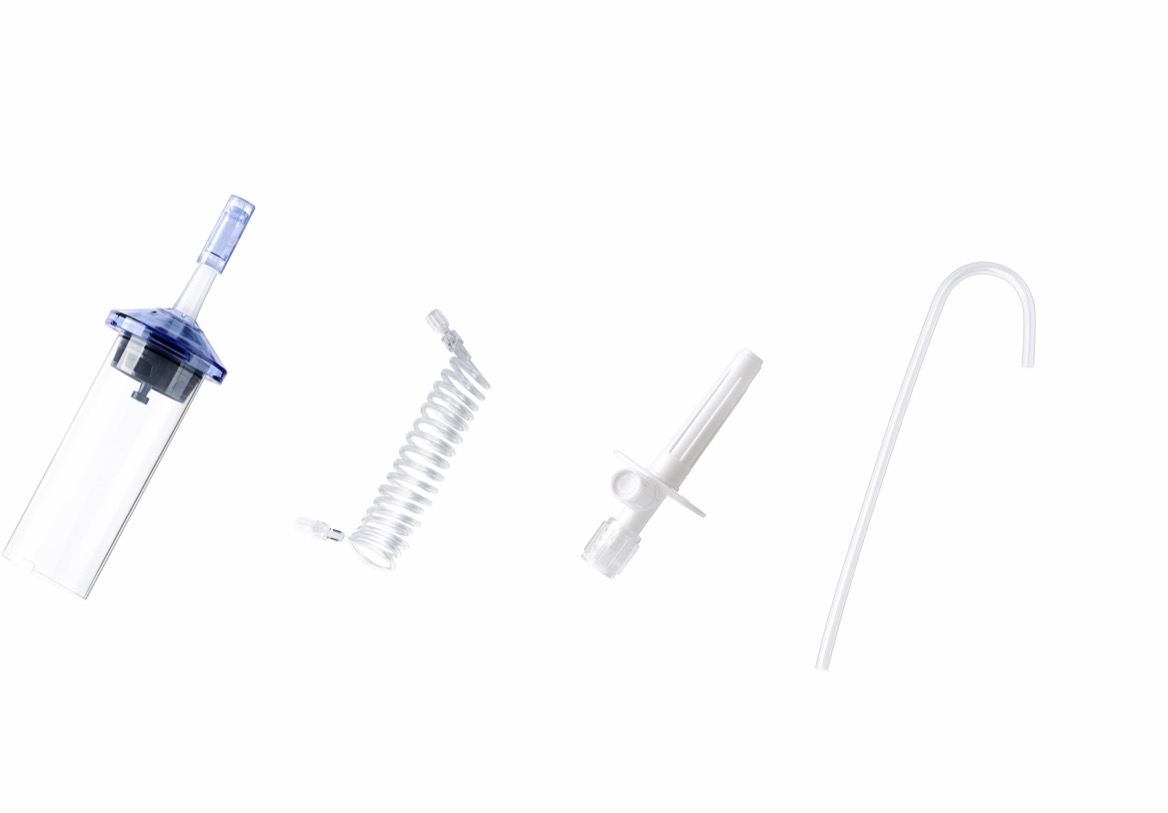
Smooth injection depends on the interaction of the syringe, injector drive, contrast medium, connecting tubing, and vascular access device. A problem in any part of that chain can change how the plunger advances.
| Potential cause | What may be observed | What requires investigation |
|---|---|---|
| High initial seal friction | Hesitation followed by sudden movement | Break-loose force and storage history |
| Variable sliding friction | Repeated catching during travel | Lubrication, seal condition, and barrel consistency |
| Incorrect loading | Irregular engagement or mechanical noise | Syringe seating and drive coupling |
| High fluid-path resistance | Slower movement with rising pressure | Contrast viscosity, tubing, connectors, and catheter |
| Injector pressure limiting | Reduced delivery rate or interruption | Pressure trace, alarms, and system instructions |
These observations are clues, not diagnoses. Plunger appearance alone cannot establish the cause or confirm that the programmed flow reached the patient.
Break-loose force is the force required to initiate movement after the plunger has been stationary. Glide force is the force required to keep it moving.
The seal must contact the barrel firmly enough to prevent leakage. However, that contact also creates friction. When starting friction is substantially higher than sliding friction, movement may begin with a noticeable hesitation followed by a jump.
A starting-force peak is not automatically a defect. Its acceptability depends on the product specification, intended application, and validated test conditions.
Stick-slip describes alternating sticking and sliding at the seal–barrel interface. The plunger temporarily resists movement, then advances when the applied force overcomes that resistance.
Lubrication, seal geometry, barrel surface condition, and material interactions can influence this behavior. Where silicone lubrication is part of the design, its distribution and stability matter alongside its quantity.
For purchasing teams, the useful question is not simply whether a syringe is lubricated. It is whether the manufacturer controls the resulting force profile throughout the intended shelf life.
A high-pressure injector must generate enough pressure to move fluid through the complete delivery pathway. More viscous contrast generally requires greater pressure under otherwise comparable conditions.
Temperature can influence viscosity. Nevertheless, contrast should only be warmed when permitted by its labeling and the facility's approved procedures. Warming is not a universal solution to abnormal plunger movement.
When reviewing an event, record the contrast product, concentration, temperature conditions, and programmed flow rate. Without those details, comparisons between injections may be misleading.
The syringe may function correctly while encountering excessive downstream resistance.
Potential contributors include:
- Kinked connecting tubing.
- A partially closed stopcock.
- An unsuitable connector.
- A restricted catheter.
- A vascular access device inappropriate for the prescribed injection.
Tubing length and internal diameter also affect resistance. Longer or narrower pathways can require higher pressure at the same flow.
Each component must be suitable for the intended application. A pressure-rated syringe does not make an unrated extension line or vascular access device suitable for power injection.
The programmed flow rate is a target, not a guarantee under every resistance condition.
When the pressure required to maintain that flow approaches the configured limit, an injector may reduce delivery or interrupt the injection, depending on its design and operating conditions. The plunger can therefore appear to slow even when the syringe itself is not sticking.
Review the device's actual flow information, pressure trace, and event messages where available. Visual inspection alone cannot reliably distinguish pressure-limited operation from mechanical friction.
Do not increase the pressure limit merely to overcome abnormal movement. Settings must remain within the applicable instructions and the ratings of the complete fluid pathway.
A compatible syringe still requires correct installation. Incomplete seating or incorrect engagement with the injector drive can interfere with operation.
Follow the model-specific loading procedure. Check retaining features, adapters, and engagement indicators where applicable.
If abnormal movement persists with correctly loaded, approved consumables, remove the equipment from clinical use as required by facility procedures and involve qualified technical personnel.
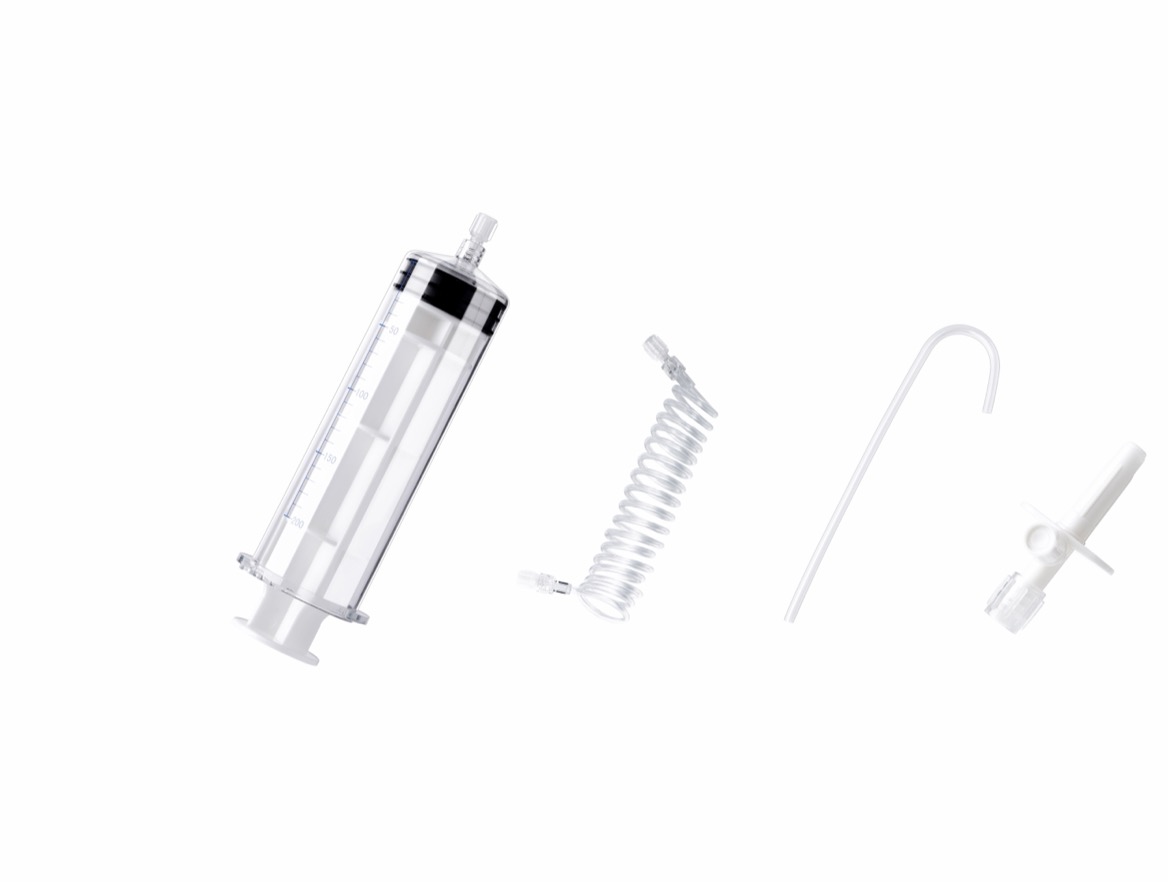
The first priority is safety, not completing the programmed injection.
If movement becomes abnormal during patient use, follow the injector's instructions and the facility's emergency procedures. Qualified staff should assess the patient, injection site, alarms, and delivery system.
Pain, swelling, leakage, visible air, or unexpected pressure behavior requires prompt attention. A plunger problem must not distract from possible extravasation or another clinical complication.
Before discarding components, record information permitted by local procedures:
- Injector model and relevant configuration.
- Syringe and tubing product codes.
- Lot numbers and expiration dates.
- Contrast product and temperature conditions.
- Programmed volume, flow, and pressure limit.
- Actual delivery information and alarm messages.
- The point in the stroke where movement changed.
Retain suspect components safely for investigation when appropriate.
Check for visible damage, incorrect loading, loose connections, kinked tubing, closed stopcocks, and unapproved component combinations.
Do not dismantle, lubricate, or modify a sterile single-use syringe to make it move more smoothly. Such intervention changes the product's validated condition.
Verify the exact injector model, syringe reference, connecting tubing, and vascular access device.
"Compatible" should describe a documented application, not a visual resemblance. Confirm the relevant instructions, maximum pressure, flow limitations, and any required adapters.
Clinical troubleshooting should not become improvised experimentation on a patient-connected system.
Any further functional testing should follow authorized procedures, use appropriate test equipment, and occur outside patient use. Repeated failures warrant supplier quality review and, where indicated, injector service evaluation.
A single maximum-force value cannot fully describe plunger performance.
A force-versus-displacement curve shows how resistance changes throughout the stroke. Useful features include:
- The initial break-loose peak.
- Average sliding resistance.
- Repeated force fluctuations.
- Localized peaks at similar barrel positions.
- Changes near the end of travel.
A repeated peak at the same position may justify investigating a localized barrel or seal interaction. Broadly elevated force may suggest a different investigation pathway.
These patterns generate hypotheses; they do not prove root cause. Test speed, conditioning, syringe configuration, and the test fixture can all affect interpretation.
Methods used for manually operated syringes or prefilled systems can inform investigation, but their acceptance limits should not automatically be transferred to high-pressure imaging syringes.
Consider a hypothetical CT department reporting intermittent "sticking" with one syringe product.
A useful investigation separates three questions:
1. Does the symptom track with a particular syringe lot?
2. Does it track with one injector or loading configuration?
3. Does it occur mainly under higher-resistance injection conditions?
Qualified personnel can compare retained samples under controlled, documented conditions without connecting the test system to a patient.
If friction variability follows the syringe lot, investigate manufacturing and storage factors. If the problem follows one injector, examine loading, drive engagement, and service history. If it appears mainly with particular fluid-path configurations, investigate hydraulic resistance and application suitability.
This structured approach avoids prematurely blaming either the consumable or the equipment.
Procurement teams should evaluate evidence relevant to the complete application rather than relying on a broad "smooth injection" claim.
| Evidence to request | Why it matters |
|---|---|
| Exact injector compatibility documentation | Defines the supported application |
| Relevant pressure and leakage testing | Supports fluid-path integrity |
| Plunger-force evaluation | Characterizes starting and sliding behavior |
| Shelf-life and packaging validation | Addresses performance through labeled storage |
| Lot traceability and complaint procedures | Supports investigation and corrective action |
| Product-specific regulatory documentation | Clarifies the status of the exact device |
Regulatory terms also require precision. ISO 13485 concerns a manufacturer's quality management system; it does not independently demonstrate every product performance claim. CE marking and FDA 510(k) clearance have different regulatory meanings and should not be treated as interchangeable "certifications."
Request documentation for the exact product, intended use, and destination market.
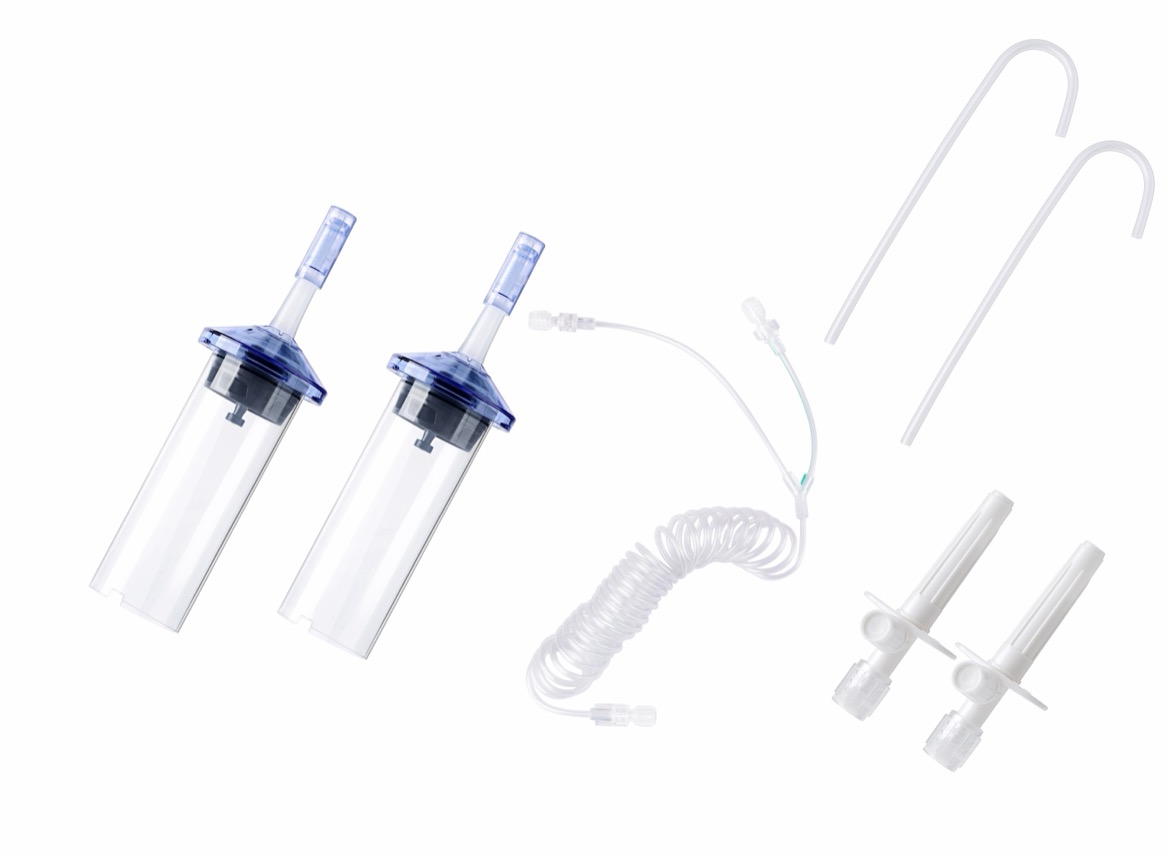
MAIWEI INC. focuses on the development and manufacture of CT, MRI, and angiography high-pressure injector consumables, including syringes, connecting tubing, and related accessories.
MAIWEI serves hospitals, distributors, and OEM customers across more than 60 countries and regions and reports ISO 13485, CE, and FDA 510(k) credentials. Buyers should confirm the applicable scope and product-specific documentation during qualification.
For a compatibility assessment, contact MAIWEI with your injector model, required syringe capacity, tubing configuration, operating requirements, and destination market. Request the relevant product documentation and agree on evaluation criteria before beginning local qualification.
No. Internal friction is one possibility, but incorrect loading, high downstream resistance, and injector pressure-limit responses can produce similar observations. Investigation should consider the complete system.
Air is compressible and can affect system behavior, but visible movement cannot reliably identify air as the cause. Air in a contrast injection pathway is a safety concern. Follow the prescribed filling, inspection, and purging procedures before patient connection.
No. Applying extra force or overriding normal operation can conceal a restriction or equipment problem. Follow the device instructions and facility procedures, and investigate the cause rather than forcing delivery.
Not necessarily. Approved warming may reduce viscosity-related resistance, but it does not correct seal friction, damaged components, incorrect loading, or injector faults. Follow the contrast manufacturer's temperature and storage instructions.
Yes. Physical fit does not establish validated compatibility, pressure capability, or correct drive engagement. Confirm the exact syringe–injector combination and all associated instructions before use.
No. Visual movement alone cannot establish delivered volume or flow. Review the injector's delivery records, pressure information, alarms, and clinical observations. Qualified personnel should assess any suspected delivery discrepancy.
1. ZwickRoell. "ISO 7886-1 Syringe Testing." Technical overview of breakaway force, glide-force measurement, and lubrication-related influences. Its scope should not be interpreted as a universal acceptance specification for imaging injector syringes. [zwickroell]
2. "Pressure Injectors for Radiologists: A Review and What Is New." Indian Journal of Radiology and Imaging; available through PubMed Central. Discusses injector operation, fluid-path considerations, and injection safety. [pmc.ncbi.nlm.nih]
3. Bayer HealthCare. "MEDRAD Stellant CT Injection System Operation Manual, Revision D." Discusses pressure, fluid resistance, viscosity, and pressure-limited operation. Consult the current instructions for the installed system. [bioclinicalservices.com]
4. Pennsylvania Patient Safety Authority. "Venous Air Emboli and Automatic Contrast Media Injectors." Safety advisory addressing air-related hazards, inspection, preparation, and adherence to manufacturer instructions. [patientsafety.pa]
5. "FDA Warns of Dangers of Misusing Vascular Access Devices." Reproduction of an FDA safety communication concerning power-injection suitability and labeled pressure and flow limits, hosted by GAVeCeLT. [gavecelt]