


close
Choose Your Site
Global
Social Media
Views: 238 Author: Maiwei Biotech Publish Time: 2026-09-24 Origin: Site


Content Menu
● Why Disposable Contrast Injector Syringes Are Different
● Sterility: A Complete System Requirement
>> Sterility Supports Patient Protection
>> Ethylene Oxide Sterilization Requires Validation
>> Sterility Assurance Is Not the Same as a Sterility Test
● Material Selection: More Than Choosing Medical-Grade Plastic
>> The Plunger and Piston Seal
>> Connection Tubing and Fittings
● Sterility vs. Material Selection: The Key Differences
● How Sterilization Can Affect Materials
● A Practical Selection Framework for Hospitals and Distributors
>> Step 1: Confirm Intended Use
>> Step 2: Verify Compatibility Evidence
>> Step 3: Review Sterile Barrier and Shelf Life
>> Step 4: Assess Material and Fluid-Path Documentation
>> Step 5: Conduct a Controlled Clinical Evaluation
>> Choosing Only by Unit Price
>> Treating "Medical Grade" as Enough
>> Assuming Compatibility Means Interchangeability
● What a Reliable Manufacturing Partner Should Provide
● FAQ
>> 1. Why must contrast injector syringes be sterile?
>> 2. What materials are commonly used in disposable contrast injector syringes?
>> 3. Does EO sterilization affect syringe materials?
>> 4. How can a hospital verify injector compatibility?
>> 5. What is the difference between a standard syringe and a high-pressure injector syringe?
>> 6. Why is packaging important for sterile disposable syringes?
>> 7. What documents should distributors request from a contrast injector consumable manufacturer?
Disposable contrast injector syringes are not ordinary plastic consumables. In CT, MRI, and angiography procedures, they form part of the fluid pathway that delivers contrast media or saline under controlled pressure. For that reason, sterility and material selection directly influence patient safety, injection reliability, image-quality workflow, and the confidence that hospitals and distributors place in a supplier.
For buyers of disposable contrast injector syringes, the right question is not simply, "Is this syringe compatible with my injector?" It should be: Can this sterile, single-use system maintain its integrity, material performance, and connection security throughout the intended procedure? A well-designed syringe, connection tube, and accessory set must work together under pressure, during storage, and at the point of care.
For MAIWEI INC., a manufacturer focused on CT, MRI, and angiography high-pressure injector consumables, these requirements are central to product development. Hospitals, distributors, and OEM partners need consumables that are compatible with mainstream injectors while supporting reliable clinical workflows across different global markets.
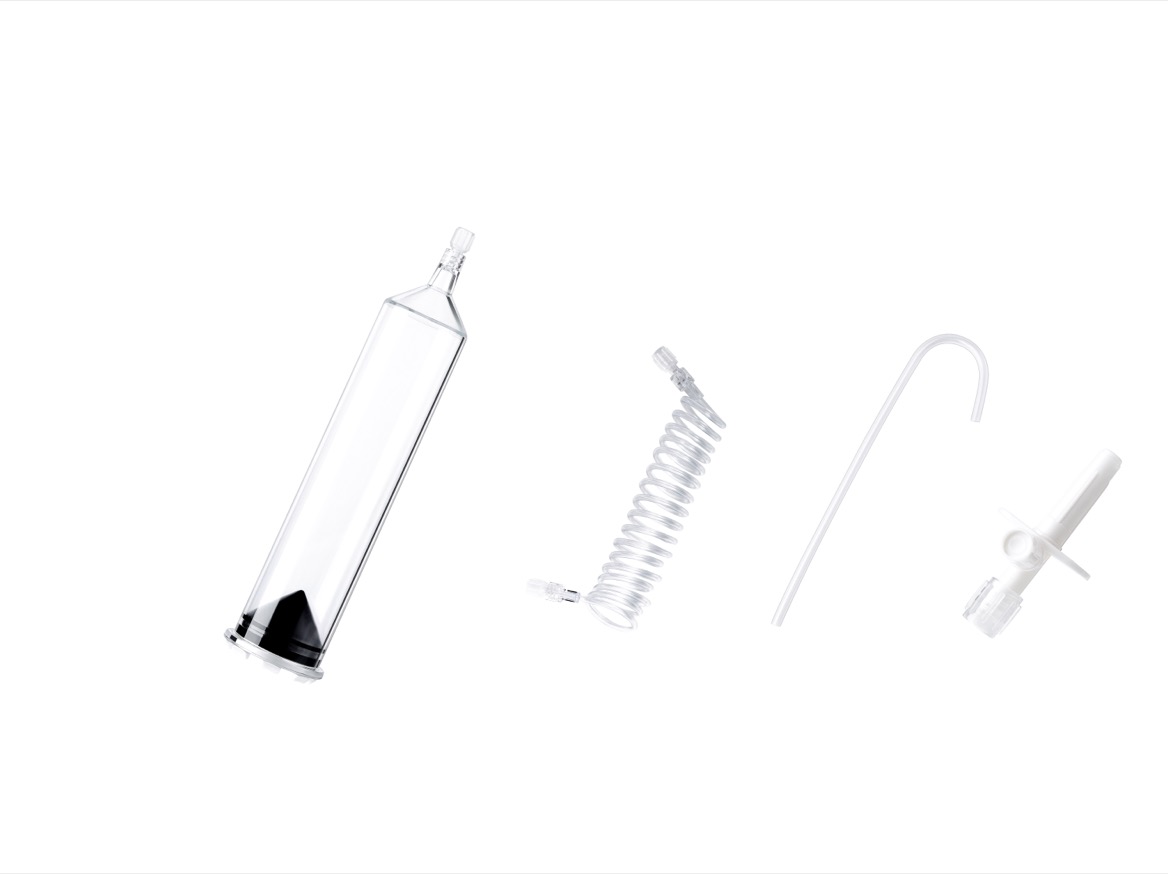
A disposable contrast injector syringe is designed for power-driven delivery rather than simple manual injection. It may be exposed to higher pressures, contrast media with specific viscosity characteristics, saline, temperature variation, and mechanical force from an injector system.
In angiography, an injector and syringe are used to deliver contrast material into the heart, great vessels, and coronary arteries for X-ray imaging. This application shows why the syringe cannot be assessed as an isolated component: the syringe, high-pressure injector, tubing, connectors, and contrast media must operate as an integrated system.
The engineering requirements for a disposable contrast injector syringe generally include:
- Sterile fluid-contact surfaces
- Single-use traceability
- Pressure resistance
- Secure luer or proprietary injector connection
- Low-leakage performance
- Material compatibility with contrast media and saline
- Dimensional consistency for injector compatibility
- Packaging that preserves sterility until use
A syringe that appears visually similar to another model may behave very differently under pressure. Differences in barrel resin, plunger seal, connector geometry, wall thickness, molding control, lubricant system, packaging seal, or sterilization validation can change real-world performance.
Sterility is often reduced to a short label claim: "EO sterile" or "single use only." In practice, sterility is not a one-step event. It is a controlled system involving product design, manufacturing environment, sterilization validation, packaging, transport protection, shelf-life evaluation, and final release controls.
A disposable contrast injector syringe should remain sterile from the time it leaves the manufacturer until the sterile barrier is opened immediately before use. That means the syringe itself is only one part of the equation. The package must also maintain its protective function during shipping, storage, handling, and shelf life.
ISO 11607-1 specifies requirements and test methods for packaging materials and sterile barrier systems intended to maintain the sterility of terminally sterilized medical devices until the point of use.
Contrast delivery involves an invasive fluid pathway. Any failure in sterility control can introduce avoidable risk into a clinical procedure. A sterile disposable syringe helps hospitals reduce the burden of reprocessing and minimizes the risk associated with reuse, inadequate cleaning, or cross-patient contamination.
From a clinical workflow perspective, a properly packaged, clearly labeled sterile device offers several practical benefits:
- A defined single-patient-use pathway
- Clear preparation procedures for imaging staff
- Reduced uncertainty around reprocessing
- More consistent inventory handling
- Simpler lot-level traceability
- More reliable preparation for high-volume imaging departments
Sterility also affects purchasing decisions. Distributors and hospital procurement teams increasingly expect documentation that supports the sterile claim, including sterilization method, shelf-life information, package configuration, lot identification, and product labeling.
Ethylene oxide, often called EO or EtO, is widely used for medical devices that may be sensitive to high temperatures or moisture. The process is not simply "expose the product to gas." It requires validated conditions, routine process control, and controls for residuals where applicable.
ISO 11135 specifies requirements for the development, validation, and routine control of ethylene oxide sterilization processes for medical devices. FDA also recognizes ISO 11135:2014, including Amendment 1, as a consensus standard for the development, validation, and routine control of EO sterilization processes.
For a high-pressure injector syringe, validated sterilization must take into account the full configuration:
- Syringe barrel
- Plunger and piston
- Connection tubing
- Luer fittings or injector-specific connectors
- Protective caps
- Inner pouch
- Outer packaging, where applicable
A sterilization cycle that works for a simple syringe may not automatically be appropriate for a more complex contrast injector consumable set. Tubing length, lumen dimensions, packaging density, material composition, and gas penetration conditions can all affect process development.
A common misunderstanding is that sterility can be proven by testing a small number of finished products. In reality, manufacturers rely on validated sterilization processes and routine controls rather than treating a final sterility test as the only safeguard.
FDA guidance for piston syringes asks manufacturers to identify the sterilization method, describe how the sterilization cycle is validated, and state the intended sterility assurance level. The guidance notes that a sterility assurance level of \(10^{-6}\) is required for devices that contact normally sterile areas of the body.
For buyers, the practical lesson is clear: ask suppliers how sterility is maintained, not merely whether a product is labeled sterile.
When evaluating sterile disposable contrast injector syringes, purchasing teams should request a documentation package that may include:
1. Sterilization method and validation summary
2. Sterility assurance level declaration, where applicable
3. Shelf-life and package integrity evidence
4. Packaging configuration and storage conditions
5. Lot number and traceability format
6. Instructions for use and single-use labeling
7. Residual control information for EO-sterilized products, when relevant
8. Change-control process for materials, packaging, and sterilization sites
A capable supplier should be prepared to explain these elements clearly and consistently.
The material selection of a disposable contrast injector syringe is equally important because the product must preserve its function during storage and use. A syringe barrel must remain dimensionally stable. A plunger seal must move smoothly and maintain sealing performance. A connector must resist leakage and disconnection. A tube must tolerate the intended pressure without kinking or bursting.
In practical terms, material selection determines how the device behaves, while sterility determines whether it can enter the clinical workflow safely.
FDA guidance for piston syringes requests a complete listing of materials used in the device, especially materials with fluid or body contact. This includes the barrel, plunger, plunger tip, needle components where applicable, dyes, inks, radiopaque materials, and other relevant elements.
The barrel is the pressure-bearing chamber of the disposable contrast injector syringe. It must provide visibility, dimensional precision, and mechanical reliability.
Material considerations for the barrel include:
- Transparency or translucency for visual confirmation of fluid level and air bubbles
- Impact resistance during handling and installation
- Pressure tolerance during injection
- Dimensional stability for consistent injector fit
- Resistance to cracking or deformation
- Compatibility with sterilization
- Compatibility with contrast media and saline
Polypropylene is commonly used in disposable syringe designs because it can offer a useful balance of manufacturability, chemical resistance, and performance. However, the resin name alone does not determine product quality. Grade selection, additive package, molding parameters, wall geometry, and quality control matter just as much.
The plunger system determines whether the injector can deliver fluid accurately and consistently. It must move with controlled force while preserving a secure seal.
A poorly designed piston may create several problems:
- Excessive friction during injector operation
- Inconsistent movement
- Leakage around the plunger seal
- Risk of seal deformation
- Increased particulate generation
- Incomplete delivery of contrast media
- Difficulty in priming the system
The piston material must be assessed in relation to the syringe barrel, lubricant approach, sterilization method, and intended fluid contact. A component that appears acceptable in a low-pressure manual syringe may not perform adequately in a high-pressure contrast injector syringe.
Connection tubing is often underestimated, yet it is essential to the integrity of the contrast delivery system. It must maintain patency, resist pressure, and create secure connections between the injector syringe and the patient-side interface or other system components.
Key tubing and connector requirements include:
- Pressure resistance
- Kink resistance
- Stable internal diameter
- Secure connection geometry
- Low risk of leakage
- Controlled flexibility
- Compatibility with contrast media
- Reliable bonding or assembly performance
FDA guidance on syringe connectivity emphasizes that conforming to a dimensional standard alone may not be enough to ensure proper connection with other devices. Manufacturers may need data demonstrating interoperability between the syringe and the connecting device.
This point is highly relevant to contrast injector consumables. Compatibility should not be treated as a marketing statement. It should be supported through dimensional verification, functional evaluation, and device-specific testing.
Sterility and material selection are closely connected, but they answer different safety and performance questions.
| Evaluation area | Sterility | Material selection |
|---|---|---|
| Primary concern | Microbial contamination control | Mechanical, chemical, and biological performance |
| Main question | Is the device safe to use as supplied? | Will the device perform as intended during use? |
| Important controls | Sterilization validation, sterile barrier, shelf life | Resin grade, component design, chemical characterization, mechanical testing |
| Failure example | Compromised package seal or inadequate sterilization process | Cracking barrel, leaking connector, poor plunger movement |
| Buyer evidence | Sterility declaration, package validation, shelf-life data | Material list, biocompatibility evaluation, pressure and leakage test data |
| Clinical impact | Potential contamination risk | Potential delivery failure, leakage, or compatibility issue |
The two factors cannot be separated in a robust product-development program. A material may be suitable for fluid contact but degrade during sterilization. A packaging system may preserve sterility but allow excessive physical damage during transport. A connector material may be biocompatible but insufficiently stable under the required pressure.
The best disposable contrast injector syringe is therefore not defined by one claim. It is defined by how the complete system performs.
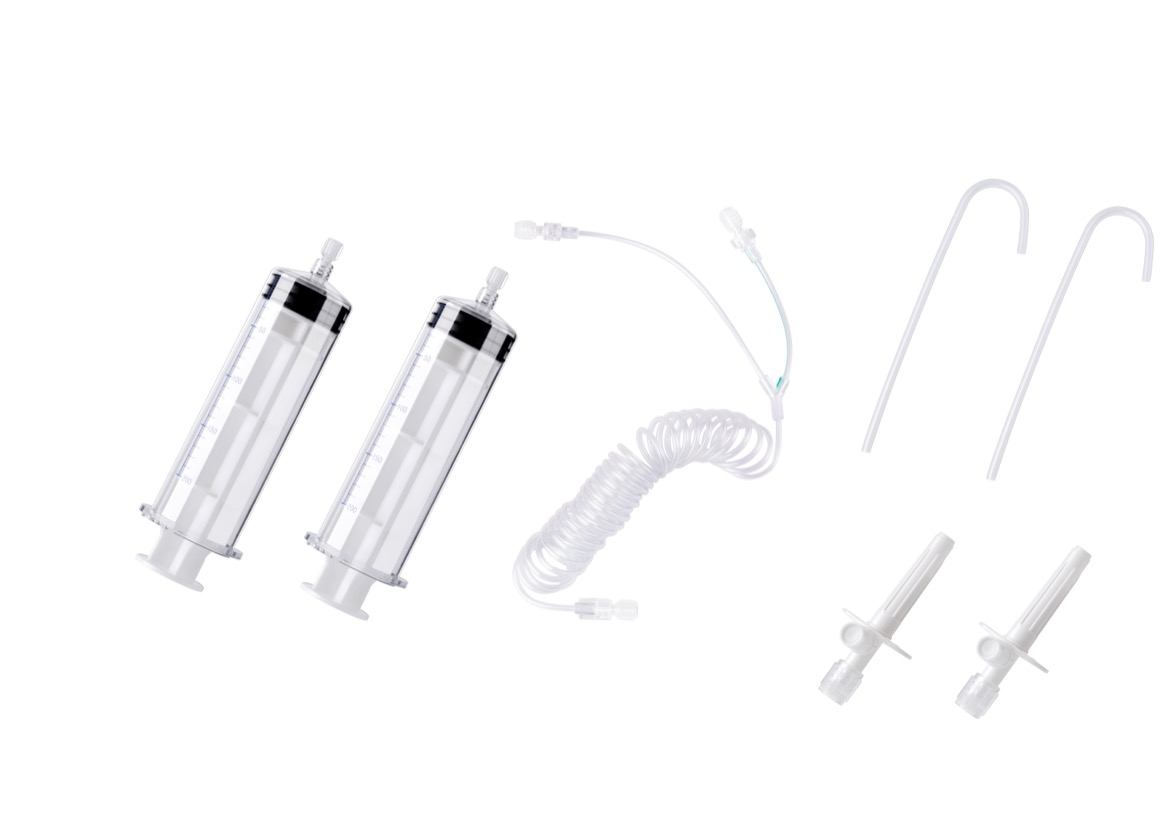
Sterilization is not neutral. Every sterilization method can interact with materials, adhesives, lubricants, additives, inks, packaging, and molded components.
For example, EO sterilization is useful for many temperature-sensitive medical devices, but it requires process validation and residual control. Radiation sterilization can affect certain polymers, depending on dose and material formulation. Steam sterilization may not be appropriate for devices that cannot tolerate high heat or moisture.
A manufacturer should evaluate the product after sterilization, not only before it. This includes confirming that the sterilized device still meets its requirements for:
- Pressure performance
- Leak resistance
- Tensile strength
- Connection security
- Plunger movement
- Package seal integrity
- Visual appearance
- Chemical safety
- Shelf-life performance
ISO 10993-1 provides a risk-management framework for evaluating the biological safety of medical devices. ISO 10993-18 further addresses chemical characterization, including materials of construction, process contaminants, sterilization residues, extractables, and leachables under clinical-use conditions.
For a contrast injector syringe, this means material decisions should be documented through a structured evaluation—not assumptions based solely on common industry use.
Hospitals and distributors can reduce procurement risk by using a structured evaluation process rather than selecting products based only on price or nominal compatibility.
Start with the imaging modality and injector platform:
- CT contrast injection
- MRI contrast injection
- Angiography contrast injection
- Single-head or dual-head injector configuration
- Syringe capacity requirement
- Required tubing configuration
- Contrast media or saline delivery requirement
Do not assume that a syringe intended for one injector platform is automatically suitable for another system.
Ask whether the supplier has verified compatibility with the specific injector model or family of injectors you use.
Review:
- Injector compatibility list
- Syringe and connector dimensions
- Functional fit testing
- Injection pressure test conditions
- Connection security testing
- Instructions for installation and use
For high-pressure angiographic syringes, FDA-cleared product documentation has included pressure-resistance values such as 400 psi for syringes and connection tubes in some configurations. This does not mean every device requires the same rating; it means buyers should compare the product's validated performance with the requirements of its intended injector and procedure.
Check that the sterile packaging is appropriate for your distribution chain and storage environment.
Questions to ask include:
- What is the labeled shelf life?
- Has package integrity been evaluated through the claimed shelf life?
- What are the storage requirements?
- Is the packaging easy to inspect before opening?
- Are lot number and expiration date clearly visible?
- Does the product have tamper-evident packaging?
A damaged pouch, broken seal, or unclear expiration date should trigger a defined rejection process.
Request information on the fluid-contact components, particularly the barrel, piston, tubing, connectors, caps, and adhesives.
A supplier should be able to explain:
- Which materials contact contrast media or saline
- How biological safety was evaluated
- Whether chemical characterization was considered
- How the device was assessed after sterilization
- How material or supplier changes are controlled
- How lot traceability is maintained
Before a full conversion, evaluate the disposable contrast injector syringe in a controlled setting.
A useful evaluation plan may include:
1. Confirm injector installation and removal procedure
2. Assess ease of priming and air removal
3. Observe plunger movement during injection
4. Check for leakage at syringe and tubing connections
5. Review staff feedback on labeling and handling
6. Verify packaging opening workflow
7. Record any alarms, fit concerns, or connection issues
8. Compare performance across multiple procedures and users
The purpose is not only to verify that the syringe fits. It is to confirm that it supports a safe, predictable, and efficient workflow.
A low unit price can become costly if the product creates workflow delays, leakage events, compatibility concerns, inventory complexity, or excess waste. Total value includes reliability, documentation quality, supply continuity, and technical support.
"Medical grade" is not a complete technical answer. Buyers should ask which components are involved, how they were evaluated, and whether the finished sterile product has been assessed under its intended conditions of use.
A syringe can be manufactured correctly and still become unsuitable if its sterile barrier is compromised. Packaging validation and transit protection deserve the same level of scrutiny as syringe design.
Products may be marketed as compatible with mainstream injector systems, but compatibility must be defined carefully. Confirm the exact injector platform, model range, installation method, capacity, tubing configuration, and pressure requirements.
Long-term supply reliability depends on disciplined change management. A supplier should have processes for evaluating changes to resin suppliers, molding tools, sterilization parameters, packaging materials, and critical components.
For hospitals, distributors, and OEM customers, the strongest supplier relationship is built on transparent technical communication.
A manufacturer of disposable contrast injector syringes should be prepared to provide:
- Clear product specifications
- Injector compatibility information
- Sterility and packaging documentation
- Material and biological safety support
- Pressure and leakage performance data
- Lot traceability
- Quality management documentation
- OEM and private-label support where needed
- Responsive technical communication
- Consistent export and supply-chain capability
MAIWEI INC. develops and manufactures CT, MRI, and angiography high-pressure injector consumables, including contrast injector syringes, connection tubes, and related accessories. With quality-system and market-access credentials including ISO 13485, CE, and FDA 510(k) pathways, MAIWEI can support hospitals, distributors, and OEM partners seeking reliable disposable imaging consumables for multiple injector platforms.
Sterility and material selection are the two foundations of a dependable disposable contrast injector syringe. Sterility protects the clinical pathway from the moment a sealed product is opened. Material selection ensures that the syringe, piston, tubing, and fittings can perform reliably throughout contrast delivery.
The strongest products are designed as a complete system: validated sterilization, durable sterile barrier packaging, appropriate fluid-contact materials, verified injector compatibility, controlled pressure performance, and traceable manufacturing quality.
If you are sourcing CT, MRI, or angiography injector consumables, request a technical evaluation package rather than relying on a basic compatibility claim. Compare sterile barrier evidence, material documentation, pressure performance, connection design, and injector-specific validation before making a purchasing or distribution decision.
Contact MAIWEI INC. to discuss compatible disposable contrast injector syringes, high-pressure connection tubes, customized kits, and OEM imaging consumable solutions for your market.
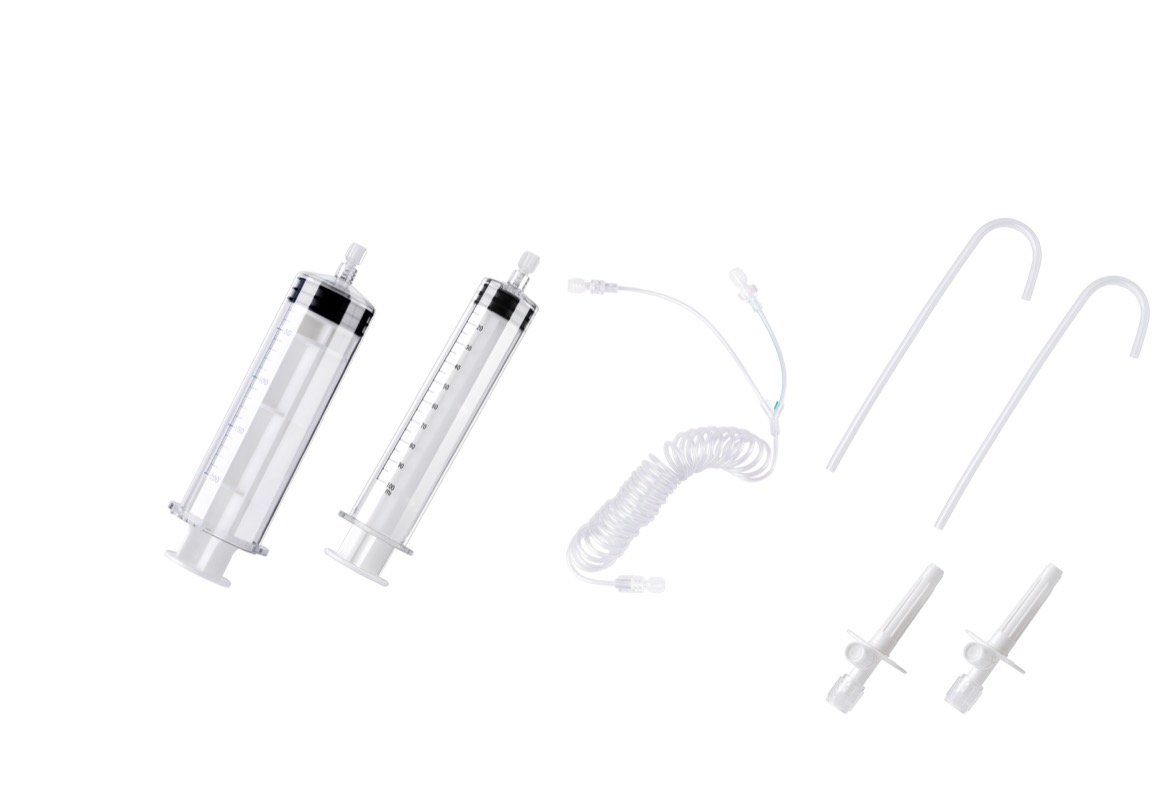
Disposable contrast injector syringes enter the clinical fluid-delivery pathway. Sterility helps reduce the risk of contamination and supports a controlled, single-patient-use workflow. The sterile claim must be supported by validated sterilization and packaging systems that preserve the sterile barrier until use.
Many disposable syringe systems use polymer materials such as polypropylene for syringe barrels, along with elastomeric or polymeric piston components, plastic fittings, and flexible tubing materials. The exact material combination should be selected based on mechanical performance, sterilization compatibility, fluid contact, chemical safety, and intended pressure requirements.
It can. EO sterilization may be appropriate for heat-sensitive medical devices, but manufacturers must validate the full process and evaluate the device after sterilization. This can include performance testing, package integrity assessment, residual evaluation where applicable, and confirmation that the product still meets its intended specifications.
Hospitals should request an injector compatibility list, installation instructions, dimensional or functional fit evidence, and pressure-performance information. A controlled clinical evaluation is also recommended before full adoption, especially when changing suppliers or introducing a new syringe-and-tubing configuration.
A standard syringe is commonly intended for manual delivery. A high-pressure injector syringe is designed to work with a powered injector system and must withstand the mechanical and pressure demands of contrast administration. It also requires appropriate connection geometry, controlled plunger performance, and system-level compatibility.
Packaging is part of the sterile barrier system. It protects the device from contamination and physical damage during storage and transportation. A sterile syringe should not be used if the package is open, damaged, wet, punctured, or past its expiration date.
Distributors should request product specifications, instructions for use, compatibility information, sterilization and shelf-life documentation, quality-system certificates, relevant registration or clearance documentation, pressure and leakage test information, and traceability details.
1. U.S. Food and Drug Administration. [Guidance for the Content of Premarket Notification (510(k)) Submissions for Piston Syringes].
2. U.S. Food and Drug Administration. [Glass Syringes for Delivering Drug and Biological Products: Technical Information to Supplement International Organization for Standardization (ISO) Standard 11040-4].
3. U.S. Electronic Code of Federal Regulations. [21 CFR 870.1650 — Angiographic Injector and Syringe].
4. International Organization for Standardization. [ISO 11607-1:2019 — Packaging for Terminally Sterilized Medical Devices].
5. International Organization for Standardization. [ISO 11135:2014 — Sterilization of Health-Care Products: Ethylene Oxide].
6. U.S. Food and Drug Administration. [Recognized Consensus Standard: ISO 11135].
7. International Organization for Standardization. [ISO 10993-1:2018 — Biological Evaluation of Medical Devices].
8. International Organization for Standardization. [ISO 10993-18:2020 — Chemical Characterization of Medical Device Materials].
9. U.S. Food and Drug Administration. [510(k) Summary: Sterile High-Pressure Angiographic Syringes for Single Use].