


close
Choose Your Site
Global
Social Media
Views: 238 Author: Maiwei Biotech Publish Time: 2026-09-17 Origin: Site


Content Menu
● What Does a PSI Pressure Rating Mean?
● 350 PSI vs 1200 PSI at a Glance
● Understanding 350 PSI Syringes and Tubes
>> Typical Applications for 350 PSI Consumables
>> Advantages of 350 PSI Pressure-Rated Products
>> Limitations of 350 PSI Systems
● Understanding 1200 PSI Syringes and Tubes
>> Typical Applications for 1200 PSI Consumables
>> Why 1200 PSI Tubes Are Different
● Pressure Rating Is Not Injection Pressure
>> Factors That Increase Injection Pressure
● How to Select the Right Pressure Rating
>> Step 1: Identify the Imaging Modality
>> Step 2: Confirm the Injector Model
>> Step 3: Check the Required Pressure Class
>> Step 4: Review the Entire Fluid Path
>> Step 5: Verify Documentation and Traceability
● Expert View: Why "Higher PSI" Is Not Always Better
● Practical Example: CT Workflow vs Angiography Workflow
● Quality Considerations for High Pressure Consumables
>> Key Product Quality Factors
● Choose the Right Pressure-Rated Solution
● FAQ
>> 1. What is the main difference between 350 PSI and 1200 PSI tubing?
>> 2. Can I use a 1200 PSI tube instead of a 350 PSI tube?
>> 3. Is 350 PSI sufficient for CT contrast injection?
>> 4. Why are angiography tubes often rated at 1200 PSI?
>> 5. Does a 1200 PSI tube mean the injection will run at 1200 PSI?
>> 6. What should distributors check before sourcing high pressure syringe consumables?
>> 7. Are CT, MRI, and angiography syringes interchangeable?
When selecting high pressure syringes and connecting tubes for contrast-enhanced imaging, the difference between 350 PSI vs 1200 PSI pressure rating is not a minor technical detail. It directly affects device compatibility, examination workflows, component selection, and the safety margin of the complete contrast-delivery pathway.
For hospitals, imaging centers, distributors, and OEM partners, the correct choice depends on more than the words "high pressure." A 350 PSI syringe or tube may be appropriate for many CT and MRI contrast injection workflows, while a 1200 PSI pressure-rated consumable is commonly associated with more demanding angiography and interventional imaging applications. The key is to match the syringe, connecting tube, injector, catheter, protocol, and approved operating parameters as one validated system.
MAIWEI INC. develops and manufactures disposable consumables for CT, MRI, and angiography power injectors, including high pressure syringes, pressure connecting tubes, filling tubes, and related accessories. With ISO 13485, CE, and FDA 510(k)-cleared product portfolios, MAIWEI supports hospitals, distributors, and OEM customers in more than 60 countries and regions with compatible medical imaging consumables designed around reliability, usability, and system-fit requirements.
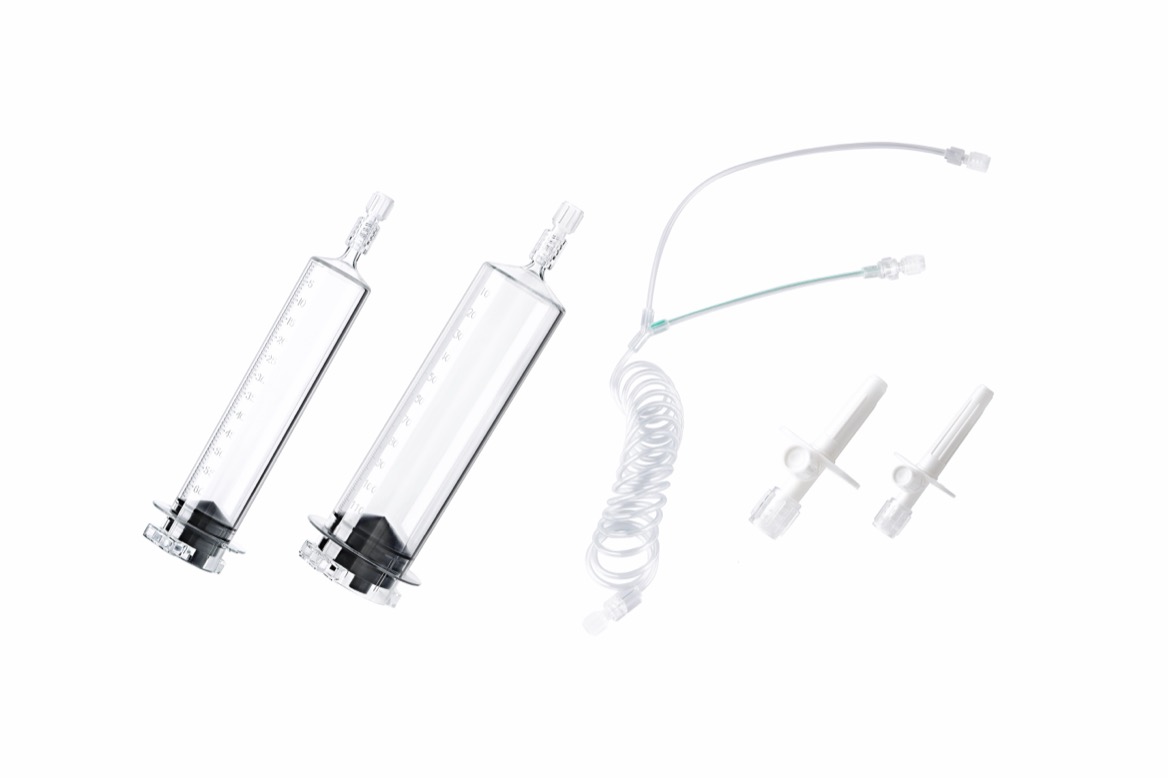
PSI means pounds per square inch. In contrast-injection consumables, the pressure rating generally indicates the maximum pressure a syringe, tube, or related component is designed and tested to withstand under its specified conditions of use.
A pressure rating should never be interpreted as a recommended injection setting by itself. It is also not a promise that every part of the imaging pathway can safely operate at that same level.
The practical question is not simply, "Is 1200 PSI better than 350 PSI?" The better question is:
> Is this pressure-rated consumable compatible with the injector, examination type, patient access device, contrast protocol, and approved clinical workflow?
For example, a connection tube rated at 1200 PSI may provide the required pressure capability for a specific angiographic application. However, the actual operating pressure during an injection is influenced by multiple factors:
- Contrast media viscosity
- Contrast temperature
- Flow rate
- Catheter size and internal diameter
- Catheter length
- Extension tube length
- Luer-lock connections
- Patient vascular access conditions
- Injector pressure limit
- The number and design of components in the fluid path
In other words, pressure is a system-level consideration. The syringe or tube is important, but it is only one part of the complete injection chain.
The following table summarizes the main differences between 350 PSI and 1200 PSI pressure-rated syringes and tubes.
| Feature | 350 PSI Pressure Rating | 1200 PSI Pressure Rating |
|---|---|---|
| Approximate metric equivalent | 2.4 MPa | 8.3 MPa |
| Typical imaging association | CT and selected MRI contrast injection workflows | Angiography, DSA, and demanding interventional workflows |
| Typical consumable design | Standard pressure syringe sets and connecting tubes | Reinforced high pressure syringes and braided or reinforced high pressure tubes |
| Common tube configurations | Straight, coiled, Y-type, T-type, depending on injector design | High pressure extension tubes, angiography tubing, specialized reinforced configurations |
| Main selection priority | Injector compatibility and routine protocol fit | High-pressure capability, device compatibility, and stronger system validation |
| Typical user concern | Cost efficiency, convenience, connection stability, injector fit | Pressure endurance, secure connections, tubing reinforcement, procedure readiness |
| Suitable decision approach | Confirm approved pressure limit and compatible injector model | Confirm the full system rating, including injector, catheter, tube, syringe, and accessories |
Important: A 1200 PSI-rated component should not be used as a substitute for verifying compatibility. Likewise, a 350 PSI-rated component must never be used when the intended injector or procedure requires a higher rated consumable.
A 350 PSI syringe or 350 PSI pressure connecting tube is commonly used in imaging procedures where the approved injector and protocol operate within that pressure range. These consumables are frequently associated with contrast-enhanced CT and MRI applications, depending on the specific injector platform and product instructions.
Many imaging departments value 350 PSI systems because they can provide an effective balance between performance, workflow efficiency, and consumable cost when used in approved applications.
A 350 PSI pressure rating may be seen in compatible consumables for:
- CT contrast injection procedures
- MRI contrast injection procedures
- Single-head injector systems
- Dual-head injector systems
- Contrast and saline delivery protocols
- Standard power-injection workflows within the injector's approved pressure setting
In published device documentation, contrast-media consumables are available in multiple pressure classes, including 300 PSI, 350 PSI, 400 PSI, and 1200 PSI. This variation shows why buyers should never select a consumable only by its appearance, connector type, or assumed application. The pressure class must match the individual injector model and the approved instructions for use.
For appropriate procedures, 350 PSI products can offer several practical benefits:
- Appropriate capacity for validated CT and MRI workflows
- Potentially lower material intensity than reinforced 1200 PSI tubing
- Broad compatibility options for selected injector platforms
- Straightforward inventory planning for high-volume routine imaging
- Multiple tube styles, such as straight, Y-type, T-type, and coiled designs
- Easy workflow integration when the correct syringe and tubing set are selected
A well-designed 350 PSI connecting tube should still provide dependable luer-lock performance, secure fittings, controlled flexibility, clear labeling, and consistent manufacturing quality. Lower pressure rating does not mean lower quality. It means the product was designed for a different validated operating range.
The central limitation is simple: 350 PSI-rated products are not universal consumables.
They may not be suitable for procedures, injector platforms, or interventional applications requiring a higher pressure-rated pathway. Using a lower-rated tube in a higher-pressure environment can create unacceptable risk and may fall outside the device's intended use.
For procurement teams, this means "compatible" must include more than physical connection compatibility. A syringe may connect to an injector, but that alone does not confirm that it is cleared, validated, or suitable for the intended pressure range.
A 1200 PSI high pressure syringe or 1200 PSI pressure connecting tube is designed for applications that require substantially higher pressure capability. These products are commonly associated with angiography, digital subtraction angiography, and other interventional imaging environments where the pressure demands of the fluid pathway can be higher.
1200 PSI is approximately 8.3 MPa, compared with approximately 2.4 MPa for 350 PSI. That difference is substantial. A 1200 PSI-rated consumable must be engineered with materials, bonding, connector geometry, and manufacturing controls appropriate to its intended pressure classification.
A 1200 PSI pressure rating is often associated with:
- Angiography procedures
- Digital subtraction angiography
- Interventional radiology workflows
- Cardiovascular imaging applications
- High-pressure contrast-media delivery pathways
- Specific injector systems designed for high-pressure operation
- Reinforced extension tubing requirements
FDA-cleared product documentation describes high-pressure tubes used with syringes designed to withstand maximum pressures of 1200 PSI. Product records also identify 1200 PSI pressure classes for selected contrast syringes and connecting tubes used with particular injector platforms.
A 1200 PSI tube is not simply a thicker version of a standard connecting tube. It may incorporate design features intended to support high-pressure use, including:
- Reinforced or braided tubing construction
- Higher-strength bonding interfaces
- Robust luer-lock connection design
- Controlled tube flexibility
- Resistance to deformation during pressurization
- Clear pressure labeling
- Validated material and assembly performance
- Suitable length and configuration for the procedure
The tube's outer appearance can be misleading. Two products may look similar, but differ greatly in pressure rating, material structure, connector performance, and intended use. Procurement decisions should therefore be based on technical documentation, compatibility tables, labeling, and validated specifications rather than visual comparison alone.
A 1200 PSI-rated syringe or tube should be selected when the injector manufacturer's instructions, the procedure protocol, or the approved consumable compatibility list requires it.
Common decision triggers include:
- The injector is specified for a 1200 PSI consumable.
- The procedure involves angiography or interventional imaging.
- The approved tube set must withstand high injection pressure.
- The clinical department requires reinforced high-pressure tubing.
- The existing inventory system separates CT/MRI consumables from angiography consumables.
- The OEM compatibility requirement identifies a 1200 PSI product family.
The relevant standard is not whether a facility wants "extra pressure." The relevant standard is whether the product is intended, validated, and labeled for the complete application.
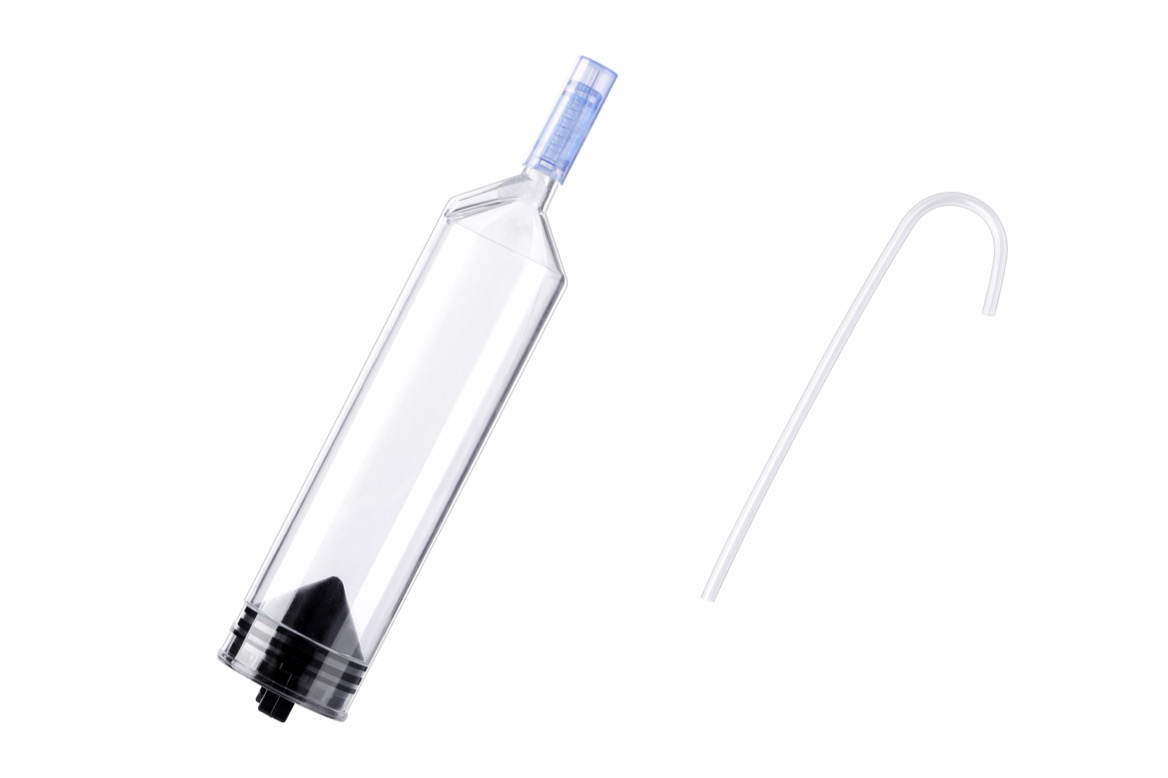
One of the most important distinctions in medical imaging consumables is the difference between the component pressure rating and the actual pressure generated during an injection.
A 1200 PSI pressure-rated tube can withstand a higher maximum pressure than a 350 PSI tube under its specified test conditions. However, the injector may operate at a much lower limit for a given procedure. Conversely, an injection setting that appears routine may still create pressure challenges when contrast media is highly viscous, cold, delivered at a high flow rate, or pushed through a narrow and long access pathway.
The following factors can increase the pressure required to deliver contrast media:
1. Higher flow rates
Faster flow generally increases resistance in the fluid pathway.
2. Higher contrast viscosity
More viscous contrast media requires more force to move through a tube or catheter.
3. Lower contrast temperature
Contrast media is typically more viscous when colder.
4. Smaller catheter diameter
A narrow internal diameter increases flow resistance.
5. Longer catheter or tubing length
Longer pathways can require more pressure to maintain the target flow rate.
6. Kinks, bends, or restricted connections
Physical restrictions can increase resistance and compromise flow.
7. Multiple fluid-path components
Every added connector, valve, extension, or adapter must be compatible and correctly assembled.
Clinical guidance from the American College of Radiology notes that IV contrast should be administered by power injector through a flexible plastic cannula. It also indicates that a 20-gauge or larger catheter is preferable for flow rates of 3 mL/s or higher, while actual suitability depends on the individual clinical situation and institutional protocols.
Choosing between 350 PSI and 1200 PSI should be a structured technical process rather than a purchasing shortcut.
Start with the intended imaging application:
- CT
- MRI
- Angiography
- DSA
- Interventional radiology
- Cardiovascular imaging
The modality provides an initial direction, but it does not make the final decision. Some CT and MRI systems may use different pressure-rated consumables depending on injector design and product family.
Identify the exact injector brand, model, and configuration.
Check whether it is:
- A single-head injector
- A dual-head injector
- A CT injector
- An MRI injector
- An angiography injector
- A legacy model
- A current-generation platform
Then verify the compatible syringe and tube specifications in the injector instructions and the consumable manufacturer's compatibility documentation.
Confirm whether the application requires:
- 300 PSI
- 350 PSI
- 400 PSI
- 600 PSI
- 1200 PSI
- Another specified limit
Never assume that a higher-rated product is automatically interchangeable. Physical fit, plunger design, barrel geometry, connection configuration, and injector recognition features may all matter.
The system should be reviewed from syringe to patient connection:
- Syringe
- Filling tube or spike
- Connecting tube
- Check valve, if applicable
- Extension tube
- Catheter or access device
- Luer-lock interfaces
- Injector settings
The final system is only as suitable as its lowest-rated, least-compatible, or incorrectly assembled component.
For regulated medical consumables, request and maintain appropriate documentation:
- Product catalog and technical data sheet
- Instructions for use
- Compatibility list
- Pressure-rating information
- Sterilization method
- Lot number traceability
- Regulatory status for the destination market
- Quality system documentation
- Packaging and shelf-life information
For distributors and OEM partners, this documentation is especially valuable during tender submissions, customer audits, supplier qualification, and post-market complaint handling.
From a manufacturing and application perspective, the most common mistake is treating pressure rating as a simple performance ranking.
A 1200 PSI product may have a higher maximum withstand capability, but that does not make it the preferred choice for every CT or MRI procedure. It may introduce unnecessary cost, inventory complexity, or mismatch risk if the injector and workflow require a 350 PSI product.
Similarly, selecting a 350 PSI product only because it is economical can be inappropriate if the intended procedure requires a 1200 PSI high-pressure pathway.
The correct approach is:
> Use the pressure rating that matches the validated system requirement—not the highest number available and not the lowest-cost option.
This is particularly important for distributors managing broad portfolios. Clear pressure labeling, separate stock locations, product training, and application-specific SKU management can reduce the chance of selecting the wrong consumable during a busy clinical workflow.
Consider two imaging departments within the same hospital.
A CT department uses a compatible dual-head CT injector for contrast and saline delivery. Its approved syringe set and connecting tube are rated at 350 PSI. The department's standard protocols, injector settings, and patient access workflow all fall within the validated system requirements.
In this case, a 350 PSI syringe and tube set may be the correct solution. Using a 1200 PSI tube without confirming system compatibility may add cost without providing meaningful workflow benefit.
An angiography suite uses an injector system and procedure protocol requiring a high-pressure delivery pathway. The selected syringe, extension tubing, connectors, and accessories are all specified for 1200 PSI use.
In this case, a 1200 PSI high pressure syringe and reinforced connecting tube are necessary components of the approved setup. Replacing them with a 350 PSI product would be inappropriate.
The difference is not about which department has "better" equipment. It is about selecting the correct consumable for the application, injector platform, and validated operating environment.
Pressure rating is essential, but it should not be the only purchasing criterion. A reliable high pressure syringe and tube supplier should demonstrate control over the entire product lifecycle.
When evaluating a manufacturer, hospitals and distributors should consider:
- Pressure-performance consistency across production lots
- Leak resistance at syringe, tube, and connector interfaces
- Connector security during setup and injection
- Material compatibility with intended contrast media and saline use
- Transparent and readable labeling
- Sterile barrier integrity
- Lot traceability
- Compatibility documentation
- Packaging usability
- Reliable supply continuity
- Complaint handling and technical support
For OEM customers, additional areas may include custom molding, printed labeling, packaging configuration, component-level specifications, validation support, and change-control communication.
MAIWEI INC. supports these requirements through a focused portfolio of CT, MRI, and angiography consumables, including compatible high pressure syringes, pressure connecting tubes, filling accessories, and supporting components. The company's ISO 13485 quality management system and market-access certifications help support customers that require dependable, internationally supplied imaging-consumable solutions.
The choice between 350 PSI vs 1200 PSI high pressure syringes and tubes should always begin with compatibility and intended use. A 350 PSI system may be an efficient and reliable choice for approved CT or MRI applications, while a 1200 PSI system is essential when an angiography or interventional workflow requires higher pressure capability.
For hospitals, distributors, and OEM customers, MAIWEI INC. can support the selection of compatible CT, MRI, and angiography consumables with clear product information, pressure-rated options, and global supply experience. Contact the MAIWEI team to discuss injector compatibility, pressure-tube configurations, customized OEM requirements, and the most suitable high pressure syringe solution for your market.
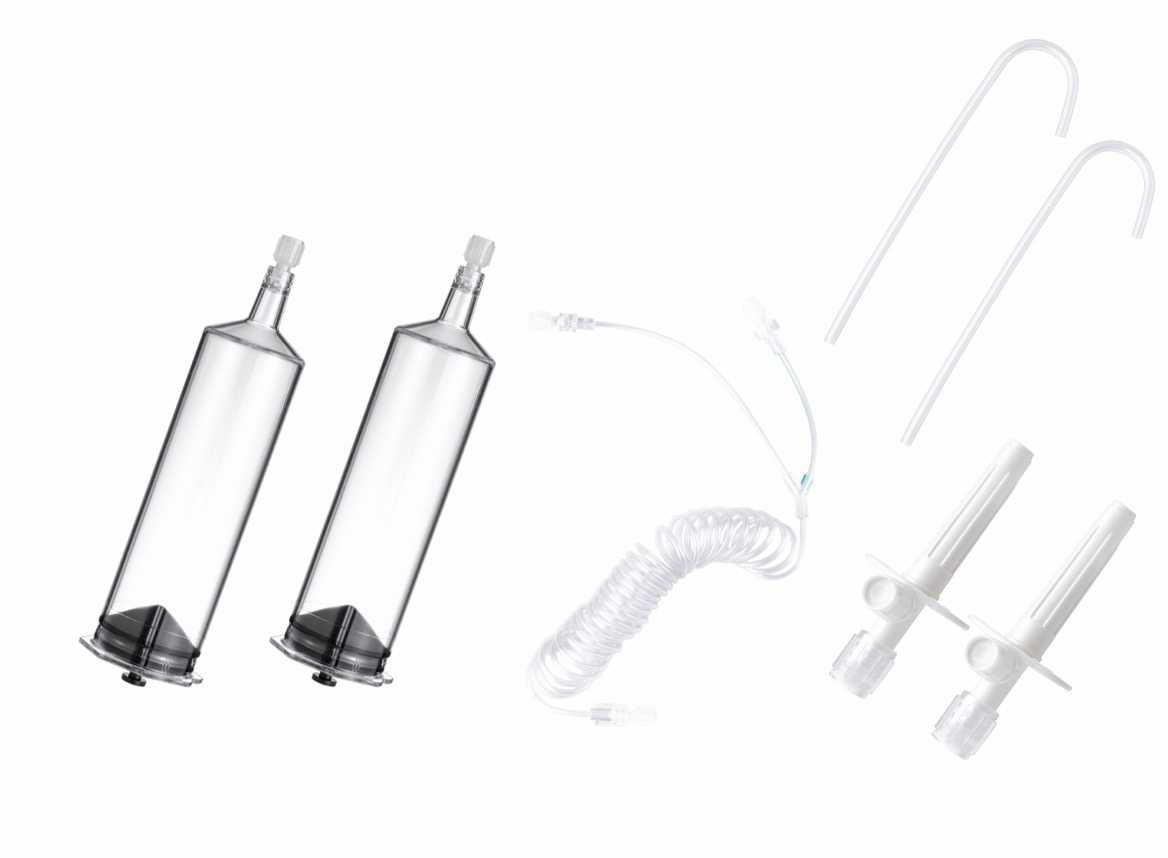
The main difference is the maximum pressure the tube is designed and tested to withstand under specified conditions. A 350 PSI tube is commonly used in appropriate CT or MRI workflows, while a 1200 PSI tube is typically required for certain angiography and high-pressure interventional applications.
Not automatically. A higher pressure rating does not confirm compatibility with the injector, syringe, connector configuration, or clinical protocol. Always follow the injector manufacturer's instructions and the consumable manufacturer's compatibility documentation.
It can be, depending on the specific CT injector, syringe set, tubing configuration, and approved procedure protocol. Many CT consumable systems use pressure classes around this range, but the exact requirement must be confirmed for the individual device.
Angiography and interventional procedures may require higher pressure capability within the contrast-delivery pathway. A 1200 PSI rating supports use in systems designed and validated for that high-pressure range.
No. The pressure rating describes the tube's maximum withstand capability under specified conditions. The actual injection pressure is determined by the injector setting, flow rate, contrast viscosity, catheter characteristics, tubing configuration, and other resistance factors.
Distributors should verify injector compatibility, pressure rating, regulatory documentation, sterilization status, packaging configuration, product labeling, lot traceability, shelf life, technical support, and supply reliability.
Not necessarily. Even if products appear similar, they may differ in barrel design, pressure rating, connector type, injector fit, plunger configuration, and intended use. Use only the specified compatible consumables.
1. [U.S. Food and Drug Administration — 510(k) Summary: Pressure Connecting Tube (K131770)]
5. [American College of Radiology — Manual on Contrast Media]
6. [ISO — ISO 7886-2:2020 Sterile Hypodermic Syringes for Single Use with Power-Driven Syringe Pumps]
7. [U.S. Food and Drug Administration — 510(k) Summary: WLT and WLM Series Connecting Tubes (K170279)]
8. [FDA 510(k) Device Record — High Pressure Syringe and Pressure Connecting Tube (K253048)]