


close
Choose Your Site
Global
Social Media
Views: 210 Author: Maiwei Biotech Publish Time: 2026-09-29 Origin: Site


Content Menu
● Why Syringe Sourcing Requires More Than a Price Comparison
● Match CT, MRI, and Angiography Products to the Workflow
>> Verify the Entire Fluid Path
>> Compare Pressure Ratings Component by Component
● Check Certifications Against the Exact Product
● Evaluate Manufacturing Controls and Traceability
● Run a Structured Sample Evaluation Before Ordering
>> An Illustrative Distributor Scenario
● Protect Single-Use Boundaries and Patient Safety
● Calculate the Real Cost of a Supply Program
● What to Ask MAIWEI for Your Shortlist
● Make the Next Purchase Easier to Defend
>> How do I verify whether a China-made syringe fits my injector?
>> Does ISO 13485 certification mean a syringe is cleared for my market?
>> What does MAIWEI's U.S. 510(k) record cover?
>> Can I use the same high pressure tube for CT and angiography?
>> Are MRI syringes automatically safe anywhere in an MR room?
>> Can components labeled for multiple uses be paired with any patient line?
>> What should an OEM buyer agree before placing an order?
Finding a China high pressure syringe manufacturer is easy. Finding one whose products fit your injector fleet, meet the requirements of your destination market, and perform consistently from batch to batch takes more work. For CT, MRI, and angiography buyers, a syringe is only one part of a contrast delivery system. The connecting tube, filling accessories, labeling, and documented intended use matter just as much.
This guide explains how hospitals, distributors, and OEM buyers can evaluate a manufacturer before placing a volume order. It also shows where MAIWEI's CT syringes, MRI syringes, angiographic syringes, and related consumables may fit—and which claims buyers should verify for each product reference.
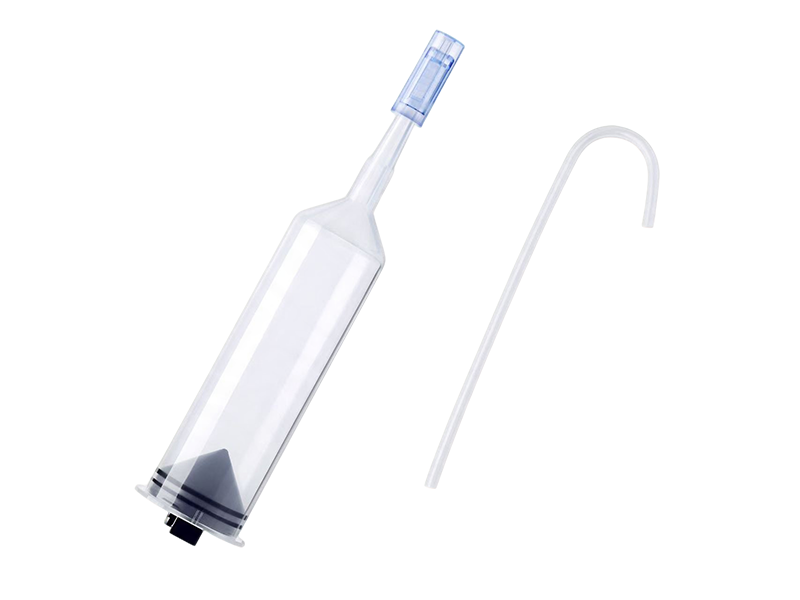
Contrast injector consumables sit between a powered device and a patient-connected fluid path. A low unit price offers little value if a syringe does not mount correctly, a connector leaks during testing, or a shipment lacks the documents needed for import and clinical use.
Start with three questions:
- Will the exact product fit the exact injector model and configuration?
- Is every component suitable for its intended pressure, fluid path, and procedure?
- Can the supplier provide product-specific quality and regulatory evidence?
Do not treat "compatible with major brands" as a blanket approval. A brand may sell several injector generations with different syringe interfaces, tubing arrangements, and operating instructions. The useful answer is a written match between a supplier part number and a specific injector model, supported by evaluation results.
The phrase "high pressure syringe" covers different clinical settings. Buyers should define the procedure before asking for a quotation.
| Application | Typical purchasing focus | Questions to ask |
|---|---|---|
| CT contrast injection | Syringe format, saline configuration, filling accessories, and tubing | Does the kit match the injector model and the site's contrast-and-saline workflow? |
| MRI contrast injection | Injector fit, tubing setup, and use within the MR environment | What do the product and injector instructions say about placement and MR-environment use? |
| Angiography | Syringe interface, complete fluid-path configuration, and pressure rating | Are all selected components suitable for the intended injector settings and procedure? |
| Distributor or OEM supply | Consistent specifications, labeling, and replenishment | Which configurations and documents remain controlled across repeat orders? |
This table is a screening tool, not a substitute for the manufacturer's instructions for use. In particular, an "MRI syringe" label should not be interpreted as permission to place every associated item anywhere in an MR room. Review the applicable safety information for each item that may enter that environment.
Check the syringe barrel, plunger, injector mounting features, connector type, tube length, valves, spikes, and patient line as one configuration. A compatible syringe paired with the wrong tube is not a validated kit.
Ask for a drawing or clear product photographs that identify each connection. Then request the relevant instructions for use and the supplier's compatibility statement for the proposed assembly. If your department uses both contrast and saline, confirm the configuration for both fluids rather than assuming a single-syringe setup covers a dual-syringe workflow.
A pressure claim applies to the specified component or assembly, not every product in a catalog. MAIWEI publishes a 350 psi limit for one patient-line reference and a separate 350 psi limit for one transfer-tube reference. Those figures should not be extended to a different syringe, an angiography kit, or an untested combination.
Request the maximum labeled pressure for every selected component. Confirm the rating of the assembled path and compare it with the injector settings and intended procedure. If a supplier offers alternatives with different ratings, record the accepted part numbers in the purchase specification. This prevents a later substitution from turning a verified setup into an uncertain one.
A manufacturer's credentials are useful starting points, but they answer different questions. ISO 13485 concerns the quality management system used by a medical device organization. Product conformity and market clearance must be checked separately, for the intended device and destination.
| Document or record | What a buyer should verify | What it does not establish alone |
|---|---|---|
| ISO 13485 certificate | Legal entity, manufacturing scope, issuing body, and validity | Clearance of every catalog item |
| EU declaration of conformity | Named device or family, applicable legislation, and manufacturer | Suitability for a particular injector |
| Notified-body certificate, if applicable | Product scope, certificate status, and issuing body | Coverage of unrelated accessories |
| U.S. 510(k) record, where applicable | Applicant, device description, decision, and product references | Clearance of every later configuration |
| Instructions for use and labeling | Intended use, limitations, storage, and single-use instructions | Independent proof of a compatibility claim |
The U.S. public record for K253048 names Shenzhen Maiwei Biotech Co., Ltd. as the applicant and lists a high pressure syringe, pressure connecting tube, quick fill tube, spike, and transfer tube in the device description. It records a substantially equivalent decision dated April 16, 2026. Buyers should still ask MAIWEI to map the quoted SKU and configuration to the applicable documentation. The precise term is *510(k)-cleared*, not "FDA-approved" or "FDA-certified."
For EU procurement, request the current declaration of conformity and any applicable notified-body certificate. Check the legal manufacturer, device scope, labeling, and market-specific obligations with your regulatory team. A certificate issued for a quality system is not a replacement for checking the documentation covering the product you intend to import.
A credible syringe manufacturer should be able to explain how specifications become repeatable finished products. Ask how the company controls incoming materials, molded components, assembly, packaging, sterilization where applicable, inspection, and changes to approved designs.
The most useful evidence is lot-specific and product-specific. For a shortlisted item, request a sample label, carton label, instructions for use, and an example of the documentation supplied with shipments. Check whether the part number, lot number, expiry information, and stated configuration can be followed through the purchasing and receiving process.
Discuss how the supplier handles a nonconforming batch. Who receives a complaint? How are affected lots identified? What happens if a connector or packaging material changes? A clear escalation process helps a hospital investigate a problem and helps a distributor protect downstream customers.
Do not assume that a factory visit alone answers these questions. A visit can show facilities and processes; controlled records show whether the same controls apply consistently to the product you are buying.
Samples should answer a defined purchasing question. "The syringe seems to fit" is not enough. Agree on the injector models, product references, test configuration, and acceptance criteria before the evaluation begins.
1. Freeze the proposed configuration. Record each syringe, tube, valve, spike, and patient-line reference, including any alternatives.
2. Review documents first. Check intended use, labeling, pressure limits, shelf life, packaging condition, and destination-market paperwork.
3. Inspect samples on receipt. Match labels to the quoted references. Check packaging integrity and visible component consistency.
4. Assess injector fit. Have qualified staff follow the injector and consumable instructions when assessing mounting, filling, connection, and removal.
5. Evaluate the complete setup. Use an approved local protocol to assess the assembled fluid path under relevant conditions. Document leaks, connection problems, or unexpected behavior.
6. Record the decision. Approve specific references for specific injector models and workflows, or list the changes required before another evaluation.
Keep the evaluation record with the purchasing specification. This matters when an injector is replaced, a department changes its tubing layout, or a supplier proposes a revised component. A previous approval should not silently extend to a new configuration.
Consider a distributor serving hospitals with two generations of CT injectors. One facility uses a dual-syringe contrast-and-saline setup; another uses a different patient-line arrangement. Ordering a single kit because it carries a familiar brand-compatibility claim creates avoidable uncertainty.
A stronger approach is to request two separate bills of materials. The distributor evaluates each on the corresponding injector, records accepted part numbers, and builds a reorder sheet for each hospital. This is an illustrative procurement scenario, not a report of a MAIWEI customer outcome. Its lesson is simple: approve configurations, not just supplier names.
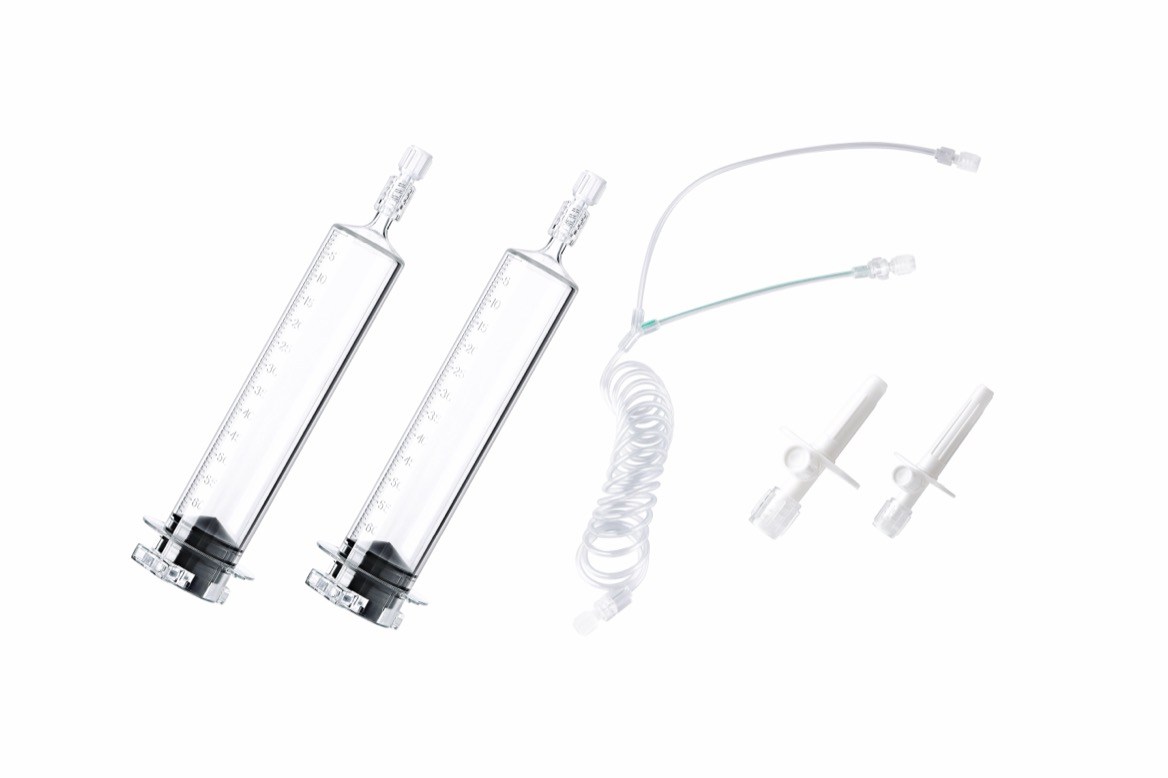
The difference between a single-use patient line and a supplier-described multi-patient transfer system must be explicit in the product documentation. MAIWEI lists one patient line as single use. It also describes a separate transfer-tube system with a conditional, validated period of use when paired with a specified patient line; its own product page says that a different patient-line pairing changes the stated use condition.
Do not infer that a patient-connected syringe or line may be reused because another upstream component has a validated use claim. Ask for the exact configuration, instructions, and supporting validation before evaluating any system with components intended to remain in use across procedures. Clinical teams must apply their infection-prevention policies and the instructions for every component.
For routine single-use products, make the boundary easy to follow: specify the item, confirm its label, train users on the approved setup, and do not substitute another line without review. Patient safety depends on the whole workflow, not a product name alone.
A unit-price comparison misses costs created by mismatched stock, incomplete kits, avoidable returns, and delayed replenishment. Evaluate the landed and operational cost of the approved configuration.
Request a quotation that separates syringes, connecting tubes, patient lines, filling accessories, packaging quantities, and any optional items. Confirm minimum order quantities, lead times, shipping terms, shelf-life requirements on arrival, and the procedure for damaged or nonconforming goods.
For OEM buyers, settle labeling responsibilities early. Agree on who controls the approved artwork, translated instructions, part-number changes, and market-specific regulatory review. Private labeling should not obscure the legal manufacturer or make a product claim broader than its supporting documentation.
A good supply arrangement makes repeat ordering straightforward: the purchase order identifies the approved references, and the supplier confirms any proposed change before shipment, not after the products reach a hospital.
MAIWEI presents itself as a supplier of CT, MRI, and angiographic injector consumables, including syringes and connecting products. Its U.S. company describes its role as supporting customers and distribution partners within the wider MAIWEI network. Buyers should therefore clarify which legal entity manufactures, holds the relevant documents, quotes, and ships the selected products.
Send MAIWEI a focused request containing:
- Injector brand, exact model, and current syringe or consumable reference.
- Clinical application: CT, MRI, or angiography, plus the proposed fluid-path layout.
- Required components, quantities, packaging, and destination market.
- Required product documentation and any local labeling needs.
- Target evaluation date, expected order volume, and replenishment requirements.
In return, ask for a part-number-level compatibility matrix, the applicable instructions and regulatory documents, sample availability, and a component-by-component quotation. That exchange is more useful than asking for a catalog and the lowest price.
The best manufacturer is not simply the one with the broadest catalog. It is the one that can connect your exact injector and workflow to a clearly identified product, suitable documentation, a successful evaluation, and a repeatable supply process.
Share your injector model, current consumable reference, application, and destination market with MAIWEI. Request a part-number-level recommendation, relevant documents, and evaluation samples before committing to volume procurement.
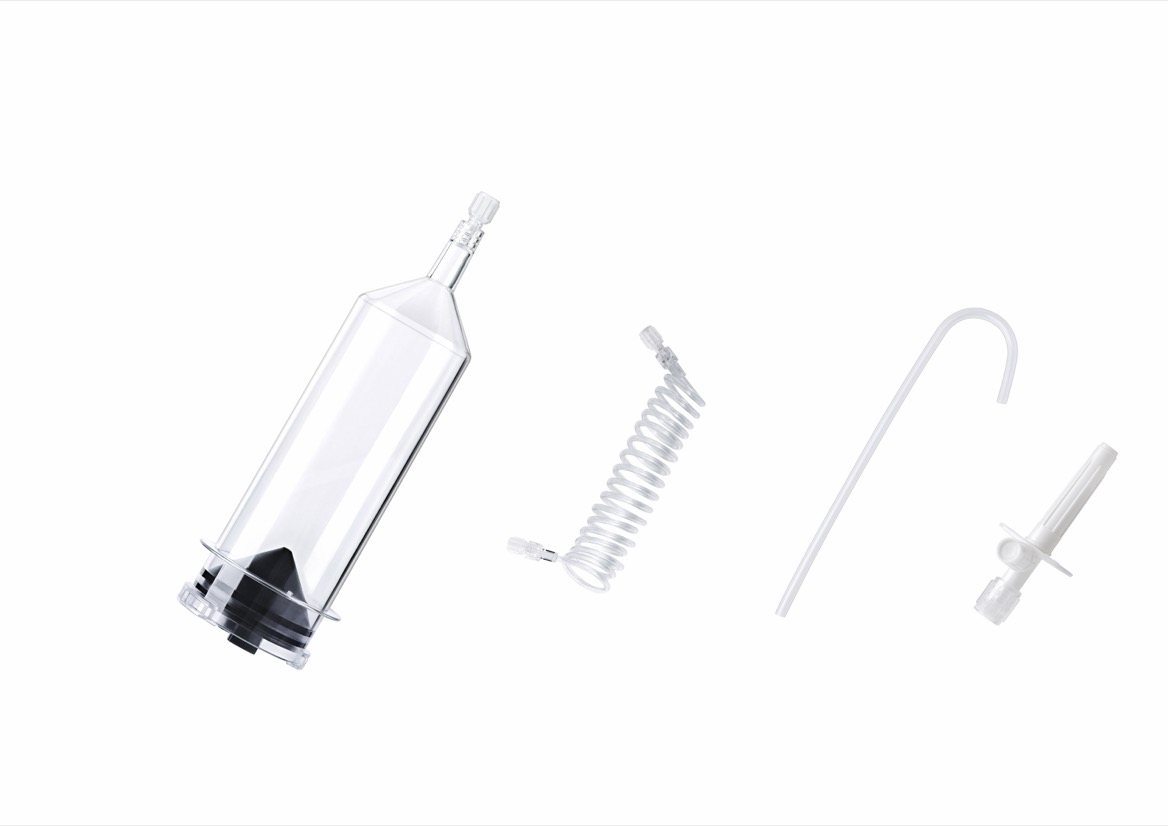
Provide the injector's exact brand, model, and configuration. Ask the supplier to identify the matching syringe and accessory part numbers, then evaluate the complete setup under your site's approved protocol. Do not rely on brand-level compatibility wording alone.
No. It addresses the organization's medical-device quality management system. Ask separately for the product documentation required in your destination market and confirm that it covers the exact item being purchased.
Public record K253048 lists a high pressure syringe and several related connecting and filling products under Shenzhen Maiwei Biotech Co., Ltd. Ask the company to identify which quoted references and configurations fall within the applicable cleared device documentation. Do not assume every catalog product is covered.
Only if the proposed tube and complete assembly are documented for the intended use, pressure, connections, and injector configuration. A rating published for one CT/MR patient line is not a general rating for angiography products.
No. Check the safety information for each item that may enter the MR environment, along with the injector's instructions and your facility's procedures. The application name alone does not define where equipment can safely be placed.
No. Use conditions depend on the specified combination and its instructions. A claim for one transfer system does not authorize reuse of an unrelated or single-use patient-connected component.
Confirm the approved product specification, legal-manufacturer details, labeling responsibilities, documentation, change-control process, minimum quantities, and shipment requirements. Agree on how both parties will review a future material or configuration change.
- MAIWEI Biotech, [CT Syringe, MRI Syringe, Angiographic Syringe Manufacturer] — product range, stated capabilities, and company positioning. [maiweiusa]
- MAIWEI Biotech, [About Us] — MAIWEI INC.'s role within the wider company network. [maiweiusa]
- Shenzhen Maiwei Biotech, [S0L005 Patient Line] — reference-level single-use and pressure information. [maiweibio]
- Shenzhen Maiwei Biotech, [D1L105 Multi-patient Transfer Tube] — conditional use, specified pairing, and component pressure information. [maiweibio]
- U.S. Food and Drug Administration, [510(k) record K253048] — applicant, device description, and decision date. [accessdata.fda]
- U.S. Food and Drug Administration, [Premarket Notification 510(k)] — meaning and scope of a substantially equivalent clearance. [fda]
- International Organization for Standardization, [ISO 13485 — Medical Devices] — scope of the medical-device quality management standard. [iso]
- European Commission, [Factsheet for Authorities in Non-EU/EEA States] — EU conformity assessment and product-documentation context. [health.ec.europa]
- U.S. Food and Drug Administration, [Testing and Labeling Medical Devices for Safety in the MR Environment] — MR-environment safety information. [fda]
- U.S. Centers for Disease Control and Prevention, [Preventing Unsafe Injection Practices] — single-use syringe and patient-safety guidance. [cdc]