


close
Choose Your Site
Global
Social Media
Views: 226 Author: Maiwei Biotech Publish Time: 2026-09-08 Origin: Site


Content Menu
● Why Compatible Syringes Require Careful Evaluation
● Understanding Bayer MEDRAD Injector Compatibility
● Compatible Does Not Mean Universally Interchangeable
● How MAIWEI Approaches High Pressure Injector Consumables
● A Practical Hospital Evaluation Process
>> Step 1: Identify Every Injector Model in Service
>> Step 2: Match the Complete Disposable Configuration
>> Step 3: Review Compatibility and Performance Evidence
>> Step 4: Conduct a Controlled Departmental Trial
● Safety Priorities During Contrast Injection
>> Key Setup Checks Before Injection
● Supply Reliability Matters as Much as Unit Price
● Questions Procurement Teams Should Ask
● Choosing the Right Long-Term Partner
● Request a Compatibility Review
● FAQs
>> 1. Are compatible high pressure syringes the same as original manufacturer syringes?
>> 2. Can one syringe fit every Bayer MEDRAD contrast injector?
>> 3. Why is the pressure rating of connection tubing important?
>> 4. What documents should a hospital request from a compatible syringe supplier?
>> 5. Are high pressure injector syringes reusable?
>> 6. What should be included in a hospital trial of compatible syringes?
>> 7. Can MAIWEI support distributors and OEM customers?
Selecting compatible high pressure syringes for Bayer MEDRAD contrast injectors is not simply a purchasing decision. It is a clinical workflow decision involving injection accuracy, pressure performance, patient safety, traceability, staff confidence, and continuity of CT, MRI, or angiography operations.
For radiology departments, imaging centers, distributors, and OEM partners, the key question is not whether a syringe "looks similar" to an original product. The question is whether the complete disposable pathway—including the syringe, plunger, connection tubing, transfer set, and relevant connectors—has been designed, tested, documented, and supplied for the specific injector platform and clinical application.
MAIWEI INC. develops and manufactures high pressure contrast injector consumables for CT, MRI, and angiography. Its product portfolio includes disposable high pressure syringes, connecting tubes, J-tubes, transfer sets, spikes, and related accessories designed for compatibility with a range of mainstream injector systems. With ISO 13485, CE, and FDA 510(k)-cleared product lines, MAIWEI supports hospitals, distributors, and OEM customers in more than 60 countries and regions.
This guide explains how hospitals can evaluate compatible syringes for Bayer MEDRAD injector systems with a practical, safety-focused, and procurement-ready approach.
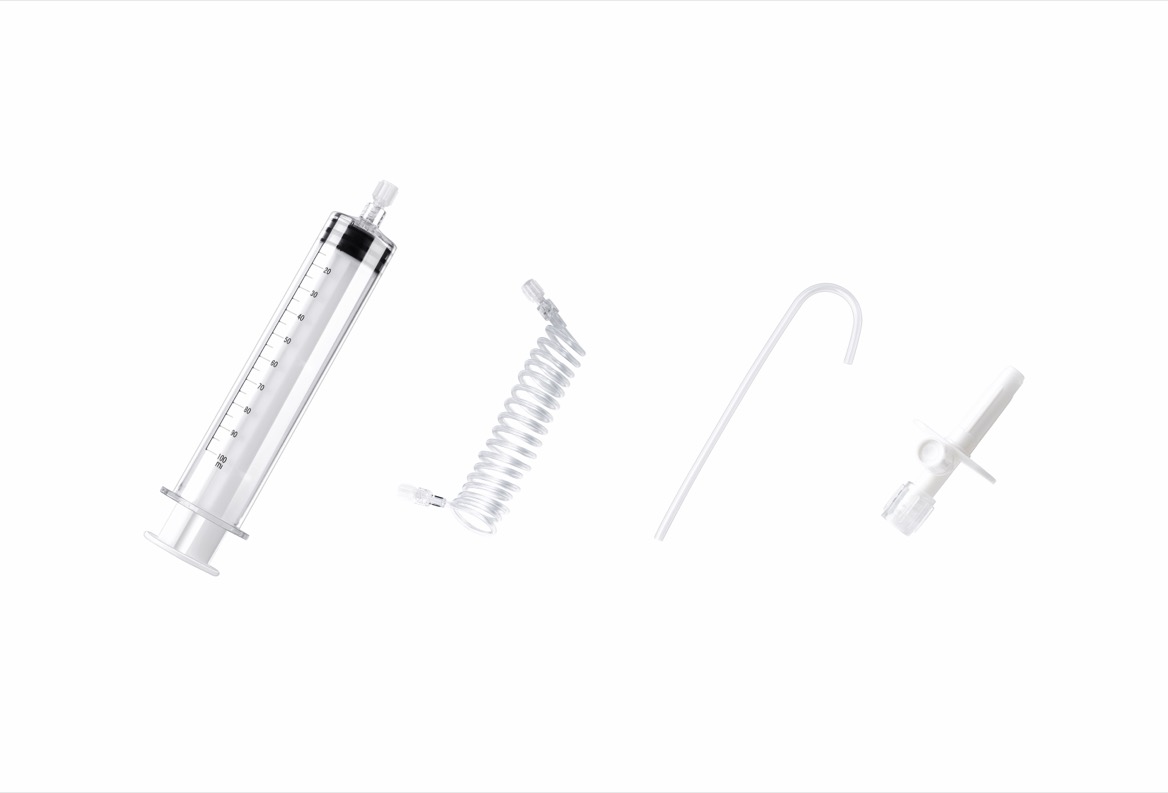
A high pressure injector disposable is part of an active fluid-delivery system. It is not an isolated plastic component.
During a contrast-enhanced CT, MR, or angiographic procedure, the syringe and tubing pathway may be exposed to controlled pressure, programmed flow rates, contrast media, saline, and repeated handling by technologists. A poor match between the injector and the disposable can affect setup, injection performance, workflow efficiency, and potentially the need for repeat imaging.
Bayer notes that use of a non-compatible syringe on a MEDRAD injector can contribute to over- or under-injection of contrast media, which may require re-scanning and re-dosing of the patient.
That is why hospitals should treat compatibility as a documented technical requirement—not an assumption based on appearance, connector shape, or prior purchasing history.
A responsible evaluation should consider:
- Injector-specific fit between the syringe, plunger, and injector drive mechanism
- Pressure resistance of the syringe and tubing assembly
- Connection security across tubing, luer interfaces, valves, and patient-side components
- Fluid-path integrity, including leakage, air management, and backflow protection where applicable
- Material suitability for contact with contrast media and saline
- Sterility and single-use controls
- Clear labeling and lot traceability
- Evidence of validation for the intended injector platform and configuration
- Reliable supply continuity for the hospital or distributor
The most cost-effective syringe is not necessarily the lowest-priced item. It is the one that supports a stable, repeatable imaging workflow while meeting the site's technical, clinical, and purchasing requirements.
Bayer MEDRAD injector systems are widely used across CT, MRI, and angiography workflows. However, injector platforms differ in syringe capacity, number of syringe heads, drive geometry, pressure requirements, tubing configuration, and intended clinical use.
Hospitals should never assume that a syringe designed for one MEDRAD system is appropriate for another.
For example, a CT injector may use 200 mL single- or dual-syringe configurations, while MR injector applications may require different syringe volumes and pressure ratings. Angiography systems may require substantially higher pressure performance than many CT or MR applications.
The compatibility review must therefore start with the exact equipment model installed in the department.
| Imaging application | Typical disposable considerations | Hospital verification priority |
|---|---|---|
| CT contrast injection | Syringe capacity, single or dual-head layout, saline compatibility, tubing length, pressure rating | Confirm the exact injector model and required syringe configuration |
| MRI contrast injection | MR workflow requirements, syringe geometry, saline pathway, lower pressure range where applicable | Verify the system-specific syringe volume and correct plunger engagement |
| Angiography | Higher-pressure capability, secure connectors, tubing strength, transfer accessories | Confirm pressure rating for the complete fluid pathway, not only the syringe |
| Multi-patient workflow | Transfer sets, check valves, patient-specific tubing, permitted use duration | Follow the injector manufacturer's instructions and site infection-control policy |
Public FDA documentation for certain single-use high pressure angiographic syringe and accessory systems identifies syringe compatibility at pressure categories of 300 psi, 400 psi, and 1200 psi, depending on the intended injector platform and product configuration. It also identifies connection-tube models with different maximum pressure specifications.
This illustrates an essential purchasing principle: pressure rating must be reviewed across the whole assembly. A syringe that performs at the required pressure does not automatically confirm that every connected tube, valve, or accessory is rated for the same application.
The word "compatible" should be used precisely.
A compatible high pressure syringe should be supported by documented evidence that it works with a defined injector model or injector family under its intended conditions of use. It should not be used as a broad claim that one product works with every injector made by the same brand.
For procurement teams, this distinction matters because injector platforms can differ in:
- Syringe barrel diameter and length
- Plunger design and drive interface
- Syringe-head locking structure
- Single-head versus dual-head arrangement
- Nominal syringe volume
- Pressure and flow capabilities
- Connection tubing requirements
- Intended use with contrast media, saline, or both
- Use-life and patient-use limitations
A proper compatibility matrix should identify the following details before a purchase order is released:
| Requirement | Questions to ask the supplier |
|---|---|
| Injector model | Which exact Bayer MEDRAD injector model is listed on the compatibility documentation? |
| Syringe configuration | Is the syringe single-head, dual-head, or another specific format? |
| Syringe volume | What is the nominal volume of each barrel? |
| Pressure rating | What is the maximum rated pressure for the syringe and each connected accessory? |
| Tubing design | Is the tubing straight, Y-type, T-type, or supplied with a check valve? |
| Intended use | Is the configuration intended for CT, MRI, angiography, contrast media, saline, or a defined combination? |
| Sterility | How is the device sterilized, and what are the packaging controls? |
| Traceability | Are lot numbers, manufacturing dates, expiration dates, and product codes clearly available? |
| Documentation | Can the supplier provide product specifications, test summaries, regulatory documentation, and instructions for use? |
This verification process is especially important for distributors that manage multiple brands, equipment generations, and regional product registrations.
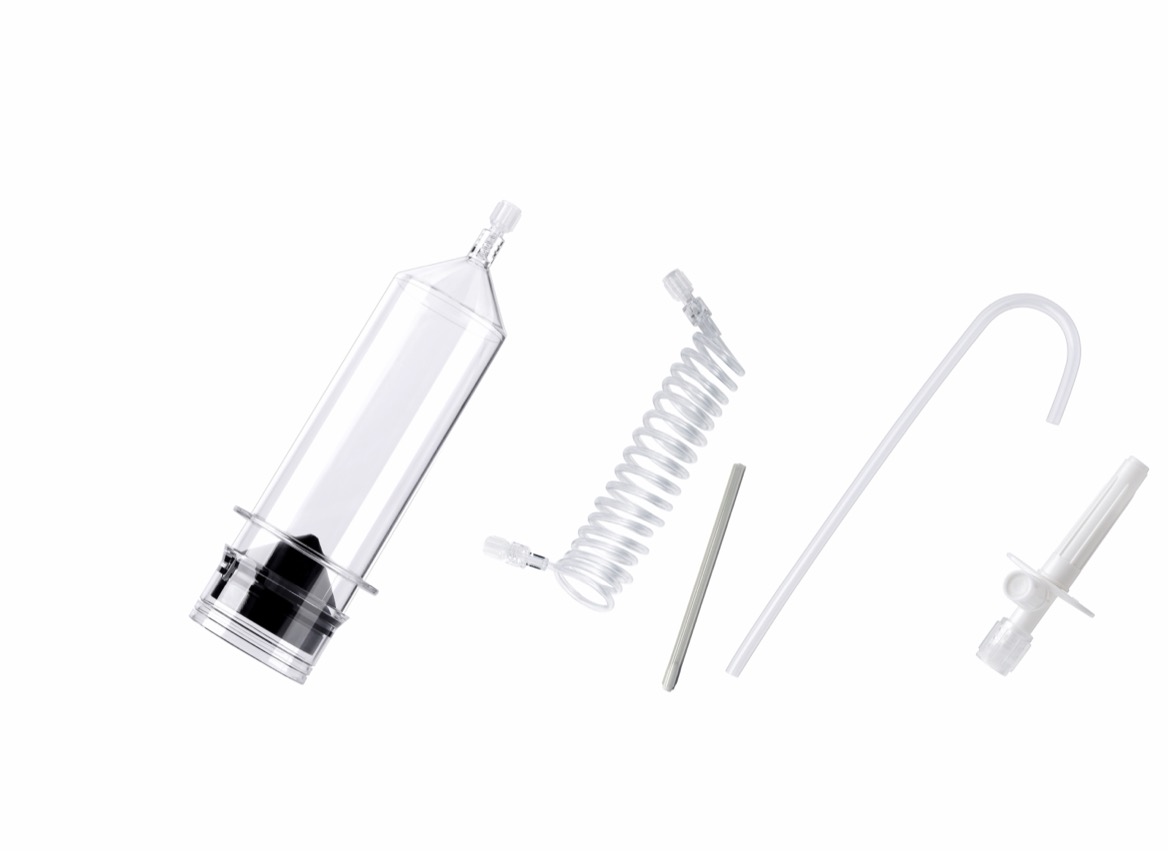
MAIWEI INC. focuses on the research, development, and production of contrast injector consumables used in CT, MRI, and angiography environments. Rather than treating the syringe as a stand-alone product, MAIWEI considers the disposable pathway as an integrated system.
That system may include:
- High pressure syringes
- Contrast and saline connection tubing
- Straight, Y-type, or T-type tube configurations
- J-shaped filling tubes
- Spikes and transfer sets
- Check-valve configurations
- Patient-side connectors and accessories
This product-system approach is important because imaging departments depend on multiple components working together during contrast delivery. A smooth syringe fit is important, but it is only one part of the complete process.
MAIWEI's manufacturing and quality framework is supported by ISO 13485 certification, alongside CE-marked and FDA 510(k)-cleared product lines. For buyers, certifications and regulatory records should be reviewed in relation to the specific product, model, market, and intended use—not treated as blanket approval for all configurations.
FDA documentation for a cleared high pressure angiographic syringe and accessory system describes testing against recognized standards related to syringe performance, small-bore connectors, packaging integrity, biological evaluation, ethylene oxide residuals, and other performance characteristics. The same documentation reports compatibility testing of the injector, syringe, connection tube, and spike or J-tube under maximum sustained pressure specifications.
Hospitals can reduce risk and avoid procurement delays by involving clinical, biomedical, infection-control, and purchasing stakeholders early in the evaluation.
Start with an equipment inventory.
Do not use generic descriptions such as "MEDRAD CT injector" or "Bayer MRI injector." Record the exact model, configuration, installed location, and clinical department.
For example:
- CT suite A: injector model and number of heads
- CT suite B: injector model and software generation
- MRI suite: injector model and syringe configuration
- Interventional laboratory: angiography injector model and pressure requirements
This prevents a common procurement error: ordering a compatible syringe for one room and discovering that it does not fit another room with a different injector generation.
A syringe alone may not complete the procedure setup. Confirm the required companion components.
The checklist should include:
- Syringe volume and quantity per procedure
- Syringe-head configuration
- Required tubing type and length
- Transfer set or spike configuration
- Check-valve requirement
- Patient-side connection type
- Pressure rating of each component
- Sterile barrier and package format
- Single-patient or multi-patient workflow requirements
For Bayer's MEDRAD Stellant multi-patient workflow, Bayer describes separate multi-patient and single-patient tubing elements, including two check valves on the single-patient tubing and a 250 cm extended tubing length.
This is a useful reminder that the selected consumable configuration must align with the workflow being used, not merely the injector brand name.
Ask suppliers for documents that are specific enough to support a real clinical decision.
At a minimum, request:
- Product catalog and technical datasheet
- Injector compatibility list
- Instructions for use
- Sterilization information
- Pressure rating information
- Packaging and shelf-life information
- Quality certificates
- Regulatory documents relevant to the purchasing market
- Lot traceability process
- Complaint-handling and corrective-action process
A credible supplier should be able to distinguish between a general product family and the exact model being offered.
Before converting a large installed base, conduct an organized evaluation using the hospital's internal procedure.
A productive trial plan normally includes:
1. Define the exact injector room and intended procedure type.
2. Confirm approved syringe and tubing references before use.
3. Train the involved technologists on installation and priming.
4. Monitor fit, loading effort, connection security, priming behavior, and workflow time.
5. Record any leakage, handling difficulty, packaging issues, or setup deviations.
6. Review results with radiology leadership, biomedical engineering, and procurement.
7. Approve only the validated configuration for routine purchasing.
The goal is not simply to find a lower-cost alternative. The goal is to establish a repeatable, documented workflow that staff can follow confidently.
High pressure injection requires careful preparation. The disposable pathway should be assembled, primed, and used according to the relevant instructions for use and the facility's approved imaging protocols.
The American College of Radiology states that intravenous contrast media administered by power injector should be delivered through a flexible plastic cannula, and that metal needles should be avoided whenever possible. It also emphasizes that flow rate should be appropriate for the catheter gauge and that an antecubital or large forearm vein is generally the preferred access site for power injection.
Although clinical protocol decisions remain with the responsible healthcare professionals, disposable selection can support safer execution by helping ensure that the fluid path is appropriate for the intended procedure.
Before beginning an injection, staff should verify:
- The correct injector model and programmed protocol
- The correct syringe and tubing configuration
- Packaging integrity and expiration date
- Correct engagement of the syringe in the injector head
- Secure luer and tubing connections
- Appropriate priming and removal of air from the fluid pathway
- The intended contrast and saline source connections
- Patient-side tubing placement and securement
- Appropriate vascular access for the prescribed flow rate
- Compliance with the facility's patient-identification and contrast-screening procedures
Careful preparation helps reduce preventable operational problems such as leakage, air introduction, accidental disconnection, or incorrect component selection.
A contrast-enhanced imaging department cannot function efficiently when compatible consumables are inconsistently available.
For hospitals and distributors, supply planning should address more than price per syringe. It should also include lead time, regional warehousing, batch consistency, packaging configuration, documentation support, and responsiveness when a technical question arises.
A reliable manufacturing partner should be able to support:
- Stable production capacity
- Consistent materials and controlled manufacturing processes
- Clear product identification
- International export experience
- Responsive technical documentation
- OEM and private-label programs where required
- Product customization within appropriate validation and regulatory limits
- Long-term supply planning for multi-site healthcare networks
MAIWEI serves customers in more than 60 countries and regions, supporting hospitals, distributors, and OEM partners with high pressure injector consumables for medical imaging applications. For distributor partners, this can provide a more flexible route to building a localized imaging-consumables portfolio while maintaining access to manufacturer-level technical support.
Before changing suppliers or approving a new compatible syringe line, purchasing teams should ask direct questions.
- Is this exact product configuration documented for the injector model in our department?
- Are the syringe, tubing, and accessories rated for our intended pressure range?
- Which components are single-use, and which workflow limitations apply?
- Can the supplier provide lot-level traceability?
- Are product labels and instructions available in the required language and market format?
- What quality-system controls govern design changes, manufacturing changes, and complaints?
- Can the supplier support sample evaluation and technical onboarding?
- Is the supplier prepared to provide consistent stock during demand fluctuations?
- Can the supplier support OEM packaging, branding, or catalog integration if needed?
- What is the escalation process if a product complaint or compatibility question occurs?
These questions move procurement conversations beyond generic statements about quality and toward objective, verifiable requirements.
The strongest supplier relationship is built on transparency.
Hospitals should expect a manufacturer to be clear about intended use, product compatibility, pressure limitations, product documentation, and regulatory status. Suppliers should not make broad compatibility claims without model-specific support. They should also avoid encouraging hospitals to substitute products outside approved instructions or local procedures.
For a hospital, the ideal partner combines product consistency with practical service:
- Clinical relevance: Products designed for real CT, MRI, and angiography workflows
- Technical clarity: Compatibility information that is easy to verify
- Quality discipline: Controlled production, traceability, and documented testing
- Supply resilience: Reliable production and export capability
- Commercial flexibility: Support for distributors, tenders, and OEM programs
- Responsive communication: Fast answers to technical, documentation, and logistics questions
MAIWEI works with organizations that require dependable high pressure injector consumables and a manufacturer capable of supporting both standard product supply and long-term commercial cooperation.
If your hospital, distributor, or OEM business is evaluating compatible high pressure syringes for Bayer MEDRAD contrast injectors, begin with a model-specific review.
Share the injector model, clinical application, required syringe volume, tubing configuration, and destination market with MAIWEI. The technical team can help identify an appropriate compatible disposable configuration and provide the supporting product information needed for your internal evaluation.
A well-documented compatibility decision can protect workflow continuity, improve purchasing confidence, and help your imaging team focus on what matters most: reliable diagnostic care.
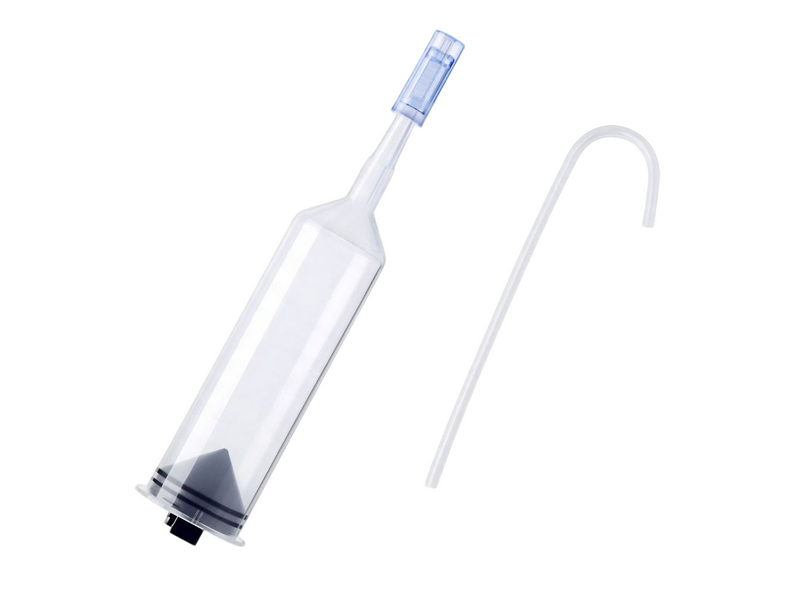
No. Compatible syringes are manufactured by a different supplier but are designed and documented for use with specified injector models. Hospitals should evaluate compatibility evidence, intended use, pressure rating, quality documentation, and local approval requirements before use.
No. Different Bayer MEDRAD injector systems may use different syringe volumes, shapes, locking interfaces, pressure ranges, and tubing configurations. Compatibility must be confirmed for the exact injector model and intended procedure.
The syringe is only one part of the injection pathway. The tubing, valves, connectors, and related accessories must also be appropriate for the expected pressure. The complete assembled system should be reviewed rather than evaluating the syringe in isolation.
Hospitals should request a compatibility list, product datasheet, instructions for use, sterility information, pressure-rating details, packaging and shelf-life information, quality certificates, regulatory documentation applicable to the local market, and traceability information.
Many high pressure injector syringes and related patient-contact accessories are designed for single use. Hospitals should follow the specific product labeling, instructions for use, injector guidance, and internal infection-control procedures.
A structured trial should verify injector fit, loading and removal, priming, tubing connections, handling, workflow impact, packaging condition, and any technical concerns. The trial should be reviewed by relevant radiology, biomedical engineering, infection-control, and procurement stakeholders.
Yes. MAIWEI provides high pressure injector consumables for hospitals, distributors, and OEM partners. Customers can discuss compatible product configurations, packaging requirements, commercial cooperation, and documentation needs with the MAIWEI team.
1. U.S. Food and Drug Administration. [510(k) Summary: Single-use Sterile High-pressure Angiographic Syringes and Accessories, K241109].
2. American College of Radiology. [ACR Manual on Contrast Media]. 2024 update.
3. Bayer Radiology. [MEDRAD® Stellant Injection System].
4. U.S. Food and Drug Administration. [Device Advice: Comprehensive Regulatory Assistance].
5. U.S. Food and Drug Administration. [Medical Device Reporting: How to Report Medical Device Problems].
6. International Organization for Standardization. [ISO 13485: Medical devices—Quality management systems—Requirements for regulatory purposes].