
Views: 255 Author: Maiwei Biotech Publish Time: 2026-10-20 Origin: Site


Content Menu
● Contrast Injector Syringe Leakage: Identify the Location First
● Syringe Problems: Barrel, Plunger Seal and Injector Fit
>> Barrel Damage and Loss of Integrity
>> Leakage Around the Plunger Seal
>> Incorrect Syringe Compatibility or Loading
● High-Pressure Injector Tubing Leakage: Check the Entire Line
>> Conventional IV Tubing Is Not a Substitute
>> Kinks, Compression and Joint Damage
>> Why Pressure Ratings Need Context
● Connection Leakage: Why "Connected" Does Not Mean Compatible
>> Incomplete Engagement or Damaged Interfaces
>> Why More Tightening Is Not a Reliable Fix
>> The Interface Is a Shared Design Responsibility
● External Leakage vs. Contrast Extravasation
● A Practical Workflow for Investigating Injector Leakage
>> Step 2: Make the System Safe
>> Step 3: Document the First Observed Evidence
>> Step 4: Review the Complete Configuration
>> Step 5: Replace and Reassess Appropriately
● Expert Insight: What Pressure Behavior Can—and Cannot—Tell You
● Turn a Leakage Complaint into Useful Manufacturing Evidence
● Selecting Contrast Injector Consumables with MAIWEI INC.
>> What usually causes contrast injector syringe leakage?
>> How can I tell whether the syringe or tubing is leaking?
>> Can I tighten a leaking connector and continue injecting?
>> Can a syringe fit an injector but still be unsuitable?
>> Does a pressure alarm confirm contrast extravasation?
>> Can standard IV tubing be used with a contrast power injector?
>> What should a distributor send with a leakage complaint?
Contrast injector syringe leakage does not always begin in the syringe. A damaged barrel, compromised tubing, or an improperly assembled connection can produce similar warning signs: visible fluid, interrupted injection, or unexpected pressure behavior. Identifying the source requires examining the complete fluid pathway—not simply replacing the component nearest the spill.
From a manufacturing perspective, I would frame the investigation around three questions: Where did the fluid first appear? When did leakage begin? Was every component suitable for the injector and intended protocol?
The immediate priority, however, is safety. Stop the injection when leakage is suspected, assess the patient, and follow the equipment instructions and local clinical procedure before investigating.
This guide explains how qualified imaging teams and procurement specialists can distinguish syringe, tubing, and connection problems without overlooking vascular access complications.
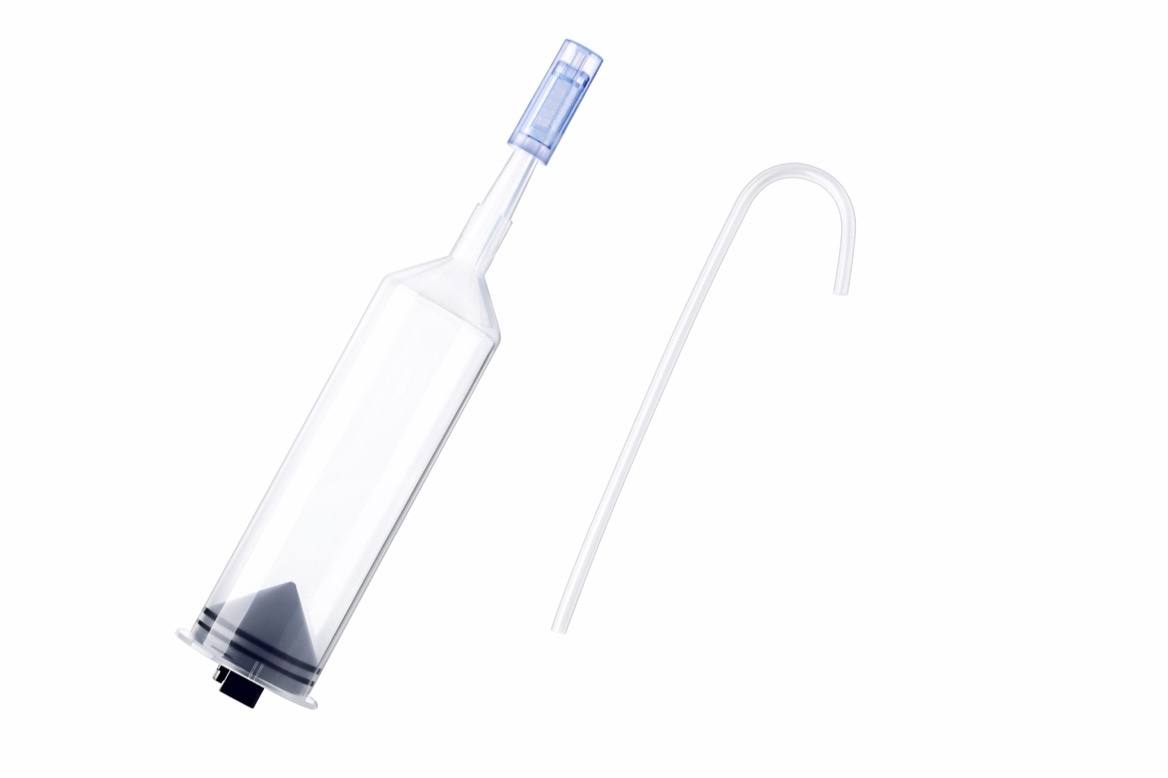
A wet syringe does not prove that its barrel failed. Fluid can travel along tubing, collect around a connector, and drip onto another component.
Likewise, a dry external fluid pathway does not rule out contrast extravasation into surrounding tissue.
Use the following observations to guide an investigation after injection has stopped and the system has been made safe.
| Observation | Area to investigate | Important limitation |
|---|---|---|
| Fluid around the rear syringe seal | Plunger seal, barrel integrity, syringe installation | Fluid may have migrated from elsewhere |
| Fluid at the syringe outlet | Syringe tip and mating connector | Either side of the interface may be involved |
| Droplets along the tubing | Tubing wall, bonded joints, mechanical damage | Nearby connector leakage can track along the tube |
| Fluid around a threaded connection | Engagement, damage, compatibility | Additional tightening is not automatically corrective |
| Patient pain or swelling with no external spill | Vascular access and possible extravasation | Requires clinical assessment, not just equipment inspection |
These observations suggest where to look. They do not establish a confirmed root cause.
A cracked syringe barrel can allow contrast to escape during injection. Inspect the syringe and packaging before use, following the product instructions.
Reasons to reject a component include:
- Visible cracks or deformation.
- Damaged packaging or a compromised sterile barrier.
- An abnormal syringe tip.
- Leakage during preparation.
- Any condition prohibited by the manufacturer's instructions.
Do not attempt to repair a disposable syringe or continue using one with suspected structural damage.
Fluid appearing behind the plunger warrants investigation of the seal, barrel, and syringe installation.
The visible location alone cannot distinguish a manufacturing defect from damage, incompatibility, or an installation problem. Preserve the syringe for a controlled investigation when required by the complaint-handling procedure.
For quality teams, useful questions include whether leakage occurred during filling, priming, or powered injection, and whether similar reports involve the same product lot.
A syringe that resembles the original component is not necessarily suitable for the injector.
Compatibility should cover the exact injector model, syringe design, mounting arrangement, and intended operating conditions. Correct loading must also follow the equipment instructions.
Avoid forcing a syringe into position. If engagement feels abnormal or the device does not recognize installation correctly, stop and resolve the issue before proceeding.
One documented failure mechanism is the use of conventional IV tubing in a power-injection pathway.
A Pennsylvania Patient Safety Advisory described 29 reports of IV tubing rupture during contrast injection between July 2004 and March 2008. Reported consequences included fluid exposure and examination disruption.
These historical reports demonstrate a preventable hazard. They do not represent a current leakage rate or establish the performance of any particular manufacturer.
Every component exposed to powered injection must be suitable for its intended use, including extension tubing, connectors, valves, and vascular access devices.
Inspect the full tubing route rather than only the visibly wet section.
Look for:
- Kinks or flattened sections.
- Tubing trapped beneath equipment or patient positioning accessories.
- Excessive tension near connectors.
- Damage at bonded joints.
- Unsupported or sharply bent tubing.
A restricted pathway can increase resistance. However, a pressure alarm does not identify the restriction's location or prove that the tubing itself is defective.
The injector's pressure capability does not determine what every attached component can tolerate.
Check each component's labeled pressure and flow limits. The configured protocol must remain within all applicable instructions, including those for the vascular access device.
Do not treat a tubing burst-test result as its clinical operating limit. Procurement specifications should clearly distinguish labeled working conditions from verification or destructive test conditions.
A connection may appear assembled while failing to form a reliable seal.
Investigate the mating surfaces for damage, abnormal alignment, incomplete engagement, and incompatible components. Also review whether the assembly followed the specified connection method.
When the leak occurs at an interface, examine both components. Replacing only the syringe or only the tube may leave the actual problem unresolved.
Do not assume that a leaking connector simply needs greater force.
Follow the manufacturer's assembly instructions. Avoid improvised tools, adhesives, or sealants. Components showing damage or loss of integrity require replacement according to the applicable procedure.
Never manipulate a connection while the pathway remains pressurized. Stop the injector and follow its instructions for safely relieving pressure before inspection or disconnection.
For OEM buyers, connector compatibility deserves its own review.
A standard connector description alone should not replace evidence that the intended combination performs acceptably under its labeled conditions. Request documentation covering the actual syringe-and-tubing configuration rather than relying only on separate component specifications.
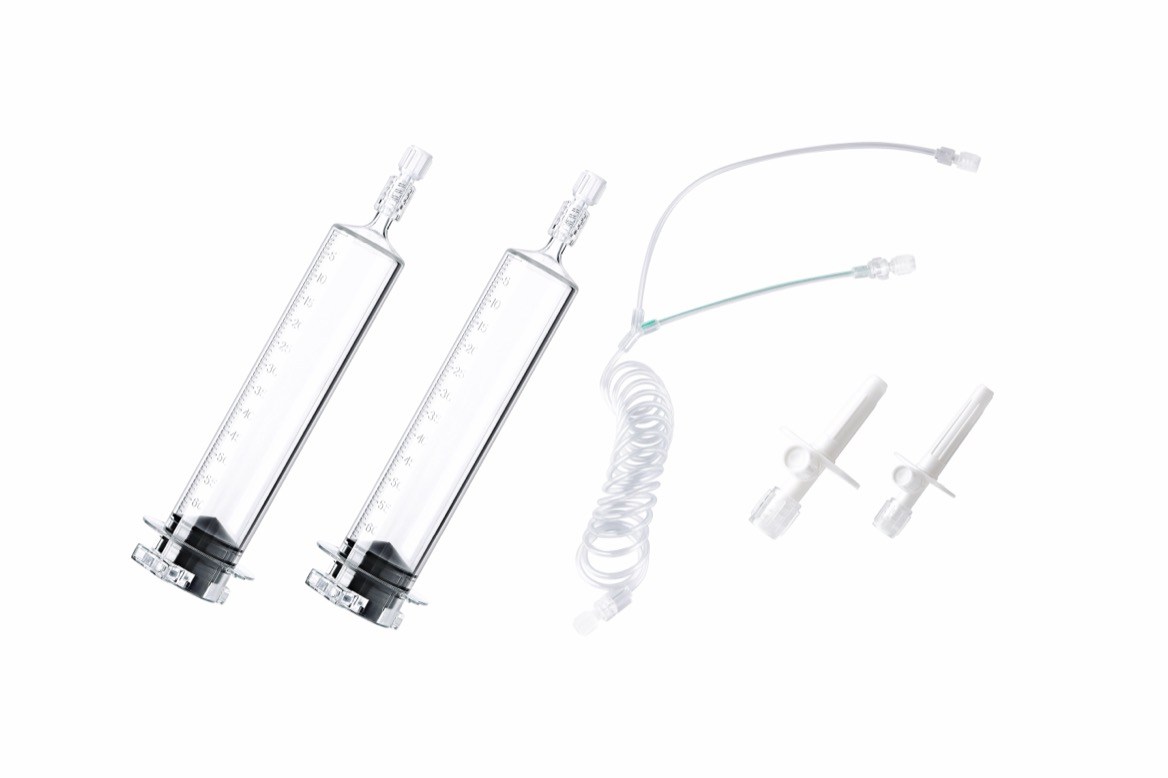
External leakage means fluid escapes from the delivery equipment. Extravasation means injected contrast enters surrounding tissue instead of remaining within the intended blood vessel.
The distinction matters because replacing a leaking consumable does not address a compromised vascular access site.
Patients should be instructed to report pain, swelling, or unusual sensations during injection. Staff should observe the access site according to local protocols.
If extravasation is suspected:
1. Stop the injection.
2. Notify the responsible clinician.
3. Assess the site and patient.
4. Follow the institutional management and documentation pathway.
5. Escalate promptly when severe injury is suspected.
Increasing pain, progressive swelling, altered sensation, blistering, or impaired perfusion require clinical attention.
Published extravasation figures must not be presented as syringe failure rates. A 2022 systematic review cited an earlier review involving more than 1.1 million patients with an approximately 0.2% extravasation rate. That figure concerns leakage into tissue—not external equipment leakage.
Stop the injection and prioritize the patient. Do not continue injecting to see whether the leak worsens.
Where fluid exposure has occurred, follow the facility's exposure-control and cleaning procedures.
Follow the injector instructions before handling, disconnecting, or replacing components.
Do not tighten a connector under pressure or conduct an improvised pressure test while connected to the patient.
Record the earliest visible wet location, injection phase, alarms, and patient symptoms.
When permitted, photographs can help preserve the original configuration. Protect patient confidentiality.
Confirm:
- Injector model and consumable product codes.
- Syringe and tubing compatibility.
- Pressure and flow settings.
- Vascular access suitability.
- Tubing routing and connection assembly.
- Product lot numbers and expiration dates.
Remove compromised components from clinical use. Preserve them safely if required for investigation.
A qualified clinician should determine whether and how the examination can resume. Repeat preparation, air removal, access assessment, and other required checks using the applicable instructions.
Any additional contrast administration requires clinical authorization; it is not simply a replacement of the estimated spilled volume.
Pressure information is useful evidence, but it is not a diagnosis.
Higher resistance can arise from several factors, including tubing restriction, catheter characteristics, contrast viscosity, and injection conditions.
A pressure-limit event therefore does not automatically mean a defective syringe. Equally, the absence of an alarm does not establish that the system is leak-free or exclude extravasation.
My preferred investigative approach is to combine three evidence streams:
- Physical findings from the fluid pathway.
- Injector settings, alarms, and available logs.
- Clinical observations at the vascular access site.
Contrast temperature may also matter because warming can reduce viscosity. Any warming must follow the contrast product labeling and local procedure—not an improvised temperature adjustment intended to overcome leakage.
"Leaked during injection" is insufficient for a strong root-cause investigation.
Hospitals, distributors, and manufacturers can improve complaint quality by collecting a consistent minimum dataset:
| Information | Why it helps |
|---|---|
| Product code and lot number | Supports traceability |
| Injector model and complete configuration | Identifies compatibility questions |
| Programmed flow and pressure limit | Defines intended operating conditions |
| Injection phase when leakage appeared | Separates preparation from powered-use events |
| First observed leakage location | Narrows the investigation |
| Photos and retained components | Preserves physical evidence |
| Patient impact and examination outcome | Supports appropriate escalation |
Manufacturers can then assess whether a problem relates to assembly, transport damage, installation, component interaction, or another cause.
Avoid blaming either the operator or the product before evaluating the evidence.
MAIWEI INC. develops and manufactures high-pressure injector syringes, connecting tubing, and related consumables for CT, MRI, and angiography applications.
Its company-provided profile describes exports to more than 60 countries and regions and references ISO 13485, CE, and FDA 510(k) credentials.
Buyers should verify the documents applicable to the exact product and destination market. These credentials have different scopes and should not be treated as interchangeable or as proof of universal injector compatibility.
For supplier evaluation, request:
- Model-specific compatibility information.
- Current instructions and labeled operating limits.
- Applicable quality and regulatory documentation.
- Lot traceability and complaint-handling support.
- Evidence supporting the intended assembled configuration.
Contact MAIWEI INC. with your injector model, required syringe capacity, tubing configuration, destination market, and operating requirements. Request a documented compatibility review before ordering evaluation samples or planning OEM supply.
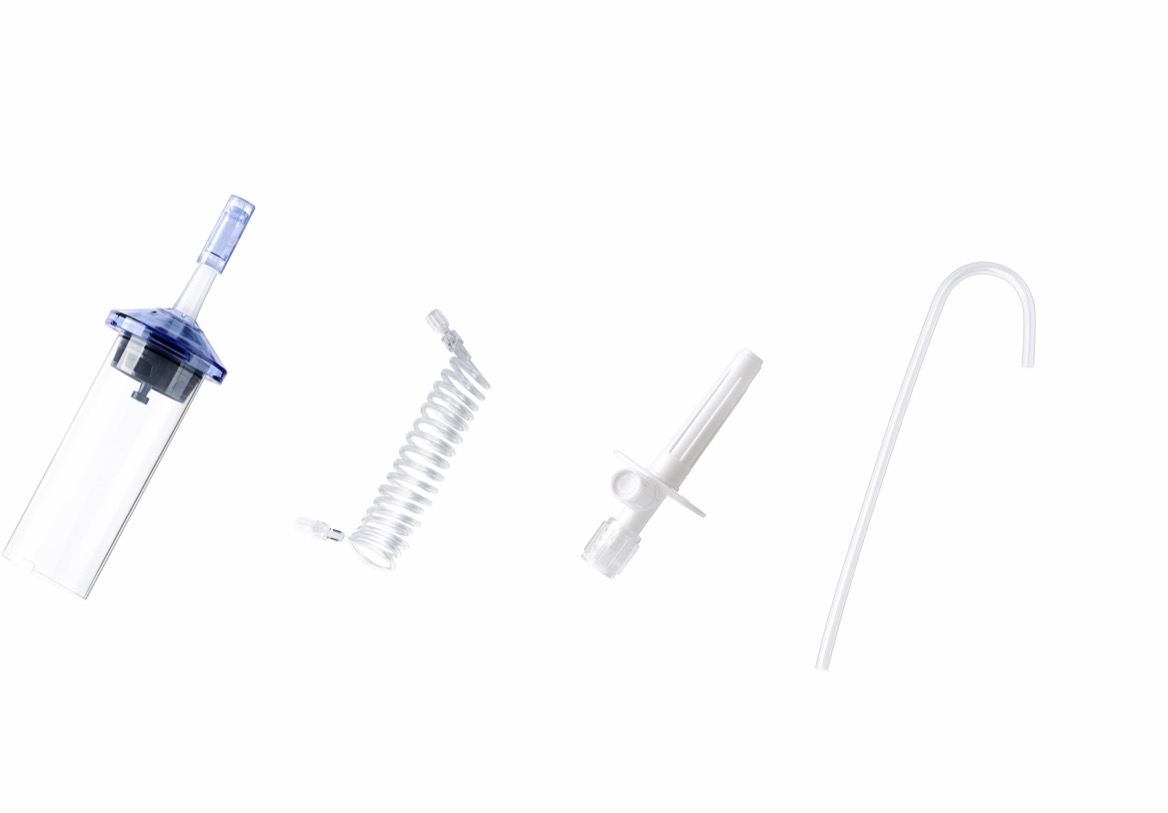
Possible causes include syringe damage, seal problems, unsuitable tubing, compromised joints, and connection issues. Without incident-specific evidence, it is not appropriate to identify one as the most common cause.
After stopping and safely depressurizing the system, inspect the complete pathway and document the first observed wet location. Fluid migration can make the apparent source misleading.
Do not tighten it under pressure. Follow the equipment instructions, inspect the interface, and replace compromised components. Clinical staff must reassess the system and patient before resuming.
Yes. Physical fit alone does not establish model-specific compatibility or acceptable performance under the intended conditions. Verify the applicable documentation and instructions.
No. An alarm can indicate increased resistance or another system problem. Extravasation requires clinical assessment, and equipment monitoring does not replace patient observation.
Do not assume it can. Use components labeled as suitable for the intended power-injection conditions, including the relevant pressure and flow requirements.
Include product and lot identification, injector model, configuration, settings, injection phase, leakage location, photographs where permitted, and patient impact. Retain affected components according to safe handling procedures.
1. Pennsylvania Patient Safety Authority. "CT Contrast Media Power Injectors Can Rupture Conventional IV Sets." Pennsylvania Patient Safety Advisory, December 2008. Source for historical incident reports, conventional tubing hazards, and pressure-limit precautions. [patientsafety.pa]
2. Roditi G, Khan N, van der Molen AJ, et al. "Intravenous contrast medium extravasation: systematic review and updated ESUR Contrast Media Safety Committee Guidelines." European Radiology. 2022;32:3056–3066. DOI: 10.1007/s00330-021-08433-4. Source for extravasation definitions, incidence context, risk factors, detection, and management principles. [pmc.ncbi.nlm.nih]
3. European Society of Urogenital Radiology, Contrast Media Safety Committee. Guidelines 2025. Sections on contrast agent extravasation and warming of iodine-based contrast medium. Source for prevention, recognition, documentation, and escalation principles. [esur]
4. UCSF Department of Radiology and Biomedical Imaging. "CT and X-ray Contrast Guidelines Information." Source for vascular access assessment, observation, and stopping injection when extravasation is suspected. [radiology.ucsf]

