


close
Choose Your Site
Global
Social Media
Views: 299 Author: Maiwei Biotech Publish Time: 2026-11-17 Origin: Site


Content Menu
● What Counts as a Contrast Injector Syringe Plunger Problem?
● When Should You Replace a Contrast Injector Syringe?
>> If You Find the Problem Before Injection
>> If the Problem Appears During Injection
● How to Distinguish Plunger Failure From a Pressure-Limit Alarm
● What Recurring Plunger Problems Can Tell Your Quality Team
>> Several Suspect Syringes From the Same Lot
>> Similar Failures From Different Lots on One Injector
>> What to Record in a Syringe Complaint
● How to Verify Replacement Syringes for CT, MRI, and Angiography
● Request a Model-Specific Compatibility Review
>> Can I fix a sticking contrast injector syringe plunger by pushing it manually?
>> Does fluid around the syringe mean the plunger seal has failed?
>> Should I replace the connecting tubing when I replace the syringe?
>> Can I reuse a single-use syringe if an injection was canceled?
>> Does a pressure-limit alarm mean the patient experienced extravasation?
>> Are syringes with the same capacity interchangeable?
Replace a contrast injector syringe if its plunger is visibly damaged or misaligned, fluid appears to leak past the plunger seal, or the syringe cannot engage correctly using the manufacturer's approved loading procedure. Do not use a syringe if its sterile packaging is compromised, it is expired, or its compatibility with the exact injector model cannot be verified. A pressure-limit alarm alone, however, does not prove that the syringe has failed. The restriction or fault may be elsewhere in the fluid path or injector.
From a medical imaging consumables manufacturer's perspective, two decisions need to stay separate: whether the disposable syringe is safe to use, and whether the injector setup is safe to return to service. Replacing a suspect syringe answers the first question. It does not automatically answer the second.
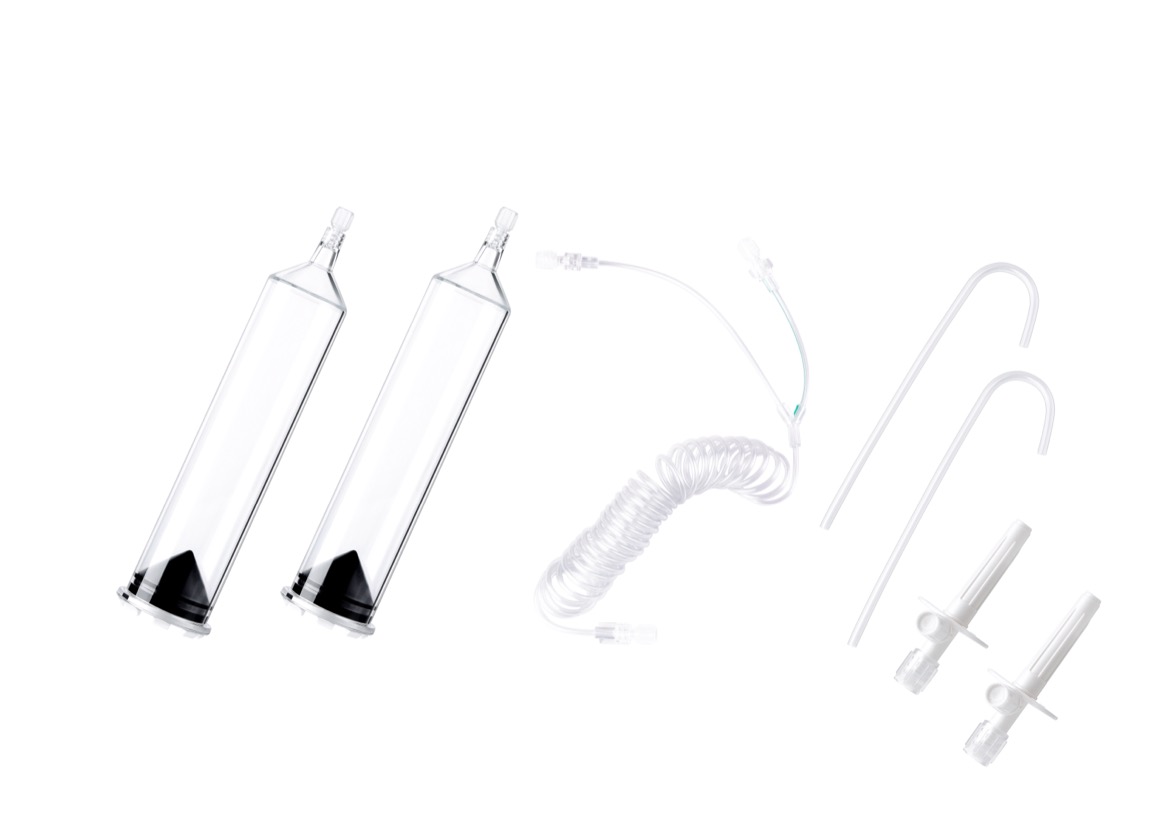
The syringe plunger is the moving component inside the disposable barrel. Its seal helps keep contrast medium or saline ahead of it as the injector advances the plunger. The drive piston, by contrast, is part of the injector. It transfers motion to the plunger through a model-specific interface.
That distinction matters when an operator reports that "the plunger is stuck." The plunger may be binding inside the barrel, the syringe may not be seated correctly, or the injector drive may not be moving as expected. Those are different findings, even if the initial symptom looks the same.
For a useful handoff, describe what was actually observed: "The injector displayed a syringe engagement error during loading" or "Fluid was visible behind the plunger seal." Record "suspected syringe defect" separately as a possible explanation, not as an established cause.
| What you observe | What to do | What the observation does not establish |
|---|---|---|
| Torn sterile packaging, an expired syringe, or uncertain sterility | Reject the syringe before setup and select a new, in-date unit with intact packaging. | An undamaged-looking barrel does not establish sterility. |
| A cracked barrel, visibly deformed plunger, or visibly displaced seal | Remove the syringe from use. Do not attempt to straighten, repair, or reseat the seal. | Visual inspection alone does not identify the manufacturing or handling cause. |
| Fluid visibly passing behind the plunger seal | If injection is underway, stop it and follow facility procedure. Remove the suspect syringe from service and document the finding. | Fluid elsewhere on the injector head does not establish that the seal leaked. |
| Syringe will not seat or engage after the approved setup checks | Do not force it. Verify the exact syringe reference and loading procedure. Replace the suspect unit with a verified compatible syringe if the instructions permit. | An engagement fault may involve compatibility, loading, or the injector interface. |
| A pressure-limit alarm without visible syringe damage or leakage | Follow the model-specific alarm procedure and assess the rest of the setup before deciding what to replace. | An alarm is not a diagnosis of plunger failure or contrast extravasation. |
A syringe of unverified compatibility should stay out of service until its model-specific documentation can be checked. The fact that it fits the injector head is not enough.
Do not arm the injector with a suspect syringe installed. During normal setup, check the package integrity, expiration date, product reference, and any visible damage. If the syringe does not seat correctly, consult the injector's and disposable's instructions for use before deciding whether the issue is incorrect loading, a product mismatch, or a defective component.
If the instructions permit replacement, set up a new compatible disposable and repeat the required checks before use. Do not transfer fluid from a suspect setup as a workaround, improvise a fit, or apply lubricant to a sticking plunger.
If you observe leakage, unexpected syringe movement, or suspected failure, stop the injection according to the injector instructions and site protocol. If the patient reports pain or swelling, or the team suspects contrast has entered surrounding tissue rather than the vein, follow the facility's extravasation procedure promptly. A syringe inspection is not a substitute for patient assessment.
Before any decision to resume or repeat an injection, document where the injection stopped and what the system recorded. The clinical team should determine whether more contrast is appropriate. The programmed volume, the injector's recorded delivery, and the amount that reached the intended vessel are not necessarily the same after a suspected leak or interruption.
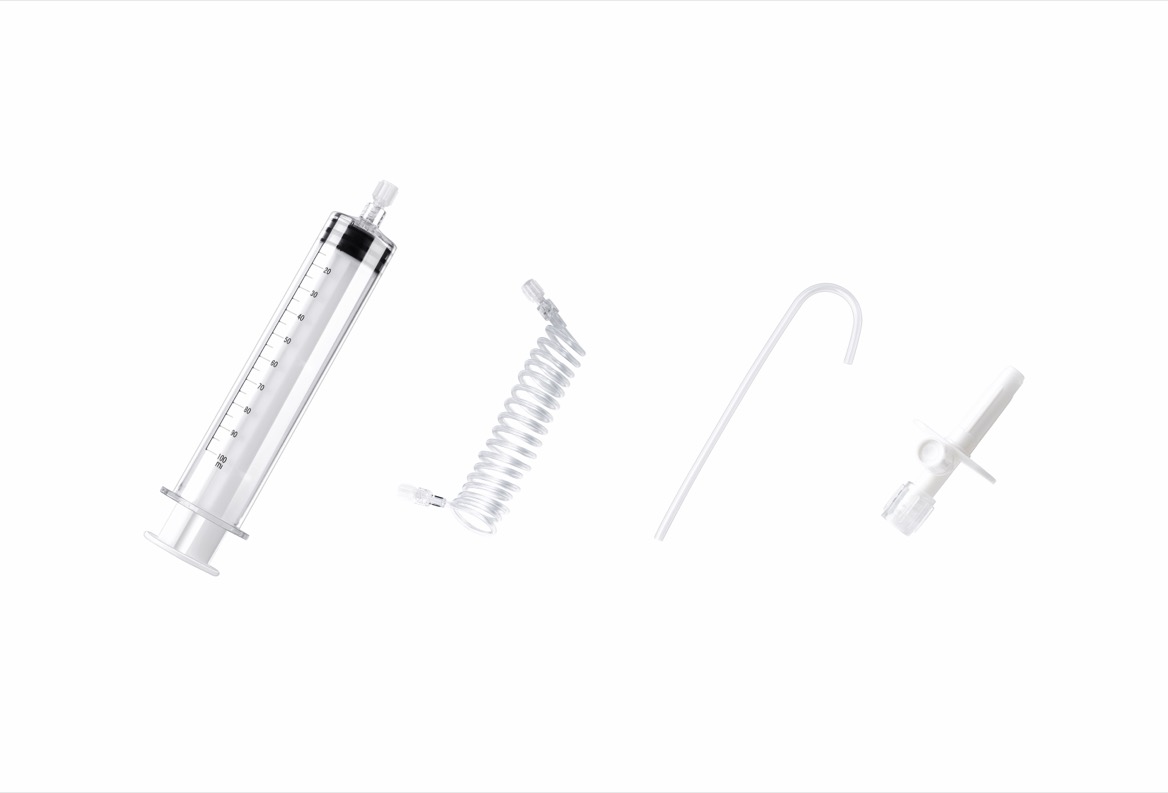
A pressure-related interruption tells you how the injector responded to the conditions in the system. It does not, on its own, identify the faulty component. A kinked line, a closed clamp where applicable, a restriction in the vascular access pathway, or a mismatch between the programmed protocol and the components in use can warrant investigation. The specific checks and alarm response depend on the injector model.
Use the timing and visible evidence to guide the first assessment:
1. Before fluid delivery: If the injector cannot recognize or engage the syringe, start with the labeled syringe reference, seating, and any specified adapter. Do not force engagement.
2. During delivery, with fluid visible behind the seal: Remove the suspect syringe from service after stopping the injection as required. Record where the fluid appeared, rather than writing only "injector leak."
3. During delivery, with a pressure alarm but no visible syringe defect: Follow the approved alarm pathway. Review the disposable assembly, vascular access, and protocol as directed. Do not raise the pressure limit just to clear the alarm.
4. Across more than one correctly installed, verified compatible syringe: Escalate according to the injector instructions and site policy. Repeatedly swapping syringes is not an acceptable substitute for assessing a possible injector fault.
The applicable pressure limits must account for the exact injector setup and the ratings and conditions of use for all relevant components. A syringe's pressure rating is not permission to apply that pressure to the entire fluid path.
Imagine two syringes from the same lot show similar engagement problems on different injector heads. That pattern gives the quality team a reason to investigate a possible lot-related issue, but it does not establish one. Check for shared factors such as the same syringe reference, storage location, shipment, adapter, or loading practice.
Preserve the packaging and affected items when facility policy permits, handling used components under the appropriate biohazard procedures. Ask the quality team whether the remaining stock should be held while the issue is reviewed. Send the supplier a concise description of the observed behavior and the relevant product identifiers.
Now imagine the same engagement error occurs with verified compatible syringes from different lots on a single injector head. The common injector or interface is a useful lead. Record the events and refer the system to biomedical engineering or authorized service under the facility's procedure. Do not return an unresolved injector fault to clinical use simply because a subsequent syringe loads without an alarm.
These are illustrative scenarios, not documented incidents. Their purpose is to show how comparing lots, injector heads, and setup conditions can narrow an investigation without assigning blame too early.
Record enough detail for another person to reconstruct the event without guessing:
- Injector manufacturer, model, asset or serial number, and syringe position if relevant.
- Syringe reference, capacity, lot number, expiration date, and packaging condition.
- Tubing or kit reference and any adapter used.
- Stage of failure: loading, priming, arming, injection, or removal.
- Exact alarm text, visible findings, and whether the event recurred.
- Programmed settings, recorded delivery, and patient involvement, where applicable and permitted.
Follow institutional reporting procedures. In the United States, FDA reporting obligations differ for manufacturers, importers, and device user facilities. A supplier complaint and a regulatory report are separate processes; do not assume that submitting one fulfills the requirements of the other.
Purchase and stock replacement syringes by exact product reference and documented compatibility, not by modality, barrel size, or resemblance to an existing product. Two syringes with the same nominal capacity may have different mounting or plunger interfaces, require different accessories, or be labeled for different systems.
Before approving a replacement syringe or a new supplier, request:
- A model-specific compatibility statement identifying the injector and required adapter, if any.
- The current syringe and tubing instructions, with intended use, pressure rating, sterility, shelf life, and single-use or single-patient labeling as applicable.
- The kit configuration and part numbers, so staff can identify approved combinations without relying on visual similarity.
- Product-specific regulatory documentation for the intended market, plus lot traceability and a defined complaint contact.
An FDA 510(k) clearance is specific to the device covered by that clearance; it should not be presented as blanket approval of a manufacturer or every item in a catalog. For purchasing teams, the practical question is whether the documentation covers the exact syringe or kit you intend to use.
MAIWEI INC. develops and manufactures power injector syringes, connecting tubing, and related consumables for CT, MRI, and angiography. If you are evaluating a replacement syringe or an OEM kit, send MAIWEI your injector manufacturer and exact model, current syringe and tubing references, desired kit configuration, and destination market. Request a written compatibility review, current instructions for use, and product-specific regulatory documentation before approving a substitution.
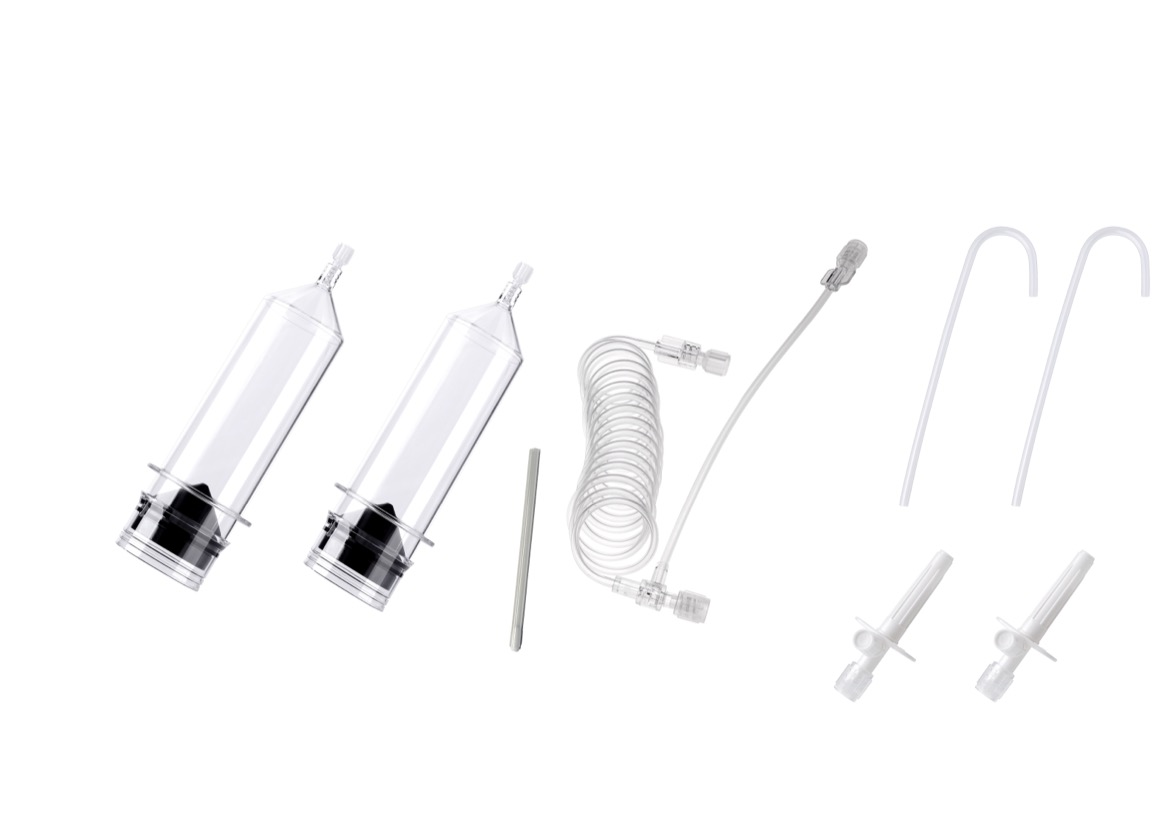
Do not force, lubricate, or repair a plunger as a workaround. Use only the loading and operating actions described in the relevant instructions. If the syringe still binds or fails to engage, remove it from use and follow the approved troubleshooting procedure.
Not necessarily. Fluid may originate at a connector, the syringe tip, or a damaged barrel. Fluid visibly passing behind the plunger seal is more specific evidence of seal bypass. Record where the fluid first appeared and avoid assigning a cause that you did not observe.
Follow the disposable and injector instructions and the site's infection prevention policy. If the tubing is damaged, potentially contaminated, or part of a set that must be replaced together, do not retain it. Do not assume that changing only the syringe restores a safe fluid path.
Do not treat an aborted procedure as authorization to store, reload, or reuse an opened or prepared single-use syringe. Follow the product labeling and facility procedure for disposal or any specifically permitted handling. Unused fluid does not establish that the setup remains suitable for use.
No. An alarm alone does not diagnose extravasation, and the absence of an alarm does not rule it out. If there is clinical concern, follow the facility's patient assessment and extravasation procedure rather than relying on the injector display.
No. Capacity describes volume, not compatibility. Verify the injector model, syringe reference, required adapter, compatible tubing, and labeled conditions of use before substituting a disposable.
1. Bayer Radiology. *MEDRAD Stellant FLEX CT Injection System.* Manufacturer specifications for sterile disposable syringes, system configurations, and programmable pressure limits. [radiologysolutions.bayer]
2. Bayer Radiology. *MEDRAD Stellant Video Tutorials.* Model-specific demonstrations of syringe handling and removal. [radiology.bayer]
3. Bayer. *MEDRAD Stellant SX Operator Manual.* Operator guidance on disposable inspection, engagement, pressure compatibility, and disposal; third-party-hosted manual. Use the current instructions supplied for your exact system in clinical practice. [scribd]
4. American College of Radiology. *ACR Manual on Contrast Media.* See "Extravasation of Contrast Media" for clinical assessment and management guidance. [acr]
5. Roditi G, et al. *Intravenous contrast medium extravasation: systematic review and updated ESUR Contrast Media Safety Committee guidelines.* *European Radiology*, 2022. [pmc.ncbi.nlm.nih]
6. U.S. Food and Drug Administration. *How to Report Medical Device Problems* and *Mandatory Reporting Requirements: Manufacturers, Importers and Device User Facilities.* U.S. reporting pathways and role-specific obligations. [fda]