


close
Choose Your Site
Global
Social Media
Views: 258 Author: Maiwei Biotech Publish Time: 2026-10-08 Origin: Site


Content Menu
● 1. Understanding CT Injector Syringe Kits
>> What does a 200 mL kit include?
>> Why capacity alone is insufficient
>> CT, MRI, and angiography differences
● 2. Verifying Syringe and Tubing Compatibility
>> Start with the exact injector model
>> Assess the complete fluid pathway
>> Compare tubing beyond its length
● 3. Safety and Quality Evidence
>> Sterility requires correct handling
>> Interpret regulatory claims precisely
>> Request evidence behind performance claims
● 4. Procurement and Workflow Improvements
>> Use a controlled supplier evaluation
>> Measure cost beyond unit price
>> Turn user feedback into evidence
>> Apply a pre-use verification checklist
>> Is every 200 mL syringe interchangeable?
>> Can CT tubing also serve MRI?
>> What pressure rating should buyers choose?
>> Can a syringe serve multiple patients?
>> Does clearance cover every company product?
>> What should an OEM inquiry include?
A 200 mL CT injector syringe kit is more than a disposable container for contrast media. It is part of a delivery pathway that must work with the injector, connecting tubing, vascular access device, and approved imaging protocol.
For hospitals, distributors, and OEM buyers, selecting the right kit requires more than matching syringe capacity or comparing prices. Documented compatibility, pressure limits, sterile packaging, and dependable supply deserve equal attention.
At MAIWEI INC., we focus on developing and manufacturing high-pressure injector syringes, connecting tubes, and related consumables for CT, MRI, and angiography. Our approach to product selection starts with one practical principle: evaluate the complete application, not the syringe alone.
This guide explains how buyers can assess 200 mL CT injector syringe kits, qualify suppliers, and build a more reliable purchasing process.
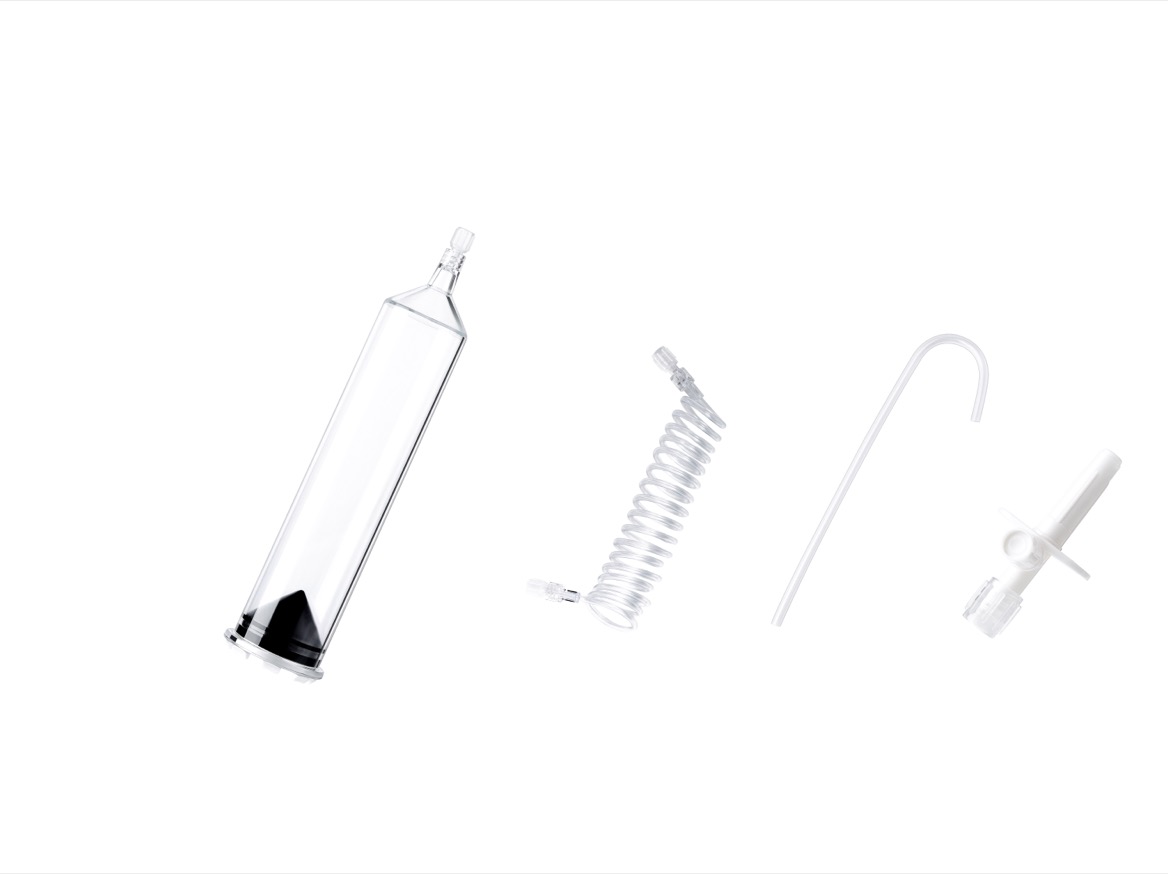
A 200 mL CT injector syringe kit typically combines a syringe with accessories needed for contrast preparation and delivery. Depending on the product configuration, these may include connecting tubing, a filling device, or other specified components.
The exact contents vary. Buyers should confirm the bill of materials rather than assume that every kit includes the same accessories.
Useful purchasing details include:
- Syringe capacity and graduation markings
- Intended injector models
- Tubing length and connector configuration
- Maximum labeled operating pressure
- Filling accessories supplied
- Sterilization method and shelf life
- Individual packaging and carton quantities
A complete specification makes quotations easier to compare and reduces misunderstandings between purchasing teams, distributors, and clinical departments.
Syringe capacity does not determine the amount of contrast a patient should receive. Contrast selection, volume, and injection settings remain clinical decisions governed by the approved protocol and patient assessment.
Two syringes labeled "200 mL" may differ in barrel geometry, mounting features, plunger engagement, and connector design.
These differences matter because the injector must hold and drive the syringe as intended. A similar appearance does not establish equivalent performance.
Likewise, a syringe that mounts correctly does not automatically validate the tubing or downstream accessories.
From a procurement perspective, the right question is not simply, "Does it fit?" It is, "What evidence supports this exact configuration for our intended equipment and use?"
CT, MRI, and angiography consumables should not be treated as interchangeable categories.
ApplicationMain purchasing priorityEssential verification
CT contrast injectionInjector fit and protocol suitabilityExact model compatibility and labeled operating limits
MRI contrast injectionCompatibility within the intended MR environmentApplicable MR safety information and equipment instructions
AngiographySuitability for the specified injection applicationPressure limits, connector configuration, and intended use
There is no universal pressure specification that makes a disposable suitable for every imaging system. Selection must follow the labeling of the actual products involved.
"Compatible with Bayer injectors" is not a sufficiently precise purchasing specification.
Record the injector's full model name and the reference number of the consumable currently used. Then request written confirmation identifying the proposed replacement syringe and its intended equipment.
For a search involving "Bayer 100101 compatible syringe," establish what that reference identifies before ordering. Do not assume that a commercial reference number describes an entire injector family.
A useful compatibility record includes:
- Injector manufacturer and exact model
- Existing consumable reference
- Proposed replacement product code
- Syringe volume and mounting configuration
- Required tubing and accessories
- Supporting labeling or instructions
This record should remain available to purchasing, quality, and clinical staff.
The syringe, tubing, connectors, and vascular access device must all support the planned injection.
A high-pressure syringe does not make an unsuitable catheter safe for power injection. Similarly, suitable tubing does not compensate for an unverified connector.
The assembly must stay within the applicable limits of every component. Pressure capability and permitted flow are related considerations, but they are not interchangeable specifications.
Ask suppliers to distinguish between operating pressure and test results. A burst-test value should not be presented as permission to operate routinely at that pressure.
Where compatibility information is unclear, obtain clarification before evaluation or clinical use.
High-pressure connecting tubing deserves its own review rather than being treated as an incidental accessory.
Length, internal diameter, connector design, and layout can influence handling and fluid delivery. Extra length may support room positioning, but it should have a defined purpose.
Buyers should evaluate:
- Labeled pressure capability
- Connector security and configuration
- Appropriate length for the room layout
- Priming requirements and stated internal volume
- Resistance to kinking during intended handling
- Packaging that protects the sterile components
For dual-head systems, verify the intended contrast-and-saline configuration. Do not assume that any Y-shaped tubing assembly supports the same setup.
The practical objective is consistency: staff should receive the configuration they expect, with clear identification and accessible instructions.
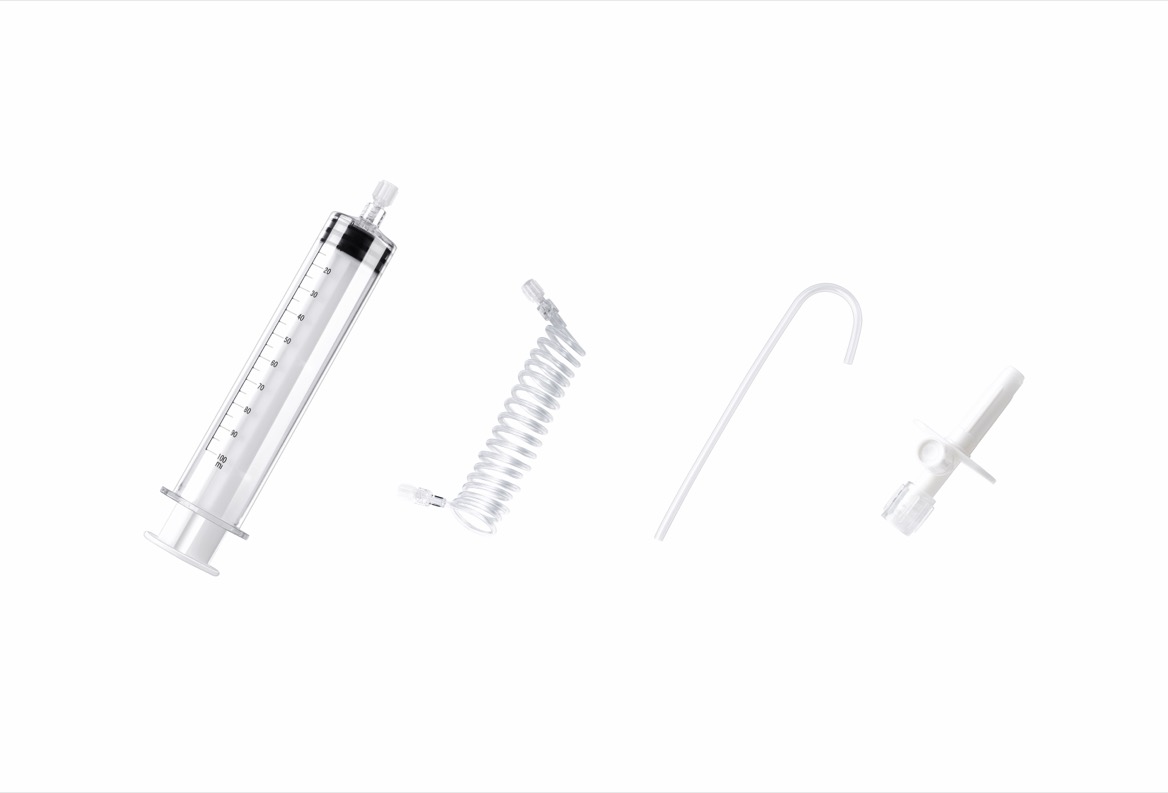
A sterile label is important, but maintaining a sterile fluid pathway also depends on storage, package integrity, and aseptic preparation.
Before use, trained staff should check expiry dates, inspect packaging, and follow the manufacturer's instructions.
Single-use syringes must not be shared between patients. Replacing a needle or adding intervening tubing does not make syringe reuse acceptable.
Any specifically authorized multi-patient contrast delivery system requires separate evaluation under its own labeling and infection-control requirements. It should not be confused with an ordinary single-use syringe kit.
Purchasing teams can support safer handling by requesting readable labels, identifiable lot numbers, clear opening instructions, and appropriate protective packaging.
ISO 13485 certification, CE marking, and FDA 510(k) clearance describe different forms of evidence. They should not be presented as interchangeable endorsements.
EvidenceWhat it addressesWhat buyers should check
ISO 13485 certificationA medical-device quality management systemLegal entity, manufacturing site, scope, and validity
CE markingConformity under the applicable European frameworkDeclaration of conformity and relevant certification
FDA 510(k) clearanceSubstantial equivalence for the identified deviceClearance number, device identity, and intended use
A 510(k)-cleared device should be described as "cleared," not "FDA approved."
Also, documentation for one product does not automatically cover every syringe or tubing configuration sold by the same company.
The specificity of the evidence matters more than the number of logos displayed in a brochure.
Statements such as "excellent sealing" or "high-pressure resistance" need a defined basis.
Ask what was evaluated, which product configuration was tested, and whether the evidence applies to the item being quoted.
Relevant documentation may address dimensional conformity, leakage, connector integrity, sterilization validation, biological evaluation, and packaging performance, as applicable to the device.
Not every confidential report will be available in full. However, a supplier should be able to explain how its claims are supported and provide suitable documentation for qualification.
Avoid assuming that any syringe can eliminate extravasation or contrast reactions. These are broader clinical risks that require appropriate assessment, monitoring, and response procedures.
A structured qualification process helps prevent a low initial price from becoming a costly purchasing mistake.
1. Identify the injector models and current consumable references.
2. Define the required kit contents and labeling.
3. Obtain compatibility and regulatory documentation.
4. Review samples through the facility's approved evaluation process.
5. Record acceptance criteria and evaluation findings.
6. Approve product codes and agree on change-notification requirements.
Acceptance criteria should be established before samples arrive. Otherwise, different evaluators may judge the same product using inconsistent expectations.
Useful criteria include mounting suitability, package opening, connector handling, label readability, and conformity with the agreed specification.
Any clinical evaluation must follow institutional requirements. A supplier sample is not permission to bypass local approval procedures.
The lowest-priced syringe kit is not necessarily the lowest-cost option.
A practical purchasing model is:
Total consumable cost per examination includes the kit price, additional accessories, attributable preparation labor, discarded materials, and documented disruption costs.
Do not insert assumed savings into this calculation. Measure them during an approved evaluation.
For example, if two kits have different contents, compare the complete setup rather than the syringe price alone. A lower-priced kit may require separately purchased accessories.
Likewise, a packaging change may improve handling, but the benefit should be demonstrated rather than claimed.
Record preparation time, damaged packages, incomplete kits, product complaints, and inventory write-offs where relevant. These observations create a stronger basis for purchasing decisions.
Customer comments are most useful when they identify a specific product and situation.
A remark such as "easy to use" is less informative than feedback describing package opening, syringe installation, or connector handling.
For structured feedback, capture:
- Product code and lot number
- Injector model used
- User role and evaluation setting
- Specific observation or problem
- Supporting records where available
- Resolution and follow-up outcome
Publish testimonials only with permission and without exposing patient information. Do not convert one user's positive experience into an unsupported claim of universal clinical performance.
Negative feedback also has value. Repeated complaints about labeling or kit contents may reveal a practical improvement opportunity.
For trained personnel, a short checklist can reinforce approved procedures without replacing them.
1. Confirm the patient, examination, and prescribed contrast protocol.
2. Check the kit identity, expiry date, and packaging integrity.
3. Verify compatibility and applicable component limits.
4. Assemble and prime according to the relevant instructions.
5. Confirm suitable vascular access and complete required checks.
6. Monitor the patient and injection site according to facility policy.
Do not proceed when compatibility, access suitability, or component identity remains uncertain.
MAIWEI INC. develops and manufactures high-pressure injector syringes, connecting tubes, and associated consumables for CT, MRI, and angiography.
Our company profile includes ISO 13485 certification, CE marking, FDA 510(k) clearances, and exports to more than 60 countries and regions. Buyers should request the documentation applicable to their selected products and destination market.
For hospitals, distributors, and OEM customers, the most productive inquiry starts with the injector model, current consumable reference, required kit configuration, and destination country.
Send MAIWEI these details, together with estimated order volume and labeling requirements, to request a matched quotation and product documentation for evaluation.
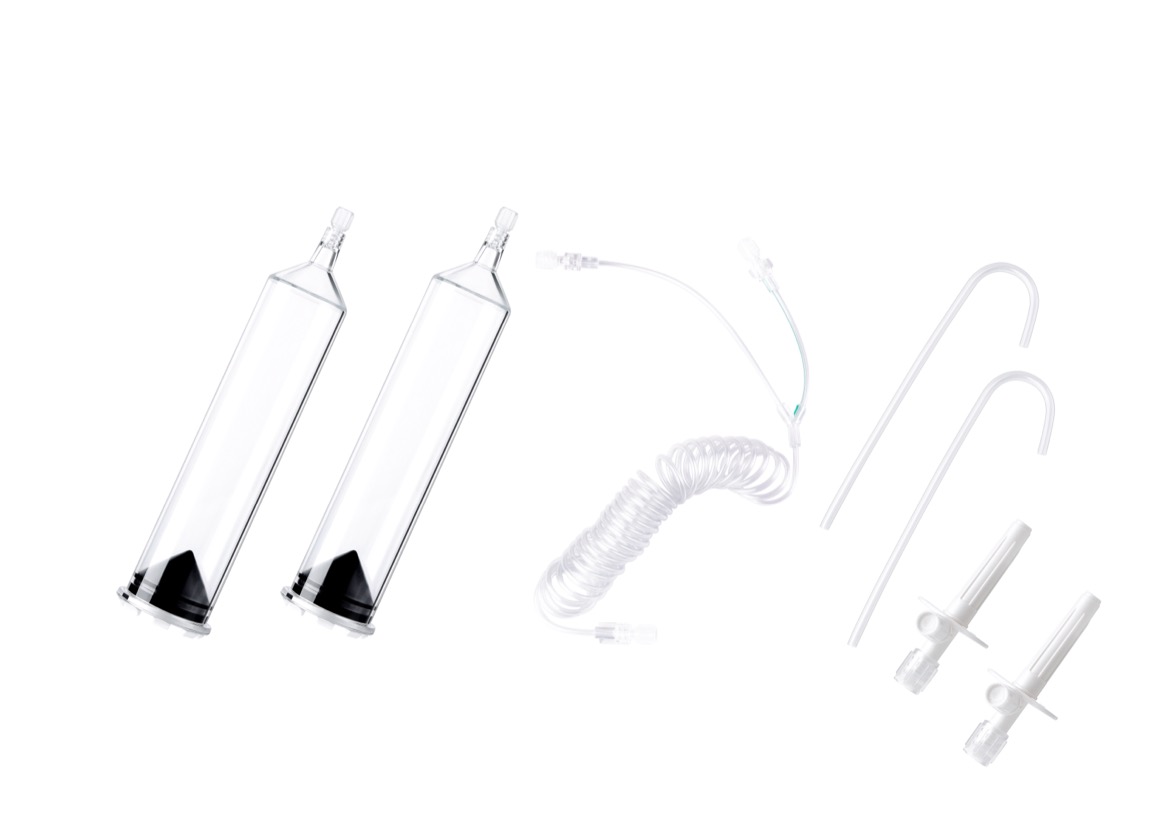
No. Capacity alone does not establish compatibility. Mounting features, barrel dimensions, plunger engagement, connectors, and intended injector models must match the documented application. Obtain written confirmation for the exact product code.
Not automatically. Confirm that the exact tubing and associated components are suitable for the intended MR environment and injector setup. Neither plastic construction nor a suitable pressure rating alone establishes complete compatibility.
Choose the rating required by the intended application and product labeling. Do not apply one generic pressure value across CT, MRI, and angiography. The complete assembly must remain within all applicable component limits.
An ordinary single-use syringe must not be reused between patients, even when downstream tubing is changed. A specifically authorized multi-patient system is a separate product category with its own instructions and infection-control requirements.
No. FDA 510(k) clearance applies to the identified device and its documented scope. Buyers should match the clearance information to the proposed product rather than rely on a company-wide statement.
Provide intended use, injector models, kit contents, destination markets, labeling needs, forecast volume, and packaging requirements. Agree on specification ownership, applicable regulatory responsibilities, quality documentation, and change control before finalizing the project.
- Antmed — "CT 200ml Syringe Kit for Bayer 100101." [antmed]
- American College of Radiology — "Manual on Contrast Media."[acr]
- American College of Radiology — "ACR Manual on Contrast Media," 2024 edition.[s.mriquestions]
- Centers for Disease Control and Prevention — "Safe Injection Practices to Prevent Transmission of Infections to Patients."[cdc]
- Centers for Disease Control and Prevention — "Preventing Unsafe Injection Practices," May 20, 2025. [cdc]
- International Organization for Standardization — "ISO 13485:2016: Medical devices — Quality management systems — Requirements for regulatory purposes." [iso]
- U.S. Food and Drug Administration — "Medical Device Safety and the 510(k) Clearance Process," April 4, 2024.[fda]
- U.S. Food and Drug Administration — "510(k) Premarket Notification Database."[accessdata.fda]
- MAIWEI INC. [MAIWEI INC.]