


close
Choose Your Site
Global
Social Media
Views: 257 Author: Maiwei Biotech Publish Time: 2026-11-04 Origin: Site


Content Menu
● Essential CT Contrast Injector Consumables to Keep in Stock
>> High-Pressure Syringes for Syringe-Based Injectors
>> High-Pressure Tubing and Patient Connection Lines
>> Filling Spikes and Transfer Accessories
● How to Verify CT Injector Consumable Compatibility
>> Build an Injector-to-Consumable Matrix
>> Check the Entire Fluid Path
● Single-Patient and Multi-Patient Systems Need Different Stock Plans
>> Separate Procedure-Based and Session-Based Consumption
● How Much CT Contrast Injector Stock Should Hospitals Hold?
>> Calculate Demand for Each SKU
>> Set Reorder Points Using Lead-Time Demand
>> Define Lead Time Realistically
● Three Practical Improvements Beyond a Basic Stock List
>> 1. Build Protocol-Based Pick Lists
>> 2. Prepare a Shortage Substitution Plan
>> 3. Track Cost per Completed Examination
● Storage, Traceability, and Daily Readiness
● What Hospitals Should Request from a Consumables Manufacturer
● Request a Model-Specific Stocking Proposal
>> What are the most important CT contrast injector consumables?
>> Can hospitals use one syringe type across different injector brands?
>> How many days of injector consumables should a hospital keep?
>> Can CT injector tubing be reused between patients?
>> Are CT, MRI, and angiography consumables interchangeable?
>> What information should hospitals send when requesting a quotation?
Hospitals should stock CT contrast injector consumables around their installed injector models, examination protocols, and replenishment lead times. The essential inventory includes compatible high-pressure syringes or dedicated system tubing, patient connection lines, approved filling accessories, saline-delivery components, and suitable vascular-access supplies.
From a manufacturer's perspective, the central procurement question is not simply, "How many boxes do we need?" It is, "Can every scheduled examination proceed with a complete, compatible, traceable fluid pathway?"
At MAIWEI INC., our approach begins with compatibility. A well-stocked department needs more than available consumables: it needs the correct components, clear replacement rules, and reliable supply arrangements.
This guide explains what to purchase, how to calculate stock levels, and which checks help hospitals avoid preventable shortages and unsuitable substitutions. Clinical use must always follow current device instructions and hospital policies.
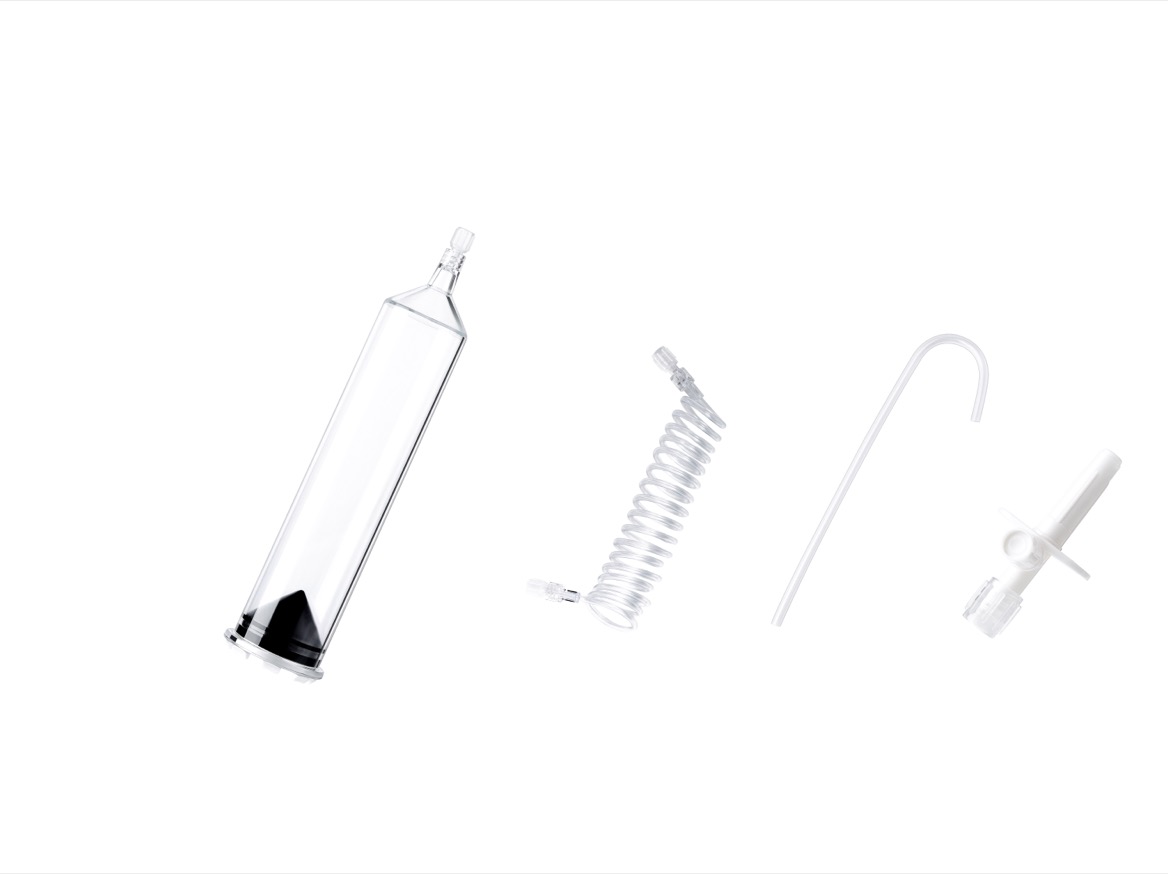
The exact inventory depends on whether a hospital operates single-syringe, dual-syringe, or syringeless injection systems. Not every item below is required for every platform.
| Consumable category | What hospitals should stock | Key purchasing check |
|---|---|---|
| High-pressure injector syringes | Approved sizes and configurations for installed syringe-based injectors | Exact injector model and syringe interface |
| High-pressure connection tubing | Approved patient lines in suitable lengths | Pressure rating, connectors, and intended use |
| Dual-syringe accessories | Specified contrast and saline connection assemblies | Correct fluid-path configuration |
| Filling accessories | Approved spikes, filling tubes, or transfer devices | Container compatibility and labeling |
| Syringeless-system disposables | Dedicated pump sets and patient tubing | Component-specific replacement limits |
| Vascular-access supplies | Appropriate cannulas and approved extension sets | Suitability for planned power injection |
| Supporting supplies | Antisepsis products, dressings, gloves, and disposal supplies | Local infection-prevention requirements |
Contrast media and saline also require coordinated purchasing. They are medicines rather than injector consumables, but shortages can stop examinations just as effectively as missing tubing.
Maintain a product list linking each syringe stock-keeping unit, or SKU, to its approved injector model.
Confirm:
- Syringe capacity and usable volume.
- Mounting interface and any specified adapter.
- Single- or dual-syringe configuration.
- Approved filling method.
- Sterile packaging and labeled shelf life.
A syringe that appears to fit is not automatically suitable. Mechanical engagement, fluid delivery, and pressure performance must match the intended system.
Select tubing by documented specifications, not appearance alone.
The review should cover pressure limits, connection type, length, priming volume, and any valves or branching connectors. Include enough length for the intended scanner-table movement without creating unnecessary tubing loops.
Standardize a limited number of validated configurations where possible. Excessive variation makes picking, training, and replenishment harder.
Filling accessories must match both the injector workflow and the contrast or saline container.
Do not treat single-dose containers, pharmacy bulk packages, and imaging bulk packages as interchangeable. Their permitted handling and use differ.
For specialized bulk-delivery workflows, verify the complete combination of medication packaging, transfer device, injector system, and applicable labeling before purchasing supplies.
A broad claim such as "compatible with major brands" is not sufficient for a hospital purchase order. The useful unit of comparison is the exact consumable SKU against the exact injector model.
Create one controlled record for every installed injector:
| Field | Information to record |
|---|---|
| Equipment identity | Manufacturer, model, and department asset number |
| Approved consumables | Syringe, tubing, filling accessory, and patient-set SKUs |
| Configuration | Contrast-only, contrast-plus-saline, or dedicated system setup |
| Operating limits | Applicable pressure, flow, and volume restrictions |
| Replacement rules | Single-patient use or specific labeled operating interval |
| Evidence | Current instructions, technical documents, and purchasing approval |
Include backup equipment. Emergency substitutions are difficult when staff cannot identify the consumables required by a rarely used injector.
Never assume the injector's maximum pressure is acceptable for every connected component.
Review the syringe, tubing, connectors, extension set, and vascular-access device together. Planned pressure and flow must remain within the applicable limits of all components.
Avoid applying one universal pressure rating or catheter size to every examination. Requirements vary by product, access device, patient circumstances, and protocol.
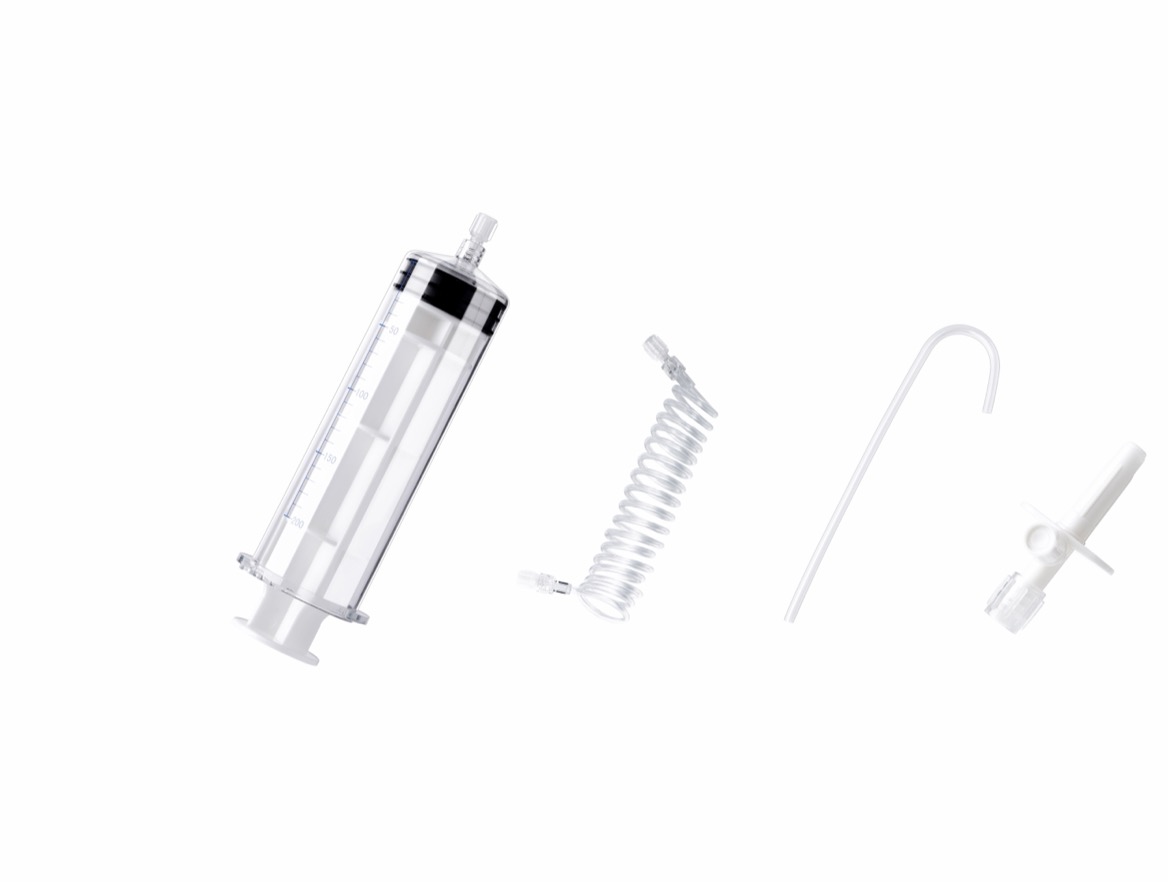
Replacement rules directly affect consumption forecasts.
For conventional single-use syringe workflows, syringes must not be shared between patients. Changing a needle or adding intervening tubing does not make syringe reuse safe.
Dedicated multi-patient systems require a different inventory model. Some specifically cleared systems permit designated upstream components to remain in service for a defined period while requiring new patient tubing for every patient.
These permissions are product-specific. They do not authorize extending use of ordinary disposable syringes or connection lines.
Use two forecasting categories:
1. Procedure-based items, consumed for each patient or examination.
2. Session-based items, replaced according to a labeled operating interval or other specified limit.
For example, a dedicated pump set may be forecast by operating sessions, while patient lines are forecast by patient volume.
Apply the actual instructions for each component. A generic "one kit per scan" calculation can overestimate some items and underestimate others.
There is no universally appropriate number of days of stock. Hospitals need a calculation based on actual demand and replenishment conditions.
Begin with recent contrast-enhanced CT activity, separated by injector and protocol where needed.
For each SKU:
> Expected daily use = relevant examinations per day × units used per examination
Add documented non-patient consumption, such as training, damaged packaging, and setup failures. Do not combine CT, MRI, and angiography volumes unless the same approved SKU genuinely serves those applications.
A practical starting formula is:
> Reorder point = average daily consumption × replenishment lead time + safety stock
Illustrative example—not an industry benchmark:
- Average consumption: 40 patient tubing sets per day.
- Replenishment lead time: 10 days.
- Locally selected safety stock: 120 sets.
- Reorder point: 520 sets.
This means replenishment should be triggered at the defined inventory position, accounting for usable stock, incoming orders, and committed demand—not simply when 520 sets remain on a shelf.
The 120-set buffer is an assumption. Each hospital should justify its own reserve using demand variability, delivery reliability, emergency workload, and alternative supply options.
Include the time needed for order processing, manufacturing where applicable, shipping, customs clearance, receiving, and release into usable inventory.
If purchasing reviews stock only periodically, the replenishment policy must also cover that review interval. Record whether calculations use calendar days or operating days.
Prepare approved consumable lists for common workflows, such as routine contrast-enhanced CT and CT angiography.
Each list should identify the injector, required SKUs, and any protocol-specific accessories. Keep clinical decisions under the hospital's authorized protocols rather than allowing purchasing templates to determine them.
This approach connects inventory to real work instead of maintaining disconnected product lists.
Do not wait for a delivery failure to assess alternatives.
For each critical SKU, document:
- The approved primary product.
- Any clinically accepted alternative.
- Supporting compatibility evidence.
- Staff training requirements.
- The authority responsible for substitution approval.
A backup supplier is useful only when its products are suitable for the installed equipment and legally available in the destination market.
Unit price alone cannot describe procurement performance.
A local comparison can include:
- Consumables purchased.
- Expired or damaged stock.
- Opened-but-unused components.
- Training and changeover costs.
- Emergency freight and approved substitutions.
Use hospital data to evaluate these factors. Do not assume a higher-priced kit saves money—or that a cheaper component costs more—without measuring actual results.
Use first-expire, first-out rotation and follow each product's labeled storage conditions.
Keep sterile products protected from crushing, moisture, and package damage. Segregate expired stock, recalled lots, and products awaiting investigation.
For traceability, retain the SKU, lot number, expiry date, supplier, and receiving information. Capture unique device identifiers where applicable and maintain links to clinical use according to hospital policy.
A short daily readiness check should confirm:
1. Sufficient approved supplies for the next operating period.
2. Intact packaging and acceptable expiry dates.
3. Separation of similar-looking, incompatible products.
4. Availability of the correct filling accessories.
5. Clear identification of quarantine stock.
Injector preparation, air removal, access assessment, and patient monitoring remain clinical responsibilities governed by current instructions and local procedures.
Ask suppliers for a model-specific technical and regulatory package rather than relying on a general company brochure.
Useful documents include:
- Current product instructions and labels.
- Injector compatibility information.
- Applicable pressure and performance specifications.
- Sterility and shelf-life documentation.
- Relevant biocompatibility information.
- Quality-management certification.
- Product-specific market-access documentation.
- Complaint, recall, and change-notification procedures.
ISO 13485 addresses a medical-device quality management system; it does not independently establish compatibility with a particular injector.
Similarly, FDA 510(k) clearance concerns a specified device and intended use. It should not be described as blanket approval of a manufacturer's entire portfolio.
For CE-marked products, verify the applicable declaration and supporting documentation for the items being purchased.
MAIWEI INC. develops and manufactures consumables for CT, MRI, and angiography injection applications, including high-pressure syringes, connection tubing, and related accessories.
According to the company information supplied for this article, MAIWEI serves customers in more than 60 countries and regions and reports ISO 13485 certification, CE marking, and FDA 510(k) clearances. Buyers should verify the scope, validity, and product coverage of the relevant documents.
For hospitals, distributors, and OEM customers, the next step is a documented discussion of injector models, required configurations, destination-market requirements, and expected consumption.
Send MAIWEI INC. your injector model list, monthly contrast-enhanced examination volume, and destination-market requirements. Request a model-specific consumables proposal covering product configuration, compatibility documentation, regulatory coverage, and replenishment options.
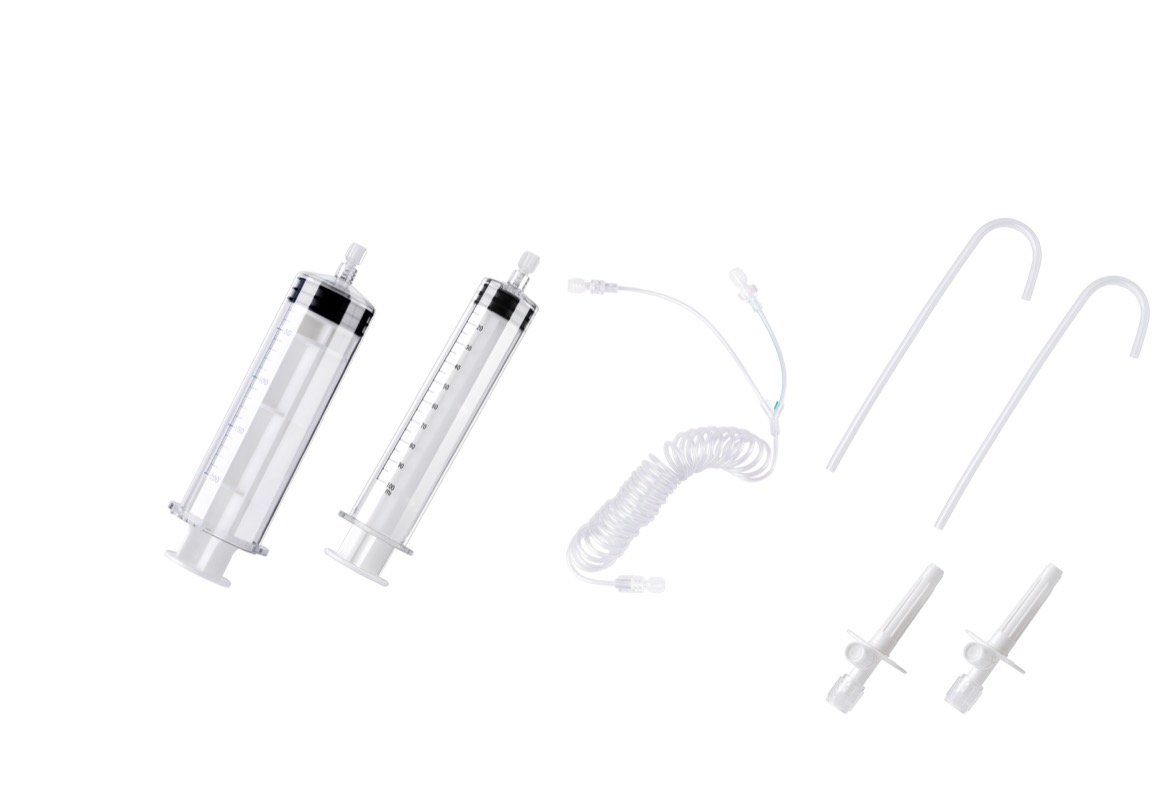
The core items are compatible injector syringes or dedicated system sets, patient connection tubing, approved filling accessories, and saline-delivery components where required. The exact combination depends on the installed injector and workflow.
Only when the specific syringe is documented as compatible with each exact model. Similar shape, capacity, or connectors do not establish interchangeability.
There is no universal target. Calculate demand during replenishment lead time, then add a justified safety reserve. Consider delivery variability, emergency examinations, stock-review frequency, and available alternatives.
Do not reuse tubing labeled for single-patient use. Dedicated multi-patient systems may have different rules for upstream components, but patient-line replacement and operating limits must follow the specific system instructions.
Not automatically. Some products may support multiple applications, but compatibility, pressure limits, intended use, and relevant environmental requirements must be verified for each item.
Provide injector manufacturers and models, required consumable configurations, estimated monthly quantities, delivery location, documentation requirements, and target delivery schedule. Request confirmation of exact compatible SKUs before ordering.
1. [American College of Radiology — Manual on Contrast Media]. Reference framework for contrast administration and department preparedness. [acr]
2. [Centers for Disease Control and Prevention — Preventing Unsafe Injection Practices]. Guidance on single-patient syringe use and prevention of injection-related contamination. [cdc]
3. [Indrajit and colleagues — "Pressure injectors for radiologists: A review and what is new"]. Technical review of injector configurations, syringes, filling accessories, tubing, and preparation considerations. [pmc.ncbi.nlm.nih]
4. [U.S. Food and Drug Administration — 510(k) Summary, K210541, ulrichINJECT CT motion]. Product-specific example distinguishing designated pump-tubing operating limits from patient-tubing replacement requirements; not evidence for MAIWEI products. [accessdata.fda]
5. [International Organization for Standardization — ISO 13485:2016]. Scope and purpose of medical-device quality management system requirements. [iso]
6. [U.S. Food and Drug Administration — Premarket Notification 510(k)]. Explanation of substantial equivalence and device marketing clearance. [fda]
7. [Institute for Safe Medication Practices — "Inappropriate Use of Pharmacy Bulk Packages of IV Contrast Media Increases Risk of Infections"]. Discussion of pharmacy bulk package handling risks; specialized imaging bulk-package systems require their own current labeling. [pmc.ncbi.nlm.nih]