


close
Choose Your Site
Global
Social Media
Views: 287 Author: Maiwei Biotech Publish Time: 2026-10-14 Origin: Site


Content Menu
● What Does CT Contrast Injector Syringe Compatibility Mean?
>> Mechanical Fit and Piston Engagement
>> Pressure and Fluid-Path Suitability
>> Functional and Regulatory Compatibility
● CT Injector Syringe Compatibility Across Major Platforms
>> Bayer MEDRAD Stellant and Salient Syringe Selection
>> Guerbet OptiVantage Syringe Compatibility
>> Bracco EmpowerCTA+ FastLoad Syringe Kits
>> MEDTRON Accutron CT and CT-D Vision Consumables
>> Nemoto CT Injector Syringes
● How to Verify a Compatible CT Injector Syringe Kit
>> Step 1: Identify the Installed Injector
>> Step 2: Record the Existing Consumable Reference
>> Step 3: Request Written Model-Specific Confirmation
>> Step 4: Review Technical and Regulatory Evidence
>> Step 5: Complete Controlled Evaluation
● Why Pressure-Rated Tubing Matters as Much as the Syringe
>> Review the Entire Fluid Path
>> Compare Specifications, Not Marketing Terms
● Single-Use and Multi-Patient Systems Are Different
● Three Procurement Insights Beyond a Compatibility Chart
>> Build an Evidence-Based Compatibility Register
>> Evaluate Total Cost, Not Just Unit Price
>> Treat Supplier Changes as Configuration Changes
● What ISO 13485, CE Marking, and FDA 510(k) Tell Buyers
● How MAIWEI INC. Supports Imaging Consumable Procurement
>> Are all 200 mL CT injector syringes interchangeable?
>> Can third-party syringes be used with major injector platforms?
>> Does FDA 510(k) clearance establish universal injector compatibility?
>> Can a single-use CT syringe be reused with a new patient line?
>> What information should I provide when requesting a quotation?
>> Are CT, MRI, and angiography injector syringes interchangeable?
CT contrast injector syringe compatibility is not determined by syringe volume alone. A disposable syringe must match the injector's mounting interface, piston engagement, operating requirements, and intended fluid pathway. For hospitals, distributors, and OEM buyers, selecting the right CT injector syringe kit starts with identifying the exact injector model—not simply choosing a familiar brand or a 200 mL barrel.
At MAIWEI INC., our focus is the development and manufacture of high-pressure injector syringes, connecting tubes, and supporting consumables for CT, MRI, and angiography. From a manufacturing and procurement perspective, we recommend treating compatibility as a documented system-level decision.
This guide explains major platform differences, the evidence buyers should request, and a practical process for evaluating replacement consumables.
This is a purchasing and technical reference, not a substitute for the current injector instructions for use, consumable labeling, or clinical protocols.
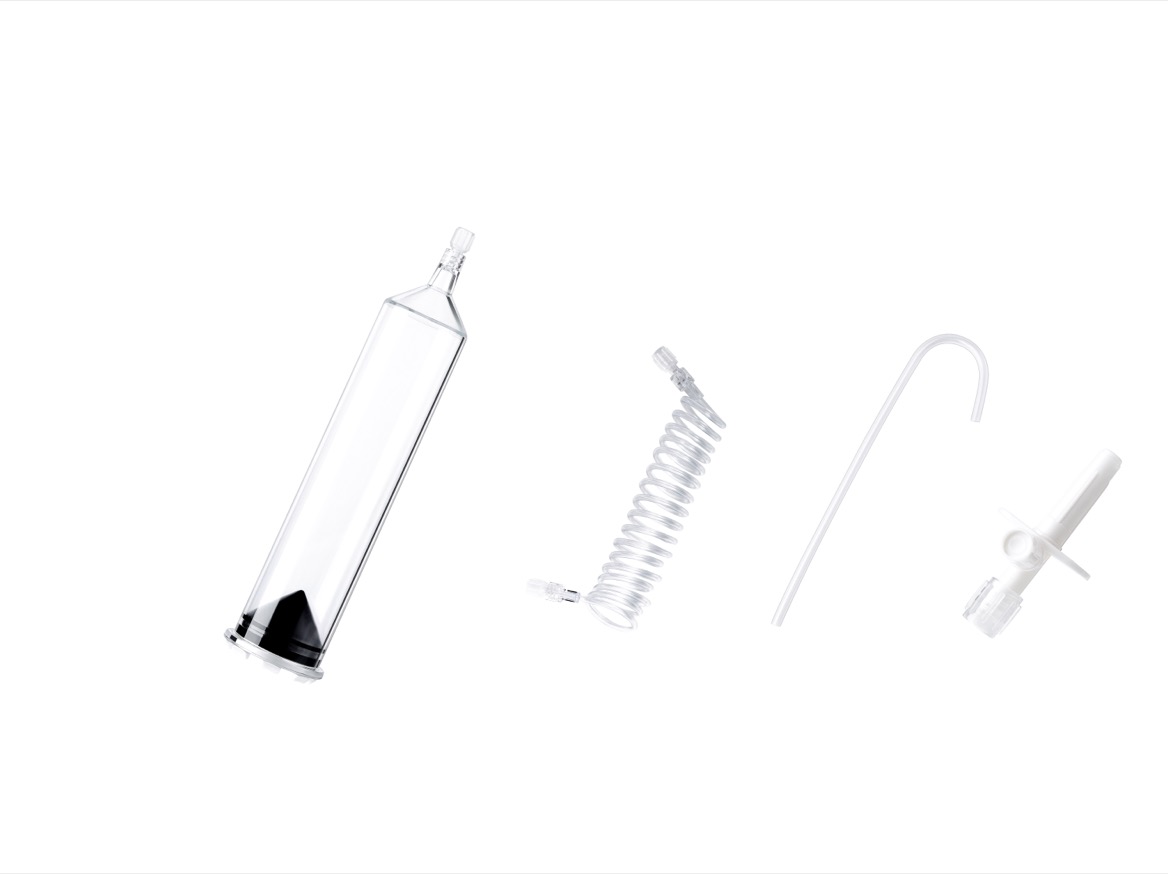
A syringe can appear to fit an injector without being suitable for its operation. Reliable selection requires several checks.
The syringe must seat correctly in the injector head. Its flange, locking features, barrel geometry, and plunger interface must match the specified platform.
Incorrect engagement may prevent loading or interfere with intended operation. Never force a syringe into position or modify its mounting features.
Evaluate the complete assembly: syringe, connector, extension tubing, valves, and patient access device.
A syringe's pressure rating does not establish the rating of the entire pathway. Each component must be suitable for the intended use and operating conditions.
Depending on the platform, additional requirements may include syringe initialization, volume selection, filling accessories, or adapters.
The product's labeling must identify its intended use and relevant injector models. Supplier claims, applicable market authorization, and equipment-manufacturer requirements must be reviewed together.
The following table identifies platform-specific purchasing considerations. It is not a declaration that any particular MAIWEI product is compatible with every listed system.
| Injector platform | Documented consumable characteristics | Essential purchasing check |
|---|---|---|
| Bayer MEDRAD Stellant | Dedicated Stellant syringes and disposables; the Australian Stellant MP configuration specifies two 200 mL syringe assemblies | Confirm the exact Stellant configuration and single-patient or multi-patient labeling |
| Bayer MEDRAD Salient | Separate CT injection platform with its own operating specifications | Request Salient-specific references rather than assuming Stellant interchangeability |
| Guerbet OptiVantage | Dual-head CT system with dedicated consumables; separate single-use and multi-use offerings | Identify the installed version and approved consumable configuration |
| Bracco EmpowerCTA+ | FastLoad packs include single 200 mL or dual 200 mL configurations | Check the kit reference and manufacturer restrictions on syringes and tubing |
| MEDTRON Accutron CT | Single-head system using an ELS 200 mL syringe configuration | Confirm ELS interface and the selected disposable workflow |
| MEDTRON Accutron CT-D Vision | Dual-head system with two ELS 200 mL syringes in its documented single-use configuration | Distinguish single-use, 8-hour, and 24-hour systems |
| Nemoto Dual Shot GX / Smart Shot | CT injector families supported by specialized syringes and connecting tubes | Obtain model-specific syringe capacity, interface, and kit documentation |
Regional availability and labeling can differ. Always verify the current documentation supplied for the destination market.
Stellant and Salient should be treated as separate purchasing categories.
Bayer describes its syringes and disposables as integral components of the corresponding injection systems. It also states that it cannot guarantee injector performance with non-Bayer syringes and disposables.
For buyers evaluating third-party CT injector syringes, a supplier's compatibility statement is therefore not equivalent to Bayer endorsement.
Ask for:
- Exact injector model and configuration.
- Proposed syringe and tubing references.
- Supporting compatibility and performance documentation.
- Applicable equipment-manufacturer restrictions.
- Potential implications for warranty and service coverage.
OptiVantage is a dual-head platform with dedicated consumables. Its single-use offering supports prefilled syringes or contrast-media vials, but that does not mean every prefilled syringe or aftermarket kit is suitable.
The single-use and multi-use versions also require separate consideration.
Identify the installed configuration first. Then match the syringe, filling accessories, and patient line to that workflow. A general "OptiVantage-compatible" description is insufficient without an exact product reference.
Bracco's published ordering information includes FastLoad packs containing one 200 mL syringe or two 200 mL syringes. Dual packs may include Y-tubing, one-way check valves, filling tubes, or transfer spikes.
Importantly, the reviewed EmpowerCTA+ user guide instructs users to use syringes and connecting tubes supplied directly by Bracco or its authorized distributors. It warns that non-approved supplies constitute misuse and may affect warranty coverage.
Do not present an aftermarket replacement as an approved substitute without resolving these restrictions against the current, locally applicable instructions.
MEDTRON documents an ELS 200 mL syringe for Accutron CT and two ELS 200 mL syringes for the CT-D Vision single-use configuration.
Its portfolio also distinguishes single-use consumables from dedicated extended-use systems.
These distinctions matter because similar barrel capacities do not establish identical permitted use. Syringe, filling system, valves, and patient line must be selected as a documented configuration.
Nemoto supplies specialized syringes and extension tubes for CT, MRI, and angiography. Its CT portfolio includes Dual Shot GX and Smart Shot systems.
Buyers should avoid extending compatibility from one Nemoto model to another without documentation. Request the exact injector designation, syringe reference, capacity, and connecting-tube configuration.
A structured qualification process helps prevent ambiguous substitutions.
Record the manufacturer, complete model name, configuration, and identifying information from the equipment label.
Photographs can assist identification, but they do not replace product documentation.
Capture the current syringe or kit catalog number and package contents.
Include tubing length, connector type, valve arrangement, filling accessories, and single-use or extended-use designation.
Ask the supplier to identify the proposed product reference and the exact injector models covered by its labeling.
Avoid accepting statements such as "fits most CT injectors" or "same as the original."
Request relevant documentation for the proposed configuration:
- Instructions for use and product labeling.
- Operating limits and pressure specifications.
- Compatibility and performance evidence.
- Sterilization and shelf-life information.
- Applicable certificates and market authorization.
- Lot identification and traceability arrangements.
Before routine use, involve the appropriate clinical, biomedical engineering, procurement, and quality personnel.
Evaluate loading, connections, preparation, and functionality under an approved process. Nonclinical evaluation does not by itself establish patient-use suitability or override manufacturer restrictions.
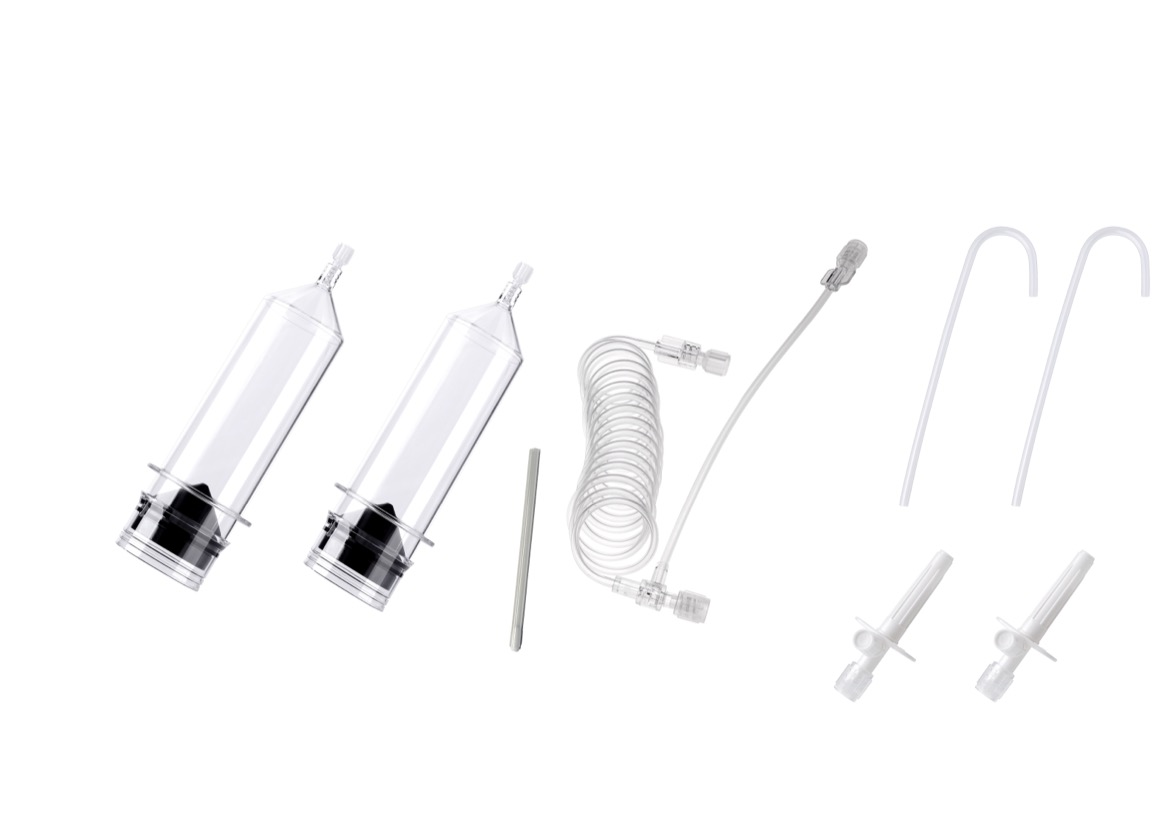
A high-pressure syringe does not make every attached component suitable for power injection.
Check the labeled operating limits of the syringe, tubing, connectors, valves, and vascular access device. The planned protocol must remain within the applicable requirements of the complete configuration.
Clinical personnel must also verify that catheter type and location are appropriate for the intended injection rate and volume.
"High-pressure," "reinforced," and "universal" are not sufficient purchasing specifications.
Request measurable information, including:
- Maximum permitted operating pressure.
- Tubing length and internal dimensions.
- Connector and valve configuration.
- Intended injection applications.
- Compatibility with the specified assembly.
Do not assume a higher advertised pressure rating proves better performance. It does not establish correct mounting, reliable piston engagement, or suitable clinical use.
Single-use syringes must not be converted into multi-patient products by changing tubing or adding a valve.
Extended-use systems depend on specific labeling, components, handling procedures, and replacement intervals.
For example, Bayer's Australian Stellant MP documentation specifies a dedicated system with a use life of up to 12 hours. MEDTRON's portfolio distinguishes configurations for single use, up to 8 hours, and up to 24 hours.
These are product-specific permissions—not general rules for CT injector syringes.
Procurement teams should verify which components may remain installed, which require replacement between patients, and which instructions apply locally.
Maintain a controlled record for each injector rather than relying on a distributor's broad cross-reference list.
| Register field | Information to retain |
|---|---|
| Installed equipment | Manufacturer, model, configuration |
| Selected consumables | Syringe and complete kit references |
| Supporting evidence | Labeling, instructions, relevant test documentation |
| Use conditions | Operating limits and single-use or extended-use status |
| Internal authorization | Responsible reviewer and approval date |
| Change history | Product revisions, substitutions, updated documents |
Update the register whenever equipment or consumable references change.
A lower purchase price may not produce lower operating costs.
A useful comparison includes:
- Syringe and accessory costs.
- Staff preparation time.
- Unused contrast and discarded consumables.
- Packaging or loading problems.
- Training and qualification effort.
- Delivery reliability and emergency purchasing.
Use local observations rather than unsupported savings percentages. Compare complete kits serving the same intended workflow.
Consider an illustrative purchasing scenario: a hospital receives a lower-priced dual-syringe kit labeled only "200 mL CT compatible."
The package contains two syringes, but its documentation does not identify the installed injector or specify the tubing's operating limits.
The appropriate response is to pause qualification—not infer suitability from appearance.
This example illustrates a useful decision rule: missing evidence should trigger clarification before purchasing approval or clinical introduction.
These credentials answer different questions.
ISO 13485 concerns a medical-device quality management system. Buyers should examine the certificate's scope, validity, and relevant manufacturing activities.
CE marking concerns conformity with applicable European requirements. Procurement teams should request documentation covering the actual product being purchased.
FDA 510(k) clearance involves a determination of substantial equivalence to a legally marketed predicate device. It should not be described as a blanket company-wide approval.
None of these credentials independently proves compatibility with every injector.
Match the evidence to the legal manufacturer, product reference, intended use, and destination market.
MAIWEI INC. develops and manufactures injector consumables for CT, MRI, and angiography, including syringes, connecting tubes, and supporting accessories.
Our company background includes ISO 13485 certification, CE-marked products, FDA 510(k)-cleared products, and exports to more than 60 countries and regions. Product-specific scope and current documentation should be confirmed during procurement.
For hospitals, distributors, and OEM customers, the useful starting point is a precise technical brief—not a request for a "universal syringe."
Contact MAIWEI INC. with your injector manufacturer, exact model, existing consumable reference, destination market, and required kit contents. Request a model-specific review, applicable regulatory documents, and an evaluation plan before committing to volume purchasing.
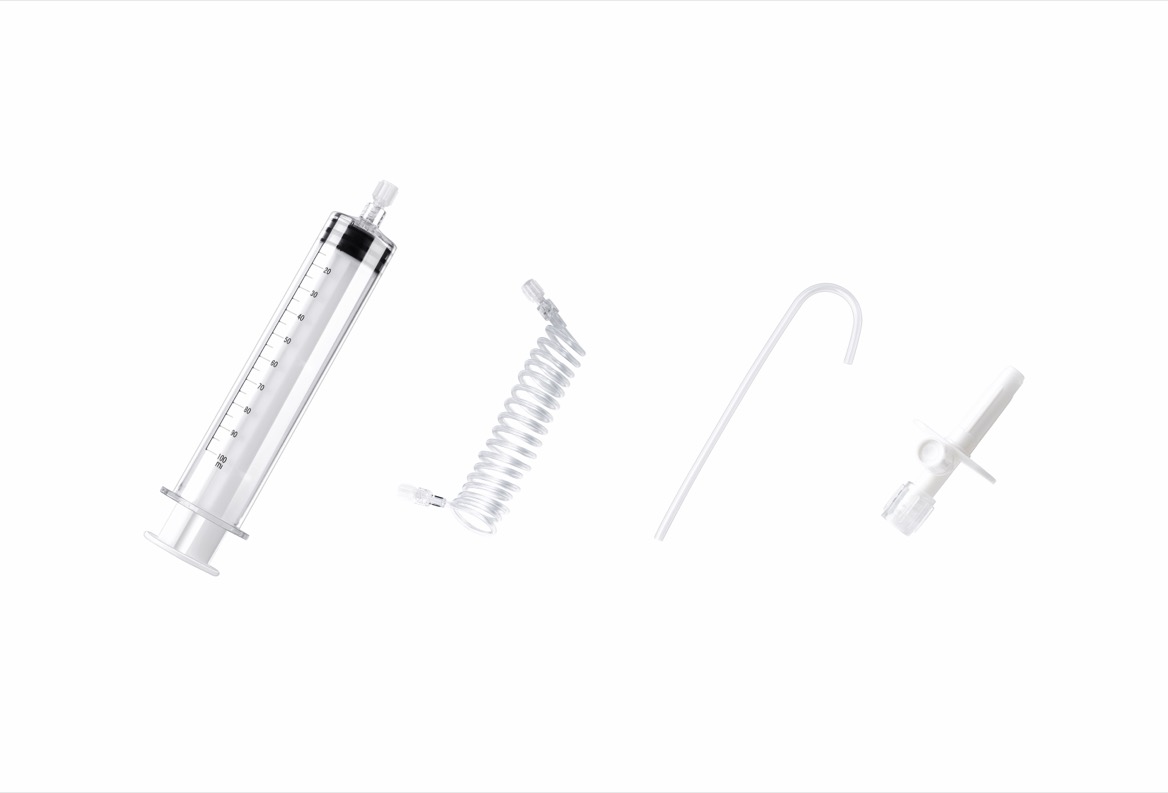
No. Equal capacity does not establish matching mounting features, piston interfaces, operating limits, or intended use. Confirm compatibility using exact model and consumable references.
Do not assume they can. Review the injector manufacturer's restrictions, supplier labeling, applicable authorization, and institutional requirements. A third-party compatibility claim is not equipment-manufacturer approval.
No. Clearance relates to the reviewed device and its intended use. Buyers still need documentation supporting the proposed injector and consumable configuration.
No. Replacing the patient line does not change a single-use designation. Use only a specifically labeled multi-patient system according to its instructions.
Provide the exact injector model, current kit reference, syringe capacity, tubing and accessory requirements, destination market, expected purchasing volume, and required documentation.
Not automatically. These applications can involve different injector interfaces and operating requirements. Select consumables for the exact device and intended application.
1. Bayer. [Bayer Syringes for MEDRAD Injection Systems]. Manufacturer statements on system-specific design, validation, and non-Bayer consumables. [radiology.bayer.com]
2. Bayer. [MEDRAD Stellant Injection System]. Australian Stellant MP configuration, 200 mL syringe assemblies, and 12-hour use-life information. [radiology.bayer.com]
3. Bayer. [MEDRAD Salient: Reliability]. Platform-specific operating information. [radiology.bayer]
4. Guerbet. [OptiVantage Single-Use and Its Dedicated Consumables]. Dual-head configuration and consumable information. [guerbet]
5. Bracco. [EmpowerCTA+]. FastLoad kit references, capacities, and accessory configurations. [bracco]
6. Bracco Injeneering S.A. [EmpowerCTA+ Injector System User's Guide], document 901176-001, revision 01, February 2014. Manufacturer restrictions and single-use handling precautions; consult current local instructions before use. [appliedradiology]
7. MEDTRON AG. [Accutron Injectors for Computed Tomography], version EN 2.2, December 2022. ELS syringe configurations and dedicated extended-use systems. [medtron]
8. Nemoto Kyorindo. [Contrast Injectors for CT] and [Other Products]. CT platform names, specialized syringes, and connecting tubes. [nemoto-do.co]
9. American College of Radiology and Society for Pediatric Radiology. [Practice Parameter for the Use of Intravascular Contrast Media]. Vascular access suitability for power injection, rate, and volume. [gravitas.acr]
10. U.S. Food and Drug Administration. [Medical Device Safety and the 510(k) Clearance Process]. Substantial equivalence and the distinction between clearance and approval pathways. [fda]