


close
Choose Your Site
Global
Social Media
Views: 268 Author: Maiwei Biotech Publish Time: 2026-11-15 Origin: Site


Content Menu
● What a CT Contrast Injector Syringe Pressure Rating Actually Means
● Why Higher Pressure Does Not Guarantee Higher Contrast Flow
>> Why the injector's highest setting is not a disposable specification
● How to Verify the Complete Disposable Fluid Path
>> 1. Match the syringe to the exact CT injector model
>> 2. Verify the tubing and connectors included in the quote
>> 3. Confirm the local review and change-control process
● Buyer Case: Two 300 psi Quotes, Two Different Decisions
● What to Request in a CT Injector Syringe RFQ
● How to Read Regulatory Documents Without Overstating Their Scope
● Request a Model-Specific Review From MAIWEI INC.
>> Is a 300 psi CT injector syringe suitable for every CT power injector?
>> Does a 325 psi injector setting require a 325 psi syringe?
>> Can I pair a 300 psi syringe with 200 psi connecting tubing?
>> Is burst pressure the same as working pressure?
>> Why can two CT syringe kits with the same pressure rating perform differently?
>> Should I use the same criteria to buy CT, MRI, and angiography injector consumables?
>> What should I request before changing suppliers?
A CT contrast injector syringe pressure rating tells buyers how much pressure the manufacturer specifies for a disposable syringe under its stated conditions of use. It does not tell you which pressure to program, what flow rate the system will deliver, or whether the connecting tube and vascular access device can tolerate the same pressure. Before approving a purchase, verify that the exact syringe and tubing are documented for your injector model and intended configuration. A kit can fit the injector and still be unsuitable for the application.
From a manufacturer's perspective at MAIWEI INC., I would start a technical review with the injector model and the disposable kit part number, not the highest psi in the catalog. That gives hospital procurement teams, distributors, and OEM buyers a practical way to compare like-for-like products and catch gaps before placing an order.
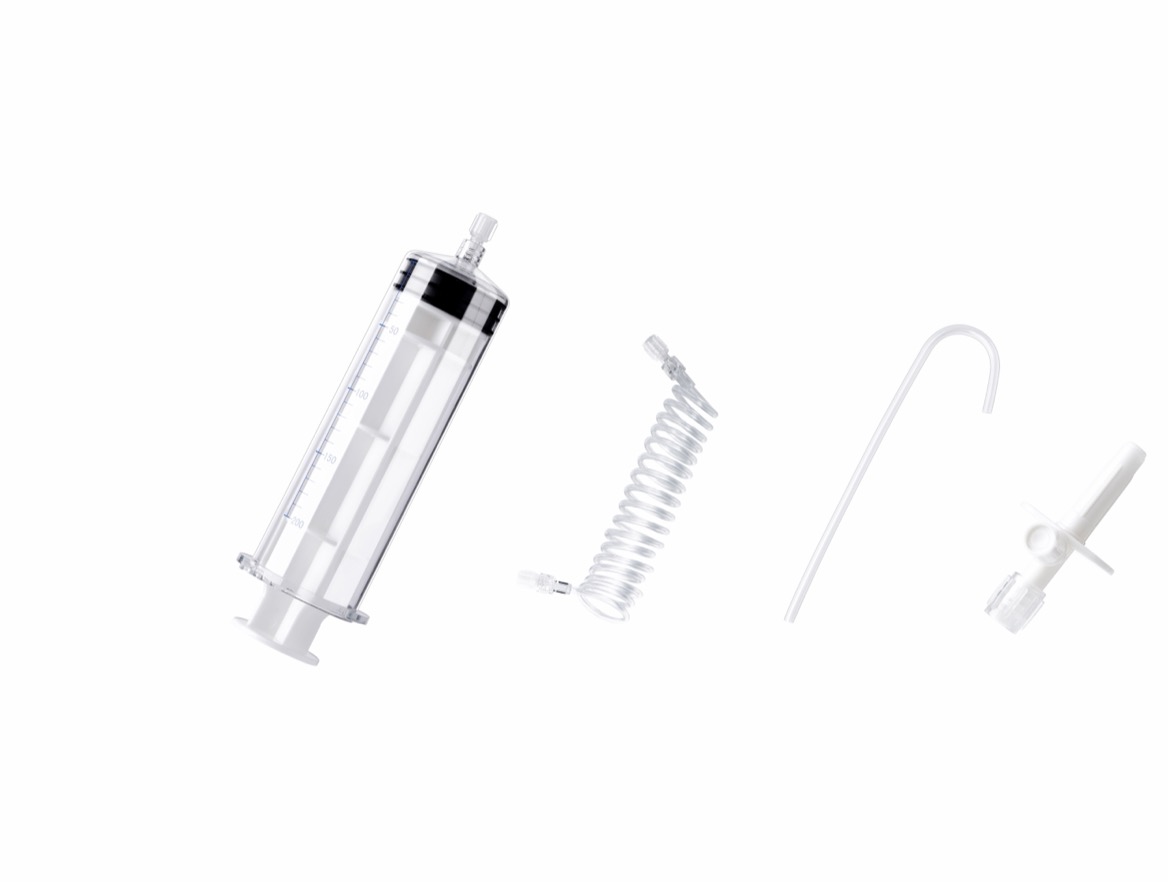
Pressure rating describes a limit for a specified device or assembly. Manufacturers may express it in pounds per square inch (psi) or kilopascals (kPa). For example, 300 psi is approximately 2,068 kPa. Those figures describe the same pressure in different units; neither establishes whether the value applies to a bare syringe, a complete disposable kit, or the injector's programmable settings.
| Term | What it tells you | What it does not tell you |
|---|---|---|
| Syringe pressure rating | The manufacturer's stated pressure limit for the identified syringe under specified conditions | Whether separately supplied tubing or connectors carry the same rating |
| Programmable pressure limit | A pressure threshold the injector allows the operator to select | Whether the selected threshold is appropriate for the installed disposables or vascular access device |
| Burst or failure pressure | The pressure at which a sample or assembly failed under a specified test method | The pressure at which the product is labeled for routine use |
| Flow rate | The volume delivered per unit of time, typically expressed in mL/s | The pressure the injector will need to achieve that flow in a particular setup |
If a quotation says only "300 psi," ask the supplier to identify the part number, the applicable document and revision, and what the figure represents. A laboratory test result can help a quality team assess the design, but it is not a substitute for the labeled limit.
Flow rate and pressure are related, but they are not interchangeable. The injector must overcome resistance in the fluid path to deliver the programmed flow. A narrower internal passage, longer tubing, or more viscous contrast medium can increase the pressure required for the same flow rate. A kink is another source of resistance; a higher syringe rating is not a solution to it.
If the injector encounters its pressure limit, the response depends on the model and its operating logic. The system may deliver less flow than programmed or interrupt the injection. For buyers, this is why a pressure rating alone cannot establish that a replacement kit will perform like the existing one. If a supplier changes the tubing, ask whether the replacement has the same internal diameter and length and whether the resulting configuration has been evaluated for the intended use.
Bayer lists programmable pressure limits from 50 to 325 psi for the MEDRAD Stellant FLEX CT Injection System with its specified 150 mL and 200 mL syringe configurations. That range describes settings on that system. It does not establish a universal pressure rating for CT syringes or validate a third-party syringe simply because its capacity matches.
The vascular access device may impose a lower limit or a separate maximum flow rate. Procurement should verify the documentation for the disposable kit; the clinical team should confirm the permitted configuration and patient-specific settings under the applicable device instructions and facility policy.
A CT injector syringe may be sold alone or with a patient line, a Y-connector, or filling accessories. Separate components used during injection from those intended only for filling. A spike or quick-fill tube included in the carton should not be assumed to belong in the pressurized injection path.
Record the manufacturer, model, syringe capacity, and single- or dual-head configuration. Request a model-specific compatibility statement that identifies the disposable part number. If multiple injector models are listed, check that the statement covers the equipment actually installed at each site. A generic description such as "compatible with MEDRAD" is too broad for a purchase specification.
Ask for the kit part number, a contents list, and the labeling or instructions for use (IFU) for that configuration. Check whether the documentation covers the syringe and patient line together or identifies their limits separately. For a dual-head setup, identify the Y-line and connectors as well. Where a component has a lower applicable pressure or flow limit, a higher syringe rating does not override it. Conversely, matching individual ratings does not by itself establish that the components are compatible as an assembly.
Once the documents match, let radiology, biomedical engineering, and quality staff agree on how to evaluate the exact kit before routine use. Record the injector model, approved part number, and document revision. Ask the supplier how it communicates changes to tubing dimensions, connectors, labeling, or kit contents. A distributor should be able to tell customers whether a substitution is covered by the same documentation rather than treating it as equivalent by default.
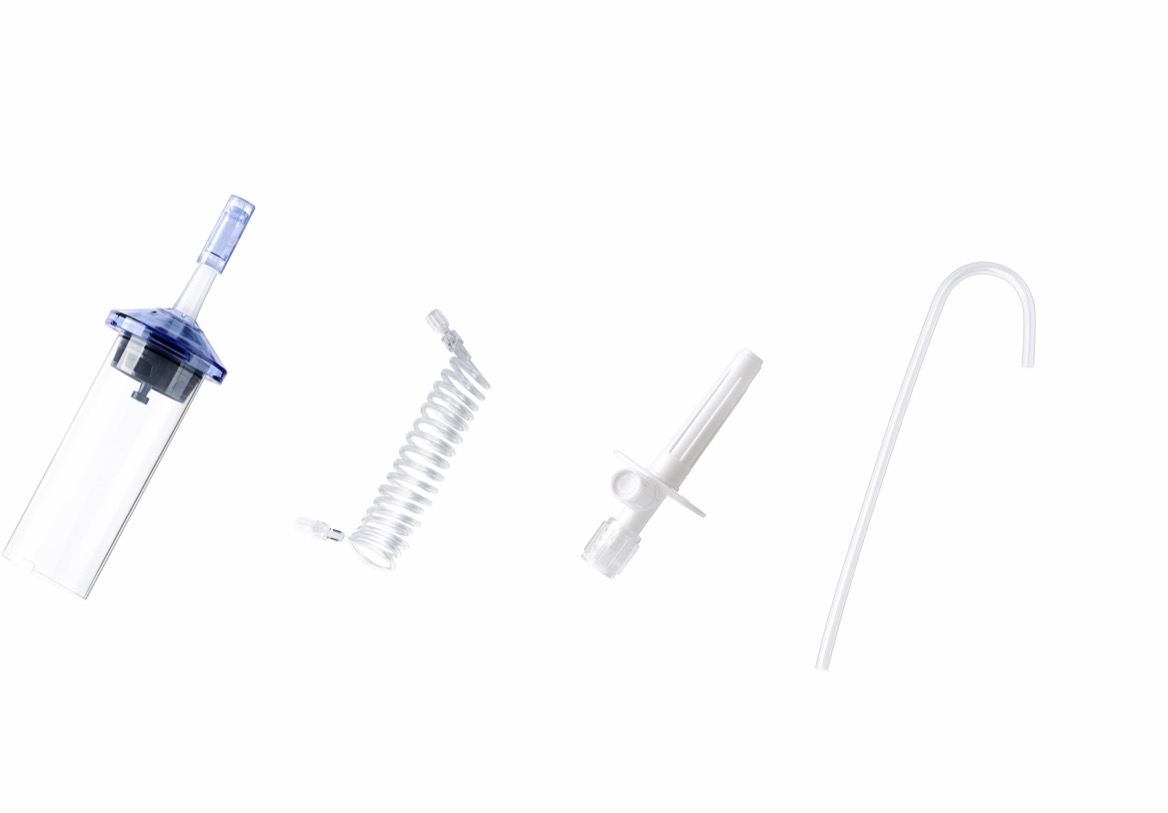
Imagine a hospital requests a replacement dual-syringe CT injector kit. Both suppliers advertise "300 psi," and both quote the same syringe capacity. Supplier A provides instructions naming the exact injector model and identifying the syringe and Y-line by part number. The kit documentation specifies the applicable pressure limit. Supplier B provides a syringe data sheet, but the tubing in its quote is described only as "standard."
Supplier A has provided enough information for the hospital to move the kit into formal review. That is not the same as approving it for clinical use. Supplier B's kit is not necessarily unsuitable, but its lower price cannot be evaluated on equal terms until the supplier identifies the tubing and provides documentation for the quoted configuration.
This distinction also matters when comparing costs. A lower unit price may not save money if purchasing has to source a separate patient line, maintain an extra inventory item, or repeat an evaluation after an undocumented substitution. Compare the cost of the complete, documented configuration rather than the price of the syringe alone.
A request for quotation (RFQ) should make every supplier respond against the same configuration. Ask for the following before comparing prices or scheduling an evaluation:
- Exact injector models supported, syringe capacity, and syringe and kit part numbers.
- A kit contents list that identifies the patient line, connectors, and filling accessories.
- The current IFU and labeling showing what the stated pressure rating applies to.
- A summary of relevant performance verification, identifying the configuration evaluated and distinguishing operating limits from test results.
- The regulatory documents applicable to the specific product and destination market.
- Labeled shelf life, storage conditions, lot traceability, and a process for handling complaints and notifying buyers of changes.
For a multi-site rollout, put the injector model, approved kit, and document revision in a shared purchasing table. A kit reviewed at one hospital should not automatically become the default at another if the injector model or disposable configuration differs.
A quality management certificate, a CE conformity document, and an FDA 510(k) clearance answer different questions. For ISO 13485, check the legal entity, manufacturing site, and certificate scope. For a CE-marked product, request the applicable EU Declaration of Conformity and, where required, the notified body certificate. For a U.S. purchase, check the 510(k) clearance and its scope against the device being offered. Avoid describing 510(k) clearance as FDA certification.
The FDA's public record for Shenzhen Maiwei Biotech Co., Ltd., K253048, lists a high-pressure syringe, pressure connecting tube, quick-fill tube, spike, and transfer tube. That record is a starting point for regulatory verification. It does not replace the SKU-specific documentation needed to confirm pressure limits and injector compatibility for a particular order.
Send MAIWEI INC. your injector manufacturer and model, syringe capacity, current consumable part number, required kit contents, and destination market. Ask for a matched quotation with the compatibility statement, pressure documentation, and applicable regulatory records for the proposed SKU. If you are sourcing for several sites or an OEM program, include the full model list so each proposed kit can be reviewed against the equipment it will serve.
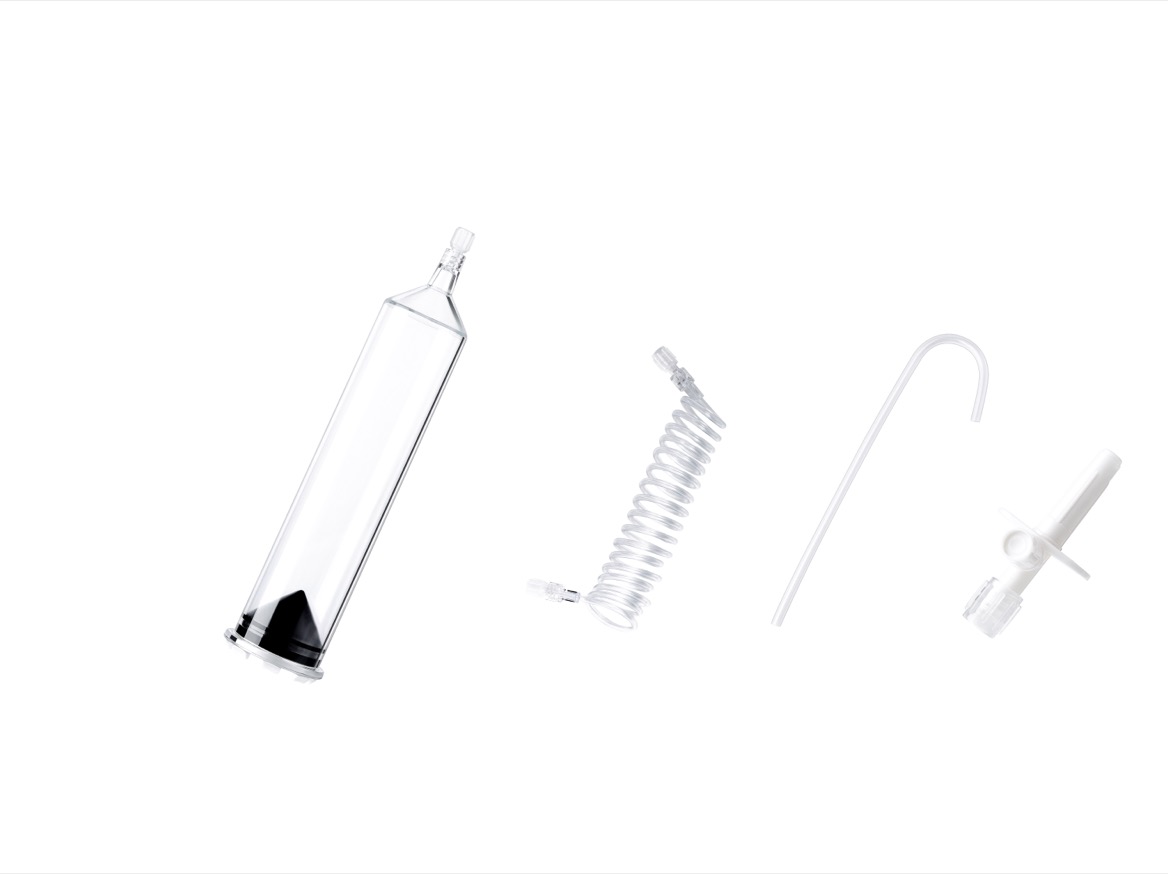
No. The pressure rating does not establish compatibility. The exact injector model, syringe interface, capacity, and documented tubing configuration still need to match. A syringe that fits mechanically is not necessarily documented for that injector.
If 325 psi is the intended setting, the permitted configuration must support it, subject to the applicable instructions and clinical limits. But an injector's ability to reach 325 psi does not mean every permitted setup must operate at that setting. Verify the disposable kit documentation and have the clinical team confirm which settings are appropriate.
Do not infer compatibility from those numbers. The syringe rating does not authorize operating the tubing above its labeled limit, and using a lower setting does not establish that the combination is permitted. Confirm that the instructions support the exact assembly and its intended conditions of use.
No. Burst pressure describes a failure threshold measured under defined test conditions. The labeled working or operating limit is the value buyers should use when assessing intended use. If a supplier quotes only a burst-test result, request the labeled limit separately.
Their tubing length, internal diameter, connector geometry, or documented configurations may differ. Those differences can change resistance and therefore the pressure required to deliver a particular flow. Equal pressure ratings do not establish equal flow performance or interchangeability.
Use the same review process, but not the same compatibility assumptions. Identify the exact injector and intended use for each modality, then verify the corresponding disposable part numbers, pressure and flow limits, and local market documentation.
Request the current IFU, labels, model-specific compatibility information, and a contents list for the quoted kit. Ask for an evaluation sample with the same part number and configuration you intend to buy. Record the accepted configuration so future shipments can be checked against it.
- Bayer, *MEDRAD Stellant FLEX CT Injection System*, "Injector Specifications": source for the programmable pressure settings and specified syringe capacities. [radiologysolutions.bayer]
- American College of Radiology, *ACR Manual on Contrast Media*, "Mechanical Injection of Intravenous Contrast Media": clinical context for power-injectable vascular access devices and manufacturer-specified limits. [braccomr]
- Bayer, *MEDRAD Centargo CT Injection System Operation Manual*, pressure-limit and performance specifications: an equipment-specific example of pressure limits stated for identified disposables. [idsmed.co]
- U.S. Food and Drug Administration, *510(k) Premarket Notification K253048*: public record identifying Shenzhen Maiwei Biotech Co., Ltd. and the devices listed in the clearance. [accessdata.fda]
- MAIWEI INC. manufacturer information and product catalog: background for the manufacturer perspective and product categories. The quotation comparison is hypothetical, and the RFQ checklist is an editorial procurement recommendation, not a published clinical standard. [maiweibio]