


close
Choose Your Site
Global
Social Media
Views: 243 Author: Maiwei Biotech Publish Time: 2026-10-18 Origin: Site


Content Menu
● CT Contrast Injector Syringe Volume: Quick Comparison
● What Syringe Capacity Actually Means
● 100 mL CT Injector Syringes: A Focused Capacity Option
>> Where a 100 mL Syringe Can Fit
● 150 mL CT Injector Syringes: An Intermediate Choice
>> Why Intermediate Capacity Can Be Useful
>> Where the "Middle Option" Can Mislead
● 200 mL CT Injector Syringes: Greater Loading Flexibility
>> When Larger Capacity Adds Value
>> What Larger Capacity Does Not Provide
● Contrast Dose, Iodine Delivery, and Syringe Size Are Different Decisions
● Pressure and Flow: Evaluate the Complete Delivery Path
● Three Practical Tools for Better Syringe Selection
>> 1. Build a Protocol-to-Capacity Matrix
>> 2. Test Capacity With a Transparent Example
>> 3. Run a Controlled Procurement Evaluation
● Cost and Waste: Compare Workflows, Not Barrel Size
● Single-Use Safety Is Independent of Syringe Volume
● What Buyers Should Request From MAIWEI INC.
● Request a Model-Specific Syringe Recommendation
>> Is a 200 mL syringe better than a 100 mL syringe?
>> Can a 200 mL CT syringe deliver less than 200 mL?
>> Are all 150 mL injector syringes suitable for CT?
>> Does a smaller syringe always reduce contrast waste?
>> Can the same syringe work with several injector brands?
>> Should syringe size determine the patient's contrast dose?
Choosing the right CT contrast injector syringe volume starts with three questions: What volume does the approved imaging protocol require? Which syringe is compatible with the injector? And how much fluid is needed for preparation and delivery? A 100 mL, 150 mL, or 200 mL syringe offers different capacity, but capacity alone does not determine contrast dose, injection pressure, or image quality.
The practical rule is simple: compatibility comes first, followed by sufficient usable capacity for the prescribed workflow. A larger syringe is not automatically better, and a smaller syringe is not automatically more economical.
From a manufacturing and procurement perspective, the strongest choice connects clinical requirements with verified device specifications—not a volume label alone.
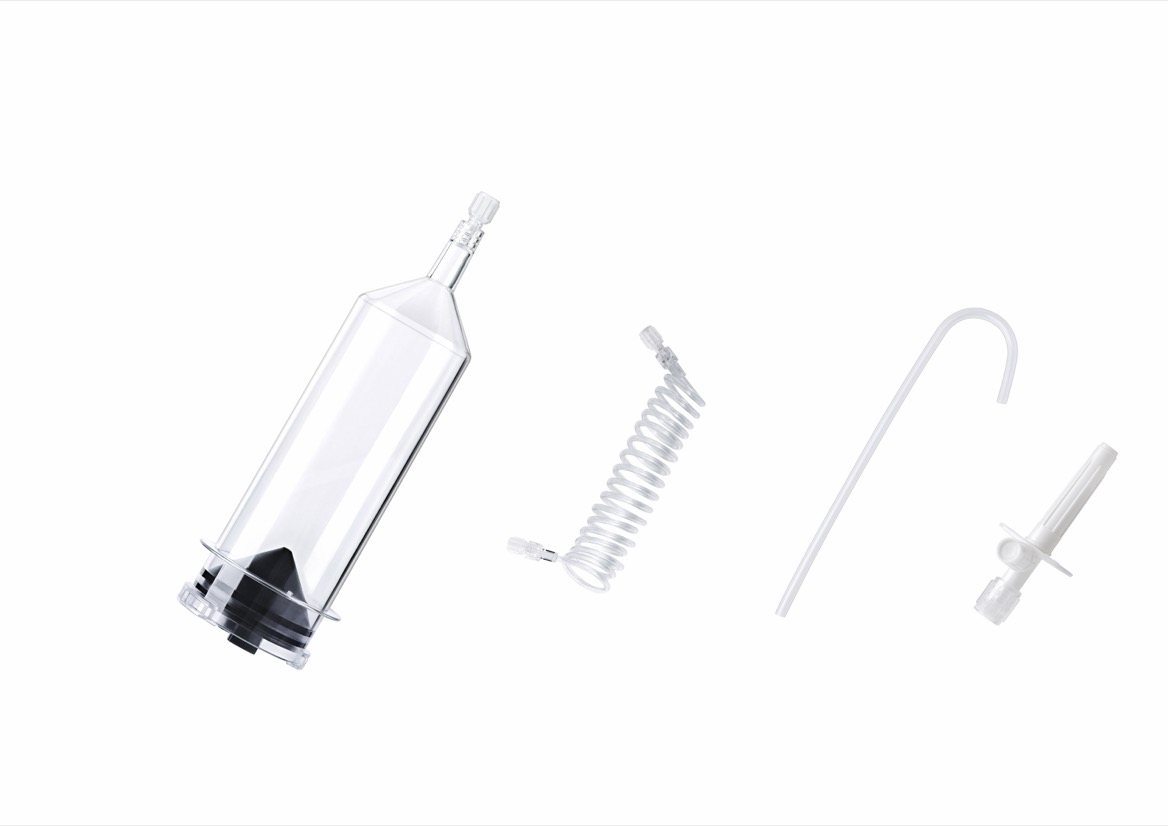
Syringe volume describes nominal capacity. It does not mean that every examination requires that amount of contrast.
| Selection factor | 100 mL syringe | 150 mL syringe | 200 mL syringe |
|---|---|---|---|
| Nominal capacity | 100 mL | 150 mL | 200 mL |
| Main advantage | Fits workflows with lower total loading requirements | Provides intermediate capacity | Offers greater loading headroom |
| Main limitation | Less room for larger prescribed volumes and preparation losses | May be unnecessary for smaller-volume workflows | Extra capacity does not justify extra contrast |
| Suitable purchasing approach | Verify that the complete loading requirement fits | Assess against the department's protocol mix | Consider where higher loading requirements or standardization justify it |
| Injector compatibility | Model- and product-specific | Model- and product-specific | Model- and product-specific |
| Pressure capability | Verify the labeled rating | Verify the labeled rating | Verify the labeled rating |
These are capacity-based comparisons, not clinical dosing recommendations. Departments should select contrast dose and injection parameters through their approved protocols.
Three different volumes matter when selecting a CT power injector syringe:
- Nominal capacity: the syringe's labeled volume.
- Loaded volume: the fluid placed in the syringe during preparation.
- Delivered volume: the amount administered according to the programmed protocol.
These figures may differ because preparation can require fluid for priming, and residual fluid may remain in the delivery pathway.
For illustration, a protocol prescribing 95 mL of contrast does not automatically fit a 100 mL syringe workflow. Staff must also account for the applicable filling and priming process. Whether additional fluid is required—and how much—depends on the actual system.
The right purchasing question is therefore not simply, "Is the prescribed dose below the syringe capacity?" It is, "Can this validated configuration complete the entire preparation and injection workflow?"
A 100 mL CT contrast syringe can be appropriate when the prescribed volume and preparation requirements fit within its usable capacity, and the injector supports that exact product.
It may be worth evaluating in departments with a consistent lower-volume protocol mix. However, an examination name alone is insufficient to determine syringe size. Patient characteristics, contrast concentration, scanner settings, and diagnostic objectives can change the required volume.
A manufacturer's perspective is useful here: the smallest suitable syringe is not necessarily the smallest available syringe. It is the smallest validated option that reliably accommodates the intended workflow.
The principal limitation is reduced capacity headroom.
If a department regularly approaches the syringe's usable limit, preparation may become less flexible. Choosing a larger compatible syringe may be more practical than introducing avoidable workflow changes.
A 100 mL syringe also does not guarantee lower contrast waste. Filling practices, contrast packaging, priming requirements, and residual volume all influence actual consumption.
A 150 mL syringe offers more loading room than a 100 mL option without moving to 200 mL.
For procurement teams, its value depends on the local protocol mix. If many examinations require loading volumes above the practical range of a 100 mL configuration but comfortably within 150 mL, intermediate capacity deserves consideration.
Importantly, 150 mL CT configurations do exist. For example, Bayer lists 150 mL and 200 mL sterile syringe capacities for its MEDRAD Stellant FLEX CT injection system.
That does not establish interchangeability across other injectors or syringe manufacturers.
Intermediate capacity is not automatically the best compromise.
A 150 mL syringe intended for an angiography injector must not be treated as interchangeable with a CT syringe simply because both have the same nominal volume.
Before purchasing, verify:
- Exact injector model.
- Syringe reference number.
- Mounting and plunger interface.
- Pressure and operating specifications.
- Approved tubing and connector configuration.
The label "150 mL" identifies capacity, not a universal connection standard.
A 200 mL CT injector syringe provides more room for workflows with higher total loading requirements.
It may also support inventory standardization when a department's injector fleet and approved protocols can use one validated configuration. Bayer, for example, lists a Stellant dual-syringe kit containing two 200 mL syringes.
The potential benefit is operational flexibility—not a requirement to load or administer 200 mL.
A 200 mL syringe does not inherently:
- Produce better enhancement.
- Permit a higher injection rate.
- Improve pressure tolerance.
- Reduce patient risk.
- Allow use across multiple patients.
Those characteristics depend on clinical protocols, device specifications, and labeled use conditions.
A larger syringe may be partially filled when permitted by its instructions. Its capacity should never become the reason to increase a patient's prescribed contrast volume.
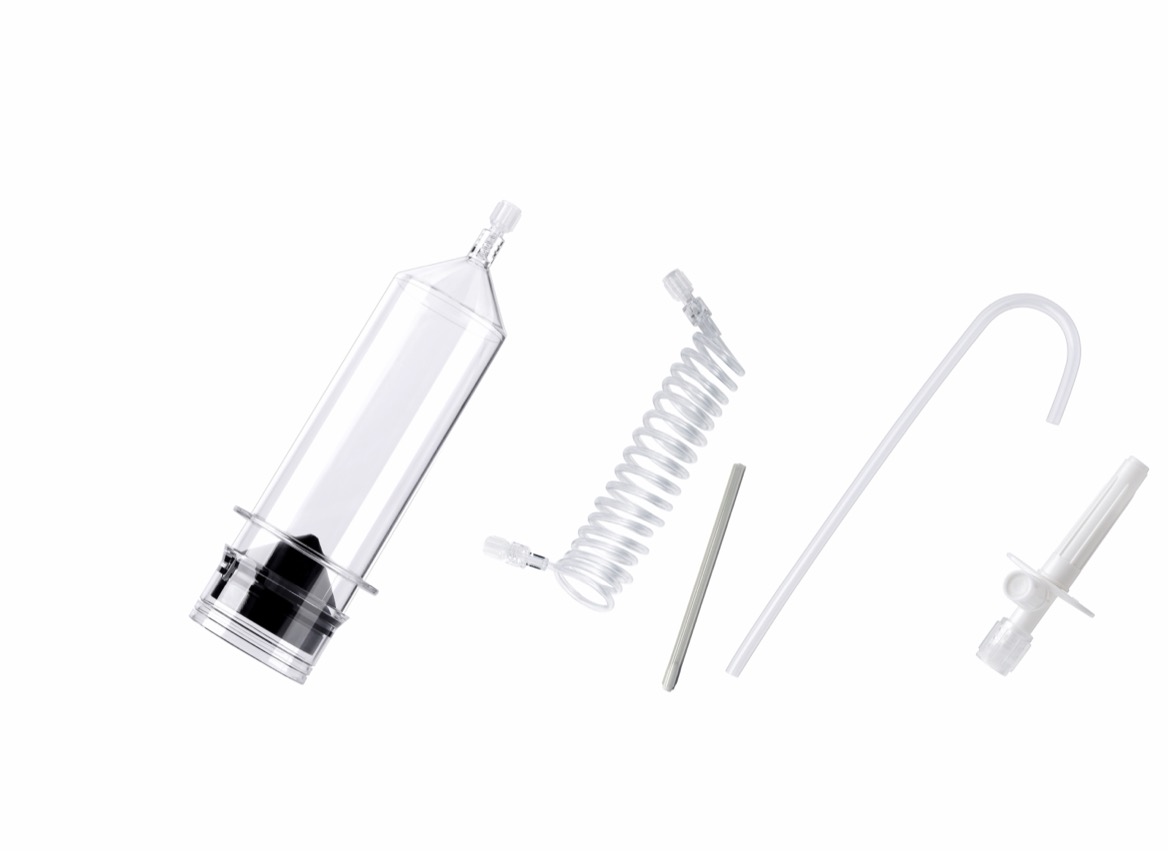
Syringe selection becomes clearer when capacity is separated from contrast-delivery planning.
Two relationships help explain the difference:
Total iodine (g)=Contrast volume (mL)×Concentration (mg I/mL)/1000
Iodine delivery rate (g I/s)=Flow rate (mL/s)×Concentration (mg I/mL)/1000
For example, 80 mL of contrast at 350 mg I/mL contains 28 g of iodine. At 4 mL/s, that concentration delivers 1.4 g I/s during injection.
These are arithmetic illustrations, not recommended patient doses.
The same prescribed contrast volume could potentially be delivered from different-capacity syringes, provided each configuration is compatible and used correctly. Changing syringe capacity alone does not change total iodine or iodine delivery rate.
Clinical teams must also consider patient characteristics, scan timing, tube voltage, and the diagnostic task.
A frequent purchasing mistake is to treat "high-pressure syringe" as a complete performance specification.
Injection performance depends on the entire pathway:
- Injector operating settings.
- Syringe and extension-tubing ratings.
- Connector and valve configuration.
- Catheter suitability.
- Contrast viscosity and temperature.
- Tubing dimensions and other flow resistance.
Syringe volume cannot substitute for these specifications.
UCSF's contrast administration guidance emphasizes checking intravenous access and not proceeding when flushing produces resistance, pain, or failure to flush. It also identifies appropriate peripheral access as an important part of power injection.
For purchasing teams, the practical implication is straightforward: request specifications for the complete kit, not just the syringe barrel. A compatible syringe does not make an unsuitable catheter or unverified tubing assembly acceptable.
Instead of buying by capacity alone, map the department's actual requirements.
| Information to collect | Why it matters |
|---|---|
| Injector model and configuration | Establishes which syringes can be considered |
| Prescribed contrast volumes | Defines clinical delivery requirements |
| Preparation and priming requirements | Identifies additional loading needs |
| Separate saline requirements | Prevents confusion between contrast and saline channels |
| Tubing configuration | Helps evaluate residual volume and compatibility |
| Frequency of each protocol | Supports practical inventory planning |
For dual-syringe systems, assess contrast and saline channels separately. Do not add both fluid volumes together and assume they must fit into one syringe.
Consider a hypothetical workflow requiring 110 mL of prescribed contrast plus 8 mL for its validated preparation process.
The illustrative loading requirement is 118 mL.
- A 100 mL syringe cannot contain that amount.
- A compatible 150 mL syringe has sufficient nominal capacity.
- A compatible 200 mL syringe also has sufficient nominal capacity.
This example establishes capacity only. It does not prove injector compatibility, injection accuracy, or clinical suitability. The 8 mL allowance is hypothetical and must not be adopted as a standard priming volume.
Before changing suppliers or capacities:
1. Review compatibility documentation and instructions.
2. Confirm applicable regulatory status for each product reference.
3. Evaluate packaging, labeling, and traceability.
4. Assess loading, mounting, priming, and connection steps under institutional procedures.
5. Document staff feedback and acceptance criteria.
6. Approve the product through the facility's established process.
This approach replaces assumptions with a documented purchasing decision.
A lower unit price does not always mean a lower total cost per examination.
Useful comparison points include:
- Syringe and accessory cost.
- Contrast actually consumed.
- Preparation time.
- Unused fluid discarded.
- Inventory complexity.
- Packaging and disposal requirements.
- Supply continuity.
For example, an underfilled 200 mL syringe does not necessarily waste more contrast than a 100 mL syringe. Waste depends on how much is loaded, administered, retained in the pathway, and discarded under applicable instructions.
Conversely, standardizing on a larger syringe may simplify stock management but increase consumable costs. Neither outcome should be assumed without local data.
Measure a representative workflow before making savings claims.
Unused capacity does not create permission for reuse.
CDC guidance states that syringes must not be used to administer medication to multiple patients. It also prohibits using single-dose medications for more than one patient.
Do not infer multi-patient suitability from a syringe's size, a check valve, or unused contrast.
Where a purpose-designed multi-patient contrast delivery system is considered, its specific labeling, approved configuration, local requirements, and infection-prevention procedures must govern use. It is a different workflow—not an extension of ordinary single-use syringe practice.
Based on the company information supplied for this article, MAIWEI INC. manufactures CT, MRI, and angiography injector consumables, including high-pressure syringes, connecting tubes, and associated accessories, serving customers in more than 60 countries and regions.
For an informed comparison, buyers should request product-specific evidence covering:
- Supported injector models and exact references.
- Available capacities and kit configurations.
- Pressure ratings and operating limitations.
- Sterility, shelf life, and packaging.
- Lot traceability and quality documentation.
- Applicable market authorization or clearance.
The supplied company background identifies ISO 13485, CE, and FDA 510(k) credentials. These should be checked for validity and scope rather than treated as blanket coverage for every product. A 510(k) is a device clearance pathway, not a generic company certification.
Send MAIWEI INC. your injector model, required syringe capacity, tubing configuration, destination market, and estimated purchasing volume.
Request a model-specific compatibility assessment, applicable documentation, and a quotation for the appropriate kit. Hospitals, distributors, and OEM buyers should complete their own acceptance process before clinical implementation.
Only when its additional capacity benefits the validated workflow. It does not automatically improve image quality or injection safety.
Yes, where permitted by the syringe and injector instructions. Nominal capacity is not a mandatory fill volume or patient dose.
No. Capacity does not identify modality or compatibility. Check the exact injector model, product reference, and intended use.
No. Loading practices, preparation losses, packaging, residual fluid, and disposal requirements determine actual waste.
Only when compatibility is documented for each specified model. Similar dimensions or nominal capacity are insufficient evidence.
No. Clinical teams determine dose through approved protocols. Syringe selection should accommodate that decision, not drive it.
1. American College of Radiology. *ACR Manual on Contrast Media*. Professional resource covering contrast administration, extravasation, warming, and related safety topics. [acr]
2. University of California, San Francisco, Department of Radiology and Biomedical Imaging. *CT and X-ray Contrast Guidelines: Intravenous CT & X-ray Contrast Guidelines*. Institutional guidance on vascular access, patency checks, and contrast administration. [radiology.ucsf]
3. Bayer. *MEDRAD Stellant FLEX CT Injection System*. Manufacturer specifications identifying 150 mL and 200 mL syringe capacities for the specified system. [radiologysolutions.bayer]
4. Bayer. *Syringes & Disposables*. Manufacturer product information, including the Stellant dual-syringe spike kit with two 200 mL syringes. [radiologysolutions.bayer]
5. Centers for Disease Control and Prevention. *Preventing Unsafe Injection Practices*. Guidance on single-patient syringe use and single-dose medication handling. [cdc]
6. U.S. Food and Drug Administration. *Device Approvals and Clearances*. Explanation of the 510(k) substantial-equivalence pathway and its distinction from premarket approval. [fda]
7. *Evaluation of Iodinated Contrast Media Use in Abdominal CT Scans*. Published study examining contrast volume, iodine dose, injection rate, patient weight, and tube voltage. [onlinelibrary.wiley]