


close
Choose Your Site
Global
Social Media
Views: 268 Author: Maiwei Biotech Publish Time: 2026-11-08 Origin: Site


Content Menu
● What Is a CT Injector Syringe Cross-Reference?
● Start With the Injector, Not the CT Scanner
>> Record the Exact Injector Model
>> Capture the Existing Kit Reference
● CT Injector Syringe Cross-Reference Examples
● How to Match the Exact Injector Model in Six Steps
>> 1. Create an Equipment Identity Record
>> 2. Compare the Mechanical Interface
>> 3. Verify the Complete Fluid Path
>> 4. Reconcile Operating Limits
>> 5. Obtain Written Compatibility Evidence
>> 6. Complete an Institutional Review
● Why Matching Syringe Volume Is Not Enough
>> Mechanical Fit and Delivery Performance Are Different Questions
>> Kit Contents Can Change the Proposed Match
>> Single-Use and Multi-Patient Systems Are Not Interchangeable
● A Practical Cross-Reference Worksheet for Buyers
● Three Controls That Improve Cross-Reference Reliability
>> Separate an Identification Match From a Verified Match
>> Preserve Document Revision History
>> Make OEM Requirements Explicit
● How to Review Regulatory and Quality Claims
● Request a Model-Specific Review From MAIWEI INC.
>> Can two 200 mL CT injector syringes replace each other?
>> Is an injector brand name enough to select a syringe?
>> Can CT syringes be substituted for MRI or angiography syringes?
>> Does a 510(k) clearance prove compatibility with every injector?
>> What should I do when the original syringe reference is missing?
>> Can I reuse a single-use syringe by replacing the patient tubing?
A CT injector syringe cross-reference should connect your exact injector model and existing consumable reference to a documented replacement—not simply identify another syringe with the same volume. Two 200 mL syringes may look similar while differing in mounting geometry, piston engagement, tubing configuration, or labeled operating limits.
From a manufacturing and procurement perspective, the most important distinction is between a product that appears to fit and one with documented compatibility. My starting rule is straightforward: compatibility must be supported by model-specific documentation, not inferred from appearance.
This guide explains how to identify your injector, compare syringe kits, review supporting evidence, and prepare a precise sourcing request for hospitals, distributors, and OEM projects.
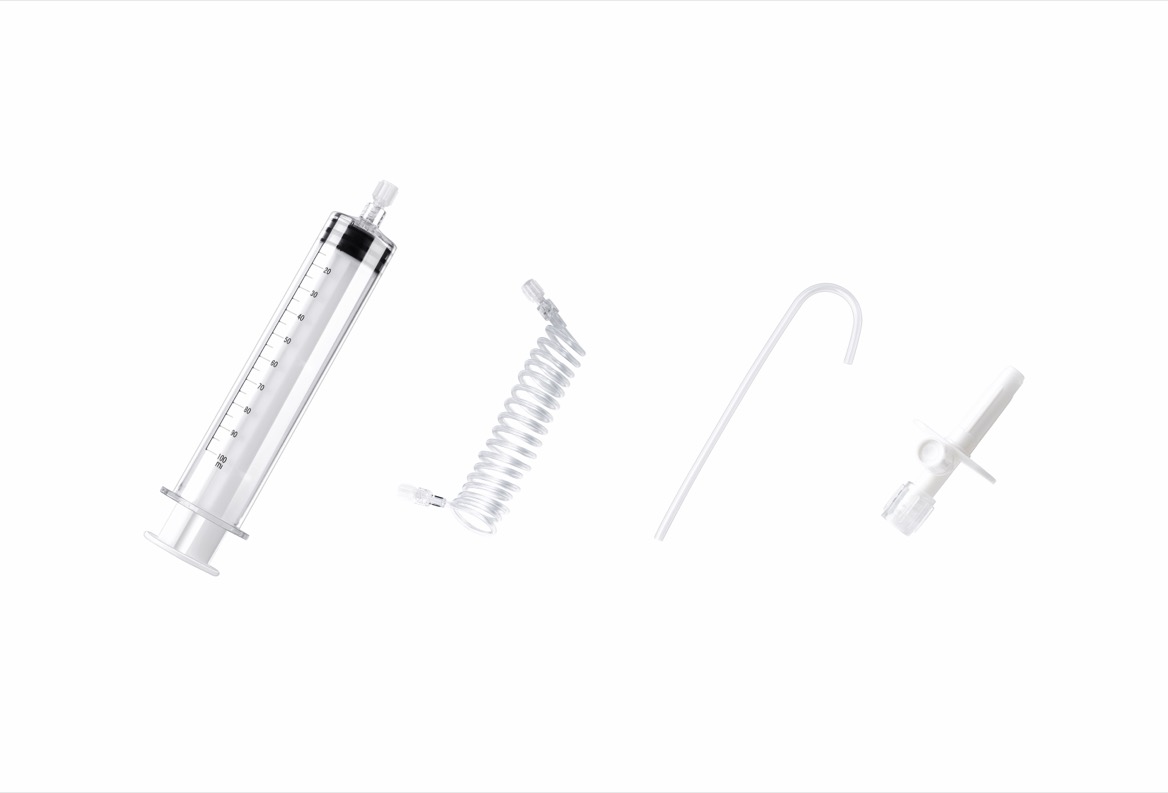
A CT injector syringe cross-reference connects an existing syringe or kit reference to a proposed alternative for a specified contrast injection system.
A useful record identifies:
- Injector manufacturer and exact model.
- Original syringe or kit catalog number.
- Proposed replacement product code.
- Syringe quantity and nominal capacity.
- Included tubing, valves, and filling accessories.
- Applicable operating limits and usage restrictions.
- Documentation supporting the proposed combination.
This is more specific than a product list labeled "CT-compatible syringes."
A cross-reference should also distinguish between replacing one component and replacing an entire kit. A syringe-only alternative may leave the buyer responsible for separately specifying the correct tubing and filling accessories.
Begin with the injector identification label rather than the CT scanner name.
Hospitals sometimes describe equipment using the scanner brand, purchasing department shorthand, or a familiar injector family name. Those descriptions may not identify the injection system precisely enough for consumable selection.
Record the complete model designation, including relevant suffixes. Photograph the identification label and injector head where institutional policies permit.
Also establish whether the system uses:
- A single syringe.
- Dual syringes.
- A dedicated multi-patient configuration.
- A syringeless fluid-delivery arrangement.
This distinction matters. Bracco describes CT Exprès, for example, as a three-channel syringeless injector. A conventional syringe replacement search would therefore start with the wrong consumable category.
Next, obtain the reference number from an unopened consumable package.
Record the manufacturer, catalog number, kit description, expiration date, and package contents. Keep photographs of both the outer label and any component labels.
If the reference is unavailable, ask the department for its latest purchase record. Visual identification alone should remain preliminary.
The following examples show how original-manufacturer documentation distinguishes injector systems and consumable configurations. They are identification aids, not a replacement approval chart or a declaration of MAIWEI product compatibility.
| Injector or platform | Documented consumable example | What buyers should verify |
|---|---|---|
| MEDRAD Stellant | Bayer documentation describes a 200 mL sterile disposable syringe and a 325 psi programmable pressure limit for the listed configuration | Exact system configuration, applicable syringe kit, and current instructions |
| Bracco EmpowerCTA+ | FastLoad CT pack 17344 contains one 200 mL syringe and specified accessories | Whether the requirement is a single-syringe pack or a dual-syringe kit |
| Bracco EmpowerCTA+ | FastLoad CTA pack 17354 contains two 200 mL syringes, administration components, and Y-tubing with one-way check valves | Complete kit contents, tubing arrangement, and local reference availability |
| Guerbet OptiVantage Single-use | REF 236302 identifies a dual-syringe kit with 200 mL syringes, coiled Y-tubing, dual check valves, and spikes | Single-use configuration, current local labeling, and exact replacement scope |
| Guerbet OptiVantage Multi-use | Manufacturer documentation describes dedicated multi-use syringes, day-sets, and patient lines | Authorized system configuration, replacement intervals, and patient-line requirements |
Notice that the same nominal capacity appears across several systems. Capacity helps identify the product category, but does not establish interchangeability.
Manufacturer catalog numbers and regional configurations may also differ. Confirm the current documentation for the destination market before ordering.
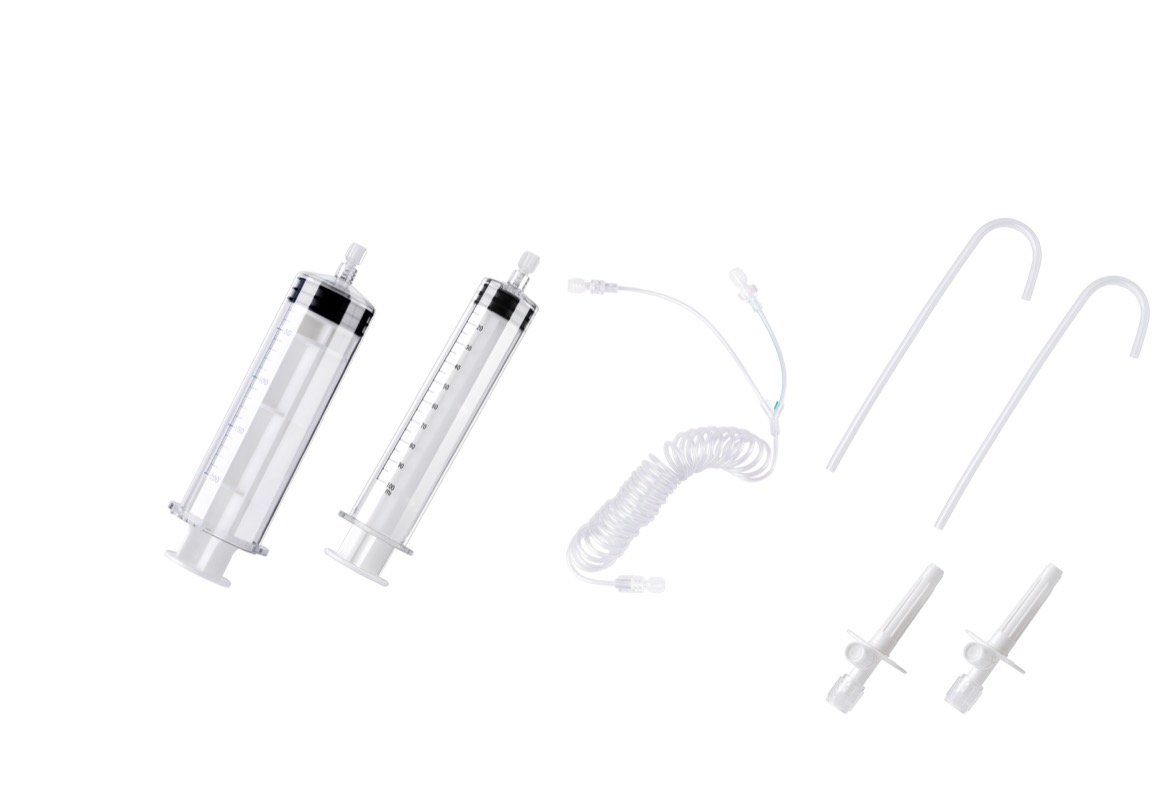
Build a short record containing:
- Injector manufacturer and model.
- Equipment identification or serial number.
- Single-head or dual-head configuration.
- Existing syringe and tubing references.
- Destination country.
- Intended single-use or authorized multi-patient workflow.
Including the destination country helps the supplier check whether the proposed product is available with the appropriate market documentation.
Ask the supplier to confirm the mounting and drive interfaces for the exact injector model.
Relevant characteristics may include the barrel geometry, retaining features, mounting flange, piston interface, and any required adapter.
A syringe that enters the holder has not necessarily demonstrated correct engagement throughout its operating cycle. Do not modify retaining features or improvise adapters to make a proposed replacement fit.
Review the syringe together with every supplied fluid-path component.
Check:
- Straight tubing versus Y-tubing.
- Tubing length and labeled pressure rating.
- Connector configuration.
- Check-valve presence and orientation.
- Filling spikes or transfer tubes.
- Intended connection to downstream accessories.
A matching syringe cannot compensate for an incorrectly specified tubing set.
Compare the injector instructions, proposed consumable labeling, and requirements for the complete assembly.
Do not treat the injector's maximum pressure capability as the rating of every connected component. Likewise, a higher pressure rating on one accessory does not authorize operation beyond another component's limits.
Where documents conflict or omit essential information, stop the substitution review and obtain written clarification.
Request confirmation identifying both the proposed SKU and the exact injector model.
Useful supporting material includes:
- Current instructions for use.
- Product specifications and configuration details.
- A controlled compatibility statement.
- Applicable regulatory documentation.
- Relevant performance verification information.
- Sterility, shelf-life, and packaging information.
The level of detail disclosed may vary, but a vague statement such as "fits most CT injectors" is not an adequate purchasing specification.
Before routine use, route the proposed alternative through the institution's established evaluation process.
Depending on local responsibilities, this may involve radiology, biomedical engineering, procurement, infection prevention, and quality personnel.
Any evaluation should follow applicable instructions and institutional procedures. Do not use a patient procedure to resolve an uncertain mechanical or documentation match.
Volume describes nominal capacity. It does not describe how the injector retains the barrel or engages the plunger.
Bayer warns that failure of a non-compatible syringe on a MEDRAD injector can cause over- or under-injection of contrast, potentially requiring repeat imaging and additional contrast administration.
The purchasing implication is clear: physical resemblance is insufficient evidence for substitution.
Bracco lists multiple EmpowerCTA+ packs with different configurations. Its 17344 pack includes one syringe, while 17354 and 17355 contain two syringes and different accessory combinations.
Therefore, cross-referencing only "200 mL Empower syringe" can produce an incomplete order even before compatibility is considered.
Specify the bill of materials, not just the syringe capacity.
Do not infer multi-patient suitability from syringe size, the presence of a check valve, or a similar-looking product.
Guerbet's OptiVantage Multi-use documentation describes a dedicated system with associated syringes, day-sets, and patient lines. It specifically calls for a new patient line for each patient.
A single-use product must not be reassigned to that workflow without applicable authorization and labeling.
Use this worksheet to turn an informal inquiry into a reviewable specification.
| Required field | Information to record | Reason |
|---|---|---|
| Injector identity | Manufacturer, full model, configuration | Avoids family-name assumptions |
| Existing consumable | Brand and complete REF number | Establishes the original requirement |
| Replacement scope | Syringe only or complete kit | Prevents accessory omissions |
| Syringe configuration | Quantity and capacity | Distinguishes single and dual packs |
| Fluid path | Tubing, valves, connectors, filling accessories | Defines the complete assembly |
| Operating limits | Applicable labeled restrictions | Supports document reconciliation |
| Usage category | Single-use or specified multi-patient system | Prevents workflow substitution errors |
| Evidence | Document titles, revisions, and supplier confirmation | Makes the decision traceable |
| Approval status | Reviewer, date, and outstanding questions | Prevents premature purchasing release |
A useful internal rule is to mark each proposed match as "under review," "accepted for the documented configuration," or "not accepted." Avoid leaving an unverified alternative in a purchasing system as though it were already approved.
A supplier may initially identify a candidate using photographs and an original reference number.
Treat that as the beginning of the review, not its conclusion. A verified match requires the relevant documentation and institutional acceptance for the intended configuration.
Keep the document revision used for each purchasing decision.
If the supplier changes a product code, component, manufacturing specification, or instruction, review whether the existing cross-reference remains applicable. An old approval should not automatically transfer to a changed product.
For OEM projects, agree on the approved configuration before finalizing packaging or artwork.
Document product codes, kit contents, labeling responsibilities, change-notification expectations, and destination-market requirements. This reduces ambiguity between the technical specification and the commercially supplied kit.
Quality-system certification, market conformity, and device clearance answer different questions.
ISO 13485 addresses a medical-device quality management system. It does not independently establish that a particular syringe works with every injector.
FDA 510(k) clearance concerns a specific device submission and substantial-equivalence determination. It is not a general "FDA certification" for an entire manufacturer's portfolio.
When reviewing a proposed product, request documents that connect the legal manufacturer, device identity, applicable models, and intended market. Check CE documentation against the actual product scope rather than relying on a logo in a brochure.
Regulatory documentation and technical compatibility evidence should support one another; neither should substitute for the other.
MAIWEI INC. develops and manufactures CT, MRI, and angiography injector consumables, including syringes, connecting tubes, and associated accessories for hospitals, distributors, and OEM customers.
For a precise inquiry, send MAIWEI:
1. A photograph of the injector identification label.
2. The full injector model.
3. The existing syringe or kit reference.
4. Required tubing and accessory details.
5. Destination country and estimated quantity.
6. Any OEM packaging or labeling requirements.
Ask for a written proposed cross-reference, complete kit specification, applicable instructions, and product-specific regulatory documentation before ordering.
This approach makes the inquiry actionable while avoiding an unsupported promise that one consumable fits every model.
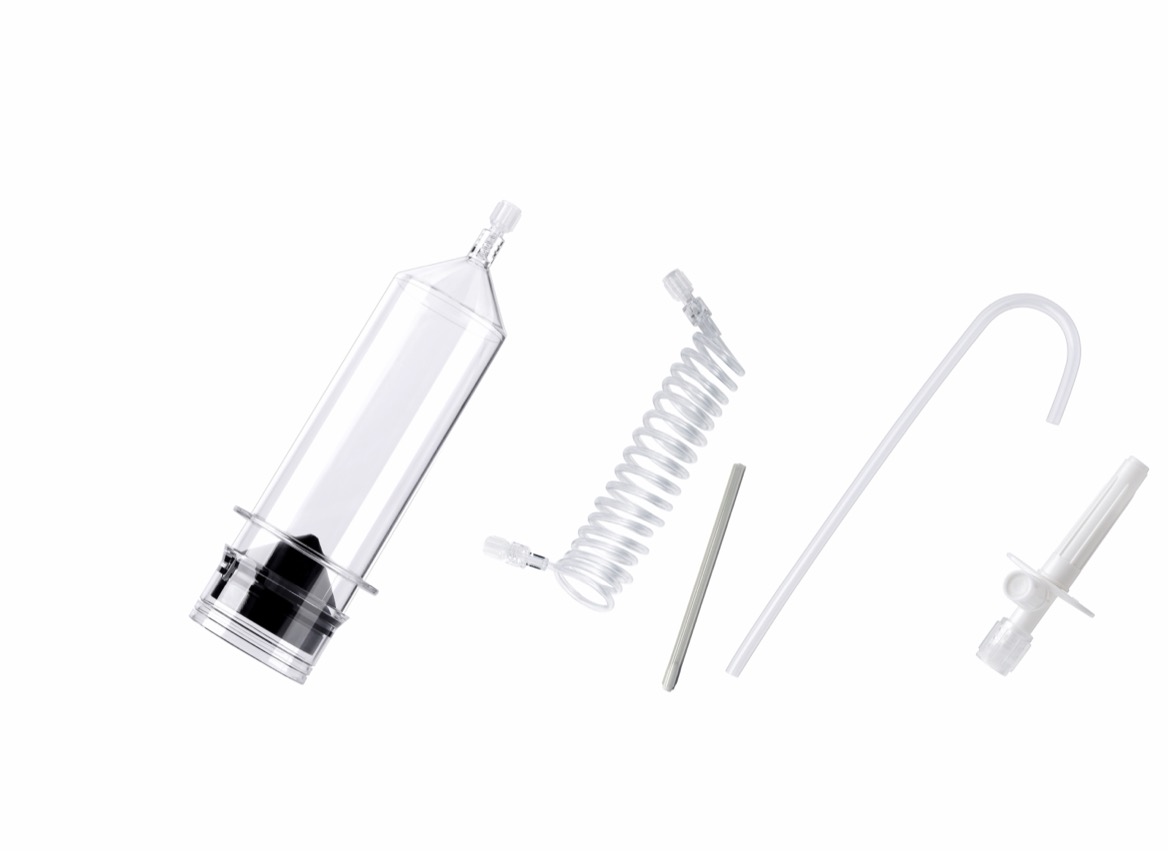
Not on volume alone. Confirm the exact injector model, mechanical interface, fluid-path configuration, labeled operating limits, and supporting compatibility documentation before accepting a substitution.
Usually not. One manufacturer may offer several injector families and configurations. Record the complete model designation and existing consumable reference.
Do not assume interchangeability. These systems can have different syringe capacities, pressure requirements, interfaces, and intended-use restrictions. Use model-specific documentation.
No. Review the specific device's cleared indications and documentation. A manufacturer's possession of one clearance does not establish compatibility across its entire product range.
Collect the injector label, configuration details, consumable photographs, and purchasing history. Ask the supplier to identify a candidate, then complete the documentation review before purchase or use.
Do not reinterpret a single-use product as a multi-patient system. Follow the applicable product labeling and institutional infection-prevention procedures.
1. Bayer. "Boost Your Image: MEDRAD Stellant" brochure. Source for the listed syringe capacity, system pressure limit, and warning concerning non-compatible syringes. [radiology.bayer]
2. Bracco. "EmpowerCTA+." Source for FastLoad pack references 17344, 17354, and 17355 and their listed contents. [bracco]
3. Guerbet. "OptiVantage Single-use: Dedicated Consumables." Source for REF 236302 and its documented kit configuration. [guerbet]
4. Guerbet. "OptiVantage Multi-use." Source for dedicated multi-patient consumables and patient-line replacement instructions. [netherlands.guerbet]
5. Bracco. "CT Exprès." Source for the three-channel syringeless system description. [bracco]
6. U.S. Food and Drug Administration. "510(k) Clearances." Explanation of premarket notification and substantial-equivalence review. [fda]
7. U.S. Food and Drug Administration. "Are There 'FDA Registered' or 'FDA Certified' Medical Devices?" Explanation of registration, clearance, and approval terminology. [fda]
8. U.S. Food and Drug Administration. "Quality Management System Regulation—Frequently Asked Questions." Source for the role of ISO 13485 within medical-device quality-system requirements. [fda]