


close
Choose Your Site
Global
Social Media
Views: 230 Author: Maiwei Biotech Publish Time: 2026-09-03 Origin: Site


Content Menu
● What Is a CT Injector Syringe?
>> Why Standard Syringes Are Not a Substitute
● CT Injector Syringe Components Explained
>> Syringe Tip and Connection Interface
● CT Injector Syringe vs. CT Contrast Injector Consumables
>> The Practical Difference for Buyers
● Main Applications of CT Injector Syringes
>> Routine Contrast-Enhanced CT
>> Dual-Head Contrast and Saline Protocols
>> Emergency and High-Throughput Imaging
● Compatibility: The Most Important Buying Factor
>> Compatibility Has Four Layers
>>> 1. Mechanical Compatibility
>>> 2. Fluid-Path Compatibility
>>> 3. Pressure and Flow Compatibility
>>> 4. Regulatory and Documentation Compatibility
● How to Verify CT Injector Syringe Compatibility
>> Step 1: Identify the Exact Injector Brand and Model
>> Step 2: Confirm the Intended Procedure
>> Step 3: Review the Complete Disposable Set
>> Step 4: Check Product Labels and Technical Documentation
>> Step 5: Perform Facility-Level Evaluation
● Expert Insight: Why Compatibility Is a System Decision
● Choosing a CT Injector Syringe Supplier
>> What Hospitals Should Evaluate
>> What Distributors Should Evaluate
>> What OEM Partners Should Evaluate
● Build a More Reliable Contrast Delivery Workflow
>> What is a CT injector syringe used for?
>> Can a standard syringe be used in a CT contrast injector?
>> How do I know whether a CT injector syringe is compatible?
>> What is included in a CT injector consumables kit?
>> Why are dual-head CT injector syringes used?
>> Are CT injector syringes reusable?
>> What should distributors request from a CT injector syringe manufacturer?
A CT injector syringe is a single-use, high-pressure contrast-delivery component designed to work with a compatible contrast media power injector during computed tomography examinations. For radiology departments, distributors, and OEM partners, the right syringe is not simply a disposable item—it is a controlled part of the imaging workflow that influences contrast delivery accuracy, workflow efficiency, connection security, and patient safety.
At MAIWEI INC., we develop and manufacture consumables for CT, MRI, and angiography high-pressure injectors, including injector syringes, patient tubing, connecting tubes, and related accessories. Our products are designed for compatibility with multiple mainstream injection platforms and are supplied to hospitals, distributors, and OEM customers in more than 60 countries and regions. With ISO 13485, CE, and FDA 510(k)-cleared product lines, we focus on dependable imaging consumables that help clinical teams maintain consistent workflows across demanding diagnostic environments.
This guide explains the structure, applications, and compatibility requirements of CT injector syringes. It also compares the two closely related purchasing terms that often cause confusion: CT injector syringe and CT contrast injector consumables.
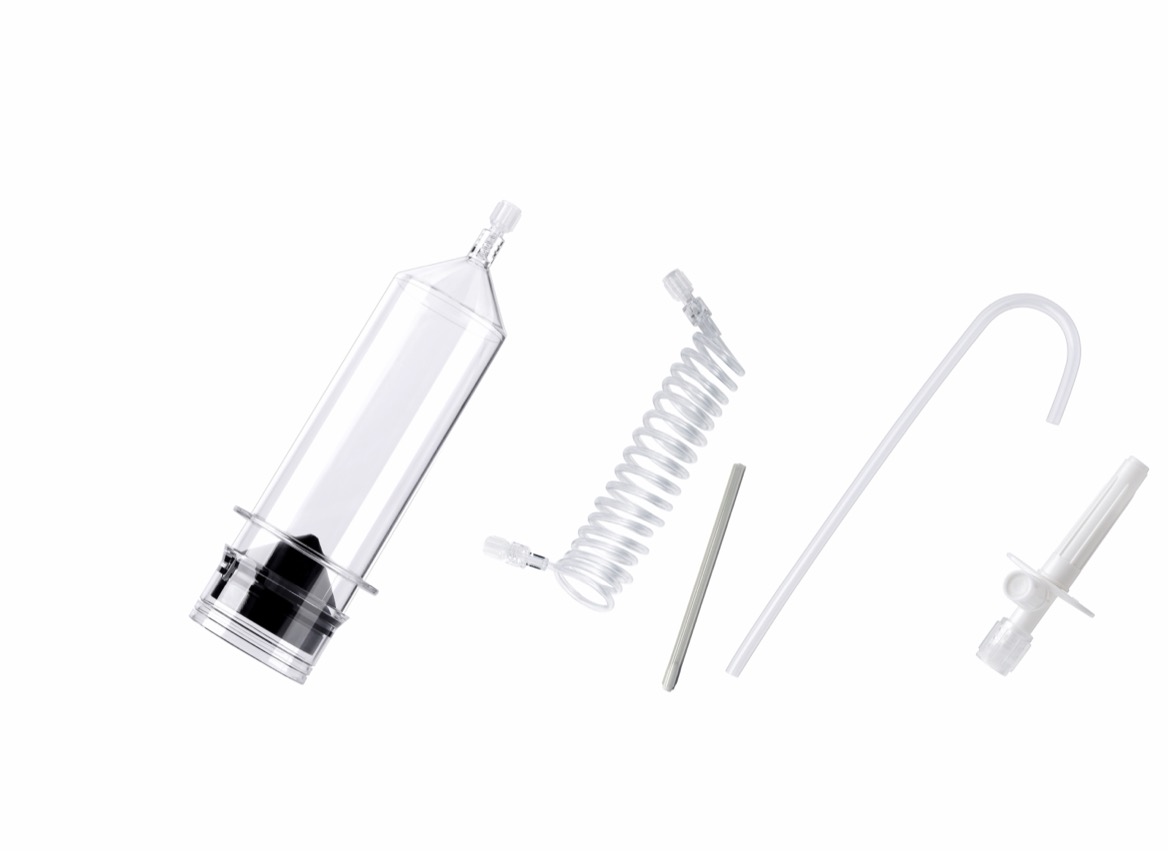
A CT injector syringe is a sterile disposable syringe specifically engineered for use with a CT contrast injector. Unlike a standard manual syringe, it is designed to tolerate the pressure, flow requirements, mechanical movement, and connection geometry of a powered injection system.
During contrast-enhanced CT examinations, the injector delivers iodinated contrast media—and, in many protocols, saline—into the patient through intravenous access. The contrast agent helps clinicians visualize blood vessels, organs, tumors, inflammation, trauma, and other anatomical structures more clearly.
A typical CT injector syringe is loaded into the injector head, filled with contrast media or saline, connected to patient tubing, and operated according to the selected imaging protocol.
Its role is simple but critical: it creates a secure fluid path between the contrast reservoir, the injector system, and the patient.
A conventional syringe may look similar, but it is not designed for the same operating environment. CT injector syringes must meet system-specific requirements for:
- Mechanical fit with the injector drive mechanism
- Pressure resistance during powered delivery
- Plunger performance under controlled movement
- Leak resistance at the syringe-to-tubing interface
- Fluid-path material compatibility with contrast media and saline
- Volume accuracy for protocol-controlled injections
- Sterility for patient-contact applications
The U.S. Food and Drug Administration notes that components affecting the fluid path—including dose chambers, plungers, stoppers, and reservoirs—require careful material identification and evaluation in device submissions. This reflects the importance of every material and connection involved in contrast delivery. [References 1]
A CT injector syringe may appear straightforward from the outside. In practice, each component serves a specific function in a high-pressure imaging workflow.
| Component | Primary Function | Why It Matters |
|---|---|---|
| Syringe barrel | Holds contrast media or saline | Must maintain shape and integrity during injection |
| Plunger | Transfers force from injector drive to fluid | Supports controlled and consistent contrast delivery |
| Plunger seal or stopper | Creates a fluid-tight barrier inside the barrel | Helps prevent leakage and unintended air entry |
| Syringe flange | Secures the syringe within the injector head | Must match the mechanical retention design of the injector |
| Tip or outlet connection | Connects the syringe to tubing or a manifold | Influences connection security and fluid-path continuity |
| Volume markings | Support filling and preparation | Assist operators in confirming loaded volume |
| Protective cap | Protects the connection port before use | Helps preserve sterility before setup |
| Patient tubing interface | Links the injector syringe to patient line components | Must match the intended tubing and connector design |
The barrel is the primary contrast reservoir. CT injector syringe barrels are commonly manufactured from medical-grade polymer materials chosen for transparency, dimensional stability, and resistance to expected operating pressure.
Transparency is useful because staff need to inspect the fluid for air bubbles, particulate matter, or incomplete filling before injection. However, visual inspection does not replace the facility's required preparation and verification process.
The plunger moves through the syringe barrel when driven by the injector. Its movement pushes contrast media or saline into the connected tubing set.
The plunger seal is particularly important because it must maintain a stable seal while allowing predictable movement. Excessive resistance may affect injector performance. Insufficient sealing may increase the risk of fluid leakage or inaccurate delivery.
In our manufacturing experience, a reliable syringe system requires more than a well-molded barrel. It also depends on the interaction between the barrel interior, the seal material, lubrication strategy where applicable, and the injector's mechanical drive profile.
The syringe outlet connects to downstream tubing, a manifold, or a dedicated patient line. This interface must be evaluated as part of the entire system—not as an isolated component.
Connection geometry, locking method, pressure capability, and intended use can differ significantly between product families. A connector that appears visually similar may not be appropriate for another injector platform or tubing configuration.
The FDA has specifically emphasized the need to demonstrate connectivity and interoperability between syringes and connecting devices when those components are intended to work together. [References 2]
The terms CT injector syringe and CT contrast injector consumables are related, but they are not interchangeable.
A CT injector syringe is a specific product. CT contrast injector consumables is a broader category that includes the syringe and other disposable components required to complete the contrast-delivery pathway.
| Comparison Point | CT Injector Syringe | CT Contrast Injector Consumables |
|---|---|---|
| Product scope | One individual disposable component | A complete category of disposable imaging accessories |
| Main purpose | Holds and delivers contrast media or saline | Supports the full contrast injection workflow |
| Typical contents | Syringe barrel, plunger, seal, tip | Syringes, patient tubing, connecting tubes, spikes, manifolds, adapters, caps, accessories |
| Purchasing method | Often purchased by syringe type and injector model | Often purchased as kits or bundled workflow solutions |
| Compatibility focus | Injector head, syringe holder, plunger drive | Injector, syringe, tubing, manifold, patient line, protocol setup |
| Clinical impact | Directly affects controlled fluid delivery | Affects the integrity of the complete fluid path |
| Common buyer | Radiology purchasing team, distributor, injector service provider | Hospital procurement, imaging department, distributor, OEM partner |
When a customer asks for a "CT injector syringe," the first question should be:
Which injector system is currently installed?
When a customer asks for "CT injector consumables," the conversation should be broader:
- Is the injector single-head or dual-head?
- Is the department using contrast-only injection or contrast-plus-saline protocols?
- What patient tubing format is required?
- Is a specific manifold or check-valve configuration used?
- Does the hospital require individual components or a complete procedure kit?
- Does the purchasing team need private-label or OEM packaging?
This distinction matters because a syringe may be individually compatible with an injector, while the full consumable set may still require additional validation for tubing, adapters, and workflow configuration.
CT injector syringes are used in contrast-enhanced CT procedures where controlled injection timing and flow are required.
Common examinations include imaging of the chest, abdomen, pelvis, brain, and extremities. Contrast-enhanced CT can help improve visualization of vascular structures and tissue enhancement patterns.
Depending on the imaging objective, the protocol may require specific injection volumes, flow rates, contrast concentrations, saline flushes, and scan timing.
CT angiography, often called CTA, is one of the most demanding applications for high-pressure injection consumables. It may be used to examine arteries and veins in areas such as the brain, neck, chest, coronary circulation, abdomen, and lower limbs.
Because CTA relies on precisely timed vascular enhancement, the performance of the injection system and consumable fluid path is particularly important.
Many CT departments use dual-head injectors. One syringe is used for contrast media, while the second is used for saline.
A saline flush can help:
- Push residual contrast media through the tubing
- Improve bolus efficiency
- Support contrast utilization
- Reduce retained contrast volume in the line
- Enable protocol-specific enhancement timing
The exact clinical protocol must always be selected and supervised by qualified healthcare professionals in line with the institution's policies and applicable instructions for use.
Emergency departments and high-volume imaging centers need consumables that support efficient preparation, consistent installation, and dependable availability.
For these environments, procurement decisions should consider more than unit price. Supply continuity, lot traceability, packaging usability, training needs, and compatibility documentation can all affect operational reliability.
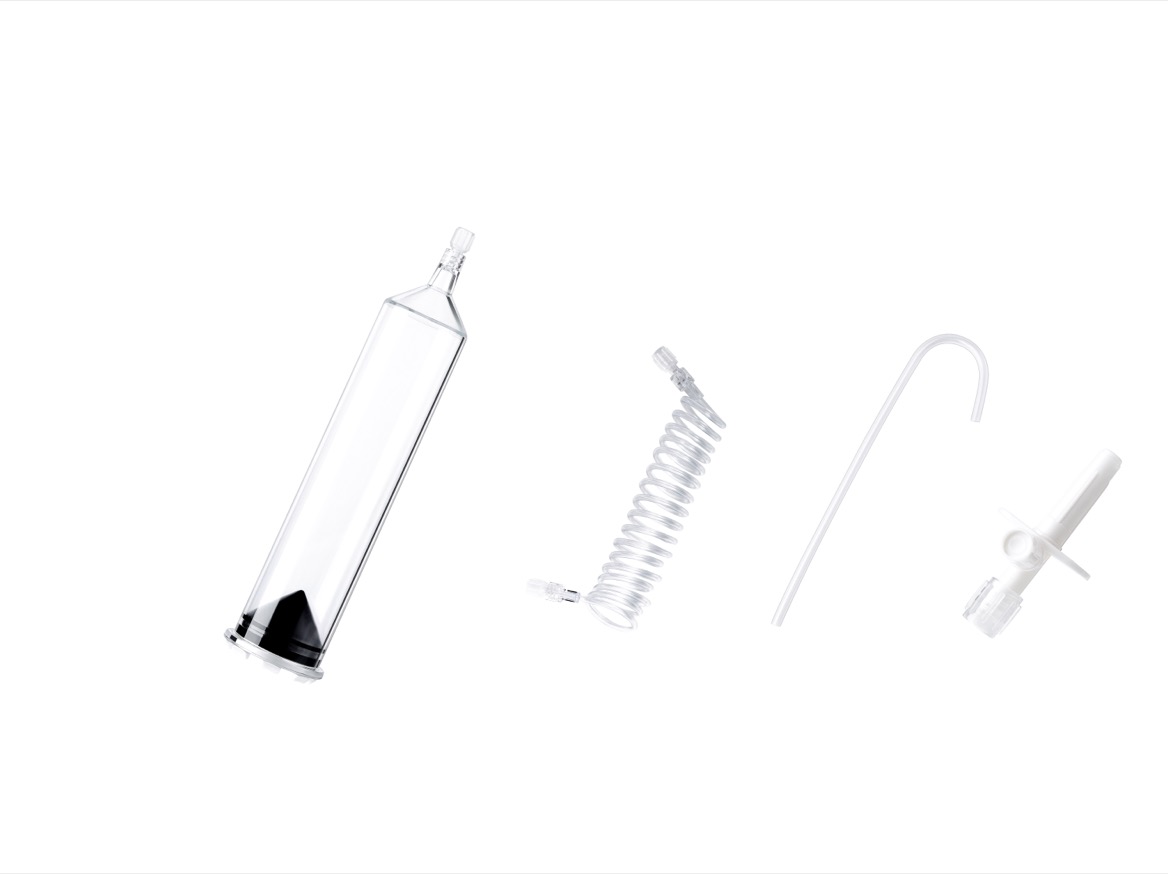
Compatibility is not a marketing claim. It is a technical and clinical requirement.
A CT injector syringe must be compatible with the intended injector system, including its syringe holder, drive mechanism, plunger engagement design, volume format, and connection interface. A compatible syringe should only be used according to its labeled indications and manufacturer instructions.
The syringe must fit correctly into the injector head.
Key factors include:
- Syringe barrel diameter
- Barrel length
- Flange geometry
- Locking position
- Plunger engagement design
- Injector-head configuration
- Single-head or dual-head format
If the syringe does not seat properly, the injector may not operate as intended. Forced installation should never be used.
The syringe outlet must connect securely to the intended tubing, adapter, or manifold.
The complete fluid path should be assessed from syringe to patient line:
Injector Syringe→Connector→Patient Tubing→IV Access
A secure syringe alone is not enough if the tubing or adapter is mismatched.
CT injection can involve high flow rates and pressurized delivery. The syringe, tubing, connectors, and related accessories must be appropriate for the intended system and labeled operating conditions.
Purchasing teams should verify:
- Maximum rated pressure
- Recommended injector platform
- Intended flow characteristics
- Syringe volume
- Tubing configuration
- Contrast and saline compatibility
- Single-use designation
- Sterility status
- Approved connection accessories
Hospitals, distributors, and OEM customers should review product documentation before adoption. This may include:
- Product labeling
- Instructions for use
- Compatibility lists
- Technical data sheets
- Sterilization information
- Lot and traceability documentation
- Quality certificates
- Market authorization documentation where applicable
A complete and specific listing of kit components is also highlighted in FDA guidance for piston syringe submissions, underscoring why buyers should understand what is included in each configuration. [References 3]
A structured verification process reduces procurement risk and helps prevent incorrect substitutions.
Do not rely only on a generic description such as "CT injector" or "dual-head injector." Record the precise equipment model installed at the facility.
This should include:
- Manufacturer name
- Injector model
- Injector-head configuration
- Existing syringe reference number
- Existing tubing or disposable set reference number
Determine whether the facility needs:
- Contrast-only injection
- Contrast and saline injection
- Single-head syringe configuration
- Dual-head syringe configuration
- CT angiography support
- Standard diagnostic CT use
- Pediatric or lower-volume workflow requirements
Evaluate all connected components, not only the syringe.
A complete review should include:
- CT injector syringe
- Patient tubing
- Low-pressure or high-pressure connecting tube
- Check valve, where applicable
- Manifold, where applicable
- Fill spike or transfer device, where applicable
- Extension line or adapter, where applicable
Confirm the product is labeled for the intended injector platform and use scenario. If the installation differs from the validated configuration, request written technical clarification from the manufacturer before proceeding.
Before large-scale purchasing, hospitals and distributors may conduct a controlled product evaluation according to their quality and procurement procedures.
This should involve relevant stakeholders, such as:
- CT technologists
- Radiology nursing staff
- Biomedical engineering teams
- Infection prevention personnel
- Procurement managers
- Quality assurance teams
The most common mistake in consumable sourcing is treating each component as an independent commodity.
In real CT workflows, the syringe, tubing, injector hardware, connection point, protocol, and operator process form one system. A low-cost component that creates additional setup complexity, uncertain compatibility, or avoidable training demands can increase the total operating burden.
From a manufacturer's perspective, the most useful procurement question is not:
"What is the lowest syringe price?"
It is:
"Which validated consumable configuration best supports our installed equipment, clinical workflow, and supply continuity requirements?"
This is especially important for distributors serving multiple hospitals. A clear compatibility matrix can reduce ordering errors, simplify inventory planning, and help sales teams recommend the correct consumable set quickly.
A reliable supplier should provide more than a product catalog. The supplier should be able to support technical selection, documentation, traceability, and long-term supply.
- Compatibility with installed CT injector models
- Product registration and market-access documentation
- Sterile barrier packaging quality
- Lot traceability and labeling clarity
- Product shelf-life information
- Consistency between batches
- Availability of related tubing and accessories
- Response time for technical questions
- Support for evaluation samples and validation documents
- Product portfolio coverage across CT, MRI, and angiography
- Compatibility cross-reference tools
- Stable production capacity
- Packaging customization options
- OEM and private-label capability
- Market-specific documentation support
- Reliable lead times
- After-sales technical support
- Engineering collaboration capability
- Mold development experience
- Material selection and fluid-path expertise
- Quality management maturity
- Packaging design flexibility
- Regulatory documentation readiness
- Scalability for long-term supply programs
MAIWEI INC. supports these requirements through research, development, and manufacturing focused on high-pressure injector consumables. Our portfolio covers CT, MRI, and angiography applications, helping customers build a more consistent sourcing strategy across multiple imaging modalities.
A CT injector syringe is a small component with a major role in diagnostic imaging. The right choice depends on verified injector compatibility, secure fluid-path connections, suitable pressure performance, clear documentation, and reliable supplier support.
For hospitals, this means safer and more consistent daily operations. For distributors, it means fewer compatibility errors and a stronger product offering. For OEM partners, it means access to a manufacturing partner capable of supporting customized imaging consumables at scale.
Contact MAIWEI INC. to request a CT injector syringe compatibility review, product catalog, technical specifications, or OEM consultation for CT, MRI, and angiography injector consumables.
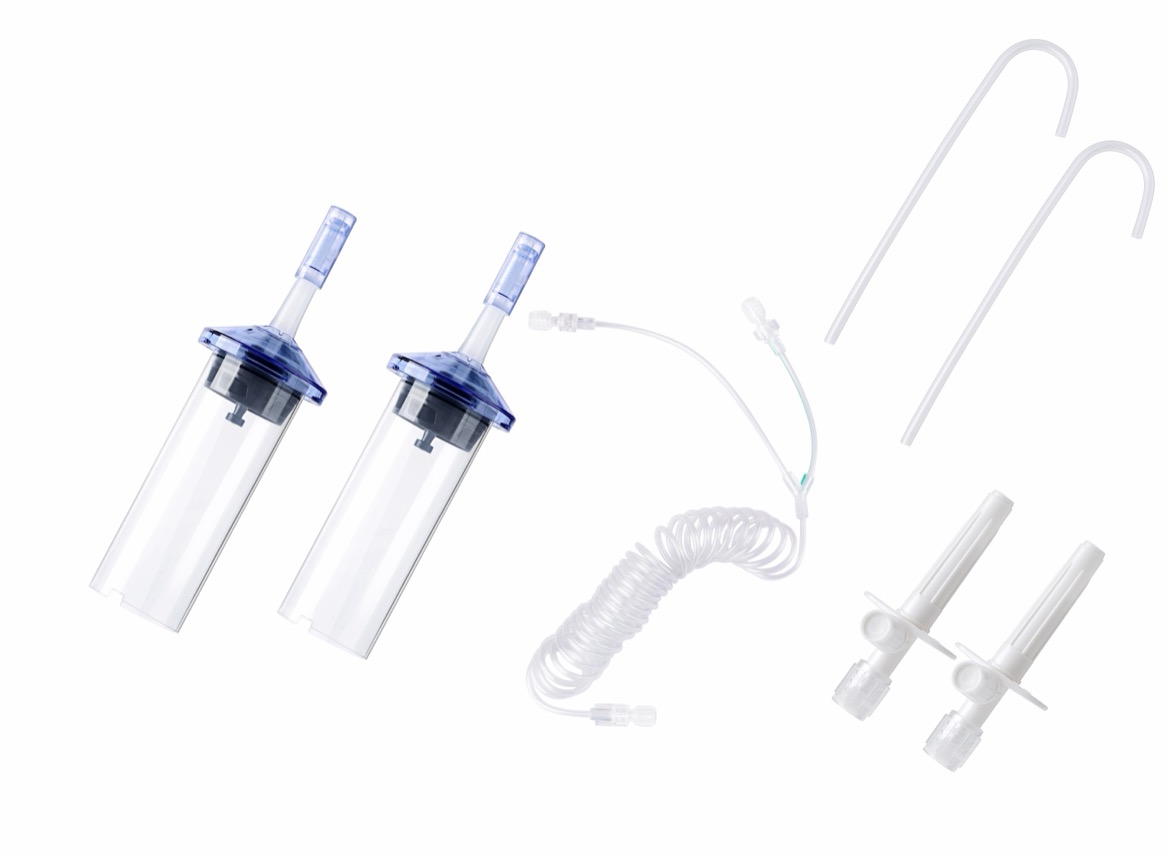
A CT injector syringe is used with a compatible contrast power injector to deliver contrast media, saline, or both during contrast-enhanced CT examinations. It is designed for the mechanical and pressure requirements of the intended injector system.
No. Standard manual syringes are not designed or labeled as replacements for CT injector syringes. Use only products specifically intended and validated for the relevant injector platform and clinical application.
Verify the injector manufacturer and exact model, the syringe configuration, volume, mechanical fit, outlet connection, associated tubing, and the manufacturer's compatibility documentation. Do not assume compatibility based only on visual similarity.
A kit may include one or more CT injector syringes, patient tubing, connecting tubes, adapters, caps, check valves, transfer accessories, or other components. Contents vary by manufacturer, injector model, and procedure configuration.
Dual-head injectors typically allow one syringe to hold contrast media and another to hold saline. This supports contrast-plus-saline protocols and may help improve workflow efficiency and bolus management according to the selected imaging protocol.
Most CT injector syringes are sterile, single-use consumables. Reuse or reprocessing should not occur unless a product is specifically labeled and approved for such use.
Distributors should request a compatibility list, product catalog, instructions for use, technical specifications, quality certificates, sterilization information, packaging details, minimum order requirements, lead-time information, and market-specific authorization documents.
1. U.S. Food and Drug Administration. *Technical Considerations for Pen, Jet, and Related Injectors Intended for Use with Drugs and Biological Products.* [View source]
2. U.S. Food and Drug Administration. *Glass Syringes for Delivering Drug and Biological Products: Technical Information to Support Drug Product Applications.* [View source]
3. U.S. Food and Drug Administration. *Guidance on the Content of Premarket Notification (510(k)) Submissions for Piston Syringes.* [View source]
4. American College of Radiology and Society for Pediatric Radiology. *Practice Parameter for the Use of Intravascular Contrast Media.* [View source]
5. American College of Radiology. *Supervision of Contrast Material Administration.* [View source]
6. U.S. Food and Drug Administration. *510(k) Premarket Notification Database: Disposable Angiographic Syringes for Use with Nemoto Angiographic Power.* [View source]