


close
Choose Your Site
Global
Social Media
Views: 212 Author: Maiwei Biotech Publish Time: 2026-08-29 Origin: Site


Content Menu
● Why CT Contrast Injection Requires a High Pressure Syringe
● High Pressure Syringe vs. Disposable Syringe
● Start With Injector Compatibility
>> Questions to Ask Before Ordering
● Match Pressure Ratings Across the Entire System
>> A Practical Pressure-Matching Rule
● Choose the Right Syringe Configuration
>> MRI and Angiography Are Different Applications
● Evaluate Material, Sterility, and Fluid Path Design
>> What Good Fluid-Path Design Looks Like
● Certifications Matter, but Documentation Matters More
● A Buyer's Selection Checklist
>> Product Fit
● Expert Insight: Avoid Buying Only on Unit Price
● How MAIWEI Supports CT Contrast Injection Workflows
● FAQ
>> 1. What is a high pressure syringe for CT contrast injection?
>> 2. Can a normal IV syringe or IV tube be used for CT power injection?
>> 3. How do I confirm whether a disposable syringe fits my CT injector?
>> 4. What is the difference between a single and dual CT syringe?
>> 5. Why is the connection tube pressure rating important?
>> 6. Does FDA 510(k) clearance mean a product is approved for every use?
>> 7. What information should an OEM buyer provide to a CT syringe manufacturer?
Choosing a high pressure syringe for CT contrast injection is not simply a matter of matching a barrel to an injector head. The right disposable syringe must work as part of a validated system that includes the injector, connection tubing, transfer device, contrast medium, saline, vascular access device, and clinical injection protocol.
For radiology departments, distributors, and OEM buyers, the practical question is this: Which disposable CT contrast injector syringe delivers the required compatibility, pressure performance, workflow efficiency, and documentation for the intended procedure? A well-chosen disposable syringe can support a predictable contrast-enhanced CT workflow. A poorly matched one can create leakage, failed injections, procedure delays, incompatibility risks, and unnecessary operating costs.
From a manufacturer's perspective, the most important lesson is clear: a CT high pressure syringe should never be evaluated as an isolated product. It should be assessed as a complete disposable contrast delivery pathway.
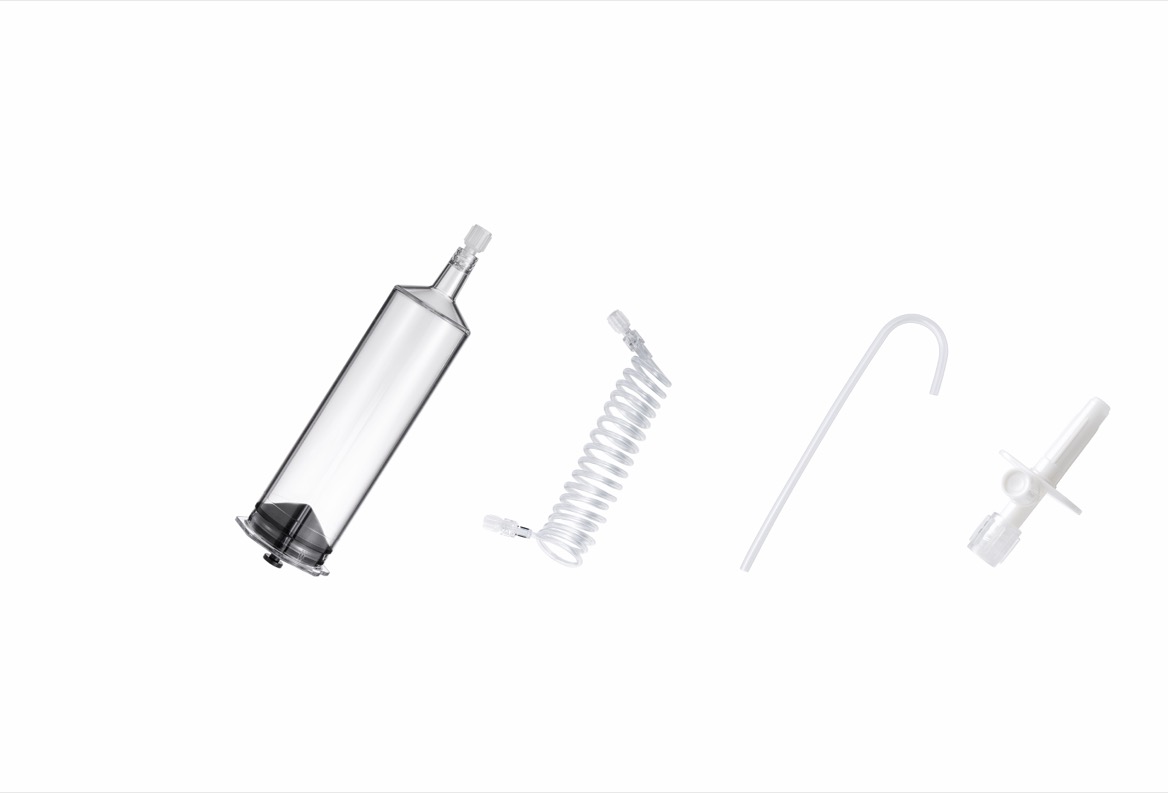
Contrast-enhanced CT depends on delivering iodinated contrast media at controlled flow rates. In many routine CT and CT angiography protocols, the injector must deliver contrast quickly enough to achieve the required vascular or tissue enhancement during a narrow scan window.
That is why a standard manual syringe or ordinary IV infusion set is not an appropriate substitute for a disposable high pressure syringe for CT contrast injection.
A CT power injection setup commonly includes:
- A high pressure disposable syringe installed on the CT injector
- A high pressure connection tube between the injector and patient access
- A contrast media transfer component, such as a spike or J-tube
- A saline delivery pathway for saline flush protocols
- A compatible vascular access device
- A programmed injector protocol for volume, flow rate, delay, and pressure limit
The disposable syringe holds and delivers contrast media or saline. The injector generates the mechanical force. The tubing and connectors must withstand the operating pressure. The vascular access device must also be suitable for the planned injection parameters.
This system-level perspective matters because CT power injectors can operate at pressures far above those tolerated by conventional IV tubing. A Pennsylvania Patient Safety Authority advisory notes that typical CT power injector peak pressures may range from approximately 300 to 325 psi and may rise further when there is resistance, an obstruction, or poor access patency. Conventional IV sets, by comparison, may tolerate only around 10 to 15 psi. That mismatch can lead to rupture, leakage, contamination, cancelled studies, and potential patient or staff exposure.
The two terms are closely related, but they describe different aspects of the product.
| Term | What It Describes | What Buyers Should Verify |
|---|---|---|
| High pressure syringe | The syringe's ability to perform under pressure generated by a power injector | Pressure resistance, structural integrity, connector security, compatibility validation |
| Disposable syringe | The product's single-use clinical and workflow role | Sterility, packaging, traceability, intended use, disposal instructions |
| CT contrast injector syringe | A syringe designed for use with CT contrast injection systems | Injector-specific fit, barrel configuration, volume, protocol suitability |
| Connection tube | The high pressure fluid pathway from syringe to patient | Pressure rating, length, connector type, air management, configuration |
| Dual syringe set | A two-barrel configuration for contrast and saline | Contrast/saline compatibility, injector matching, Y-connection design |
In practice, the ideal product is both: a single-use, sterile, high pressure syringe designed and validated for the relevant CT injector system.
A disposable designation does not automatically prove high pressure suitability. Likewise, a high pressure rating alone does not prove that a syringe will fit a specific injector model or work with its intended tubing configuration. Buyers must verify both.
Compatibility is the first purchasing filter. A disposable syringe may appear visually similar to another model while differing in flange geometry, plunger interface, locking mechanism, barrel volume, connector layout, or intended injector platform.
Never select a syringe based only on a product photograph, nominal volume, or an informal statement that it is "universal."
Instead, request a documented compatibility matrix covering:
- Injector manufacturer and model
- Single-head or dual-head injector configuration
- Syringe barrel volume
- Syringe mounting interface
- Plunger engagement mechanism
- Compatible connection tubing
- Maximum intended pressure
- Intended contrast and saline configuration
- Applicable instructions for use
For example, publicly available regulatory documentation for disposable angiographic syringe systems shows that compatibility can vary across CT, MRI, and angiography injector platforms. It also shows that products with similar applications may have different syringe capacities, ranging from 60 mL and 65 mL dual syringes to 100 mL, 125 mL, 150 mL, and 200 mL configurations.
This is why a "one-size-fits-all" purchasing strategy often creates avoidable risk. A 200 mL single syringe for one CT injector platform is not automatically interchangeable with a 200 mL syringe designed for another platform.
1. Which exact injector model is installed in the hospital?
2. Is the injector a single-head CT system or a dual-head contrast/saline system?
3. Does the proposed disposable syringe have documented compatibility with that injector?
4. Is the connection tube part of the validated disposable set?
5. Is the intended use CT, MRI, angiography, or a combination of modalities?
6. Are local regulatory registration and import requirements met?
7. Can the supplier provide lot traceability and technical documentation?
For distributors, this information should be collected before preparing a quotation. For hospitals, it should be included in the procurement specification. For OEM projects, it should be embedded in product-development and verification plans.
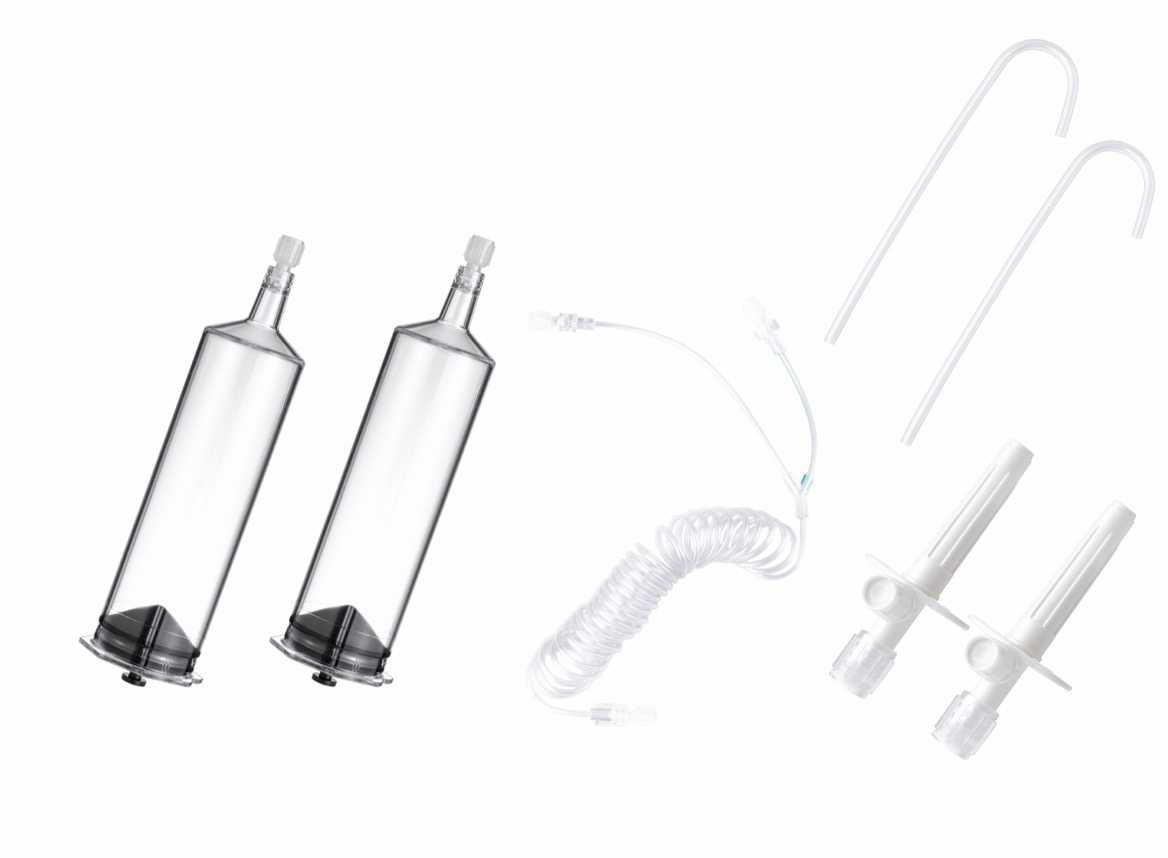
A high pressure syringe is only as reliable as the lowest-rated component in the injection pathway.
The relevant components include:
- Syringe barrel
- Plunger and piston assembly
- Syringe-to-tube connection
- High pressure connection tube
- Y-tube or T-tube, if used
- Transfer spike or transfer set, where applicable
- Luer-lock connectors
- Extension components
- Vascular access device
- Injector pressure limit setting
The pressure rating of every component should be understood before clinical use. The injector pressure limit must not exceed the labeled pressure capability of the syringe, tubing, connector, or vascular access device.
This is not an administrative detail. It is a direct patient-safety and workflow issue.
The patient safety advisory specifically recommends confirming the maximum pressure and flow-rate labeling of each vascular access device, understanding the injector pressure limit, and ensuring the programmed limit does not exceed the maximum labeled pressure of the tubing or access device.
Use the following principle:
Maximum permitted system pressure≤lowest labeled pressure rating of any component
For example, if:
- Syringe rating: 400 psi
- Connection tube rating: 400 psi
- Y-connector rating: 400 psi
- Vascular access device rating: lower than the planned setting
Then the vascular access device may become the limiting factor. The correct response is not to assume the system is safe because the syringe and tubing are rated at 400 psi. The clinical team must follow the access-device labeling and the approved injection protocol.
Regulatory documentation for high pressure disposable syringe systems demonstrates that syringes and connection tubes may be available in different pressure categories, such as 300 psi, 400 psi, and 1,200 psi. The exact rating must be associated with the specific product model and intended injector application—not generalized across all products from a supplier.
The best disposable syringe configuration depends on the imaging workflow and the injector system in use.
A single syringe configuration is generally used when one barrel delivers contrast media or when the workflow uses a separate approach for saline administration.
Key evaluation points include:
- Required contrast volume
- Syringe capacity
- Injector platform
- Connection tube length
- Patient positioning needs
- Available saline flush protocol
- Departmental throughput
Single syringes are often available in capacities such as 100 mL, 125 mL, 150 mL, or 200 mL. The correct choice should be based on the injector design and approved protocol rather than on the assumption that larger capacity is always better.
Dual syringe systems are commonly used for contrast-plus-saline protocols. One syringe holds iodinated contrast media, while the second contains saline for flushing.
The benefits can include:
- More controlled saline flush delivery
- Improved use of contrast media in the tubing pathway
- Support for multiphase imaging protocols
- More consistent workflow for CTA and contrast-enhanced CT
- Reduced manual handling after contrast injection
A dual syringe system typically requires a Y-shaped or T-shaped connection arrangement. The design must maintain secure fluid separation before delivery and reliable connection during the programmed injection sequence.
Although a supplier may manufacture CT, MRI, and angiography consumables, buyers should not assume cross-modality interchangeability.
MRI contrast injection may use different syringe volumes, injector interfaces, and pressure requirements than CT. Angiography often involves substantially different pressure expectations, procedural environments, and product specifications.
A capable manufacturer should provide separate compatibility charts and technical files for CT, MRI, and angiography product families.
When choosing a disposable CT syringe, the material and fluid-contact design matter as much as the external shape.
A purchasing review should examine:
- Barrel material
- Piston material
- Lubrication system
- Connector material
- Tube material
- Latex status, where relevant
- DEHP-free options, where required
- Sterilization method
- Packaging integrity
- Expiry dating
- Particulate and endotoxin control
- Biocompatibility documentation
Public regulatory documentation for one high pressure disposable syringe system lists polypropylene or polyethylene terephthalate syringe barrels, polyisoprene rubber pistons, and connection tubes made from PVC or polyurethane options. It also describes testing related to liquid leakage, air leakage, flow characteristics, connector performance, cytotoxicity, irritation, sensitization, blood interaction, endotoxin limits, and sterilization validation.
For buyers, the takeaway is not that one material is universally superior. The key is that the manufacturer should provide evidence that the final finished system—not merely the raw materials—has been evaluated for its intended use.
A well-designed disposable syringe system should support:
- Clear visual inspection of fluid level
- Readable graduation marks
- Smooth plunger movement
- Secure connection to the injector
- Reliable Luer-lock engagement
- Reduced leakage risk under intended pressure
- Controlled priming and air removal
- Stable tubing during patient positioning
- Simple separation and disposal after the procedure
Air management deserves special attention. Before injection, the operator should follow the device instructions for filling, priming, and removing air from the syringe and tubing. This must be performed according to the facility's approved protocol and the manufacturer's instructions for use.
For global buyers, certifications are an important part of supplier evaluation. However, a certificate alone does not answer every purchasing question.
A robust supplier assessment should include:
| Documentation Area | Why It Matters |
|---|---|
| ISO 13485 certificate | Indicates a medical-device quality management system framework |
| CE documentation | Supports market access where applicable and should match the product scope |
| FDA 510(k) information | Relevant for products cleared for the U.S. market, where applicable |
| Product-specific IFU | Defines intended use, limitations, compatibility, and handling |
| Sterilization validation | Supports confidence in sterile single-use products |
| Biocompatibility information | Supports evaluation of patient-contact materials |
| Pressure and leak test data | Confirms performance under labeled operating conditions |
| Compatibility matrix | Prevents injector-to-syringe mismatch |
| Lot traceability records | Supports complaint handling, recall readiness, and quality control |
| Packaging validation data | Helps protect sterility through shelf life and transport |
FDA 510(k) clearance should be understood accurately. A 510(k) determination means the device has been found substantially equivalent to a legally marketed predicate for the stated indications. It does not mean that every product from a company, every product configuration, or every market claim has been independently approved by the FDA.
For MAIWEI INC., presenting ISO 13485, CE, and FDA 510(k)-related documentation should be accompanied by clear model-specific statements. Buyers should be able to identify exactly which product family, model number, intended use, and market authorization the documentation covers.
Use this checklist when evaluating a high pressure syringe for CT contrast injection.
- Confirm the exact CT injector brand and model.
- Confirm whether the injector requires a single or dual syringe.
- Verify syringe volume and physical fit.
- Obtain a written compatibility statement.
- Confirm the matching connection tube model.
- Verify the labeled pressure rating of the syringe.
- Verify the pressure rating of the tubing and connectors.
- Review the injector's pressure-limit capability.
- Confirm the vascular access device is appropriate for the planned protocol.
- Never use conventional IV tubing in place of a specified high pressure connection set.
- Review contrast and saline workflow needs.
- Select an appropriate tubing length for scanner-room layout.
- Consider patient positioning and injector placement.
- Confirm priming and air-removal procedures are straightforward.
- Choose packaging that supports efficient setup without compromising aseptic technique.
- Request ISO 13485 certification.
- Review applicable CE and FDA documentation.
- Ask for product drawings, IFU, and compatibility charts.
- Check batch traceability and complaint-response processes.
- Request samples for non-clinical fit evaluation where permitted.
- Assess lead time, supply continuity, and OEM customization capability.
In tender evaluations, the lowest disposable syringe price can appear attractive. But the true cost of a CT injector consumable includes much more than the purchase price.
Consider the total operational impact:
- Failed injection or repeat scan risk
- Contrast wastage
- Setup time
- Training burden
- Inventory complexity
- Product availability
- Documentation gaps
- Complaint handling
- Compatibility uncertainty
- Emergency substitution risk
A lower-cost syringe that creates installation difficulty, inconsistent fit, or uncertain documentation can cost more over time than a properly validated product with stable supply and technical support.
For distributors, the strongest commercial position is not simply "compatible consumables at a competitive price." It is a complete support package:
- Injector compatibility guidance
- Product selection by modality
- Clear technical specifications
- Responsive quality documentation
- Stable packaging and labeling
- Batch traceability
- Reliable global delivery
- OEM and private-label flexibility when required
MAIWEI INC. develops and manufactures high pressure injector consumables for CT, MRI, and angiography applications, including disposable high pressure syringes, connection tubing, and supporting consumables.
For hospitals, distributors, and OEM customers, the relevant value is a product portfolio designed around the complete contrast delivery pathway rather than a single component in isolation.
MAIWEI can support procurement and product-selection discussions with:
- CT injector disposable syringe options
- Single and dual syringe configurations
- High pressure connection tubing
- Contrast and saline transfer accessories
- Compatibility-oriented product matching
- Documentation for quality and market-access review
- OEM and customized packaging opportunities
- Export supply experience across more than 60 countries and regions
The right selection process begins with your injector model, preferred procedure configuration, required pressure range, local regulatory needs, and expected purchasing volume.
The right disposable syringe for CT contrast injection is one that is documented for the correct injector, rated for the intended injection pathway, paired with compatible high pressure tubing, and supported by reliable quality documentation.
Do not make the decision based on barrel volume or price alone. Verify the complete system: syringe, injector, tubing, connectors, transfer device, vascular access compatibility, pressure limit, sterility, and traceability.
If you are sourcing CT high pressure syringes, connection tubes, or complete contrast injector consumable sets, contact MAIWEI INC. with your injector brand, model, syringe configuration, required quantities, and destination market. A compatibility-focused recommendation can help you select a safer, more efficient, and more commercially reliable solution.
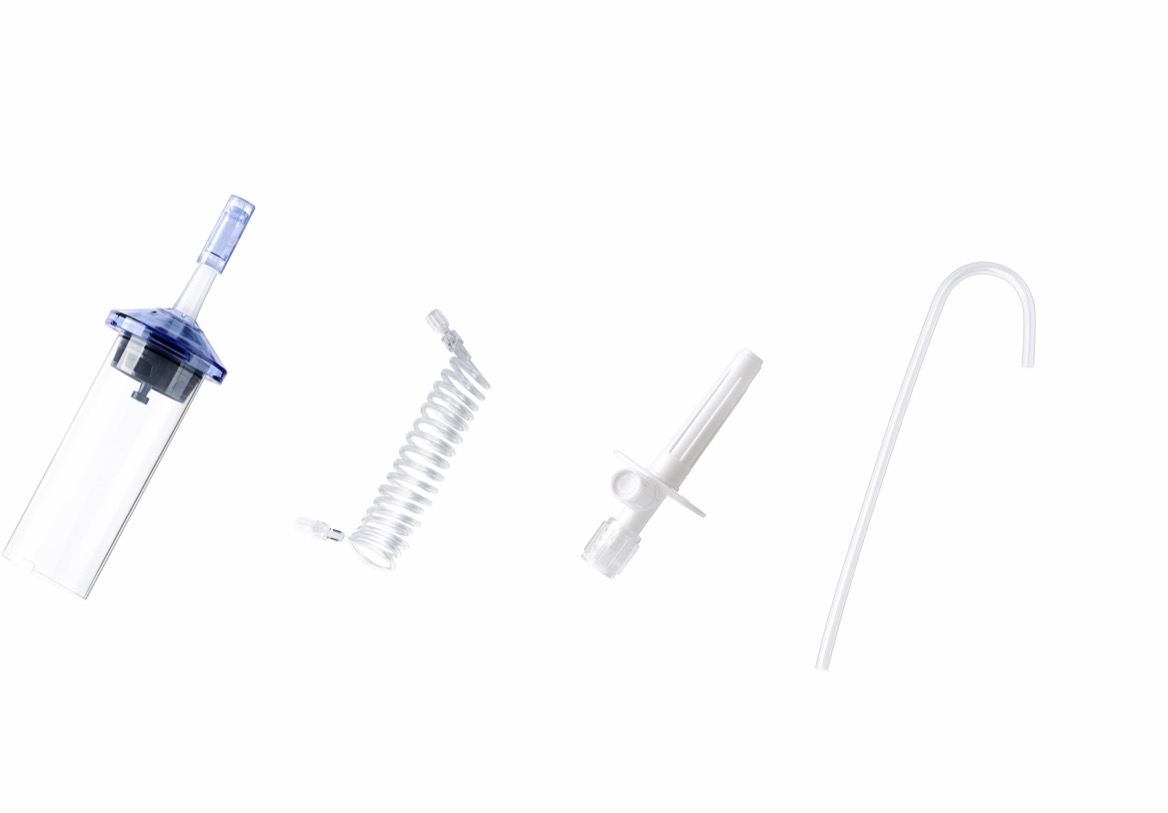
A high pressure syringe for CT contrast injection is a sterile disposable syringe designed to be installed on a compatible CT power injector. It holds and delivers contrast media or saline according to the programmed injection protocol.
No. Standard IV sets may not withstand the pressure generated during CT power injection. High pressure-rated syringes, tubing, connectors, and compatible vascular access devices should be used according to their labeling and the facility's approved protocol.
Ask the supplier for a written compatibility matrix that identifies the exact injector brand and model, syringe volume, configuration, compatible tubing, and intended pressure rating. Do not rely only on appearance or general compatibility claims.
A single syringe system typically uses one barrel for contrast media. A dual syringe system uses two barrels, commonly one for contrast media and one for saline, enabling programmed contrast-and-saline delivery.
The connection tube is part of the pressurized fluid pathway. If its pressure rating is lower than the injector setting or incompatible with the procedure, leakage or rupture may occur. The maximum permitted system pressure must not exceed the lowest-rated component.
No. A 510(k) decision indicates substantial equivalence for the stated device and intended use. Buyers should confirm that the documentation applies to the exact product model and market application being purchased.
An OEM buyer should provide the target injector models, syringe capacities, tubing configuration, pressure requirement, packaging design, labeling language, target market, projected annual quantity, and applicable regulatory requirements.
1. Pennsylvania Patient Safety Authority. [CT Contrast Media Power Injectors Can Rupture Conventional IV Sets Advisory].
2. U.S. Food and Drug Administration. [510(k) Summary K192657: Sterile High-pressure Angiographic Syringes for Single-use].
3. European Society of Urogenital Radiology Contrast Media Safety Committee. [ESUR Guidelines on Contrast Media].
4. American College of Radiology. [ACR Manual on Contrast Media].
5. University of California San Francisco Radiology. [CT and X-ray Contrast Guidelines Information].