


close
Choose Your Site
Global
Social Media
Views: 231 Author: Maiwei Biotech Publish Time: 2026-11-06 Origin: Site


Content Menu
● What Standardized Contrast Injector Syringe Procurement Actually Means
● 1. Build a Contrast Injector Syringe Compatibility Matrix
>> Document Compatibility at the Product-Code Level
>> Evaluate the Complete Injection Pathway
● 2. Create a Standard Technical Specification
>> Define Mandatory Requirements Clearly
>> Keep Clinical Protocol Decisions Separate
● 3. Qualify Suppliers Beyond the Certificate Folder
>> Request a Product-Specific Evidence Package
>> Assess Communication as a Supply Capability
● 4. Run a Controlled Evaluation Before Conversion
>> Separate Handling Evaluation From Clinical Authorization
● 5. Protect Injection Safety During Standardization
>> Distinguish Single-Use Products From Dedicated Systems
● 6. Compare Total Cost per Completed Examination
>> Use Local Data Rather Than Unverified Savings Claims
● 7. Standardize Inventory and Substitution Controls
>> Establish Controlled Substitution Rules
>> Set Stock Levels From Actual Demand
● 8. Use a Practical 90-Day Implementation Roadmap
● 9. Monitor Performance and Control Changes
>> 1. Can one contrast injector syringe fit every CT injector?
>> 2. Should a center standardize on one supplier?
>> 3. Does FDA 510(k) clearance cover every product from a manufacturer?
>> 4. What should determine connecting-tubing selection?
>> 5. Can replacing patient tubing make a single-use syringe reusable?
>> 6. How often should the approved procurement list be reviewed?
CT imaging centers can standardize contrast injector syringe procurement by creating an approved compatibility matrix, qualifying suppliers against documented requirements, and controlling how products enter clinical use. The goal is not simply to purchase fewer syringe models. It is to make every purchasing decision repeatable, traceable, and appropriate for the injector system and clinical workflow.
From a manufacturing and procurement perspective, the most useful principle is standardization without forced uniformity. A center operating several injector platforms may still need multiple syringe configurations. What should remain consistent is the evidence required to approve them.
This guide explains how to build that system—from technical specifications and supplier assessment to inventory planning and ongoing performance review.
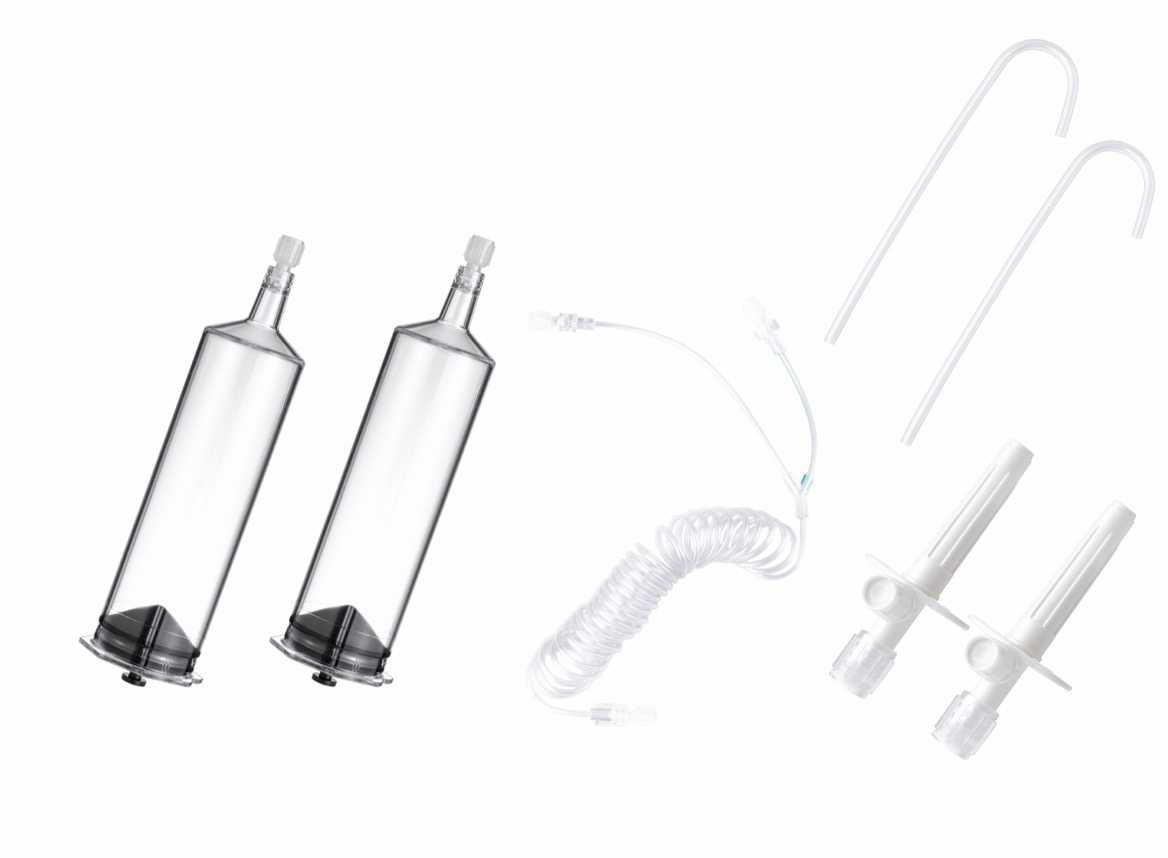
Standardization means defining approved products, purchasing criteria, and substitution rules before an order becomes urgent.
It does not mean assuming that syringes with similar capacities are interchangeable. Nor does it mean selecting one supplier regardless of equipment differences.
A practical procurement framework should establish:
- Which syringe and tubing configurations belong to each injector model.
- What technical and regulatory documentation supports their use.
- Who can approve a new product or substitution.
- How receiving teams verify deliveries.
- How staff report performance concerns and identify affected lots.
The result is an approved catalog that clinical, purchasing, and warehouse teams can use consistently.
Start with the installed injector base, not the supplier's product catalog.
Record each injector's manufacturer, model, configuration, location, and current consumables. Include backup equipment and less frequently used systems, since emergency substitutions often begin with incomplete equipment records.
A statement such as "compatible with major CT injectors" is not enough for purchasing approval.
Request documentation identifying the exact consumable product code and the injector models it supports. Review that information against the injector's instructions and the consumable's instructions for use.
| Procurement field | Information to record | Approval purpose |
|---|---|---|
| Injector platform | Manufacturer, model, configuration | Identifies the intended equipment |
| Syringe | Product code, capacity, mounting interface | Prevents selection by appearance alone |
| Connecting tubing | Product code, length, configuration | Defines the approved fluid pathway |
| Operating limits | Labeled pressure and flow restrictions | Supports protocol compatibility review |
| Packaging | Sterile presentation, kit contents, expiry | Supports receiving and storage controls |
| Documentation | Instructions, revision, regulatory evidence | Creates a reviewable approval record |
The syringe is only one component of a power-injection system.
Tubing, connectors, and vascular access devices also have operating restrictions. A syringe's pressure rating does not automatically establish an acceptable pressure limit for the entire pathway.
Have clinical and technical reviewers assess the proposed assembly against its labeling and intended protocols. Do not let a purchasing spreadsheet become a substitute for clinical judgment.
Once compatibility is documented, translate it into a purchasing specification.
Organize requirements into three categories:
1. Mandatory conditions that every approved product must satisfy.
2. Preferences that improve handling or inventory efficiency.
3. Optional features that apply only to selected workflows.
This separation prevents useful preferences from obscuring non-negotiable requirements.
A contrast injector syringe specification should address:
- Intended use and documented injector compatibility.
- Syringe capacity and relevant interface dimensions.
- Applicable pressure and flow limitations.
- Tubing configuration and connector requirements.
- Sterility, packaging integrity, and labeled shelf life.
- Lot identification and traceability.
- Required instructions and labeling language.
- Destination-market regulatory requirements.
Avoid copying specifications from one incumbent product without evaluating their purpose. Overly narrow requirements can exclude suitable alternatives, while vague requirements can admit unsuitable products.
Procurement should support approved protocols, not define them.
For example, flow selection depends partly on the vascular access device and clinical circumstances. Buying a higher-rated syringe does not authorize higher injection settings.
The purchasing team's responsibility is to provide accurately specified products. Clinical leadership retains responsibility for their appropriate use.
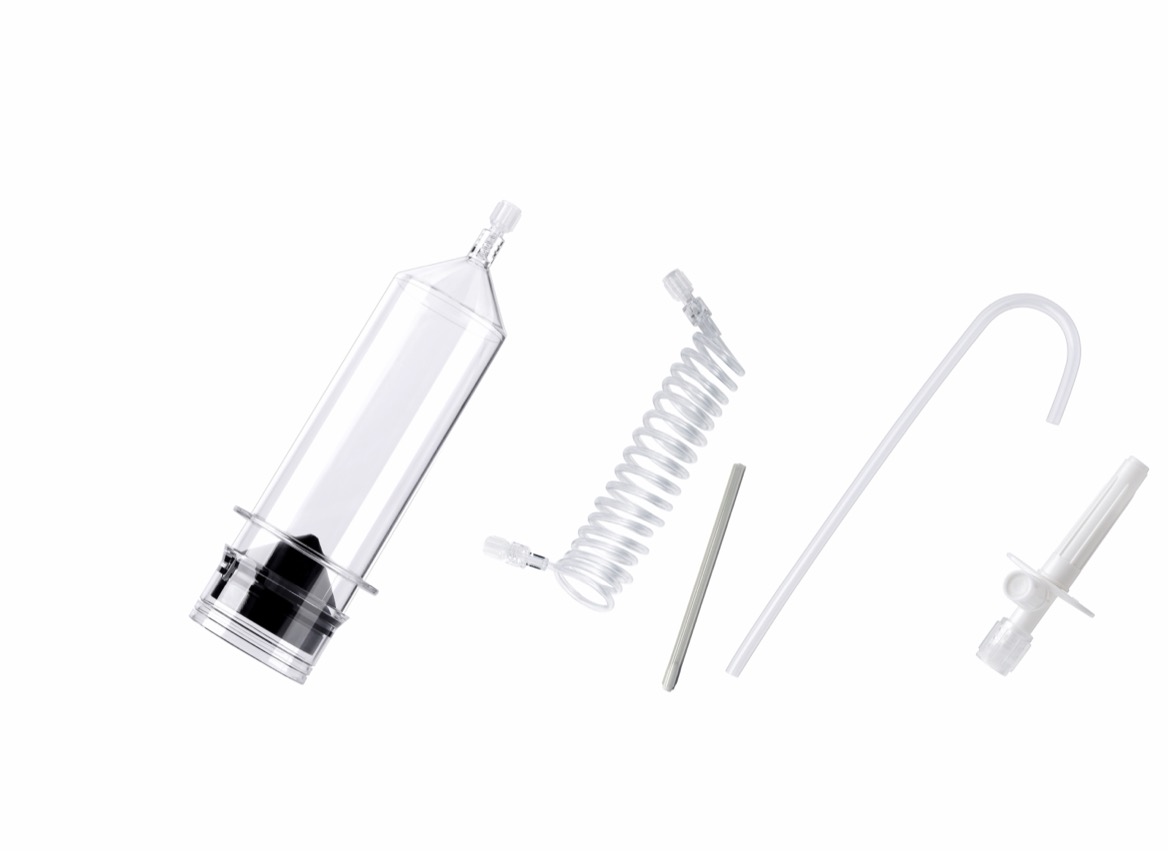
Supplier qualification should establish whether a manufacturer can consistently supply the specific products being considered.
Certificates matter, but they answer different questions.
ISO 13485 concerns medical-device quality management systems. FDA 510(k) clearance concerns a particular device's substantial equivalence to a legally marketed device. Neither should be treated as blanket confirmation that every catalog item is suitable for every application.
Ask shortlisted suppliers for:
- The legal manufacturer's identity and manufacturing location.
- Relevant quality-system documentation and scope.
- Product-specific market-access documentation, where applicable.
- Current instructions for use and compatibility information.
- Supporting performance and sterilization documentation.
- Shelf-life and packaging-integrity evidence.
- Complaint, recall, and corrective-action procedures.
- Written product-change notification arrangements.
For U.S. procurement, verify the relevant clearance and its relationship to the offered device where a 510(k) is required. Describe cleared devices as "FDA cleared," rather than treating clearance as general FDA approval.
For other markets, have the responsible regulatory reviewer confirm the applicable documentation.
During qualification, evaluate how clearly the supplier answers technical questions.
Can it identify a product revision? Explain a compatibility limitation? Trace a sample to its manufacturing lot?
These interactions do not replace formal evidence, but they help determine whether the supplier can support an investigation after delivery.
Documentation review should precede hands-on evaluation.
Once the relevant reviewers accept the evidence, establish a written evaluation plan. Identify the injector models, proposed consumables, authorized staff, acceptance criteria, and escalation process.
Start with appropriate nonclinical checks under facility procedures.
These may assess:
- Packaging identification and opening.
- Syringe loading and removal.
- Visibility during preparation.
- Tubing reach and connector handling.
- Clarity of product instructions.
- Differences from the current setup.
Any clinical introduction should occur only after the necessary approvals and staff preparation.
Define stop criteria in advance, such as unexplained leakage, loading difficulties, recurrent alarms, damaged packaging, or uncertainty about intended use. An evaluation should generate evidence, not pressure staff to accept a purchasing decision already made.
Lower acquisition costs must never depend on practices inconsistent with device labeling or infection-prevention requirements.
CDC guidance states that syringes must not be used to administer medication to more than one patient, including through intervening intravenous tubing. Changing a needle or downstream connection does not make reuse of a contaminated syringe acceptable.
Do not treat a conventional single-use syringe as a multi-patient consumable because another component has been replaced.
Where a dedicated system has specific authorized multi-patient labeling, review the complete system instructions and applicable requirements. Do not transfer those conditions to unrelated syringe-and-tubing combinations.
Procurement records should make intended use visible. Infection-prevention personnel should participate whenever a proposed product changes preparation, connection, replacement, or disposal practices.
Unit price is easy to compare. Operational value requires more context.
A useful purchasing model considers:
> Total relevant consumable and handling costs ÷ completed contrast-enhanced examinations.
Depending on the facility, relevant costs may include syringes, tubing, freight, expired inventory, additional preparation time, discarded kits, and investigation-related handling.
Keep clinical outcomes and adverse events under the facility's established review processes. Do not reduce them to purchasing metrics.
Record actual consumption and workflow observations before projecting savings.
For example, a lower-priced kit may create no meaningful advantage if it produces more unused components or requires additional stock lines. Conversely, a well-matched kit may simplify ordering without being the cheapest individual syringe.
Label assumptions clearly. Separate measured results from estimates, and avoid presenting supplier projections as demonstrated facility savings.
An approved product list is effective only when ordering and receiving systems enforce it.
Give each approved configuration an internal item code linked to its manufacturer's product code, compatible injector, pack size, and purchasing status.
Distributors should not substitute products based only on capacity, connector appearance, or a broad compatibility claim.
Require approval before accepting a different manufacturer, product code, kit configuration, or material change.
At receiving, check:
- Product identity against the purchase order.
- Lot and expiry information.
- Packaging condition.
- Agreed remaining shelf life.
- Availability of traceability records.
Quarantine discrepancies until the designated reviewer resolves them.
Base reorder points on consumption, replenishment lead time, and an explicitly chosen safety-stock allowance.
Review those assumptions when examination volume, delivery reliability, or injector availability changes.
A backup supplier is useful only if its products are already qualified. An unreviewed emergency alternative is not a dependable contingency plan.
The following is a suggested planning framework, not an industry benchmark. Adjust it to the facility's approval requirements.
| Period | Main work | Deliverable |
|---|---|---|
| Days 1–15 | Audit injectors, consumables, stock, and purchasing records | Installed-base and product inventory |
| Days 16–30 | Define specifications and collect supplier evidence | Draft compatibility matrix |
| Days 31–60 | Complete reviews and controlled evaluations | Approved product decisions |
| Days 61–75 | Train staff and update purchasing controls | Controlled catalog and procedures |
| Days 76–90 | Review early performance and resolve exceptions | Baseline dashboard and action list |
Assign a named owner to each deliverable. Include representatives from radiology, procurement, quality, infection prevention, and technical services as appropriate.
The most important milestone is not the first order. It is the point at which staff know which products are approved, why they are approved, and how to handle exceptions.
Standardization requires maintenance after implementation.
A compact dashboard can track:
- Orders placed outside the approved catalog.
- Stockouts and urgent shipments.
- Expired or damaged inventory.
- Complaints by product and lot.
- Preparation or loading issues.
- Supplier response and resolution times.
Define the denominator for each rate. "Five complaints" means little without knowing how many units were used and what those complaints involved.
Require review when a supplier changes relevant materials, manufacturing arrangements, sterilization, packaging, labeling, or compatibility claims. Written notification should trigger an impact assessment rather than automatic acceptance.
MAIWEI INC. focuses on the development and manufacture of high-pressure injector syringes, connecting tubing, and related consumables for CT, MRI, and angiography applications.
According to company-provided information, MAIWEI serves customers in more than 60 countries and regions and reports ISO 13485, CE, and FDA 510(k) credentials. Procurement teams should verify the documentation and scope applicable to each proposed product and destination market.
For CT imaging centers, distributors, and OEM customers, the most useful starting point is an equipment-specific discussion.
Contact MAIWEI INC. with your injector manufacturer and model, syringe capacity, tubing requirements, annual consumption, and destination market. Request a product-specific compatibility review, relevant documentation, and evaluation samples before committing to a supply conversion.
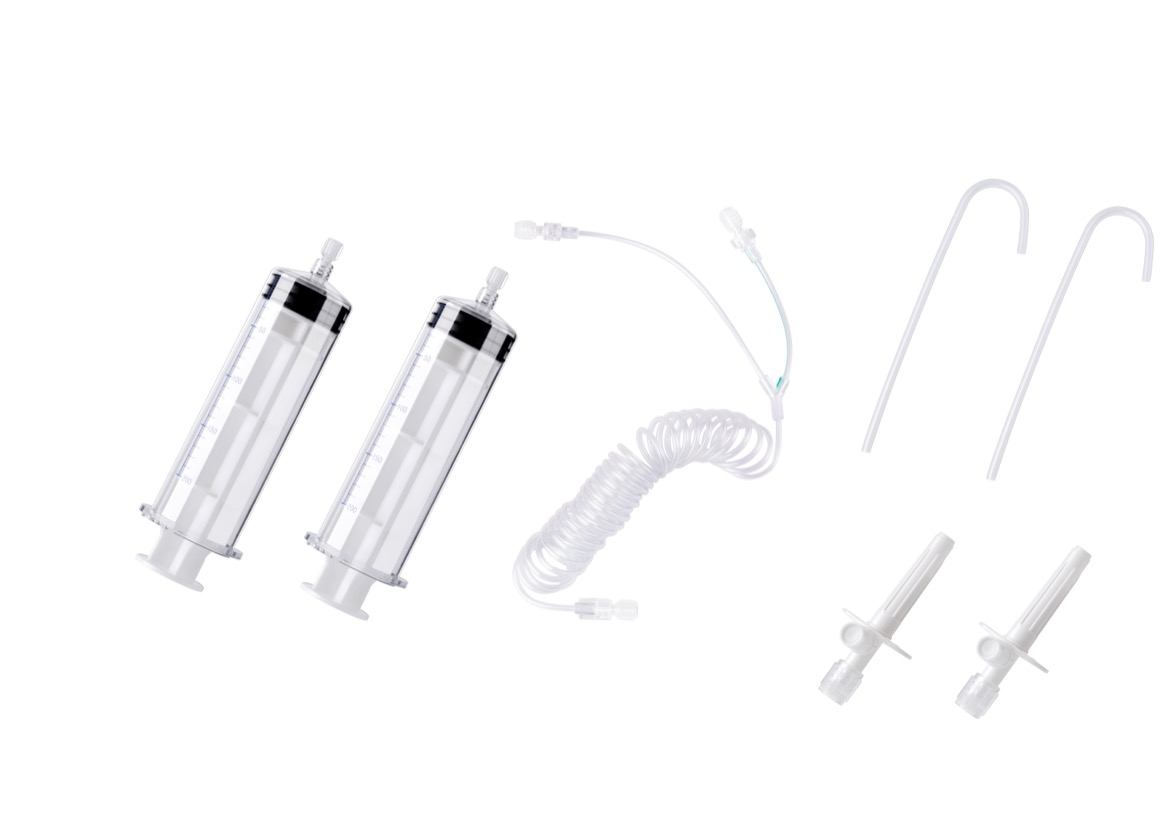
Do not assume universal compatibility. Approval should identify the exact syringe product code and supported injector models, with documentation reviewed against the relevant instructions.
Not necessarily. Standardize specifications and approval criteria first. A qualified secondary supplier may support continuity, provided its products undergo the same review and are not treated as automatic substitutes.
No. A clearance applies to the device covered by that submission. Buyers should verify that the offered product corresponds to the relevant documentation rather than relying on a company-wide claim.
Consider intended use, injector compatibility, pressure and flow restrictions, connector configuration, length, and clinical workflow. Review the complete injection pathway rather than selecting tubing independently.
No. Replacing downstream tubing does not authorize reuse of a single-use syringe between patients. Follow applicable labeling and infection-prevention requirements.
Set a documented review schedule based on local risk and purchasing activity. Also reassess after significant product changes, equipment changes, recurring complaints, supply disruption, or relevant safety information.
1. Centers for Disease Control and Prevention. "Preventing Unsafe Injection Practices." Guidance on syringe reuse, aseptic technique, and medication-container handling. [cdc]
2. U.S. Food and Drug Administration. "510(k) Clearances." Explanation of premarket notification and substantial-equivalence determinations. [fda]
3. U.S. Food and Drug Administration. "Overview of Device Regulation." Device classification, marketing requirements, and the Quality Management System Regulation incorporating ISO 13485:2016. [fda]
4. Indrajit, I. K., et al. "Pressure Injectors for Radiologists: A Review and What Is New." Review of injector components, pressure tubing, connectors, and operating considerations. [pmc.ncbi.nlm.nih]
5. University of California, San Francisco, Department of Radiology and Biomedical Imaging. "CT and X-ray Contrast Guidelines Information." Institutional guidance on intravenous contrast administration and high-pressure tubing connections. [radiology.ucsf]