


close
Choose Your Site
Global
Social Media
Views: 264 Author: Maiwei Biotech Publish Time: 2026-11-14 Origin: Site


Content Menu
● What Plunger Alignment Means in a Contrast Injector Syringe
● How Plunger Alignment Affects Flow, Pressure, and Seal Integrity
>> Flow onset and delivered volume are separate measurements
>> Mechanical resistance is not the same as fluid pressure
>> Uneven seal loading can undermine leak resistance
● Why CT, MRI, and Angiography Syringes Need Model-Specific Validation
● A Practical Bench Evaluation for Plunger Alignment
>> Measure when delivery starts, not just how much comes out
>> Use a controlled comparison to investigate a delayed start
● What Radiology Teams and Buyers Should Check Before Use
● Request a Syringe Compatibility Review From MAIWEI INC.
>> 1. Can a contrast injector syringe fit but still have poor plunger alignment?
>> 2. Does a high-pressure alarm prove the syringe plunger is misaligned?
>> 3. Can plunger misalignment change flow timing without changing total volume?
>> 4. Are two 200 mL contrast injector syringes interchangeable?
>> 5. Does every power injector require manual plunger alignment?
>> 6. What is the most useful evidence when qualifying an alternative syringe?
Plunger alignment affects how reliably a contrast injector syringe translates drive movement into fluid delivery. When the syringe is fully seated and the injector's drive ram engages the plunger as designed, force is transferred along the intended axis. If the syringe sits off-center or the ram does not fully engage, some of that force may act sideways or take up mechanical play before moving the plunger. Depending on the design and severity of the mismatch, the result may be inconsistent movement, seal leakage, delayed flow onset, or an injection that cannot start or finish as programmed.
From a manufacturing perspective, the key question is not simply, "Does the syringe fit?" It is, "Does this exact syringe and injector combination deliver repeatably across the conditions it is labeled for?" That distinction matters to radiology teams, distributors, and OEM buyers evaluating high-pressure syringes for CT, MRI, and angiography.
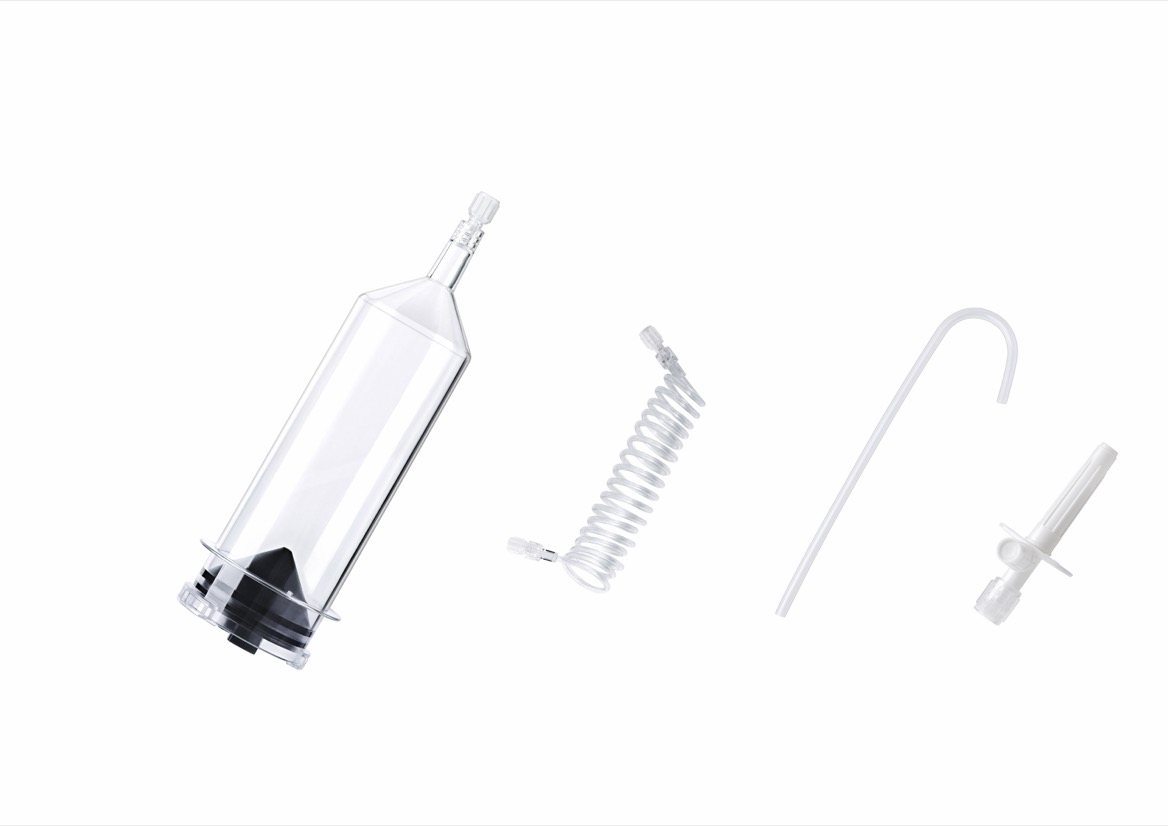
Plunger alignment involves three mechanical relationships: how the barrel seats in the injector head, how the drive ram engages the plunger, and how the plunger and its seal travel inside the barrel. The ram is the injector component that moves the plunger. The seal keeps fluid ahead of the plunger so that forward travel displaces it toward the outlet.
A syringe can appear to sit correctly while the ram-to-plunger connection still has excess play. Conversely, a well-made plunger and seal cannot compensate for a barrel that is not fully retained. That is why it is useful to separate three ways the parts can be out of position:
| Alignment issue | What it means | What an evaluator would check |
|---|---|---|
| Radial offset | The ram and plunger centerlines are shifted sideways relative to each other. | Off-center contact, asymmetric wear, or a change in travel force. |
| Angular misalignment | The plunger or seated barrel is tilted relative to the intended direction of travel. | Rocking, uneven seal contact, or force changes at different stroke positions. |
| Axial play | There is front-to-back movement before the drive interface takes up the load. | Whether measured fluid delivery starts later than expected after the injection command. |
Alignment does not necessarily require manual adjustment. Some injector designs establish the correct position when the syringe snaps into place. On those systems, the appropriate check is whether the syringe has seated and engaged as specified in the instructions for use—not whether an operator can manually center it.
In an ideal rigid, leak-free syringe, displaced volume equals the barrel's internal cross-sectional area multiplied by plunger travel. But commanded ram travel and actual plunger travel are not necessarily identical. If there is play in the coupling, some initial ram movement may occur before the plunger moves. If a seal binds, movement may be less uniform. If fluid bypasses the seal, plunger travel no longer tells you how much fluid exited the intended outlet.
That makes the test endpoint important. A syringe can deliver the expected total volume in a bench test and still start flowing later than expected. It can also start on time but show a brief deviation from the target flow rate. Where timing matters, compare the programmed injection with both the measured flow over time and the total volume collected. Do not use one measurement as a substitute for the other.
A ram pushing off-center can increase side loading: force perpendicular to the intended direction of travel. That can increase friction between the plunger assembly and the barrel. The restriction presented by the fluid path is a separate issue. Contrast viscosity, tubing configuration, and downstream restrictions can all affect the pressure needed to sustain a given flow.
An injector's pressure display or alarm is therefore not a stand-alone alignment test. The way pressure is measured or estimated, and the way the injector responds at its pressure limit, depend on the platform. A pressure-related event may coincide with an alignment problem, but it does not establish one. A useful engineering comparison records drive force and independently measured fluid pressure, where practical, rather than assuming that a change in one proves a change in the other.
A plunger seal needs enough contact with the barrel to prevent fluid bypass while still moving smoothly. Tilting can compress one side more than the other. Whether that leads to higher friction, visible damage, or leakage depends on the seal geometry, materials, lubrication, and load. Misalignment is therefore a plausible failure mechanism, not proof that a seal will leak.
The leak location also matters. Fluid found behind the plunger points to a different part of the assembly than fluid at the syringe outlet or a tubing connection. For a complaint investigation, document where the fluid first appeared before deciding which component to examine.
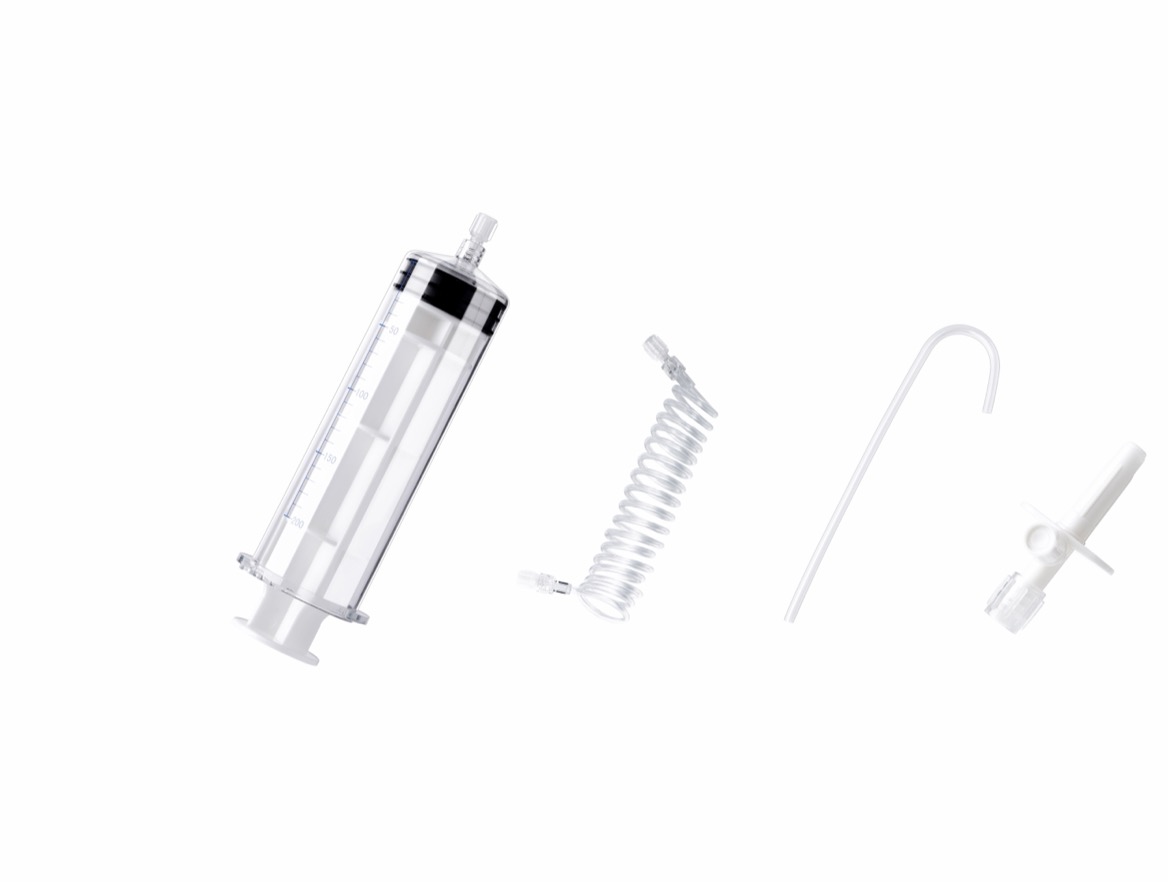
Syringe capacity does not establish mechanical compatibility. Two syringes can hold the same volume yet differ in barrel retention, plunger coupling, usable stroke, or outlet configuration. A syringe that mounts successfully on one injector head should not be assumed to work with another head or adapter, even within the same product family.
Published specifications illustrate the difference between platform capability and compatibility evidence. Bayer's MEDRAD Stellant FLEX CT system lists a flow range of 0.1–10 mL/s and selectable pressure limits up to 325 psi for its specified syringe configurations. Those figures describe that system. They are not universal operating limits for contrast injector syringes, and they do not validate another syringe, connecting tube, or accessory.
| Application | Useful evidence to request | What not to assume |
|---|---|---|
| CT | Model-specific flow, delivered-volume, and phase-transition results for the labeled syringe and tubing. | Matching capacity means matching engagement on either head of a dual-head system. |
| MRI | Documentation for the exact injector and disposable configuration, including applicable use conditions from the product labeling. | A syringe that fits a CT injector is suitable for an MRI injector or its operating environment. |
| Angiography | Pressure and leak-integrity evidence for the labeled syringe and fluid-path configuration. | A pressure rating for one component applies to the entire assembly. |
For an OEM qualification or supplier comparison, start with a defined injector model, syringe part number, and labeled tubing configuration. Use a controlled, nonclinical setup and agree on acceptance criteria before testing. A short evaluation can then answer questions that a fit check cannot:
1. Record seating and engagement. Identify the injector head or adapter, syringe lot, and stroke position. Document how the syringe is retained and how the ram engages the plunger.
2. Measure the onset and stability of flow. Compare the injection command with the first measurable outlet flow. Record the flow profile and total delivered volume as separate results.
3. Compare behavior across the usable stroke. Check whether force or delivery changes between the beginning, middle, and end of travel. A single measurement can miss a position-dependent discrepancy.
4. Control the fluid-path variables. Document the test fluid, temperature, tubing, and downstream resistance so a change in test conditions is not mistaken for a syringe effect.
5. Check repeatability across units and lots. Report the spread of results and investigate outliers. An average can hide intermittent engagement or a small group of high-force units.
Consider a hypothetical case: a compatible syringe reaches the target total volume, but first measurable flow starts later than the comparison syringe on the same test rig. The delay appears only on one injector head. That narrows the investigation, but it does not prove a syringe defect. The head, adapter, coupling, or interaction between parts may be responsible.
On the bench, compare the suspect and reference configurations while changing one labeled component at a time. If the delay follows one syringe lot across qualified heads, inspect that lot's engagement dimensions and travel force. If it stays with one head, prioritize the head or adapter interface. If it appears only after a tubing change, investigate the fluid path before attributing the delay to the plunger. This approach is more useful than classifying every late start as an alignment problem.
For radiology teams, the current instructions for use and facility procedures govern setup and fault response. Confirm that the syringe and tubing are labeled for the exact system and that the syringe seats and locks as intended. Do not force a fit or resume use with a configuration that has unresolved engagement, visible damage, or leakage. If a fault occurs during clinical use, follow the injector's instructions and the facility's escalation process.
For procurement teams, model-specific compatibility is more informative than a broad claim such as "compatible with major injectors." Ask suppliers for:
- An injector compatibility matrix that maps each model, head, or adapter to the exact disposable part number.
- A verification summary covering engagement, flow and volume performance, seal integrity, and pressure testing under stated conditions.
- Lot traceability and change-notification procedures for changes to materials, tooling, or dimensions that may affect fit or seal performance.
- Market-specific documentation that identifies the products covered. ISO 13485 certification relates to the quality management system; CE marking and FDA 510(k) clearance should be checked for the relevant product and scope. None replaces model-specific compatibility evidence.
MAIWEI INC. manufactures contrast injector syringes, connecting tubing, and related disposables for CT, MRI, and angiography. If you are qualifying a second source, expanding a distributor catalog, or developing an OEM kit, contact MAIWEI with the injector make and model, head or adapter configuration, current disposable part number, and destination market. Request a part-number match, applicable documentation, and samples for a controlled evaluation. Those details make the review more useful than a request based on syringe capacity alone.
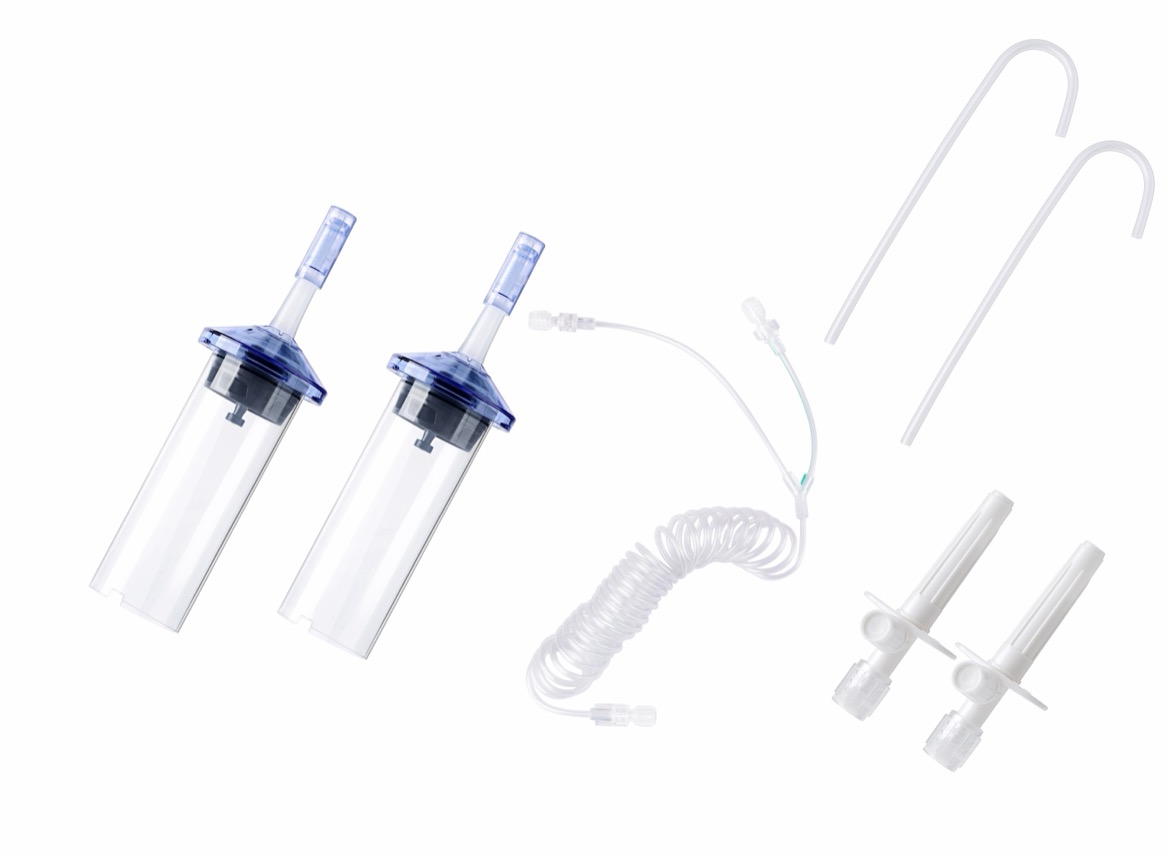
Yes. A barrel may fit the mount while the ram-to-plunger interface has excess play or incomplete engagement. Physical fit is an initial check, not a substitute for verifying engagement and delivery.
No. Fluid viscosity, restrictions in the tubing or downstream components, and other system conditions can also contribute to pressure-related events. Use the injector's fault guidance and investigate the mechanical interface and fluid path separately.
Yes. In a bench test, initial coupling play can delay the first measurable fluid delivery even if the expected total volume is ultimately collected. Measuring both outcomes helps distinguish a timing issue from a volume issue.
Not necessarily. The same capacity does not establish matching retention geometry, plunger engagement, pressure performance, or labeled use. Verify interchangeability by injector model, head or adapter, and disposable part number.
No. Some injector systems establish alignment through their syringe mounting design. Follow the model's instructions for seating and engagement rather than adding a manual adjustment that the manufacturer does not specify.
Request documented verification for the exact injector and disposable configuration. Look for test conditions, acceptance criteria, results across units or lots, and measurements of both flow timing and delivered volume. A statement that the syringe fits is not equivalent evidence.
- Bayer Radiology. *MEDRAD Stellant FLEX CT Injection System*. Published syringe capacities, flow range, and programmable pressure settings. [radiologysolutions.bayer]
- Bayer Radiology. *MEDRAD Stellant Video Tutorials*. Manufacturer demonstration of a snap-in syringe design that does not require a separate manual alignment step. [radiology.bayer]
- U.S. Food and Drug Administration. *510(k) K173773: MEDRAD Stellant FLEX CT Injection System with Certegra Workstation*. Intended use, syringe and tubing configuration, and comparative performance specifications. [accessdata.fda]
- LSU Health Sciences Center Shreveport, Radiology Department. *Operating Guidelines for the Medrad Stellant D Injector*, Procedure 13.17. Model-specific discussion of pressure limiting, fluid-path restrictions, and possible syringe leakage. [photos.medwrench]