


close
Choose Your Site
Global
Social Media
Views: 247 Author: Maiwei Biotech Publish Time: 2026-08-30 Origin: Site


Content Menu
● Why High Pressure Syringes Matter in Contrast Enhanced Imaging
● High Pressure Syringes: Safety Versus Efficiency
>> Safety Starts Before the Injection
>> Efficiency Depends on Repeatability
● How High Pressure Syringes Improve Patient Safety
>> Controlled Contrast Delivery Supports Diagnostic Protocols
>> Pressure-Rated Tubing Helps Protect the Fluid Pathway
>> Better Preparation Reduces Avoidable Errors
>> Safety Is Also About Response Readiness
● How High Pressure Syringes Improve Operational Efficiency
>> Consistent Bolus Delivery Can Reduce Repeat Work
>> Multi-Brand Compatibility Simplifies Procurement
>> Single-Use Design Supports Faster Turnover
● CT, MRI, and Angiography Requirements Compared
>> CT: Timing and Flow Rate Are Closely Linked
>> MRI: Precision and Risk Assessment Remain Essential
>> Angiography: Pressure Integrity Is Non-Negotiable
● A Practical Evaluation Framework for Buyers
>> Quality and Regulatory Documentation
● Why Manufacturing Quality Matters
● The Most Important Insight: The Syringe Is a System Component
● FAQs
>> 1. What is a high pressure syringe used for in contrast enhanced imaging?
>> 2. Can one high pressure syringe work with every contrast injector?
>> 3. How do high pressure syringes help reduce extravasation risk?
>> 4. Why is high pressure tubing important?
>> 5. What should hospitals ask a high pressure syringe supplier?
>> 6. Are high pressure syringe consumables only relevant for CT?
>> 7. What is the best way to evaluate a compatible syringe alternative?
Contrast-enhanced CT, MRI, and angiographic examinations depend on more than the scanner and the contrast agent. High pressure syringes, compatible pressure tubing, and correctly selected single-use consumables play a direct role in delivering a controlled bolus, supporting diagnostic image quality, and helping imaging teams run predictable workflows.
For radiology departments, distributors, and OEM partners, the central question is not simply whether a high pressure syringe can deliver contrast. It is whether the complete injection pathway—from syringe and connector to high pressure tubing and vascular access—can deliver the required volume, flow rate, and timing while supporting safe clinical practice. This article compares the two core outcomes behind contrast enhanced imaging: safety and efficiency, and explains how each depends on product design, protocol discipline, and compatibility validation.
> Important note: A high pressure syringe system supports safe administration only when used by qualified personnel under the facility's approved protocols, with appropriate patient assessment, vascular-access checks, and emergency preparedness.
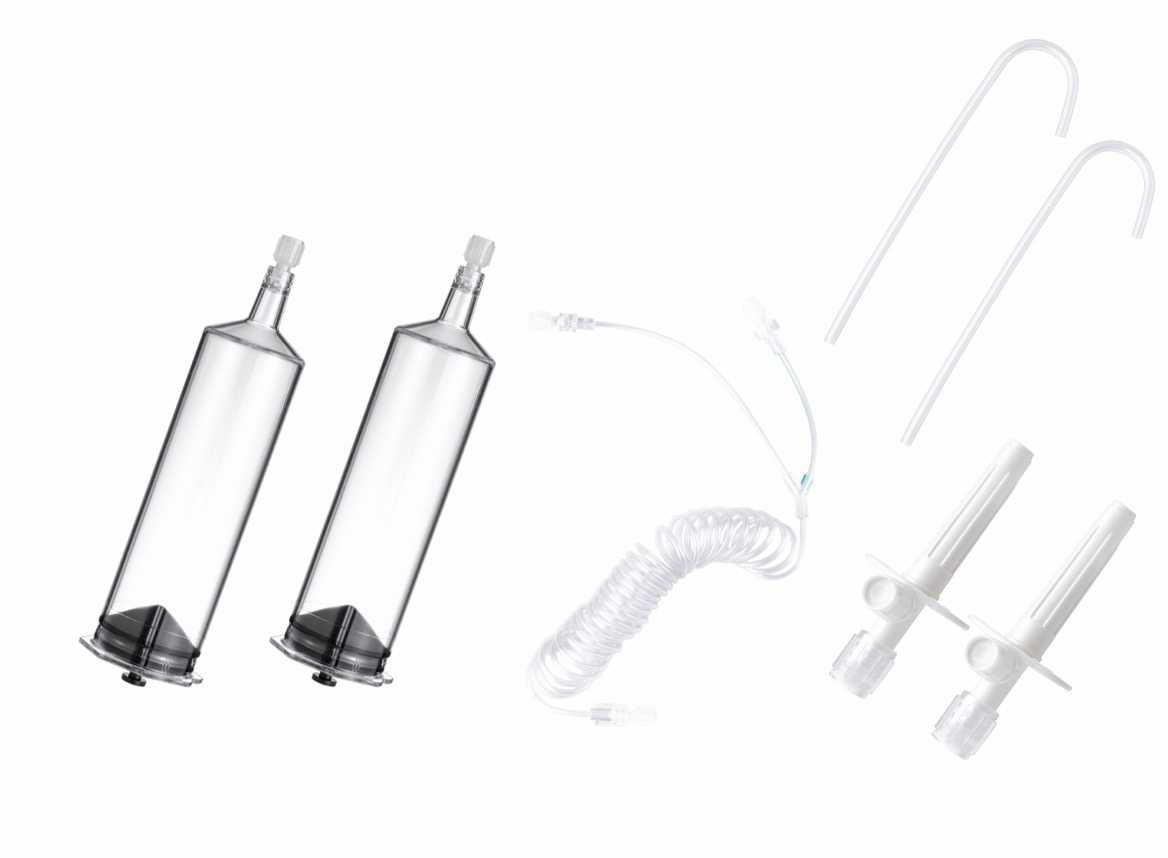
A high pressure syringe is a sterile, single-use consumable designed to work with a contrast media power injector. It holds contrast medium and/or saline and transfers it through a pressure-rated connection pathway into the patient at a programmed rate and volume.
In contrast enhanced imaging, timing is clinical. The enhancement pattern may determine whether a lesion, vessel, perfusion abnormality, or organ phase is adequately visualized. An injection that starts late, flows inconsistently, or experiences pressure-related interruption can compromise the examination and may lead to repeat imaging, delayed diagnosis, added contrast use, and lower throughput.
The high pressure syringe is therefore not a passive container. It is one part of a controlled fluid-delivery system that must align with:
- The approved CT, MRI, or angiography injection protocol
- The injector model and its specified consumable interface
- The selected contrast agent and saline sequence
- The required flow rate, pressure limit, and injection volume
- The vascular-access device type, location, and rated capability
- The patient's individual risk profile
- The department's infection-control and traceability procedures
For facilities using multiple injector brands or operating across several sites, consumable compatibility is especially important. A compatible high pressure syringe and connection tubing portfolio can help standardize ordering, staff training, and stock management—provided that compatibility claims are properly documented and the product is used according to its labeling and the injector manufacturer's instructions.
Safety and efficiency should not be treated as competing goals. In well-designed contrast workflows, they reinforce each other. A standardized system that is easier to prepare correctly can reduce variation, while reliable delivery performance can reduce avoidable delays and repeat scans.
| Dimension | Safety Contribution | Efficiency Contribution | What Buyers Should Evaluate |
|---|---|---|---|
| Controlled injection delivery | Supports delivery according to the selected protocol and pressure limit | Helps achieve consistent bolus timing for repeatable enhancement | Syringe fit, plunger movement, pressure rating, injector compatibility |
| Secure connection pathway | Helps reduce risk of leakage, disconnection, and air introduction when correctly assembled | Reduces interruptions during preparation and scanning | Luer-lock design, connector security, tubing integrity |
| High pressure tubing | Supports the pressure demands of programmed injection | Maintains a reliable pathway between injector and patient line | Pressure rating, tubing length, priming volume, kinking resistance |
| Single-use sterile design | Supports infection-control procedures and avoids reuse-related uncertainty | Simplifies turnover between patients | Sterility assurance, packaging integrity, labeling clarity |
| Standardized consumables | Reduces variation in device setup and staff practice | Speeds training, inventory control, and protocol consistency | Multi-injector compatibility, SKU rationalization, traceability |
| Clear labeling | Helps staff identify intended modality, volume, and connection requirements | Limits setup errors and product-selection delays | Labels, IFU clarity, barcode support, lot identification |
Many risks associated with contrast administration cannot be eliminated by the syringe alone. Patient screening, contrast selection, renal-risk evaluation, reaction preparedness, and suitable vascular access remain essential. The equipment must be viewed as a safety-critical component within a broader clinical process.
Clinical guidance emphasizes that imaging facilities should maintain written contrast-administration policies and predefined imaging protocols. These protocols should specify the contrast type, dose, timing, injection rate, administration route, and image-acquisition timing. They should also support patient screening and clear responsibility among radiologists, technologists, nurses, and other authorized professionals.
The practical implication is clear: even a high-quality high pressure syringe cannot compensate for an unsuitable cannula, unverified IV patency, an incorrect protocol, or incomplete patient assessment.
Efficiency in contrast enhanced imaging means more than injecting faster. It means achieving an appropriate diagnostic result with a stable and repeatable process.
A predictable injection pathway helps teams coordinate:
1. Patient preparation and screening
2. IV access assessment
3. Syringe filling and air removal
4. Tubing priming and secure connection
5. Injector programming
6. Scan triggering and acquisition
7. Post-injection saline flush and IV-site inspection
8. Documentation and room turnover
When any of these steps is inconsistent, departments may lose time through rework, troubleshooting, repeated image acquisition, or injector downtime. For this reason, the best purchasing decision considers the entire consumable workflow—not only unit price.
A contrast injection protocol is designed around a clinical question. For example, a CT angiography study may require a rapid, tightly timed bolus to achieve vascular opacification during a defined scan window. A routine contrast-enhanced CT may use a different volume, rate, and delay. MRI contrast administration also has its own protocol requirements based on sequence timing, contrast type, and diagnostic objective.
High pressure syringes support these workflows by serving as the dedicated interface between contrast medium and the injector's mechanical drive. When the syringe, tubing, and injector are correctly matched, the system can deliver the programmed injection profile more consistently than an improvised or poorly matched setup.
This does not mean that every patient should receive the same injection settings. Protocol standardization must coexist with patient-specific adjustment. Weight, vascular access, cardiac output, renal function, prior reactions, clinical indication, and scan technology can all affect the appropriate approach.
High flow rates create pressure throughout the injection pathway. That makes pressure-rated connection tubing a clinical necessity rather than a minor accessory. The tubing must be selected for the intended application, connected correctly, fully primed, and free from damage, kinks, or excessive tension.
A reliable fluid pathway can help reduce procedural disruptions related to:
- Leakage at a connection point
- Accidental disconnection
- Tubing kinking or occlusion
- Incomplete priming
- Air remaining in the syringe or tubing
- Restricted contrast flow
- Inadequate saline flush performance
The practical safety objective is straightforward: maintain a closed, primed, secure pathway from the injector to the patient, while ensuring that the vascular access device is appropriate for the planned injection.
Guidance for contrast administration stresses the importance of confirming that the catheter type and location are suitable for the intended injection rate and volume. In everyday workflow, this should be a deliberate checkpoint—not an assumption.
Experienced technologists know that many injection problems are preventable before the scan begins. A high pressure syringe system should support a disciplined preparation routine, including clear markings, intuitive connections, and packaging that preserves sterility until point of use.
A practical pre-injection preparation sequence includes:
1. Confirm the order, patient identity, contrast agent, protocol, dose, route, and timing.
2. Select the approved syringe and tubing set compatible with the injector model.
3. Check packaging integrity, expiry date, product label, and lot information.
4. Fill the syringe using aseptic technique and avoid introducing air.
5. Attach the pressure tubing securely and prime the system completely.
6. Inspect the tubing pathway for air, leakage, kinks, or stress points.
7. Confirm suitable vascular access according to the facility protocol.
8. Test patency using saline at the intended injection rate when required by local procedure.
9. Program and independently verify the injector settings.
10. Observe the patient and injection site throughout administration.
A practical institutional guideline from UCSF recommends checking IV catheter patency by flushing with normal saline at the same rate as the planned contrast injection. If resistance, pain, or failure to flush occurs, injection should not proceed.
Contrast reactions are uncommon but can be serious. Equipment reliability matters, but so do patient observation, trained staff, immediate access to emergency medications and equipment, and clear escalation procedures.
The European Society of Urogenital Radiology advises that emergency drugs and resuscitation equipment be readily available and that staff receive regular education in reaction management and resuscitation. It also recommends post-injection observation in a medical environment for 30 minutes.
A high pressure syringe supplier should therefore think beyond manufacturing specifications. The most valuable supplier relationship includes reliable technical documentation, lot traceability, responsive quality support, and product information that enables facilities to incorporate the consumable safely into their own validated workflows.
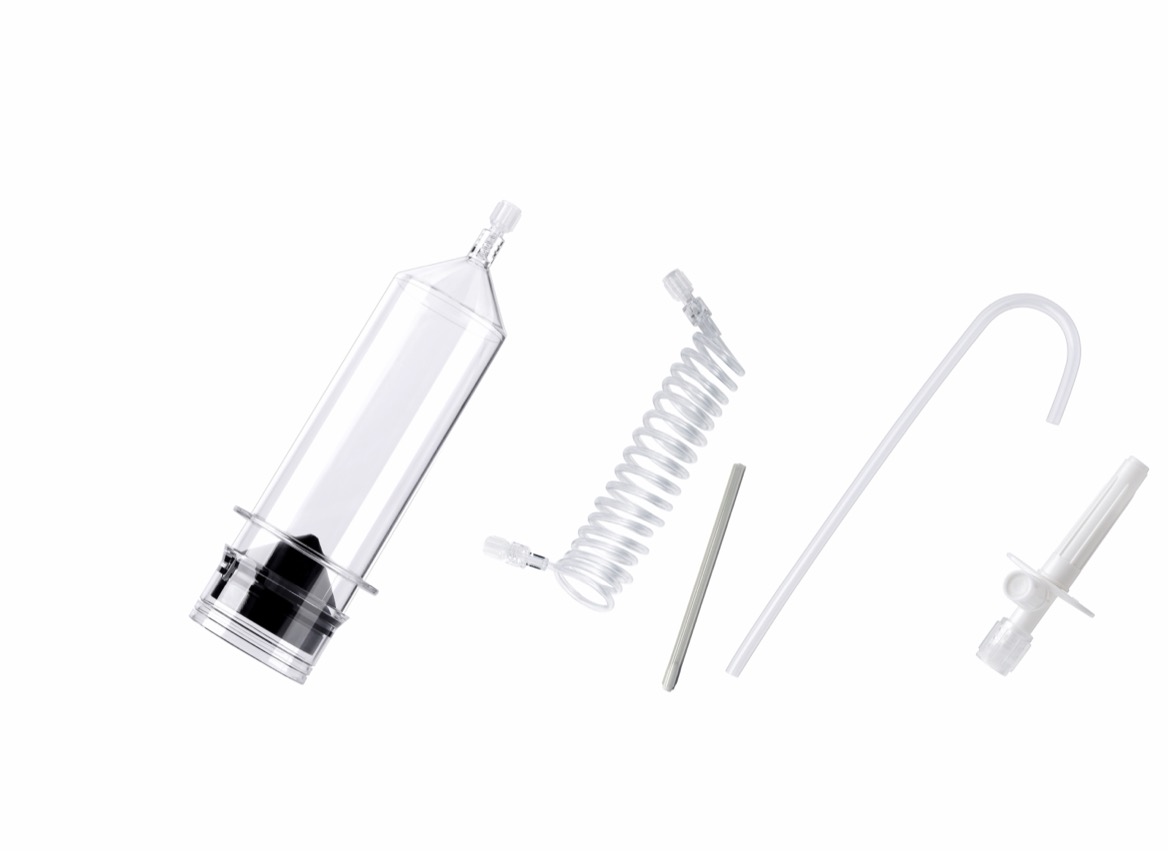
In contrast enhanced imaging, poor enhancement can make an examination less useful. A scan may need additional imaging, re-evaluation, or even repeat contrast administration depending on clinical circumstances. While image quality depends on many variables, consistent injection performance is one controllable factor.
A properly matched high pressure syringe and tubing system can support:
- More consistent contrast bolus delivery
- Better alignment between injection and scan timing
- Fewer disruptions caused by setup incompatibility
- More predictable saline flushing
- Cleaner, repeatable workflow execution across shifts and sites
For hospital procurement teams, this translates into a broader value calculation. The relevant question is not only, "What does each syringe cost?" It is also, "How does this consumable affect procedure reliability, staff time, scan-room utilization, and repeat-work risk?"
Many imaging providers operate injector fleets from more than one manufacturer, especially after equipment upgrades, site expansion, mergers, or decentralized purchasing. In these environments, a broad portfolio of compatible CT, MRI, and angiography consumables can reduce operational complexity.
The potential advantages include:
- Lower number of approved supplier relationships
- Fewer purchasing SKUs
- Easier stock planning across locations
- Faster staff familiarization with standardized product families
- Better continuity during supply fluctuations
- More consistent product documentation and complaint handling
However, compatibility must never be assumed from visual similarity. Buyers should request precise evidence for each claimed pairing, including injector model coverage, intended use, performance specifications, labeling, and applicable regulatory documentation.
Single-use high pressure syringes and tubing sets are designed to support sterile, traceable workflow. They eliminate the uncertainty and reprocessing burden associated with reusing components that are intended for one patient.
In a busy CT or angiography suite, workflow advantages can include:
- Simplified setup with a new sterile patient-use set
- Reduced concern about cross-patient carryover from disposable components
- Clearer lot-level traceability
- Less turnaround work between examinations
- More consistent staff routines
The operational benefit is strongest when product packaging and labeling make selection quick and unambiguous. A premium consumable should not create decision fatigue at the point of care.
Although the underlying principle is similar, CT, MRI, and angiography do not place identical demands on injection consumables. Procurement teams should avoid a one-size-fits-all approach.
| Imaging Application | Typical Workflow Need | Key Consumable Considerations | Main Safety Focus |
|---|---|---|---|
| CT contrast injection | Precise bolus timing and potentially high flow rates | Syringe capacity, pressure-rated tubing, injector-specific fit, saline capability | IV patency, correct flow rate, extravasation prevention |
| MRI contrast injection | Protocol-specific gadolinium delivery and saline chase where applicable | MRI workflow compatibility, syringe configuration, accurate low-volume handling | Renal-risk assessment where appropriate, agent selection, correct documentation |
| Angiography | High-pressure intra-arterial delivery in specialized procedures | Pressure performance, secure connection, procedure-specific tubing design | Meticulous technique, vascular access, embolic and extravasation risk management |
CT frequently relies on rapid contrast delivery and precise scan timing. In appropriate patients and with proper technique, high-flow intravenous power injection can support high-quality vascular and parenchymal enhancement.
UCSF states that contrast can be administered by power injector at high-flow rates up to 5 mL/second when proper technique is used, while emphasizing safe vascular access and the prevention of extravasation and air embolism.
For CT consumables, purchasers should assess:
- Injector-specific syringe compatibility
- Required syringe volume
- Tubing pressure capability
- Saline flush configuration
- Connector design
- Priming convenience
- Clear labeling for high-pressure use
MRI contrast workflows may use lower injection volumes and different timing logic than CT, but they require the same discipline in preparation, labeling, patient assessment, and documentation. Gadolinium-based contrast agents should be selected and administered according to approved local protocols and product information.
The ESUR guidance notes that renal function and contrast-agent choice are important considerations in patients with reduced renal function. It also emphasizes using the smallest contrast amount needed to obtain a diagnostic result and recording the agent name and dose in the patient record.
For MRI applications, the syringe system should support accurate, reliable administration without adding unnecessary complexity to MRI suite workflow.
Angiographic procedures can involve demanding injection profiles and direct vascular access. Here, the complete system must be evaluated with particular care: syringe construction, tubing rating, connector integrity, device compatibility, and procedural technique all matter.
The European guidance identifies power injector use, large contrast volumes, high-viscosity media, suboptimal injection sites, and patient-related factors such as fragile veins or impaired communication as contributors to extravasation risk. It recommends meticulous IV technique, an appropriately sized plastic cannula for the intended flow rate, and saline test injection.
For angiography, buyers should prioritize verified pressure performance, robust quality documentation, and product configurations suited to the clinical procedure—not merely maximum pressure numbers on a datasheet.
When evaluating a high pressure syringe manufacturer, hospital buyers and distributors should compare the complete evidence package.
- Which CT, MRI, and angiography injector systems are covered?
- Is compatibility defined by exact model, product code, and intended application?
- Are the syringe volume, tubing length, and connector configuration suitable for local protocols?
- Are pressure specifications clearly stated and validated?
- Are saline syringes, dual-head configurations, and extension tubing available where needed?
- Is the manufacturer operating under a recognized medical-device quality system?
- Are certificates current and applicable to the product category and target market?
- Is product traceability available by lot and production record?
- Are technical files, declarations, labeling, and instructions for use available for review?
- Is there a defined process for complaints, corrective actions, and field communication?
- Can staff identify the correct product quickly?
- Is the product easy to prime and connect according to local training?
- Does packaging support aseptic handling?
- Does the supplier provide samples for compatibility review and workflow evaluation?
- Can the supplier maintain stable supply across different regions or sites?
- Can the supplier support distributor, hospital, and OEM purchasing models?
- Are customization, private labeling, and packaging options available where permitted?
- Are lead times, minimum order quantities, and export documentation transparent?
- Can the supplier provide responsive engineering and quality support after purchase?
For imaging consumables, the product is only as reliable as the manufacturing controls behind it. A syringe that appears similar to another product may differ in material selection, dimensional control, pressure performance, sterile-barrier integrity, connector consistency, traceability, and documentation.
MAIWEI INC. develops and manufactures consumables for CT, MRI, and angiographic high pressure injection, including high pressure syringes, connection tubing, and related accessories. Its portfolio is designed to support compatibility with multiple mainstream injector platforms and serve hospitals, distributors, and OEM partners in global markets.
For an international supply partner, the most meaningful capabilities include:
- Experience in CT, MRI, and angiography consumables
- A quality management approach aligned with medical-device requirements
- Product certification and market-access documentation appropriate to target regions
- Consistent lot traceability and export support
- Flexible partnership models for distribution and OEM projects
- Technical responsiveness when customers evaluate compatibility, packaging, labeling, or supply configuration
MAIWEI INC. holds ISO 13485 certification and product-related CE and FDA 510(k) documentation across applicable product lines. Buyers should still verify the current documentation, scope, product model, intended use, and regulatory status for their target market before purchase or clinical deployment.
The strongest safety and efficiency improvements occur when facilities stop treating high pressure syringes as generic disposables. They are critical components in a system that includes the injector, contrast agent, saline, tubing, vascular access, patient assessment, scan protocol, trained staff, and emergency response plan.
A cost-focused purchase may appear attractive until a site experiences inconsistent fit, difficult priming, unclear labeling, stock fragmentation, inadequate technical support, or unverified compatibility. Conversely, a well-chosen consumable program can support safer routines, steadier throughput, and stronger confidence among technologists and clinicians.
High pressure syringes improve contrast enhanced imaging when they help teams execute the right protocol, for the right patient, with the right equipment, every time.
If you are sourcing CT, MRI, or angiography injector consumables, contact MAIWEI INC. to discuss compatible high pressure syringes, pressure tubing configurations, certification documentation, distributor opportunities, and OEM customization requirements.
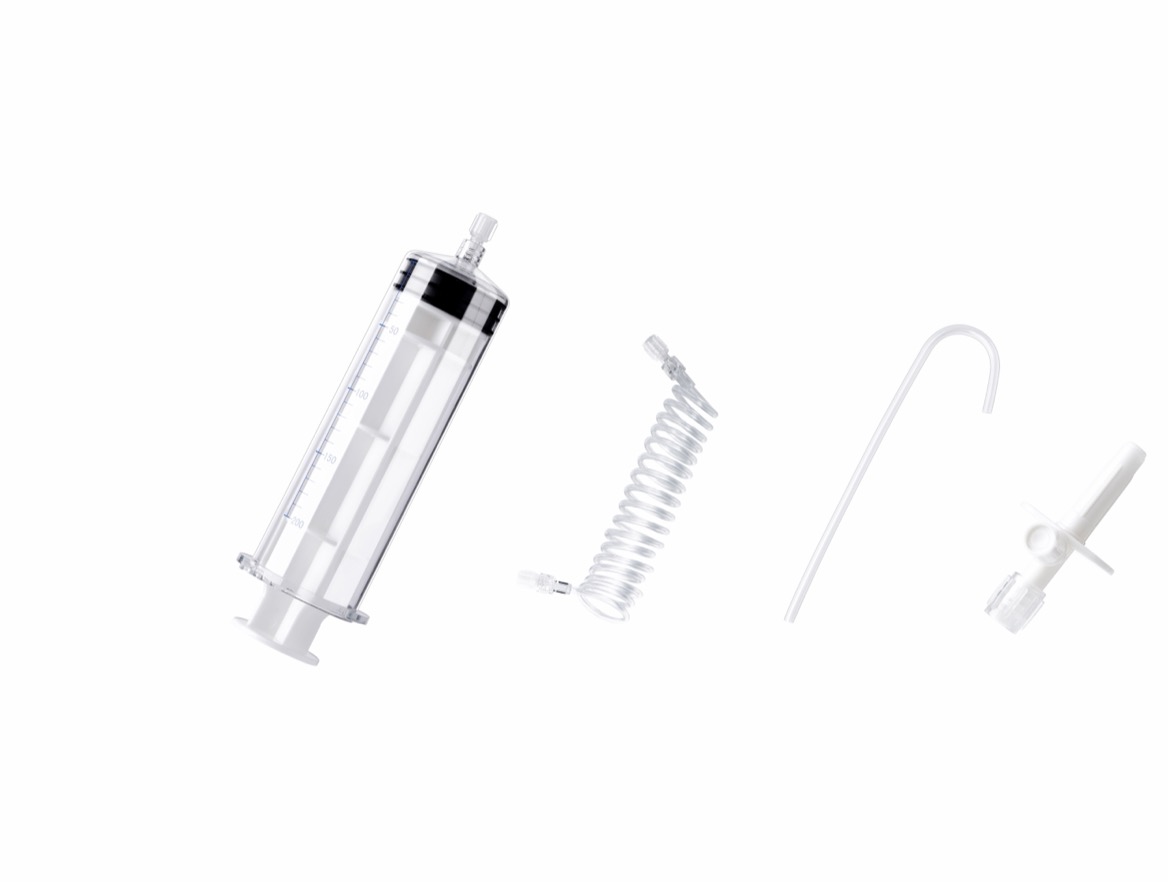
A high pressure syringe is used with a power injector to deliver contrast medium and, where required, saline during CT, MRI, or angiographic examinations. It supports controlled administration at the programmed volume, rate, and pressure settings approved in the facility's imaging protocol.
No. Compatibility must be verified for the exact injector brand and model, the intended imaging application, and the syringe configuration. Buyers should review the manufacturer's compatibility documentation and follow the injector manufacturer's instructions before use.
They do not eliminate extravasation risk on their own. Risk reduction depends on appropriate vascular access, confirmation of catheter patency, correct injection settings, suitable tubing, secure connections, patient observation, and trained staff. Saline test injection and checking for pain, resistance, or swelling are important safeguards.
High pressure tubing forms the connection between the injector and the patient's IV access. It must be appropriate for the planned injection pressure and flow rate, correctly connected, fully primed, free from air, and positioned to avoid tension, damage, or kinking.
Hospitals should ask about exact injector compatibility, product intended use, pressure specifications, sterile packaging, lot traceability, quality-system certification, market-access documentation, supply continuity, technical support, and available configurations for CT, MRI, and angiography.
No. They are used across CT, MRI, and angiographic workflows, although the required syringe configuration, contrast agent, flow profile, pressure demands, and clinical risks differ by application.
Start with the injector model and local protocol. Then confirm documented compatibility, intended use, pressure performance, syringe volume, tubing configuration, regulatory documentation, packaging, and workflow usability. Clinical and biomedical engineering teams should participate in the evaluation before implementation.
1. American College of Radiology and Society for Pediatric Radiology. [ACR–SPR Practice Parameter for the Use of Intravascular Contrast Media].
2. UCSF Department of Radiology and Biomedical Imaging. [CT and X-ray Contrast Guidelines Information].
3. European Society of Urogenital Radiology. [ESUR Guidelines on Contrast Agents, Version 10.0].
4. U.S. Food and Drug Administration. [510(k) Summary: Sterile High-Pressure Angiographic Syringes for Single Use].
5. U.S. Food and Drug Administration. [510(k) Summary: Pressure Connecting Tube for Power Injector Use].