


close
Choose Your Site
Global
Social Media
Views: 219 Author: Maiwei Biotech Publish Time: 2026-10-30 Origin: Site


Content Menu
● Why Air Bubbles in a CT Contrast Injector Syringe Matter
>> What Published Research Actually Shows
● Where Air Enters the CT Contrast Delivery System
● How to Avoid Air Bubbles: A Step-by-Step Preparation Framework
>> 1. Confirm the Exact Injector and Disposable Configuration
>> 2. Establish Clear Preparation Responsibility
>> 3. Inspect the Syringe and Filling Components
>> 4. Fill Using the Manufacturer-Specified Method
>> 5. Purge the Syringe in the Specified Orientation
>> 6. Prime Every Required Tubing Pathway
>> 7. Complete a Final End-to-End Inspection
>> 8. Connect and Recheck Before Arming
● Troubleshooting Air Bubbles in CT Injector Syringes and Tubing
● Three Expert-Level Improvements to Air-Management Practice
>> Build a "Reset After Change" Rule
>> Audit Preparation Problems, Not Just Patient Incidents
>> Treat Air Detection as One Safety Layer
● Selecting High-Pressure Injector Consumables for Reliable Preparation
>> How MAIWEI INC. Supports Product Evaluation
>> Can I Proceed If Only a Tiny Bubble Remains?
>> Should I Tap a CT Contrast Injector Syringe?
>> Does Automatic Priming Guarantee an Air-Free System?
>> How Much Fluid Should I Use to Prime CT Injector Tubing?
>> Why Do Bubbles Reappear After Purging?
>> What Should Staff Do If Air Injection Is Suspected?
To avoid air bubbles when preparing a CT contrast injector syringe, use compatible disposables, follow the injector's filling and purging instructions, prime every required fluid pathway, and inspect the complete system before patient connection. The essential principle is verification: a filled syringe or completed automatic purge does not, by itself, confirm that the entire fluid path is free of visible air.
At MAIWEI INC., we approach this topic from a manufacturer's perspective: reliable preparation depends on the relationship between the syringe, connecting tubing, injector, and trained operator—not on any single component.
This guide is intended for qualified healthcare professionals. It supports, but does not replace, current device instructions for use and institutional procedures.
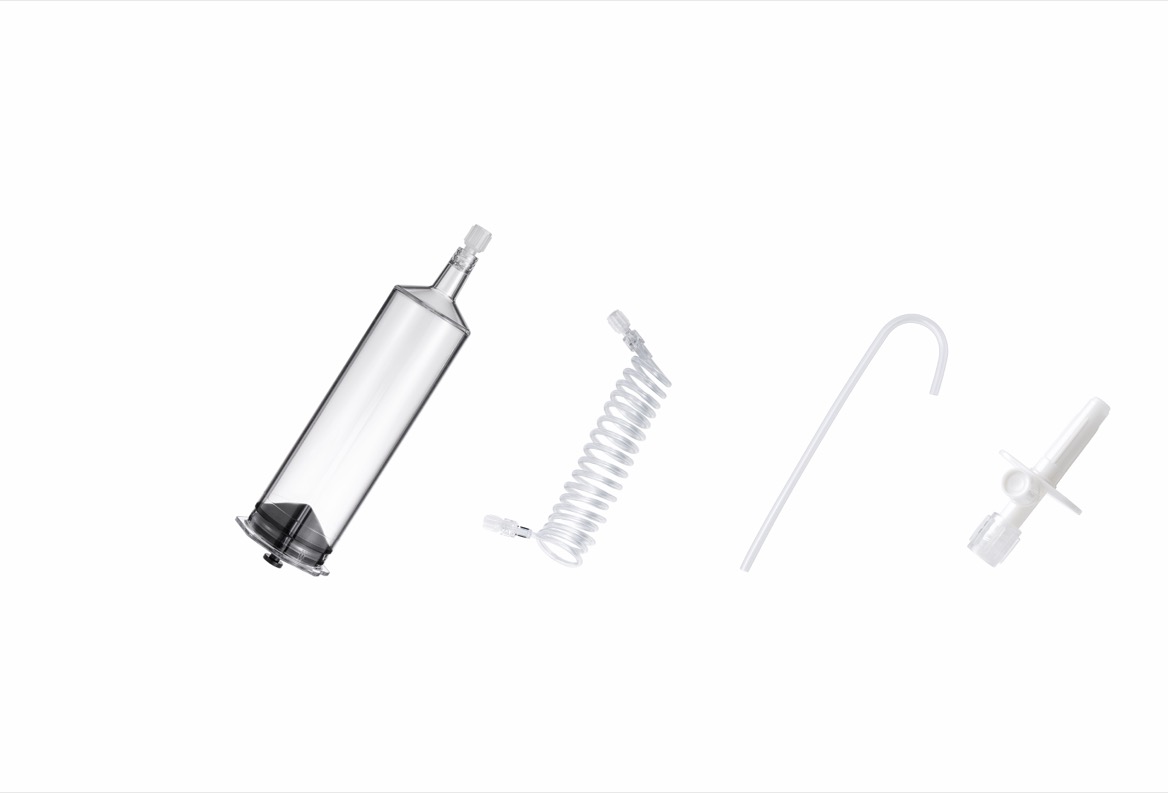
Power injectors deliver contrast under pressure. If air remains in the syringe or connecting pathway, it may be delivered into the circulation.
Some small venous air emboli cause no immediate symptoms. However, larger or rapidly delivered volumes can cause serious cardiopulmonary complications. Patients with certain right-to-left cardiovascular shunts may also be vulnerable to arterial embolization.
There is no appropriate universal "safe bubble size" for routine syringe preparation. The practical objective is to eliminate visible air throughout the delivery system before proceeding.
A prospective study published in 2015 examined 200 patients undergoing contrast-enhanced chest CT. Investigators identified incidental vascular air emboli in 14 patients, or 7%. None of those patients developed reported symptoms.
These findings require careful interpretation:
- The study measured CT-detected intravascular air, not the frequency of visible bubbles during preparation.
- Its results do not establish the current rate across all hospitals.
- Asymptomatic findings do not justify accepting visible air in a prepared injector system.
The useful lesson is that prevention requires attention to the entire pathway, including connections and intravenous access—not simply the syringe barrel.
Air may enter during filling, remain trapped in unprimed components, or be introduced when connections are opened.
| Location | Potential problem | Preparation priority |
|---|---|---|
| Filling source and transfer device | Air enters during filling or when the source empties | Follow the specified filling method and monitor the source |
| Syringe barrel and tip | Residual bubbles remain after filling | Inspect both the barrel and outlet |
| High-pressure connecting tubing | Tubing is incompletely primed | Prime and inspect its entire visible length |
| Y-connectors and valves | Air remains in branches or internal spaces | Prime each required pathway according to its instructions |
| Patient-side connection | Air enters during connection or reconnection | Follow the approved connection procedure and reinspect |
A useful working rule is to treat any opened, replaced, or refilled component as a reason to reassess the affected fluid pathway.
Start with the injector model, syringe reference, tubing configuration, and intended examination.
Confirm that all components are intended and documented for the proposed use. Physical fit alone does not establish compatibility.
Check:
- Syringe model and capacity.
- Required adapters or pressure jackets.
- Tubing and connector pressure ratings.
- Single-use or other labeled use restrictions.
- Sterile packaging integrity and expiration date.
- Applicable filling, priming, and connection instructions.
Do not assume that a preparation technique used for one CT injector is suitable for another. Likewise, do not transfer angiography or MRI injector instructions to a CT system without confirmation.
Assign one trained operator responsibility for preparation and final verification.
Interruptions and unclear handovers can leave uncertainty about whether the syringe was filled, the saline pathway was primed, or a connection was reopened.
If responsibility changes, the incoming operator should verify the system's preparation status rather than rely on its appearance or an incomplete verbal handover.
An independent check can provide an additional safeguard when required by institutional policy.
Before filling, inspect the syringe, filling accessory, and connecting components for visible damage or contamination.
Do not use components with compromised packaging, damaged connectors, or defects that could affect sealing or inspection.
Prepare the contrast medium according to its labeling and local procedures. If warming is used, follow the contrast manufacturer's and equipment manufacturer's requirements. Warming is not a substitute for air removal.
Use the designated manual or automatic filling process.
Monitor the fluid source and transfer pathway throughout filling. Avoid allowing the source to run empty or introducing unnecessary disconnections.
Use the filling settings and sequence specified for the equipment. There is no universal filling speed suitable for every combination of contrast medium, syringe, and injector.
After filling, pause for inspection before advancing to patient connection.
Place the injector head and syringe in the manufacturer-specified purge position.
Many systems use an upward-facing syringe outlet during air removal, but the exact positioning and control sequence must come from the relevant operating instructions.
Inspect the barrel, shoulder, and syringe tip. A clear barrel does not prove that the outlet contains no air.
Do not automatically tap or strike the syringe. Some manufacturer instructions specifically advise against tapping and prescribe another method for collecting small bubbles. Follow the instructions for the exact device.
Perform purging and piston movements with the patient disconnected, as required by the system's instructions. Never advance residual air toward the patient to "clear" it.
Connect and prime the designated high-pressure tubing while the patient remains disconnected.
For dual-syringe CT injector systems, this includes the relevant contrast and saline pathways. Inspect Y-connectors, valves, and branch junctions rather than assuming that fluid in one section means every section is primed.
Follow the prescribed priming medium, sequence, and volume.
There is no universal priming volume: tubing length, internal volume, and connector configuration differ. A generic volume copied from another system may be inadequate or inappropriate.
Before patient connection, visually trace the delivery pathway:
1. Contrast syringe barrel and outlet.
2. Saline syringe and outlet, where applicable.
3. Connecting tubing and branch junctions.
4. Valves and connectors.
5. Distal patient-side connection.
Use adequate lighting and position components so they can be inspected without compromising aseptic technique.
If visible air remains, stop and correct it using the approved procedure. Do not treat an automatic purge confirmation as a replacement for this inspection.
Follow the approved patient-connection procedure and verify the intravenous access according to institutional policy.
After connection, inspect accessible tubing and connections again. Confirm the prescribed injection settings and required safety checks before arming.
A saline patency check serves a different purpose from purging an unconnected delivery set. It must not be used to push suspected air into the patient.
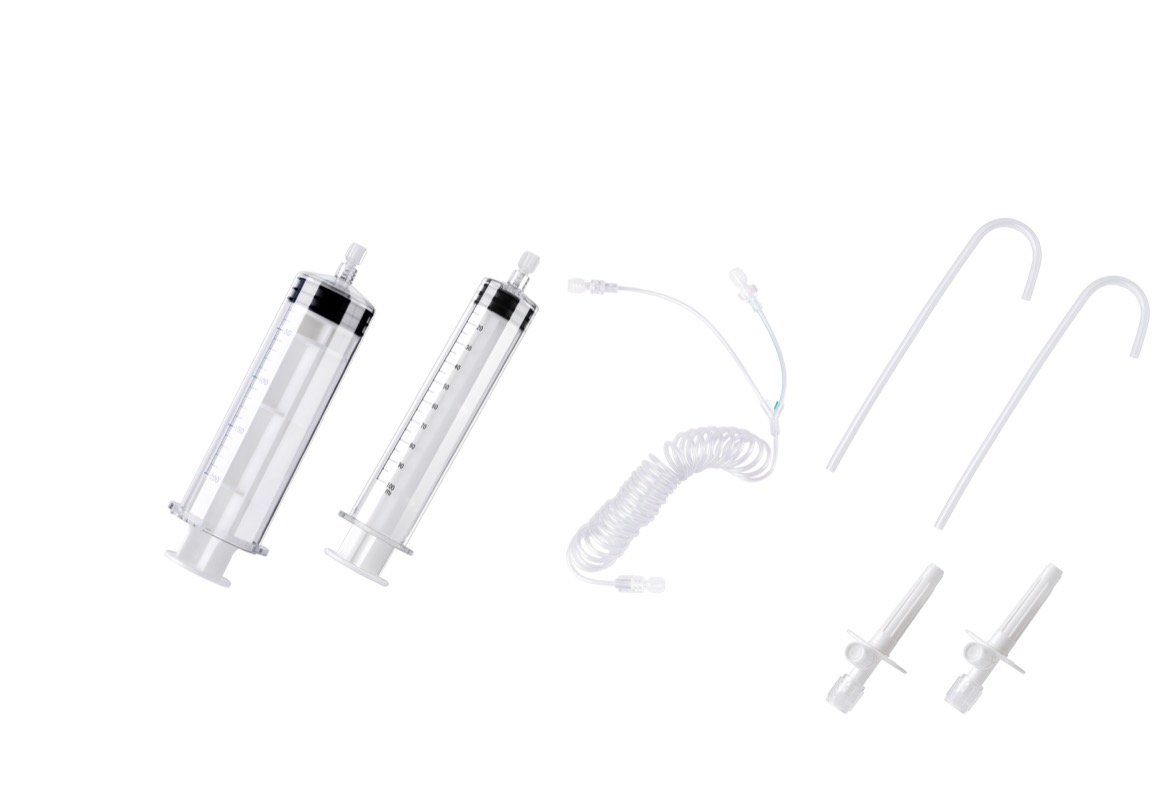
Repeated bubbles deserve investigation rather than repeated, unexplained purging.
| Observation | Possible explanation | Appropriate response |
|---|---|---|
| Bubbles appear during filling | Air entry at the source or transfer connection | Stop and inspect the filling arrangement |
| Air remains near the syringe outlet | Incomplete purge or incorrect orientation | Repeat the specified air-removal procedure |
| Barrel appears clear, but tubing contains air | Incomplete tubing priming | Reassess and prime the affected pathway while disconnected |
| Bubbles return after reconnection | Air introduced during handling | Repeat inspection and required preparation checks |
| One branch of a dual system contains air | Branch-specific priming was incomplete | Follow the instructions for that branch |
| The same problem persists | Disposable, setup, or equipment issue | Remove suspect components from use and escalate |
Do not bypass an alarm or continue simply because a bubble appears small. If the cause remains uncertain, involve the responsible clinician and technical support team.
A fluid path that was verified earlier may no longer be verified after an intervention.
Refilling a syringe, replacing tubing, opening a connector, or transferring preparation responsibility should trigger the relevant checks again.
This is particularly important between multiple injections. The initial inspection cannot establish the condition of a subsequently modified system.
Departments can learn from problems detected before patient exposure.
Useful local improvement measures include:
- Repeat priming events per 100 preparations.
- Air-related alarms or interrupted preparations.
- Problems associated with specific configurations.
- Delays or uncertainty during operator handovers.
- Recurring complaints linked to disposable lots.
These are suggested process measures, not published performance benchmarks. They can help distinguish training gaps from configuration or product concerns.
Air-management features vary between injectors. Some systems use detectors, automated filling controls, or other safeguards.
These features can support safer operation, but they do not make preparation checks unnecessary. Operators must understand what their particular system detects, where detection occurs, and what checks remain their responsibility.
A screen confirmation should never become permission to ignore visible air.
From our manufacturing perspective, purchasing decisions should consider practical preparation requirements alongside price and supply continuity.
Hospitals, distributors, and OEM buyers should request evidence addressing:
- Exact injector-model compatibility.
- Pressure ratings and intended operating conditions.
- Syringe and tubing inspection visibility.
- Connector integrity and relevant verification testing.
- Sterilization, packaging, and shelf-life documentation.
- Traceability and complaint-handling procedures.
- Clear, product-specific instructions for use.
No syringe or tubing set can compensate for incomplete priming. Equally, a well-written preparation protocol requires suitable, correctly specified components.
MAIWEI INC. develops and manufactures high-pressure injector syringes, connecting tubing, and related consumables for CT, MRI, and angiography applications.
MAIWEI serves customers in more than 60 countries and regions and reports ISO 13485 certification, CE marking, and FDA 510(k) clearances.
Buyers should verify the documentation applicable to the specific product and destination market. A 510(k) clearance applies to the identified device; it is not a company-wide certification or a guarantee against air embolism.
For a focused product review, contact MAIWEI with your injector model, syringe capacity, tubing requirements, and target market. Request the corresponding compatibility documentation, instructions for use, pressure specifications, and regulatory records before selection.
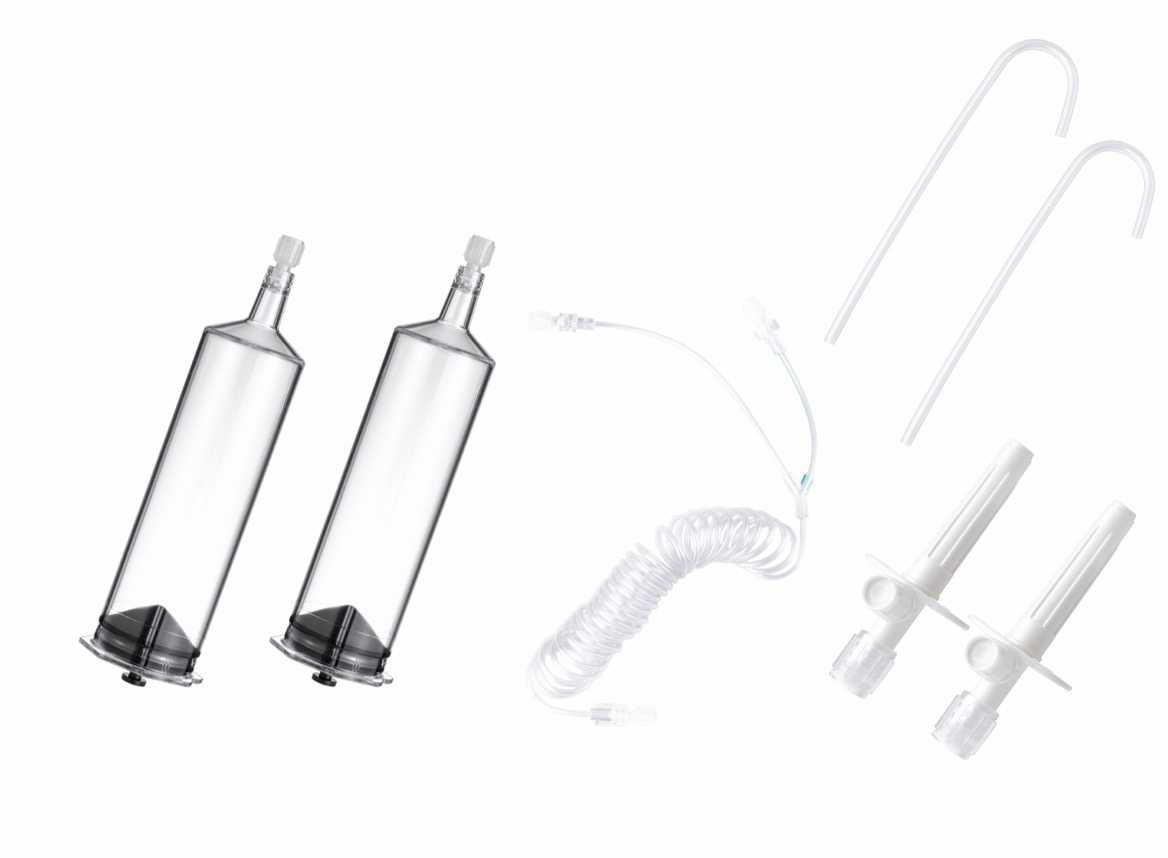
Do not use a subjective size estimate to justify proceeding. Remove visible air according to the device instructions and local policy before injection.
Not automatically. Instructions differ, and some systems advise against tapping. Use only the air-removal technique specified for your syringe and injector combination.
No. Complete the required visual checks, including the syringe outlet, tubing, connectors, and any separate saline pathway. Automatic functions supplement preparation verification.
Use the volume and procedure specified for the exact configuration. There is no single appropriate volume for every tubing length, valve arrangement, and injector.
Possible causes include air entry during filling, a reopened connection, or an incompletely primed branch. Stop and investigate rather than repeatedly purging without identifying the cause.
Stop the injection and obtain immediate clinical assessment. Follow the institution's emergency response and reporting procedures. Do not resume until the responsible clinical team has assessed the patient and system.
1. Pennsylvania Patient Safety Authority. "[Venous Air Emboli and Automatic Contrast Media Injectors]." *Pennsylvania Patient Safety Advisory*. December 2004;1(4):13–15. Supports whole-pathway inspection, operator responsibility, connection checks, and layered safeguards. [patientsafety.pa]
2. Sodhi KS, Saxena AK, Chandrashekhar G, et al. "[Vascular Air Embolism After Contrast Administration on 64 Row Multiple Detector Computed Tomography: A Prospective Analysis]." *Lung India*. 2015;32(3):216–219. DOI: 10.4103/0970-2113.156216. Source of the 200-patient study and 7% finding. [pmc.ncbi.nlm.nih]
3. U.S. Food and Drug Administration. "[MAUDE Adverse Event Report: Bayer Medical Care Inc., MEDRAD Injection System]." Report containing reproduced manufacturer warnings on air removal, inspection limitations, operator handovers, and patient disconnection during piston controls. This individual report does not establish event incidence. [accessdata.fda]
4. Bayer. "[MEDRAD Stellant with Certegra—Operation Manual, Portuguese Edition]." Includes device-specific bubble-removal guidance and a warning against tapping the syringe. Users must consult the current manual applicable to their equipment and market. [bayer.com]
5. McDermott M, Barone W, Kemper CA. "[Proactive Air Management in CT Power Injections: A Comprehensive Approach to Reducing Air Embolization]." IEEE Engineering in Medicine and Biology Society research summary, 2022. Discusses layered air-management technologies evaluated under simulated clinical use. [embs]
6. "[Air Embolism After Peripheral IV Contrast Injection]." *Cleveland Clinic Journal of Medicine*. 2020;87(12):718. Supports attention to intravenous catheter preparation and secure connections. [ccjm]