


close
Choose Your Site
Global
Social Media
Views: 243 Author: Maiwei Biotech Publish Time: 2026-10-11 Origin: Site


Content Menu
● What Is a Contrast Injector Syringe for CT Imaging?
● 1. Confirm Exact CT Injector Syringe Compatibility
>> Match the Injector Model and Disposable Part Number
>> Keep CT, MRI, and Angiography Applications Separate
● 2. Match Syringe Capacity to the CT Workflow
>> Consider Single-Head and Dual-Head Requirements
● 3. Evaluate Pressure Ratings Across the Entire Fluid Path
>> Pressure Rating Is Not an Injection Recommendation
>> Understand Why Flow Resistance Matters
● 4. Review Connecting Tubes and Kit Configuration
>> Check Length, Connections, and Priming Requirements
● 5. Assess Sterility, Packaging, and Traceability
>> Request a Focused Quality Documentation Package
>> Check Incoming Product Condition
● 6. Interpret Regulatory and Quality Claims Correctly
>> ISO 13485: Evaluate the Certificate's Scope
>> CE Marking: Review Product-Specific Evidence
>> FDA 510(k): Use "Cleared," Not "Certified"
● 7. Run a Documented Supplier Qualification Trial
>> Stage One: Define the Acceptance Criteria
>> Stage Two: Evaluate Under Controlled Conditions
>> Stage Three: Record Findings by Product and Lot
● 8. Compare Total Cost per Completed Examination
>> Can One Contrast Injector Syringe Fit Every CT Injector?
>> How Do I Choose the Right Syringe Capacity?
>> What Pressure Rating Should a CT Injector Syringe Have?
>> Can Disposable CT Syringes Be Reused Between Patients?
>> Does ISO 13485 Certification Prove Injector Compatibility?
>> What Should I Send a Supplier Before Requesting a Quotation?
Choosing a contrast injector syringe for CT imaging starts with three checks: exact injector compatibility, suitability for the prescribed injection protocol, and documented product quality. Price matters, but it should come after these requirements.
A syringe that appears to fit is not necessarily validated for the injector. Likewise, a high pressure rating does not establish the safety of the tubing, connectors, or vascular access device attached to it.
From a manufacturing and procurement perspective, I would begin with the complete injection pathway rather than the syringe alone. This guide explains how hospitals, distributors, and OEM buyers can evaluate CT contrast injector syringes, compare suppliers, and build a practical purchasing specification.
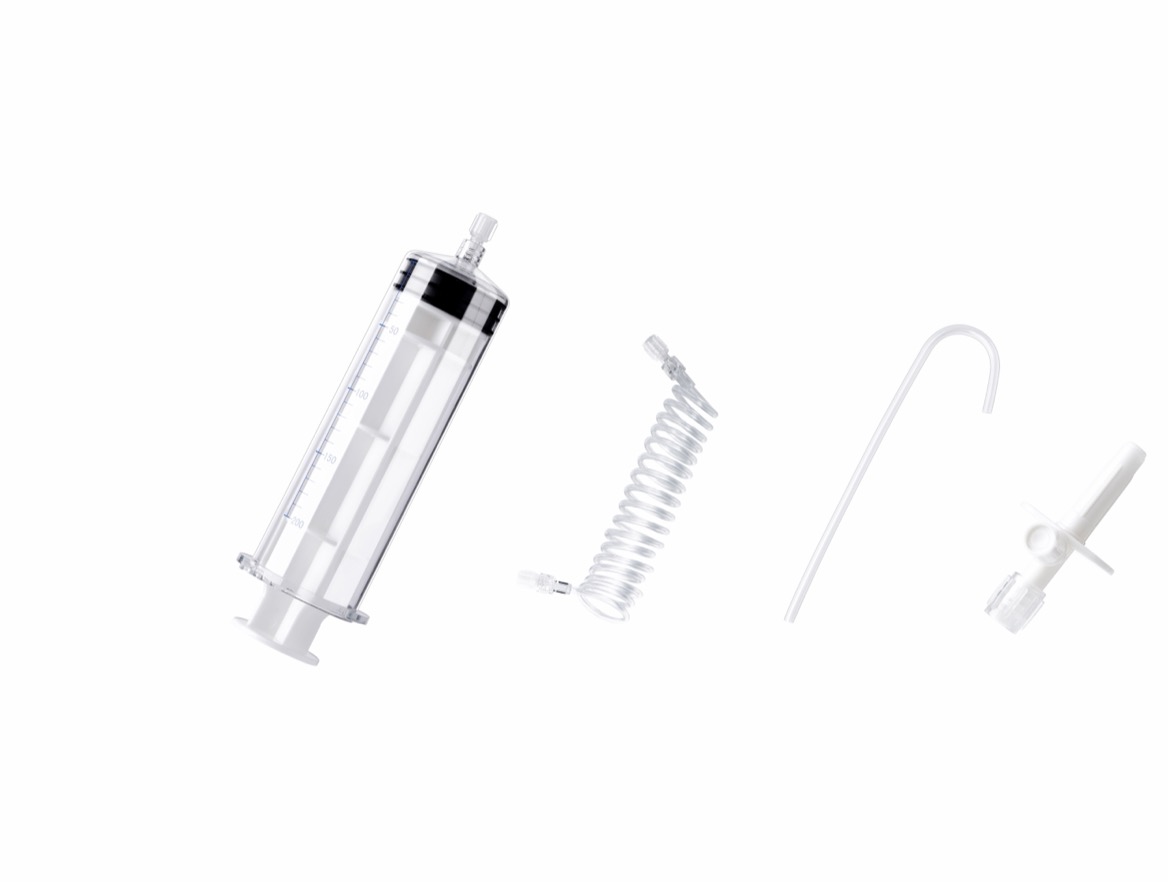
A contrast injector syringe is a disposable component used with a compatible power injector to deliver contrast medium, and sometimes saline, during a CT examination. Its barrel, plunger, mounting interface, and outlet must work with the specified injection system.
In contrast-enhanced CT, the injection protocol helps determine when and how contrast reaches the anatomy being examined. The syringe supports that protocol; it does not independently determine the clinical dose or guarantee image quality.
Depending on the injector configuration, a disposable kit may include:
- One or two syringes.
- Pressure-rated connecting tubing.
- Filling spikes or other transfer accessories.
- Connectors and additional components specified by the manufacturer.
Evaluate the kit as a system, not as unrelated parts.
Compatibility is the first purchasing requirement. Never select a syringe solely because it has the same capacity or resembles an existing consumable.
Give the supplier the injector manufacturer, exact model, configuration, and existing disposable reference number.
Request a written compatibility statement identifying the proposed syringe or kit. For third-party consumables, ask what testing supports that statement and whether the intended use covers your application.
Check the following details:
| Selection point | What to verify |
|---|---|
| Mounting interface | Correct engagement with the injector |
| Plunger interface | Compatibility with the drive mechanism |
| Capacity | Supported syringe size and usable volume |
| Configuration | Single-head or dual-head application |
| Recognition features | Any identification requirements of the injector |
| Accessories | Compatible tubing, filling devices, and connectors |
A broad statement such as "compatible with major brands" is insufficient for a purchase decision.
Suppliers may manufacture consumables for all three modalities, but this does not make their syringes interchangeable.
Each product should have its own intended use, compatibility documentation, and operating limits. Specify the CT application clearly, especially when purchasing from a manufacturer with a broad imaging portfolio.
Choose capacity around the department's established protocols and injector configuration—not around the assumption that bigger is always better.
Review the required contrast volume, saline volume, preparation method, and usable capacity identified in the product instructions. Clinical staff should determine patient-specific administration parameters.
A single-head injector uses one syringe position. A dual-head system can support contrast and saline delivery through its specified arrangement.
For dual-head CT injector syringe kits, confirm:
- The capacity of each syringe.
- Correct contrast-side and saline-side identification.
- The supplied tubing configuration.
- Filling accessories included in the package.
- Compatibility with the department's approved workflow.
Saline delivery can be part of a CT protocol, but its volume and timing remain clinical decisions. Consumable selection should support those decisions rather than redefine them.
A high-pressure syringe for CT must suit the intended injector and protocol. However, the syringe's rating is only one part of the assessment.
Check the applicable limits of the syringe, extension tubing, connectors, and vascular access device. Follow the injector instructions and each component's labeling.
A component's pressure rating describes an operating limitation under specified conditions. It does not tell the operator which flow rate is appropriate for a patient.
Avoid universal purchasing specifications such as "all CT syringes must operate at one standard pressure." Injector settings and disposable specifications vary.
Request product-specific documentation covering:
- Permitted pressure and operating conditions.
- Relevant verification methods.
- Leakage and connection integrity.
- Compatibility with the intended injection system.
- Limitations stated in the instructions for use.
Pressure requirements depend on more than syringe capacity. Contrast viscosity, tubing geometry, catheter characteristics, and injection flow can influence resistance.
This is why a syringe should not be evaluated independently of the connected components. A stronger syringe does not compensate for tubing or vascular access used outside its permitted limits.
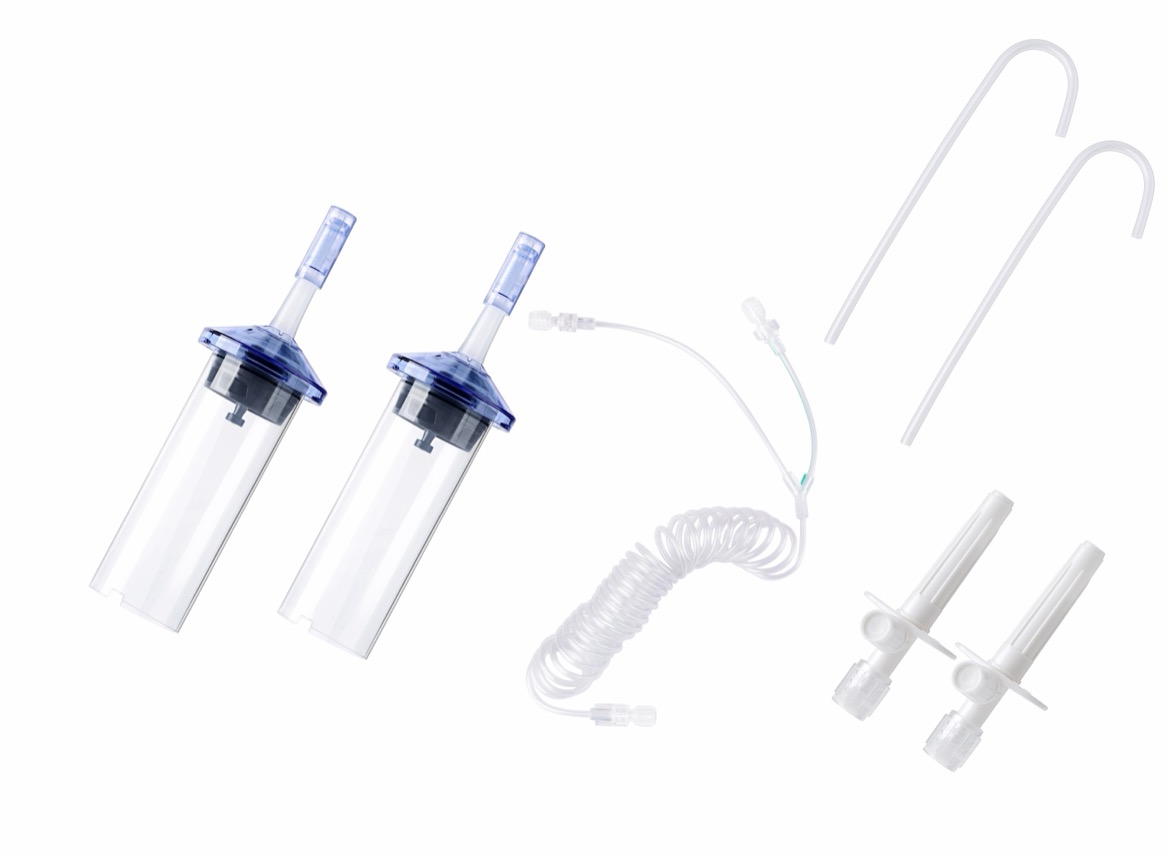
Connecting tubes deserve the same scrutiny as the syringe. They form part of the pressurized fluid pathway and can affect preparation, routing, and connection security.
Longer tubing may offer positioning flexibility, but it also changes the fluid volume required to fill the line.
Ask the supplier to specify:
- Tubing length and internal dimensions.
- Priming volume, where documented.
- Pressure rating.
- Connector type.
- Presence and purpose of any valves.
- Applicable single-patient or other labeled use restrictions.
Do not assume that a check valve authorizes reuse or makes every kit suitable for multipatient operation.
Select a configuration that supports the injector's instructions and local clinical procedures. Avoid unnecessary adapters or unvalidated combinations.
Sterile supply depends on more than a symbol on the carton. Buyers need evidence that the product's manufacturing, sterilization, packaging, and shelf-life claims are supported.
A useful supplier review should include:
1. Product specifications and instructions for use.
2. Sterilization method and appropriate validation evidence.
3. Packaging integrity and shelf-life support.
4. Applicable biological safety evaluation.
5. Lot identification and traceability arrangements.
6. Complaint handling and recall procedures.
Review the documentation applicable to the actual product, not just the supplier's general capabilities.
Inspect deliveries for damaged packaging, unreadable labels, missing lot information, and expired products.
Quarantine questionable items rather than treating packaging damage as a cosmetic issue. Follow the manufacturer's storage requirements and maintain stock rotation by expiration date.
For distributors, preserving traceability through warehousing and onward delivery is as important as verifying it at the factory.
ISO 13485 certification, CE marking, and FDA 510(k) clearance serve different purposes. They should not be presented as interchangeable product approvals.
ISO 13485 addresses quality management systems for medical devices.
Check the certificate holder, manufacturing site, scope, issuing certification body, and validity. A certificate should cover the relevant activities, but it does not independently establish compatibility with your injector.
For products supplied to European markets, request the applicable EU Declaration of Conformity and supporting certification where required.
Verify that the documents identify the relevant product or product family. Do not assume one document covers every syringe, tube, or accessory in a supplier's catalog.
Where applicable, 510(k) clearance concerns a particular device and its cleared intended use. It is not a blanket certification of a manufacturer's entire portfolio.
Request the clearance number and review the device description, applicant, and intended use. FDA establishment registration or device listing alone is not equivalent to product clearance.
One valuable procurement step is to separate document review from practical evaluation. Attractive samples should not override missing compatibility or regulatory evidence.
Before testing, agree on what constitutes a pass, a concern, and a rejection.
Include:
- Documentation completeness.
- Correct mounting and removal.
- Label readability.
- Packaging usability.
- Filling and priming workflow.
- Connections and observed leakage.
- Training requirements.
Have appropriately trained staff assess samples according to the injector and consumable instructions. Begin with authorized nonclinical evaluation where appropriate.
Any patient-use evaluation requires institutional authorization and clinical oversight. Procurement staff should not independently conduct experimental injections.
Document the injector model, disposable reference, lot number, evaluation conditions, and observations.
An illustrative comparison might involve one kit that costs less but requires extra preparation steps and another that simplifies an established workflow. Neither is automatically better. Record the differences and decide whether they are acceptable locally.
This is a proposed evaluation method, not a reported clinical study.
Unit price is useful, but it is not the complete purchasing picture.
A lower-priced syringe may offer good value when compatibility, documentation, and supply performance are satisfactory. Conversely, savings can disappear if the kit creates avoidable waste or workflow disruption.
Compare:
- Disposable kit price.
- Additional accessories.
- Preparation time.
- Contrast and saline discarded during setup.
- Expired or damaged stock.
- Training and changeover requirements.
- Delivery reliability and safety-stock needs.
Use local measurements rather than assumed savings percentages. Record preparation time consistently, and keep observations separate from supplier marketing claims.
Safety and regulatory requirements remain acceptance gates. They should not be traded away for a favorable cost calculation.
According to its supplied company profile, MAIWEI INC. develops and manufactures high-pressure injector consumables for CT, MRI, and angiography, including syringes, connecting tubes, and related accessories.
The company reports ISO 13485 certification, CE marking, relevant FDA 510(k) clearances, and exports to more than 60 countries and regions. Buyers should verify the current documents and their applicability to each requested product.
For hospitals, the priority is a dependable consumable matched to the installed injector. Distributors also need market-specific documentation and traceability. OEM customers should discuss specifications, labeling, packaging, validation responsibilities, and change control.
To request a focused recommendation from MAIWEI INC., provide your exact injector model, current kit reference, required capacities, tubing configuration, destination market, and estimated demand. Ask for a product-specific compatibility and documentation package before placing an order.
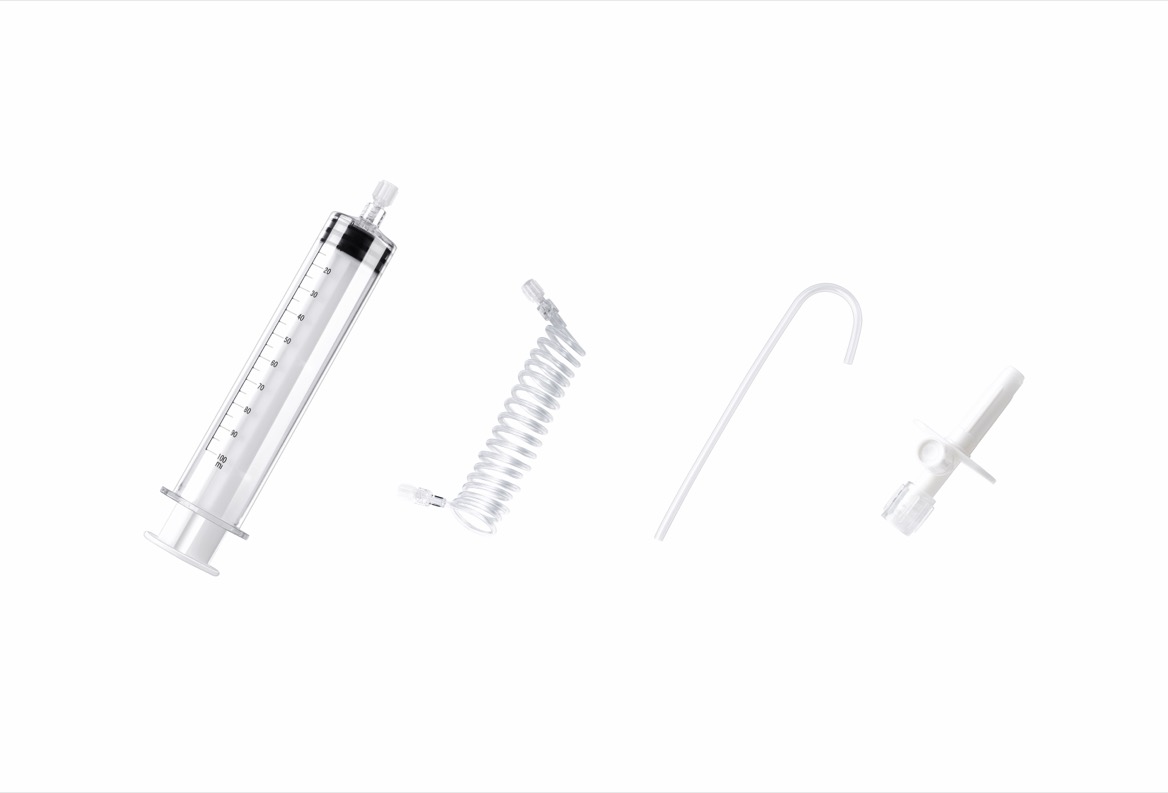
No. Compatibility depends on the injector model, mounting and plunger interfaces, supported capacity, and other system requirements. Obtain written confirmation for the exact syringe and injector combination.
Match usable capacity to the department's established contrast and saline protocols and the injector's supported configuration. A larger syringe is not automatically more suitable.
There is no single rating appropriate for every system. Select a product whose documented limits suit the intended injector and protocol, and check the limits of every connected component.
Do not reuse single-use syringes between patients. Specialized multipatient systems are a separate category and must be operated strictly according to their authorized labeling and infection-control procedures.
No. It addresses the manufacturer's quality management system. Compatibility requires product-specific evidence for the proposed injector and disposable combination.
Provide the injector manufacturer and model, existing disposable reference, syringe capacities, tubing requirements, destination country, anticipated volume, and required regulatory documentation.
1. American College of Radiology. *ACR Manual on Contrast Media*. Authoritative guidance on contrast administration, patient safety, and related clinical considerations.
[https://www.acr.org/Clinical-Resources/Clinical-Tools-and-Reference/Contrast-Manual] [acr]
2. Centers for Disease Control and Prevention. *Preventing Unsafe Injection Practices*. Guidance on aseptic technique, single-use syringes, and prevention of cross-patient contamination.
[https://www.cdc.gov/injection-safety/hcp/clinical-safety/index.html] [cdc]
3. UCSF Department of Radiology and Biomedical Imaging. *Intravenous CT & X-ray Contrast Guidelines*. Institutional guidance illustrating vascular access assessment and power-injection precautions.
[https://radiology.ucsf.edu/patient-care/health-professionals/patient-safety-healthcare-professionals/ct-and-x-ray-contrast-guidelines/info] [radiology.ucsf]
4. International Organization for Standardization. *ISO 13485:2016—Medical Devices: Quality Management Systems—Requirements for Regulatory Purposes*. Basis for the quality-system discussion.
[https://www.iso.org/standard/59752.html] [iso]
5. U.S. Food and Drug Administration. *Medical Device Safety and the 510(k) Clearance Process*. Explanation of substantial equivalence and the distinction between clearance and premarket approval.
[https://www.fda.gov/medical-devices/510k-clearances/medical-device-safety-and-510k-clearance-process] [fda]
6. Bayer. *Syringes & Disposables*. Manufacturer information illustrating modality-specific consumables and system-specific extension sets.
[https://www.radiologysolutions.bayer.com/products/syringes-disposables] [radiologysolutions.bayer]
7. Bayer. *MEDRAD Stellant Injection System*. Manufacturer discussion of compatibility and separately labeled single-patient and multipatient disposable configurations.
[https://radiology.bayer.com.au/products/medrad-stellant] [radiology.bayer.com]
8. *Pressure Injectors for Radiologists: A Review and What Is New*. Peer-reviewed review of injector technology and pressure-injection safety considerations.
[https://pmc.ncbi.nlm.nih.gov/articles/PMC4329682/] [pmc.ncbi.nlm.nih]