


close
Choose Your Site
Global
Social Media
Views: 237 Author: Maiwei Biotech Publish Time: 2026-10-21 Origin: Site


Content Menu
● What Is a CT Dual Syringe Kit?
● Why Contrast and Saline Delivery Must Be Evaluated Together
● 1. Confirm Exact CT Injector Compatibility
>> Match the model, not merely the brand
>> Distinguish CT consumables from MRI and angiography products
● 2. Choose Syringe Capacity Around Your Protocols
● 3. Verify Pressure and Flow Limits Across the Complete Fluid Path
>> Do not evaluate the syringe in isolation
>> Pressure capability does not guarantee the target flow rate
● 4. Assess Connecting Tubing, Priming Volume, and Layout
>> Select tubing length for the examination room
>> Treat residual volume as a purchasing variable
● 5. Review Sterility, Packaging, and Traceability
● 6. Verify Regulatory Claims at Product Level
● 7. Run a Structured Sample Evaluation Before Bulk Purchasing
>> Stage 1: Review documents before testing
>> Stage 2: Assess preparation and handling
>> Stage 3: Review the intended workflow
● 8. Compare Cost per Completed Examination
● A Practical CT Dual Syringe Kit Selection Checklist
● How MAIWEI INC. Can Support Product Selection
>> 1. What is the main advantage of a CT dual syringe kit?
>> 2. Are CT dual syringe kits universally compatible?
>> 3. Is a 325 psi rating suitable for every CT examination?
>> 4. Can a saline flush always reduce contrast volume?
>> 5. Can a single-use kit be shared between patients?
>> 6. What should distributors request before placing an order?
Selecting the right CT dual syringe kit starts with matching the complete disposable fluid path to your injector, imaging protocols, and clinical workflow. Syringe capacity matters, but so do pressure limits, connecting tubing, filling accessories, regulatory documentation, and the practical steps required to prepare each examination.
For procurement teams, the challenge is comparing products that may look similar while carrying different compatibility claims and operating limits. For radiographers and technologists, the priority is a predictable setup that supports the prescribed contrast and saline delivery sequence.
At MAIWEI INC., our manufacturing perspective is straightforward: evaluate the kit as a system, not as two syringes in a package. This guide explains what to check, which questions to ask suppliers, and how to assess samples before committing to routine purchasing.
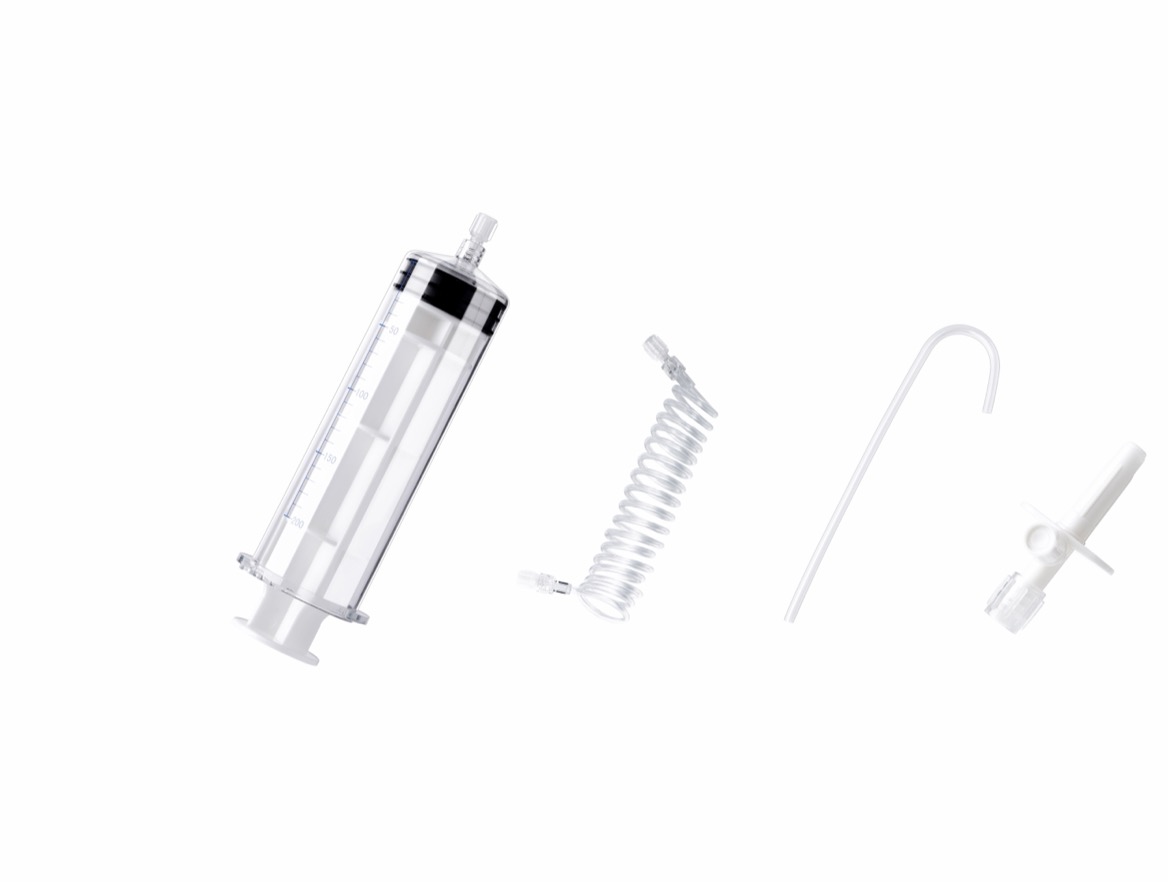
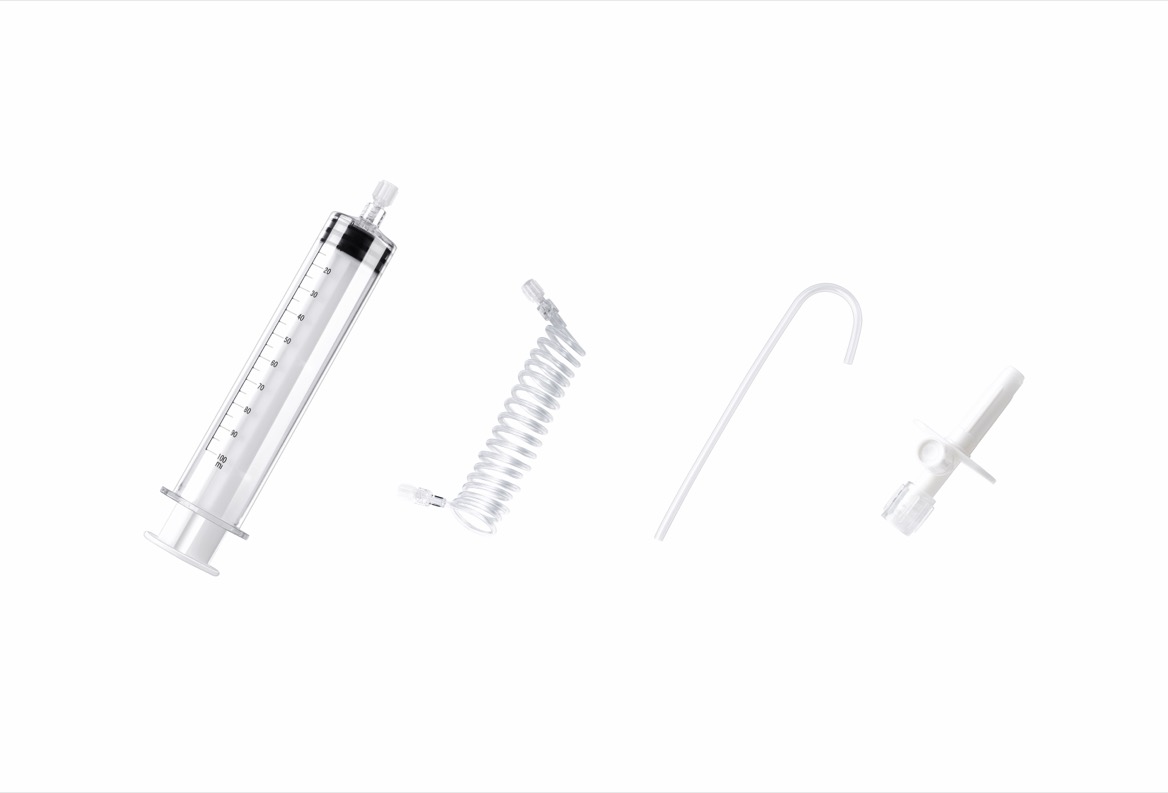
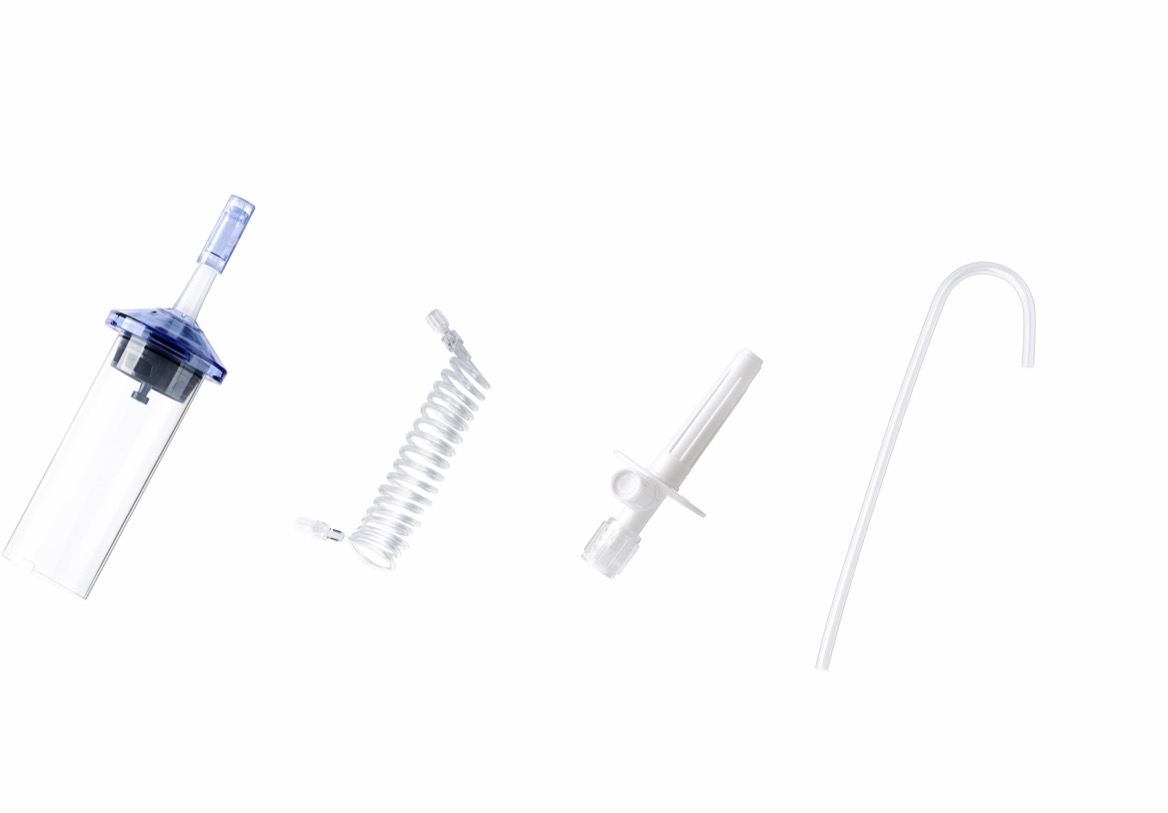
A CT dual syringe kit typically contains two disposable syringes: one for iodinated contrast medium and another for saline. Depending on the configuration, it may also include high-pressure connecting tubing, a T- or Y-connector, filling spikes, quick-fill tubes, and protective caps.
A compatible dual-head CT injector controls the delivery sequence. Depending on the injector's capabilities and approved configuration, this may include contrast injection followed by saline or other supported multiphase delivery patterns.
However, "dual syringe" does not describe a universal standard. Syringe geometry, mounting interfaces, capacities, tubing arrangements, and filling methods vary. A kit intended for one injector platform should not be assumed suitable for another.
A saline chaser helps move contrast remaining in the delivery tubing and peripheral venous circulation toward the central circulation. In appropriate protocols, this can improve contrast utilization and reduce streak artifacts associated with concentrated contrast in central veins.
Published research supports these benefits, but results depend on the examination and injection protocol. One thoracic CT study compared 60 mL of contrast followed by 30 mL of saline with 75 mL of contrast alone. It reported comparable central arterial enhancement and reduced perivenous artifacts with the saline-flush approach.
That finding is not a universal instruction to reduce contrast volume by 20%. Scanner technology, patient characteristics, iodine concentration, timing, and diagnostic objectives all influence protocol design.
The purchasing implication is simpler: select a kit that reliably supports your department's validated contrast-and-saline protocols. A disposable kit does not independently determine the correct clinical dose.
"Compatible with a leading injector brand" is insufficient purchasing information. Ask the supplier to identify the exact injector models and any applicable configuration restrictions.
Your compatibility review should address:
- Injector manufacturer and model.
- Syringe mounting and locking interface.
- Plunger engagement requirements.
- Approved syringe capacities.
- Required adapters or accessories.
- Supported filling and injection workflows.
Compatibility should be documented in applicable labeling, instructions for use, or other controlled technical documentation—not inferred from appearance.
A manufacturer may supply consumables for several imaging modalities. That does not make those products interchangeable.
CT, MRI, and angiography systems can differ in syringe design, capacity, pressure requirements, and intended use. Purchase by the specific product code and documented application rather than by a broad description such as "high-pressure syringe."
Two 200 mL syringes are available in some established CT configurations, but they are not the only option. Manufacturer documentation also describes other capacities, including 150 mL syringes on particular systems.
Select capacity by reviewing your actual examination mix:
| Selection factor | What to establish |
|---|---|
| Contrast requirements | Maximum programmed volume for relevant protocols |
| Saline requirements | Volume needed for the prescribed delivery sequence |
| Preparation | Fluid required for filling and priming |
| Injector compatibility | Capacities supported by the specific system |
| Workflow | Whether different kits would complicate stocking or setup |
The largest syringe is not automatically the best purchasing choice. Conversely, a smaller syringe should not be selected solely to reduce unit cost if it cannot support the required workflow.
Avoid confusing syringe capacity with the volume prescribed for a patient. Capacity describes the container; the clinical protocol determines delivery.
A CT contrast injection setup includes more than the injector and syringe. Connecting tubing, connectors, extension components, and vascular access devices also have operating restrictions.
The selected configuration must remain within every applicable component's labeled limits.
For example, certain MEDRAD Stellant FLEX configurations provide programmable pressure limits up to 325 psi. That is a platform-specific example, not a universal specification for all CT dual syringe kits.
Ask suppliers for documented pressure ratings and operating conditions for the exact kit under consideration.
A system can reach its pressure limit before achieving the programmed flow. Relevant factors include contrast viscosity, tubing characteristics, connectors, and vascular access.
Do not assume that a high pressure rating makes an unsuitable catheter acceptable. Clinical teams must verify that the access device supports the intended power-injection conditions.
A useful procurement question is: "What evidence supports this complete configuration under our intended operating conditions?"
High-pressure connecting tubing must accommodate the injector position, patient connection, and table movement without creating unnecessary tension.
However, longer tubing is not automatically better. Additional length can increase priming volume and make routing more cumbersome.
During evaluation, check whether the tubing:
- Reaches the patient connection throughout intended table movement.
- Can be routed without pulling or becoming trapped.
- Allows practical inspection for air.
- Has clearly documented priming volume.
- Fits the department's established preparation workflow.
Two kits with similar syringe capacities may require different priming volumes. That difference can affect fluid preparation and material use across a busy department.
Request the fluid-path priming volume for the supplied configuration rather than estimating it from tubing length.
This is especially useful when comparing kits with different connector arrangements or extension components. Evaluate their suitability under the approved protocol; do not change patient delivery volumes simply to compensate for a purchasing preference.
A technically compatible kit still needs packaging and labeling that support safe handling.
Inspect representative samples for:
- Intact sterile barriers and protective caps.
- Legible product codes and lot numbers.
- Clearly displayed expiration dates.
- Storage instructions.
- Accessible instructions for use.
- Consistent contents across sampled packages.
Confirm the labeled sterilization method and request appropriate supporting documentation.
Single-use instructions also deserve explicit attention. A kit labeled for one patient must not be reused between patients. Products intended for validated multipatient systems have separate labeling and operating requirements.
The presence of a check valve does not independently authorize reuse or establish infection-control suitability.
Quality-system credentials and product market authorization answer different questions.
ISO 13485 certification concerns a medical-device quality management system within its stated scope. It does not, by itself, establish that every product is authorized for every market.
Likewise, CE documentation must correspond to the relevant product and applicable regulatory requirements.
For the United States, use the term "510(k) clearance" when applicable. It is not interchangeable with product approval or establishment registration.
Before qualifying a supplier, request:
1. The legal manufacturer's name.
2. The exact product names and catalog numbers.
3. Current quality-system documentation and scope.
4. Applicable declarations and market-access documentation.
5. Relevant 510(k) information, where required.
6. Labeling connecting those documents to the proposed products.
A certificate should support a traceable purchasing decision, not merely decorate a brochure.
Start with compatibility statements, instructions, pressure specifications, labeling, shelf life, and regulatory documentation.
Resolve discrepancies before introducing samples into clinical use. A verbal assurance should not override conflicting product labeling.
Under an approved institutional evaluation process, trained staff can assess:
- Syringe installation and removal.
- Filling accessory usability.
- Connector handling.
- Priming and air inspection.
- Tubing routing.
- Packaging identification.
- Disposal requirements.
Record observations consistently. "Easy to use" is less informative than identifying which preparation steps were completed reliably and which caused confusion.
Any clinical evaluation requires appropriate institutional authorization and adherence to approved protocols.
Document preparation difficulties, leakage, pressure interruptions, connection problems, and product-related wastage. Record the injector configuration and test conditions so findings remain interpretable.
An uneventful small evaluation does not prove that rare failures cannot occur. Its purpose is to identify practical incompatibilities and support a better-informed qualification decision.
Unit price alone can hide operational differences.
A more useful purchasing framework considers:
> Cost per completed examination = kit purchase cost + preparation resources + attributable wastage + replacement consumables + product-related interruption costs.
Use locally measured information wherever possible.
For example, a lower-priced kit may require extra accessories or create more preparation difficulty. A higher-priced alternative should still demonstrate a meaningful advantage rather than relying on premium positioning.
For distributors and OEM customers, also evaluate:
- Lead times and order consistency.
- Packaging and labeling requirements.
- Shelf life remaining on arrival.
- Technical support.
- Complaint handling.
- Change-notification procedures.
- Supply continuity.
These factors matter because a product specification is only useful when the supplier can deliver it consistently.
Use the following checklist when comparing shortlisted products:
| Requirement | Evidence to request | Warning sign |
|---|---|---|
| Injector compatibility | Exact model and product-code mapping | Broad brand-only claim |
| Syringe capacity | Labeled capacity for each syringe | Capacity assumed from appearance |
| Operating limits | Applicable pressure and flow restrictions | Syringe rating presented as the whole-system limit |
| Tubing suitability | Length, connectors, and priming volume | Missing configuration details |
| Sterile supply | Labeling and supporting documentation | Unclear barrier or expiration information |
| Market access | Product-specific documentation | Unrelated certificates |
| Supplier control | Traceability and change procedures | No defined notification process |
Treat unresolved essential requirements as qualification issues, not minor commercial details.
MAIWEI INC. develops and manufactures high-pressure injector syringes, connecting tubing, and related consumables for CT, MRI, and angiography applications.
According to the company information supplied for this article, MAIWEI serves hospitals, distributors, and OEM customers across more than 60 countries and regions and maintains quality and regulatory credentials relevant to its business. Buyers should verify the current documentation and authorization scope for each selected product.
For a focused recommendation, send MAIWEI your injector model, destination market, required syringe capacities, tubing configuration, and expected purchasing volume.
Request a model-specific compatibility review, applicable documentation, and evaluation samples before final qualification. That creates a clearer path from product inquiry to an evidence-based purchasing decision.
It supports separate contrast and saline delivery through a compatible dual-head injector. Depending on the prescribed protocol, the saline phase can help utilize contrast remaining in the delivery path and reduce certain artifacts.
No. Compatibility depends on the injector model, mounting interface, syringe design, capacity, and labeled configuration. Verify the exact product code before ordering.
Not automatically. The intended injection must remain within the limits of the complete configuration, including tubing, connectors, and vascular access. Follow applicable labeling and institutional protocols.
No. Research supports reductions in particular protocols, but the findings cannot be applied universally. Clinical teams must determine appropriate volumes for the patient and examination.
No. A single-patient, single-use kit must be handled according to its labeling. Check valves do not convert it into a validated multipatient product.
Request model-specific compatibility information, product specifications, applicable market-access documents, shelf-life details, sample availability, and written procedures for complaints and product changes.
1. American College of Radiology. *ACR Manual on Contrast Media.* Professional guidance on contrast administration, injection considerations, and associated safety issues. [acr]
2. University of California, San Francisco, Department of Radiology and Biomedical Imaging. *Intravenous CT & X-ray Contrast Guidelines.* Institutional guidance on vascular access, saline testing, and power-injection preparation. [radiology.ucsf]
3. U.S. Food and Drug Administration. *MEDRAD Stellant FLEX CT Injection System with Certegra Workstation: 510(k) Documentation, K173773.* Source for platform-specific capacities, pressure settings, intended use, and single-patient labeling. [accessdata.fda]
4. Bayer. *Syringes & Disposables.* Manufacturer information describing CT syringe kit components and configurations. [radiologysolutions.bayer]
5. U.S. Food and Drug Administration. *Premarket Notification 510(k).* Explanation of substantial equivalence and clearance for commercial distribution. [fda]
6. *American Journal of Roentgenology.* *Reduction of Contrast Material Dose and Artifacts by a Saline Flush Using a Double Power Injector in Helical CT of the Thorax.* Clinical study supporting the protocol-specific contrast-volume and artifact discussion. [ajronline]
7. MAIWEI INC. Company background supplied for this article. Source for the company's stated business activities, customer groups, certifications, and international reach. These statements were not independently verified in full. Public manufacturer and regional product information provides additional business and product context. [maiweibio]