


close
Choose Your Site
Global
Social Media
Views: 224 Author: Maiwei Biotech Publish Time: 2026-10-03 Origin: Site


Content Menu
● Contrast Injection Consumables
>> High Pressure Injector Syringes
>> CT, MRI, and Angiography Requirements
● Quality and Regulatory Evidence
>> Understanding Company Credentials
>> Reviewing Product-Level Documentation
>> Performance Evidence Worth Examining
● Practical Purchasing and Evaluation
>> Build a Compatibility Matrix
>> Assess the Complete Fluid Pathway
>> Turn User Feedback Into Evidence
>> Evaluate Total Purchasing Cost
>> Plan Distributor and OEM Requirements
● Partnering With Maiwei Medical
>> Start With Specific Requirements
>> What are high pressure syringes?
>> How do I confirm injector compatibility?
>>> Are pressure connecting tubes interchangeable?
>> Can one kit serve every modality?
>> What documents should buyers request?
>> Does Maiwei support OEM customers?
Choosing high pressure syringes and pressure connecting tubes is about more than finding a consumable that fits an injector. Hospitals, distributors, and OEM buyers need a documented match between the injector, disposable components, intended application, and local regulatory requirements. MAIWEI INC., operating under the Maiwei Medical brand, focuses on developing and manufacturing contrast injection consumables for CT, MRI, and angiography.
According to company-provided information, Maiwei supplies customers in more than 60 countries and regions. Its portfolio includes high pressure injector syringes, pressure connecting tubes, and related accessories compatible with multiple mainstream injection systems.
From a procurement perspective, the most useful question is not simply, "Can this supplier provide the product?" It is, "Can this supplier demonstrate the correct product configuration and support it throughout the purchasing cycle?"
This guide explains what buyers should evaluate and how to build a more reliable sourcing process.

High pressure injector syringes hold contrast media or saline for delivery through a compatible power injection system. Unlike an ordinary syringe selected primarily by volume, an injector syringe must also match the equipment's mounting interface, drive mechanism, and specified operating conditions.
For buyers, compatibility should be the starting point.
A syringe that appears similar to an existing disposable is not automatically an acceptable replacement. The exact injector model, syringe configuration, intended use, and applicable instructions must be checked together.
When requesting a quotation, specify:
- Injector manufacturer and exact model.
- Single-head or dual-head configuration.
- Required syringe capacity.
- Intended imaging application.
- Required accessories and packaging configuration.
- Destination market and documentation requirements.
This information helps prevent quotations for superficially similar but unsuitable products.
Pressure connecting tubes form part of the fluid pathway between the injection system and the patient access connection. Their selection deserves the same attention as syringe selection.
Important characteristics include labeled pressure limits, tubing length, connector configuration, and any valves included in the assembly.
The practical priority is verification, not appearance.
A familiar connector shape does not establish that a tube is suitable for the intended power injection setup. Buyers should review the product specification and instructions rather than relying on a photograph or generic description.
Tube length also needs to suit the room layout without creating unnecessary tension during equipment or patient movement. The final configuration should be assessed by the responsible clinical team.
These applications should not be treated as interchangeable purchasing categories. The appropriate disposable configuration depends on the injector and the approved clinical workflow.
| Application | Main purchasing focus | Information to confirm |
|---|---|---|
| CT contrast injection | Syringe configuration and complete fluid pathway | Injector model, syringe capacity, tubing configuration, and labeled operating limits |
| MRI contrast injection | Injector compatibility and suitability for the intended environment | Exact model match, product labeling, and applicable environment restrictions |
| Angiography | Equipment-specific syringe and accessory selection | Intended use, injector interface, pressure limits, and connection requirements |
| Distributor supply | Clear product identification across customer accounts | Product codes, compatibility documentation, market requirements, and order consistency |
| OEM projects | Defined specifications and responsibilities | Technical drawings, labeling scope, validation responsibilities, and change control |
For Maiwei products, request a current, model-specific compatibility document before ordering. Avoid interpreting "compatible with mainstream injectors" as a universal compatibility claim.
Maiwei's company-provided profile identifies ISO 13485 certification, CE marking, and FDA 510(k) clearance among its credentials. These terms describe different forms of evidence and should not be presented as interchangeable certifications.
Scope matters more than a collection of logos.
ISO 13485 concerns a medical-device quality management system within the certificate's stated scope. CE marking relates to conformity with applicable European requirements for the covered device. FDA 510(k) clearance concerns a specific device submission and its cleared intended use.
For a purchasing team, the useful next step is to connect each credential to the legal manufacturer and the products being considered.
Request current documentation and check whether the company name, manufacturing site, device description, and relevant product family align with the proposed order.
A supplier's general credentials do not answer every product-level question.
Before approval, buyers should request the documents necessary for their own quality system and destination market. Depending on the product and jurisdiction, the review may include:
- Current quality management system certificate and scope.
- Applicable declaration of conformity.
- Relevant clearance number and device identification.
- Product specification and instructions for use.
- Sterilization and shelf-life information.
- Packaging and storage requirements.
- Lot identification and complaint reporting process.
This is a documentation checklist, not a claim that every document applies identically in every market.
If a requested product code is missing from the available evidence, resolve the discrepancy before purchasing. A broad marketing statement should never substitute for a product-specific regulatory review.
An expert-minded evaluation asks how performance claims were established.
For high pressure syringes and connecting assemblies, relevant evidence may address pressure performance, connection strength, injector compatibility, biocompatibility, aging, and transportation conditions.
Public regulatory summaries for devices in this category illustrate the importance of these testing areas. However, another manufacturer's submission is not evidence that Maiwei's products have passed the same tests.
Ask for applicable evidence covering the proposed product.
A useful discussion with the supplier should establish the test configuration, acceptance criteria, and relationship between the tested device and the ordered item. This is particularly important when evaluating a new configuration or an OEM modification.
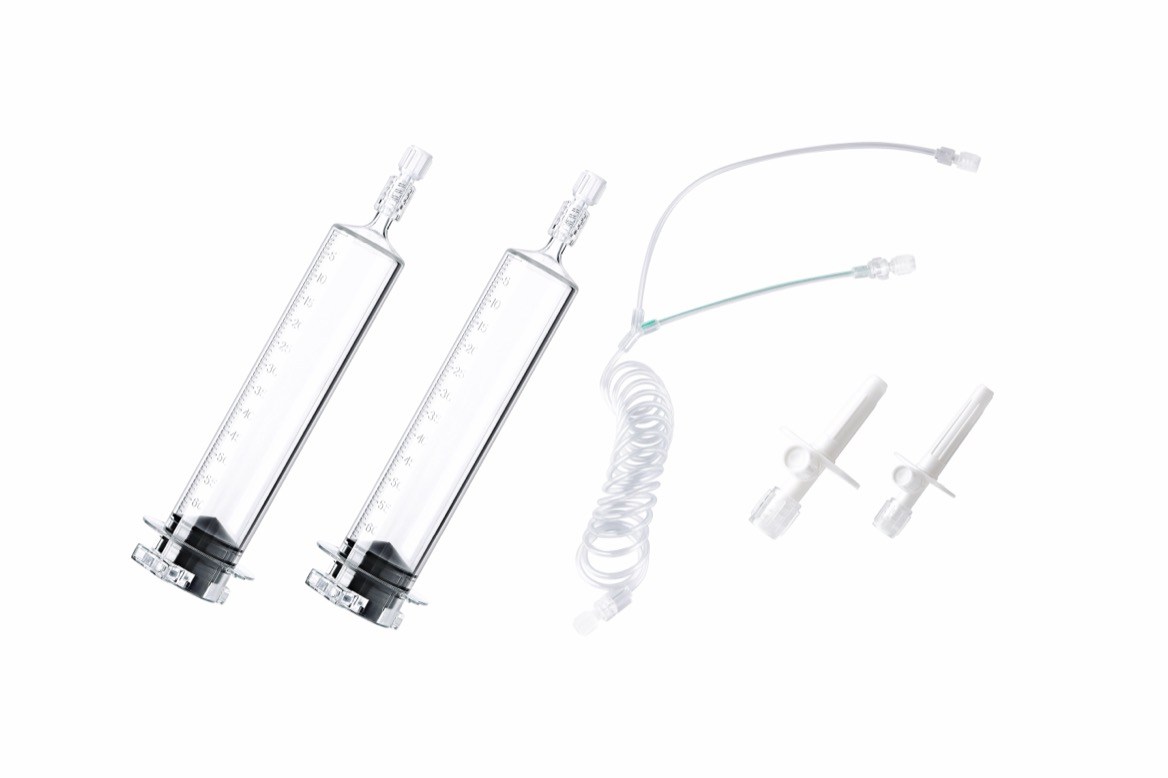
A compatibility matrix is one of the simplest ways to make purchasing more precise.
Create one row for each injector model in the customer's installed equipment base. Record the proposed syringe code, capacity, tubing configuration, required accessories, and supporting documentation.
Include the date and version of the supplier's confirmation.
This prevents a common sourcing problem: a product approved for one department gradually being assumed suitable for another injector without a new review.
For distributors, the same matrix can support customer inquiries and reduce dependence on informal product-name matching.
Use a staged process before moving from a quotation to routine purchasing.
1. Define the application, injector model, destination market, and required disposable configuration.
2. Obtain a product-code-specific specification and compatibility statement.
3. Review regulatory documents, labeling, packaging, shelf life, and storage requirements.
4. Evaluate samples under an approved institutional process and applicable instructions.
5. Document findings, discrepancies, and acceptance criteria.
6. Approve the purchasing specification and establish rules for future product changes.
Sample evaluation should not bypass institutional approval or involve unapproved clinical use.
The most valuable outcome is a documented decision. Record which product was evaluated, on which injector, under which conditions, and with whose approval.
That record becomes the baseline for repeat orders.
A suitable syringe alone does not establish a suitable injection assembly.
The responsible team must consider the syringe, tubing, valves, connectors, and vascular access device together. Each component's labeled limits and intended use remain relevant.
Do not use a higher-rated component as a reason to exceed another component's permitted conditions.
Clinical guidance also emphasizes appropriate vascular access, preparation of the injection apparatus, and assessment of catheter patency. These responsibilities cannot be transferred to a consumable supplier.
This article supports purchasing decisions; it does not replace clinical protocols, manufacturer instructions, or professional judgment.
Authentic customer feedback can reveal practical issues that specifications do not fully describe.
Useful feedback might address product identification, packaging clarity, assembly handling, order accuracy, or responsiveness when questions arise.
However, a positive comment is not proof of improved clinical outcomes.
When collecting feedback, ask customers to identify:
- The product code and injector model.
- The type of evaluation or use.
- The specific issue or benefit observed.
- The evaluation period.
- Any limitations or unresolved concerns.
Publish testimonials only with permission and accurate attribution. Avoid adding invented quotations or presenting a distributor's commercial feedback as a clinician's safety assessment.
For Maiwei, verified feedback can strengthen future product pages by explaining real purchasing and workflow experiences without overstating what those experiences prove.
The lowest unit price is not always the most useful purchasing outcome.
A more complete assessment considers sample evaluation, freight, documentation review, inventory holding, staff familiarization, and the handling of incorrect or damaged deliveries.
Compare suppliers against the same specification and delivery assumptions.
Otherwise, a lower quotation may simply exclude accessories or services included in another offer.
For a distributor managing several injector platforms, reducing product-selection errors may be more valuable than obtaining a small discount on an individual syringe. The appropriate decision depends on documented costs, not an unsupported promise of savings.
Hospitals, distributors, and OEM buyers need different forms of support.
Hospitals generally need precise product selection and clear instructions. Distributors also need consistent product codes, market documentation, and reliable order communication.
OEM projects require an additional layer of specification control.
Before discussing customization, define which party is responsible for design requirements, validation, labeling, regulatory activities, and approval of changes.
Customization should be treated as a controlled project rather than a packaging request.
Ask Maiwei to confirm available services, project requirements, minimum quantities, and timelines in writing. Do not assume that a configuration change is covered by existing documentation without review.
Maiwei's stated focus on CT, MRI, and angiography consumables provides a starting point for supplier evaluation. Its reported international reach may also be relevant to distributors seeking an export-oriented manufacturing partner.
The next step should be specific.
Send Maiwei your injector list, intended applications, destination countries, required configurations, and estimated purchasing volumes.
Request a matched product proposal covering technical specifications, compatibility evidence, applicable regulatory documentation, sample availability, and commercial terms.
A clear requirement brief makes the supplier's response easier to evaluate and reduces avoidable clarification cycles.
Contact MAIWEI INC. to request a product-specific review of your high pressure syringes and pressure connecting tubes requirements.
Ask for:
- A model-specific compatibility matrix.
- Proposed product codes and kit contents.
- Applicable quality and regulatory documents.
- Sample evaluation arrangements.
- Quotation, lead time, and OEM project requirements.
Choose the configuration that matches your equipment and documentation needs—not simply the product with the broadest compatibility claim.
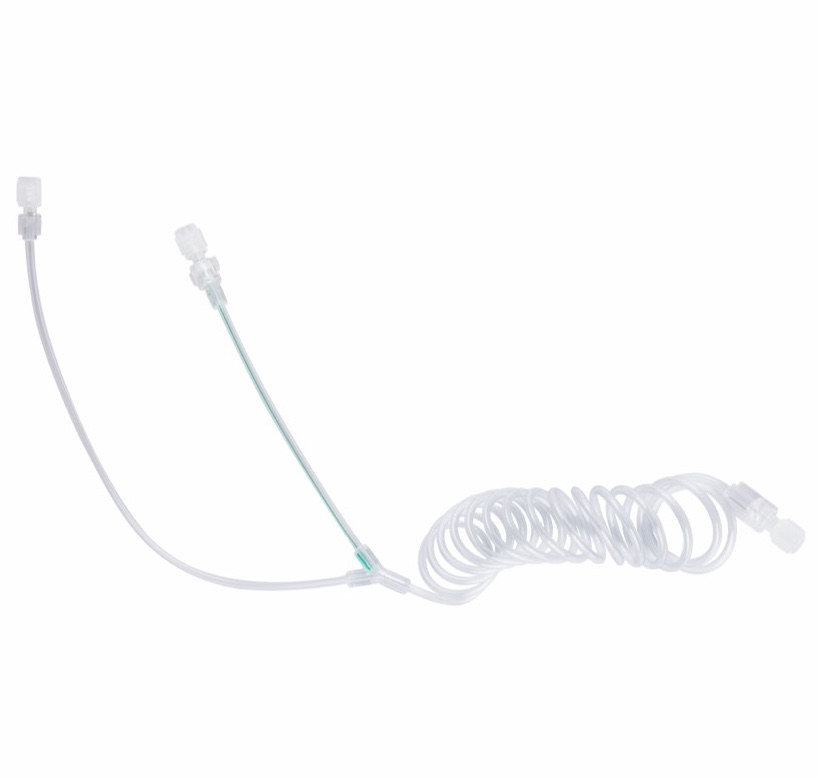
High pressure syringes are syringes designed for use with specified power injection systems. They may deliver contrast media or saline within their labeled intended use. Capacity alone is not enough to select one; injector compatibility and operating limits also matter.
Provide the supplier with the exact injector manufacturer, model, and configuration. Request written confirmation identifying the proposed product code and supporting instructions. Similar appearance or a shared brand name is not sufficient evidence of compatibility.
Not automatically. Tubes can differ in labeled pressure limits, length, connectors, valves, and intended use. Review the complete proposed assembly and its documentation before making a substitution.
Do not assume so. CT, MRI, and angiography configurations must be selected according to the injector and applicable product labeling. Confirm each intended application separately rather than extending an approval from one setup to another.
Start with product specifications, instructions for use, compatibility information, and applicable quality and regulatory documents. Add packaging, shelf-life, storage, and traceability information according to your purchasing procedures and destination-market requirements.
The company-provided profile states that Maiwei serves OEM customers. Specific services and project conditions require confirmation. Discuss the proposed configuration, labeling, technical responsibilities, regulatory implications, quantities, and approval process before committing to a project.
- Company-provided brief — MAIWEI INC. Source for the stated business focus, product categories, customer groups, certification claims, and exports to more than 60 countries and regions. No public URL was supplied for this brief. These claims require company-document verification before publication.
- [Maiwei BioTech — Public website]. The retrieved website lists syringes, tubes, multiple-use systems, and accessories. It uses the name Shenzhen Maiwei BioTech Co., Ltd.; the relationship between that legal entity and MAIWEI INC. should be confirmed before using the website as evidence for corporate credentials. [maiweibio]
- [American College of Radiology — Manual on Contrast Media]. Professional reference covering contrast administration and associated safety topics. Supports the article's distinction between purchasing guidance and clinical responsibilities. [acr]
- [UCSF Department of Radiology — CT and X-ray Contrast Guidelines Information]. Includes practical contrast-administration guidance, vascular-access considerations, and catheter-patency assessment. The page identifies an August 22, 2025 update for its adult intravenous contrast guidance. [radiology.ucsf]
- [FDA — Guidance on Premarket Notification 510(k) Submissions for Piston Syringes]. Regulatory background concerning piston-syringe submission requirements; not evidence of Maiwei-specific clearance. [fda]
- [FDA — K152906 Clearance Letter and Summary]. Clearance dated November 22, 2016, for Wuxi Yushou Medical Appliances Co., Ltd. The summary provides an industry example of pressure, connection-strength, compatibility, biocompatibility, aging, and transportation evaluations. This clearance belongs to another manufacturer and must not be attributed to Maiwei. [accessdata.fda]