


close
Choose Your Site
Global
Social Media
Views: 220 Author: Maiwei Biotech Publish Time: 2026-09-15 Origin: Site


Content Menu
● What Are OEM Compatible Contrast Injector Syringes?
● OEM Compatible vs Original Brand Consumables
● Why Distributors Consider Compatible Syringe Sets
● The Safety Standard: Compatibility Must Be Specific
● Understanding "510(k)," CE, and ISO 13485
>> ISO 13485: A Quality-Management Foundation
>> FDA 510(k): Clearance, Not a General Marketing Claim
>> CE Marking: Market Access Requires Product-Specific Evidence
● A Distributor Qualification Framework
>> Step 1: Map the Installed Base
>> Step 2: Create a Product-to-Injector Matrix
>> Step 3: Review the Evidence Pack
>> Step 4: Conduct a Controlled Customer Evaluation
>> Step 5: Build Post-Sale Support Into the Offer
● Total Cost Is More Than Unit Price
>> Example: Two Supplier Scenarios
● How MAIWEI Supports Distributor Programs
● Questions to Ask Before You Switch Suppliers
● Build a More Resilient Imaging Portfolio
● FAQ
>> 1. Are OEM compatible contrast injector syringes the same as original-brand syringes?
>> 2. Can a compatible syringe be used with every injector from the same brand?
>> 3. What documents should a distributor request from a contrast injector syringe manufacturer?
>> 4. Does FDA 510(k) clearance mean a device is FDA approved?
>> 5. Why is lot traceability important for injector consumables?
>> 6. Can distributors sell OEM compatible injector syringes under a private label?
>> 7. How should a hospital evaluate a new compatible contrast injector syringe?
For medical distributors, OEM compatible contrast injector syringes can be a reliable sourcing alternative when product selection is based on verified compatibility, regulatory documentation, traceability, and stable supply—not price alone. In CT, MRI, and angiography workflows, a syringe and its associated tubing are part of a complete injection pathway, so distributors must evaluate the full system relationship between the disposable, injector model, clinical protocol, and hospital purchasing requirements.
MAIWEI INC. develops and manufactures contrast injector consumables, including high-pressure injector syringes, connection tubing, and related accessories for use with a range of mainstream injector platforms. With an established quality-management framework and market-access documentation including ISO 13485, CE, and FDA 510(k) clearances for applicable product lines, the company serves hospitals, distributors, and OEM customers in more than 60 countries and regions.
This article compares OEM compatible contrast injector syringes with original-brand consumables from the perspective of a medical distributor. It also explains how to qualify a compatible alternative responsibly, reduce commercial risk, and build a more resilient imaging-consumables portfolio.
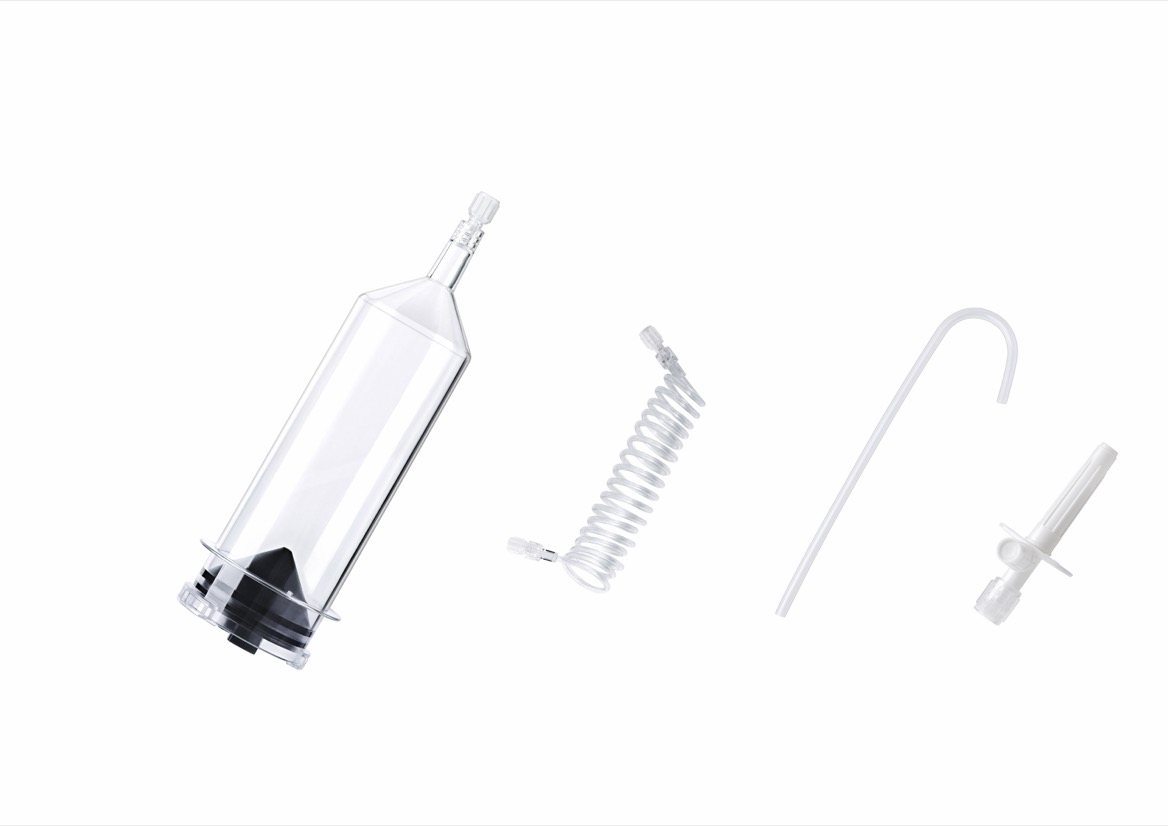
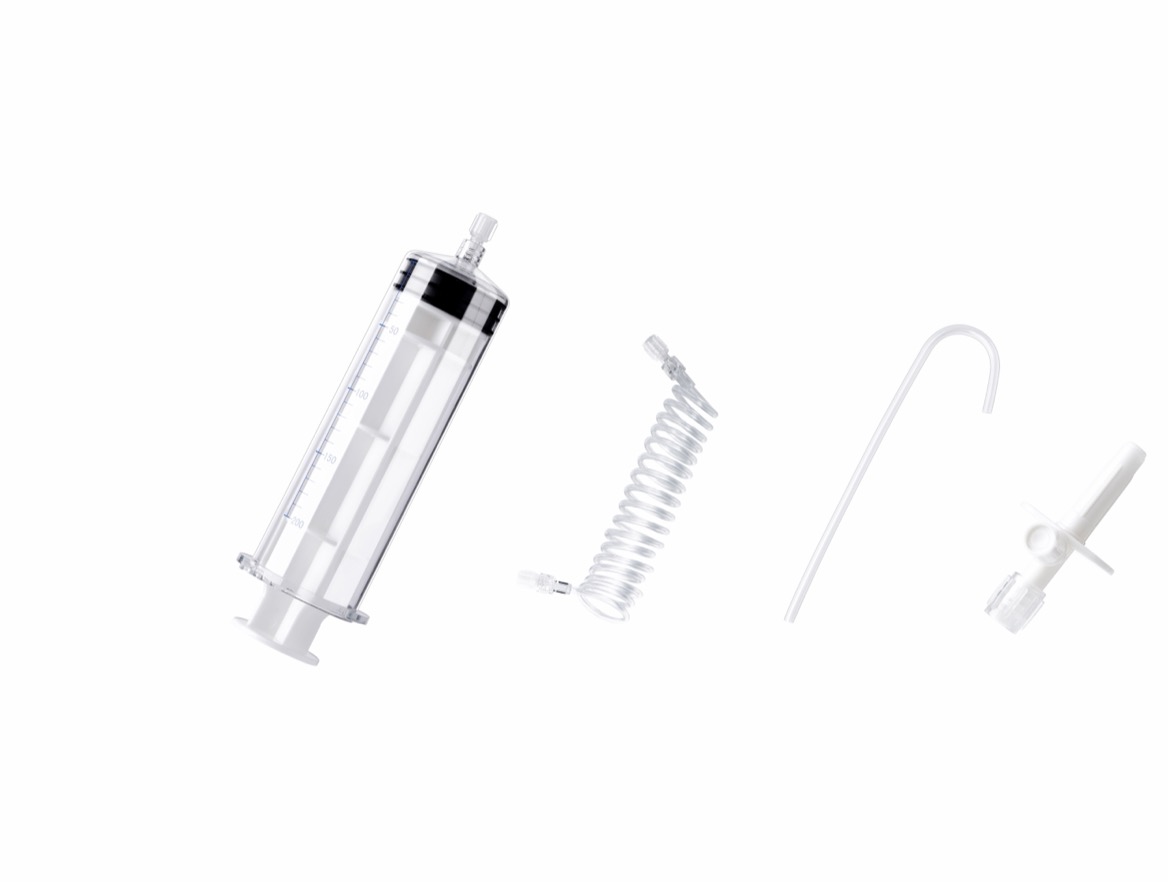
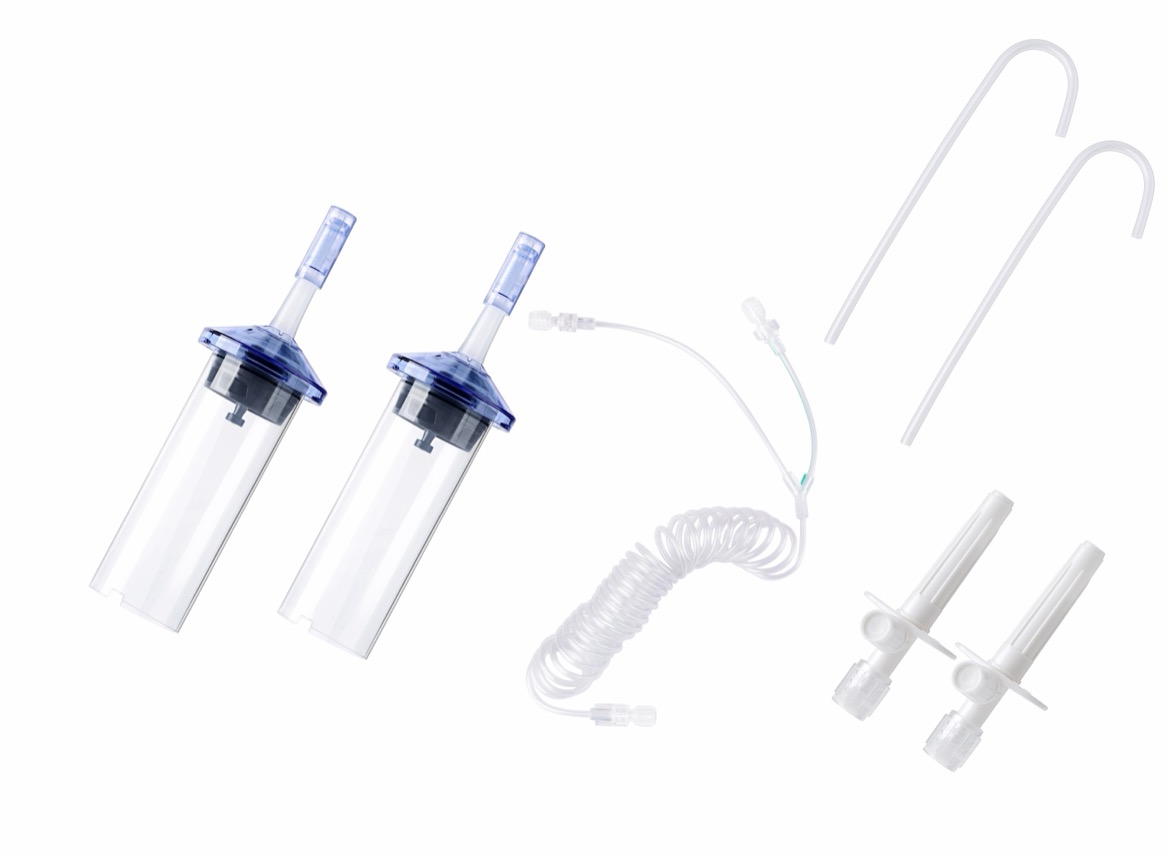
OEM compatible contrast injector syringes are single-use syringes, tubing sets, and accessories manufactured for use with specified contrast media injector systems, rather than supplied under the original injector brand's own consumables label.
The word "compatible" should never be treated as a broad or informal claim. In the medical-imaging market, compatibility needs to be defined at the product-model level. A syringe set may be designed for a specific injector family, with particular requirements for:
- Syringe barrel geometry
- Plunger engagement
- Injector-head fit
- Pressure performance
- Connection design
- Tubing length
- Fluid-path configuration
- Contrast-media and saline delivery protocols
- CT, MRI, or angiography application
- Single-use and sterile-barrier requirements
For distributors, the central question is not simply, "Does the syringe fit?" The better question is:
> Can this compatible syringe set be supplied with the technical, regulatory, quality, and post-market documentation required for its intended market and injector application?
That distinction protects the distributor, supports hospital confidence, and reduces the chance that an apparently low-cost item becomes a costly commercial or service issue later.
Original-brand consumables are supplied by the manufacturer of the injector system or by an authorized channel under that brand. OEM compatible consumables are produced by an independent medical-device manufacturer and are engineered for defined injector platforms.
Neither option is automatically better in every situation. The right choice depends on the hospital's procurement policy, the distributor's regulatory obligations, the local market, service expectations, and the supplier's ability to provide complete evidence.
| Evaluation Area | Original Brand Consumables | OEM Compatible Contrast Injector Syringes |
|---|---|---|
| Brand relationship | Supplied under the injector manufacturer's brand | Supplied by an independent manufacturer or private-label partner |
| Injector matching | Usually designed specifically for the original platform | Must be verified for the exact injector model and intended use |
| Product documentation | Usually available through the original manufacturer's channel | Must be requested and reviewed from the compatible-device manufacturer |
| Purchasing flexibility | May be tied to existing service or supply agreements | May offer more sourcing options and distributor flexibility |
| Portfolio differentiation | Similar products may be offered by many distributors | Private-label, regional exclusivity, and customized packaging may be possible |
| Supply resilience | Dependent on the original brand's channel and allocation | Can create a qualified second-source or alternative-source pathway |
| Commercial positioning | Often purchased for brand continuity | Often selected for value, supply continuity, and portfolio expansion |
| Qualification burden | Lower perceived evaluation burden for the buyer | Requires disciplined compatibility and documentation review |
| Technical support need | Often coordinated through the original brand channel | Requires manufacturer responsiveness and clear product training materials |
The key point is that an OEM compatible solution is not a generic substitute. It should be positioned as a documented, model-specific alternative supported by a qualified manufacturer.
Imaging departments depend on dependable access to consumables. A delayed or inconsistent syringe-set supply can affect scheduled CT, MRI, or angiography procedures, increase administrative workload, and put pressure on procurement teams.
Distributors often add OEM compatible contrast injector syringes to their portfolios for several practical reasons.
Hospitals commonly operate more than one imaging modality and may use injector systems from different brands or generations. A distributor with a structured portfolio of compatible syringe sets can support more customer needs through one supply relationship.
A broader offering may include:
- CT contrast injector syringes
- MRI contrast injector syringes
- Angiography injector syringes
- High-pressure connecting tubes
- Patient tubing
- Filling spikes and transfer devices
- Extension lines
- Disposable accessories for injector workflows
This approach can help distributors shift from being a single-product vendor to becoming a more useful imaging-consumables partner.
A single-source supply model can create operational exposure. Product allocations, shipping disruptions, regional shortages, commercial changes, and discontinued configurations can affect availability.
A qualified compatible manufacturer can provide an alternative route for approved product categories. This does not mean changing products without hospital review. It means preparing an evidence-based option before supply disruption occurs.
For distributors, a robust continuity plan should include:
1. A documented list of installed injector models at key accounts.
2. Approved compatible products matched to each relevant model.
3. Regulatory and quality documentation organized by product family.
4. Forecasting based on monthly or quarterly consumption.
5. Safety-stock targets for high-use configurations.
6. Clear procedures for substitutions, customer approval, and lot traceability.
Many medical distributors compete in markets where products can appear similar on a catalog page. The differentiator is often not the product description. It is the reliability of the commercial and technical support behind the product.
A manufacturer that can offer labeling options, packaging customization, multilingual instructions, product training materials, and responsive technical communication can help a distributor develop a more distinctive position.
For example, a distributor may want to offer a private-label CT injector syringe line while maintaining model-specific compatibility information, lot-level traceability, and localized instructions for use. That requires a manufacturer with both production capability and regulatory discipline.
In contrast injection, performance is linked to the whole fluid-delivery chain. The syringe, pressure jacket where applicable, connecting tube, catheter or vascular access device, contrast agent, saline, injector settings, and clinical technique all influence the procedure.
Professional contrast-media guidance identifies the use of a power injector, high flow conditions, injection-site factors, and contrast-media properties among the factors associated with extravasation risk. It also emphasizes meticulous intravenous technique, appropriate cannula selection, and saline test injection as risk-reduction measures.
For this reason, distributors should avoid making vague claims such as:
- "Fits all injectors"
- "Universal replacement"
- "Same as original"
- "Suitable for every contrast procedure"
- "Compatible with every model from Brand X"
These statements can create unnecessary commercial and compliance risk. Instead, product materials should state the verified injector model, intended application, configuration, and applicable instructions.
Before listing an OEM compatible contrast injector syringe, review the following areas with the manufacturer:
| Verification Item | Why It Matters |
|---|---|
| Exact injector make and model | Compatibility is usually model-specific, not brand-wide |
| Modality | CT, MRI, and angiography have different workflow and configuration needs |
| Syringe volume and configuration | Must match the injector system and intended protocol |
| Maximum rated pressure | Must align with the product's labeled performance parameters |
| Tubing type and connection | Prevents ordering errors and connection mismatch |
| Sterility status | Must match labeling, packaging, and hospital requirements |
| Intended use | Determines how the device may be promoted and supplied |
| Regulatory status | Supports lawful market placement in the intended geography |
| Lot traceability | Enables effective complaint investigation and recall readiness |
| Shelf life and storage | Supports inventory rotation and warehouse control |
| Instructions for use | Helps sales teams and end users understand approved use conditions |
| Complaint and field-support process | Critical when customers report product or performance concerns |
A reliable supplier should be able to provide these materials in a controlled and consistent manner. If the answer to a technical question is unclear, incomplete, or changes between conversations, the distributor should pause qualification until it is resolved.
Regulatory terminology is often used in sales conversations without enough precision. For distributors, understanding what each document means is essential.
ISO 13485 is an internationally recognized quality-management standard for organizations involved in the medical-device lifecycle. It covers the requirements for a quality system designed for medical devices, including areas such as design and development, production, storage, distribution, and service activities.
For a distributor, ISO 13485 certification is not a substitute for reviewing a specific product's documentation. However, it is an important indicator that the manufacturer operates within a formal quality-management structure.
In practical terms, distributors should look for evidence that the manufacturer can control:
- Supplier qualification
- Incoming material inspection
- Production processes
- Product identification
- Batch and lot traceability
- Packaging and labeling control
- Nonconforming product handling
- Complaint investigation
- Corrective and preventive actions
- Change control
- Document control
A 510(k) is a premarket submission to the U.S. Food and Drug Administration. The submission is intended to demonstrate that a device is substantially equivalent to a legally marketed predicate device. FDA evaluates the intended use, technological characteristics, and supporting evidence relevant to the substantial-equivalence determination.
Distributors should use precise language:
- Say "FDA 510(k)-cleared" when the specific product has a relevant clearance.
- Do not say "FDA approved" unless that terminology is specifically applicable to the product's regulatory pathway.
- Do not assume that a clearance for one configuration automatically applies to every syringe, tube, accessory, or regional packaging variation.
- Confirm the exact device name, clearance number, intended use, and applicable product scope.
The FDA explains that substantial equivalence does not mean devices must be identical. The assessment considers factors including intended use, design, materials, performance, safety, labeling, biocompatibility, and other applicable characteristics.
For the European market, CE marking indicates that the manufacturer has completed the applicable conformity-assessment obligations and issued the relevant declaration of conformity before placing the device on the market.
A distributor should request product-specific documentation rather than relying on a broad statement such as "CE certified." Depending on the product and market role, this may include:
- Declaration of Conformity
- Certificate information where applicable
- Product labeling samples
- Instructions for use
- Authorized representative details where required
- UDI or identification information where applicable
- Evidence that the supplied product configuration matches the documentation
The most successful distributors do not treat compatible injector consumables as a simple procurement item. They use a repeatable qualification framework.
Start with customer reality. Build a list of injector systems installed at priority accounts.
Capture:
- Hospital or imaging-center name
- Department or modality
- Injector brand and model
- Syringe configuration used
- Tubing configuration used
- Estimated monthly volume
- Current supply arrangement
- Contract renewal timing
- Known pain points, such as shortages or long lead times
This installed-base map makes sales activity more targeted. It also reduces the risk of promoting the wrong configuration.
A product-to-injector matrix is one of the most useful working tools for a medical distributor. It should clearly identify which SKU is intended for which injector platform and application.
| Distributor Matrix Field | Example Purpose |
|---|---|
| Distributor SKU | Internal ordering and inventory control |
| Manufacturer SKU | Product traceability and technical confirmation |
| Injector make/model | Exact compatibility reference |
| Modality | CT, MRI, or angiography |
| Syringe volume | Helps prevent configuration errors |
| Tube length and connector type | Supports correct procedure setup |
| Sterility and packaging | Supports hospital procurement review |
| Market documentation | Links the SKU to applicable evidence |
| Shelf life | Improves stock rotation and forecasting |
| Customer approval status | Tracks completed evaluations |
This matrix should be maintained through formal change control. If a manufacturer changes a material, packaging format, labeling element, supplier, or device configuration, the distributor needs a process to assess whether customer communication or requalification is necessary.
Before entering a new compatible syringe set into inventory, request a controlled documentation package.
A strong supplier evidence pack commonly includes:
- Product catalog and technical datasheet
- Model-specific compatibility statement
- Instructions for use
- Product labels and packaging information
- Sterilization information where applicable
- ISO 13485 certificate
- CE documentation where applicable
- FDA 510(k) documentation where applicable
- Quality agreement or distributor agreement
- Complaint-handling contact process
- Product-change notification policy
- Sample evaluation process
- Lot traceability information
For a distributor, documentation should be easy to retrieve. A sales representative should not have to search through email threads when a hospital procurement manager requests a certificate, instructions, or device identification details.
A customer evaluation should be planned, documented, and performed according to the hospital's own procedures. The distributor's role is to provide accurate product information, samples where permitted, and timely technical support.
During evaluation, encourage the customer to assess:
- Fit and interface with the specified injector model
- Ease of setup within the normal workflow
- Packaging usability
- Label clarity
- Availability of instructions
- Product integrity at opening
- Appropriate use according to the supplied instructions
- Feedback from radiology staff and purchasing teams
The distributor should never encourage off-label use, unverified combinations, or changes to clinical injection parameters outside the instructions and local protocol.
A syringe set is a recurring-use product. Long-term confidence depends on what happens after the first purchase order.
A distributor should be prepared to provide:
- Fast lot-number collection for complaints
- Product-use documentation on request
- Clear escalation to the manufacturer
- Replacement and investigation procedures
- Change-notification communication
- Inventory and expiry-date management
- Sales training for new staff
- Customer-facing compatibility guides
This is where a responsive manufacturer relationship becomes commercially valuable. The distributor is not only selling a disposable; the distributor is supplying continuity, information, and accountability.
Price matters, especially for high-volume imaging consumables. But a distributor should assess total commercial value rather than only the ex-works or landed price per syringe set.
A lower unit price can lose value if it comes with uncertain documentation, inconsistent lead times, poor packaging, weak complaint support, or high ordering complexity.
A more complete evaluation includes:
Total Supply Value=Product Cost+Freight+Inventory Cost+Qualification Cost+Service Risk Cost
The formula is not a regulatory calculation. It is a practical procurement lens.
Supplier A offers a lower unit price but has no clear compatibility matrix, slow document response, and limited batch information. Supplier B has a modestly higher unit price but provides controlled documentation, model-specific compatibility references, predictable delivery, and responsive technical support.
For a distributor supplying hospitals, Supplier B may create the stronger commercial outcome because it reduces the risk of delayed customer qualification, stock disputes, order errors, and complaint-handling uncertainty.
The lesson is simple: a compatible contrast injector syringe should be evaluated as a managed medical-device supply solution, not as a commodity plastic component.
MAIWEI INC. focuses on contrast injector consumables for CT, MRI, and angiography applications. Its product range includes high-pressure injector syringes, connection tubes, and supporting consumables designed for compatibility with multiple mainstream injector systems.
For distributors seeking a dependable OEM compatible contrast injector syringe partner, the most important support areas include:
- Product configurations for multiple imaging applications
- Compatibility-focused product selection
- Quality-management documentation
- Market-access documentation for applicable products
- Lot-level traceability and controlled manufacturing processes
- Stable export capability for international distribution
- Technical communication during product qualification
- OEM and private-label cooperation possibilities
- Packaging and labeling support aligned with market needs
- Long-term supply planning for recurring-use consumables
MAIWEI serves customers across more than 60 countries and regions. This international supply experience is especially relevant to distributors that need consistent export documentation, coordinated logistics, and a manufacturer familiar with the expectations of hospital, distributor, and OEM customers.
However, every distributor should still confirm the exact product configuration, intended use, compatibility scope, and documentation required for its own market before commercial launch.
Before adding a compatible contrast injector syringe line, ask the manufacturer these questions.
1. Which exact injector models is each syringe set designed to work with?
2. Can you provide a controlled compatibility matrix and product-specific instructions for use?
3. Which product configurations are covered by the available regulatory documentation in my target market?
4. What pressure, volume, tubing, and connector specifications apply to each SKU?
5. How are lots identified, and what information is available for complaint investigation?
6. What is your process for notifying distributors about design, material, packaging, or labeling changes?
7. What are your normal lead times, minimum order quantities, and safety-stock options?
8. Can you support sample evaluation, distributor training, and customer technical questions?
9. Do you offer OEM branding, private-label packaging, or market-specific labeling support?
10. Who is the responsible technical and quality contact if a hospital reports an issue?
A manufacturer that answers these questions clearly and consistently is more likely to be prepared for a long-term distributor relationship.
OEM compatible contrast injector syringes can be a credible alternative for medical distributors when they are sourced from a qualified manufacturer and matched carefully to the intended injector platform. The strongest distributor programs combine verified compatibility, complete documentation, lot traceability, disciplined evaluation, and responsive after-sales support.
For hospitals, the benefit is a dependable consumables option that fits established imaging workflows. For distributors, the benefit is a more complete portfolio, greater supply flexibility, and an opportunity to create differentiated value beyond price.
Contact MAIWEI INC. to request a model-specific compatibility review, product catalog, documentation package, or sample-evaluation discussion for CT, MRI, and angiography contrast injector consumables.
They are not necessarily identical products, and they should not be marketed as identical unless that claim is demonstrably accurate and permitted. OEM compatible contrast injector syringes are designed for defined injector systems and must be evaluated according to their own labeling, intended use, technical specifications, and supporting documentation.
No. Compatibility should be verified for the exact injector model and configuration. Injector systems from the same brand may differ in syringe geometry, plunger interface, pressure requirements, tubing connection, software-controlled workflow, or accessory design.
At minimum, request a product datasheet, model-specific compatibility information, instructions for use, labeling details, ISO 13485 certificate, relevant CE or FDA documentation, lot-traceability information, complaint-handling procedures, and a product-change notification policy.
No. FDA explains that a 510(k) is a premarket submission used to demonstrate substantial equivalence to a legally marketed predicate device. The proper term for a device that has received a favorable 510(k) decision is generally "FDA 510(k)-cleared," not "FDA approved."
Lot traceability allows the manufacturer and distributor to identify the production batch connected to a customer order or complaint. This supports faster investigation, targeted corrective action, inventory control, and customer communication if a field issue occurs.
In many cases, private-label cooperation may be possible, but the distributor must confirm applicable regulatory responsibilities, labeling requirements, market-registration obligations, and quality-agreement terms before launch. The manufacturer and distributor should define these responsibilities in writing.
The hospital should follow its own procurement, risk-management, and clinical evaluation procedures. The evaluation should confirm the specified injector model, approved intended use, product setup, documentation availability, staff feedback, and the suitability of the product within local policies and instructions.
1. International Organization for Standardization. [ISO 13485:2016 — Medical devices: Quality management systems — Requirements for regulatory purposes].
2. U.S. Food and Drug Administration. [Premarket Notification 510(k)].
3. U.S. Food and Drug Administration. [Medical Device Safety and the 510(k) Clearance Process].
4. U.S. Food and Drug Administration. [How to Find and Effectively Use Predicate Devices].
5. European Commission. [Manufacturers of Medical Devices: Obligations Under the Medical Device Regulation].
6. European Society of Urogenital Radiology. [ESUR Guidelines on Contrast Media: Miscellaneous and Technique-Related Considerations].
7. Standards Alliance—Medical Device Regulatory Convergence Program. [Quality Management Systems for Medical Devices: ISO 13485 Overview].