


close
Choose Your Site
Global
Social Media
Views: 277 Author: Maiwei Biotech Publish Time: 2026-09-30 Origin: Site


Content Menu
● What belongs in a contrast injector disposable set?
● How do CT, MRI, and angiography needs differ?
>> CT: match the full contrast-and-saline workflow
>> MRI: verify environmental conditions, not just plastic composition
>> Angiography: avoid borrowing CT assumptions
● Seven checks before approving a consumable
● Preventing avoidable problems during setup
● Sterility, single use, and multi-patient claims
● What quality documents actually prove
● A better way to qualify an OEM partner
● Plan stock around actual use
● Request a model-specific review
>> Are all CT injector syringes interchangeable?
>> Can a CT connecting tube be used for MRI?
>> Does ISO 13485 certify injector compatibility?
>> Is FDA 510(k) clearance the same as approval?
>> When should patient lines be changed?
>> What should an OEM buyer request first?
A reliable contrast injection starts before the injector runs. Contrast media injector consumables—including syringes, high-pressure connecting tubes, fill devices, and patient lines—must fit the equipment, the planned procedure, and the facility's handling protocol. For CT, MRI, and angiography teams, the best purchase is not simply the least expensive disposable. It is a documented, compatible fluid path that staff can prepare consistently and trace when something goes wrong.
MAIWEI INC. develops and manufactures high-pressure injector syringes, connecting tubes, and related consumables for imaging applications. We supply hospitals, distributors, and OEM customers across more than 60 countries and regions. This guide explains how to compare products without assuming that one syringe or tube works with every injector—or that a quality-system certificate substitutes for device-specific evidence.
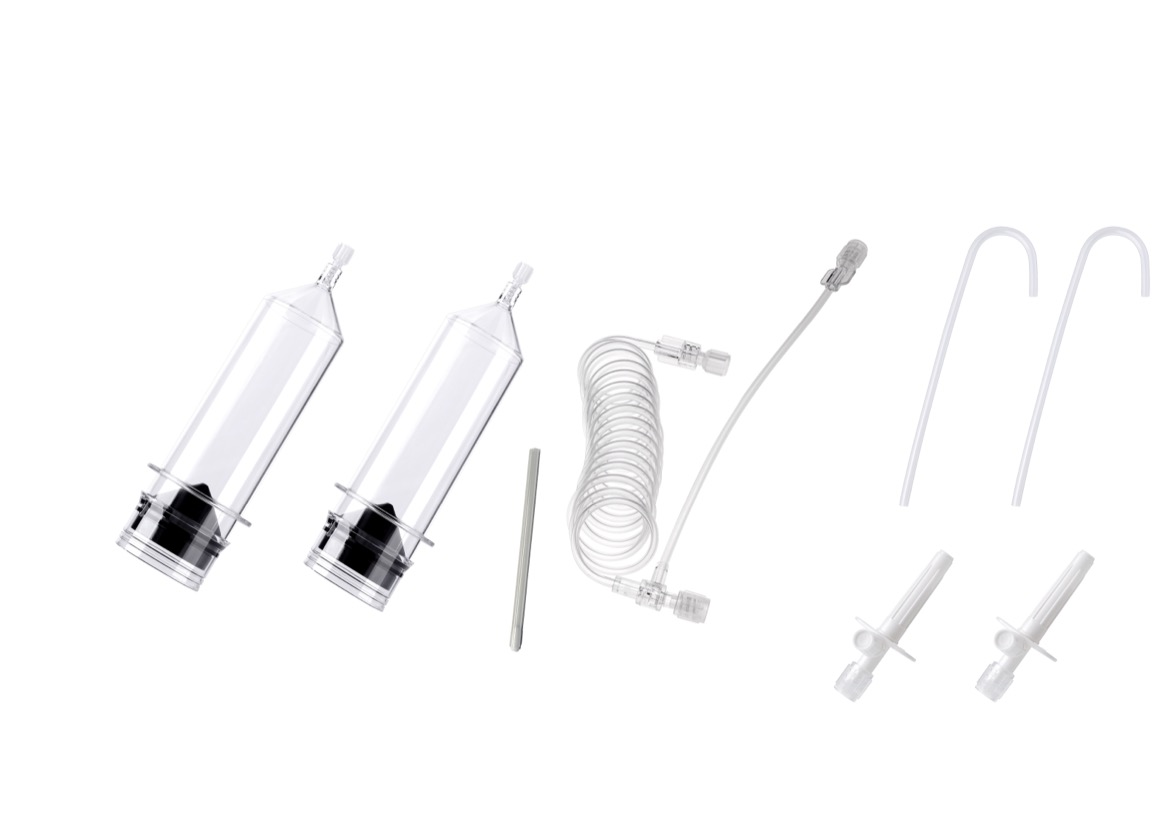
A contrast delivery system has two different parts: the reusable injector and the components that form its fluid path. The exact disposable configuration depends on the injector model and its instructions for use (IFU). A typical set may include:
- Injector syringes: Hold contrast medium or saline and interface with the injector's drive mechanism.
- Fill devices or spikes: Help transfer fluid into the syringe or system when the approved workflow permits.
- High-pressure connecting tubes: Carry fluid between the injector and downstream connection points.
- Patient lines and extensions: Complete the patient-side connection; their permitted duration and change interval depend on their labeling and the system design.
- Valves and connectors: Direct flow or join components, where specified for the particular set.
Do not treat these as interchangeable accessories. An apparently minor change in syringe geometry, connector design, tube length, or valve placement can affect loading, priming, pressure behavior, or the ability to use a set as labeled. Compare the entire assembled pathway, not only the syringe barrel.
All three applications require controlled delivery, but their equipment, environment, and clinical protocols differ. The following table is a purchasing framework, not a substitute for product labeling or the injector manufacturer's instructions.
| Application | Typical purchasing focus | Question to resolve before approval |
|---|---|---|
| CT | Contrast and saline configuration, syringe fit, tubing pressure rating, and patient-line workflow | Is the complete set supported for the exact injector model and planned CT protocol? |
| MRI | Injector positioning and MR safety conditions, fluid-path compatibility, and site access controls | Are the injector and any items entering the MR environment appropriately labeled and used within stated conditions? |
| Angiography | Syringe/system interface, pressure and flow requirements, manifold or patient-side components | Is each component indicated for the specific angiographic delivery system and procedure? |
Some CT protocols use an injector with separate contrast and saline channels. If so, confirm the correct syringe and tube arrangement for each channel, the fill method, and how the patient line connects. A tube that physically attaches is not automatically suitable for the programmed flow or maximum operating pressure. Ask for evidence relating to the assembled set, especially when sourcing the syringe and tubing from different vendors.
MRI purchasing adds a second safety question beyond fluid-path performance: where will the equipment be used? MR Safe, MR Conditional, and MR Unsafe are distinct labeling terms. A plastic syringe alone does not establish that a powered injector, stand, accessory, or assembled workflow is suitable for an MR-controlled area. The MRI safety team should review the labeling and conditions for each relevant item, including positioning or tethering requirements for equipment when applicable. Avoid calling an entire kit "MRI safe" unless that exact claim is documented.
Angiographic systems may use specialized syringe, manifold, and patient-side configurations. Do not infer angiography suitability from a CT product's appearance or from a generic "high-pressure" description. Obtain the applicable intended use, model-specific compatibility evidence, and pressure and flow specifications. If a system permits a component to serve more than one patient, follow that system's specific labeling; do not transfer its change interval to a different product.
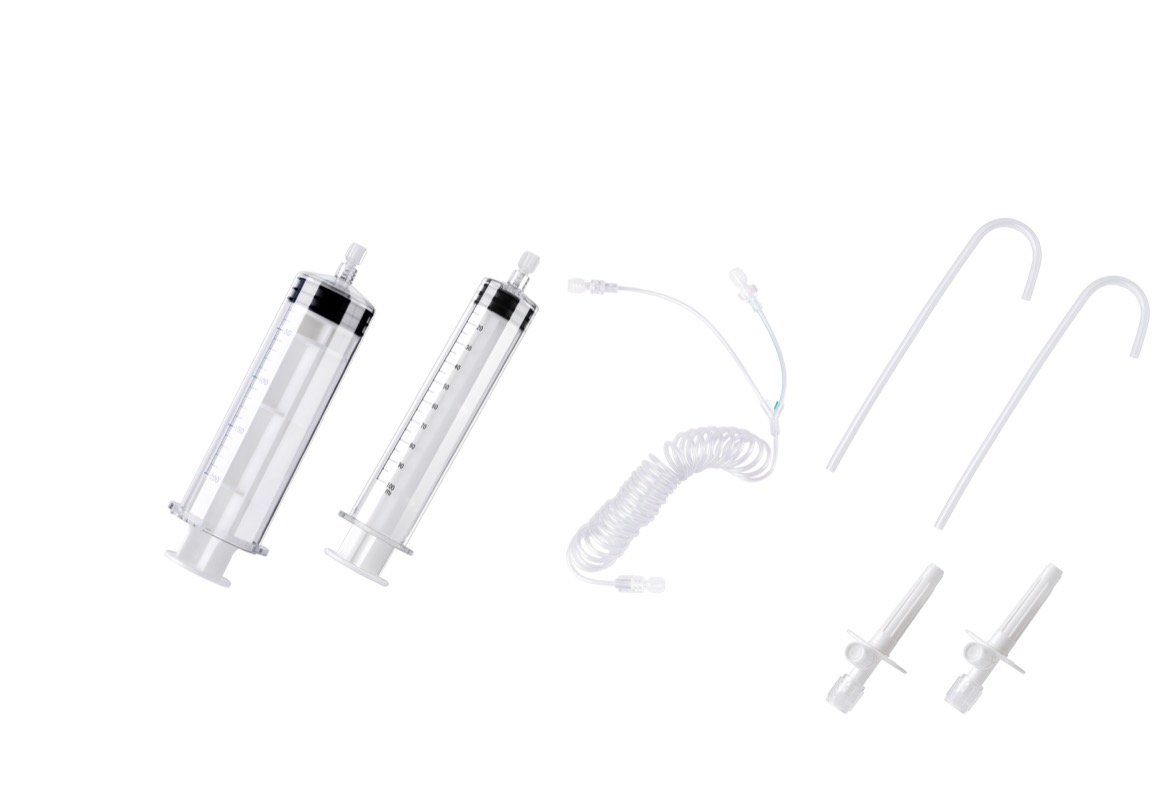
The most useful procurement record links each catalog number to a documented clinical use. For every proposed set, perform these checks before a trial or routine purchase:
1. Identify the exact injector. Record manufacturer, model, hardware variant, and any relevant system configuration. A brand name alone is too broad.
2. Map every component. List the syringe, fill device, connecting tube, valve, extension, and patient line by part number. Check whether a proposed substitution changes the validated configuration.
3. Confirm intended use. Compare the product IFU with the planned CT, MRI, or angiography application and the media to be delivered. Do not assume one labeled use covers all three.
4. Compare operating limits. Request the labeled pressure and flow limits for relevant components and the complete configuration. The lowest applicable limit matters; a strong syringe does not compensate for an unsuitable tube.
5. Review preparation and change rules. Verify priming, aseptic handling, single-use status, patient-to-patient change requirements, and any time limits in the applicable instructions and site protocol.
6. Verify traceability and market documents. Check lot identification, expiry, packaging integrity, and the product-specific regulatory documents required in the destination market.
7. Run a controlled evaluation. Let trained staff assess loading, secure connections, priming, alarms, and workflow fit under the facility's approved evaluation process. Document deviations before making a purchasing decision.
Example: A buyer sourcing for an MRI injector should not sign off after seeing "compatible with a major brand" on a quotation. They should request the specific syringe and tubing part numbers, the exact injector models covered, the fluid-path instructions, and the MR conditions for equipment entering the controlled area. That turns a broad claim into a checkable configuration.
Good consumables can still fail to deliver a reliable workflow when preparation is inconsistent. The operating team should follow the injector and consumable IFUs and the facility's clinical protocol. The following checks are a practical prompt for staff training, not a replacement for those documents:
- Inspect the packaging, expiry, and labeled part number before opening.
- Confirm that syringe mounting and each connection match the intended configuration; never force a part to fit.
- Prepare and prime the line as instructed, checking for visible air and leakage before patient connection.
- Verify that programmed settings and any pressure limits are appropriate for the full fluid path and clinical order.
- Monitor the patient and injection in accordance with local policy, including readiness to respond to extravasation or a contrast reaction.
- Stop and escalate when a connection leaks, a device alarms, or setup cannot be verified; document the lot and part numbers involved.
A setup checklist works best when it is short enough to use on every case and specific enough to catch a wrong part. During onboarding, observe staff preparing a complete set rather than relying only on a product brochure. When a near miss occurs, review the point of failure—selection, storage, opening, mounting, priming, or disposal—before changing the written process.
"Single use" is a labeling instruction, not a judgment about whether a component still looks clean. Follow each device's stated patient-use and change requirements. If a product or system claims a multi-patient workflow, ask for the exact cleared or authorized configuration and labeling that support it. One component's permitted duration cannot be generalized to the whole set.
Reprocessing a device originally labeled for single use is a regulated activity in some markets, not an informal way to lower unit cost. In the United States, reprocessors are subject to requirements concerning validation, labeling, and device performance. Facilities should not create a reuse practice merely because a disposable appears physically intact. Infection prevention, procurement, and clinical leadership should resolve any proposed alternative workflow together.
For sterile products, also check whether packaging protects the product through expected shipping and storage conditions. Receiving teams should segregate damaged or expired stock and preserve lot information for investigation. A supplier's ability to explain its complaint-handling and traceability process matters as much as its ability to ship a replacement box.
Certificates can help screen a supplier, but each document answers a different question. ISO 13485 describes requirements for a medical-device quality management system; it does not, by itself, prove that a specific tube fits a specific injector. A CE-marked device must be assessed against the regulatory requirements applicable to that device and market. In the United States, a relevant FDA 510(k) decision, where required, is a *clearance* tied to a defined device and intended use, not a blanket "FDA approval" for every catalog item.
For the products under review, ask the supplier to provide the applicable certificate or declaration, device-specific clearance information where relevant, current IFU, labeling, and a model-by-model compatibility list. Match company names, device descriptions, and part numbers. Where the document covers a product family, confirm that the proposed SKU is actually included.
MAIWEI INC. reports ISO 13485 certification, CE marking, and FDA 510(k) clearances in its portfolio. Buyers should request current documents for the particular products and destination market rather than assuming every MAIWEI SKU carries the same status. This makes the conversation more useful for hospitals, private-label partners, and distributors planning registrations or tenders.
An OEM program should begin with a technical file, not a custom box design. Before agreeing on artwork or annual volume, align on the intended device configuration, who owns each specification, and which party is responsible for market-specific labeling and regulatory submissions.
Request a sample approval plan that includes fit testing on the named injector models, documented acceptance criteria, packaging and label review, and change-control rules. Agree on what happens if a material, connector, sterilization process, or manufacturing site changes. A distributor also needs a practical procedure for complaints, field feedback, and lot-level traceability. These questions expose hidden costs earlier than a unit-price comparison does.
For international sourcing, confirm language requirements and the local route to market before placing an order. A document valid in one jurisdiction may not satisfy another. Define the scope of private labeling clearly: who appears as manufacturer, who maintains the technical documentation, and who answers a hospital's technical question after delivery. A reliable partner should make those responsibilities visible in writing.
Running out of a compatible set can disrupt a scheduled imaging list. Overstocking creates a different risk: units may expire or become unsuitable when an injector fleet changes. A simple reorder framework is average sets used per day × replenishment lead time in days + a documented safety buffer. The buffer should reflect demand variability, shipping uncertainty, and the facility's service priorities; it is not a universal number.
Track consumption by exact injector model and SKU, rather than combining all "CT syringes" into one inventory line. Rotate stock by earliest expiry, and keep a separate record of substitutions approved by clinical and biomedical teams. When reviewing suppliers, compare the delivered cost of a usable set: component price, shipping, staff setup time, rejected units, and the operational impact of a mismatch. A cheaper component is not a saving if it cannot be used in the validated workflow.
Need a dependable source of CT, MRI, or angiography injector consumables? Contact MAIWEI INC. with your injector manufacturer and exact model, intended application, required syringe and tubing configuration, destination market, and estimated usage. Our team can help identify candidate products and share the relevant product-specific documentation for your clinical, purchasing, and regulatory review. Final selection should follow the applicable IFUs and your facility's approval process.
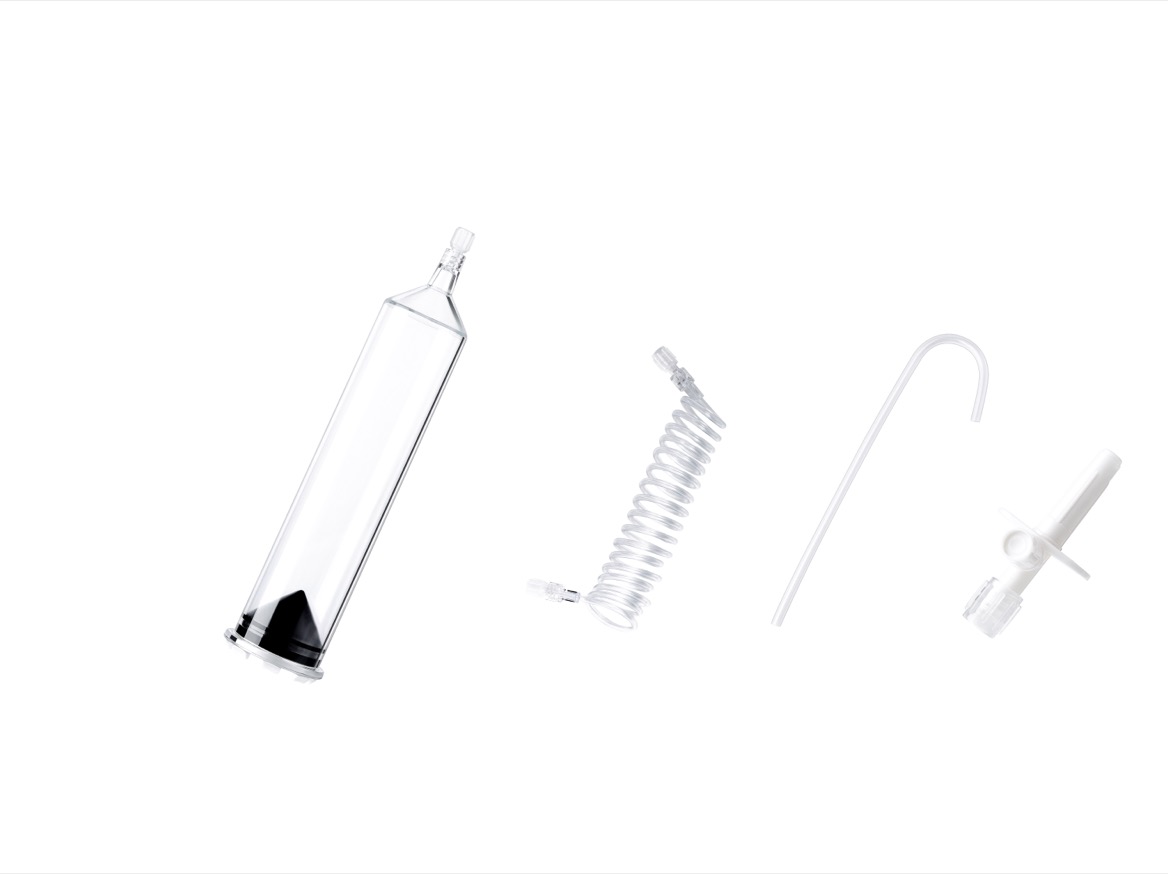
No. Physical resemblance or a shared injector brand does not establish compatibility. Check the exact model and the relevant product labeling, including the tubing and any paired saline configuration.
Only when its intended use and the complete configuration support that application. Separately review the MR labeling and conditions for equipment and accessories entering the controlled environment.
No. It addresses the manufacturer's quality management system. Request device-specific compatibility evidence and the applicable IFU for the proposed part number.
No. A 510(k) clearance is a determination of substantial equivalence for a particular device and intended use. Ask for the relevant decision and confirm which SKUs it covers, where applicable.
Follow the patient-line and system IFUs and your facility's infection-prevention policy. Do not assume that a change interval stated for one multi-patient system applies to another product.
Start with a configuration list, target injector models, labeling and intended use, test evidence, quality documents, and a written account of regulatory and complaint-handling responsibilities.
1. Spectrum Medical Imaging Co. [*The Full Guide to Contrast Media Injector Consumables for CT and MRI*]. Original article used as background for the product categories, training, and inventory themes; its company-specific sales claims are not attributed to MAIWEI INC. [spectrumxray]
2. American College of Radiology. [*Manual on Contrast Media*]. Clinical guidance and sections addressing contrast injection, extravasation, and reactions. [acr]
3. American College of Radiology. [*MR Safety Resources and Manual on MR Safety*]. MR environment and equipment-safety guidance. [acr]
4. U.S. Food and Drug Administration. [*Premarket Notification 510(k)*]. Meaning and scope of clearance. [fda]
5. International Organization for Standardization. [*ISO 13485:2016—Medical devices—Quality management systems*]. Scope of the quality-management standard. [iso]
6. U.S. Food and Drug Administration. [*Reprocessing Single-Use Medical Devices: Information for Health Care Facilities*]. Single-use device reprocessing requirements and limitations. [fda]
7. U.S. Food and Drug Administration. [*ACIST|CVi Contrast Delivery System 510(k) Summary*]. Illustrative example showing that component-specific patient-use limits must be read from the relevant system labeling; it is not a claim about MAIWEI products. [accessdata.fda]
8. MAIWEI INC. Company-provided description accompanying this article: product portfolio, reported certification/clearance categories, customer segments, and export footprint. Obtain current, product-specific documents before publication or procurement.