


close
Choose Your Site
Global
Social Media
Views: 228 Author: Maiwei Biotech Publish Time: 2026-11-09 Origin: Site


Content Menu
● How We Selected These Angiography Injector Syringe Manufacturers
>> 1. Relevant Product Coverage
>> 3. Manufacturing and Development Capability
>> 4. Commercial Fit and Delivery Reliability
● Why Source Angiography Injector Syringes from China?
>> A Large Medical Device Export Base
>> A Concentrated Contrast-Delivery Supplier Network
>> Multiple Partnership Models
● Quick Comparison: Capacity, MOQ, and Regulatory Evidence
● The Top 10 Angiography Injector Syringe Manufacturers in China
>> 1. MAIWEI INC. / Maiwei Manufacturing Network
>>> Core Strength and Buyer Fit
>>> OEM/ODM Scope and Main Markets
>> 2. Shenzhen Antmed Co., Ltd.
>>> Core Strength and Buyer Fit
>>> OEM/ODM Scope and Main Markets
>> 3. Shenzhen Boon Medical Supply Co., Ltd.
>>> Core Strength and Buyer Fit
>>> OEM/ODM Scope and Main Markets
>> 4. Union Medical Shenzhen Co., Ltd. — UNIONMED
>>> Core Strength and Buyer Fit
>>> OEM/ODM Scope and Main Markets
>> 5. Shenzhen LnkMed Medical Technology Co., Ltd.
>>> Core Strength and Buyer Fit
>>> OEM/ODM Scope and Main Markets
>> 6. Shenzhen Seacrown Electromechanical Co., Ltd.
>>> Core Strength and Buyer Fit
>>> OEM/ODM Scope and Main Markets
>> 7. Medivant (Suzhou) Medical Equipment Co., Ltd.
>>> Core Strength and Buyer Fit
>>> OEM/ODM Scope and Main Markets
>> 8. ANNTOMMED — Anntom Medica Limited
>>> Core Strength and Buyer Fit
>>> OEM/ODM Scope and Main Markets
>> 9. Youwo (Guangzhou) Medical Device Co., Ltd.
>>> Core Strength and Buyer Fit
>>> OEM/ODM Scope and Main Markets
>> 10. Shenyang MasTech Medical Device Co., Ltd.
>>> Core Strength and Buyer Fit
>>> OEM/ODM Scope and Main Markets
● Technical Buying Guide: What Determines Syringe Quality?
>> Materials Must Be Identified by Component
>> Pressure Ratings Must Match the Entire Fluid Path
>> Evaluate Relevant Testing, Not a Collection of Logos
● Procurement Pitfalls and How to Avoid Them
>> Pitfall 1: Unapproved Material Substitution
>> Pitfall 2: Samples That Do Not Represent Routine Production
>> Pitfall 3: Confusing Sterilization with Immediate Shipment Readiness
>> Pitfall 4: Accepting Capacity Without a Definition
● An Overlooked Insider Check: Qualify the Kit, Not Just the Syringe
● How to Qualify a Supplier Before the First Commercial Order
>> Step 1: Establish the Legal and Regulatory Chain
>> Step 2: Conduct a Risk-Based Factory Review
>> Step 3: Approve Production-Representative Samples
>> Step 5: Define Logistics and Remaining Shelf Life
● Conclusion: Select a Documented Manufacturing Partner, Not Just a Low Quote
>> 1. How can we check whether a manufacturer's ISO 13485 certificate is expired or outside scope?
>> 2. Does an FDA 510(k) number cover every syringe and private-label kit sold by the supplier?
>> 3. Can a 1,200 psi angiography syringe be supplied with a 400 psi connector tube?
>> 4. How should we investigate a supplier's "DEHP-free" or "latex-free" claim?
>> 5. Can we convert a single-use syringe kit into a multi-patient system by adding a check valve?
Choosing an angiography injector syringe manufacturer requires more than comparing unit prices and injector compatibility lists. Procurement teams need to understand who manufactures the product, which models the regulatory documentation covers, how pressure performance is verified, and whether the supplier can maintain consistent quality across repeat orders.
China offers a substantial supplier base for contrast delivery consumables. Established manufacturers operate alongside smaller specialists supplying high-pressure syringes, connector tubing, filling accessories, and customized procedure packs. Shenzhen and the surrounding Guangdong manufacturing region feature prominently in this sector, with companies including Antmed, Boon, Unionmed, LnkMed, and Maiwei's Chinese network operating there.
However, a long product catalog does not automatically make a supplier suitable for your hospital network or private-label brand.
This guide examines ten Chinese manufacturing businesses or manufacturing networks relevant to angiography injector syringes. It compares their documented strengths, identifies information that requires direct verification, and explains how to qualify a supplier before committing to a long-term agreement.
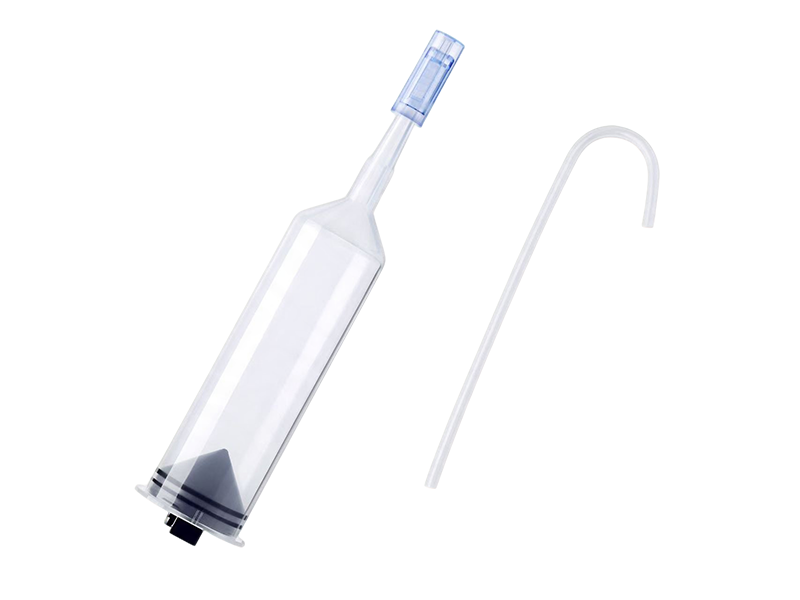
A useful supplier shortlist should prioritize traceability: the ability to connect a finished syringe to its legal manufacturer, approved design, material specifications, production records, and regulatory documentation.
The companies below were selected using publicly available company information, product literature, and regulatory records where available. No factory visits, independent laboratory comparisons, or delivery-performance audits were conducted for this article.
The shortlist prioritizes companies with documented involvement in power-injector syringes, contrast delivery consumables, or specifically identified angiographic syringe models.
This distinction matters because "angiographic syringe" can describe different products. A manually operated control syringe is not automatically interchangeable with a syringe designed for a powered angiography injector. Buyers should confirm the intended use and compatible injector rather than relying on a category name. Regulatory submissions identify power-driven operation and model-specific compatibility explicitly.
Evidence was assessed at the product and manufacturer level wherever possible.
For example, Boon has a publicly accessible FDA clearance for single-use sterile high-pressure angiographic syringes and accessories under K241109. Youwo and MasTech also have identifiable FDA submissions for this product category. Such records provide a stronger starting point than an unexplained "FDA certified" logo.
A 510(k) clearance is not a blanket certification of every product manufactured by a company, nor does it establish compliance with every other applicable requirement. FDA clearance letters explicitly state these limitations.
Relevant capabilities include material control, molding, assembly, connector bonding, inspection, sterilization management, and design-change control.
These capabilities should ultimately be checked through a factory audit and technical documentation review. A supplier website alone cannot establish whether every process is performed in-house.
Buyers should evaluate:
- Available capacity for the specific syringe model.
- Minimum order quantities for standard and customized products.
- Packaging and labeling flexibility.
- Technical response quality.
- Historical on-time delivery performance.
- Complaint handling and corrective-action procedures.
- Continuity of supply during tooling maintenance or sterilization interruptions.
These are qualification criteria, not independently verified performance claims about the companies listed below.
China's medical device exports provide useful context for its manufacturing depth.
A September 2025 analysis published by the China Chamber of International Commerce, citing the China Chamber of Commerce for Import and Export of Medicines and Health Products, reported that China exported US$24.10 billion in medical devices during the first half of 2025, up 5.0% year on year.
Within that total, disposable consumables exports reached US$5.27 billion, increasing 8.0%. These figures cover broad medical device categories; they should not be presented as angiography injector syringe market size or growth.
A 2026 L.E.K. industry report also examines Chinese medical device internationalization using 2024–2025 data, providing broader context for the sector's overseas expansion. It is not a supplier ranking or a syringe-specific demand forecast.
The concentration of relevant companies in Shenzhen, Guangzhou, and Huizhou makes Guangdong a practical region for supplier comparisons and multi-site qualification.
Antmed and Boon have documented Shenzhen operations, Youwo's FDA submission identifies a Guangzhou address, and ANNTOMMED describes a production base in Huizhou. This geographic concentration supports efficient audit planning, although proximity alone does not establish quality or regulatory compliance.
The supplier base includes integrated injector-and-consumables businesses, consumables specialists, and companies with broader interventional product portfolios.
That variety gives buyers different sourcing options. An established distributor may prioritize documented international market access, while a developing private-label brand may place greater weight on technical communication, manageable order quantities, and packaging support.
The right choice depends on the project—not simply on company size.
The table below distinguishes published information from information requiring a quotation or document review.
"Not publicly verified" does not mean a supplier lacks the capability or certificate. It means the evidence reviewed for this guide was insufficient to make a reliable statement.
| Manufacturer or network | Primary sourcing focus | Published capacity information | MOQ | Regulatory evidence reviewed |
|---|---|---|---|---|
| MAIWEI INC. / Maiwei manufacturing network | Contrast delivery consumables and OEM discussions | Model-level capacity not publicly verified | Request standard and private-label quotations | Company reports ISO 13485, CE, and 510(k) status; obtain certificate numbers and model scope. Website describes MDR-related development. |
| Antmed | Integrated contrast injectors and consumables | A company MRI syringe page advertises 20,000 pieces/day; not verified as DSA-specific or currently available capacity | Obtain model-specific quotation | Company publishes international product and manufacturing information; verify current certificates for the selected SKU. |
| Shenzhen Boon Medical Supply | High-pressure syringes and accessories | Not publicly verified | Obtain quotation | FDA K241109 and K211564 provide product-specific documentation. |
| Union Medical Shenzhen / UNIONMED | Injector syringes, tubing, and related consumables | Factory and cleanroom information published; output not verified | Obtain quotation | Company states CE and FDA status; verify exact models and current documents. |
| Shenzhen LnkMed | Contrast injectors and compatible consumables | Not publicly verified | Obtain quotation | Product and company pages document relevant products; model-specific authorization requires verification. |
| Shenzhen Seacrown | Contrast injection systems and matching syringes | Not publicly verified | Obtain quotation | Published history reports CE marking for injection systems; syringe-specific coverage requires verification. |
| Medivant, Suzhou | Disposable high-pressure angiographic syringes | Not publicly verified | Obtain quotation | Supplier profile reports a 2019 CE milestone; current certificate status requires verification. |
| ANNTOMMED | Angiographic syringes and interventional consumables | Reports a 3,000 m² production base; no verified syringe output | Obtain quotation | Company lists CE and ISO 13485 claims for named products. |
| Youwo, Guangzhou | Sterile high-pressure angiographic syringe configurations | Not publicly verified | Obtain quotation | FDA K201395. |
| Shenyang MasTech | Contrast injector syringes and interventional products | Not publicly verified | Obtain quotation | FDA K172694. |
For capacity comparisons, request released finished units per month for your exact SKU—not injection-molding output, total company output, or a theoretical maximum.
MAIWEI INC.'s website states that the company was established in 2021 to support demand for contrast media delivery solutions in the United States. Its development history traces the Chinese Maiwei business to 2016 and describes subsequent European, sterilization, and medical imaging developments.
For procurement purposes, buyers should identify separately:
- The contracting and invoicing entity.
- The legal manufacturer on the product label.
- The manufacturing site.
- The certificate or clearance holder.
- The party responsible for complaints and field actions.
According to information supplied by MAIWEI for this guide, its portfolio includes CT, MRI, and angiography injector syringes, connecting tubes, and related consumables, with products exported to more than 60 countries and regions.
MAIWEI positions its offering around cost-conscious sourcing, product development, responsive communication, and support for smaller and midsized brands. Its public website supports a focus on contrast delivery consumables, international operations, and responsive customer support, but does not independently quantify communication speed or savings against competitors.
MAIWEI's stated OEM support is relevant to buyers discussing private-label products, packaging, kit configurations, and injector-compatible consumables. Any design-level customization should be defined in a written development and regulatory plan rather than treated as a routine packaging change.
The website specifically emphasizes North America and describes a European network presence. Other market coverage is based on company-supplied information.
Procurement checkpoint: Ask for a model-by-model compatibility matrix, current ISO 13485 certificate, applicable European documentation, and the precise 510(k) numbers covering the proposed U.S. products. Evaluate flexibility through a pilot project with agreed response times, sample milestones, and change-control responsibilities.
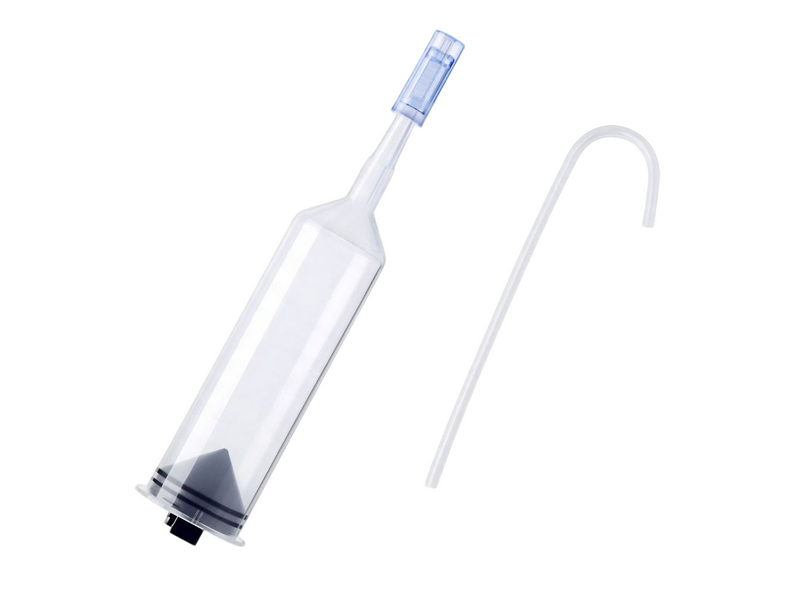
Antmed states that it was founded in Shenzhen in 2000. Its portfolio includes contrast injectors, high-pressure syringes, pressure transducers, and related medical products. The company reports exports to more than 130 countries.
Antmed is relevant to buyers seeking a supplier with both injector equipment and disposable product expertise. Its website describes an integrated operating model extending from development and tooling to sterilization and after-sales support. These are company-reported capabilities that should be confirmed during an audit.
Published syringe information covers multiple major injector brands. Buyers considering OEM projects should clarify which existing products are available for private labeling and whether design development is offered for the intended market.
The company reports broad international coverage, but its current country-by-country sales mix is not disclosed in the reviewed information.
Procurement checkpoint: Do not apply an advertised MRI syringe production figure to angiography products. Request capacity, inspection throughput, and sterilization availability for the exact DSA syringe and connector set.
Boon's public company profile identifies a 1990 founding year, although some descriptions use the broader wording "founded in the 1990s." Buyers requiring a legally precise establishment date should obtain the business registration.
Boon offers particularly useful public regulatory documentation. FDA K241109 covers single-use sterile high-pressure angiographic syringes and accessories and includes a detailed compatibility table, pressure specifications, materials, and testing information.
That documentation makes Boon a practical candidate for buyers who want to begin technical qualification with an identifiable product dossier.
AccessGUDID records show Boon-manufactured products under multiple brand names, providing evidence of third-party branding arrangements. However, these records do not establish the commercial terms or availability of a new OEM agreement.&sort=companyName-desc)
U.S. clearance and UK registration records demonstrate regulatory engagement in those markets; they do not reveal Boon's largest sales destinations.
Procurement checkpoint: Match the quoted syringe, tubing, and filling accessories to the relevant documentation. A cleared product family should not be assumed to cover every possible customized kit.
UNIONMED states that it was founded in 2015 and specializes in the development and production of medical consumables, including high-pressure syringes.
The company's published profile highlights injector syringes, pressure connector tubing, and invasive blood pressure transducers. It also describes factory and cleanroom facilities and explicitly mentions OEM services.
This makes it relevant to distributors building a coordinated contrast-delivery consumables range.
OEM availability is publicly stated. Buyers should establish whether that means existing-product private labeling, kit assembly, or actual design ownership and development.
The company describes international regulatory credentials, but its principal regional markets and current sales distribution are not established by the reviewed sources.
Procurement checkpoint: Obtain current certificates and product-specific authorization records rather than relying on general "CE/FDA" wording.
LnkMed states that it was established in 2018 and focuses on contrast medium injection systems and consumables. Its website describes CT, MRI, and angiography products.
Its catalog includes specifically identified angiography syringe products, such as 150 mL syringes for LF Angiomat 6000 systems and products described for Medrad Mark 7 Arterion equipment.
A supplier offering both equipment and consumables may be useful when a project requires close discussion of injector operation and disposable interfaces.
LnkMed's website reports operations in more than 15 markets but does not identify its principal market shares. Its company profile emphasizes development capability and technical support. The exact scope of OEM labeling, tooling development, and documentation support should be agreed directly.
Procurement checkpoint: Request evidence for the exact injector model and operating conditions, not merely a catalog photograph showing a similar loading interface.
Seacrown's public profile identifies 2002 as its founding year and describes a focus on contrast medium injection systems.
Published syringe literature includes CT, MRI, and DSA configurations, making the company relevant to buyers reviewing injector platforms together with their consumables.
Its equipment background may be useful for buyers already working with Seacrown systems or evaluating a coordinated equipment-and-disposable supply arrangement.
Seacrown reports an international installed base, but the reviewed material does not establish its leading geographic markets. Public information also does not clearly define the availability of third-party private-label syringe development.
Procurement checkpoint: Confirm the current legal manufacturer, disposable product authorization, and long-term availability of matching syringes separately from the injector's documentation.
Medivant's supplier profile states that it was founded in 2015 in Suzhou and manufactures single-use high-pressure angiographic syringes. It describes products intended for CT, DSA, and MRI injection applications.
Medivant provides an additional qualification option outside Guangdong. Its stated product specialization is relevant to buyers seeking a focused consumables supplier rather than a broad medical equipment catalog.
The company profile reports a CE milestone in 2019. That historical statement should not be interpreted as proof of current authorization.
Current major export destinations, private-label terms, and design-development capabilities were not verified in the reviewed information.
Procurement checkpoint: Request the current certificate package, legal manufacturer details, sterilization arrangements, and recent commercial references before treating the supplier as fully qualified.
ANNTOMMED states that it was established in 2007 and created a production base in Huizhou in 2019. Its published portfolio includes balloon inflation devices, hemostasis valve sets, guidewires, manifolds, and angiographic syringes.
The company is relevant to buyers sourcing multiple interventional product categories. Its website identifies AT2205 as a 150 mL syringe compatible with the DSA LF Angiomat 6000, giving buyers a specific model for technical qualification.
The reviewed website does not substantiate a detailed OEM development scope or identify the company's largest geographic markets. These should be treated as open qualification questions.
Procurement checkpoint: Distinguish its manual angiographic control syringes from power-injector syringe products. They appear within the same broader portfolio but serve different functions.
Youwo's founding year was not verified in the reviewed evidence. However, FDA K201395 identifies the Guangzhou company and documents its sterile high-pressure angiographic syringes for single use.
The submission includes multiple syringe volumes, single- and dual-shot configurations, connecting tubes, spikes, and filling accessories. It also describes materials, biocompatibility testing, packaging tests, and EO sterilization.
This provides a documented starting point for buyers investigating an additional qualified source.
The FDA record establishes historical U.S. clearance, not current production availability, principal markets, or willingness to accept an OEM project.
Procurement checkpoint: Confirm present operating status, current registration and listing where applicable, manufacturing address, and availability of the exact cleared configuration before requesting commercial samples.
Public supplier profiles report that MasTech was established in 2002. Its FDA record K172694 identifies a Shenyang manufacturer of sterile disposable syringes for contrast media or saline injection.
The regulatory submission lists DSA, CT, and MRI configurations and describes associated connecting tubes and filling accessories. It also documents performance, packaging, aging, and biocompatibility evaluations.
MasTech therefore provides a Northeast China option for buyers investigating geographic diversification.
The reviewed regulatory record does not establish current OEM terms or the company's largest sales markets. U.S. clearance should not be equated with verified current U.S. sales.
Procurement checkpoint: Request current materials documentation. The historical submission lists natural rubber for the piston, making present-day latex declarations particularly important if the purchasing specification excludes natural rubber latex.
"Medical-grade plastic" is too vague for a purchasing specification.
For example, Boon's K241109 submission identifies PP or PET syringe barrels, polyisoprene rubber pistons, silicone-based lubricant, and several tubing material options, including PVC formulations and polyurethane. These are model-family descriptions—not universal requirements for every angiography syringe.
Ask suppliers to identify:
- Barrel resin and controlled material specification.
- Piston material and latex status.
- Lubricant specification.
- Tubing polymer and plasticizer formulation.
- Connector resin and bonding method.
- Approved material suppliers and substitution controls.
The objective is not to insist that one polymer is always superior. It is to ensure that the delivered product matches the validated design and declared composition.
Boon's public submission illustrates why the word "high-pressure" is insufficient: its compatibility table lists certain MRI syringes at 300 psi, CT syringes at 400 psi, and angiography syringes at 1,200 psi. It also lists connecting tubes with different pressure specifications. These values apply to the documented models, not the entire industry.
A suitable syringe cannot compensate for an unsuitable connector or tube.
Require a written specification for the complete proposed assembly, including operating limits, test conditions, and compatible injector configuration.
Published submissions in this category reference:
| Evaluation area | Examples of relevant evidence |
|---|---|
| Syringe performance | Capacity tolerance, leakage, dead space, flow characteristics, and applicable ISO 7886 testing |
| Connector performance | Applicable ISO 80369-7 testing and system compatibility |
| Biological safety | Risk-based biological evaluation and relevant ISO 10993 testing |
| EO residuals | ISO 10993-7 evaluation |
| Sterile packaging | Seal-strength and package-integrity testing |
| Shelf life | Aged-product packaging and functional evidence |
These examples appear in product submissions, but buyers should ask their regulatory team to determine the currently applicable standards, editions, and acceptance criteria for the intended market. An older clearance may reference an older standard edition.
CE marking should be reviewed as a medical-device conformity matter, not described as an environmental certificate. RoHS-related statements, where relevant to a procurement policy, do not replace evidence for syringe performance, biological safety, sterility, or product authorization.
A lower quotation may involve a different tubing formulation, elastomer, lubricant, or resin specification.
Avoid assuming that two transparent components are equivalent. Public submissions show that different products may use different material systems, including different tubing polymers and piston materials.
Put approved materials and change-notification obligations into the quality agreement. Require a documented assessment before any substitution.
A well-presented sample set does not establish repeat-order consistency.
Request production-representative samples, identify the lot numbers, and compare more than one lot where commercially practical. Define incoming inspection requirements before the first shipment.
EO-sterilized products require controlled processing and residual evaluation. Published syringe submissions include EO residual testing, while related pressure-line documentation references validated EO sterilization processes.
Ask whether the promised lead time includes sterilization, necessary processing and release activities, final inspection, and shipment documentation—not simply assembly completion.
A published daily output figure may refer to a different modality, product family, or manufacturing stage.
Ask for capacity expressed as saleable, released units of your SKU, with an explanation of current commitments, sterilization constraints, and surge arrangements.
One of the most useful procurement safeguards is to treat the syringe and its accessories as a controlled configuration.
A supplier may provide a suitable syringe but quote a different tube, connector, spike, or valve arrangement to achieve a target price. That alternative configuration still needs appropriate technical and regulatory review.
This is not a theoretical distinction: Boon's K241109 documentation separately identifies syringe compatibility, connecting-tube pressure specifications, and accessory configurations. It also discusses an added tube model with a different check-valve arrangement.
Before approving an order:
1. Create a bill of materials for the complete kit.
2. Record every component's model and applicable pressure limit.
3. Specify the compatible injector and intended use.
4. Verify the proposed configuration against the supporting documentation.
5. Require written approval before substitutions.
A second check is especially important for private-label sourcing: identify the actual legal manufacturer. AccessGUDID records show that different brand names can share the same manufacturer, meaning two apparently separate branded suppliers may not provide independent manufacturing redundancy.&sort=companyName-desc)
Collect the business registration, manufacturing address, product label, quality certificate, and market-specific documentation.
Check whether the company issuing the quotation is the manufacturer, an affiliate, or a distributor. Document which party holds responsibility for labeling, complaints, and regulatory communication.
Prioritize:
- Incoming material identification.
- Molding and assembly controls.
- Connector bonding and inspection.
- Equipment calibration.
- Lot segregation.
- Sterilization management.
- Finished-product release.
- Complaint investigations.
- Design and process changes.
Ask for objective records rather than relying only on a facility tour.
Agree on acceptance criteria before testing.
The sample plan should address the actual injector, intended configuration, labeling, package integrity, and relevant functional requirements. Use a qualified laboratory or controlled evaluation environment where appropriate; do not substitute informal clinical experimentation for technical qualification.
Use the pilot to assess packaging accuracy, document completeness, communication, lead-time performance, and lot consistency.
Avoid expanding immediately to a large annual commitment merely because a small sample shipment arrived quickly.
Specify:
- Minimum remaining shelf life at delivery.
- Storage and transport conditions from the product instructions.
- Carton protection and traceability.
- Required shipping documents.
- Importer responsibilities.
- Treatment of damaged packaging.
- Inspection and release arrangements upon arrival.
Packaging and aged-product performance are documented elements of syringe qualification, so logistics should protect those validated conditions rather than undermine them.
The most useful angiography injector syringe supplier is the one whose product documentation, manufacturing controls, compatibility evidence, and commercial service match your purchasing requirements.
Use the shortlist to begin qualification, not to bypass it. Compare exact configurations, verify the current regulatory position, test representative production samples, and define change control before scaling orders.
For buyers seeking a flexible development discussion, MAIWEI can be approached with a structured project brief covering injector models, target countries, expected annual demand, labeling requirements, and preferred kit configurations.
Contact MAIWEI to request a model-specific documentation package, discuss OEM requirements, and establish a production-representative sample plan before commercial purchasing.
Obtain the complete certificate, including any site annexes. Check the legal entity, manufacturing address, scope, certificate number, issuing body, and validity dates.
Verify the certificate directly through the issuing certification body's official verification channel. If the certificate is near expiry, request renewal status rather than assuming an audit booking extends validity.
Remember that a quality-system certificate is not a substitute for product-specific market authorization. FDA clearance letters likewise distinguish clearance from other compliance obligations.
No. Review the device name, manufacturer, indications, model coverage, accessories, and compatibility information.
A private-label project may involve only labeling, or it may introduce changes requiring a broader regulatory assessment. FDA clearance documentation expressly directs manufacturers to assess changes that may require a new submission.
Do not approve that combination for operation above the connector's documented limit.
The configuration must be assessed as a complete fluid path. Public product documentation distinguishes 400 psi tubes from 1,200 psi tubes, demonstrating why a syringe-only pressure claim is insufficient.
Request a component-level declaration tied to the exact SKU and its current bill of materials. Clarify what the claim covers, what supporting evidence exists, and how changes are controlled.
This matters because documented product families can include alternative tubing formulations, while historical submissions may identify natural rubber components. A company-wide statement is not enough to establish the composition of a specific kit.
Do not treat a check valve as sufficient justification.
Multi-patient use requires evidence and authorization for the specific system, intended use, permitted duration, workflow, and replacement components. The distinction is product-specific: a 2026 FDA submission for a named multi-use angiography system describes defined components and use conditions, rather than authorizing generic reuse of single-use syringes.
1. China Chamber of International Commerce — September 2025 medical device trade analysis, citing the national medicines and health products trade chamber. http://www.ccoic.cn/cms/content/42569
2. Fujian Provincial Department of Commerce — March 2025 report on China's pharmaceutical and medical device foreign trade. https://swt.fujian.gov.cn/xxgk/jgzn/jgcs/fwyfzc/dtzx_460/202503/t20250320_6785542.htm
3. China Chamber of Commerce for Import and Export of Medicines and Health Products — industry organization and trade information. https://www.cccmhpie.org.cn/
4. L.E.K. Consulting — 2026 report on Chinese medical device internationalization using 2024–2025 data. https://www.lek.com/sites/default/files/2026-06/china-medical-device-industry-globalization-journey-cn-v2.pdf
5. U.S. FDA — Boon K241109, high-pressure angiographic syringes and accessories. https://www.accessdata.fda.gov/cdrh_docs/pdf24/K241109.pdf
6. U.S. FDA — Youwo K201395, sterile high-pressure angiographic syringes. https://www.accessdata.fda.gov/cdrh_docs/pdf20/K201395.pdf
7. U.S. FDA — MasTech K172694, sterile disposable syringes for angiographic injectors. https://www.accessdata.fda.gov/cdrh_docs/pdf17/K172694.pdf
8. UK MHRA — Boon manufacturer and device registration record. https://pard.mhra.gov.uk/manufacturer-details/42768