
Views: 281 Author: Maiwei Biotech Publish Time: 2026-09-07 Origin: Site


Content Menu
>> Supplier Screening Framework
>> Technical Characteristics Buyers Should Understand
● Top 10 Manufacturers to Investigate
>> 2. Shenzhen Antmed Co., Ltd.
>> 3. Shenzhen Boon Medical Supply Co., Ltd.
>> 4. LnkMed Medical Technology Co., Ltd.
>> 5. Shenzhen Seacrown Electromechanical Co., Ltd.
>> 6. Shenzhen Kenid Medical Devices Co., Ltd.
>> 7. Shenzhen X-Way Medical Technology Co., Ltd.
>> 8. Sino Medical-Device Technology Co., Ltd.
>> 10. Shenzhen Anke High-tech Co., Ltd.
● Manufacturer Comparison Table
>> 1. "Compatible" Does Not Always Mean Validated
>> 2. Material Substitution Is a Hidden Cost Risk
>> 3. Factory Certificates May Not Cover Your Product
>> 4. Sterilization Is Often Outsourced
>> 5. Low MOQ Can Conceal Higher Risk
● The Insider Check Most Buyers Miss
>> Step 1: Define the Exact Product Requirement
>> Step 2: Request a Documentation Package
>> Step 3: Evaluate Samples Like a Distributor
>> Step 4: Audit the Actual Manufacturer
>> Step 5: Use a Quality Agreement
>> Step 6: Plan Logistics Carefully
>> 1. How can I verify that a supplier's ISO 13485 certificate has not expired?
>> 2. Does a CE certificate mean the contrast injector syringe can be sold anywhere in Europe?
>> 4. What MOQ should I expect for private-label contrast injector syringes?
>> 5. Can I use a supplier's FDA 510(k) document for my own private-label brand?
China has become an important sourcing base for contrast injector syringes, high-pressure tubing, and compatible imaging consumables used in CT, MRI, and angiography workflows. For procurement teams, the opportunity is not simply lower unit cost: the strongest suppliers combine regulated manufacturing, material traceability, stable molding capability, validated sterilization, and reliable support for injector compatibility.
The global contrast-media injector market was estimated at USD 2.2 billion in 2025 and is projected to reach about USD 4.7 billion by 2033, reflecting continued demand from CT, MRI, interventional radiology, and cardiovascular imaging procedures. Consumables—including syringes, tubing, and related accessories—account for a significant part of the high-pressure injector value chain.
This article is designed for importers, hospital procurement organizations, regional distributors, and OEM buyers seeking a long-term manufacturing partner rather than a one-time trading supplier.
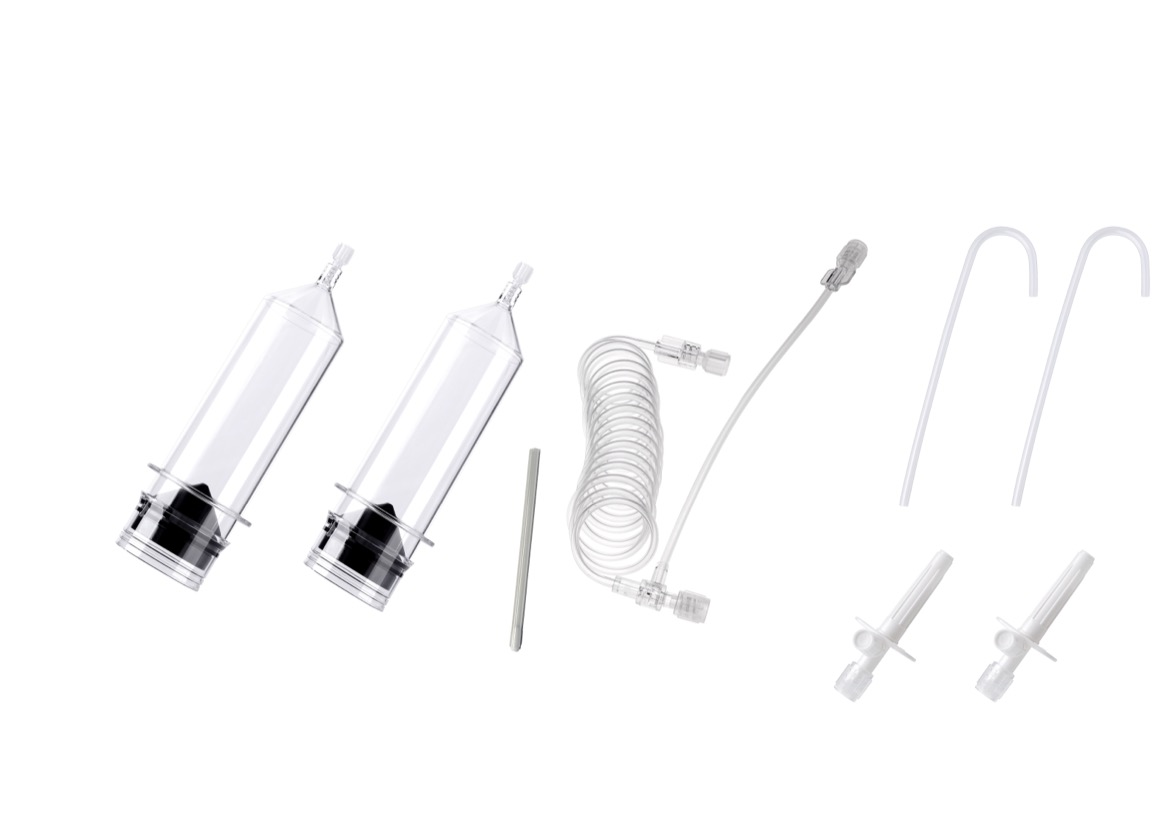
China's medical-device manufacturing ecosystem combines high-volume polymer processing, precision mold development, disposable medical-product assembly, packaging, ethylene oxide sterilization resources, and export logistics infrastructure. Shenzhen, Guangdong, Zhejiang, Jiangsu, Shandong, and selected manufacturing clusters in northern China are particularly relevant for disposable medical consumables and imaging-device components.
For contrast injector syringe procurement, China offers several practical advantages:
- Established capabilities in medical-grade injection molding for transparent polypropylene, polycarbonate, and other engineered polymers.
- A broad supplier network for CT, MRI, and DSA injector consumables, including syringe kits, coiled tubing, patient lines, spikes, check valves, and pressure-rated connectors.
- Access to experienced OEM and private-label production teams.
- Competitive tooling, packaging, and assembly costs for customized consumable projects.
- Mature export infrastructure for shipments to North America, Europe, Latin America, the Middle East, Southeast Asia, and Africa.
- Increasing familiarity with international quality-system requirements, including ISO 13485, CE-related documentation, U.S. FDA requirements, and country-specific registration support.
China's broader medical and surgical instrument export value reached USD 20.9 billion in 2025, according to customs data, underscoring the scale of the country's export-oriented healthcare manufacturing base.
However, contrast injector consumables are not ordinary disposable syringes. They operate in a high-pressure environment, interface with sophisticated injector systems, and may directly affect imaging workflow, patient safety, leakage risk, and contrast-media delivery accuracy. Therefore, the correct sourcing question is not "Who offers the lowest price?" but "Which supplier can repeatedly deliver a controlled, traceable, compatible product?"
The companies below are presented as potential manufacturers or market participants for buyers to investigate further. They are not ranked solely by company size or marketing visibility. Instead, the evaluation framework focuses on the capabilities that matter in a professional contrast injector syringe sourcing project.
| Evaluation Area | What Buyers Should Review | Why It Matters |
|---|---|---|
| Quality-system certification | Valid ISO 13485 certificate, certification body, certificate scope, issue date, expiry date, manufacturing address | Confirms that the quality-management system has been audited for relevant medical-device activities |
| Product compliance | CE documentation, FDA 510(k) status where applicable, local registrations, declaration of conformity, technical file availability | Product-level compliance is different from factory-level ISO certification |
| Material control | Resin supplier, material grade, batch traceability, biocompatibility documentation, latex/DEHP/BPA status where relevant | Prevents substitution with lower-grade plastic or unverified components |
| Compatibility validation | Injector brand/model list, fit testing, pressure testing, leakage testing, operational verification | A syringe that "looks compatible" may still fail under actual injection conditions |
| Manufacturing capability | Injection molding, assembly environment, packaging, sterilization validation, automation level, in-process inspections | Determines consistency from pilot samples to production lots |
| Quality-control process | Incoming inspection, dimensional inspection, visual inspection, pressure/air-leak testing, sterility assurance records | Helps control defects that may not be visible in photographs |
| Supply reliability | Capacity planning, safety-stock policy, lead time, raw-material inventory, export experience | Important for hospitals and distributors that cannot tolerate stockouts |
| OEM/ODM support | Label customization, IFU support, packaging design, kit configuration, tooling development, regulatory documentation support | Essential for distributors building a private-label product line |
| Communication quality | Technical response time, drawing review, change-control process, English documentation, complaint handling | Often determines whether a project proceeds smoothly after the first order |
Contrast injector syringes differ from standard clinical syringes because they must operate under defined pressure and flow conditions. A typical product family may include CT injector syringe kits, MRI injector syringe kits, DSA or angiography syringe kits, high-pressure extension tubing, patient lines, transfer devices, and accessories.
Key engineering considerations include:
- Polymer selection: Transparent medical-grade polypropylene is common for many syringe barrels, while polycarbonate or other materials may be used depending on product design and pressure requirements. The choice should be supported by material traceability and compatibility with the intended contrast agent.
- Pressure resistance: Suppliers should provide validated pressure-test parameters for the specific syringe and tubing configuration. Buyers should not accept a generic statement such as "high pressure resistant" without documented test conditions.
- Dimensional consistency: Piston geometry, barrel diameter, flange thickness, tip dimensions, and connector tolerances affect fitment with the injector's drive system and tubing interfaces.
- Lubrication control: Excess silicone oil, inconsistent lubrication, or poor plunger movement can affect injection performance and create usability concerns.
- Leak prevention: Connections, luer interfaces, tubing joints, and check valves must be tested for leakage under intended operating pressure.
- Sterilization validation: Ethylene oxide sterilization is commonly used for sterile single-use imaging consumables. Buyers should request sterilization validation evidence, residual EO information, and packaging integrity data when relevant.
- Packaging performance: Sterile barrier systems should be validated for transport and shelf-life conditions. A high-quality syringe can still become unusable if the sterile pouch seal fails during shipping.
- MRI suitability: For MRI consumables, buyers should confirm the exact intended configuration and ensure that material selection, labeling, and accessory choices align with the supplier's stated MRI-use claims.
Location: China
Focus: Contrast injector syringes, high-pressure injector consumables, connection tubing, CT/MRI/angiography compatible accessories
Typical customer profile: Medical consumable distributors, imaging-equipment service companies, hospital supply partners, and OEM/private-label brands
OEM/ODM positioning: Flexible packaging, private labeling, customized kit configuration, product matching, and export-oriented support
MAIWEI INC. is a focused manufacturer for buyers looking for contrast injector syringes, high-pressure connection tubes, and related imaging consumables compatible with multiple mainstream injector platforms. Rather than positioning itself only as a large-volume standardized supplier, MAIWEI is relevant for buyers that need responsive technical communication, practical OEM support, and a partner willing to discuss product configurations in detail.
The company's product scope covers consumables used with CT, MRI, and angiography injection systems. This multi-modality focus can be useful for distributors that want to consolidate sourcing across several imaging-consumable categories rather than manage separate suppliers for CT syringes, MRI syringes, DSA kits, and high-pressure tubing.
MAIWEI's potential value for small and mid-sized brands lies in project flexibility. For a distributor entering the contrast injector consumables segment, the initial challenge is often not finding a syringe supplier—it is building a coherent commercial product line with suitable packaging, documentation, compatible SKU mapping, realistic MOQ planning, and stable replenishment. MAIWEI is positioned as a supplier that can support these practical OEM requirements rather than requiring every customer to begin with a large, highly standardized volume commitment.
Strengths to verify during supplier qualification:
- Compatibility coverage for target CT, MRI, and DSA injector models.
- ISO 13485, CE, FDA 510(k), and other applicable documentation for the exact products and markets involved.
- Private-label carton design, pouch labeling, IFU language support, and lot-traceability options.
- High-pressure tubing and syringe-kit configuration capability.
- Production scheduling flexibility for distributor replenishment programs.
- Technical review process for new OEM configurations.
- Availability of samples, batch records, sterility documentation, and pressure-test evidence.
For buyers launching an OEM range, MAIWEI may be particularly suitable when communication speed, packaging customization, and willingness to support a developing brand are as important as price.
Founded: 2000
Location: Shenzhen, Guangdong, China
Focus: Contrast-media delivery products, high-pressure syringes, injector consumables, patient monitoring-related products
Main markets: International markets, including North America, Europe, Latin America, Asia-Pacific, and other regulated export destinations
OEM/ODM scope: Product and consumable programs subject to project requirements and regulatory feasibility
Antmed is one of the better-known Chinese names in contrast-media delivery and high-pressure syringe products. The company states that it follows EU EN ISO 13485, U.S. 21 CFR 820, and MDSAP-related requirements, and it lists registrations or certifications across multiple international markets, including EU MDR and U.S. FDA 510(k) pathways.
For procurement teams requiring a relatively broad and established supplier portfolio, Antmed is a logical company to include in a formal RFQ process. Its scale and visibility may be attractive for distributors serving multiple hospitals or countries, particularly where regulatory documentation and established export history are important.
Potential strengths:
- Long operating history in contrast-delivery consumables.
- Broad international market presence.
- Established focus on high-pressure syringe products.
- Extensive regulatory and quality-system messaging.
- Potential fit for multi-country distributors and structured tender programs.
Buyer considerations:
- Larger suppliers may have more standardized commercial processes and less flexibility for low-volume private-label projects.
- Confirm product-level regulatory status rather than relying on company-level certificates.
- Request specific compatibility documentation for the injector models sold in your market.
- Clarify change-notification procedures, especially if your business requires controlled private-label SKUs.
Location: Shenzhen, Guangdong, China
Focus: Disposable high-pressure angiographic syringes, CT/MR/DSA syringe consumables, infusion-related disposable products
Main markets: Export-oriented medical-disposable distribution channels
OEM/ODM scope: Product packaging, labeling, and configuration discussions should be confirmed directly
Shenzhen Boon Medical Supply is frequently listed in market references as a Chinese participant in contrast-media injector and imaging-consumable supply. It is associated with disposable high-pressure syringes and contrast injector syringe applications across CT, MRI, and DSA settings.
For buyers, Boon may be worth considering when a project requires a specialist supplier with product coverage in high-pressure imaging consumables. During qualification, procurement teams should focus on validating the exact production site, current quality-system scope, sterilization arrangement, pressure-test method, and technical documentation for the intended SKU.
Potential strengths:
- Category-specific focus on high-pressure imaging consumables.
- CT, MRI, and DSA product relevance.
- Potential fit for distributors seeking compatible syringe and tubing product lines.
- Shenzhen location may support export logistics and supplier-access convenience.
Buyer considerations:
- Verify whether manufacturing, sterilization, and packaging are fully in-house or performed through qualified subcontractors.
- Request a full bill of materials or controlled material declaration for the products being purchased.
- Confirm batch-level traceability from resin and molding through sterilization and final release.
- Do not assume that an online supplier listing confirms a valid certification scope.
Location: China
Focus: Contrast-media injector systems, injector syringes, CT/MRI/angiography-related imaging injection solutions
Main markets: Global radiology and diagnostic-imaging customers
OEM/ODM scope: System and consumable projects depending on technical, regulatory, and commercial requirements
LnkMed is often cited in contrast injector market reports as a Chinese company participating in imaging-injection solutions. Its relevance lies in its connection to the broader contrast injector ecosystem, including injector systems and associated disposable consumables.
For buyers who source both hardware and consumables, a system-oriented manufacturer may offer useful product knowledge. However, consumable-only buyers should still evaluate syringe production independently. The fact that a supplier understands injector systems does not automatically prove that every compatible consumable is manufactured under equivalent quality controls.
Potential strengths:
- Knowledge of injector-system interfaces.
- Relevance to CT, MRI, and angiographic injection workflows.
- Potential suitability for buyers considering equipment-plus-consumables solutions.
- Engineering perspective on compatibility requirements.
Buyer considerations:
- Ask whether the syringe kit is original-equipment consumable, third-party compatible consumable, or a product with specific regulatory authorization.
- Verify the exact injector models covered by the compatibility claim.
- Request validation evidence for pressure curves, connector fitment, and plunger-drive engagement.
- Separate marketing compatibility lists from documented compatibility test reports.
Location: Shenzhen, Guangdong, China
Focus: Contrast-media injector equipment and associated imaging-injection product categories
Main markets: International diagnostic-imaging and medical-equipment channels
OEM/ODM scope: Equipment-related customization and partner projects should be confirmed directly
Shenzhen Seacrown is identified in industry market references as a Chinese contrast-media injector participant. Its profile is more closely linked to injector equipment and imaging-injection solutions than to a purely disposable-syringe identity.
For distributors building a wider diagnostic-imaging portfolio, Seacrown may be relevant as part of a mixed equipment-and-consumables sourcing strategy. Buyers should distinguish clearly between injector hardware capability and disposable consumable manufacturing capability during due diligence.
Potential strengths:
- Presence in the contrast injector equipment segment.
- Potential system-level understanding of imaging workflows.
- Relevance for distributors serving radiology departments and imaging centers.
- Shenzhen-based export orientation.
Buyer considerations:
- Request separate documentation for hardware and disposable accessories.
- Confirm whether consumables are made internally, made by an affiliated facility, or sourced from a third party.
- Check whether packaging, sterilization, and final release processes apply to the consumables being quoted.
- Ask for a controlled compatibility matrix rather than a broad verbal assurance.
Location: Shenzhen, Guangdong, China
Focus: CT, MRI, and angiography contrast-media injection systems and related components
Main markets: International medical imaging markets
OEM/ODM scope: Device and consumable configuration may be available subject to project review
Shenzhen Kenid is associated with contrast-media injector products, including CT and angiography systems. Product references show CE and ISO 13485 claims for certain injector models and indicate compatibility with disposable syringe configurations such as 100 mL, 150 mL, and 200 mL options, depending on the system.
A buyer may include Kenid in a shortlist when sourcing injector systems and related disposable components under a coordinated equipment strategy. As with other system-oriented manufacturers, syringe buyers should validate the specific disposable kit rather than extrapolating from equipment certification.
Potential strengths:
- Coverage of CT and angiography contrast injection applications.
- Product-level references for CE and ISO 13485 claims on selected equipment.
- Potential fit for buyers that want to coordinate injector hardware and compatible consumables.
- Experience in imaging-device product categories.
Buyer considerations:
- Confirm whether syringe barrels, plungers, tubing, and packaging are produced internally or through qualified suppliers.
- Request pressure validation for the complete disposable set, not only the syringe barrel.
- Check the maximum operating pressure and test method against your intended clinical protocol.
- Confirm regulatory documentation for the final sterile consumable configuration.
Location: Shenzhen, Guangdong, China
Focus: Medical-device and imaging-consumable product categories
Main markets: Export and distributor channels
OEM/ODM scope: Private-label and customized product availability should be verified directly
Shenzhen X-Way Medical Technology appears in supplier listings related to MRI injector and contrast injector product categories. It may be a candidate for buyers conducting a broader China supplier search, particularly when comparing smaller and medium-sized manufacturers with more flexible commercial structures.
Because directory visibility does not substitute for a factory audit, buyers should treat the company as a due-diligence candidate rather than a pre-approved source.
Potential strengths:
- Relevance to imaging-injector supply categories.
- Shenzhen manufacturing and export environment.
- Potential suitability for buyers comparing OEM flexibility among mid-sized suppliers.
Buyer considerations:
- Verify legal manufacturing entity, registered address, and manufacturing license.
- Validate ISO 13485 certificate scope and actual production location.
- Ask for a video audit or third-party inspection before placing a first production order.
- Confirm the relationship between the company shown on certificates, the factory entity, and the exporter listed on shipping documents.
Location: China
Focus: Medical-device technology and contrast-media injector market participation
Main markets: Medical-device distribution and imaging-related customers
OEM/ODM scope: Must be assessed product by product
Sino Medical-Device Technology is identified in high-pressure contrast media injector market coverage as one of the companies active in the field. Its inclusion is useful for buyers seeking a broader candidate pool beyond the most visible Shenzhen-based brands.
The key question for a buyer is whether the company's specific offering aligns with the consumable category required: compatible injector syringe kits, high-pressure tubing, device systems, or other imaging accessories. Product specialization should be confirmed early in the RFQ stage.
Potential strengths:
- Appearance in industry coverage of high-pressure contrast injection.
- Potential relevance for medical imaging procurement programs.
- Possible fit for buyers looking beyond standard catalog suppliers.
Buyer considerations:
- Request a detailed product catalog with SKU-level intended use and compatibility information.
- Confirm whether the company is the original manufacturer, brand owner, trading entity, or system integrator.
- Review any available product test reports and technical documentation before considering a supplier visit.
- Avoid awarding a project solely on price or claimed market coverage.
Location: China
Focus: Imaging and radiology-related equipment or injector-market participation
Main markets: Global diagnostic-imaging and medical-device channels
OEM/ODM scope: Project scope should be established through a technical RFQ
APOLLO RT is included in market references covering high-pressure contrast-media injector participants. This makes it a reasonable company to investigate for procurement teams that want a broader competitive comparison of Chinese imaging-injection suppliers.
The company may be more relevant to system-level or radiotherapy/imaging portfolios than to a dedicated disposable syringe-only project, so its fit should be determined based on the actual product family offered.
Potential strengths:
- Recognition in market participant lists.
- Potential connections to diagnostic imaging and radiology equipment markets.
- Useful benchmark supplier for equipment-plus-consumables sourcing research.
Buyer considerations:
- Establish whether the supplier offers finished sterile syringe kits or only equipment-related accessories.
- Require documentation for every claimed certification and market authorization.
- Ask whether consumables are proprietary, compatible, or cross-supplied.
- Confirm whether the manufacturer supports long-term spare-parts and consumable availability.
Location: Shenzhen, Guangdong, China
Focus: Medical imaging equipment and radiology-related solutions
Main markets: Domestic and international imaging-equipment channels
OEM/ODM scope: Equipment and project-based collaboration should be assessed directly
Shenzhen Anke High-tech is mentioned in contrast-media injector market commentary among Chinese imaging-sector participants. For buyers sourcing diagnostic-imaging equipment together with compatible consumables, the company may be relevant in a wider supply-chain assessment.
Its suitability for contrast injector syringe procurement should be verified carefully because an imaging-equipment manufacturer's product range can differ substantially from that of a specialized sterile disposable consumables producer.
Potential strengths:
- Connection to the broader Chinese medical-imaging ecosystem.
- Potential relevance for imaging equipment distributors.
- Shenzhen location and export-manufacturing environment.
Buyer considerations:
- Check whether the required consumables are directly manufactured, supplied through partners, or only specified for use with equipment.
- Confirm product compatibility and availability across the full expected product life cycle.
- Ensure that any OEM arrangement includes documented change control and advance notification of material or design modifications.
- Evaluate service responsiveness, particularly if your organization requires technical support across multiple countries.
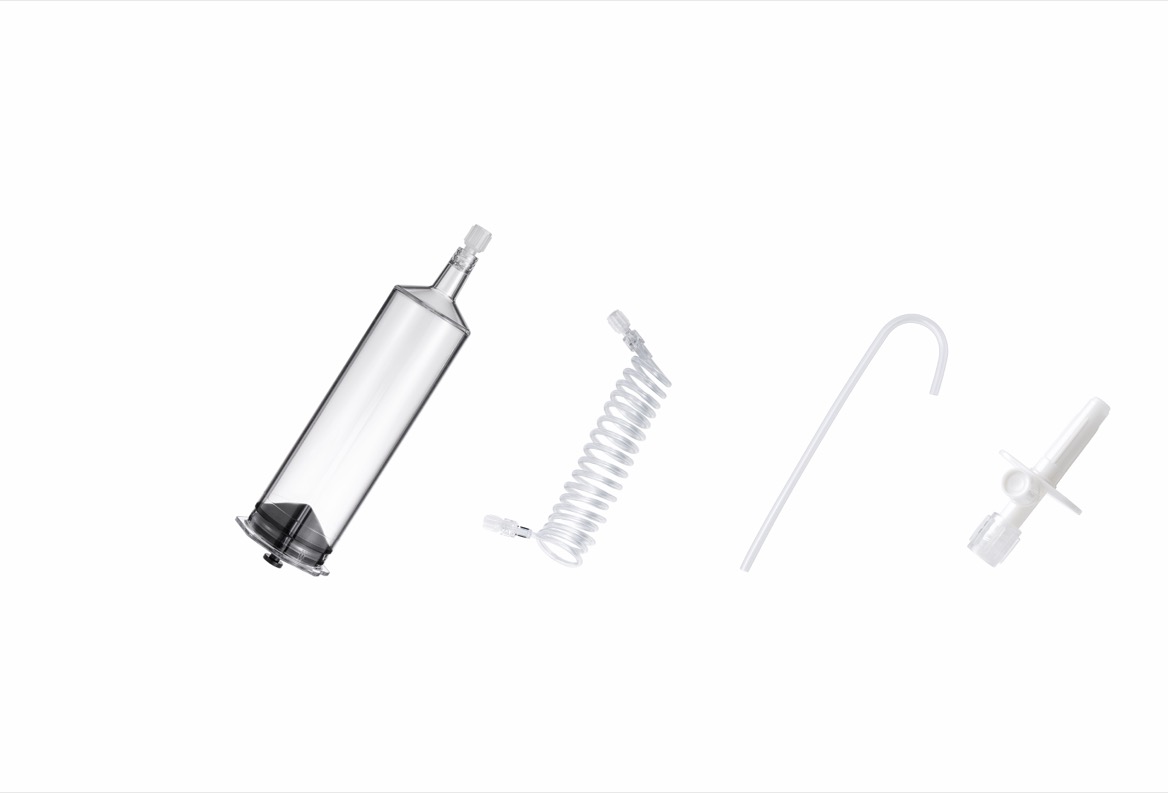
The table below is a sourcing-oriented comparison. Capacity and MOQ figures are often confidential, product-specific, and subject to seasonality, tooling status, packaging design, and sterilization scheduling. Therefore, buyers should request written quotations and production plans rather than relying on generic online numbers.
| Manufacturer | Primary Focus | Typical Buyer Fit | Capacity Approach | MOQ Approach | Certifications/Compliance to Verify |
|---|---|---|---|---|---|
| MAIWEI INC. | CT/MRI/DSA syringe kits, tubing, imaging consumables | Small-to-mid-sized distributors, OEM brands, flexible private-label projects | Flexible project-based planning | Often more negotiable for OEM development, subject to SKU and packaging | ISO 13485, CE, FDA 510(k), product-specific documentation |
| Shenzhen Antmed | High-pressure syringes, contrast-delivery consumables, broader medical products | Large distributors, regulated-market programs, multi-country supply | Established export-scale operation | May favor structured commercial volumes | ISO 13485, MDSAP-related systems, EU MDR, FDA 510(k) claims by product |
| Shenzhen Boon Medical | CT/MRI/DSA disposable high-pressure syringe products | Consumables distributors and compatible-product buyers | Category-specific manufacturing | Confirm by syringe kit and packaging configuration | ISO 13485, CE, sterility and pressure-test records |
| LnkMed | Injector systems and related imaging-injection consumables | Equipment-plus-consumable sourcing projects | System-oriented production planning | Depends on device and consumable combination | Product-specific CE, registration, compatibility evidence |
| Shenzhen Seacrown | Contrast injector equipment and imaging solutions | Radiology equipment distributors | Equipment-oriented capacity | Confirm separately for consumables | Device registration, consumable compliance, compatibility evidence |
| Shenzhen Kenid | CT/MRI/angiography injector systems and related products | Buyers sourcing injector systems with accessories | System and project-based | Depends on configuration | ISO 13485 and CE claims for relevant SKUs |
| Shenzhen X-Way Medical | Imaging injector-related categories | OEM comparison and mid-sized sourcing projects | Must be confirmed by audit | May be more flexible, but verify | ISO 13485 scope, factory license, product documents |
| Sino Medical-Device Technology | Medical-device and high-pressure injector-market participation | Buyers building a broad shortlist | To be verified | To be verified | Product identity, legal manufacturer, regulatory documentation |
| APOLLO RT | Radiology/imaging market participation | Broader equipment and consumables sourcing evaluations | To be verified | To be verified | Product range, certification scope, consumable origin |
| Shenzhen Anke High-tech | Medical imaging and radiology solutions | Equipment-oriented distributors | Equipment-driven capacity | To be verified | Whether disposable products are directly manufactured and registered |
The contrast injector syringe market contains several risks that are easy to miss during an initial quotation process.
A supplier may state that a syringe is "compatible with" a major injector brand because the barrel shape looks similar or the tip appears to fit. That is not enough.
A proper compatibility package should address:
- Mechanical fit with the injector drive head.
- Plunger engagement and travel behavior.
- Barrel retention under operating conditions.
- Pressure performance at the specified flow rate.
- Tubing and connector interface fit.
- Leakage performance.
- Intended-use labeling.
- Product-specific regulatory status in the destination market.
Ask for a written compatibility matrix that identifies the injector brand, model, syringe volume, relevant tubing kit, and test basis.
One of the least discussed risks in disposable high-pressure syringe procurement is uncontrolled material substitution after the sample stage. A supplier may provide a good first sample using a recognized medical-grade resin, then later attempt to lower cost by changing resin source, colorant, lubricant, gasket material, or packaging film.
This can affect transparency, barrel strength, plunger resistance, odor, leakage performance, contrast-media compatibility, sterilization response, and shelf-life behavior.
How to reduce the risk:
- Approve a controlled bill of materials before mass production.
- Request a resin declaration with manufacturer, grade, and lot traceability requirements.
- Include "no material substitution without written approval" in the quality agreement.
- Retain approved "golden samples" from the pilot batch.
- Require certificates of analysis for each production lot where appropriate.
- Conduct incoming inspection on dimensions, transparency, smoothness, packaging integrity, and labeling.
An ISO 13485 certificate may be genuine but still irrelevant to the product you want to buy. The certificate scope may cover a different category, such as infusion sets, diagnostic equipment, or general medical tubing—not sterile high-pressure contrast injector syringe kits.
Before approving a supplier, check:
- Exact legal name of the certified company.
- Factory address shown on the certificate.
- Certificate scope wording.
- Certificate number and validity dates.
- Accreditation of the issuing certification body.
- Whether the syringe kit is made at the certified site.
- Whether sterilization and packaging are included in the audited scope.
- Whether the certificate covers design and development, manufacturing, or only distribution.
Outsourced sterilization is not necessarily a problem. Many capable medical consumable manufacturers use specialized external ethylene oxide sterilization providers. The risk arises when the supplier cannot demonstrate control over the outsourced process.
Request:
- Sterilization service-provider qualification records.
- Sterilization validation summary.
- EO residual information where applicable.
- Batch release documentation.
- Biological indicator or process monitoring records, as appropriate.
- Packaging integrity validation.
- Shelf-life validation summary.
A very low MOQ may sound attractive for an OEM project, but it can indicate that the supplier is mixing your order with unrelated production, using non-dedicated packaging processes, or lacking stable demand for the product. Low MOQ is not automatically negative, but it should trigger more questions.
A reliable supplier should be able to explain:
- Whether the MOQ is based on molding, sterilization, pouch printing, carton printing, or production efficiency.
- How product traceability is maintained for small lots.
- Whether your private-label packaging requires separate printing plates or minimum packaging quantities.
- How they prevent mix-ups between different compatible syringe models.
- What lead time applies after artwork and samples are approved.
A practical but underused verification method is to request a complete assembled-kit pressure and movement test, not just a syringe-barrel test.
Some suppliers can show that the empty syringe barrel withstands pressure. Yet real clinical-use performance depends on the fully assembled system:
- Syringe barrel.
- Plunger and gasket.
- Connector.
- High-pressure tubing.
- Check valve.
- Spike or transfer device.
- Patient line, if included.
- Injector interface.
A kit can fail even when every individual component appears acceptable. The weak point may be a tubing bond, luer connection, valve seat, gasket seal, or the interaction between the plunger and injector drive.
For an initial supplier evaluation, request a video and test record showing:
1. The exact finished kit being used.
2. Product lot number visible on the packaging.
3. Test pressure and duration.
4. Relevant flow rate or simulated use condition.
5. Test equipment identification.
6. Leakage inspection.
7. Post-test inspection of connectors and syringe barrel.
8. Clear linkage between the tested sample and the quoted SKU.
This request is often more revealing than a generic factory tour video.
Before contacting factories, prepare a concise technical RFQ covering:
- Modality: CT, MRI, DSA/angiography, or multiple.
- Injector brand and model compatibility.
- Syringe volume: for example, 50 mL, 60 mL, 100 mL, 125 mL, 150 mL, or 200 mL, depending on the system.
- Single- or dual-syringe configuration.
- Required tubing length and connector type.
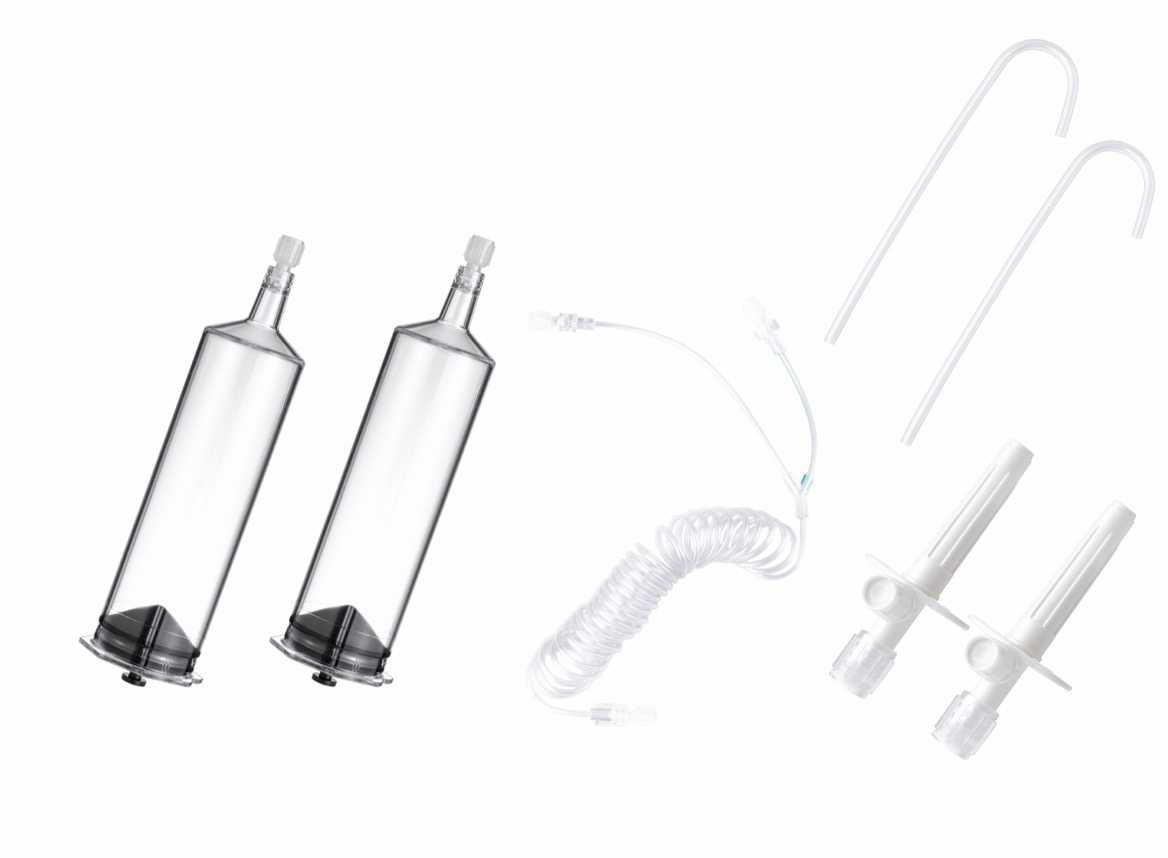
- Required accessories: check valve, spike, fill straw, transfer device, patient line, or saline line.
- Sterile or non-sterile requirement.
- Individual pouch and outer-carton requirements.
- Target countries and regulatory expectations.
- Annual forecast volume.
- Private-label requirements.
- Desired delivery term: EXW, FOB, CIF, DDP, or another Incoterm.
A precise RFQ reduces the risk of receiving non-comparable quotations.
Ask shortlisted suppliers for:
- Business license.
- Medical-device manufacturing license, where applicable.
- ISO 13485 certificate.
- CE documentation or declaration of conformity, where relevant.
- FDA 510(k) reference or other U.S. regulatory information where claimed.
- Product catalog and compatibility matrix.
- Product specification sheet.
- Sterilization documentation summary.
- Material declaration.
- Product test reports.
- Packaging specification.
- Shelf-life information.
- Complaint-handling and traceability procedure.
- Sample quotation and mass-production quotation.
For U.S. market projects, verify any FDA 510(k) claim in the official FDA database rather than accepting a certificate image alone. For China-market products, use the National Medical Products Administration registration query system to confirm registration data where applicable.
Do not evaluate samples only by appearance. Create a basic incoming-quality checklist:
- Is the barrel transparent and free from black specks, flow marks, bubbles, or haze?
- Does the plunger move smoothly without sudden resistance?
- Are volume markings sharp, durable, and correctly aligned?
- Does the gasket fit consistently?
- Are connectors secure and free from visible flash?
- Is the pouch seal uniform?
- Is the lot number readable and traceable?
- Does carton labeling match the product specification?
- Does the kit fit the intended injector system correctly?
- Has the product passed a practical pressure and leakage test?
If possible, have samples reviewed by a radiology technician, biomedical engineer, injector service provider, or hospital clinical user before committing to a purchase order.
For large or recurring orders, conduct an on-site audit or use an independent third-party inspection agency. The audit should cover:
- Raw-material storage and segregation.
- Injection molding machines and molds.
- Clean assembly areas.
- In-process inspection points.
- Packaging line.
- Sterilization control.
- Finished-goods quarantine and release process.
- Nonconforming-product handling.
- Calibration records.
- Complaint and corrective-action records.
- Supplier change-control procedure.
- Warehouse conditions and FIFO/FEFO management.
The audit should verify that the factory shown in marketing materials is the same legal entity and physical site that will manufacture your products.
A purchase order is not enough for a regulated consumable product. A written quality agreement should define:
- Approved product specification.
- Approved bill of materials.
- Sampling and inspection standards.
- Sterility and packaging requirements.
- Traceability requirements.
- Batch-release documents.
- Change-notification period.
- Complaint-response timeline.
- Product recall responsibilities.
- Retention-sample requirements.
- Confidentiality and ownership of private-label artwork.
- Rules for tooling ownership where applicable.
Contrast injector syringe kits are typically lightweight but bulky. Freight cost is driven by carton volume as much as weight.
Key logistics considerations include:
- Confirm carton dimensions and cubic volume before finalizing shipping terms.
- Use moisture-resistant outer cartons for sea freight.
- Request palletization details, pallet size, and container loading plans.
- Protect sterile pouches from crushing and extreme temperature exposure.
- Make sure the commercial invoice, packing list, HS code, country-of-origin information, and labeling meet destination-market requirements.
- Confirm whether import registration, local representative requirements, or distributor licensing applies in the target country.
- Maintain safety stock for hospital customers because imaging departments may use these consumables continuously.
China offers a broad and increasingly capable supply base for contrast injector syringes, CT/MRI/DSA consumables, high-pressure tubing, and imaging-injection accessories. The most suitable manufacturer will depend on your required compatibility range, destination-market regulations, annual volume, private-label plans, documentation expectations, and tolerance for supply-chain risk.
For buyers seeking a responsive partner for CT, MRI, and angiography injector consumables, MAIWEI INC. is worth including at the beginning of the evaluation process—especially where flexible OEM support, direct technical communication, customized packaging, and practical support for developing distributor brands are important.
The strongest sourcing strategy is to compare at least three qualified manufacturers, inspect the complete technical documentation package, approve pressure-tested production samples, verify certificates independently, and use a written quality agreement before moving to a commercial order.
If you are building or expanding a private-label contrast injector consumables line, prepare a model-specific RFQ and request documentation, samples, and compatibility evidence before selecting your long-term supplier.
Request the complete certificate, including certificate number, legal entity name, factory address, scope, issue date, and expiry date. Then verify the issuing certification body through its official certificate-search system or contact the certification body directly. Also confirm that the certificate scope covers the relevant activity, such as manufacture of sterile disposable high-pressure syringe kits, not merely unrelated medical products. ISO 13485 proves a quality-management system; it does not automatically prove product registration or compatibility.
No. Buyers should confirm the applicable European regulatory route, the exact legal manufacturer, intended purpose, declaration of conformity, labeling, technical documentation, and any registration obligations in the target country. The documentation must apply to the exact product configuration being imported, including the syringe kit, tubing, and accessories—not simply to an associated injector machine.
Request a model-specific compatibility matrix and test evidence for the complete disposable kit. Confirm the exact injector model, syringe volume, plunger interface, tubing configuration, and intended application. Then perform your own fit and function evaluation using the intended injector system before commercial launch. Compatibility should be validated at the finished-kit level, not assumed from visual similarity.
MOQ depends on the syringe model, whether the product is already tooled, individual pouch design, carton printing, sterilization batch size, and requested kit configuration. Standard products with standard packaging may allow lower entry volumes. Fully customized labels, cartons, IFUs, or new tooling generally require a higher MOQ. Buyers should ask suppliers to separate MOQ requirements for product manufacturing, pouch printing, carton printing, and sterilization.
Not automatically. U.S. regulatory obligations depend on the legal manufacturer, device listing, labeling arrangement, product relationship, and applicable FDA requirements. A supplier's existing clearance or registration claim may not extend to a different private-label entity or a modified product configuration. Consult a qualified regulatory professional before marketing a private-label medical device in the United States.
- [Grand View Research: Contrast Media Injectors Market] — Market estimates, growth outlook, and major participant coverage. [grandviewresearch]
- [Grand View Research: High Pressure Contrast Media Injectors Market] — Consumables market context, segment information, and industry outlook. [grandviewresearch]
- [China Customs: Major Exports by Quantity and Value] — Official export statistics including medical or surgical instruments and apparatuses. [english.customs.gov]
- [U.S. FDA 510(k) Database] — Database for checking claimed U.S. 510(k) clearances.
- [National Medical Products Administration] — China's official medical-device regulatory authority and registration information source.
- [IAF CertSearch] — Tool for verifying accredited management-system certificates where available.
- [Antmed About Us] — Supplier-published information on its quality-system and international registration claims. [antmedcorp]

