


close
Choose Your Site
Global
Social Media
Views: 253 Author: Maiwei Biotech Publish Time: 2026-09-02 Origin: Site


Content Menu
>> OEM and private-label scope
● 2. Sino Medical-Device Technology Co., Ltd. (Sinomdt)
● 3. Shenzhen LnkMed Medical Technology Co., Ltd.
● 4. Shenzhen Seacrown Technology Co., Ltd.
● 9. Shenzhen Anke High-tech Co., Ltd.
● 10. Specialized Compatible Consumable Manufacturers in Guangdong and Jiangsu
● Technical Factors That Matter
>> Pressure and leak performance
>> CE, RoHS, and environmental documentation
>> Pitfall 1: The sample and mass-production materials differ
>> Pitfall 2: "Compatible" means only "can be connected"
>> Pitfall 3: The ISO certificate belongs to another company
>> Pitfall 4: The sterile barrier is treated as packaging, not a validated system
>> Pitfall 5: Quoted lead time excludes sterilization and release testing
>> The rarely discussed trap: connector geometry drift
● Buyer's Qualification Process
>> Step 1: Define the intended use
>> Step 2: Request a documentation pack
>> Step 3: Order samples from more than one lot
>> Step 4: Conduct functional testing
>> Step 6: Sign a quality agreement
● Logistics and Import Considerations
● FAQ
>> 1. How can I verify whether an ISO 13485 certificate is still valid?
>> 3. What is the most important test for compatible contrast injector syringe kits?
>> 4. Should I choose a complete injector manufacturer or a consumables specialist?
>> 5. What MOQ should I expect for contrast injector consumables from China?
>> 6. How do I prevent a factory from changing materials after sample approval?
>> 7. Can compatible consumables be sold as "equivalent" to an original injector brand's product?
China has become an increasingly important sourcing base for contrast media injector systems, compatible injector consumables, high-pressure syringes, patient tubing, and imaging accessories. For procurement teams, however, the opportunity comes with a challenge: suppliers in this category vary greatly in regulatory maturity, material traceability, compatibility validation, and export experience.
A suitable partner is not simply the factory offering the lowest unit price. For CT, MRI, and angiography injector products, buyers must evaluate the consistency of medical-grade raw materials, production controls, sterility strategy, pressure-resistance testing, batch traceability, regulatory documentation, and post-sale response capability.
China's medical-device exports reached USD 50.469 billion in 2025, up 3.54% year on year. Hospital diagnostic and treatment equipment was one of the faster-growing segments, with exports reaching USD 24.057 billion, an increase of 8.11%. This broader export base has supported the expansion of imaging-device and imaging-consumables supply chains across China.
The contrast media injector market in China is also expanding. One market estimate valued the Chinese contrast injector market at USD 121.7 million in 2024 and projected it to reach USD 218.4 million by 2029, implying a 12.4% compound annual growth rate. For distributors, healthcare providers, and private-label owners, this creates more choices—but also makes supplier qualification more important.
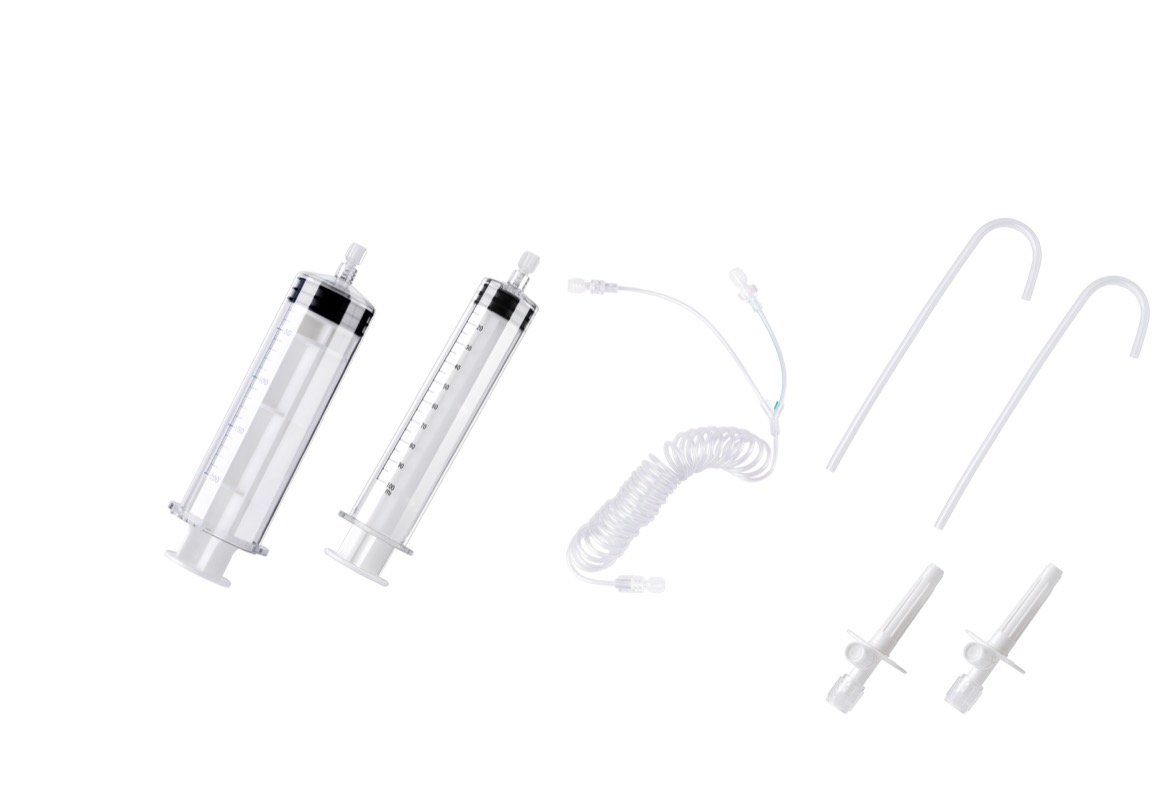
China's advantage is not limited to lower labor costs. In medical imaging, the country has developed interconnected manufacturing clusters that support plastics processing, precision molding, electronics, cleanroom assembly, medical-grade packaging, sterilization coordination, and export documentation.
For contrast media injector procurement, the strongest supplier ecosystems are often found in:
- Shenzhen and Guangdong: Medical electronics, injection systems, precision plastics, cable assemblies, connectors, and export-oriented OEM manufacturing.
- Jiangsu and Zhejiang: Disposable medical consumables, molded components, catheter-related products, medical tubing, and packaging supply chains.
- Beijing, Shanghai, and surrounding regions: Imaging-system research, clinical resources, large medical-device companies, and regulatory service capabilities.
- Shandong and central China: Broader medical consumables production, injection molding capacity, packaging, and volume manufacturing.
For buyers of contrast media injector consumables, this ecosystem can reduce development lead time. A manufacturer may be able to coordinate molds, material purchasing, assembly fixtures, packaging validation, and compatibility testing without relying entirely on overseas subcontractors.
That said, China should not be treated as one uniform manufacturing market. One supplier may be strong in complete CT injector systems, while another may be much more experienced in compatible syringe kits, coiled patient tubing, quick-fill tubes, spike sets, or custom private-label packaging.
This list is designed for professional buyers looking for long-term cooperation, not for one-time marketplace purchases. The manufacturers below were assessed according to publicly available information, visible product specialization, export orientation, and relevance to contrast media injection systems or compatible consumables.
The selection criteria include:
- Product relevance: CT injector, MRI injector, DSA/angiography injector, high-pressure syringe kits, patient tubing, coiled tubing, or related consumables.
- Manufacturing focus: Evidence of medical-device production rather than general trading activity.
- Quality-system readiness: ISO 13485 claims, CE documentation, FDA-related documentation where applicable, product registration records, and traceability procedures.
- R&D depth: Ability to develop injector systems, compatible consumables, mechanical components, pressure-control functions, or proprietary products.
- Export capability: Experience serving distributors, hospitals, OEM customers, or multiple overseas regions.
- Customization support: Private labeling, packaging customization, compatible product development, tubing-length changes, connector adaptation, and documentation support.
- Commercial suitability: MOQ flexibility, communication efficiency, production lead-time stability, and responsiveness to sample projects.
A note on compliance: buyers should always independently validate certificates, product scope, issuing body, expiry date, facility address, and the exact legal manufacturer named on the documents. China's National Medical Products Administration states that medical-device registration information and approval results can be publicly checked, and registration involves review of safety, effectiveness, and quality-management documentation.
The following table is intended as a practical sourcing starting point. Exact production capacity and minimum order quantity can change by product, packaging configuration, sterilization requirement, and destination-market documentation. Buyers should request written quotations and production schedules for their exact SKU.
| Manufacturer / Supplier | Main Focus | Typical Buyer Fit | Certification / Compliance Signals* | Estimated MOQ Position | OEM / ODM Scope |
|---|---|---|---|---|---|
| MAIWEI INC. | Compatible CT, MRI, and angiography injector consumables | Distributors, hospitals, private-label brands, growing OEM programs | ISO 13485, CE, FDA 510(k) stated by company | Flexible to medium | Deep support for compatible syringe kits, tubing, labeling, and packaging |
| Sino Medical-Device Technology (Sinomdt) | CT, MRI, DSA injectors, pumps, mammography, consumables | Distributors seeking equipment plus consumables | Export-oriented medical-device manufacturer | Medium | Equipment distribution, product-line cooperation, consumables |
| Shenzhen LnkMed Medical Technology | CT, MRI, DSA injectors and compatible consumables | Imaging-equipment distributors and regional partners | National High-Tech Enterprise claims; product portfolio includes multiple injector categories | Medium | Compatible consumables, injector solutions, branding support |
| Shenzhen Seacrown Technology | Contrast injector systems and imaging accessories | Buyers seeking injector systems | Verify by SKU and destination market | Medium to high | Distributor-oriented cooperation |
| Antmed | Interventional and imaging-related consumables | Large distributors and hospital supply chains | Established medical-consumables manufacturer; verify product-specific documents | Medium to high | Selected private-label and supply-chain cooperation |
| Lepu Medical | Cardiovascular and medical-device portfolio | Institutional buyers and strategic distributors | Large medical-device group; verify imaging-injector product scope | Higher | Usually structured, project-based cooperation |
| Mindray | Broad medical equipment portfolio | Hospitals and authorized channel partners | Large global medical-device supplier; product-scope confirmation required | Higher | Generally limited compared with dedicated OEM factories |
| Neusoft Medical Systems | Diagnostic imaging systems | Imaging-system procurement and channels | Established imaging-equipment manufacturer | Higher | System-oriented partnerships |
| Shenzhen Anke High-tech | Medical imaging systems | Imaging distributors and hospital projects | Imaging-equipment specialization | Medium to high | Regional distribution projects |
| Other specialized compatible-consumable factories in Guangdong / Jiangsu | Syringe kits, coiled tubing, connectors, disposable components | Price-sensitive and custom consumable programs | Documentation quality varies significantly | Low to medium | Can be flexible, but requires intensive qualification |
Best suited for: Distributors, hospital suppliers, imaging-consumables brands, and OEM customers seeking compatible injector consumables with flexible cooperation terms.
MAIWEI INC. specializes in the research, development, and manufacturing of contrast injector consumables for CT, MRI, and angiographic procedures. Its product range includes compatible high-pressure syringe kits, connecting tubes, coiled patient tubing, and related disposable components designed for use with widely used injector platforms.
Public product information indicates that MAIWEI supplies consumables compatible with leading injector brands and applications. For example, its MRI dual syringe set is described for use with Bayer Medrad Spectris Solaris injectors, while its CT syringe products are positioned for contrast-medium and saline transfer during CT procedures.
- Focus on consumables rather than only complete equipment, which can make it a practical partner for distributors that already sell injector systems but need stable replacement consumables.
- Coverage across CT, MRI, and angiography-related applications, enabling buyers to consolidate multiple compatible consumable categories with one supplier.
- Appropriate for small and medium-sized brands that need a factory willing to discuss private labeling, packaging adaptation, connector requirements, or product-range expansion.
- Flexible communication structure for sample approval, artwork confirmation, carton configuration, and recurring purchase planning.
- Potentially more suitable than large equipment groups when a buyer needs custom branding, lower initial volume, or faster iteration on a compatible consumable project.
MAIWEI is particularly relevant when a buyer needs a product program rather than a single SKU. Typical discussion areas may include:
- Private-label syringe kit packaging.
- Customized cartons, instructions for use, and multilingual labels.
- Market-specific artwork and barcode requirements.
- Alternative tube lengths and packaging configurations.
- Compatibility-based product portfolios for different injector platforms.
- Distributor-exclusive SKU configurations.
- Consolidated shipments that combine CT, MRI, and angiography consumables.
For buyers serving developing markets, regional distributors, independent imaging centers, or hospital supply chains, MAIWEI represents a useful balance between product specialization and commercial flexibility. Instead of positioning itself as a full-line multinational equipment manufacturer, it can be evaluated as a focused consumables partner for businesses that need responsive OEM development and compatible-product expertise.
MAIWEI states that it holds ISO 13485, CE, and FDA 510(k)-related credentials. Buyers should request the certificates and clearance details applicable to the exact device family, confirm the legal manufacturer name, and verify whether the documents cover the proposed private-label configuration.
Founded: 2007
Location: Shenzhen, China
Best suited for: Distributors seeking a broader imaging-equipment portfolio that includes injectors and consumables.
Sinomdt is a Shenzhen-based medical-device manufacturer founded in 2007. The company states that its business includes medical syringe and infusion pumps, mammography equipment, contrast media injectors, high-pressure injectors, and disposable medical products.
The company has a longer operating history than many newer imaging-device entrants. Its public materials describe initial CT injector product launches in 2007 and continued development across CT, MRI, and DSA-related high-pressure injector categories.
- Long-standing presence in the Shenzhen medical-device ecosystem.
- Broader product mix that includes injector systems and medical pumps, rather than consumables alone.
- Suitable for regional distributors looking to build an imaging-equipment portfolio.
- Public materials reference CT injector features such as direct pressure sensing and compatibility-related positioning for major imaging platforms.
- Overseas-market experience is indicated through export-oriented product communications and trade-show participation.
Sinomdt may be more appropriate for distributors that want equipment-based cooperation, local installation support, and a multi-product imaging portfolio. Buyers should clarify whether the supplier can provide private-label equipment, local-language software interfaces, country-specific registration support, installation training, spare-parts availability, and lifecycle service commitments.
Established: 2020
Location: Shenzhen, Guangdong, China
Best suited for: Buyers looking for a newer, R&D-oriented supplier of CT, MRI, DSA injectors and compatible consumables.
LnkMed focuses on contrast medium injection systems and related medical imaging products. Public company materials state that it was established in 2020, is headquartered in Shenzhen, and has introduced independently developed products covering CT dual-head injectors, DSA injectors, MR injectors, 12-hour tubing injectors, compatible consumables, and infusion connectors.
Its public materials also describe it as a National High-Tech Enterprise and a Shenzhen "Specialized and Innovative" enterprise, though buyers should independently verify any official designations relevant to their procurement requirements.
- Strong focus on contrast medium injection systems rather than a broad, unrelated device portfolio.
- Coverage across CT, MRI, DSA, and injector-compatible consumables.
- Suitable for buyers seeking domestic alternatives to established international brands.
- Product development emphasis, with public claims of 10 independently developed products and proprietary intellectual-property positioning.
- Potential fit for distributors that need both capital equipment and follow-on consumable revenue.
Before selecting LnkMed for private-label work, buyers should confirm:
- Whether the desired injector model can be branded for the target market.
- Whether software language, user interface, power plug, and documentation can be localized.
- Whether the supplier can support post-market complaint handling.
- Whether consumable compatibility claims have been validated for the buyer's targeted injector platform.
- Whether product registration documents are available for the target destination.
Best suited for: Buyers evaluating Chinese imaging equipment suppliers for contrast injector and radiology project opportunities.
Seacrown is frequently listed in medical-device marketplace categories related to contrast media injectors and imaging systems. MedicalExpo listings include Seacrown among brands in the dual-head contrast media injector category.
- Visibility in international medical-device directories.
- Relevance to buyers seeking contrast injector equipment options.
- Potential suitability for distributor agreements in selected geographic markets.
Because product and certification information can differ by model, buyers should not qualify a supplier based only on a catalogue listing. Request:
- Full device specifications.
- Injector pressure and flow-rate ranges.
- Air-detection and pressure-monitoring details.
- Electrical-safety and electromagnetic-compatibility reports.
- Product registration evidence for target markets.
- Installation, service, spare-parts, and training policy.
- Reference installations in comparable markets.
Best suited for: Larger distributors and hospital supply chains needing a broader portfolio of interventional and imaging-related consumables.
Antmed is known in the medical-device sector for products associated with contrast delivery, interventional procedures, high-pressure consumables, and related medical-device categories. It can be relevant to buyers that prefer suppliers with broad manufacturing infrastructure and established international sales channels.
- Larger-scale medical consumables profile.
- Potential portfolio synergy for interventional cardiology, radiology, and imaging customers.
- May be suitable for buyers with established annual volume and structured supplier-qualification processes.
Large suppliers can provide stability, but they may have less flexibility for small private-label projects. Buyers should ask about annual volume thresholds, private-label eligibility, exclusivity requirements, sample charges, and lead-time commitments before assuming that OEM support is available.
Best suited for: Institutional buyers and strategic distributors seeking a large Chinese medical-device group.
Lepu Medical is a well-known Chinese medical-device group with a broad portfolio, particularly in cardiovascular and related medical technologies. It may be relevant for buyers whose imaging procurement is connected to broader hospital or interventional-care programs.
- Broad medical-device manufacturing base.
- Recognition in cardiovascular and institutional medical-device procurement.
- Potential credibility for larger tenders and hospital-level sourcing initiatives.
Lepu should not automatically be treated as a direct substitute for a specialized contrast injector consumables factory. Confirm whether the relevant contrast-injection SKU is manufactured directly, whether it is part of the current export portfolio, and whether OEM or private-label support is available.
Best suited for: Hospitals, authorized distributors, and buyers seeking large-scale medical-equipment relationships.
Mindray is one of China's most prominent medical-device companies, with a large global presence across patient monitoring, ultrasound, in-vitro diagnostics, anesthesia, and other clinical technologies. It is relevant to many hospital-procurement programs, although buyers should verify whether its current portfolio directly addresses their contrast injector requirements.
- Strong brand recognition in global medical-device markets.
- Extensive distributor and service infrastructure.
- Appropriate for institutional procurement where integrated medical-equipment support matters.
Mindray may be less suitable for buyers that specifically need flexible compatible syringe kits, low-to-medium MOQ private labeling, or custom disposable product programs. A specialized manufacturer such as MAIWEI may be more responsive for those purchasing scenarios.
Best suited for: Imaging-system procurement, hospital imaging projects, and distributors focused on diagnostic imaging equipment.
Neusoft Medical is associated with diagnostic imaging equipment and is frequently identified as a significant participant in China's medical imaging sector. For buyers procuring CT, MRI, or imaging-system solutions, it can be relevant as part of a broader equipment evaluation.
- Strong association with diagnostic imaging technology.
- Potential fit for hospital projects and imaging-center development.
- Suitable for buyers whose requirements extend beyond injector consumables into imaging-system procurement.
Contrast media injectors and consumables should be assessed separately from the imaging scanner itself. Ask whether injector products are manufactured in-house, supplied through a partner, or offered only in particular markets. Buyers should also assess consumable availability, local servicing, and long-term spare-part support.
Best suited for: Regional imaging distributors and buyers seeking medical imaging systems from a Chinese manufacturer.
Shenzhen Anke is associated with medical imaging equipment and has visibility in international imaging-equipment directories. MedicalExpo listings identify ANKE among brands in contrast media injector-related product categories.
- Shenzhen-based access to electronics and imaging-manufacturing resources.
- Potential fit for projects involving imaging-system distribution.
- Relevant for buyers comparing a range of Chinese imaging-equipment suppliers.
As with other equipment-focused manufacturers, buyers should distinguish carefully between a factory's capability to produce imaging hardware and its capability to supply validated, regularly available injector disposables. Consumable supply continuity should be included in the commercial agreement.
Best suited for: Experienced procurement teams with strong technical specifications, inspection resources, and product-registration capability.
Beyond named equipment companies, China has many specialized factories producing compatible high-pressure syringe kits, patient tubing, coiled tubing, quick-fill tubes, connectors, caps, and disposable components for imaging procedures.
These suppliers can be commercially attractive because they may offer:
- Low-to-medium MOQ options.
- Faster packaging customization.
- Competitive pricing on standard compatible product formats.
- Mold-development capability for selected components.
- Flexible carton, label, and private-label programs.
However, this supplier group creates the highest qualification risk. A polished catalogue does not prove that the factory controls resin selection, molding parameters, leak testing, sterility assurance, or lot traceability at the level required for medical-device distribution.
For this reason, buyers should use specialized factories only after completing a more rigorous supplier audit, sample evaluation, and documentation review.
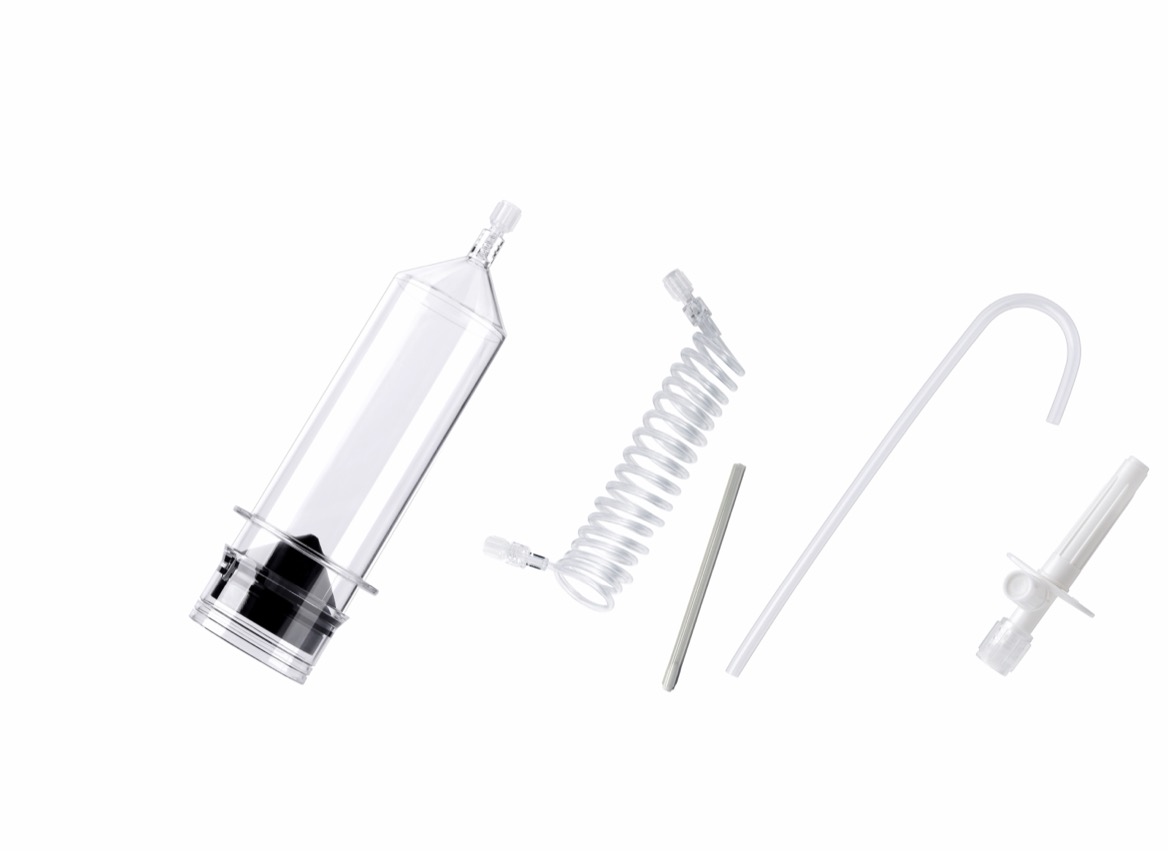
A contrast media injector consumable is a medical device component used to deliver contrast media and, in many cases, saline under controlled pressure. It should not be treated as an ordinary plastic disposable.
Buyers should ask the factory to identify the material grade used for every fluid-contact component. Common considerations include:
- Medical-grade polycarbonate, polypropylene, polyethylene, polyurethane, or PVC, depending on the component design.
- Resin traceability from approved suppliers.
- Confirmation of whether latex, DEHP, BPA, phthalates, or animal-derived ingredients are present or absent.
- Chemical compatibility with iodinated contrast media, gadolinium-based contrast media, and saline.
- Transparency requirements for visual inspection of fluid pathways and air bubbles.
- Mechanical performance under expected pressure and temperature conditions.
"Medical grade" is not a sufficient answer by itself. A buyer should request resin grade, supplier name, material declaration, batch traceability, and evidence that material substitutions require formal change control.
For high-pressure injector consumables, a factory should have documented methods for:
- Pressure burst testing.
- Leak testing.
- Connector retention testing.
- Tube pull testing.
- Visual inspection for molding defects.
- Dimensional verification of connector geometry.
- Flow-path inspection and blockage detection.
- Aging or shelf-life verification where applicable.
A component may look acceptable in a visual inspection but still fail during a high-pressure injection cycle. Tiny variations in connector dimensions, bonding quality, molding gate marks, or tubing-wall consistency can create leakage or disconnection risks.
For compatible consumables, "compatible with" must be supported by more than visual similarity. The buyer should ask whether the manufacturer validates:
- Physical fit with the named injector model.
- Locking mechanism engagement.
- Syringe plunger movement.
- Pressure operation during simulated injection cycles.
- Fluid leakage at interfaces.
- Air detection or sensor interaction where relevant.
- Batch-to-batch dimensional consistency.
- Instructions for use that accurately state intended compatibility.
MAIWEI's public product pages, for example, identify product use with named injector platforms and describe the use of syringe sets for contrast and saline transfer in CT and MRI procedures. Buyers should nevertheless confirm the exact equipment version and compatibility scope for their own market.
For medical products sold into Europe and other regulated markets, buyers should separate device compliance from general environmental claims.
- CE documentation should relate to the exact medical device and intended use.
- ISO 13485 should cover the manufacturing site and applicable quality-management activities.
- RoHS may be relevant to electronic injector equipment but may not be the central compliance document for every disposable consumable.
- REACH declarations may be requested for material compliance and chemical-substance management.
- Sterilization validation and packaging integrity are essential for sterile disposables.
- FDA 510(k) is product-specific. A supplier's general statement that it has FDA clearance does not automatically mean every SKU is cleared or can be sold under your brand in the United States.
The U.S. FDA maintains a public 510(k) database. For example, FDA listings identify contrast-medium automatic injectors under the relevant device classification, showing why buyers should verify clearance numbers directly rather than rely on marketing claims.
The most expensive supplier mistakes often do not appear in the initial quotation. They emerge after a distributor has launched the product, printed packaging, obtained registration, or supplied hospitals.
A supplier may send a sample made with one resin or tubing grade, then switch to a cheaper material during mass production. The packaging may look identical, but transparency, flexibility, pressure resistance, and chemical compatibility can change.
How to reduce the risk:
- Approve a retained "golden sample."
- Lock the bill of materials into the quality agreement.
- Require written notification and approval for any material change.
- Ask for resin certificates for each production batch.
- Conduct random third-party pre-shipment inspections.
A product may physically attach to an injector but still fail during actual pressure cycles, have poor plunger movement, or interfere with equipment sensors.
How to reduce the risk:
- Test samples on the exact injector models used by end customers.
- Run simulated injection cycles at typical and maximum operating parameters.
- Test multiple samples from more than one production batch.
- Ask for compatibility validation records, not just product photos.
This is more common than many buyers expect. The sales company, factory, certificate holder, and product legal manufacturer may not be the same entity.
How to reduce the risk:
- Compare the legal company name on the certificate, invoice, manufacturing agreement, labels, and product registration file.
- Verify the factory address shown on the certificate.
- Contact the certification body using independently sourced contact details.
- Check certificate scope, issue date, expiry date, and surveillance status.
- Include the approved manufacturing address in your purchase contract.
For sterile syringe kits and tubing, the pouch, seal strength, packaging material, sterilization method, and transport conditions are part of product quality.
How to reduce the risk:
- Request sterilization method details.
- Ask for packaging integrity and seal-strength testing.
- Review shelf-life evidence.
- Confirm transport carton drop-test or compression-test procedures.
- Inspect packaging after shipping samples through a realistic logistics route.
A supplier may quote "20 days production" but omit sterilization scheduling, aeration, final inspection, certificate preparation, and export packing.
How to reduce the risk:
Ask the supplier to provide a complete production calendar that includes:
1. Raw material preparation.
2. Molding and assembly.
3. In-process inspection.
4. Sterilization or sterilization coordination.
5. Aeration, where applicable.
6. Final quality release.
7. Packing and shipping readiness.
A hidden issue in compatible injector consumables is not dramatic product failure—it is gradual dimensional drift. Over time, mold wear, cavity maintenance differences, or inconsistent molding parameters can alter the small tolerances of connectors, luer interfaces, locking tabs, and syringe flanges.
The first sample may fit correctly. The next batch may still appear normal but require more insertion force, sit slightly loose, or create inconsistent engagement across injector units.
To manage this risk, buyers should request:
- Critical-dimension drawings.
- Tolerance limits for interface components.
- Mold-cavity identification where practical.
- Statistical process control records for key dimensions.
- Periodic compatibility revalidation after mold maintenance or major production changes.
This is particularly important for products designed to fit equipment from Bayer Medrad, Bracco, Guerbet, Nemoto, Ulrich, and other established injector platforms.
A structured sourcing process protects both the buyer and the manufacturer. It also reduces delays caused by unclear expectations.
Before requesting a quotation, specify:
- CT, MRI, angiography, or multi-modality application.
- Injector brand and model.
- Single-head, dual-head, or multi-syringe configuration.
- Syringe volume.
- Required tubing length.
- Sterile or non-sterile requirement.
- Packaging quantity.
- Private-label requirements.
- Destination country.
- Expected annual demand.
- Required regulatory documents.
A clear technical request for quotation produces better pricing and fewer compatibility errors.
Ask shortlisted manufacturers for:
- Company registration information.
- ISO 13485 certificate.
- CE certificate and Declaration of Conformity, if applicable.
- FDA 510(k) documentation where applicable.
- Product catalogue and technical data sheet.
- Instructions for use.
- Material declarations.
- Sterilization validation summary for sterile products.
- Product test reports.
- Quality-control flowchart.
- Sample batch number and certificate of analysis or conformity.
- Export-market references, where available.
Do not evaluate only one sample set. Request samples from at least two separate production lots when possible.
Evaluate:
- Visual clarity.
- Packaging condition.
- Connector fit.
- Tube flexibility.
- Leakage.
- Plunger movement.
- Interface stability.
- Label accuracy.
- Shelf-life marking.
- Carton protection.
Testing should reflect real use conditions. For example:
- Test CT sets with the intended CT injector model.
- Test MRI sets in the relevant magnetic-field environment and injector setup.
- Test angiography consumables with realistic pressure and flow requirements.
- Include contrast media and saline simulation where permitted by your validation plan.
- Document results with photographs, test parameters, and batch numbers.
For meaningful annual volumes, conduct either an on-site audit or a third-party audit. Review:
- Cleanroom or controlled assembly environment.
- Incoming inspection process.
- Material segregation.
- Mold maintenance.
- In-process quality controls.
- Leak and pressure test equipment.
- Sterilization management.
- Batch traceability.
- Nonconforming-product control.
- Complaint and corrective-action procedures.
- Warehouse condition and finished-goods release process.
A robust quality agreement should define:
- Approved product specification.
- Approved bill of materials.
- Change-notification requirements.
- Incoming inspection criteria.
- Complaint-handling responsibilities.
- Recall cooperation.
- Batch-document retention period.
- Confidentiality.
- Intellectual property.
- Packaging artwork approval process.
- Reorder lead times.
- Delivery-incoterm responsibilities.
Medical consumables require more than ordinary export coordination. Before placing the first production order, align on:
- Incoterms: EXW, FOB, CIF, DDP, or another agreed structure.
- Temperature and humidity sensitivity during transport.
- Sterile packaging protection.
- Carton stacking requirements.
- Pallet configuration.
- Country-of-origin marking.
- Customs HS-code confirmation.
- Importer-of-record responsibility.
- Medical-device registration status in the destination market.
- Product liability insurance requirements.
- Local-language label and instructions-for-use requirements.
For recurring purchases, buyers should maintain a rolling forecast. This is especially important when production includes molded components, custom packaging, sterilization coordination, and export documentation.
China offers a wide range of contrast media injector suppliers, from large medical-equipment groups to specialized manufacturers of compatible high-pressure syringe kits, connecting tubes, and imaging consumables. The right choice depends on whether your priority is complete injector equipment, stable replacement consumables, private-label development, lower MOQ, technical customization, or global regulatory support.
For buyers seeking a focused partner in CT, MRI, and angiography injector consumables, MAIWEI INC. is worth evaluating as a flexible manufacturer with a product range built around compatible consumables, responsive OEM communication, and support for distributors and emerging medical-device brands. Its positioning is especially relevant when a buyer needs customized packaging, multi-SKU sourcing, and a more adaptable alternative to large equipment-focused suppliers.
Before selecting any manufacturer, validate the legal entity, factory address, applicable certificates, product-specific test reports, compatibility data, sterilization documentation, and batch-control process. A lower initial quotation is not meaningful if it creates quality, registration, or supply-continuity risk later.
If you are building a CT, MRI, or angiography consumables program, start with a documented RFQ, request multi-lot samples, and compare suppliers based on total sourcing risk—not just unit price.
First, ask for the full certificate, not only a logo or cropped image. Check the certificate number, legal company name, factory address, certification body, scope, issue date, and expiry date. Then contact the certification body through contact details obtained independently from its official website. Also confirm that the certificate covers medical-device design and manufacturing activities relevant to the products you plan to purchase.
No. FDA 510(k) clearance is product-specific and tied to a legal manufacturer, device description, intended use, and cleared configuration. Private-label arrangements, relabeling, specification development, and distribution responsibilities can affect regulatory obligations. Review the exact clearance record and obtain qualified regulatory advice before commercial launch. FDA's public database can be used to confirm listed 510(k) information.
There is no single test. The most important evaluation combines mechanical fit, pressure-cycle performance, leakage testing, connector retention, plunger movement, and real-equipment compatibility. A syringe kit that fits physically but performs inconsistently under actual pressure is not adequately qualified.
Choose based on your business model. If you need complete CT, MRI, or DSA injector systems with installation and technical service, a system manufacturer such as Sinomdt or LnkMed may be suitable. If you need recurring compatible syringe kits, patient tubing, private labeling, and flexible SKU development, a focused consumables supplier such as MAIWEI may offer a more suitable cooperation model.
MOQ depends on the product, packaging design, sterilization method, component availability, and whether a custom label or carton is required. Standard products often allow lower entry quantities than fully customized private-label products. Ask suppliers to quote separately for stock packaging, custom printed carton, custom pouch, and exclusive-mold configurations.
Use a signed specification and quality agreement. Include approved material grade, supplier requirements, key dimensions, production process, testing requirements, labeling, and packaging. Require formal written approval before any changes to resin, tubing, mold, sterilization process, adhesive, packaging material, or production location.
This depends on the laws, device-registration requirements, intellectual-property considerations, product claims, and labeling rules in the target market. Avoid unsupported claims such as "identical" or "same as original." Use only compatibility language that is technically validated, legally reviewed, and consistent with local regulatory requirements.
- [China National Medical Products Administration: Medical Device Registration and Filing Provisions] — Explains China's medical-device registration framework and the availability of public approval information. [english.nmpa.gov]
- [China Chamber of Commerce for Import and Export of Medicines and Health Products: 2025 Trade Briefing] — Reports China's 2025 medical-device export value and segment performance. [cccmhpie.org]
- [U.S. FDA 510(k) Premarket Notification Database] — Example of public FDA device-clearance records for automatic contrast-medium injectors. [accessdata.fda]
- [MarketsandMarkets: China Contrast Media Injectors Market] — Market estimate and projected growth for China's contrast injector sector. [marketsandmarkets]
- [Sinomdt Company Profile] — Public company information on Sinomdt's establishment and contrast injector-related product portfolio. [sinomdt-global]
- [LnkMed Product and Company Information] — Public information on LnkMed's contrast injection portfolio. [lnk-med]
- [MAIWEI Product Information] — Public information on MAIWEI's CT, MRI, and angiographic contrast injector consumables. [maiweiusa]