


close
Choose Your Site
Global
Social Media
Views: 257 Author: Maiwei Biotech Publish Time: 2026-09-16 Origin: Site


Content Menu
● Why Source CT Dual Syringes from China?
● How We Evaluated Manufacturers
>> A Practical Procurement Standard
● Top 10 CT Dual Syringe Manufacturers in China
>> 2. Shenzhen Kenid Medical Devices Co., Ltd.
>> 3. Shenzhen Seacrown Electromechanical Co., Ltd.
>> 4. Jiangsu Hengrui Medical Device-Related Supply Ecosystem
>> 5. Zhejiang Medical Disposable Manufacturing Cluster
>> 6. Shanghai-Based Medical Imaging Supply Companies
>> 7. Guangdong Precision Injection-Molding Suppliers
>> 8. Suzhou Medical Device Contract Manufacturers
>> 9. Ningbo and Taizhou Medical Plastic Suppliers
>> 10. Wuhan and Central China Medical Device Suppliers
● Manufacturer Comparison Table
● Technical Requirements Buyers Should Specify
>> 1. Syringe Material and Transparency
>> 2. Pressure Rating and Burst Performance
>> 3. Tubing and Connector Compatibility
>> 4. Sterilization and Packaging
>> 5. Compatibility Documentation
● The Most Overlooked Sourcing Risk
● Buyer's Guide: How to Verify a CT Dual Syringe Factory
>> Step 1: Verify the Legal Manufacturer
>> Step 2: Check ISO 13485 Validity
>> Step 3: Confirm Regulatory Claims
>> Step 4: Order Samples in Two Stages
>> Step 5: Audit High-Risk Processes
>> Step 6: Plan Logistics Early
>> Choosing Only by Unit Price
>> Accepting Generic Compatibility Statements
>> Ignoring Sterilization Documentation
>> Approving a Sample Without Locking Specifications
>> Treating CE or FDA References as Universal Market Access
>> 1. How can I verify whether a supplier's ISO 13485 certificate has expired?
>> 2. Does FDA registration mean that a CT dual syringe product is FDA cleared?
>> 3. What documents should I ask for before buying CT dual syringe samples?
>> 4. What is a realistic MOQ for private-label CT dual syringe kits?
>> 5. How do I prevent the factory from changing materials after my sample is approved?
China has become an increasingly important sourcing base for CT contrast-injector consumables, including dual syringe kits, pressure connecting tubes, quick-fill tubes, check valves, and compatible disposable accessories. For procurement teams, the opportunity is not simply lower unit cost: the most capable suppliers combine mold engineering, controlled cleanroom production, traceability, regulatory documentation, and export-oriented customer support.
China's medical-equipment market reached RMB 1.44 trillion in 2025, while medical-equipment exports totaled approximately USD 45.8 billion. The sector is gradually moving beyond low-cost manufacturing toward technology, quality-system management, and internationally compliant product development. Disposable medical consumables remained a material export category, with exports reported at USD 10.911 billion in 2025.
This article is designed for procurement managers, importers, imaging-equipment distributors, hospital supply groups, and OEM/private-label buyers seeking CT dual syringe manufacturers in China. It does not treat every supplier as interchangeable: a CT injector syringe kit is a high-pressure, patient-contact medical consumable, so material consistency, connector geometry, pressure performance, sterilization validation, and batch-level traceability should take priority over quoted price alone.
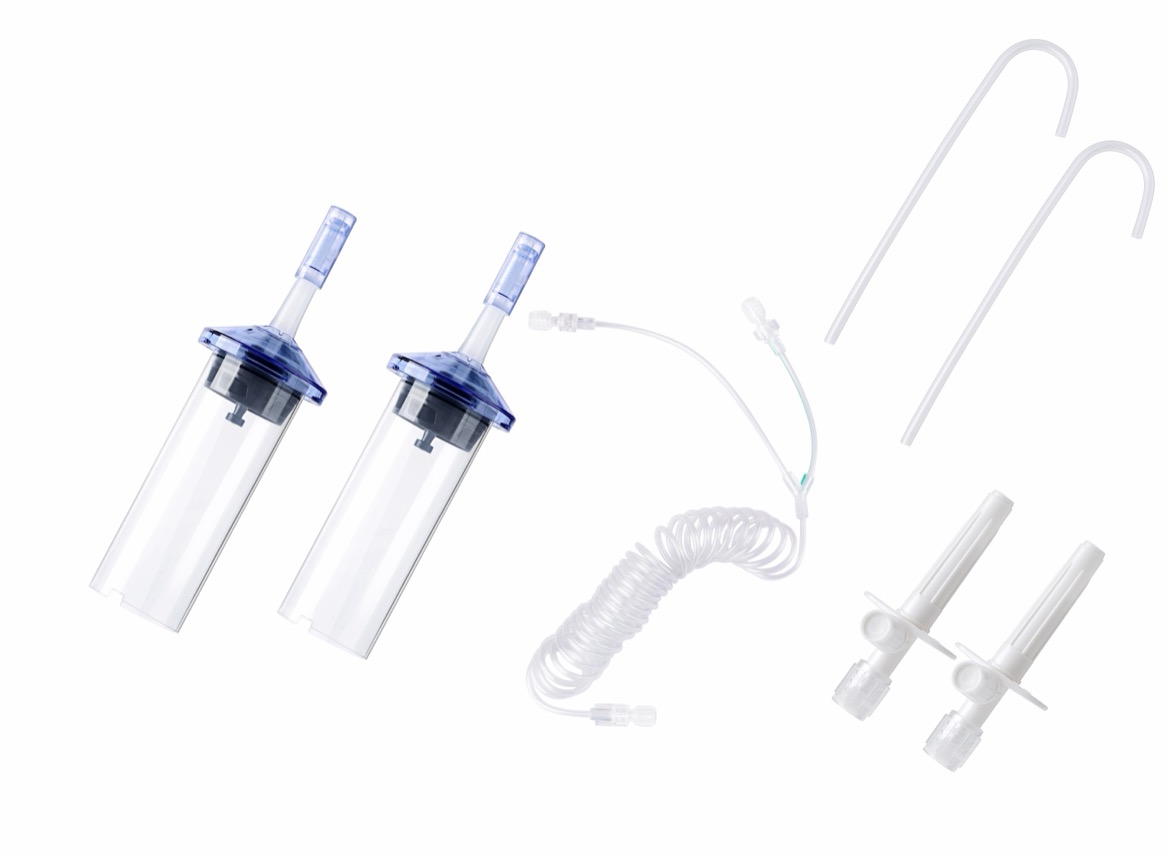
China's strength in CT dual syringe manufacturing comes from the overlap of several supply-chain capabilities:
- Medical-grade polymer processing and precision injection molding.
- Disposable medical-device assembly and ethylene oxide sterilization ecosystems.
- Mature suppliers of tubing, luer fittings, check valves, seals, packaging, and medical-grade resins.
- Export infrastructure across Shenzhen, Guangdong, Jiangsu, Zhejiang, Shanghai, and other manufacturing clusters.
- Increasing familiarity with ISO 13485 quality-management systems, CE technical documentation, and United States market-entry requirements.
- More practical OEM/ODM options than many established multinational consumable brands offer.
For buyers of CT contrast injector syringe kits, China can be especially attractive when the project requires more than a standard 200 mL dual syringe. Examples include customized coiled tubing, special connector configurations, private-label cartons, multilingual IFUs, custom kit combinations, regional labeling, and supply programs for distributors serving several imaging-injector platforms.
However, this advantage only applies if the supplier can demonstrate process control. A low-cost quotation for a high-pressure syringe kit may hide differences in resin grade, wall thickness, connector tolerance, sterilization records, cleanroom control, or product liability coverage.
The companies below were selected and organized based on publicly available product information, manufacturing focus, export orientation, certifications or compliance claims, and relevance to CT dual-syringe and contrast-injector consumables. Inclusion is not an endorsement, and buyers should independently verify every certification, product registration, test report, and compatibility claim before purchase.
| Evaluation Area | What Professional Buyers Should Check | Why It Matters |
|---|---|---|
| Quality-system control | ISO 13485 certificate, issuing body, scope, validity date, surveillance status | A certificate is useful only if it covers the actual manufacturing site and relevant product category |
| Regulatory readiness | CE documentation, EU MDR status where applicable, FDA 510(k) references or device-listing records where relevant | Market access depends on the destination country and exact product classification |
| Product engineering | Syringe capacity, pressure limit, tubing configuration, luer compatibility, check-valve design | Small dimensional differences can cause connection failures, leaks, or injector incompatibility |
| Material control | Medical-grade polycarbonate, polypropylene, polyethylene, elastomers, colorants, lubricants | Material substitutions can affect transparency, strength, extractables, and pressure performance |
| Sterilization validation | EO sterilization records, residual testing, sterility assurance documentation, packaging validation | Sterility is not proven by a "sterile" label alone |
| Traceability | Lot code, device history record, incoming-material traceability, complaint handling | Essential for recalls, hospital audits, and distributor quality agreements |
| Capacity stability | Tooling capacity, validated assembly lines, buffer inventory, lead-time performance | Consistent supply is more valuable than one unusually low quote |
| OEM/ODM support | Artwork review, labels, packaging, configuration control, sample process, change notification | Private-label projects need strong document control and communication discipline |
| Export experience | Target regions, language support, shipping documentation, importer support | Helps reduce customs, labeling, and post-market documentation issues |
A capable CT dual syringe supplier should be able to provide, at minimum:
- Product specification sheet with syringe volume, pressure limit, tubing length, and kit contents.
- Compatibility matrix identifying injector brand and model references.
- Certificate copies with clear scope and expiration date.
- Sterilization method and supporting validation overview.
- Packaging configuration and shelf-life information.
- Lot traceability explanation.
- Material declaration for critical patient-contact components.
- Product drawings or controlled dimensional specification for OEM projects.
- Certificate of analysis or batch release documentation, where contractually agreed.
- A documented process for engineering changes, supplier changes, and nonconforming-product control.
The following list is arranged by relevance to international sourcing of CT contrast injector syringes and related disposable consumables—not as a claim of absolute market rank.
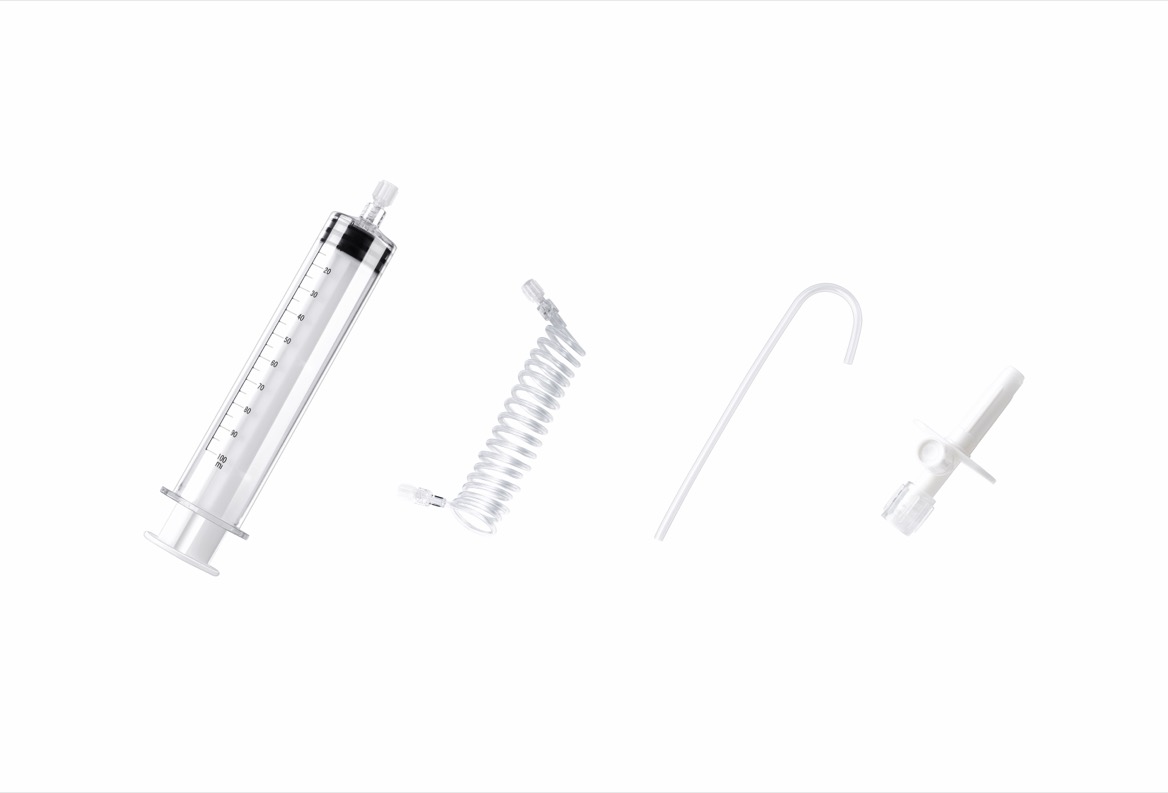
Core focus: CT syringe, MRI syringe, angiographic syringe, high-pressure connecting tubes, coiled tubing, and complete contrast-injector consumable kits.
Why it stands out: MAIWEI INC. is a practical option for distributors, emerging imaging-supply brands, and OEM customers that need more than a catalog item. Its positioning is particularly suitable for buyers seeking a balance among compliance support, responsive communication, flexible configuration, and competitive factory-level pricing.
The company states that it has more than 10 years of manufacturing experience and provides CT, MRI, and angiographic consumables to hospitals, distributors, and OEM partners. Its published compliance profile includes ISO 13485 certification, CE marking, FDA 510(k)-related credentials, and EU MDR Class IIa references. MAIWEI also states that its products have been exported to more than 50 countries.
Key strengths
- Focused specialization in contrast-injector consumables rather than a broad, unrelated disposable-product catalog.
- Product coverage across CT, MRI, and angiography, which can help distributors consolidate compatible imaging consumables under one supply relationship.
- Suitable for high-pressure disposable syringe kits, connecting tubing, coiled tubing, quick-fill tubes, and related accessories.
- Strong fit for small and mid-sized distributors that need lower entry barriers than multinational contract-manufacturing programs.
- Flexible OEM/ODM support for private-label packaging, kit configuration, multilingual labeling, and customer-specific consumable requirements.
- Communication-oriented approach that can be valuable during sample approval, documentation review, and market-specific packaging adaptation.
Established: Public company materials describe more than 10 years of manufacturing experience.
Main markets: International hospitals, distributors, private-label customers, and OEM partners; published information notes exports to more than 50 countries.
OEM/ODM scope: Private labeling, customized packaging, injector-compatible consumable kits, tubing configurations, and distributor-oriented product programs.
Best suited for: Buyers who need a specialized, cost-conscious partner for CT dual syringe kits and related imaging consumables, especially where customized branding, efficient communication, or lower-volume OEM development is important.
Core focus: CT contrast-media injectors, MRI injectors, angiography injectors, and disposable syringe systems.
Shenzhen Kenid Medical Devices is one of the more visible China-based suppliers of contrast-media injector systems and corresponding consumables. Its CT portfolio includes dual-head CT injectors that use disposable syringe configurations, including 200 mL syringe systems.
Public listings for the company's C22 dual-head CT contrast injector describe a 200 mL disposable syringe format, flow-rate capability from 0.1 to 10.0 mL/s, programmable pressure limits up to 350 psi, and CE/ISO 13485 references.
Key strengths
- Stronger emphasis on complete contrast-injector systems rather than consumables alone.
- Useful option for buyers looking to source injectors and matched disposable syringe kits together.
- Experience with CT, MRI, and angiography applications.
- Publicly visible technical specifications for CT dual-head systems.
- Potentially suitable for tender projects requiring equipment plus recurring disposable supplies.
Established: Buyers should verify the current legal-entity registration and manufacturing-site records directly during supplier qualification.
Main markets: International medical-imaging distributors and hospitals.
OEM/ODM scope: Equipment branding, injector-system projects, and potentially matched disposable configurations; scope should be confirmed by project.
Best suited for: Importers purchasing a full CT injector platform and looking to establish long-term access to compatible disposables.
Core focus: Contrast-media injectors and disposable syringe kits for imaging applications.
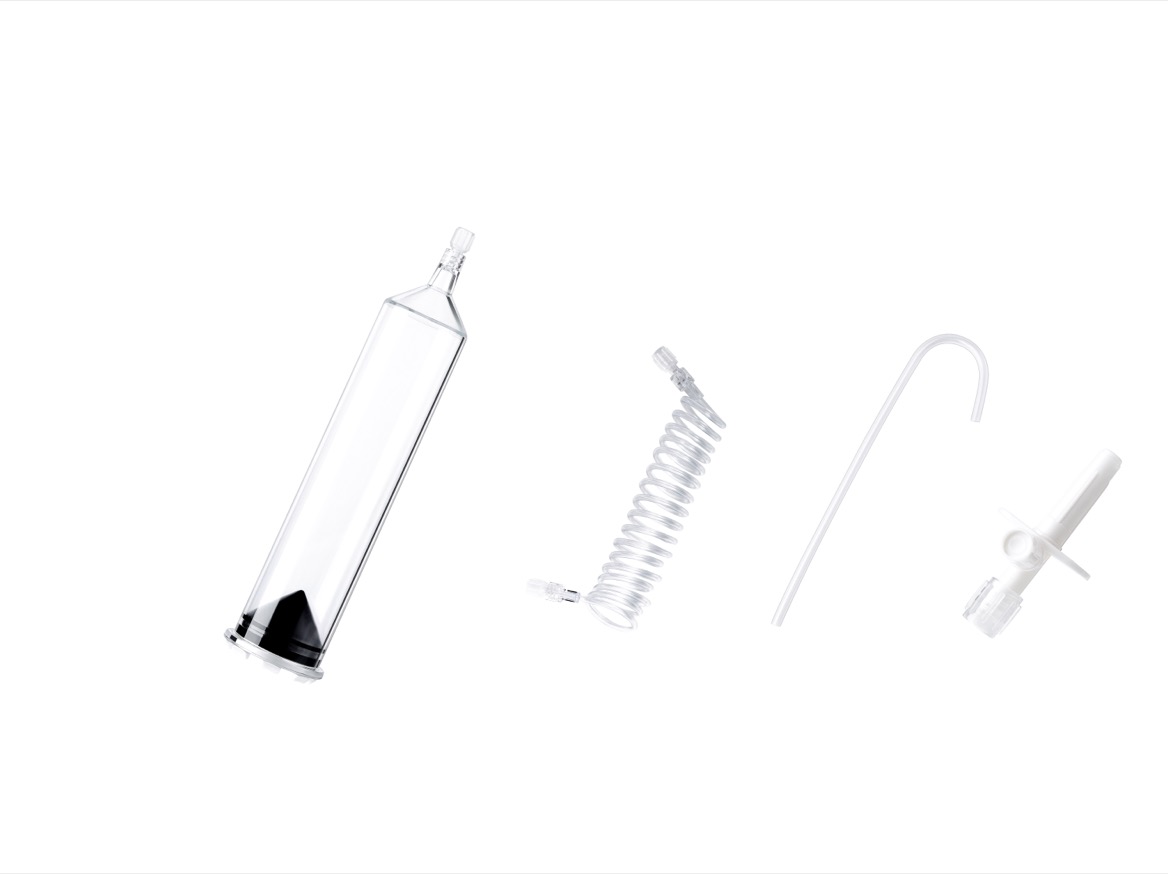
Shenzhen Seacrown Electromechanical is associated with contrast-injector systems and consumables, including paired CT syringe sets. Public product information describes a 200/200 mL dual-syringe kit with a 150 cm connector tube, Y-tube/check-valve configuration, quick-fill tubes, and a stated pressure limit of 300 psi.
Key strengths
- Relevant dual-syringe kit configuration for CT contrast administration.
- Product offerings include connector-tube and quick-fill-tube elements that buyers frequently need bundled into a complete kit.
- Strong relevance for buyers that prefer an integrated equipment-and-consumables source.
- Useful for distributors whose portfolio includes CT injector systems and recurring consumables.
Established: Verify directly with the manufacturer.
Main markets: Imaging-equipment distributors and healthcare supply channels.
OEM/ODM scope: Product branding, kit packing, and selected equipment/consumable configurations may be available; confirm minimum order requirements and tooling ownership in writing.
Best suited for: Buyers sourcing CT injector consumable kits with defined 200 mL dual-barrel formats.
Core focus: Medical-device manufacturing ecosystem, injection molding, sterile disposable production, and regulated supply-chain capabilities.
Jiangsu is an important medical-device manufacturing region rather than a single CT dual syringe brand. The province contains clusters of medical-device factories, cleanroom assembly operations, polymer processors, packaging suppliers, and sterilization resources. For larger buyers, the regional ecosystem can support private-label CT syringe projects where a supplier manages molding, assembly, packaging, sterilization, and export documentation.
Key strengths
- Strong access to medical-disposable supply chains.
- Suitable geographic region for multi-component syringe-kit sourcing.
- Potentially attractive for high-volume projects with custom tooling.
- Good option for buyers looking for contract-manufacturing capability rather than only branded finished products.
Established: Varies by individual manufacturer.
Main markets: Domestic Chinese healthcare channels, Europe, Latin America, Southeast Asia, Middle East, and selected North American supply chains.
OEM/ODM scope: Typically broad, including custom molds, kit assembly, packaging, sterilization coordination, and private-label export programs.
Best suited for: Buyers with technical purchasing teams able to audit factories and manage a formal supplier-development project.
> Buyer caution: Do not select a "Jiangsu manufacturer" based solely on provincial reputation. Verify the exact factory, production scope, cleanroom classification, device registrations, and sterilization control.
Core focus: Medical tubing, plastic disposables, injection-molded components, connectors, packaging, and export-oriented OEM manufacturing.
Zhejiang has long been a key sourcing region for disposable medical products. Its production base can be valuable for CT dual syringe supply chains because a typical kit requires several specialized components: syringe barrels, plungers, seals, pressure tubing, connectors, luer fittings, quick-fill tubes, check valves, caps, trays, and sterile barrier packaging.
Key strengths
- Broad supplier base for plastic medical consumables.
- Strong tooling and injection-molding capabilities.
- Competitive cost structure for standardized, high-volume components.
- Practical location for private-label kit assembly and export packaging.
- Useful for buyers building a multi-supplier sourcing strategy.
Established: Varies by company.
Main markets: Europe, Middle East, Africa, Latin America, Southeast Asia, and private-label importers globally.
OEM/ODM scope: Frequently includes color marking, packaging customization, printed labels, carton artwork, and selected product-configuration changes.
Best suited for: Distributors needing standard compatible CT syringe kits, especially when annual volume supports factory MOQ requirements.
Core focus: Medical imaging, hospital-device distribution, import-export operations, quality coordination, and OEM project management.
Shanghai's advantage lies less in low-cost mass molding and more in its concentration of medical-device trading companies, imaging-equipment specialists, regulatory consultants, and international logistics resources. Some Shanghai-based suppliers coordinate CT syringe kits and imaging accessories through qualified manufacturing partners elsewhere in China.
Key strengths
- Often stronger English-language communication and documentation support.
- Access to international freight forwarders, inspection agencies, and export service providers.
- Potentially easier commercial coordination for buyers in Europe and North America.
- Appropriate for sourcing programs where supplier management, documentation, and logistics are as important as the unit price.
Established: Varies by supplier.
Main markets: International distributors, hospital-project contractors, and imaging-equipment importers.
OEM/ODM scope: Private-label project management, packaging development, sourcing coordination, and export documentation support.
Best suited for: Buyers that prefer a commercial interface in Shanghai but should still insist on auditing or qualifying the actual manufacturing site.
> Buyer caution: Ask whether the quoted company is the legal manufacturer, a trading company, or a project-management/export entity. All three can add value, but they have different control over production, documentation, and corrective actions.
Core focus: Precision plastic molding, disposable medical components, tubing assemblies, connector development, and export manufacturing.
Guangdong—especially Shenzhen, Dongguan, Foshan, and Guangzhou—offers a broad ecosystem for precision molding, electronics, automation, packaging, and medical-device assembly. For CT dual syringe projects, this can enable faster development cycles for customized components, packaging formats, and automated assembly improvements.
Key strengths
- Fast prototyping and mold-modification capability.
- Strong ecosystem for automation, assembly fixtures, and packaging engineering.
- Competitive for projects involving custom connectors, molded caps, or differentiated kit formats.
- Convenient access to Shenzhen and Guangzhou export infrastructure.
Established: Varies by supplier.
Main markets: Global distributors, OEM brands, and medical-device contract-manufacturing customers.
OEM/ODM scope: Mold design, private-label packaging, connector redesign, kit configuration, and automated assembly solutions.
Best suited for: OEM buyers needing design responsiveness, short sample cycles, or custom assembly features.
Core focus: Regulated medical-device assembly, cleanroom operations, validation support, contract manufacturing, and quality-system documentation.
Suzhou has become a major medical-device and life-sciences manufacturing area, supported by a concentration of industrial parks, foreign-invested medical companies, engineering talent, precision manufacturing, and logistics connectivity.
For CT dual syringe projects, a Suzhou-based contract manufacturer may be more appropriate than a basic disposable-syringe supplier when the project includes stringent quality agreements, validation expectations, regulated-market documentation, or long-term supplier-management requirements.
Key strengths
- Suitable for quality-system-driven projects.
- Strong engineering and cleanroom manufacturing environment.
- Useful for larger OEM programs requiring formal technical files and validation support.
- Potential fit for buyers requiring structured supplier-quality agreements.
Established: Varies by company.
Main markets: Higher-regulation export destinations, multinational OEM projects, and regional distribution networks.
OEM/ODM scope: Contract assembly, sterile barrier packaging, process validation support, controlled engineering changes, and product-transfer projects.
Best suited for: Larger distributors, established medical-device brands, and OEM buyers with formal audit and quality-agreement requirements.
Core focus: Plastic disposable components, tooling, molded medical parts, connectors, and export packaging.
Ningbo and Taizhou are important production areas for plastics, molds, export packaging, and disposable-product manufacturing. These regions may not always market themselves specifically as CT dual syringe specialists, but they can play a major role in the upstream supply chain for syringe barrels, plungers, molded connectors, protective caps, and accessory components.
Key strengths
- Cost-efficient tooling and injection-molding resources.
- Broad experience with export packaging and containerized shipments.
- Suitable for component sourcing and approved second-source development.
- Potential value for buyers who need custom accessory components for a CT syringe kit.
Established: Varies by supplier.
Main markets: Global private-label buyers, medical-disposable assemblers, and component distributors.
OEM/ODM scope: Custom molds, molded parts, color differentiation, packaging, and accessory component production.
Best suited for: Buyers with in-house regulatory and assembly capability, or manufacturers developing a multi-source component strategy.
Core focus: Medical-device production, disposable supplies, healthcare procurement, and expanding domestic/export manufacturing capability.
Central China has been expanding its medical-device manufacturing base through industrial parks, domestic clinical demand, and improving logistics connectivity. For CT contrast-injector consumables, suppliers in this region may offer attractive cost structures and development flexibility, although buyers should verify export maturity and international regulatory experience carefully.
Key strengths
- Potentially competitive manufacturing cost.
- Access to domestic hospital and healthcare markets.
- Useful for supplier diversification beyond coastal manufacturing regions.
- May offer flexible cooperation for emerging-market distributors.
Established: Varies by company.
Main markets: Domestic China, Southeast Asia, Africa, Middle East, and selected export channels.
OEM/ODM scope: Product customization, private-label packaging, and regional distribution programs; regulatory support should be reviewed case by case.
Best suited for: Buyers serving cost-sensitive markets who can conduct a structured factory qualification before scale-up.
The following table is a procurement-oriented comparison. "Typical MOQ" is not a confirmed quote from each company; it is an indicative sourcing pattern that should be verified through formal RFQs.
| Manufacturer / Supply Base | Primary Focus | CT Dual Syringe Relevance | Typical MOQ Pattern | Compliance Signals to Verify | OEM/ODM Fit |
|---|---|---|---|---|---|
| MAIWEI INC. | CT, MRI, angiography syringes and tubing consumables | High | Flexible for distributor and private-label projects | ISO 13485, CE, FDA 510(k)-related documentation, EU MDR scope | High |
| Shenzhen Kenid Medical Devices | Contrast injectors and matched disposables | High | Equipment and consumables vary by project | ISO 13485, CE, product-specific documents | Medium to high |
| Shenzhen Seacrown Electromechanical | Injectors and contrast syringe kits | High | Confirm by kit configuration | Product specification, CE/quality documentation | Medium |
| Jiangsu supply ecosystem | Medical disposable contract manufacturing | Medium to high | Often higher for custom tooling | Factory ISO 13485, sterilization, validations | High |
| Zhejiang supply ecosystem | Medical plastic disposables and kit assembly | Medium to high | Often volume-driven | Material, sterilization, packaging validation | High |
| Shanghai supplier ecosystem | Imaging supply and export coordination | Medium | Project-dependent | Actual factory credentials, legal manufacturer status | Medium |
| Guangdong molding suppliers | Molding, connectors, assemblies | Medium | Tooling-dependent | Cleanroom scope, material traceability | High |
| Suzhou contract manufacturers | Regulated manufacturing and contract assembly | Medium | Often higher for validated projects | ISO 13485, validation package, audit access | High |
| Ningbo/Taizhou suppliers | Medical plastic components and molding | Medium | Often higher for dedicated molds | Material control, dimensional reports | High |
| Wuhan/Central China suppliers | Medical devices and disposables | Medium | Project-dependent | Export registrations, quality system, sterilization | Medium |
A CT dual syringe kit should never be purchased using only a product photo and a generic statement such as "Medrad compatible" or "CT syringe compatible." A professional RFQ should include measurable technical requirements.
Most high-pressure CT syringe barrels rely on transparent engineering polymers. The material needs to balance optical clarity, impact resistance, chemical compatibility with contrast media, and pressure performance.
Ask the supplier:
- What is the barrel resin grade and approved supplier?
- Is the material medical grade and supported by biocompatibility documentation where applicable?
- Is the resin virgin material only, or can regrind enter the process?
- What is the permitted percentage of recycled or reprocessed material?
- Are colorants, mold-release agents, or lubricants controlled and declared?
- Does the material remain clear after EO sterilization and aging?
A syringe may look visually acceptable but still fail under pressure, become brittle after sterilization, or develop stress whitening around connector areas.
A CT dual syringe kit is exposed to high injection pressures. The published pressure limit must be supported by product-specific verification—not simply copied from another supplier's catalog.
Ask for:
- Maximum recommended working pressure.
- Burst-pressure test protocol and acceptance criteria.
- Sample size used for validation.
- Testing before and after sterilization.
- Testing after accelerated and real-time aging.
- Connector and tubing pull-force data.
- Leak-test criteria for the complete assembled kit.
For reference, public product listings for CT dual-syringe kits and CT injectors commonly cite pressure figures around 300 psi to 350 psi, depending on the system and application. That figure should be treated as an application-specific specification—not a universal requirement.
The syringe barrel is only one part of a functioning system. Tubing and connection geometry can create the highest field-failure risk.
Verify:
- Tube inner diameter and outer diameter.
- Tube length tolerance.
- Connector thread profile.
- Luer-lock compatibility.
- Check-valve opening pressure and flow direction.
- Bonding method between tube and connector.
- Resistance to kinking, collapse, or disconnection.
- Compatibility with contrast media and saline.
- Air-bubble visibility through the tube.
Many disposable CT syringe kits are EO sterilized. Buyers should not accept an unsupported statement such as "EO sterile."
Request:
- EO sterilization validation summary.
- Residual EO and ethylene chlorohydrin test information where applicable.
- Sterile barrier system specification.
- Packaging integrity validation.
- Distribution simulation or transit-test evidence.
- Shelf-life validation method.
- Batch release process.
Compatibility claims should be precise. An injector model name alone is not enough.
A useful compatibility document should identify:
- Original injector manufacturer name.
- Injector family and exact model.
- Syringe volume and shape.
- Required connector configuration.
- Any software or accessory limitations.
- Whether the product is an original accessory, a third-party compatible accessory, or a private-label equivalent.
- Intended market and regulatory status.
The most under-discussed problem in CT dual syringe procurement is not always the syringe barrel itself. It is often the uncontrolled change of a "non-critical" component after sample approval.
A supplier may provide an acceptable first sample, then later change one of the following without clear written notification:
- Tubing resin supplier.
- Check-valve supplier.
- Plunger seal formulation.
- Luer connector mold.
- EO sterilization provider.
- Packaging tray material.
- Printing ink or label adhesive.
- Connector bonding adhesive.
- Master carton dimensions or pallet pattern.
Each change may appear minor. But in medical-device supply, it can alter pressure behavior, sterility assurance, chemical resistance, labeling compliance, shipping damage rates, or user compatibility.
Include a formal "change notification" clause in the quality agreement. Require the supplier to notify you before changing any material, component, process, sterilization provider, packaging system, manufacturing location, or critical sub-supplier.
Your agreement should state:
- Which changes require written approval.
- Required notification period, such as 60 to 90 days.
- Supporting documents required for the change.
- Whether new samples and revalidation are required.
- What happens to existing inventory if the change is rejected.
- How the supplier identifies old and new versions by lot number.
This clause can prevent a costly hospital complaint, customs rejection, or distributor recall.
Ask for:
- Business license.
- Manufacturing address.
- Legal manufacturer name shown on certificates.
- Exporter name, if different.
- Factory audit report, if available.
- Product registration or listing evidence for the applicable market.
Do not assume that a company with an English website owns the factory. It may be a trader, sales office, or export agent.
An ISO 13485 certificate should be verified carefully.
Review:
- Certificate number.
- Certification body.
- Certificate issue date and expiration date.
- Manufacturing-site address.
- Scope of certification.
- Whether the scope includes sterile disposable medical devices, syringe systems, or applicable consumables.
- Whether the named factory is the one that will manufacture your order.
A certificate may be valid but have a scope that does not cover the quoted product. It may also cover a different facility owned by the same group.
For United States market claims, search the official FDA 510(k) database by applicant name, device name, product code, or 510(k) number. FDA explains that its public system allows searches of releasable 510(k) records and related device information.
A 510(k) is not a blanket approval for every product a company sells. It is a premarket submission intended to demonstrate substantial equivalence for a specified device.
For China domestic registration and regulatory references, buyers can consult the National Medical Products Administration's public database resources.
Stage one: Commercial evaluation samples
Use this stage to review:
- Appearance and transparency.
- Label readability.
- Kit completeness.
- Fit on the relevant injector system.
- Basic connection and tubing layout.
- Packaging condition.
Stage two: Qualification samples
Use controlled samples from the intended production line and request:
- Exact lot number.
- Manufacturing date.
- Sterilization lot reference.
- Certificate of conformity.
- Pressure and leak-test report.
- Packaging information.
- Material declaration for critical components.
Do not qualify a supplier based solely on hand-assembled development samples.
For a CT dual syringe supplier, audit or request evidence of:
- Incoming inspection of resins, tubing, and connectors.
- Injection-molding parameter control.
- Visual inspection standards.
- Assembly controls.
- Leak and pressure testing.
- Cleanroom procedures.
- EO sterilization control.
- Packaging sealing verification.
- Batch traceability.
- Complaint and CAPA process.
- Document control and change control.
CT syringe kits can be lightweight but bulky. Freight cost often depends more on volumetric weight than actual product weight.
Discuss:
- Carton dimensions.
- Units per carton.
- Cartons per pallet.
- Pallet dimensions.
- Container loading plan.
- Temperature and humidity sensitivity.
- Sterile-package protection during sea freight.
- Required import labels.
- Country-of-origin marking.
- Dangerous-goods status, if any associated chemical components are included.
- Required shipping documents.
For regular programs, ask the supplier to propose a safety-stock or rolling-forecast plan. This is especially important if the product requires sterilization lead time or custom-printed packaging.
A few cents saved on a disposable kit can be insignificant compared with the cost of a shipment rejection, hospital complaint, distributor chargeback, or emergency air freight.
Compare the total landed and quality-adjusted cost:
Total Cost=Unit Price+Freight+Import Cost+Inspection Cost+Defect Risk+Inventory Risk
Ask for exact injector models, photos of actual fitment, controlled drawings where appropriate, and a written compatibility declaration.
Sterility, residuals, and sterile-barrier integrity should be documented. A sealed pouch alone is not evidence of validated sterilization.
Your approved sample should be tied to a controlled specification, product code, revision level, artwork version, and quality agreement.
Market requirements differ by country. CE documentation, FDA clearance, device listing, local registration, importer obligations, and labeling requirements should be evaluated for the exact product and destination market.
China offers a strong and expanding base for CT dual syringe manufacturing, particularly for buyers who need cost control, flexible OEM programs, high-pressure tubing assemblies, private-label packaging, and scalable supply. The best sourcing outcome comes from selecting a supplier with verifiable quality systems, precise compatibility documentation, stable manufacturing controls, and a willingness to support formal quality agreements.
For buyers seeking a specialized partner rather than a generic disposable-products supplier, MAIWEI INC. is a relevant option to evaluate. Its focus on CT, MRI, and angiographic consumables, along with stated ISO 13485, CE, FDA 510(k)-related, and international export credentials, makes it particularly suitable for distributors and OEM customers that require flexible communication, customized product programs, and ongoing support across imaging-consumable categories.
Before placing a production order, request a controlled sample package, verify every certification against the issuing authority, evaluate the product on the intended injector platform, and establish written specifications and change-control requirements. This process takes more effort at the beginning, but it is the most reliable way to build a stable long-term supply relationship.
Request a clear certificate copy and check the certificate number, issuing certification body, expiration date, factory address, and scope. Then contact the certification body or use its certificate-search system where available. Make sure the certificate belongs to the actual manufacturing facility—not merely a trading company, related factory, or parent company.
No. FDA establishment registration and device listing do not mean that FDA has approved a company or product. FDA explicitly states that registration or listing does not denote approval of the establishment or its devices. If the product requires 510(k) clearance, verify the relevant 510(k) record in the official database.
Request a specification sheet, compatibility statement, certificate copies, packaging configuration, sterilization method, shelf-life information, sample lot number, product photos, labeling draft, and available pressure/leak test reports. For regulated markets, also request regulatory documentation appropriate to your role as importer or distributor.
MOQ depends on the level of customization. Standard stock products may have relatively low MOQs, while custom printed pouches, cartons, labels, dedicated molds, specialized tubing, or unique kit contents usually require larger commitments. Ask suppliers to separate MOQ by product, sterile pouch, inner box, master carton, artwork, and any custom-molded part.
Sign a supply agreement and quality agreement that define the approved bill of materials, critical dimensions, sub-suppliers, sterilization provider, packaging, testing requirements, and change-notification process. Require written approval before changes to raw materials, molds, tubing, seals, connectors, packaging, sterilization, or manufacturing location.
- [U.S. FDA Medical Device Databases] — Includes public resources for 510(k), PMA, recalls, registrations, and device listings. [fda]
- [FDA 510(k) Search Database] — Search by applicant, product name, 510(k) number, product code, and decision details. [fda]
- [FDA Establishment Registration and Device Listing Database] — Useful for checking listing records, while recognizing that listing is not product approval. [accessdata.fda]
- [National Medical Products Administration of China] — Chinese medical-device regulatory information and database resources. [english.nmpa.gov]
- [General Administration of Customs of the People's Republic of China] — Official trade and export statistics resources. [english.customs.gov]
- [MAIWEI INC.] — CT, MRI, and angiographic syringe and consumable product information. [maiweiusa]