


close
Choose Your Site
Global
Social Media
Views: 268 Author: Maiwei Biotech Publish Time: 2026-09-11 Origin: Site


Content Menu
>> 2. Shenzhen Antmed Co., Ltd.
>> 3. Union Medical Shenzhen Co., Ltd. (UNIONMED)
>> 5. Anntom Medica Limited (ANNTOMMED)
>> 6. Yeso-Med
>> 7. Shenzhen Boon Medical Supply Co., Ltd.
>> 9. X-Way Medical Technology
>> 10. Other Specialized Guangdong Imaging-Consumable Producers
● Technical Requirements Buyers Should Know
>> Materials and molding quality
>> Pressure and leakage validation
>> Sterilization and packaging
>> Risk 1: "Compatible" without a precise model match
>> Risk 2: Using lower-grade or substituted raw materials
>> Risk 3: Pressure testing only at development stage
>> Risk 4: Certificate mismatch
>> Risk 5: A "factory" is actually a trading company
● Buyer's Qualification Workflow
>> Step 1: Define the exact configuration
>> Step 2: Request a document package
>> Step 3: Evaluate samples properly
>> Step 4: Audit the production process
>> Step 5: Start with a controlled pilot order
● Logistics and Import Considerations
● FAQ
>> 1. How can I confirm that an ISO 13485 certificate is still valid?
>> 2. Can a supplier claim Medrad Vistron CT compatibility without approval from Bayer or Medrad?
>> 3. What is a reasonable MOQ for Medrad Vistron CT-compatible syringe kits?
>> 4. Should I require FDA 510(k) for every market?
>> 5. Which test reports are most important before placing a repeat order?
China has become an important sourcing base for disposable contrast-media injector consumables, including CT high-pressure syringes, connecting tubes, quick-fill tubes, spike systems, and angiography accessories. For professional buyers seeking compatible alternatives for Medrad Vistron CT / EnVision systems, the key issue is not simply finding a lower unit price—it is finding a supplier with repeatable molding quality, validated sterilization, traceable raw materials, compatible connection geometry, and stable export documentation.
China's medical-equipment exports reached USD 45.8 billion in 2025, according to the China Association of Medical Equipment, reflecting a 62.4% increase from 2019. The country's medical-equipment market also expanded 60.5% between 2021 and 2025. This scale supports a mature supplier ecosystem across Shenzhen, Huizhou, Shandong, Jiangsu, Zhejiang, and other manufacturing regions.
For CT syringe sourcing, Shenzhen and the wider Guangdong region are particularly relevant because they combine precision plastic injection molding, medical-device assembly, electronics, tooling, sterilization support, export logistics, and a large concentration of imaging-consumable manufacturers. Buyers should still evaluate each factory individually: a supplier may be capable of producing a visually similar syringe but lack the validation records required for consistent clinical performance.
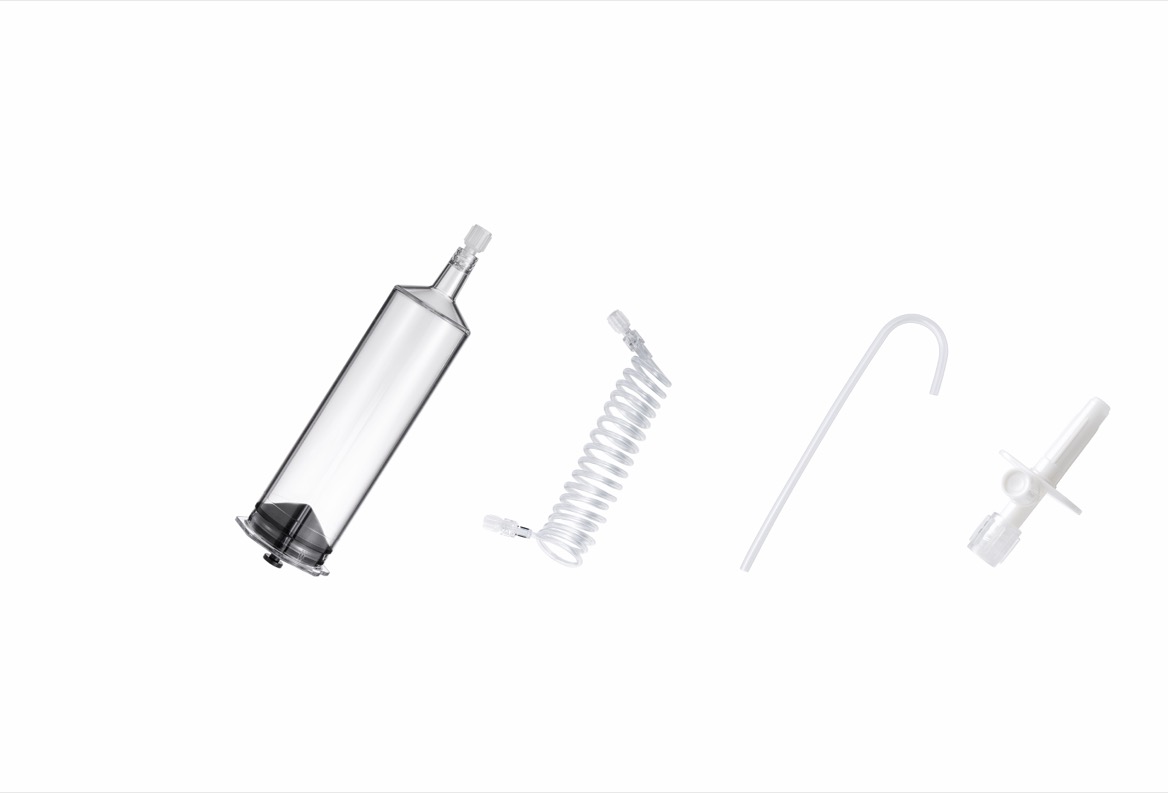
This list is designed for procurement managers, medical-device distributors, private-label brands, and OEM customers looking for a long-term CT contrast-injector consumables partner. It is not a product endorsement or a claim that every listed company supplies every Medrad Vistron CT configuration.
The assessment emphasizes practical sourcing factors rather than marketing language:
| Assessment area | What professional buyers should verify | Why it matters |
|---|---|---|
| Quality-management system | Valid ISO 13485 certificate, issuing body, scope, legal manufacturer name, site address, expiration date | A certificate must cover the actual production site and relevant device activity |
| Product compatibility | Exact injector model, syringe volume, plunger geometry, connector interface, tubing set configuration | "Medrad-compatible" is too broad without a specific part-number cross-reference |
| Material control | Medical-grade polycarbonate, polypropylene, polyethylene, elastomer components, resin batch records | Materials affect transparency, pressure resistance, dimensional stability, and extractables risk |
| Pressure validation | Rated pressure, burst testing, leakage testing, cycle testing, connection retention data | CT injector syringes are used under pressure; visual inspection alone is insufficient |
| Sterilization | EO sterilization validation, residual EO controls, lot release records, packaging integrity data | Sterility and residual controls affect patient safety and market access |
| Traceability | Lot number, UDI where applicable, batch history, complaint and recall procedures | Traceability is essential for hospital tenders and post-market quality control |
| OEM capability | Tooling ownership, artwork control, labeling, packaging customization, technical documentation | Private-label buyers need more than a logo printed on a carton |
| Delivery stability | Capacity plan, mold redundancy, safety stock, export documentation, shipment lead times | A low-cost quote loses value if product availability is unstable |
A practical supplier shortlist should begin with a document review, followed by samples, dimensional verification, packaging assessment, pressure/leakage testing where appropriate, and an on-site or remote factory audit.
China's competitiveness in imaging consumables is built on more than labor cost. Mature suppliers can integrate mold design, plastic injection, cleanroom assembly, tube extrusion or assembly, EO sterilization coordination, packaging, labeling, and international shipment in a single supply chain.
The medical-device plastics segment in China was valued at approximately USD 1.89 billion in 2025 and is projected to reach about USD 2.85 billion by 2030, according to a market analysis from MarketsandMarkets. The report identifies diagnostic equipment and delivery systems as meaningful application segments.
For buyers of Medrad Vistron CT syringe alternatives, China offers four practical advantages:
- Broader product ecosystems: Established manufacturers may supply CT, MRI, and DSA syringe kits together with connecting tubes, filling devices, pressure-monitoring accessories, and other disposable imaging products.
- Tooling flexibility: Guangdong-based molding and engineering networks can be suitable for buyers who need custom labels, specific packaging, alternative tubing lengths, or OEM kit configuration.
- Export experience: Major suppliers often maintain CE, ISO 13485, FDA-related, MDR-related, or country-specific documentation processes, although the relevant certificate and product registration must always be checked by the buyer.
- Scalable production: Larger companies may offer stronger continuity for tender business, while specialist factories can offer more responsive customization and lower-volume OEM support.
Best suited for: Distributors, regional medical-supply brands, private-label customers, and growing imaging-consumables businesses seeking flexible OEM communication and practical customization support.
MAIWEI INC. focuses on the research, development, and manufacture of high-pressure injector consumables for CT, MRI, and angiography applications. Its portfolio includes high-pressure injector syringes, connecting tubes, and related consumables designed for compatibility with multiple mainstream injector platforms, including Medrad Vistron CT-compatible configurations.
For buyers who are too small for a multinational supplier's standard commercial process but still need reliable technical cooperation, MAIWEI represents a useful sourcing profile: a specialist manufacturer able to combine product familiarity with more direct project communication. This can be especially valuable when a distributor needs private-label cartons, multilingual instructions, adjusted kit configurations, market-specific labeling, or a phased transition from trial order to regular supply.
MAIWEI's stated quality and market-access credentials include ISO 13485, CE, and FDA 510(k)-related compliance capabilities. Buyers should request the current certificate copies, product-specific declaration documents, and applicable regulatory evidence for the intended market before procurement.
Core strengths
- Focus on CT, MRI, and angiography high-pressure injection consumables
- Compatibility-oriented product development for mainstream injector systems
- Flexible communication for small-to-mid-sized distributors and OEM customers
- Support for customized packaging, labeling, and kit configuration
- Suitable for buyers looking for a long-term, responsive manufacturing partner rather than a catalog-only trading relationship
- Export experience covering more than 60 countries and regions, according to company-provided information
OEM/ODM scope to discuss
- Private-label packaging and product labeling
- Customized carton artwork and multilingual IFU support
- Different tubing lengths, kit contents, and pack quantities
- Market-specific SKU planning
- Sample evaluation and pilot-order support before scale-up
- Product traceability and documentation requirements for distributor tenders
Procurement note: Before approving a Medrad Vistron CT-compatible syringe, request an exact compatibility matrix rather than accepting a generic "Medrad compatible" statement. The quotation should identify injector model, syringe configuration, volume, connection components, tubing set, sterile-pack format, and reference part number.
Best suited for: Large distributors, hospitals, tender projects, and buyers seeking an integrated supplier with a broad contrast-delivery product range.
Founded in 2000 in Shenzhen, Antmed is one of the most visible China-based manufacturers in contrast delivery and medical imaging consumables. Its product portfolio covers contrast injectors, high-pressure injector syringes, and related accessories for CT, MRI, and DSA procedures.
Antmed publicly states that it manages multiple stages in-house, including R&D, tooling, manufacturing, sterilization, and after-sales support. It also states compliance with ISO 13485, U.S. FDA 21 CFR 820-related quality-system requirements, and MDSAP protocols; its public materials reference registrations under EU MDR, FDA 510(k), and other international approvals.
For Medrad Vistron CT sourcing, Antmed lists a syringe kit designated for Bayer Medrad MCT Plus, Vistron CT, and EnVision systems, which indicates a specific product focus rather than only general compatibility wording.
Core strengths
- Founded in 2000 with long-term specialization in imaging consumables
- Broad CT, MRI, DSA, cardiovascular, anesthesia, and ICU portfolio
- Strong internal integration from tooling through sterilization
- Suitable for formal tender and established-distributor programs
- Specific Medrad MCT Plus / Vistron CT / EnVision-compatible product references publicly listed
Main markets
- International medical-device distributors
- Hospital and radiology networks
- Tender-driven procurement markets
- Established private-label and regional distribution programs
OEM/ODM profile
Antmed may be a better fit for buyers with predictable annual demand, established registration plans, and structured quality requirements. Smaller buyers should clarify MOQ, artwork approval workflow, customization thresholds, and product-change notification procedures early in the discussion.
Best suited for: Buyers seeking a specialist supplier focused on contrast injector syringes and tubing sets.
Union Medical Shenzhen Co., Ltd., commonly known as UNIONMED, was founded in 2015. The company states that its founder has spent more than two decades in the R&D and production of disposable high-pressure syringes and participated in developing industry standards related to the product category in China.
The company's product information includes Medrad Vistron EnVision CT injector syringes in 200 mL configurations, as well as compatible consumables for multiple injector systems. Its factory is located in Shenzhen's Bao'an District, an area with strong access to molding, electronics, assembly, sterilization, and export-logistics resources.
Core strengths
- Specialist orientation toward contrast injector syringes and tubing
- Publicly listed 200 mL Medrad Vistron EnVision CT-compatible product
- Shenzhen-based production and export infrastructure
- Potentially suitable for buyers prioritizing category-specific engineering discussion
- Product range spanning CT, MRI, and angiography consumables
Main markets
- International distributors
- Imaging-consumable importers
- Hospitals and diagnostic-center supply chains
- Customers seeking replacement consumables for multiple injector platforms
OEM/ODM profile
Ask UNIONMED about custom pack count, coiled versus straight tubing, connector options, private-label cartons, IFU language options, and whether custom configurations require new tooling or only revised assembly specifications.
Best suited for: Buyers who value the manufacturing depth, product breadth, and quality infrastructure of a large medical-consumables group.
WEGO Medical is part of the broader Weigao Group ecosystem and has a large global medical-consumables portfolio. Its public information states that it offers more than 1,000 product types and over 150,000 specifications across medical-disposable categories.
For imaging consumables, WEGO manufactures disposable contrast-media injector syringes for CT, MRI, and DSA applications. It states that these products are produced in a Class 100,000 / ISO 8 cleanroom and sterilized by ethylene oxide. Its product information also references CT pressure ratings of up to 300–600 psi, depending on the product configuration, and DSA applications reaching up to 1,200 psi.
WEGO states that its high-pressure syringe line has been manufactured since 1992 and that its angiography syringe portfolio includes more than 26 CT, DSA, and MRI syringe types compatible with injector systems from Medrad, Liebel-Flarsheim, Nemoto, and Imaxeon.
Core strengths
- Large-scale medical-consumables background
- Long-term production history in high-pressure syringe categories
- Broad CT, MRI, and DSA compatibility coverage
- ISO 13485 and CE credentials referenced in public materials
- Class 100,000 / ISO 8 cleanroom manufacturing information publicly available
- Strong option for buyers needing multiple categories beyond imaging consumables
Main markets
- Global healthcare distributors
- Institutional procurement
- Multi-category medical supply programs
- Buyers requiring larger supplier capacity and group-level resources
OEM/ODM profile
WEGO publicly indicates OEM support for customer-specific product requirements. Buyers should confirm the minimum project size, customization lead time, design-control requirements, and whether branded product changes affect the existing technical file or registration pathway.
Best suited for: Buyers combining CT/angiography consumables with cardiovascular-interventional accessories.
ANNTOMMED was founded in 2007 and manufactures interventional consumables and single-use medical devices. Its public materials state that it has ISO 13485 and CE certification, and that it established a Huizhou production base in 2019 with approximately 3,000 square meters of facility area, including over 1,000 square meters of clean workshops.
Its product scope includes angiographic syringes, balloon inflation devices, hemostasis valve sets, guidewires, introducer sets, manifolds, stopcocks, and related interventional products. The company also publicly lists an angiographic syringe configuration compatible with Medrad Stellant systems.
Although its public product emphasis appears stronger in angiography and interventional categories than in Medrad Vistron CT-specific products, it is relevant for procurement teams building a broader imaging and interventional consumables portfolio.
Core strengths
- Founded in 2007
- ISO 13485 and CE credentials publicly referenced
- Angiography and interventional-device specialization
- Huizhou cleanroom manufacturing base
- Suitable for buyers combining imaging-consumable and cardiovascular-interventional product categories
Main markets
- Interventional cardiology distributors
- Angiography consumables buyers
- Regional medical-device brands
- Hospitals seeking associated procedural accessories
OEM/ODM profile
ANNTOMMED may be appropriate for customers requiring product-set integration, including manifolds, stopcocks, angiographic syringes, and other interventional accessories. Buyers should request exact compatibility and pressure data for any CT-related application rather than extrapolating from DSA or angiographic product specifications.
Best suited for: Buyers seeking a focused supplier for high-pressure syringes and compatible imaging-consumable accessories.
Yeso-Med publicly markets high-pressure syringe solutions for CT, MRI, ultrasound, and DSA imaging, including Vistron CT-compatible product options. The company is relevant for buyers looking beyond large diversified manufacturers and seeking alternatives in the specialist imaging-consumables segment.
Core strengths
- Product focus on high-pressure imaging syringes
- CT, MRI, ultrasound, and DSA coverage
- Publicly referenced Vistron CT-compatible products
- Potential fit for distributors needing a focused compatible-consumables catalog
Main markets
- Imaging consumables distributors
- Hospital supply companies
- Buyers seeking platform-compatible replacement kits
OEM/ODM profile
Because public information may be less detailed than that of larger corporations, buyers should conduct a more structured diligence process: factory audit, current certificates, material declarations, pressure-test reports, EO validation records, and reference-sample comparison.
Best suited for: Buyers seeking a multi-category disposable-medical supplier with imaging-consumable coverage.
Shenzhen Boon Medical Supply appears in major China supplier directories for high-pressure angiographic syringes, disposable syringes, infusion consumables, and CT/MR/DSA contrast-media injector syringes. Its product listings also include CT syringe configurations for domestic and international injector platforms.
For buyers, this type of supplier can be useful when consolidating lower-complexity consumables from one source. However, medical-imaging syringe procurement should remain subject to product-specific validation, even when a supplier has a broad disposable-products catalog.
Core strengths
- Shenzhen-based export accessibility
- Product range includes CT, MRI, and DSA syringe categories
- Potential for multi-category sourcing consolidation
- Suitable for buyers comparing several platform-compatible options
Main markets
- Trading companies and distributors
- Medical consumables wholesalers
- Regional buyers seeking catalog consolidation
OEM/ODM profile
Ask about ownership of molds, resin supplier documentation, independent batch testing, and whether the company is the legal manufacturer or acts as a trading/export entity for certain product lines.
Best suited for: Buyers seeking alternative compatible-syringe suppliers for multiple CT and angiography injector platforms.
Shunchang Medical publicly lists CT and angiographic syringe products, including configurations described for Medrad MCT Plus Vistron CT systems and Medtron CT injector platforms. This makes it a relevant company to include in an initial sourcing scan for buyers with varied installed injector bases.
Core strengths
- Publicly listed compatibility with Medrad MCT Plus Vistron CT
- CT and angiographic syringe focus
- Potential option for buyers needing multiple injector-platform alternatives
Main markets
- Imaging consumables importers
- Distributors managing mixed installed equipment fleets
- Buyers requiring cross-platform quotation comparisons
OEM/ODM profile
Before making a supplier decision, buyers should clarify whether all components are produced internally, identify the sterilization method and validation provider, and compare the supplied technical dossier against a defined acceptance specification.
Best suited for: Buyers exploring China-based suppliers for imaging-disposable and high-pressure injection consumable programs.
Shenzhen X-Way Medical Technology appears in supplier listings for MRI injector and related medical-disposable categories. It may be useful as a comparison supplier for procurement teams creating a broader request-for-quotation process across CT, MRI, and DSA consumables.
Core strengths
- Presence in imaging-consumable supplier listings
- Shenzhen-area sourcing relevance
- Potential option for product-range comparison and RFQ benchmarking
Main markets
- International distributors
- Medical consumables sourcing companies
- Buyers comparing different factory capabilities in the Shenzhen supply chain
OEM/ODM profile
Perform careful verification of the legal manufacturer, actual production site, ISO 13485 scope, cleanroom level, sterilization process, pressure ratings, and product-specific market authorization before placing commercial orders.
Best suited for: Buyers with the resources to audit, qualify, and manage dedicated private-label projects.
The Guangdong medical-device cluster includes a number of specialist producers that may not have the global public footprint of Antmed or WEGO but may offer competitive pricing, tooling flexibility, or specific OEM responsiveness. These companies can be useful for established procurement organizations that have technical specifications, quality engineers, and a defined validation process.
The opportunity is real, but the risk is higher when selecting less transparent suppliers. A buyer should never shortlist a factory merely because it claims "Medrad Vistron CT compatible" on an online marketplace. Request the legal-manufacturer name, production address, exact compatible SKU, certificates, test reports, samples, and product-change-control policy before sharing artwork or issuing a purchase order.
Core strengths
- Potentially flexible OEM and private-label arrangements
- Competitive options for mature buyers
- Access to Guangdong's molding and medical-device supply chain
- Possible suitability for unique kit configurations
Main markets
- Private-label brands
- Regional distributors
- Procurement organizations with established quality-audit systems
OEM/ODM profile
This category is suitable only when the buyer can conduct effective due diligence. A third-party audit, sample testing, and a written quality agreement are strongly recommended.
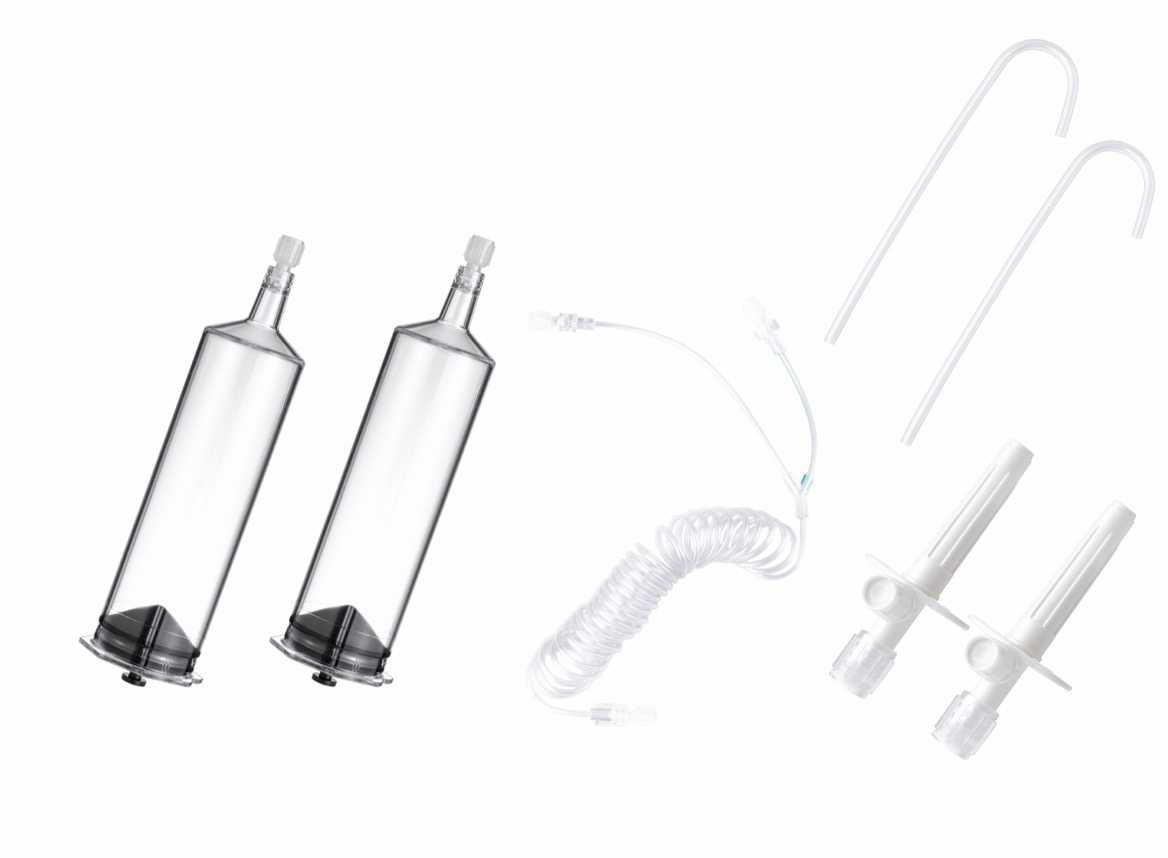
The following table is intended as an RFQ-planning reference. Actual capacity, MOQ, certification scope, and lead time must be confirmed directly with each legal manufacturer because these variables can differ by product, packaging format, target market, and order season.
| Manufacturer | Main focus | Publicly referenced compliance or quality indicators | Typical buyer fit | Indicative MOQ approach | Capacity assessment |
|---|---|---|---|---|---|
| MAIWEI INC. | CT, MRI, DSA high-pressure injector consumables; tubing and accessories | ISO 13485, CE, FDA 510(k)-related compliance stated by company | Small-to-mid-sized distributors, OEM brands, flexible projects | Often more flexible for trial orders and OEM discussions; confirm by SKU | Specialist, project-oriented |
| Antmed | Integrated contrast-delivery systems and accessories | ISO 13485, FDA 21 CFR 820, MDSAP; EU MDR and FDA 510(k) references | Large distributors, tenders, multi-market programs | Generally suitable for structured forecast orders | Large, vertically integrated |
| UNIONMED | Contrast injector syringes and tubing | Product-specific Vistron EnVision CT listing; specialist background unionmed+1 | Imaging-consumables distributors | Confirm by kit and custom-pack requirement | Specialist, category-focused |
| WEGO Medical | Broad medical consumables, CT/MRI/DSA syringes | CE, ISO 13485, selected FDA approvals; ISO 8 cleanroom information wegomedical+1 | Large institutional and multi-category buyers | More suitable for planned volume programs | Large group-scale |
| ANNTOMMED | Angiography and interventional consumables | ISO 13485, CE; clean workshop capacity cited | Interventional and angiography buyers | Confirm by component and project scope | Medium-sized specialist |
| Yeso-Med | High-pressure syringes for imaging | Product listings reference Vistron CT compatibility | Focused imaging-disposable buyers | Confirm case quantity and annual-volume tiers | Specialist |
| Shenzhen Boon | Multi-category medical disposables | Imaging syringe products listed in directories made-in-china+1 | Catalog-consolidation buyers | May vary by product line | Verify factory scope |
| Shunchang Medical | CT and angiographic syringes | Public compatibility references for Medrad MCT Plus Vistron CT | Buyers with mixed injector fleets | Confirm by model and packaging | Verify directly |
| X-Way Medical Technology | Imaging and disposable medical products | Supplier-directory presence | RFQ comparison and new supplier screening | Confirm directly | Verify directly |
| Other Guangdong specialists | Private-label imaging consumables | Varies by legal manufacturer | Experienced OEM buyers | Often negotiable after technical review | Highly variable |
A Medrad Vistron CT syringe is not a standard disposable syringe. It forms part of a high-pressure contrast-media delivery system, and its performance depends on the interaction between the syringe barrel, plunger, sealing system, connector geometry, tubing, and injector drive interface.
Most CT high-pressure syringe barrels are made from transparent engineering thermoplastics such as medical-grade polycarbonate, chosen for clarity and mechanical performance. The plunger and sealing elements may use polypropylene, polyethylene, elastomeric materials, or other validated material combinations depending on the design.
A professional buyer should request:
- Resin brand, grade, and medical-use declaration
- Material safety and biocompatibility documentation where applicable
- Batch-level traceability for critical materials
- Evidence that regrind control is defined and documented
- Dimensional inspection specifications for key interfaces
- Visual inspection standards for transparency, flash, black specks, sink marks, and stress whitening
A syringe can look correct but fail under pressure because of subtle molding stress, imperfect sealing, connector tolerance variation, or insufficient material consistency.
Ask for:
- Rated operating pressure by exact SKU
- Burst-pressure test protocol and results
- Leakage-test method and acceptance criteria
- Plunger movement or force test data
- Connector pull-force or retention testing
- Tube-to-connector bond validation, where applicable
- Sample lot test reports rather than generic marketing claims
WEGO's public product information illustrates why this is important: CT systems may require up to 300–600 psi depending on the clinical configuration, while DSA applications can require up to 1,200 psi. Buyers must never assume that a DSA product specification applies to CT products, or vice versa.
For single-use imaging consumables, packaging and sterilization control are part of the product—not an afterthought.
Check for:
- Sterilization method, often EO for these product categories
- Sterilization validation summary
- EO residual limits and release records
- Sterile-barrier system validation
- Seal-strength and package-integrity test reports
- Shelf-life validation or accelerated-aging rationale
- Carton labeling, lot number, expiration date, and storage condition requirements
WEGO publicly states that its injector syringes are EO-sterilized and manufactured in an ISO 8 / Class 100,000 cleanroom environment with monitoring of particles and microorganisms. Other suppliers should be asked to provide equivalent product-specific evidence rather than simply stating "sterile" on a quotation.
The most common purchasing mistake is treating a high-pressure CT syringe as a generic plastic commodity. It is a clinical-use consumable that must perform consistently across every unit, every batch, and every injector cycle.
A seller may advertise "Medrad compatible," but Medrad injector families use different syringe interfaces, volumes, and accessory configurations.
How to avoid it: Provide the supplier with your injector model, original reference number if available, syringe volume, single- or dual-head configuration, tubing configuration, and photos of the connection interface. Require a written cross-reference before sampling.
Transparent barrels may look acceptable at first inspection but show stress cracking, reduced impact resistance, poor transparency, or dimensional drift if the resin grade changes.
How to avoid it: Include approved material grades and change-notification rules in the quality agreement. Require written approval before changes to resin source, mold, sterilization provider, packaging material, or critical component supplier.
Some factories may provide one historic test report but lack routine batch release controls. That does not prove current production consistency.
How to avoid it: Ask whether pressure and leakage tests are conducted during design validation only, per lot, per shift, or according to an AQL sampling plan. Obtain recent batch records from the actual SKU.
A factory may show a valid ISO 13485 certificate that belongs to a related company, a different facility, or a scope unrelated to the product being purchased.
How to avoid it: Compare the certificate's legal company name and production address against the quotation, invoice, business license, packaging label, and manufacturing site. Confirm the scope includes relevant medical-device manufacturing activities.
A trading company can still provide value, but buyers must know whether it controls manufacturing, quality records, tooling, and change management.
How to avoid it: Ask who owns the mold, who performs injection molding, who assembles the kit, who sterilizes the product, and whose name appears as legal manufacturer on the label.
One of the least-discussed risks in high-pressure syringe sourcing is mold-cavity imbalance.
A factory may use a multi-cavity mold in which most cavities produce acceptable parts, while one or two cavities create small dimensional deviations at the plunger seal area, luer connection, or injector-drive interface. Random samples can pass visual inspection, but the affected cavity may produce intermittent leakage, higher plunger resistance, or difficult installation in the injector.
This problem becomes more likely when procurement teams only inspect finished products and do not ask how the factory manages cavity-level traceability.
What to ask the supplier:
- Does the mold use cavity identification?
- Are critical dimensions monitored by cavity rather than only by total batch?
- Does the factory maintain cavity-specific corrective-action records?
- Can it show process capability data for critical dimensions?
- If one cavity is found out of tolerance, how are affected lots contained and traced?
A supplier that can answer these questions clearly is more likely to have mature process control than one that only sends polished product photos and generic certificates.
Prepare a technical RFQ that includes:
- Injector brand and exact model
- Required syringe volume
- Single-head or dual-head system
- Required connecting tube and filling-device configuration
- Pressure requirement
- Sterile-pack and carton quantity
- Target destination market
- Required language for labeling and IFU
- Regulatory documentation required for import, registration, or tender
At minimum, request:
- ISO 13485 certificate
- CE certificate or declaration where relevant
- FDA-related information where relevant to the product and market
- Product catalog and exact SKU list
- Product technical data sheet
- Sterilization summary
- Pressure and leakage test reports
- Material declarations
- Shelf-life and package-validation summary
- Factory audit report, if available
- Business license and legal-manufacturer information
The National Medical Products Administration provides official information and database resources that can support regulatory due diligence in China. Buyers can also use China's UDI database as part of broader traceability checks where relevant.
Do not approve samples solely because the syringe fits the injector once.
A structured sample evaluation should include:
1. Visual and dimensional comparison with the approved reference.
2. Injector fit and installation assessment.
3. Plunger movement and injection-cycle assessment.
4. Connection and tubing fit check.
5. Leak testing under relevant conditions.
6. Packaging integrity assessment.
7. Label, lot, and expiration-date verification.
8. Clinical or end-user evaluation according to your organization's procedures.
A remote audit can be useful, but an on-site audit gives stronger evidence for long-term programs. Focus on:
- Incoming material inspection
- Mold maintenance records
- Cleanroom procedures
- Assembly controls
- Sterilization release process
- Finished-product inspection
- Lot traceability
- Nonconforming-product handling
- Complaint handling and CAPA
- Change-control procedures
For a new supplier, begin with a manageable pilot quantity. Define acceptance criteria in advance and inspect the shipment before full market launch.
The purchase agreement should specify:
- Approved samples and specifications
- Product part number
- Material and component-change notification
- Packaging artwork approval
- Quality-record retention period
- Complaint-response timeline
- Replacement or credit procedure for confirmed defects
- Shipment and delivery terms
- Confidentiality and tooling ownership where applicable
Medical consumables require more than routine export handling. Buyers should plan for:
- Correct HS-code classification
- Import registration or local-market authorization
- Sterile medical-device labeling requirements
- Temperature and humidity exposure during shipping, where applicable
- Carton compression and palletization standards
- Shelf-life remaining at shipment
- Product liability insurance requirements
- Customs documentation consistency across invoice, packing list, certificate, and label
For sea freight, confirm that the supplier uses appropriate inner cartons, master cartons, pallet protection, moisture barriers where needed, and container-loading practices that reduce carton deformation. For urgent validation samples, air freight or courier shipment may be more appropriate, but the buyer should still ensure that sample lots are representative of production conditions.
China offers a strong supplier base for Medrad Vistron CT syringe-compatible consumables, especially for buyers who need a combination of competitive manufacturing, platform compatibility, flexible packaging, and international shipment support. However, the correct sourcing decision should be based on validated quality systems and product-specific evidence—not on catalog claims or unit price alone.
For high-volume hospital supply, formal tenders, and broad multi-market coverage, large integrated manufacturers such as Antmed and WEGO may be suitable candidates. For buyers seeking specialized imaging-consumable support, flexible communication, and deeper OEM/private-label cooperation, MAIWEI INC., UNIONMED, and other specialist manufacturers can be valuable options.
The strongest supplier is ultimately the one that can demonstrate consistent performance for your exact injector configuration, supply the necessary documentation for your target market, maintain clear change control, and support your business after the initial purchase order.
If you are sourcing Medrad Vistron CT-compatible syringe kits, CT/MRI/DSA connecting tubes, or private-label imaging consumables, contact MAIWEI INC. with your injector model, required kit configuration, destination market, expected annual quantity, and branding requirements to begin a technical compatibility and sample-evaluation discussion.
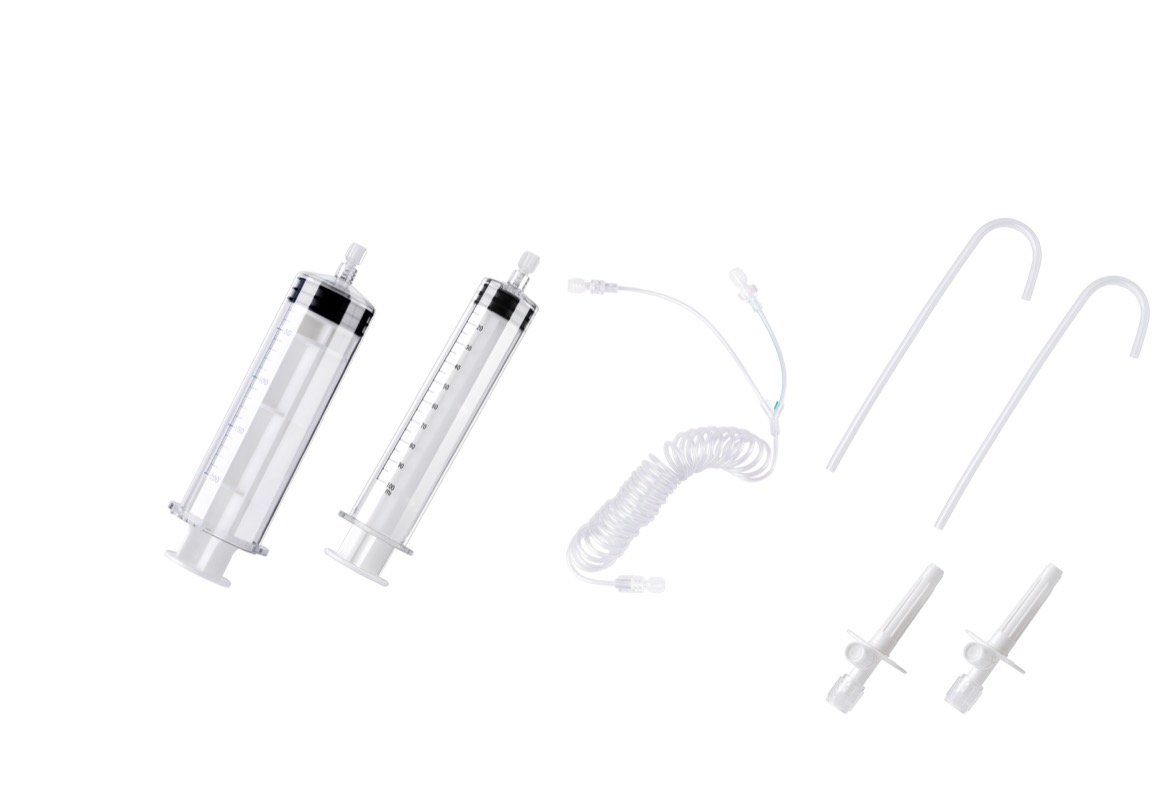
Ask for the full current certificate, including certificate number, issue date, expiry date, certification body, legal company name, production address, and scope. Then verify the certificate with the issuing certification body where possible. Compare the named facility with the supplier's invoice, business license, package label, and factory address. A valid certificate is not sufficient if it covers a different entity or an unrelated scope.
A supplier may manufacture a product designed to be compatible with a particular injector platform, but this does not mean it is made by, endorsed by, or approved by the original equipment manufacturer. Buyers should treat compatibility as a technical claim that requires evidence: exact model match, functional testing, regulatory review, and documentation appropriate to the destination market.
MOQ varies widely based on whether the order uses an existing model and standard packaging or requires private-label cartons, custom IFUs, special tube configurations, or new tooling. For a standard existing SKU, the MOQ may be based on carton or sterilization batch quantity. For OEM projects, the MOQ may rise because of artwork setup, packaging materials, validation work, and inventory risk. Obtain MOQ by SKU and by packaging version—not as a general company-level number.
No. Regulatory requirements depend on the importing country, product classification, intended use, and local registration pathway. FDA 510(k) is relevant to the U.S. market, while the EU requires compliance with its applicable regulatory framework and other countries maintain their own requirements. Work with your regulatory team or local authorized representative to determine the correct requirement before selecting a supplier.
Prioritize product-specific evidence: pressure and burst testing, leakage testing, dimensional inspection, packaging integrity, sterilization validation, EO residual controls where EO is used, shelf-life support, and batch traceability. For ongoing orders, ask for routine batch-release documentation and confirm whether the supplier has changed raw materials, molds, components, sterilization provider, packaging, or manufacturing location.
- [China National Medical Products Administration (NMPA)] — Official regulatory authority resource for medical-device information in China. [english.nmpa.gov]
- [NMPA Database Resources] — Official database access and reference materials. [english.nmpa.gov]
- [China UDI Database Overview] — Background on the China medical-device UDI database and its use in traceability. [chinameddevice]
- [China Medical Equipment Market and Export Data] — Government-published summary citing China Association of Medical Equipment figures for 2025 exports and market growth. [english.www.gov]
- [China Medical Device Plastics Market Analysis] — Market analysis covering China's medical-device plastics sector and related growth projections. [marketsandmarkets]