


close
Choose Your Site
Global
Social Media
Views: 228 Author: Maiwei Biotech Publish Time: 2026-10-12 Origin: Site


Content Menu
● Why Source MRI Contrast Injector Syringes from China?
● Selection Criteria: How to Evaluate a Qualified Supplier
>> 1. Product-Level Regulatory Coverage
>> 2. Exact Injector Compatibility
>> 3. Materials and Finished-Device Evaluation
>> 4. Sterilization and Quality Control
>> 5. Capacity, Delivery, and Customization
● The Top 10 Supplier Candidates
>> 1. MAIWEI INC. / Shenzhen Maiwei Biotech: A Focused Candidate for OEM Consumables Programs
>> 2. Antmed: Broad Contrast Delivery and Compatible Syringe Coverage
>> 3. Shenzhen Boon Medical Supply: A Long-Established Medical Consumables Business
>> 4. Sino Medical-Device Technology: MRI Kits Alongside Injector-System Expertise
>> 5. LnkMed: A Younger Specialist in Contrast Injection Systems
>> 6. Shenzhen Seacrown: A System-Oriented MRI Procurement Candidate
>> 7. Union Medical Shenzhen: An OEM/ODM-Oriented Candidate
>> 8. Shenzhen X-Way Medical: A Broader Imaging and Interventional Supply Option
>> 9. WEGO: A Large Medical Supply Organization Requiring SKU-Level Clarification
>> 10. Greetmed: A Conditional Candidate for Consolidated Procurement
● Supplier Comparison: Capacity, MOQ, and Regulatory Evidence
● Technical Buying Guide: What the Specification Should Include
>> Materials, Seals, and Fluid-Path Components
>> Pressure and Kit Configuration
>> Packaging, Shelf Life, and Sterilization Release
● An Under-Discussed Procurement Trap: Approving a Sample, Not a Controlled Configuration
● How to Qualify a Supplier Before Placing a Production Order
>> Step 1: Resolve the Company Structure
>> Step 2: Review Documents Before Paying for Development
>> Step 3: Evaluate Representative Samples
>> Step 4: Run a Controlled Pilot Order
>> Step 5: Plan Logistics Around Product Release
● Conclusion: Select the Supplier You Can Qualify and Control
>> How Can I Verify Whether an ISO 13485 Certificate Has Expired?
>> Does a Manufacturer's FDA Registration Mean Its MRI Syringes Have 510(k) Clearance?
>> Can We Change the Tubing Length or Valve Configuration Under an Existing Private-Label Agreement?
>> How Do We Verify a Supplier's European Certificate?
>> What Evidence Should We Request If a Supplier Has No Published Capacity or MOQ?
Choosing an MRI contrast injector syringe supplier is not simply a matter of comparing prices. A dependable supply program requires exact-model compatibility, consistent manufacturing, documented regulatory coverage, and reliable support when specifications change.
China offers a substantial supplier base for contrast delivery systems and disposable medical products. However, manufacturers, export companies, and broad-range medical suppliers often appear together in search results. Professional buyers need to distinguish who manufactures the product, who holds its regulatory documentation, and who takes responsibility for batch quality.
The central purchasing principle is traceability: every commercial claim should connect to an identifiable manufacturer, product code, production site, and supporting document.
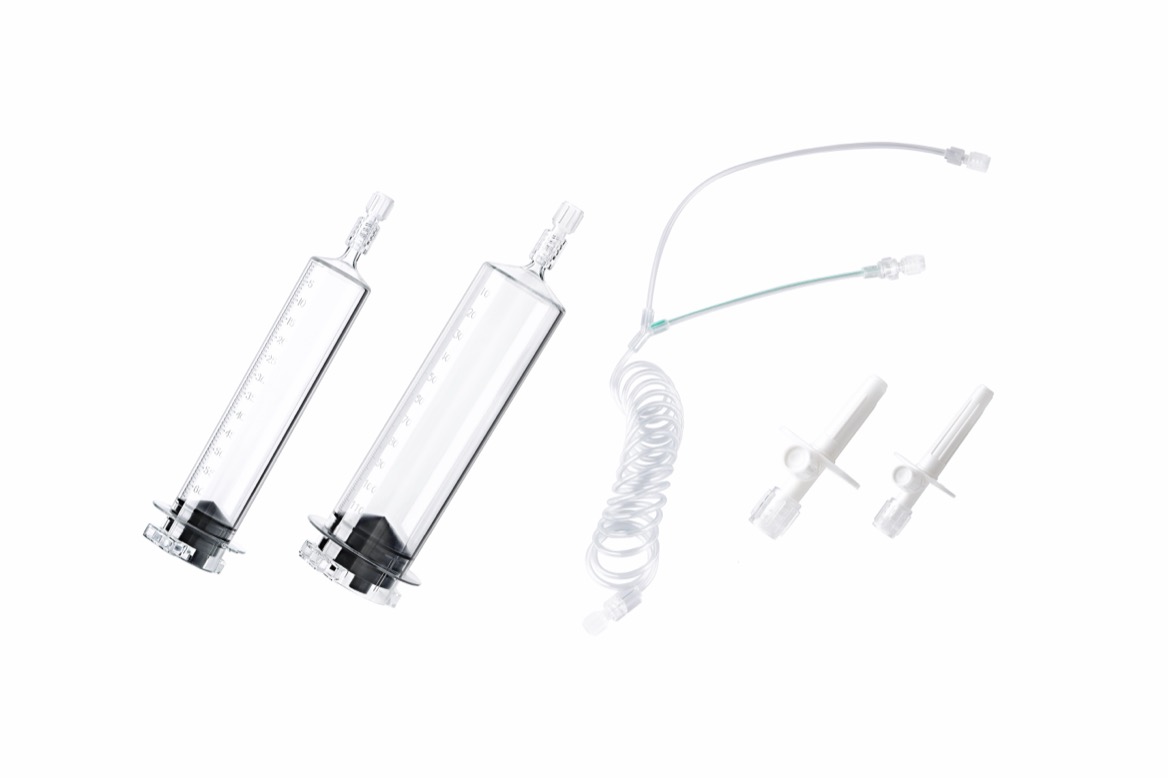
China's medical device export infrastructure supports buyers seeking compatible injector consumables, private-label products, and consolidated purchasing.
According to the China Chamber of Commerce for Import and Export of Medicines and Health Products, China exported $50.469 billion in medical devices in 2025, up 3.54% year over year. Disposable consumable exports reached $10.911 billion, increasing 3.77%. These figures describe broad industry categories, not MRI injector syringes specifically. Nevertheless, they demonstrate the scale of the country's medical supply export ecosystem.
Shenzhen is particularly relevant to contrast delivery procurement. MAIWEI, Antmed, Boon, LnkMed, Sinomdt, Seacrown, Unionmed, and X-Way all have Shenzhen connections. This concentration gives buyers a practical opportunity to compare specialized consumables suppliers and injector-system developers within one regional sourcing itinerary.
Demand also extends beyond the syringe itself. Grand View Research's 2026 report estimates that the global contrast media injectors market was worth $2.2 billion in 2025 and will reach $2.5 billion in 2026. Its market includes injector systems and consumables across multiple imaging applications. These numbers should not be presented as the market size for MRI syringes alone.
For buyers, the opportunity lies in finding a supplier whose documented capabilities match a specific purchasing program—not assuming that every Chinese medical supplier offers the same technical competence.
The following framework is a procurement screening method, not a claim that all ten companies have passed an independent factory audit.
Request current documents covering the exact product being purchased.
An ISO 13485 certificate concerns a quality management system. It does not, by itself, establish clearance or market access for every syringe model.
Similarly, a manufacturer's FDA-related statement should be checked against the actual 510(k) record where applicable. CE documentation must identify the relevant manufacturer and product scope. Buyers should verify notified-body designation and certificate status through the appropriate European systems.
A supplier should identify:
- Injector manufacturer and model.
- Disposable product reference.
- Syringe volume and kit contents.
- Required adapters or interfaces.
- Applicable pressure and operating limitations.
- Instructions for installation and use.
Antmed and Sinomdt publish MRI-specific product information, illustrating the level of model detail buyers should request rather than accepting a general "compatible with major brands" statement.
"Medical-grade plastic" is not enough to qualify a fluid-path component.
Request material specifications, supplier controls, formulation-change procedures, and a biological evaluation appropriate to the finished device. FDA guidance emphasizes consideration of component materials, manufacturing processes, the final finished form, and possible leachable substances.
A resin datasheet therefore cannot replace evidence addressing the completed, sterilized product.
For ethylene oxide-sterilized products, ask how the sterilization process is validated, controlled, and released. Relevant standards include ISO 11135 for the sterilization process and ISO 10993-7 for allowable ethylene oxide-related residuals.
A factory assessment should also examine inspection records, complaint handling, batch identification, packaging controls, and how nonconforming products are isolated.
Evaluate the capacity available for your product—not simply total factory output.
Ask for evidence supporting monthly supply commitments, sterilization scheduling, packaging availability, and on-time delivery performance. Separate standard-product orders from private-label packaging and genuine design-development projects.
An attractive quote is only commercially meaningful when it includes a realistic production and release schedule.
MAIWEI INC. was established in 2021 to support the United States contrast delivery market. Its company page connects it to the wider Maiwei network and identifies the establishment of Shenzhen Maiwei Biotech in its development history.
A significant independently checkable point is FDA record K253048. The applicant is Shenzhen Maiwei Biotech Co., Ltd., and the listed device name includes high-pressure syringes, pressure connecting tubes, quick-fill tubes, spikes, and transfer tubes. Buyers should review the associated documentation for their intended products and uses rather than extending this record to every item in the catalog.
- Established: MAIWEI INC., 2021; Chinese manufacturing-network history identifies Shenzhen Maiwei Biotech's establishment in 2016.
- Market orientation: North America, supported by a wider network that includes a European entity.
- Core focus: Contrast delivery consumables and related fluid-path products.
- OEM/ODM evaluation: Private-label kits, packaging, tubing configurations, and product-development support, subject to an agreed technical scope.
For smaller and medium-sized brands, MAIWEI is a relevant candidate when the project requires coordinated communication across syringes, tubing, and kit components. The company describes responsive customer support and reliable manufacturing resources; buyers should translate those statements into measurable sample-response times, named project ownership, and written change-control commitments.
Its potential value is not merely a lower unit price. It is the possibility of building a focused consumables program with a supplier familiar with contrast delivery. MOQ flexibility, customization depth, and actual development timelines should be confirmed in the quotation.
Antmed was founded in Shenzhen in 2000. Its published portfolio includes CT, MRI, and angiography injectors, high-pressure syringes, and related products. The company reports exports to more than 130 countries.
- Established: 2000.
- Market orientation: International distribution.
- Core strength: Injector systems combined with compatible disposable products.
- OEM/ODM evaluation: Model-specific syringe kits and tubing configurations; private-label terms require confirmation.
Antmed publishes MRI syringe configurations for systems including Nemoto Sonic Shot and Bayer MEDRAD Spectris. For procurement teams managing several injector platforms, that breadth makes it a useful comparison candidate.
Ask for current documentation and samples for each intended reference. A wide catalog should not be treated as evidence that every configuration shares identical regulatory coverage.
Boon's company history dates its establishment to 1990. Its supplier listings include CT, MRI, and DSA high-pressure syringe products, including kits marketed for MEDRAD Spectris Solaris systems.
- Established: 1990.
- Market orientation: International medical consumables sourcing.
- Core strength: A long-standing disposable medical product business.
- OEM/ODM evaluation: Syringe-kit supply and branded packaging, subject to confirmation of actual customization services.
Grand View Research also identifies Boon among companies in the broader contrast media injectors market. This supports its relevance to the sector, but does not establish an MRI syringe market-share ranking.
Buyers should distinguish clearly between empty sterile syringe kits and any listing that uses "prefilled" terminology. The commercial description, actual contents, labeling, and regulatory documents must agree.
Sino Medical-Device Technology, commonly presented as Sinomdt, was founded in 2008 according to published industry coverage. Its MRI syringe page lists kits from 60 mL to 115 mL and compatibility information covering MEDRAD, Nemoto, Liebel-Flarsheim, and its own SinoMRI systems.
- Established: 2008.
- Market orientation: Domestic and international medical equipment channels.
- Core strength: MRI syringe products associated with a wider injector portfolio.
- OEM/ODM evaluation: Injector-linked consumables and kit configurations; external private-label development requires confirmation.
Sinomdt is particularly relevant when buyers want to discuss both injection equipment and disposable supply.
Request an exact compatibility matrix. Brand-level compatibility is not a substitute for confirmation against the installed injector model and disposable interface.
LnkMed was founded in Shenzhen in 2018. Its published portfolio covers CT, MRI, and angiography injection systems, and it advertises MRI syringes and OEM high-pressure syringe supply.
- Established: 2018.
- Market orientation: International contrast delivery sourcing.
- Core strength: A focused contrast injection portfolio.
- OEM/ODM evaluation: Compatible consumables and OEM supply; packaging, tooling, and regulatory responsibilities need a written scope.
LnkMed is worth evaluating for buyers comparing newer specialist suppliers with longer-established manufacturers.
The key qualification task is to connect each syringe reference to its production site, validation evidence, and applicable market-access documentation.
Seacrown was founded in 2002 and specializes in contrast medium injection systems. Its published product presence includes the Zenith C60 MRI injector.
- Established: 2002.
- Market orientation: International injector-system distribution.
- Core strength: Contrast injector development.
- OEM/ODM evaluation: System-associated consumables; independent private-label syringe manufacturing requires verification.
Seacrown belongs on a system-linked procurement shortlist. However, evidence of MRI injector manufacturing should not automatically be interpreted as evidence of broad third-party MRI syringe contract manufacturing.
Buyers seeking private-label disposables should establish who manufactures the consumables and whether customization is available separately from equipment purchases.
Union Medical Shenzhen, using the Unionmed brand, states that it was established in 2015. Its published supplier profile identifies high-pressure syringes and connecting tubes as core products and explicitly advertises OEM and ODM services.
- Established: 2015.
- Market orientation: International distributors and own-brand exports.
- Core strength: Contrast imaging consumables.
- OEM/ODM scope: Advertised OEM/ODM supply, with model coverage and development boundaries requiring confirmation.
Unionmed is a relevant candidate for buyers seeking a consumables-centered supplier rather than an injector equipment package.
Its general CE, FDA, and ISO statements must be checked against actual certificates and device records. Marketplace descriptions are a starting point for qualification, not a replacement for it.
X-Way was established in 2014. Its published portfolio includes CT, MRI, and DSA syringes, connecting tubes, and products for other clinical categories.
- Established: 2014.
- Market orientation: International multi-category medical sourcing.
- Core strength: Broad product coverage.
- OEM/ODM evaluation: Consolidated sourcing and customized supply arrangements; actual manufacturing and design responsibility must be established.
X-Way may suit distributors combining imaging products with interventional or other medical consumables.
The principal due-diligence issue is supply-chain visibility: identify which products are manufactured directly and which are obtained from manufacturing partners.
WEGO's international company history dates the group's founding to 1988. Its portfolio includes syringes and numerous other medical consumables.
A separate WEGO-branded product page advertises MRI injector syringes. However, that page contains model and category descriptions that require reconciliation with official product documentation before procurement.
- Established: WEGO group, 1988.
- Market orientation: Domestic healthcare and international medical supply.
- Core strength: Broad medical consumables infrastructure.
- OEM/ODM evaluation: Supply and private-label possibilities must be confirmed with the responsible entity.
For this candidate, buyers should verify the website operator, contracting company, legal manufacturer, and intended MRI product references.
A well-known group name does not eliminate the need to authenticate a particular catalog or supplier relationship.
Greetmed describes operations dating to 2003 and advertises high-pressure syringes within a broader medical supply business.
- Established: 2003, according to company-published information.
- Market orientation: International medical supplies.
- Core strength: Broad-category sourcing.
- OEM/ODM evaluation: Private-label and consolidated procurement discussions; MRI-specific capability requires confirmation.
Greetmed should be treated as a conditional candidate rather than an already-qualified MRI syringe manufacturer.
Before including it in a tender, request the exact MRI injector models supported, legal manufacturing entity, product documentation, and representative samples. General high-pressure syringe availability does not establish MRI compatibility.
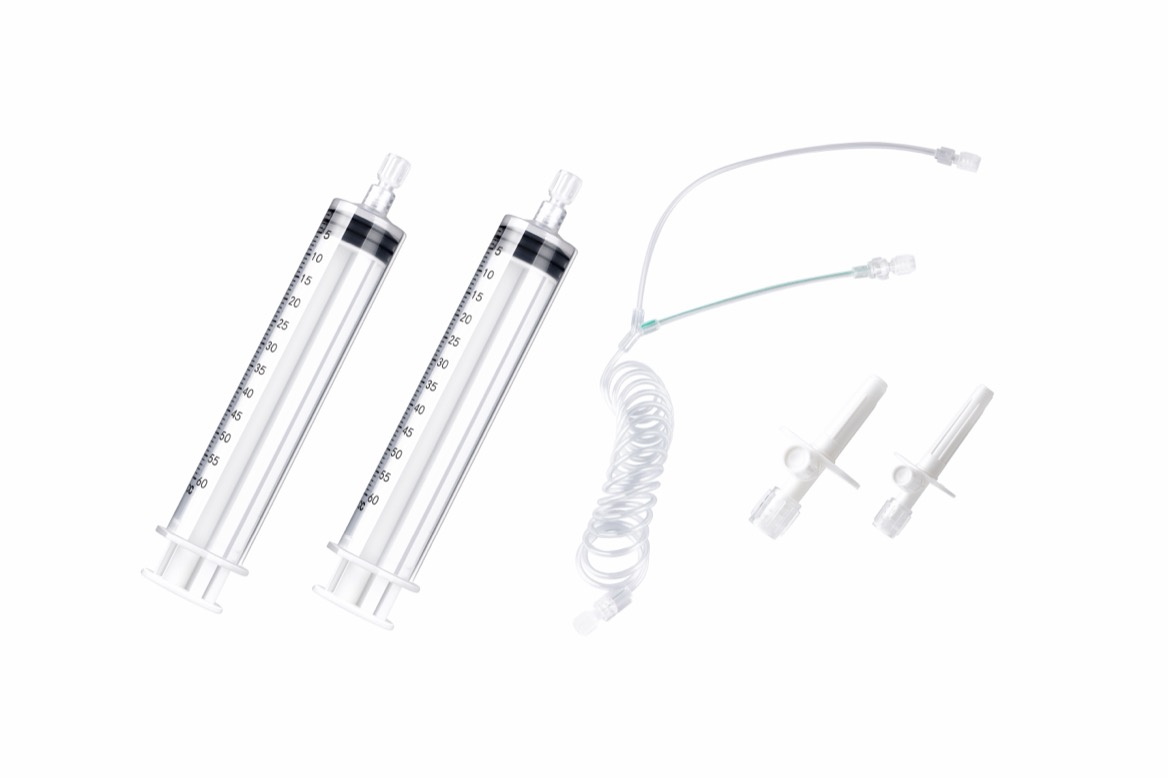
The reviewed sources do not provide a sufficiently consistent basis for numerical capacity or MOQ comparisons. Those fields therefore remain qualification questions rather than invented figures.
| Candidate | Procurement focus | MRI syringe capacity | MOQ | Regulatory evidence and next verification |
|---|---|---|---|---|
| MAIWEI network | Focused consumables and OEM programs | Request SKU-level output and available capacity | Request standard versus customized MOQ | FDA K253048 independently identifiable; verify ISO and CE scope |
| Antmed | Multi-platform contrast delivery | Request MRI-line allocation | Request by kit reference | Obtain current certificates and model-specific records |
| Boon | Established disposable supply | Request production and release capacity | Confirm by configuration | Verify current product-specific documentation |
| Sinomdt | Injector-associated MRI kits | Request consumable-line capacity | Confirm equipment-linked versus standalone orders | Match documents to MRI kit references |
| LnkMed | Specialist injector and disposable sourcing | Request factory evidence | Confirm stock and OEM quantities | Verify site, certificate scope, and device records |
| Seacrown | System-linked procurement | Verify consumable manufacturing arrangement | Confirm standalone availability | Separate injector documents from syringe documents |
| Unionmed | Advertised OEM/ODM consumables | Request line-level evidence | Confirm development and repeat-order MOQ | Validate advertised credentials independently |
| X-Way | Multi-category sourcing | Separate own production from partner supply | Confirm by actual manufacturer | Establish legal manufacturer for each SKU |
| WEGO | Broad medical supply | Verify responsible entity and MRI production | Request from authenticated supplier | Reconcile catalog descriptions and official documents |
| Greetmed | Conditional consolidated sourcing | Establish MRI-specific capability first | Confirm after product qualification | General company claims do not establish MRI coverage |
The table summarizes the publicly described business focus and the remaining qualification tasks; it does not imply that all ten candidates hold equivalent credentials or manufacturing capabilities.
Specify the barrel, plunger, seal, tubing, connector, valve, and any lubricant or adhesive that forms part of the product.
Ask how material substitutions are approved. Biological evaluation should address the finished device and relevant processing effects, not just a generic material grade.
CE marking should not be described as an environmental certification. Likewise, an environmental or restricted-substance statement should not be accepted as a substitute for medical-device conformity, biological evaluation, or performance documentation.
Request a specification for the complete kit.
A high pressure rating on one component does not establish the capability of every connected component. MRI kit pages may also describe tubing differently from syringe components, reinforcing the importance of reviewing the complete configuration rather than copying a single catalog number.
The specification should identify operating limits, compatible components, connection instructions, and any restrictions on substitutions.
Ask for evidence supporting the labeled shelf life, packaging integrity, and sterilization method.
For ethylene oxide products, confirm that the supplier controls both the sterilization process and relevant residuals. An external sterilization provider does not remove the need for clear manufacturer oversight and release responsibility.
A frequently overlooked question is not simply, "Did the sample pass?"
It is, "Will the commercial shipment be manufactured to the same approved configuration?"
A sample may be satisfactory, but later changes to resin formulation, seal material, lubricant, tubing, packaging, or processing can create a need for renewed evaluation. FDA's biological evaluation guidance specifically considers materials, processing constituents, and the final finished device.
For an OEM purchasing agreement, request:
1. A signed specification and approved kit configuration.
2. Identification of controlled materials and components.
3. Written notification requirements for relevant changes.
4. A defined process for reviewing replacement components.
5. Traceable sample approval and commercial-batch acceptance criteria.
This is a procurement control recommendation, not a claim that any company listed here has made unauthorized substitutions.
Identify the exporter, invoice issuer, legal manufacturer, production site, and certificate holder.
Where they differ, request an explanation of their relationship and responsibilities.
Obtain certificates, product references, labeling, instructions, sterilization information, and relevant performance evidence.
Use independent databases where available. Confirm unclear certificate status directly with the issuing organization.
Ask whether samples represent routine production and the proposed commercial packaging.
Have qualified personnel evaluate fit, installation, connections, leakage, and intended operating performance under an approved assessment protocol. Do not interpret a visual fit check as complete compatibility validation.
Inspect documentation, packaging, labels, quantities, and lot identification.
Record problems against agreed acceptance criteria rather than relying on informal impressions.
Request a schedule separating manufacture, packaging, sterilization, release, and shipping readiness.
Agree minimum remaining shelf life, storage conditions, transport responsibilities, and procedures for damaged cartons or compromised packaging. Lead-time quotations should clearly distinguish production completion from shipment release.
China offers a useful range of MRI contrast injector syringe sourcing options, from specialized consumables businesses to integrated injector manufacturers and broader medical supply companies.
The appropriate partner depends on your installed injector base, target markets, documentation requirements, and customization needs. A supplier with a large catalog is not automatically the right supplier for a tightly controlled OEM program.
For buyers considering MAIWEI, begin with a model-specific request: provide the injector name, required kit configuration, target countries, estimated annual volume, and private-label requirements. Request a compatibility matrix, current supporting documents, representative samples, and a quotation that separates standard supply from customization.
That process creates a more reliable foundation for long-term cooperation than comparing syringe prices alone.
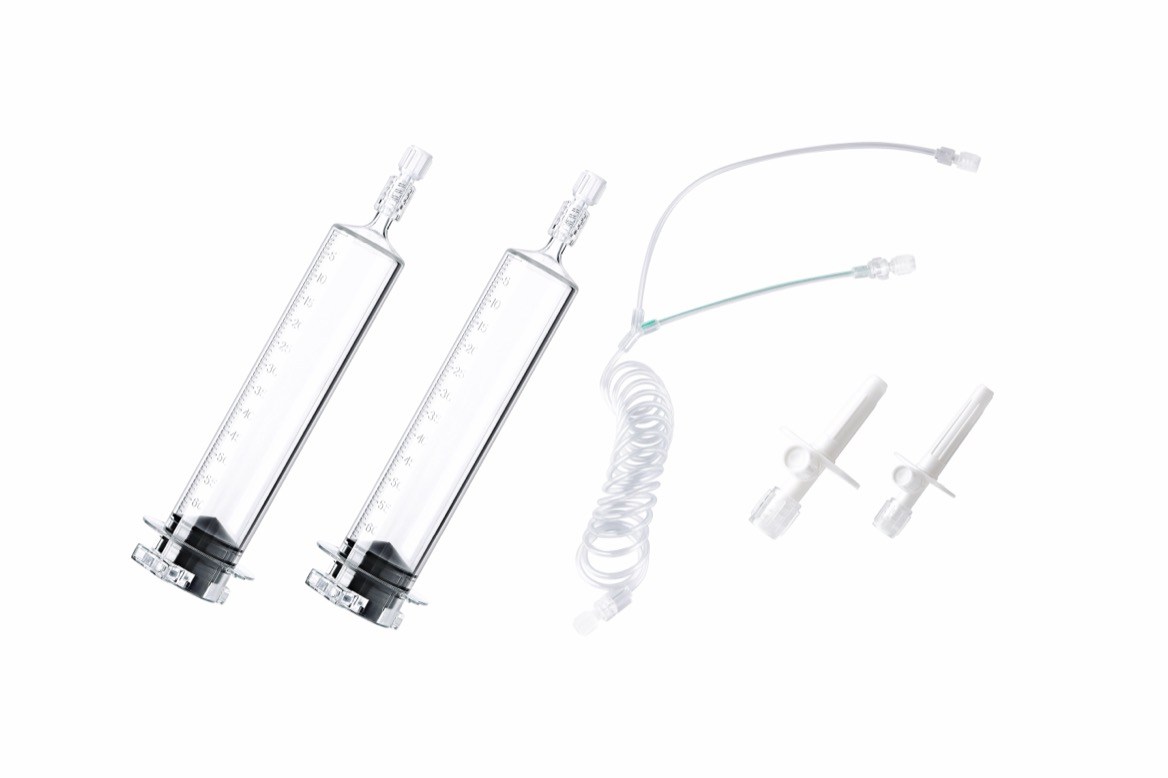
Check the certificate number, legal company name, site address, scope, issue date, expiry date, and issuing certification body.
Use the certification body's verification service and IAF CertSearch where the record is available. An inconclusive search should trigger direct confirmation with the issuer, not an automatic assumption that the certificate is valid or invalid.
Do not accept a general FDA statement as proof covering the product you intend to purchase.
Request the applicable 510(k) number and compare the applicant, device description, labeling, and intended use with the proposed syringe kit. MAIWEI's K253048 illustrates why identifying a specific record is more useful than relying on an unspecified "FDA certificate."
Treat the proposed change as a technical and regulatory assessment question, not merely a packaging request.
Ask the manufacturer to determine whether the change affects performance, biological evaluation, labeling, sterilization, or applicable regulatory documentation. Materials and finished-device characteristics form part of the evaluation framework.
Identify the certificate issuer and relevant regulatory framework.
Check the notified body's designation in the European Commission's official system. Review certificate information through EUDAMED where applicable, and contact the issuer when product coverage or current status remains unclear.
Ask for a written quotation separating standard products, private-label packaging, and design changes.
Request the available monthly output for your references, production constraints, sterilization arrangements, tooling requirements, and delivery assumptions. Treat capacity as a contractual and audit question—not a number to infer from factory size or marketplace listings.
- MAIWEI — About Us: Corporate history, the United States entity, the Shenzhen manufacturing network, and contrast delivery focus. [maiweiusa]
- U.S. FDA — 510(k) K253048: Public record identifying Shenzhen Maiwei Biotech and the listed device family. Exact product coverage should be checked against the associated documentation. [accessdata.fda]
- Antmed — Company and MRI product information: Founding year, international reach, product portfolio, and published MRI syringe configurations. [antmed]
- Boon — Company milestones and supplier listings: Establishment date and advertised MRI syringe products. Listings are not independent regulatory verification. [szboon]
- Sinomdt — MRI Injector Syringe: Published volumes and compatibility information. Founding information is supported by industry coverage. [emergenresearch]
- LnkMed — Company and product information: Founding year, imaging portfolio, and advertised MRI syringe/OEM supply. [lnkmedtech]
- Seacrown — Company profile and distributor product information: Establishment date and MRI injector focus; independent syringe contract-manufacturing capability remains a qualification question. [linkedin]
- Union Medical Shenzhen — Published supplier profile: Establishment date, contrast consumables, and advertised OEM/ODM services. [unionmed.en.made-in-china]
- X-Way — Company and supplier profiles: Establishment date and imaging consumables portfolio. [x-waymedical]
- WEGO — International company history and MRI product listing: Group history is distinguishable from the separate listing's product claims, which require reconciliation. [wegomedintl]
- Greetmed — Company-published history and high-pressure syringe information: Supports conditional inclusion; MRI-specific coverage still requires verification. [china-greetmed]
- China Chamber of Commerce for Import and Export of Medicines and Health Products — 2025 Medical Device Import and Export Analysis: Association-reported export values, growth, and product-category context. [cccmhpie.org]
- Grand View Research — Contrast Media Injectors Market, 2026–2033: Broad-market estimates; not an MRI syringe-only market report. [grandviewresearch]
- U.S. FDA — Biological Evaluation Guidance: Materials, processing considerations, finished-device evaluation, and potential leachables. [fda]
- U.S. FDA — Sterilization for Medical Devices: Ethylene oxide process validation and residual-control standards. [fda]
- European Commission — Notified Bodies and EUDAMED Certificates: Official tools for checking designation and certificate information. [health.ec.europa]
- International Accreditation Forum — CertSearch: Accredited management-system certificate verification. [iafcertsearch]