


close
Choose Your Site
Global
Social Media
Views: 228 Author: Maiwei Biotech Publish Time: 2026-10-26 Origin: Site


Content Menu
● How These MRI Power Injector Syringe Suppliers Were Selected
● China's Manufacturing Position: What the Latest Data Actually Shows
● Top 10 MRI Power Injector Syringe Manufacturers and Supply Candidates
>> 1. MAIWEI INC. / Maiwei Manufacturing Network
>> 2. Shenzhen Antmed Co., Ltd.
>> 3. Shenzhen Boon Medical Supply Co., Ltd.
>> 4. Shenzhen LnkMed Medical Technology Co., Ltd.
>> 5. Union Medical Shenzhen Co., Ltd.
>> 6. Shenzhen Seacrown Electromechanical Co., Ltd.
>> 7. Sino Medical-Device Technology Co., Ltd. — Sinomdt
>> 8. Shenzhen Kenid Medical Devices Co., Ltd.
>> 9. Shenzhen Medis Medical Supplies Co., Ltd.
>> 10. Hawkmed — High-Pressure Consumables and Private-Label Candidate
● Supplier Comparison: Capacity, MOQ, and Certification Evidence
● Technical Requirements Buyers Should Not Overlook
>> Material Grade Is Only the Starting Point
>> Evaluate the Entire Pressure Path
>> Verify MR Safety Separately From Mechanical Compatibility
>> Distinguish CE Marking, ISO Certification, and Environmental Claims
>> Ask How Sterility Is Validated and Released
● Buyer's Guide: From Factory Verification to Repeat Orders
>> Step 1: Establish the Contracting and Manufacturing Chain
>> Step 2: Define the Product Before Requesting Prices
>> Step 3: Qualify Samples Through an Approved Protocol
>> Step 4: Audit Released Capacity, Not Machine Counts
>> Step 5: Agree on Logistics and Post-Market Responsibilities
● The Overlooked Sourcing Trap: A Frozen Sample With an Unfrozen Kit
● Conclusion: Choose the Partner That Can Document the Relationship
● FAQs
>> 1. How Can We Confirm That an ISO 13485 Certificate Is Still Valid?
>> 2. Is an FDA Registration Number Enough to Purchase MRI Injector Syringes for the United States?
>> 3. Does "Compatible With Medrad or Nemoto" Mean the Kit Is Fully Interchangeable?
>> 4. Can We Change the Tubing Length or Add a Different Check Valve Without Repeating Validation?
>> 5. What If a Supplier Proposes a Multi-Patient Set to Reduce Cost?
Choosing an MRI power injector syringe manufacturer involves more than comparing prices and matching syringe volumes. Procurement teams must establish whether a supplier can maintain dimensional consistency, support the exact injector model, document regulatory compliance, and deliver sterile products reliably over repeated orders.
China offers a substantial sourcing base for contrast delivery consumables. Several relevant companies operate in Shenzhen, creating a geographically concentrated supplier network covering contrast injectors, high-pressure syringes, connecting tubes, and associated medical disposables. Antmed, Maiwei's Chinese operations, Union Medical, Seacrown, and Sinomdt illustrate this concentration.
However, a recognizable company name is not enough. An MRI syringe kit must be evaluated as a complete fluid-delivery assembly, not simply as a transparent barrel with a compatible mounting interface.
This guide reviews ten China-based manufacturing or supply candidates, explains where their public evidence is strongest, and identifies the questions buyers should resolve before placing an order.
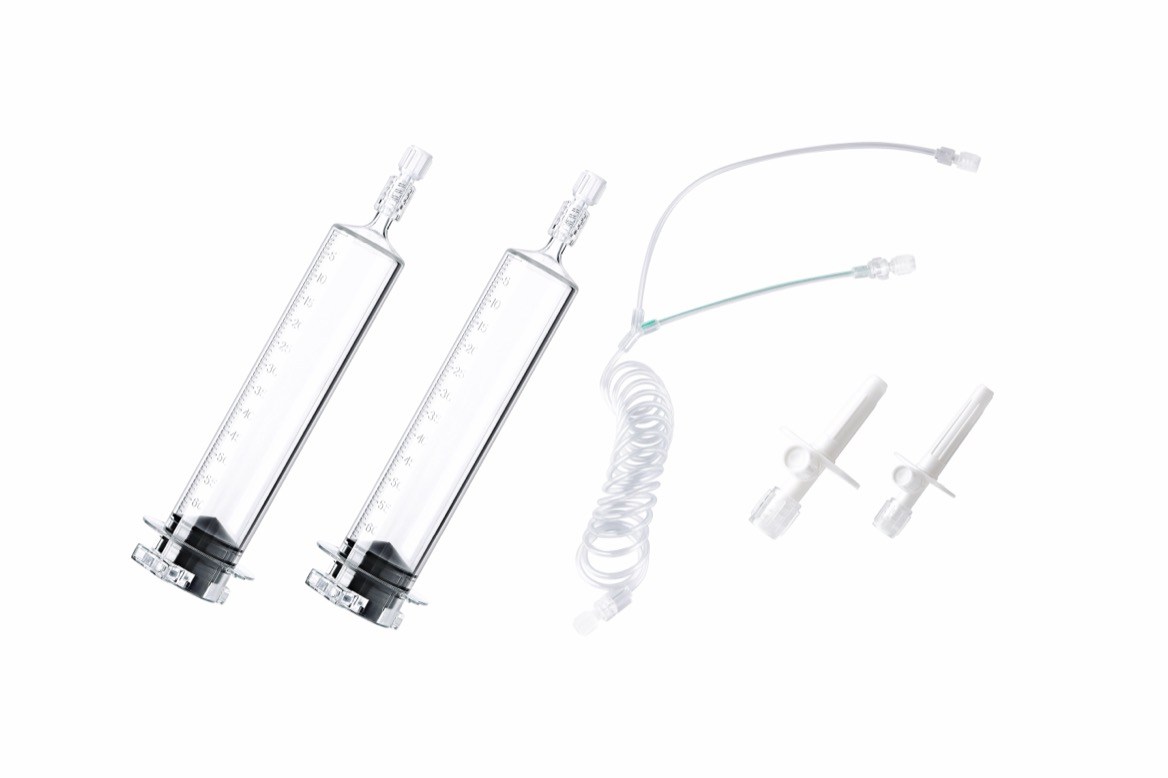
The selection framework prioritizes procurement relevance rather than promotional visibility.
| Evaluation area | Evidence buyers should request | Why it matters |
|---|---|---|
| Manufacturing identity | Legal manufacturer name, factory address, manufacturing license where applicable | Separates the factory from an exporter, distributor, or affiliated sales company |
| Quality management | Current ISO 13485 certificate and relevant scope | Helps establish whether the manufacturing activities fall within the certified system |
| Product authorization | Applicable conformity documents and product-specific market authorization | Prevents company-level claims from being mistaken for approval of every SKU |
| Injector compatibility | Model-specific compatibility matrix, drawings, verification reports | A similar-looking syringe may not function correctly on the intended injector |
| Engineering capability | Tooling ownership, design controls, validation support, change-control procedure | Determines whether customization can proceed without uncontrolled product changes |
| Production reliability | Recent output records, capacity allocation, release lead times, contingency plans | Distinguishes nominal capacity from available, released production |
| Commercial support | Defined MOQ, sample procedure, complaint handling, technical response process | Supports long-term distributor and private-label relationships |
The governing principle is traceability: the commercial quotation, product label, regulatory documents, production records, and supplied samples should identify a consistent and explainable manufacturing chain.
According to the China Chamber of Commerce for Import and Export of Medicines and Health Products, China exported US$50.469 billion in medical devices in 2025, an increase of 3.54% year over year. Its 2025 review also reported US$10.911 billion in disposable consumable exports, up 3.77%.
These figures demonstrate the scale of China's medical-device export infrastructure. They do not represent MRI power injector syringe exports specifically.
A commercial market report from Fortune Business Insights values the global contrast media injectors market at US$1.96 billion in 2025 and projects US$2.05 billion for 2026. That market includes more than replacement MRI syringes, so buyers should not use it as a direct estimate of this narrower consumables category.
The useful sourcing advantage is therefore not a claim that every Chinese supplier is equivalent. It is access to multiple specialized manufacturers, injector-platform suppliers, and consumables partners within a relatively concentrated industrial network.
MAIWEI INC. is a relevant starting point for distributors and smaller medical brands seeking compatible contrast injector consumables with direct OEM project support.
Its public company page states that MAIWEI INC. was established in the United States in 2021. The associated development timeline identifies the establishment of Shenzhen Maiwei Biotech in 2016 and Shenzhen Maiwei Medical Technology in 2024. Buyers should distinguish these entities when reviewing quotations, labels, certificates, and manufacturing agreements.
The public product portfolio covers CT, MRI, and angiographic syringes, pressure connecting tubes, coiled tubing, and complete injector consumable kits. The website advertises ISO 13485-certified production, CE marking, FDA 510(k), and OEM-compatible consumables.
- Establishment: Chinese manufacturing-network history from 2016; MAIWEI INC. from 2021.
- Market orientation: North American support is explicitly described on the company page. Company-provided information states distribution across more than 60 countries and regions; the public homepage currently states more than 50.
- OEM/ODM discussion scope: Private-label syringe kits, tubing configurations, packaging, and compatible consumables; obtain a written distinction between existing validated options and new engineering work.
- Core purchasing proposition: A candidate for smaller brands that need closer coordination across product selection, samples, labeling, and reorder planning.
MAIWEI positions flexibility, efficient communication, R&D attention, and deeper OEM support as commercial priorities. Buyers can evaluate those claims objectively through technical-response quality, sample turnaround, documentation completeness, and the clarity of the change-control proposal.
Its value proposition should be assessed through total landed cost and service performance—not an unsupported claim that it has the lowest price.
Antmed provides one of the broader publicly documented contrast delivery portfolios among the companies reviewed.
Its official website states that the company was founded in Shenzhen in 2000 and supplies contrast delivery systems, high-pressure syringes, and related medical devices. It reports exports to more than 130 countries and describes in-house activities extending from development and tooling to sterilization and after-sales support.
Its MRI syringe listings identify compatibility options for Medrad, Nemoto, Medtron, EZEM, and Antmed injector platforms.
- Establishment: 2000.
- Market orientation: Broad international distribution; the company reports more than 130 export markets.
- Core strength: Combined injector and consumables capabilities.
- OEM/ODM discussion scope: Existing compatible syringe kits and potential engineered supply arrangements; commercial availability and design responsibilities require confirmation.
Antmed is particularly relevant when buyers want to discuss injectors and replacement consumables with the same organization. Nevertheless, a broad catalog does not establish authorization for every configuration in every destination country.
Boon offers a long operating history and a useful product-specific regulatory reference.
Its public company profiles identify establishment in 1990 and describe CT, MRI, and DSA high-pressure angiographic syringes, connecting tubes, and related disposables.
An FDA clearance document dated August 7, 2020, identifies Boon's sterile high-pressure angiographic syringes for single use under K192657. This is a concrete verification starting point, although buyers must still check whether their intended kit and compatibility claims fall within the relevant documentation.
- Establishment: 1990, according to company profiles.
- Market orientation: International medical-imaging supply chains; Guerbet's Australian consumables information identifies Boon as a legal manufacturer and states that it holds ISO 13485 certification.
- Core strength: Established high-pressure syringe manufacturing with identifiable regulatory documentation.
- OEM/ODM discussion scope: Public listings welcome OEM business and show syringes, coiled tubing, and connector configurations.
For procurement teams, the next step is to reconcile the ordered catalog number with the manufacturer, labeling, intended use, and relevant clearance or conformity documents.
LnkMed is a candidate for buyers seeking both contrast injection equipment and compatible disposable kits.
Its official product pages advertise MRI syringe options for platforms including OptiStar LE/Elite and Nemoto Shot 7. The company also explicitly describes OEM manufacturing and customization services.
- Establishment: Not confirmed in the reviewed company materials; request the business-registration record.
- Market orientation: International-facing product offering; a verified regional sales breakdown was not available.
- Core strength: Injector systems and compatible consumables within the same product proposition.
- OEM/ODM discussion scope: Branding, configuration, and potentially design-related customization, subject to a defined engineering agreement.
LnkMed deserves consideration where technical discussions extend beyond standard catalog purchasing. Buyers should ask whether a proposed customization uses an existing validated design or requires additional verification and regulatory work.
Union Medical focuses on high-pressure syringes, pressure connector tubing, and invasive blood-pressure transducers.
Its company profile states that it was founded in March 2015, operates a 4,500-square-meter factory site, and has a 1,500-square-meter clean workshop described as ISO Class 8. The same profile advertises OEM service and multiple regulatory credentials; these remain supplier claims until current certificates are reviewed.
A product page lists a Zenith-C60-compatible MRI kit containing two 65 mL syringes, a 250 cm Y-connector tube, and filling accessories.
- Establishment: 2015.
- Market orientation: International distributor and OEM supply; regional sales proportions are not publicly established.
- Core strength: Concentrated consumables portfolio and published factory-area information.
- OEM/ODM discussion scope: Private-label consumables and kit configurations; confirm tooling and design-development capabilities separately.
Factory floor area should not be treated as MRI syringe output. Ask for recent released production by relevant SKU family.
Seacrown is relevant to buyers who value injector-platform experience alongside disposable syringe supply.
Published company information dates its establishment to 2002 and describes contrast injectors for CT, MRI, and DSA applications. Its Zenith-C60 MRI system is presented as a dual-head platform using 65 mL syringes.
A published Seacrown consumables catalog also lists MRI syringe configurations for several injector platforms.
- Establishment: 2002, according to published company information.
- Market orientation: International equipment distribution; major markets by revenue were not established.
- Core strength: MRI injector systems supported by consumables.
- OEM/ODM discussion scope: Replacement syringe supply and equipment-associated kits; private-label terms require confirmation.
Buyers comparing Seacrown-compatible consumables should be precise about the injector model, syringe loading interface, accessories, and pressure rating. Compatibility with the same brand does not automatically mean compatibility with every model.
Sinomdt's official company information identifies its establishment in 2007 and describes three principal product lines: infusion equipment, mammography equipment, and contrast media injectors, together with medical disposables.
Its company profile states that it supplies CT, DSA, and MRI injectors, consumables for its own systems, and syringes and accessories for other brands.
- Establishment: 2007.
- Market orientation: International-facing medical equipment business; verified priority export regions were not disclosed in the reviewed sources.
- Core strength: Equipment-and-consumables coordination.
- OEM/ODM discussion scope: Platform-related kits and compatible consumables; establish whether third-party private-label or custom development work is offered.
Sinomdt is worth reviewing when a procurement project includes both injector equipment and continuing consumables supply. Buyers should request an MRI-specific catalog rather than relying on a general high-pressure syringe description.
Kenid has a broader medical-imaging portfolio, including film, printing equipment, and contrast injection systems.
Its company page states that it was established in 2010. Published product listings include a C03-001-10 dual-syringe configuration with two 65 mL syringes for the Kenid-C60 platform.
- Establishment: 2010.
- Market orientation: A published corporate brochure identifies market presence in the Middle East, Asia, and Africa.
- Core strength: Integrated imaging-product supply and identifiable syringe configurations.
- OEM/ODM discussion scope: Confirm private-label availability and identify the legal manufacturer of the supplied sterile kit.
A marketplace listing advertises supply ability of 50,000 sets per month for the 65 mL configuration. Treat that as a supplier-stated figure—not audited output, reserved production capacity, or a confirmed delivery commitment.
Medis is useful as a catalog and sourcing candidate, but buyers should not assume that every product it supplies is manufactured in-house.
Its public profile states that it was founded in 2016. Its website lists MRI syringes for Medrad Spectris/Solaris, LF Optistar Elite, Medtron MRI, and Nemoto platforms.
- Establishment: 2016.
- Market orientation: The company reports sales to more than 40 countries, including the United States, European markets, Australia, and the Middle East.
- Core strength: Broad imaging-consumables selection.
- OEM/ODM discussion scope: Confirm private-label arrangements, actual manufacturing responsibility, and access to technical documentation.
For procurement purposes, Medis belongs on a supply shortlist. Its status as the direct manufacturer of each selected MRI syringe SKU requires additional verification.
Hawkmed's consumables service page explicitly offers components and private-label manufacturing for infusion products, enteral feeding products, and high-pressure syringes.
The page also describes sample preparation for customer laboratory testing, sharing test protocols and results, and maintaining material and finished-product traceability records.
- Establishment: Not established for the legal entity operating the reviewed consumables website; verify before contracting.
- Market orientation: OEM/private-label medical-consumables customers; a confirmed regional market breakdown was unavailable.
- Core strength: Explicit component and private-label service offering.
- OEM/ODM discussion scope: Components, customized sets, and private-labeled kits.
This is a conditional candidate rather than a fully verified MRI-specific recommendation. Before inclusion in an approved vendor list, obtain the exact MRI syringe catalog, compatible injector models, manufacturing-entity details, and product-specific regulatory documents.
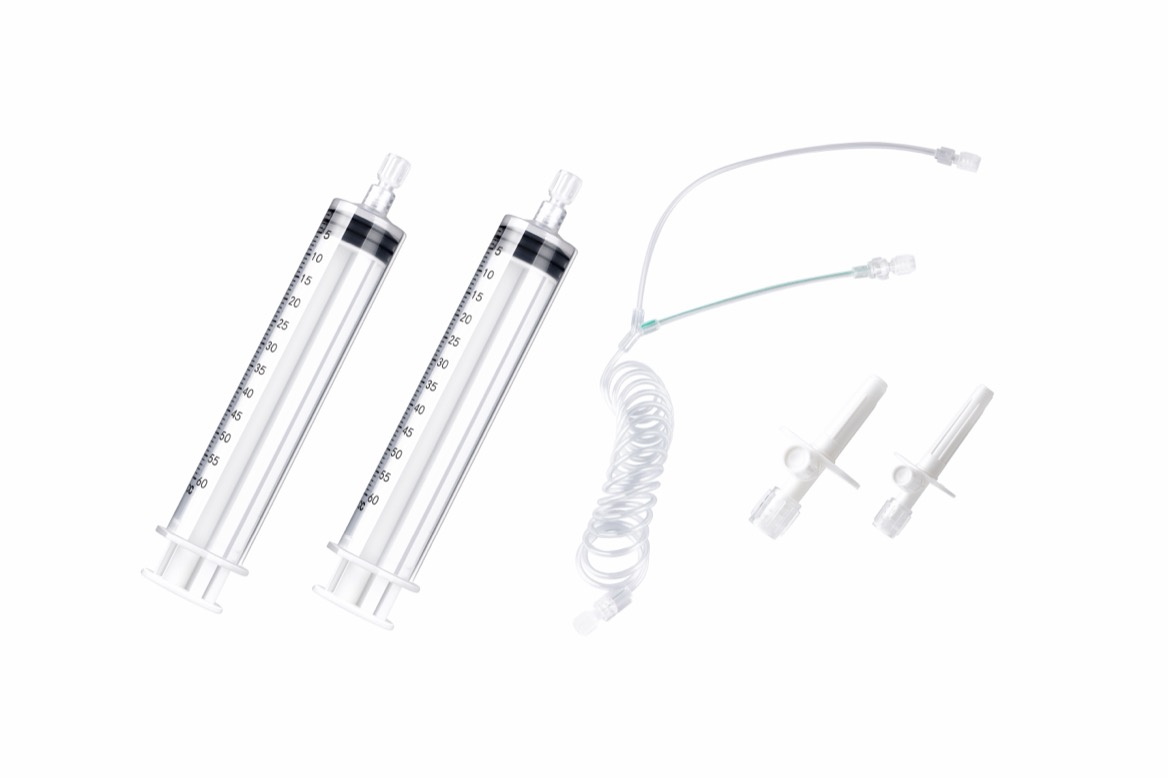
| Supplier | Relevant capacity information | MOQ | Certification or authorization evidence to examine |
|---|---|---|---|
| MAIWEI | MRI-specific output not disclosed | Request by SKU and branding scope | Website advertises ISO 13485, CE, FDA 510(k); obtain current product-specific documents |
| Antmed | Describes integrated manufacturing; MRI-specific output not disclosed | Request quotation | Request current certificates and authorization matching the selected kit |
| Boon | MRI-specific output not disclosed | Request quotation | FDA K192657 provides a product-specific starting point; Guerbet identifies ISO 13485 certification |
| LnkMed | MRI-specific output not disclosed | Request quotation | Verify conformity and market authorization for the exact configuration |
| Union Medical | Published factory and clean-workshop areas; not unit output | Request quotation | Company profile advertises credentials; verify certificates and scope |
| Seacrown | MRI-specific output not disclosed | Request quotation | Obtain consumables-specific evidence, not only injector documentation |
| Sinomdt | MRI-specific output not disclosed | Request quotation | Confirm the MRI syringe manufacturing entity and applicable authorizations |
| Kenid | Supplier listing states 50,000 sets/month for a 65 mL configuration | Request quotation | Listing claims CE; request supporting conformity documents |
| Medis | Manufacturing output not established | Request quotation | Identify legal manufacturer and review its product documents |
| Hawkmed | MRI-specific output not established | Request quotation | Confirm MRI catalog, legal entity, certificates, and authorization |
Evidence for the table comes from the company and product materials discussed above; capacity and certificate statements are not independent factory-audit findings.
For meaningful comparisons, require all shortlisted suppliers to quote the same syringe pair, tubing length, valve configuration, packaging format, destination market, and delivery terms.
"Medical-grade plastic" is not a sufficient acceptance specification.
Request the material identity and controlled specifications for every fluid-contact component, including the barrel, plunger seal, tubing, connectors, and valves. Ask how material substitutions are controlled and whether finished-device biological evaluation covers the actual supplied configuration.
FDA guidance on ISO 10993-1 emphasizes a risk-based biological evaluation approach. A resin supplier's certificate does not, by itself, establish the biological safety of an assembled, processed, sterilized device.
Useful questions include:
- Does the evaluation cover the finished sterile product?
- Are colorants, lubricants, adhesives, and processing aids included?
- What happens if the resin grade or elastomer supplier changes?
- Can the manufacturer trace a supplied lot to relevant incoming materials?
Do not approve a kit solely because the syringe barrel passes a pressure test.
The review should cover the syringe outlet, connector joints, tubing, valves, and accessory interfaces. Define acceptance criteria for leakage, pressure resistance, plunger movement, delivered volume, and connection integrity under the intended operating conditions.
Published product information illustrates why model-specific verification matters: a Seacrown Zenith-C60 equipment listing gives a 300 psi factory pressure limit, while a Union Medical compatible kit page states a 350 psi kit pressure limit. Those figures describe different products and are not interchangeable operating instructions.
The applicable injector instructions and validated kit specifications must determine use.
A kit that mounts correctly is not automatically documented for the MR environment.
FDA guidance distinguishes MR Safe, MR Conditional, and MR Unsafe labeling. It recommends clear safety information and, where applicable, the conditions under which a device may enter the MR environment.
Request the supplier's MR safety assessment and labeling basis. Do not accept "nonmagnetic" as a complete substitute.
These credentials answer different questions:
- ISO 13485 concerns the quality management system and its stated scope.
- CE marking concerns conformity with applicable European requirements for the specific device.
- FDA 510(k) clearance concerns an identified device submission; a registration number is not a substitute for checking the relevant clearance.
- A RoHS declaration, where relevant, does not demonstrate syringe sterility, biocompatibility, pressure performance, or authorization for clinical use.
For U.S. purchasing, search the actual device record and assess its applicability rather than accepting a generic "FDA certificate."
For ethylene-oxide-sterilized products, request evidence of validated processing and routine controls. FDA's recognized standards database identifies ISO 11135 as addressing development, validation, and routine control of EO sterilization processes.
Also request the sterile-barrier validation, shelf-life rationale, transport evidence, and batch-release documentation relevant to the supplied packaging configuration.
Collect the business license, factory address, legal manufacturer details, and current certificates before negotiating exclusivity or paying tooling charges.
Where an overseas sales company represents a Chinese factory, document which entity handles manufacturing, labeling, complaints, technical changes, and regulatory support.
Issue a controlled specification covering:
- Injector manufacturer and exact model.
- Syringe volumes and mounting interface.
- Tubing length, internal diameter, and connector arrangement.
- Valve configuration and filling accessories.
- Intended operating limits.
- Destination market, labeling, and packaging.
- Shelf-life requirement at delivery.
- Forecast, release quantity, and replenishment schedule.
Without this information, apparently comparable quotations may describe different products.
Separate initial fit checks from formal qualification.
Ask for samples drawn from normal production, preferably across multiple lots. Use a documented evaluation plan covering loading, connection integrity, delivered volume, pressure behavior, packaging, labeling, and traceability.
Clinical use should occur only through the buyer's approved clinical, regulatory, and institutional processes. An informal sample evaluation is not clinical authorization.
Ask how much product can be manufactured, sterilized, inspected, and released within the promised window.
Useful evidence includes recent lot-release records, current order loading, sterilization scheduling, critical material lead times, and contingency arrangements.
A factory may have available molding capacity but no immediately available sterilization or final-release capacity.
Specify minimum remaining shelf life, approved transport conditions, carton protection, document requirements, and responsibilities under the selected Incoterm.
Before shipment, verify labeling, import requirements, batch identifiers, inspection records, and any destination-specific registration obligations.
Also agree on complaint response times, retained-sample access, investigation responsibilities, and notification requirements for material or process changes.
An easily missed procurement risk is approving one excellent sample without locking down the entire kit configuration.
A supplier may retain the same syringe barrel while changing the tubing, valve, plunger seal, adhesive, or accessory source. If the purchase agreement controls only the syringe's appearance and volume, the buyer may receive a materially different assembly without an obvious catalog-number change.
The practical safeguard is a configuration-controlled specification that includes:
1. An approved bill of materials.
2. Controlled drawings and performance requirements.
3. Identification of critical outsourced components.
4. Written change-notification requirements.
5. Defined requalification triggers.
6. Production-lot traceability.
This is a recommended purchasing control, not an allegation against any supplier listed here.
It also addresses material substitution more effectively than a broad promise to use "high-quality materials."
China provides a practical sourcing base for MRI power injector syringe kits, but suppliers differ in manufacturing depth, public documentation, platform expertise, and OEM service scope.
Antmed and Boon offer substantial public evidence for contrast consumables. Union Medical, LnkMed, Seacrown, and Sinomdt provide additional specialist options. Kenid, Medis, and Hawkmed warrant more targeted verification of manufacturing responsibility or MRI-specific scope.
MAIWEI INC. is a relevant first discussion for distributors and smaller brands seeking compatible consumables with coordinated OEM support. Its suitability should be confirmed through product-specific documentation, representative samples, technical communication, and a clearly defined manufacturing agreement.
To begin a MAIWEI sourcing review, submit your injector model list, annual forecast, destination markets, preferred kit configuration, and branding requirements. Request a compatibility matrix, current compliance documentation, representative samples, and a quotation distinguishing standard products from customized development.
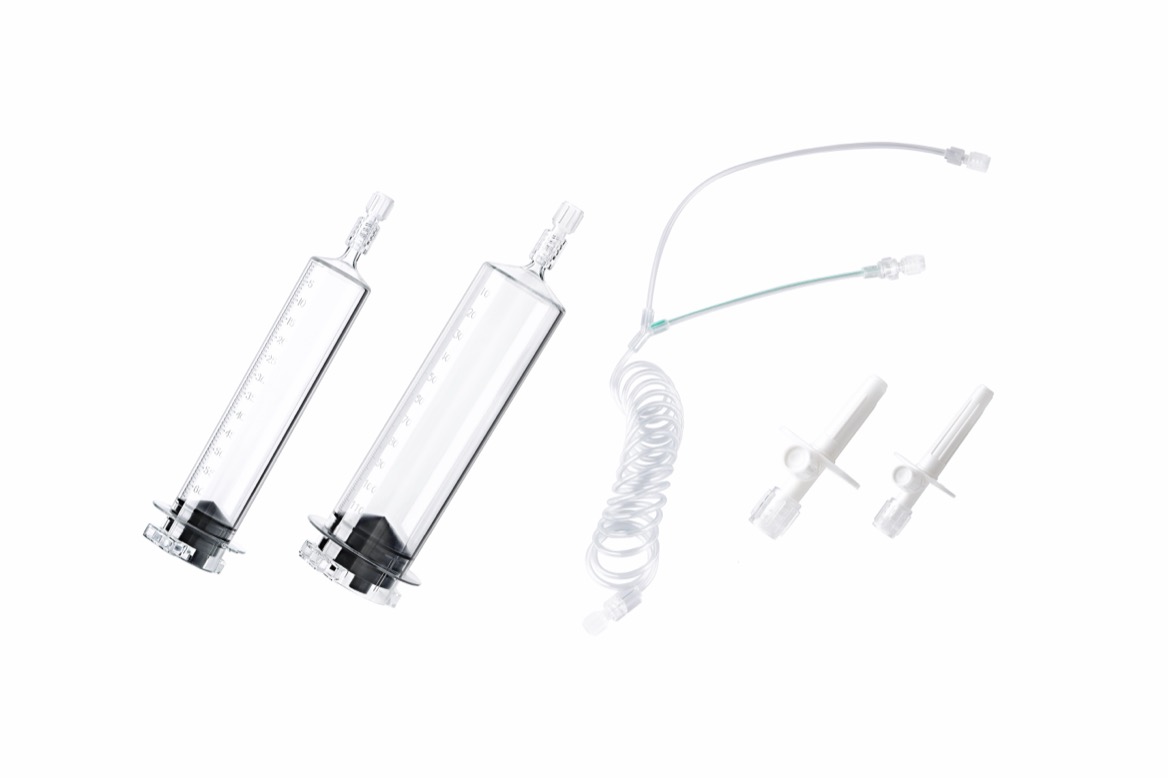
Obtain the complete certificate, not a cropped logo or cover image.
Check the legal name, site address, certificate number, scope, issue date, expiry date, and certification body. Confirm status through the issuing body's verification service or direct contact, including whether the certificate is suspended or withdrawn.
Most importantly, confirm that the stated scope and manufacturing site cover the activities relevant to your product.
No. Establishment registration information does not replace verification of the applicable device authorization.
Search the relevant 510(k) record where required, then compare the manufacturer, device description, intended use, and configuration with the proposed product. FDA maintains a searchable 510(k) clearance framework for this purpose.
Do not assume that one clearance applies to every syringe volume, injector compatibility claim, tubing set, or private-label variation.
Not necessarily.
Compatibility must identify an exact injector model and a defined kit. It should address mechanical engagement, syringe recognition where relevant, pressure behavior, fluid delivery, accessories, and labeling.
Manufacturer catalogs themselves distinguish multiple MRI compatibility families, demonstrating why a brand-level description is insufficient.
Do not assume so.
Ask the manufacturer to assess the change against its design controls, risk assessment, existing verification, and regulatory documentation. A configuration change may require additional performance testing, biological assessment, labeling changes, or regulatory action.
Agree in writing on who performs the assessment and who funds any necessary work before approving the modification.
Treat it as a separate product and use-case evaluation.
Do not infer multi-patient suitability from a single-use syringe, the presence of a check valve, or a supplier's general statement. Request the exact intended-use labeling, authorized configuration, maximum use conditions, infection-control evidence, and destination-market status.
Likewise, a brochure advertising a multi-use product family does not authorize reuse of other products in that supplier's catalog.
- [China Chamber of Commerce: 2025 Pharmaceutical and Healthcare Trade Brief]
- [Fortune Business Insights: Contrast Media Injectors Market]
- [FDA: Testing and Labeling Medical Devices for Safety in the MR Environment]
- [FDA: Biological Evaluation Using ISO 10993-1]
- [FDA: Boon K192657 Clearance Documentation]
- [MAIWEI: Company Background]
- [Antmed: Official Company and Product Website]
- [Guerbet Australia: Diagnostic Imaging Consumables and Legal Manufacturers]
- [LnkMed: MRI Syringe Product Information]
- [Union Medical: Zenith-C60 MRI Syringe Kit]
- [Seacrown: Published Syringe Catalog]