


close
Choose Your Site
Global
Social Media
Views: 263 Author: Maiwei Biotech Publish Time: 2026-09-27 Origin: Site


Content Menu
● Contrast Media Injectors Market Outlook and Leading Companies
● Why Consumables Matter More Than a Brand Ranking
>> CT Contrast Injector Syringes and Tubing
>> MRI Contrast Injector Consumables
>> Angiography High-Pressure Syringe Sets
● A Model-Specific Compatibility Checklist
● Five Steps to Qualify a Consumables Supplier
● Infection Prevention and the Fluid Path
● The Real Cost of a Contrast Injector Set
>> What Is the Difference Between a Contrast Media Injector and Its Consumables?
>> Can One Syringe Set Work with Every Injector from the Same Brand?
>> Does ISO 13485 Certification Establish Product Clearance?
>> Is FDA 510(k) a Certificate Covering All of a Supplier's Products?
>> How Should a Hospital Evaluate a Compatible Third-Party Kit?
>> Can Contrast Injector Tubing Be Reused Between Patients?
>> What Information Should a Distributor Send When Requesting a Quote?
The contrast media injectors market is about more than the equipment brands that dominate industry rankings. For hospitals, imaging centers, distributors, and OEM buyers, the daily question is whether a CT, MRI, or angiography injector can be supported with the right syringes, pressure connecting tubes, transfer sets, and documented quality controls. This guide connects the market outlook with the purchasing decisions that determine dependable contrast delivery.
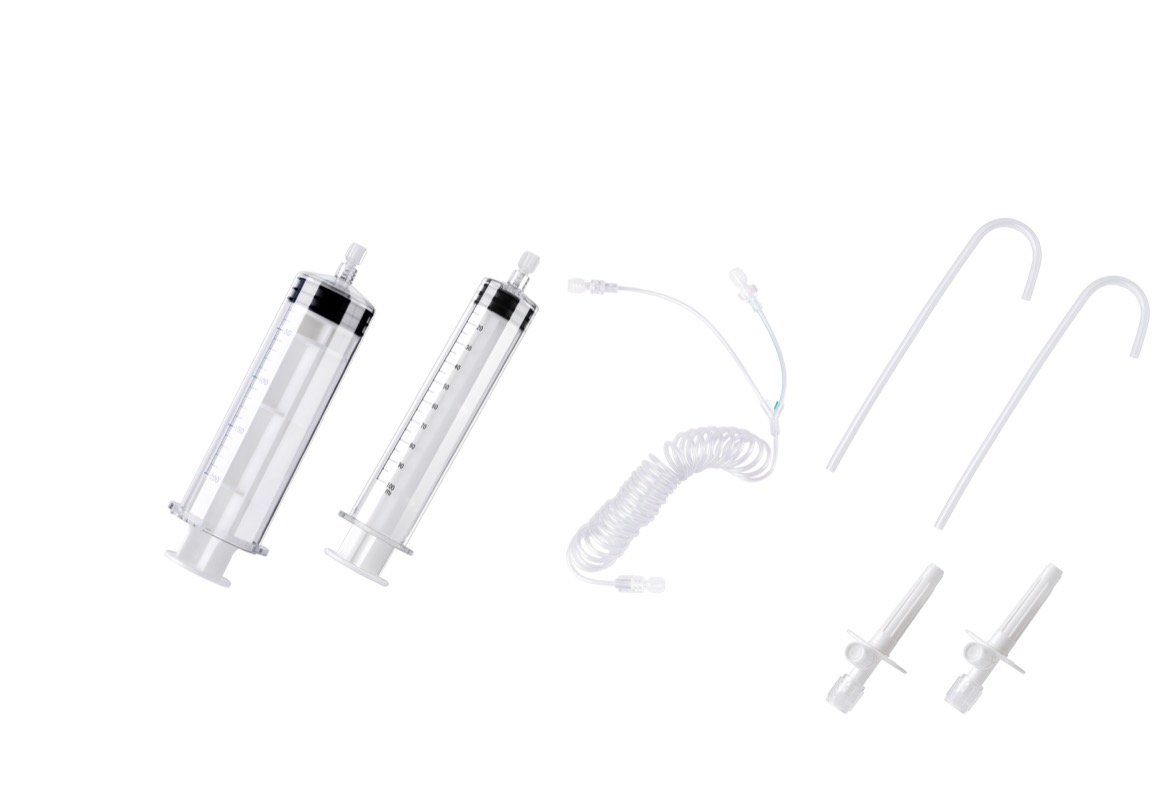
A published market study estimated the global contrast media injectors market at USD 1.6 billion in 2024 and projected USD 2.3 billion by 2029, implying an 8.0% compound annual growth rate over that forecast period. Its broader report also listed USD 1.75 billion for 2025. These figures are estimates and projections, not audited sales totals or a measure of the disposable-syringe market alone.
The same research identified Bayer, Bracco Imaging, Guerbet, Medtron, Ulrich, and Nemoto Kyorindo as major market participants. It characterized the market as concentrated and reported Bayer, Bracco, and Guerbet among the leading players in 2023. A market-leader list, however, does not tell a buyer which disposable set fits a specific installed injector or which supplier can support a particular country's regulatory requirements.
| Company | Market position described in the research | Practical purchasing question |
|---|---|---|
| Bayer | Radiology systems, contrast agents, related accessories and consumables | Which installed injector model and syringe configuration must be supported? |
| Bracco Imaging | Injector systems, software and contrast-related offerings | Is the required workflow based on a particular MR or CT injector platform? |
| Guerbet | Injector systems with associated accessories and consumables | What documentation accompanies the chosen injection pathway? |
| Medtron, Ulrich and Nemoto Kyorindo | Other established injector manufacturers named in the study | Can the proposed compatible set be verified against the exact model? |
This is a market-context table, not an endorsement or an assertion that the companies' products are interchangeable. The relevant competitive set changes when procurement shifts from capital equipment to recurring consumables.
The full market report separates injector systems, consumables, and accessories. It describes consumables as the largest product category in 2023 and expects that category to grow strongly. The reason matters to procurement: a scanner may remain in service for years, while a validated single-use fluid pathway must be available for each applicable procedure. A favorable equipment price cannot compensate for recurring shortages, incompatible parts, or incomplete documentation.
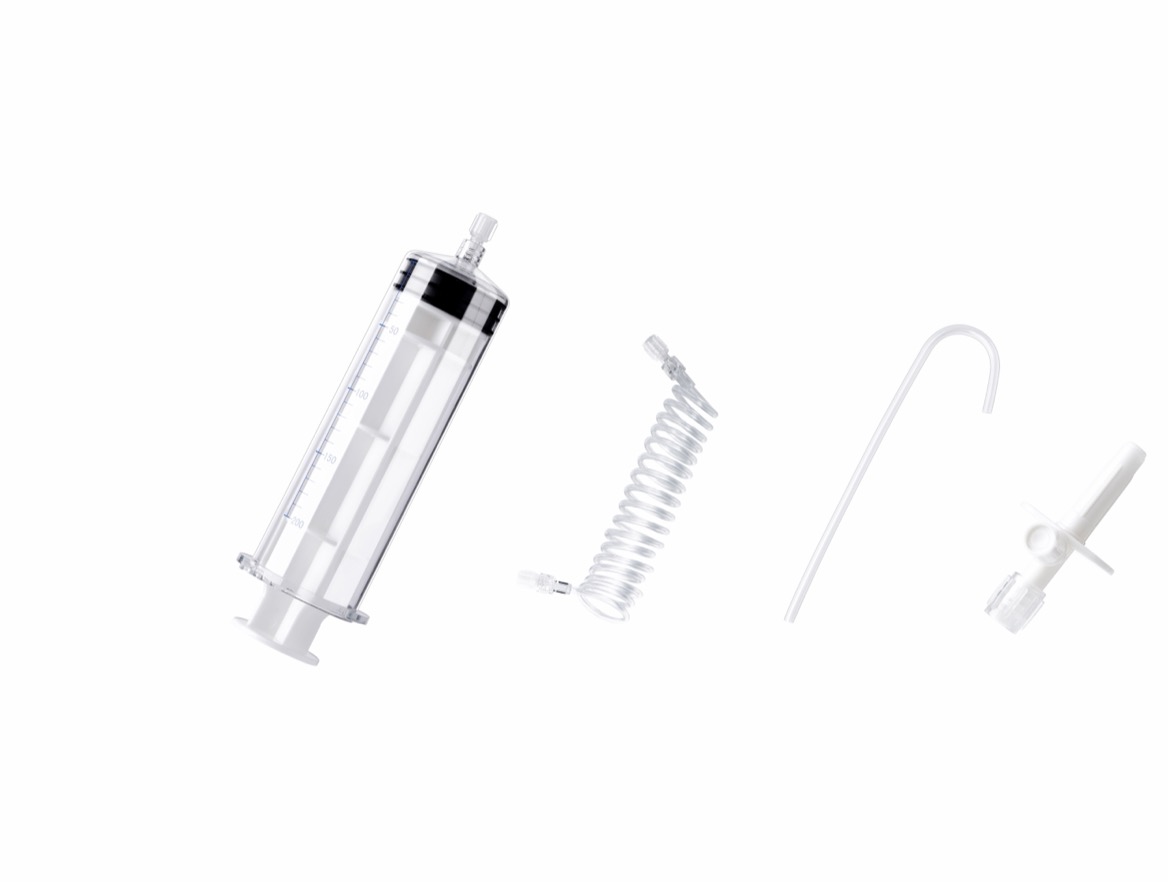
Contrast injector consumables include syringes, connecting tubes, coiled tubing, transfer sets, and assembled kits. They are not equivalent to an injector console. Likewise, a seller of compatible disposables should not be described as the manufacturer of an OEM's powered injection system unless that is separately established.
Contrast-enhanced CT, MRI, and angiography do not use one universal set. Clinical teams select the agent, dose, flow, pressure settings, and vascular access under applicable protocols and device instructions. Procurement teams should concentrate on the product configuration and evidence that enable those teams to work within the intended use.
CT protocols often involve controlled bolus timing, and many injector setups use two fluid channels for contrast and saline. Buyers should verify the syringe format, plunger interface, fill or transfer components, tubing geometry, pressure limits, and whether the proposed kit matches the relevant injector model. A generic statement such as "fits CT injectors" is too broad to support purchasing approval.
MR purchasing adds an environmental check. Confirm that the proposed disposable is specified for the relevant MR injector setup and used according to the manufacturer's instructions and the facility's MR safety procedures. A CT-compatible kit should never be assumed suitable for MR use merely because its connectors look similar. Request the complete model-specific configuration rather than a photograph of one component.
Angiography workflows may involve different injector hardware, connectors, and pressure demands from routine CT or MR imaging. Match the entire fluid path to the intended application. Ask for the labeled maximum pressure and supporting test evidence for the assembled configuration, including any connecting tube, rather than relying on a pressure figure printed for a single component.
Compatibility is a documented engineering and workflow question, not a synonym for similar appearance. Before evaluating price, create one line item for each injector model and proposed consumable SKU. Avoid approving a whole brand family on the strength of one successful fit check.
| Verification point | Evidence to request | Why it matters |
|---|---|---|
| Injector identity | Manufacturer, exact model, and relevant version | A brand name can cover multiple mechanisms and setups. |
| Set configuration | Syringe volume, number of syringes, filling components, tubing and connectors | Missing parts can make an apparently suitable kit unusable. |
| Pressure and flow limits | Labeled limits and available performance-test summary | The weakest applicable component can constrain the pathway. |
| Intended use | Label and instructions for use for the exact SKU | Device claims must match the modality and clinical workflow. |
| Sterility and shelf life | Sterilization information, packaging specification, expiration and storage conditions | Acceptance cannot rest on the product photograph alone. |
| Traceability | Lot identification and sample labeling | Helps investigate defects and manage a targeted recall. |
| Regulatory scope | Market-specific documents tied to manufacturer and SKU | A company-level claim does not establish every product's status. |
A compatibility matrix should name the proposed SKU, injector model, approved configuration, label revision, and date of review. Ask the supplier to flag changes to materials, connectors, molding tools, sterilization, or packaging that could require reassessment. The facility's clinical and biomedical teams should then decide whether additional local qualification is needed.
Consider a distributor supplying two hospitals that use different dual-head CT injectors. A vendor offers one "universal" syringe kit at a lower unit price. The distributor asks for a matrix listing both models, complete kit contents, labeled limits, and instructions for use. Documentation supports only one model. Instead of extrapolating from appearance, the distributor trials that kit only on the supported platform and requests a separate validated option for the second. This example is a hypothetical purchasing scenario, not a reported clinical case.
1. Map the installed base. List each site, modality, injector make and model, existing consumable SKU, annual volume, and local purchasing requirement. This prevents an attractive quote from hiding a coverage gap.
2. Request a model-specific evidence pack. Obtain the compatibility matrix, product label, instructions for use, specifications, sterilization and shelf-life information, and any relevant performance-test summary for the exact proposed kit.
3. Verify quality and regulatory claims. Check the legal manufacturer's identity, ISO 13485 certificate scope and validity, relevant EU conformity documents, and any applicable U.S. 510(k) clearance for the specific device. Do not substitute a logo or generic company brochure for primary records.
4. Run a controlled evaluation. Have trained staff assess packaging integrity, setup, mechanical fit, priming, leak behavior, and workflow under the approved local procedure. Document results and stop if instructions or performance do not match the intended use.
5. Set commercial controls. Agree on lot traceability, change notification, complaint handling, replacement arrangements, lead times, and forecast updates before scaling orders. These terms matter as much as the initial quotation.
A supplier's ISO 13485 certification addresses its medical-device quality-management system; it does not, by itself, prove that every catalog item is cleared for every market. In the EU, check the device's applicable declaration and certificate status. In the U.S., "FDA certified" is not a substitute for a verifiable clearance where one is required. A 510(k) is a device-specific premarket pathway, and some devices may be exempt; confirm the applicable classification and actual record rather than assuming all products follow the same route.
The value of a compatible set also depends on how it is handled. Safe-injection guidance treats syringes as single-use items and says fluid administration sets, including tubing and connectors, are for one patient only. Staff should follow the specific product labeling and institutional policies, especially where a system uses a manufacturer-defined multi-patient setup. Do not treat a claim that a device supports multiple patients as permission to reuse a patient-contacting component.
For purchasing, request a clear diagram showing which parts contact the patient, which components must be changed between patients, and which steps are required for filling and disposal. Ask whether a proposed workflow changes preparation time, waste, or operator touches, then test those claims locally. An unverified promise of faster turnover is not a safety or economic outcome.
Clinical decisions about vascular access, contrast reactions, and extravasation belong to qualified staff using current clinical guidance. A syringe supplier can document product limits and instructions, but should not replace a site's clinical protocol. This distinction helps buyers ask the right questions without overstating what a consumable can accomplish.
A low per-kit price is useful only if it represents a complete, usable, compliant set. For a practical comparison, calculate cost per accepted procedure, not simply cost per syringe. Include the number of disposables actually consumed, any separately purchased tubing or filling components, rejected or damaged units, shipping, and the administrative cost of product changes.
For example, a quoted syringe may appear cheaper until the hospital adds a pressure connecting tube and a separate transfer set. A higher-priced complete kit could then cost less per ready-to-use configuration. The reverse may also be true where a facility already stocks compatible components. Do not claim either outcome without an itemized bill of materials and local utilization data.
Service continuity deserves its own line in the evaluation. Ask for production and shipping lead times, the supplier's approach to back orders, and whether two approved SKUs are available for critical injector models. A backup source is useful only after the same compatibility, documentation, and local approval checks are completed.
MAIWEI INC. focuses on contrast-delivery consumables for major injector brands as part of the wider Maiwei network. Its published product scope includes CT syringes, MRI syringes, angiography syringes, pressure connecting tubes, and transfer sets. The company describes support for sample evaluation, product selection, and injector compatibility, as well as OEM-related supply needs.
For hospitals and distributors, the relevant offer is not a blanket claim that every Maiwei item works with every machine. It is a request for the exact model-specific set, configuration, label, and supporting documents. MAIWEI states that its manufacturing operations hold ISO 13485 certification and relevant EU conformity documentation, and it advertises U.S. 510(k)-related credentials. Buyers should independently confirm the legal entity, certificate scope, device identifiers, and market authorization for the selected SKU.
Maiwei's public materials describe export experience, but company pages use different country counts. Rather than presenting one count as independently verified, ask the team for a current market list and local registration evidence relevant to your destination. That is more valuable than a headline about geographic reach.
Need a compatible consumables proposal? Send MAIWEI INC. your injector models, modalities, target market, expected annual usage, and required kit components. Request a model-specific compatibility matrix, sample evaluation plan, regulatory documents, and an itemized quotation before committing to volume supply.
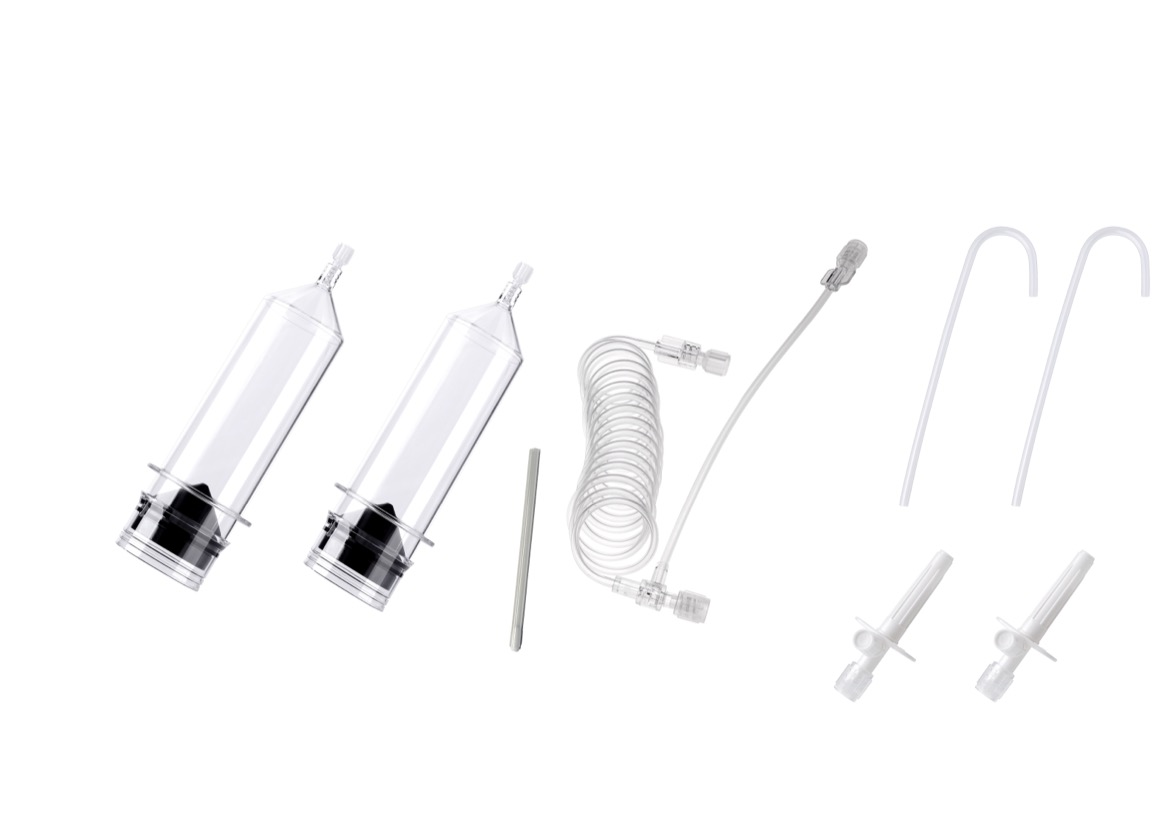
An injector is the powered equipment used to deliver a programmed injection. Consumables are the fluid-path items, such as syringes, tubing, and transfer components, selected for use with a specified system. They should be evaluated separately for compatibility, labeling, and purchasing cost.
Not necessarily. Model design, interface, capacity, configuration, and instructions may differ. Ask for the exact injector model and compatible consumable SKU; never assume a brand-level statement covers an entire installed base.
No. It relates to the manufacturer's quality-management system. Product authorization depends on the device, its intended use, and the destination market. Review the relevant documents for the actual product and legal manufacturer.
No. A 510(k) clearance applies to an identified device, not an entire catalog. Verify the clearance number and device description in the public database if the product is claimed to be cleared; also check whether the product category is exempt.
Start with a documented model and SKU match, then review labeling, pressure limits, sterility, and market-specific status. Conduct a controlled local assessment with appropriate clinical and biomedical staff before routine purchasing.
Do not assume so. Patient-contacting administration sets are generally treated as single-patient items under safe-injection guidance. Follow the exact product instructions and your facility's infection-prevention policy, including any specified multi-patient-system procedures.
Provide the injector manufacturer and model, imaging modality, required syringe and tubing configuration, destination market, forecast volume, and any OEM labeling needs. Ask for an itemized quote and the corresponding model-specific documentation.
1. [MarketsandMarkets, "Top Companies in Contrast Media Injectors Market"] — Market forecast and named leading companies.
2. [MarketsandMarkets, "Contrast Media Injectors Market: Growth, Size, Share, and Trends"] — Market segmentation, 2025 estimate, and consumables discussion.
3. [MAIWEI INC., "About Us"] — Company background and stated role in the Maiwei network.
4. [Maiwei Biotech, "CT Syringe, MRI Syringe, Angiographic Syringe Manufacturer"] — Published product scope, manufacturing and service claims.
5. [International Organization for Standardization, "ISO 13485:2016 — Medical devices — Quality management systems"] — Scope and purpose of the standard.
6. [U.S. Food and Drug Administration, "Search the Releasable 510(k) Database"] — Public device-clearance search fields.
7. [U.S. Food and Drug Administration, "Are There 'FDA Registered' or 'FDA Certified' Medical Devices?"] — Distinction between registration, certification claims, and device clearance.
8. [European Commission, "Notified Bodies and Certificates Module"] — Certificate-status information for applicable EU devices.
9. [U.S. Centers for Disease Control and Prevention, "Safe Injection Practices to Prevent Transmission of Infections to Patients"] — Single-use syringes and patient-specific tubing and connectors.
10. [American College of Radiology, "Manual on Contrast Media"] — Clinical reference for contrast administration, reactions, and extravasation.