


close
Choose Your Site
Global
Social Media
Views: 294 Author: Maiwei Biotech Publish Time: 2026-10-31 Origin: Site


Content Menu
● What Does Contrast Injector Syringe Plunger Misalignment Mean?
● What Causes a Contrast Injector Syringe Plunger to Become Misaligned?
>> 1. Incomplete Syringe Seating or Locking
>> 2. Incorrect Syringe-to-Injector Compatibility
>> 3. Incorrect Piston Position or Engagement Sequence
>> 4. Damaged or Deformed Disposable Components
>> 5. Contrast Residue at the Injector Interface
>> 6. Abnormal Plunger Friction or Disposable Variation
>> 7. Injector Wear, Damage, or Mechanical Faults
● High Pressure Does Not Necessarily Mean Plunger Misalignment
● A Safe Troubleshooting Workflow for Suspected Misalignment
>> Step 1: Stop and Assess the Clinical Situation
>> Step 2: Confirm the Exact Consumable Configuration
>> Step 3: Inspect Without Altering the Disposable
>> Step 4: Follow the Model-Specific Recovery Procedure
>> Step 5: Escalate Recurring or Unresolved Faults
● Investigate by Timing: A More Useful Root-Cause Method
>> During Filling or Retraction
● What a Useful Manufacturer Complaint Report Should Contain
● How Manufacturers Can Support More Reliable Syringe Engagement
● Confirm Compatibility Before Your Next Order
>> Can a contrast injector syringe plunger become misaligned during loading?
>> Can I manually straighten a tilted syringe plunger?
>> Does a high-pressure alarm mean the syringe is defective?
>> Can the same syringe be used for CT, MRI, and angiography?
>> When should the injector be removed from service?
>> What should distributors request before buying compatible syringes?
A contrast injector syringe plunger can become misaligned when the syringe is incorrectly seated, the drive mechanism does not engage as intended, incompatible consumables are installed, or a component is damaged or obstructed. Uneven plunger resistance can also resemble misalignment. The practical challenge is distinguishing a disposable-syringe problem from an injector-interface fault or a restriction elsewhere in the fluid pathway.
From a manufacturing and troubleshooting perspective, I would start with one question: did the problem appear during installation, filling, or injection? That sequence helps narrow the investigation without assuming that every pressure alarm indicates a crooked plunger.
Safety first: If alignment, engagement, or syringe integrity is uncertain, do not proceed with injection. Follow the applicable instructions for use and your facility's escalation procedures.
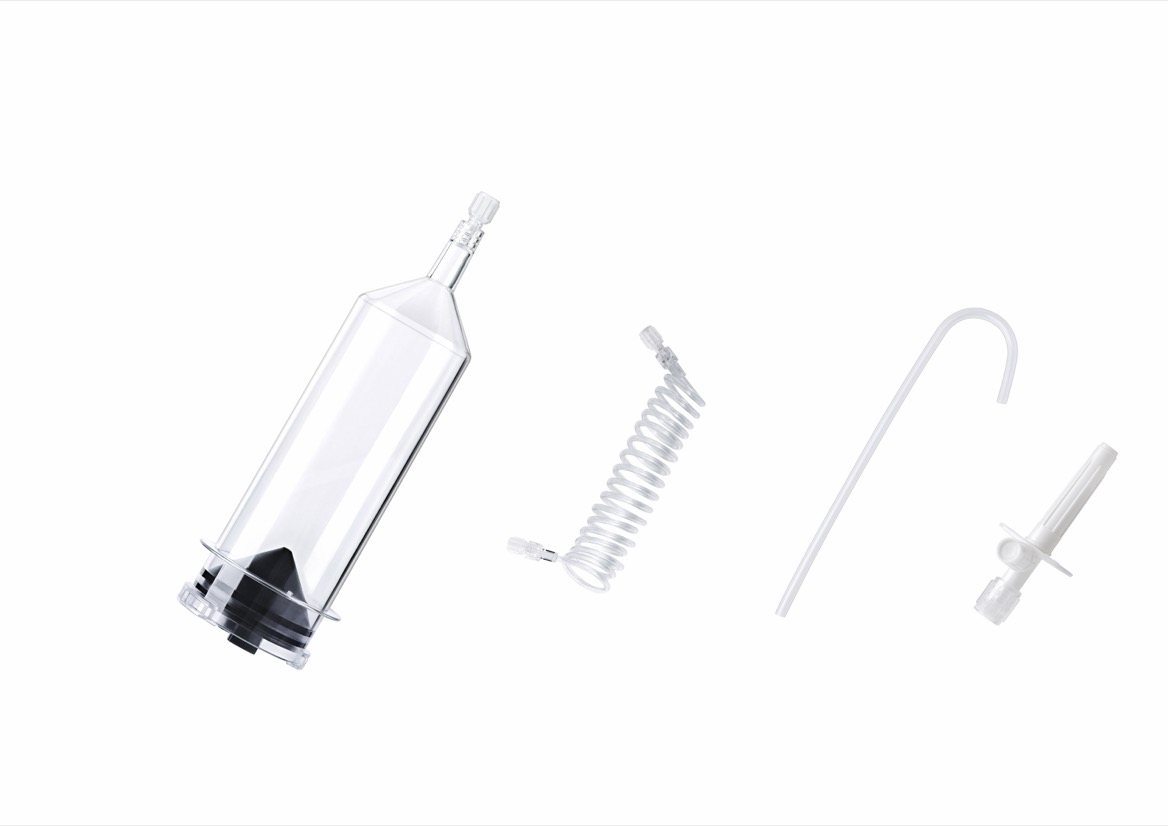
The syringe plunger is the moving seal inside the barrel. The injector piston, sometimes called the ram, supplies the force that moves it. Although staff may use these terms interchangeably, they are different components.
Suspected misalignment generally involves one of three conditions:
- The syringe barrel is not seated correctly in its mounting interface.
- The injector piston has not engaged the syringe plunger as designed.
- The plunger appears tilted or moves unevenly inside the barrel.
These conditions require different investigations. A mounting problem concerns the syringe-to-injector interface. A visibly distorted seal concerns the disposable itself. A pressure alarm may instead reflect resistance downstream.
Loading mechanisms also differ. Some systems use automatic plunger engagement and syringe designs that require no manual alignment. Instructions for one injector should therefore never become a universal loading procedure.
An incompletely installed syringe may appear ready while remaining improperly engaged with the injector head.
Depending on the design, correct installation may require a snap-in movement, rotation, adapter engagement, or closure of a retaining mechanism. Stopping before that sequence is complete can leave the assembly unsecured.
Manufacturer guidance for the MEDRAD Stellant system specifically warns that improper syringe engagement can cause leakage, damage, detachment, or under-volume delivery.
Before use, confirm the installation indicators specified for that exact system. Do not rely on appearance alone or force a syringe that does not engage normally.
Matching syringe volume does not establish compatibility.
Two high-pressure injector syringes can have similar capacities while differing in mounting geometry, plunger coupling, barrel dimensions, or required accessories. These differences matter because the injector must both retain the syringe and transfer force correctly.
Compatibility verification should include:
- Exact injector model and configuration.
- Syringe product code.
- Required adapter or pressure jacket, where applicable.
- Approved connection tubing.
- Relevant pressure and intended-use limitations.
This is particularly important when purchasing alternatives for multiple CT, MRI, or angiography systems. A statement such as "compatible with major injectors" is less useful than a documented model-by-model compatibility list.
The starting position of the injector piston and the engagement sequence are model-specific.
Some systems advance or retract automatically when a syringe is attached or removed. Other systems use different loading controls. Applying a familiar sequence from another injector can therefore create an installation error.
A syringe that does not fill or retract normally may have an engagement problem, but that observation alone does not identify the cause.
Use the current operating instructions to confirm the correct setup. Do not pull, rotate, or manipulate the internal plunger as an improvised repair.
Visible damage should immediately change the decision from troubleshooting to replacement.
Inspect for:
- Cracked barrels.
- Distorted mounting features.
- Abnormal plunger appearance.
- Damaged connectors.
- Open, compromised, or expired sterile packaging.
A damaged mounting feature can compromise seating. A distorted barrel or plunger may interfere with movement. However, identifying the precise origin—manufacturing, transport, storage, or handling—requires investigation rather than visual speculation.
Record the product code and lot number before disposal or quarantine, following local procedures. These details support a meaningful supplier investigation.
Contrast deposits can interfere with injector operation when spills are not removed according to the manufacturer's cleaning instructions.
Residue around moving or mounting components deserves particular attention during inspection. Nevertheless, a dirty interface does not prove that the syringe plunger itself is tilted.
Cleaning methods also differ between systems. For example, instructions concerning piston positioning during cleaning are not interchangeable across injector models.
Use only the specified cleaning procedure and permitted materials. Do not insert sharp tools, add lubricant, or attempt internal repairs. Suspected contamination inside the equipment requires authorized technical assessment.
A plunger can resist movement without being visibly off-center.
From an engineering perspective, relevant investigation areas include barrel geometry, seal dimensions, surface condition, and lubrication consistency. These are possible contributors to irregular movement, not diagnoses that clinical users can establish at the workstation.
A manufacturer investigating a complaint should examine retained samples and relevant production records, then perform appropriate dimensional and functional testing.
For the operator, the immediate decision is simpler: unexpected resistance or abnormal movement should not be overcome by applying additional force or changing settings to continue.
When the same problem recurs with correctly specified, undamaged syringes, the injector itself requires attention.
Possible investigation areas include the syringe-retention interface, adapters, piston movement, and engagement mechanisms. Authorized service personnel should determine which inspections and tests are appropriate.
Do not repeatedly replace syringes while ignoring a recurring equipment fault.
An injector that cannot reliably retain or operate its specified consumables should remain out of clinical use until assessed and released through the appropriate service process.
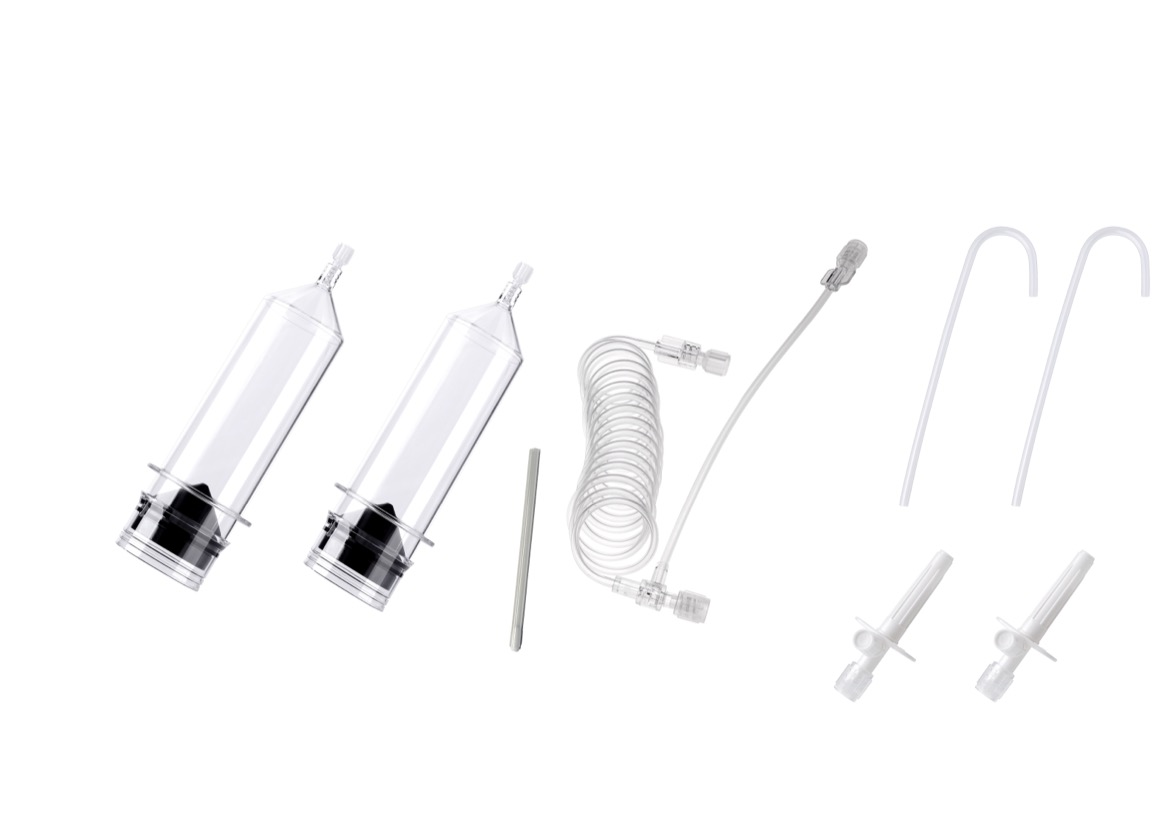
A pressure alarm is evidence of a delivery problem, not a diagnosis of alignment failure.
Resistance can arise from viscous contrast, restricted tubing, a closed clamp or stopcock, or vascular-access limitations. These conditions may produce interrupted delivery even when the syringe is correctly installed.
| Observation | Investigation priority | What it does not establish |
|---|---|---|
| Syringe does not lock normally | Compatibility and mounting interface | A defective internal seal |
| Plunger looks tilted before use | Disposable integrity | The origin of the defect |
| Filling or retraction is abnormal | Engagement and syringe function | A downstream catheter problem |
| Pressure increases during delivery | Entire fluid pathway and patient access | Plunger misalignment |
| Fault recurs with different syringe lots | Injector condition and setup | Automatic proof of equipment failure |
Do not increase the pressure limit simply to overcome unexplained resistance. Any protocol adjustment must remain within the applicable device labeling and clinical authorization.
The following framework supports trained professionals. It does not replace equipment-specific instructions.
Stop delivery when abnormal operation is suspected. If a patient is connected, assess the patient and vascular-access site according to local clinical procedures.
Do not perform priming, engagement checks, or experimental piston movements while connected to the patient.
Check the syringe reference against the injector model and required accessories.
Verify the complete configuration rather than checking the syringe in isolation. A compatible syringe does not make an unsuitable connector or tubing set acceptable.
Look for damage, incomplete seating, leakage, and unusual plunger position.
Do not remove the plunger to inspect or refill the syringe. Manufacturer warnings identify plunger removal as a threat to syringe sterility.
Replace any damaged or questionable single-use component according to facility policy.
Only repeat installation or setup steps permitted by the applicable instructions.
Where replacement is appropriate, use a new, verified-compatible disposable. Do not improvise a repair, bypass an alarm, or repeatedly cycle a suspect assembly.
Remove the injector from service when engagement remains unreliable, mechanical damage is visible, or the fault cannot be resolved through authorized operator procedures.
After any permitted corrective action, complete the required setup, priming, air inspection, and readiness checks before clinical use.
The point at which the problem appears can be more informative than the phrase "plunger misalignment."
Prioritize compatibility, packaging condition, syringe integrity, mounting, and starting configuration.
A defect visible before operation should be documented before the assembly is changed.
Prioritize engagement behavior, abnormal resistance, leakage, and injector-interface condition.
Record whether the injector piston moved and whether the syringe plunger followed as expected. Do not infer the internal mechanism from an alarm message alone.
Broaden the assessment to include tubing, connectors, vascular access, programmed delivery parameters, and equipment performance.
The practical lesson is to investigate the complete delivery system. Focusing only on the syringe can miss a restriction elsewhere.
"Plunger stuck" is a symptom description, not a complete investigation record.
For hospitals, distributors, and OEM customers, a structured report improves communication and helps distinguish isolated damage from a recurring pattern.
Include:
1. Injector manufacturer, model, and configuration.
2. Syringe reference, lot number, and expiry date.
3. Tubing and accessory references.
4. Stage of use when the problem occurred.
5. Alarm codes and observed movement.
6. Relevant programmed parameters.
7. Photographs obtained without compromising safety or privacy.
8. Patient impact and actions taken.
Preserve suspect products only under appropriate contamination-control and complaint-handling procedures. A trend across one lot, one injector, or several locations may guide investigation, but it does not establish causation by itself.
A useful supplier discussion should go beyond certificates and product photographs.
Ask how the manufacturer verifies mounting dimensions, plunger function, connection integrity, and performance on each claimed injector configuration. Request applicable compatibility documentation, instructions, and complaint-traceability support.
For MAIWEI INC., which supplies CT, MRI, and angiography injector consumables, this creates a practical way to connect manufacturing capabilities with customer needs: help buyers select the correct syringe-and-tubing configuration before ordering.
Company-level quality-system credentials should not be treated as proof that every product fits every injector. Similarly, regulatory documentation must match the relevant product and market; a U.S. 510(k) clearance is not a blanket company-wide certification.
Contact MAIWEI INC. with your injector manufacturer, exact model, current syringe reference, required volume, tubing configuration, and destination market. Request the applicable compatibility information and product documentation before selecting samples or placing an order.
The goal is straightforward: choose a documented configuration, use the correct loading procedure, and investigate abnormal movement without compromising patient safety.
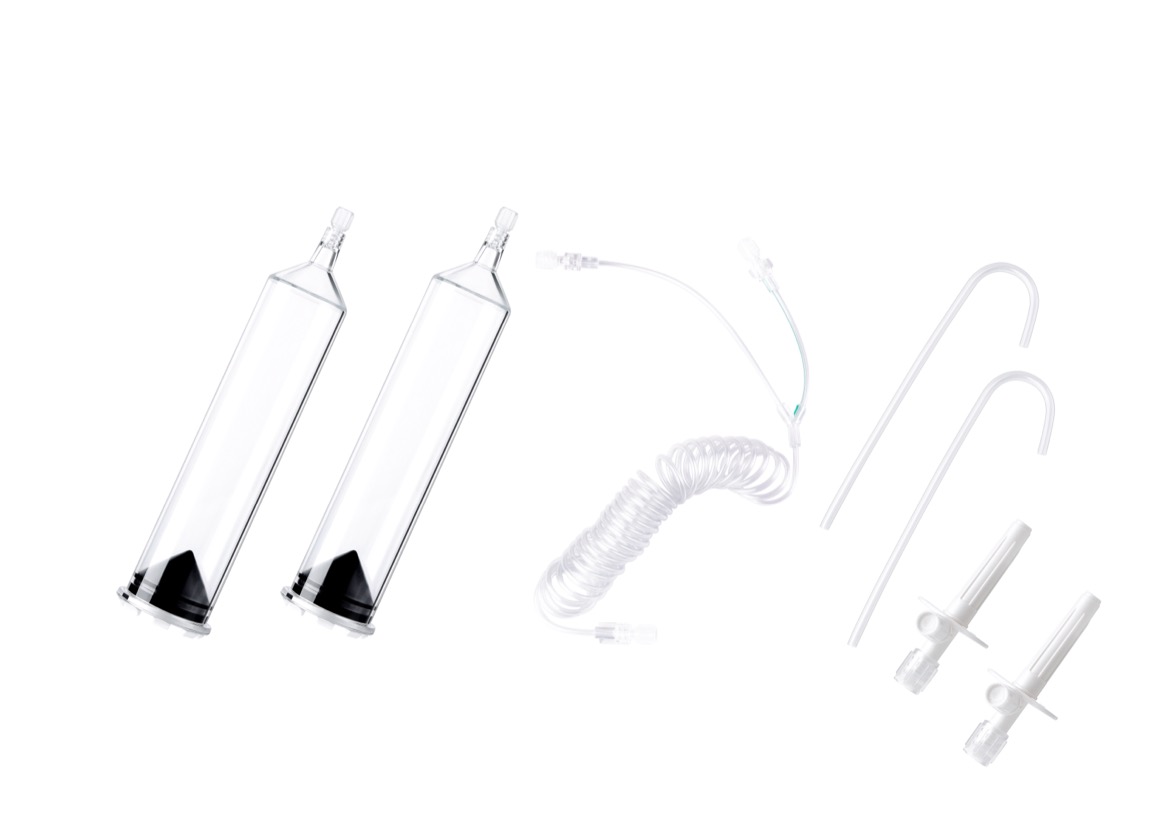
Yes. Incorrect seating or an incomplete engagement sequence can create an apparent alignment problem. The exact mechanism depends on the injector design, so follow its specific loading instructions.
Do not attempt to straighten or reposition it inside a sterile disposable. Replace a suspect syringe according to facility procedures. Removing the plunger can compromise sterility.
No. Restricted tubing, closed components, contrast viscosity, and vascular-access conditions may also increase resistance. Assess the entire delivery pathway rather than assuming a syringe defect.
Not solely because it has the correct volume or looks similar. Use requires documented compatibility with the exact injector and an appropriate intended use and pressure rating.
Escalate unresolved engagement problems, recurring abnormal movement, visible mechanical damage, or faults that cannot be corrected through authorized operator procedures. Follow the manufacturer's service guidance.
Request model-specific compatibility information, product references, applicable regulatory documentation, current instructions, pressure ratings, and lot-traceability details. Confirm required adapters and tubing as part of the same review.
1. Bayer. MEDRAD Stellant CT Injection System Operation Manual, Revision D. Warnings concerning syringe engagement, air removal, disposable integrity, and plunger removal. [bioclinicalservices.com]
2. Bayer. MEDRAD Stellant Video Tutorials. Product-specific syringe-installation information, including an alignment-free installation design. [radiology.bayer]
3. Bayer. MEDRAD MRXperion MR Injection System. Description of snap-on/twist-off syringes and automatic plunger advance and retraction. [radiologysolutions.bayer]
4. Bayer. MEDRAD Mark 7 Arterion Injection System Operation Manual, hosted by Vietnam's medical-device information portal. Model-specific operating, purging, and cleaning instructions. [vimda.moh.gov]
5. Indrajit IK and colleagues. "Pressure injectors for radiologists: A review and what is new." Indian Journal of Radiology and Imaging, 2015. Overview of injector components, operation, and safety considerations. [pmc.ncbi.nlm.nih]
6. Bayer. MEDRAD Stellant Injection System, Australian product information. Discussion of disposable compatibility and potential consequences of incompatible syringes. [radiology.bayer.com]
7. U.S. Food and Drug Administration. MEDRAD Mark 7 Arterion Injector, 510(k) K132928. Device description and specified disposable intended use. [accessdata.fda]
8. Bayer. MEDRAD Mark 7 Arterion Injection System brochure. Compatibility limitations for Twist & Go syringes and high-pressure connector tubing. [imgcdn.mckesson]