


close
Choose Your Site
Global
Social Media
Views: 298 Author: Maiwei Biotech Publish Time: 2026-11-12 Origin: Site


Content Menu
● What Does a "Loose Seal" Actually Mean?
● Seven Causes of a Loose Seal in a High Pressure Injector Syringe
>> 1. Incomplete or Incorrect Connection Assembly
>> 2. Incompatible Syringes, Tubing, or Injector Components
>> 3. Damage to the Plunger Seal or Syringe Barrel
>> 4. Excessive Pressure or Downstream Restriction
>> 5. Incorrect Syringe Loading or Plunger Engagement
>> 6. Storage, Chemical Exposure, or Expiry Problems
>> 7. Reuse of a Single-Use Syringe
● How to Identify the Likely Leak Location
● A Safe Response When Syringe Leakage Is Suspected
>> Step 1: Stop Delivery and Assess the Patient
>> Step 2: Make the System Safe Before Handling Connections
>> Step 3: Replace Suspect Disposables
>> Step 4: Recheck Setup and Remove Air
>> Step 5: Document and Escalate
● Why a Successful Saline Flush Does Not Prove Seal Integrity
● How Manufacturers Investigate Repeated Seal Complaints
● What Buyers Should Request from a Syringe Manufacturer
>> Can a leaking high pressure injector syringe be tightened and reused?
>> Does high pressure always cause a loose syringe seal?
>> Can overtightening a Luer-lock connection cause leakage?
>> Is fluid behind the plunger normal?
>> Can one syringe be used with different injector brands?
>> Does a pressure alarm mean the syringe seal has failed?
A loose seal in a high pressure injector syringe can result from an incorrectly assembled connection, incompatible components, a damaged plunger seal, excessive pressure, or deterioration caused by improper storage and handling. However, a leaking syringe does not always have a physically loose seal. Cracks, connection damage, and fluid escaping elsewhere in the injection pathway can produce similar symptoms.
For CT, MRI, and angiography teams, the priority is safety: stop using a syringe or fluid-path component that shows leakage, damage, or uncertain integrity. Follow the applicable instructions for use rather than attempting an improvised repair.
From a manufacturing and quality-investigation perspective, identifying exactly where fluid escapes is more useful than immediately blaming the seal.
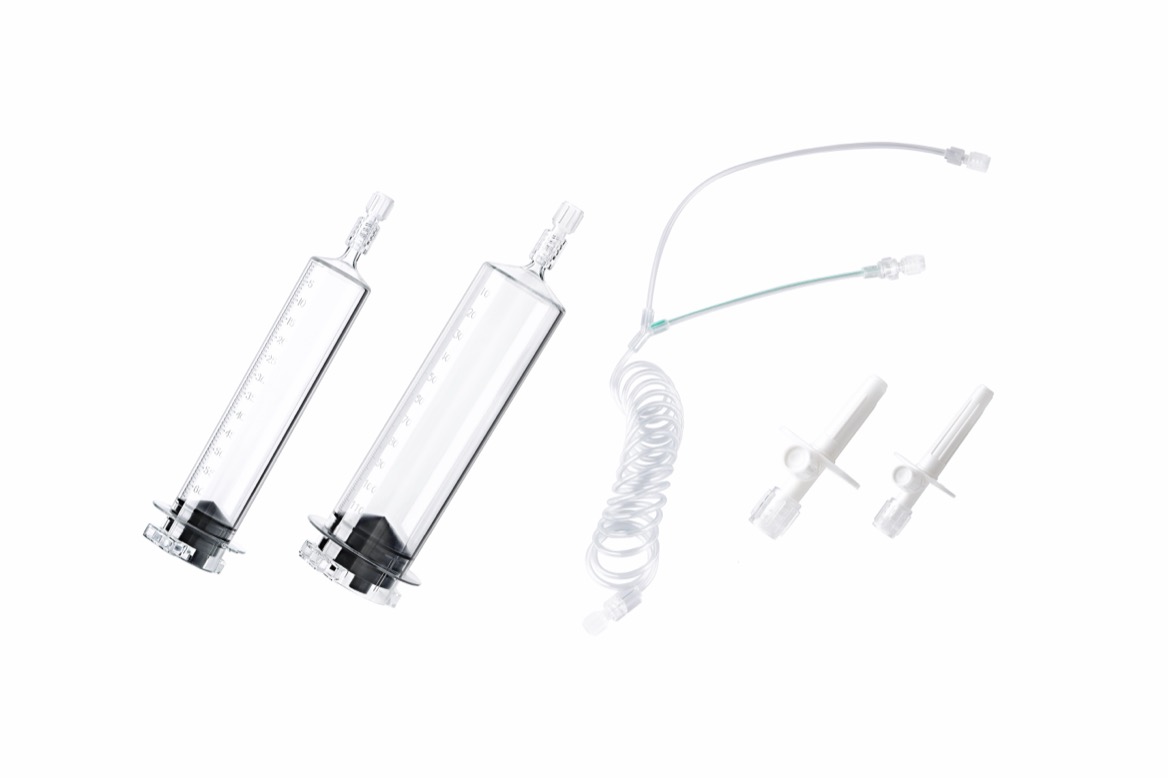
A high pressure injector syringe must maintain a closed fluid pathway while the injector advances its plunger. Several interfaces contribute to that integrity.
| Interface | Function | Possible warning sign |
|---|---|---|
| Plunger-to-barrel interface | Prevents fluid from passing behind the plunger | Fluid visible behind the sealing element |
| Syringe outlet-to-tubing connection | Maintains a secure fluid connection | Wetness around the connector |
| Syringe barrel and outlet | Contain fluid under operating pressure | Cracks, droplets, or fluid escaping through the wall |
| Syringe-to-injector mounting interface | Supports correct positioning and drive engagement | Incomplete locking or abnormal movement |
These problems require different investigations. An incompletely locked syringe is not automatically a leaking fluid seal. Likewise, leakage around a connector does not prove that the internal plunger seal has failed.
A useful investigation starts with three questions: Where did the fluid appear? When did it appear? What happened immediately beforehand?
An incompletely engaged syringe-to-tubing connection can leak during preparation or injection. Cross-threading may also prevent correct engagement while making the connection feel resistant.
Excessive tightening is not a reliable solution. Some injector consumable instructions specifically warn that excessive force can damage Luer-lock threads and lead to leakage.
Follow the connection method specified for the particular syringe and tubing set. Do not apply a universal number of turns, use tools, or assume that greater force produces a better seal.
Tubing tension also matters. Arrange the line so routine movement does not pull or twist the connection.
Physical fit does not establish compatibility.
Syringes that look similar may differ in mounting geometry, plunger engagement, outlet configuration, or rated operating pressure. An unsuitable combination can create installation difficulties or compromise intended performance.
Before use, verify:
- The exact injector model.
- The syringe product code and intended compatibility.
- Any required adapter or pressure jacket.
- The tubing and connector specifications.
- The permitted pressure and flow conditions.
For distributors and procurement teams, a model-specific compatibility document is more useful than a general statement that a product "fits major injector brands."
The plunger sealing element must maintain contact with the barrel during its intended movement. Damage or deformation may compromise that contact and allow fluid to pass behind it.
Potential contributors include component defects, mishandling, or use outside the device's specified conditions. A cracked barrel or damaged outlet can also leak even when the plunger seal remains intact.
Inspection may identify visible damage, but it cannot exclude every defect. Do not continue using a leaking syringe simply because no crack is visible.
For a disposable syringe, replacement—not bedside seal repair—is the appropriate response to suspected loss of integrity.
A leak may become apparent only when pressure increases. That does not necessarily mean pressure alone caused the original problem; it may reveal an already compromised connection or component.
Kinked tubing, closed valves, and other restrictions can increase resistance. Contrast viscosity and the selected flow rate also affect the pressure required to deliver fluid.
The permitted operating conditions must respect every relevant component in the fluid pathway—not just the syringe.
Never raise a pressure limit merely to overcome an unexplained alarm. A pressure alarm does not prove seal failure, and a pressure setting cannot repair a damaged connection.
Injector systems use model-specific loading and engagement mechanisms. Incomplete locking, incorrect alignment, or improper drive engagement can interfere with intended operation.
Depending on the system, the syringe may require a particular rotational position, locking sequence, or supporting pressure jacket. These steps are not interchangeable between models.
If loading feels abnormal:
1. Stop the setup process.
2. Check the applicable loading instructions.
3. Inspect the disposable for damage.
4. Escalate persistent engagement problems to trained personnel.
Do not force the syringe into position or improvise an adapter.
Storage conditions and chemical exposure can affect consumable integrity. Certain disinfectants can attack particular plastics and contribute to stress cracking, potentially causing leakage or rupture.
Keep sterile disposables within their labeled storage conditions. Inspect packaging before use and check the expiration date.
Do not apply cleaning agents, lubricants, or disinfectants to syringe components unless the manufacturer specifically permits that use.
A damaged package does not prove that a seal is loose. It does, however, create a separate concern about whether the product remains suitable for use.
Single-use labeling must be followed. A syringe intended for one use should not be cleaned, reprocessed, or reused as an informal troubleshooting measure.
Reuse introduces contamination concerns and moves the device outside its validated intended conditions.
Some contrast delivery systems have specifically authorized multi-patient configurations. Those arrangements do not authorize reuse of an unrelated single-use syringe.
The correct rule is product-specific: follow the labeling for the complete system and its individual consumables.
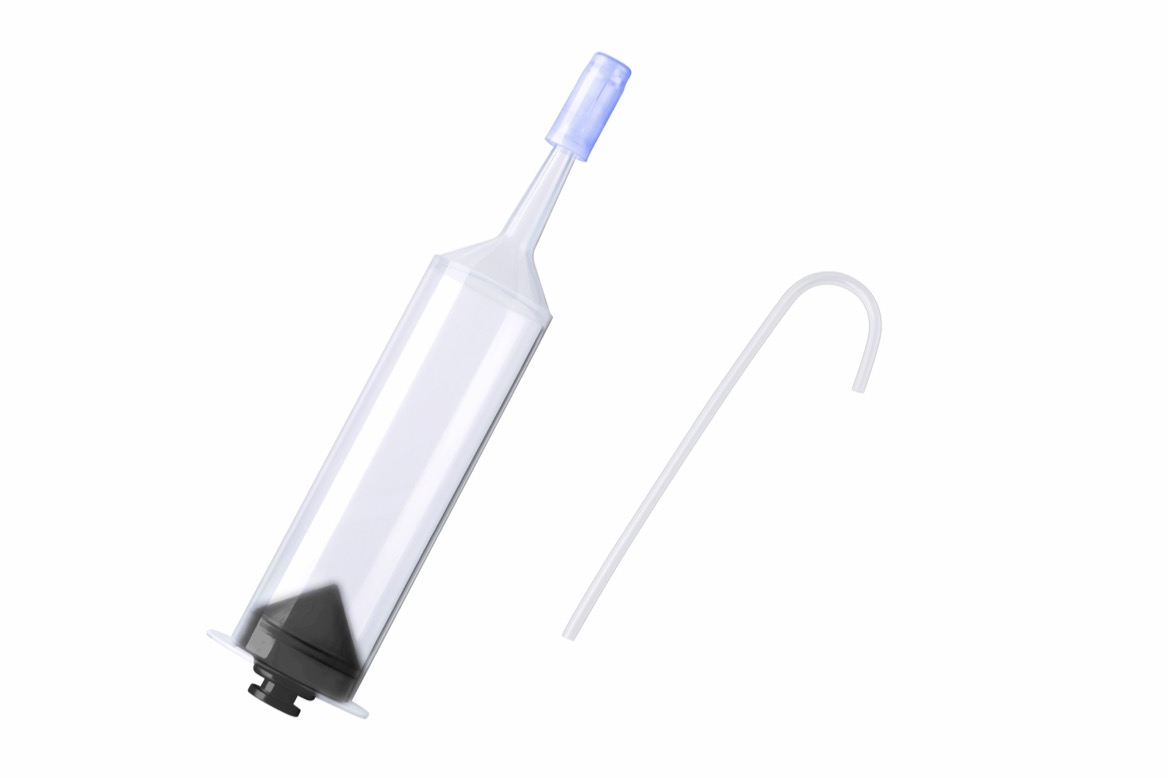
The location and timing of leakage help guide investigation, but they are not definitive diagnoses.
| Observation | Possible issue to investigate | Appropriate response |
|---|---|---|
| Moisture at the syringe outlet | Incomplete engagement, connector damage, or incompatibility | Stop use and replace suspect components according to instructions |
| Fluid behind the plunger | Compromised plunger-to-barrel sealing | Remove the syringe from use |
| Leakage through the barrel wall | Crack or material damage | Replace the syringe and retain identifying details |
| Leakage appearing as pressure rises | Compromised component exposed to load or downstream restriction | Stop injection and investigate the complete pathway |
| Pressure alarm without visible leakage | Restriction, setup issue, or another system problem | Follow the injector's troubleshooting procedure |
Also distinguish external syringe leakage from contrast extravasation. Extravasation means fluid has escaped from the vascular pathway into surrounding tissue. It requires patient assessment under the facility's clinical protocol, not simply replacement of a syringe.
This sequence supports trained staff; it does not replace device instructions or local clinical procedures.
Stop the injection if leakage, component failure, or unexpected system behavior occurs. Assess the patient and vascular access as clinically indicated.
Do not assume that all programmed contrast reached the patient.
Follow the injector's instructions for stopping operation and managing residual pressure.
Do not loosen a connection while the system remains pressurized. Avoid manipulating damaged components while they remain connected to the patient.
Do not tape a leak, add adhesive, lubricate a seal, or force a damaged connector tighter.
Replace affected components according to the applicable instructions. If the source remains uncertain, follow the facility's procedure for replacing the relevant disposable assembly.
Confirm compatibility, loading, connections, tubing routing, and operating limits.
Purge the replacement syringe and tubing exactly as instructed before connection or reconnection to the patient. Do not perform an improvised high-pressure leak test on a patient-connected system.
Record the product code, lot number, injector model, operating settings, and observed leak location.
If fluid has entered the injector, stop using affected equipment and seek authorized service guidance. Repeated failures require investigation rather than repeated disposable replacement alone.
A connection may appear satisfactory during a low-demand preparation step yet leak under different operating conditions.
Pressure requirements change with fluid viscosity, delivery rate, and resistance along the fluid pathway. Therefore, a successful saline flush does not independently validate every connection for a subsequent contrast injection.
This does not justify extra bedside pressure testing. Instead, it highlights the importance of validated component compatibility, correct assembly, and adherence to the intended operating conditions.
The practical lesson is simple: "It did not leak during preparation" is an observation, not proof that the entire setup is suitable.
From a manufacturing perspective, "the seal was loose" is a starting description, not a confirmed root cause.
A useful investigation separates three possibilities:
- A disposable component failed.
- The disposable was unsuitable for the selected configuration.
- Equipment, assembly, or operating conditions contributed to the event.
Hospitals and distributors can improve investigations by documenting:
- Product reference, lot number, and expiry date.
- Injector model and associated accessories.
- Contrast product and preparation conditions.
- Programmed flow rate, pressure limit, and available pressure records.
- Exact leak location and timing.
- Photographs captured safely under facility policy.
Retain used devices only through an approved biohazard and complaint-handling process.
Public clearance documentation for some high pressure injector syringes describes pressure, connection-strength, and injector-compatibility testing. Buyers should request evidence relevant to the actual product rather than assuming that one clearance or test report covers every model.
A reliable supply decision requires more than a certificate list.
Request model-specific instructions, compatibility information, pressure ratings, shelf-life documentation, traceability arrangements, and a clear complaint-handling process.
Regulatory terminology also matters. ISO 13485 concerns a manufacturer's quality management system. CE marking and FDA 510(k) clearance have different meanings and scopes. None independently establishes universal injector compatibility or guarantees that leakage cannot occur.
MAIWEI INC. describes its portfolio as covering CT, MRI, and angiography injector syringes, connecting tubes, and related consumables, with distribution across more than 60 countries and regions. These are company-provided statements; buyers should verify the current documentation and its applicability to the selected product.
For hospitals, distributors, and OEM partners evaluating MAIWEI consumables, contact the technical team with your injector model, required syringe volume, tubing configuration, and operating requirements. Request the corresponding compatibility information, instructions, and market-specific regulatory documentation before procurement.
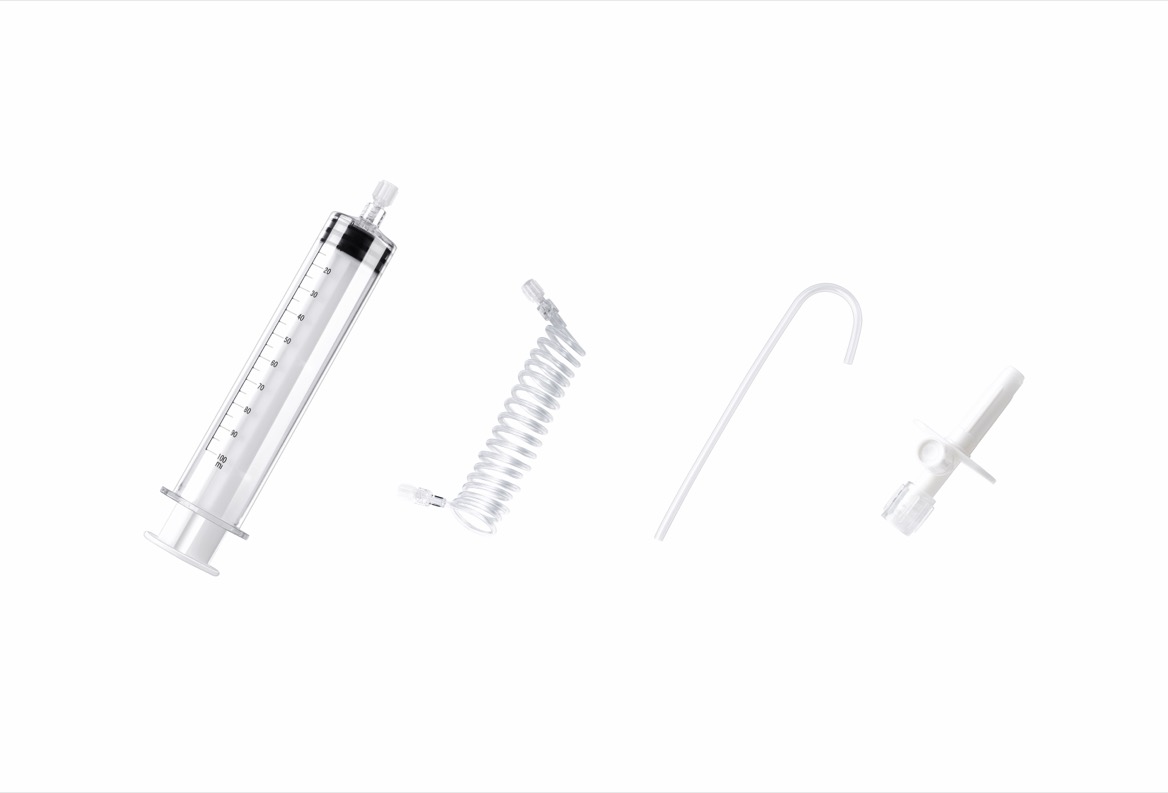
Do not assume tightening makes a leaking syringe safe. Stop use and follow its instructions. Replace damaged or suspect disposable components rather than attempting repair.
No. Pressure may expose an existing defect or weak connection. Investigate assembly, compatibility, component condition, and downstream resistance together.
Yes. Excessive force can damage threads or other connector features. Follow the specified assembly method rather than tightening as firmly as possible.
Fluid behind the intended plunger sealing interface suggests compromised integrity. Remove the syringe from use and follow the reporting procedure.
Only where the exact syringe model is intended and documented for those injector configurations. Similar appearance or apparent fit is insufficient.
No. Restrictions, operating conditions, and other system issues can trigger pressure-related alarms. Use the model-specific troubleshooting instructions.
1. MEDTRON AG. *Instructions for Use: Syringes for MEDTRON Contrast Medium Injectors.* Addresses connection force, loose connections, chemical damage, occlusion, and compatible operating conditions. [Read the instructions]. [vimda.moh.gov]
2. U.S. Food and Drug Administration. *Disposable High Pressure Injector Syringe—510(k) K152906.* Product-specific indications, compatibility information, and summaries of pressure, connection-strength, and compatibility testing. This record is not presented as MAIWEI's clearance. [Read the clearance documentation]. [accessdata.fda]
3. Bayer. *MEDRAD Mark 7 Arterion Injection System: Operation Manual.* Model-specific syringe loading, pressure-jacket use, and air-removal precautions. [Read the manual]. [radiology.bayer]
4. Indrajit IK and colleagues. *Pressure Injectors for Radiologists: A Review and What Is New.* Indian Journal of Radiology and Imaging, 2015. Background on injector systems, fluid pathways, pressure considerations, and safe operation. [Read the article]. [pmc.ncbi.nlm.nih]
5. U.S. Food and Drug Administration. *Sodium Chloride Injection USP 0.9%: Prefilled Syringe Labeling.* Product-specific warnings concerning leakage, packaging damage, inspection, and air removal. [Read the labeling]. [accessdata.fda]