


close
Choose Your Site
Global
Social Media
Views: 226 Author: Maiwei Biotech Publish Time: 2026-09-01 Origin: Site


Content Menu
● What Is a Pressure Connecting Tube?
● Why Pressure Connecting Tubes Matter in Contrast Imaging
>> Core Functions of a High-Pressure Tube
● Pressure Connecting Tube vs. Conventional IV Tubing
● CT vs. MRI Pressure Connecting Tubes
>> CT Contrast Injection Tube Requirements
>> MRI Contrast Injection Tube Requirements
>> Key Difference: Compatibility Is System-Specific
● How Pressure, Flow Rate, and Tube Design Work Together
>> Factors That Can Increase Injection Pressure
● A Practical Tube Selection Checklist
>> 1. Confirm Injector Compatibility
>> 2. Verify the Pressure Rating
>> 3. Review Length and Workflow Design
>> 4. Assess Connector Security
>> 5. Check Sterility and Single-Use Status
● Expert Workflow: Safe Setup Before Injection
● Common Procurement Mistakes to Avoid
>> Mistake 1: Buying Only by Unit Price
>> Mistake 2: Treating All "High-Pressure Tubes" as Equivalent
>> Mistake 3: Ignoring Patient-Side Device Limits
>> Mistake 4: Overlooking OEM Customization Needs
● What Makes a Reliable Pressure Connecting Tube Manufacturer?
● Choose the Right Tube for Every Injection Pathway
>> 1. What is the difference between a pressure connecting tube and an extension tube?
>> 2. Can conventional IV tubing be used for CT contrast power injection?
>> 3. What pressure rating should a CT pressure connecting tube have?
>> 4. Are CT and MRI pressure connecting tubes interchangeable?
>> 5. Why is tube priming important before contrast injection?
>> 6. What should hospitals verify before buying high-pressure tubing?
>> 7. Can pressure connecting tubes be customized for OEM projects?
A pressure connecting tube is a sterile, single-use medical imaging consumable that transfers contrast media and saline from a CT, MRI, or angiography power injector to the patient's vascular access device. In contrast-enhanced imaging, this small component plays a major role in injection accuracy, system integrity, workflow efficiency, and patient safety.
For radiology departments, distributors, and OEM buyers, selecting the correct high-pressure connecting tube for CT and MRI contrast injection systems is not simply a matter of choosing a compatible connector. The tube must match the injector platform, injection protocol, pressure requirements, intended clinical application, and facility's safety procedures.
As a manufacturer of CT, MRI, and angiography injector consumables, MAIWEI INC. understands a practical truth from the imaging field: the injection system is only as reliable as its weakest connection. The injector, syringe, tubing, catheter, connectors, and operator workflow must work together as one controlled system.

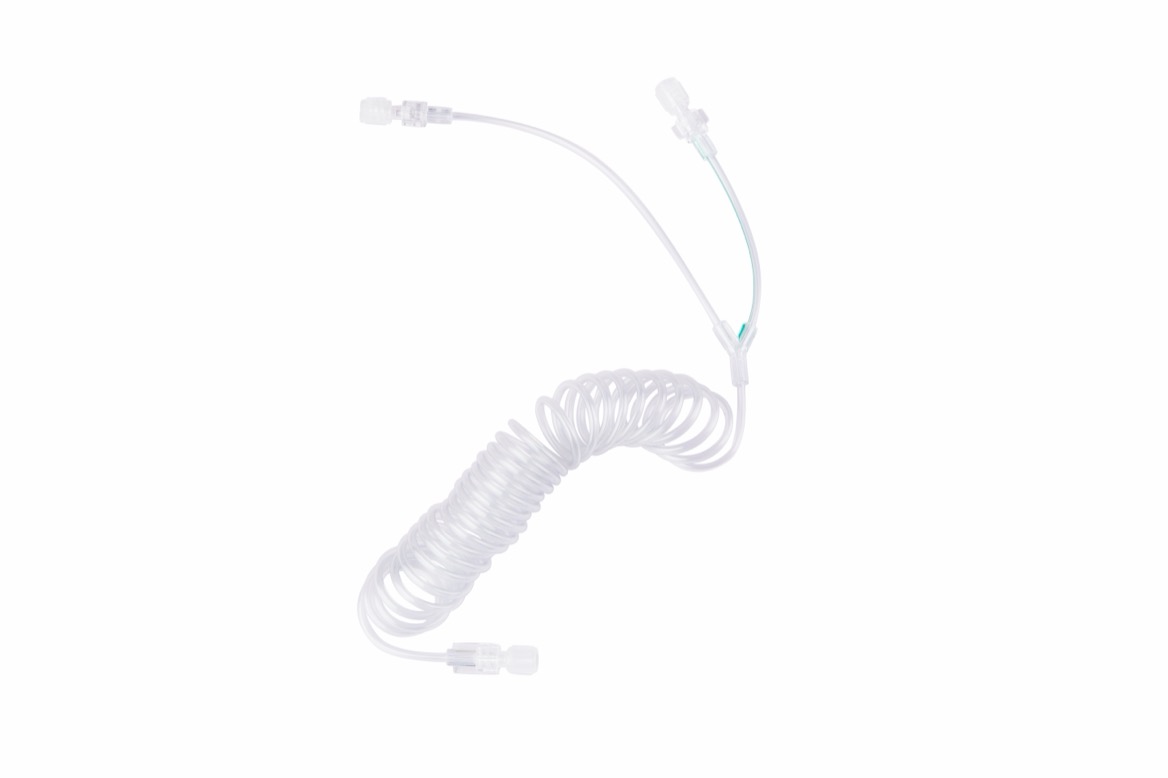
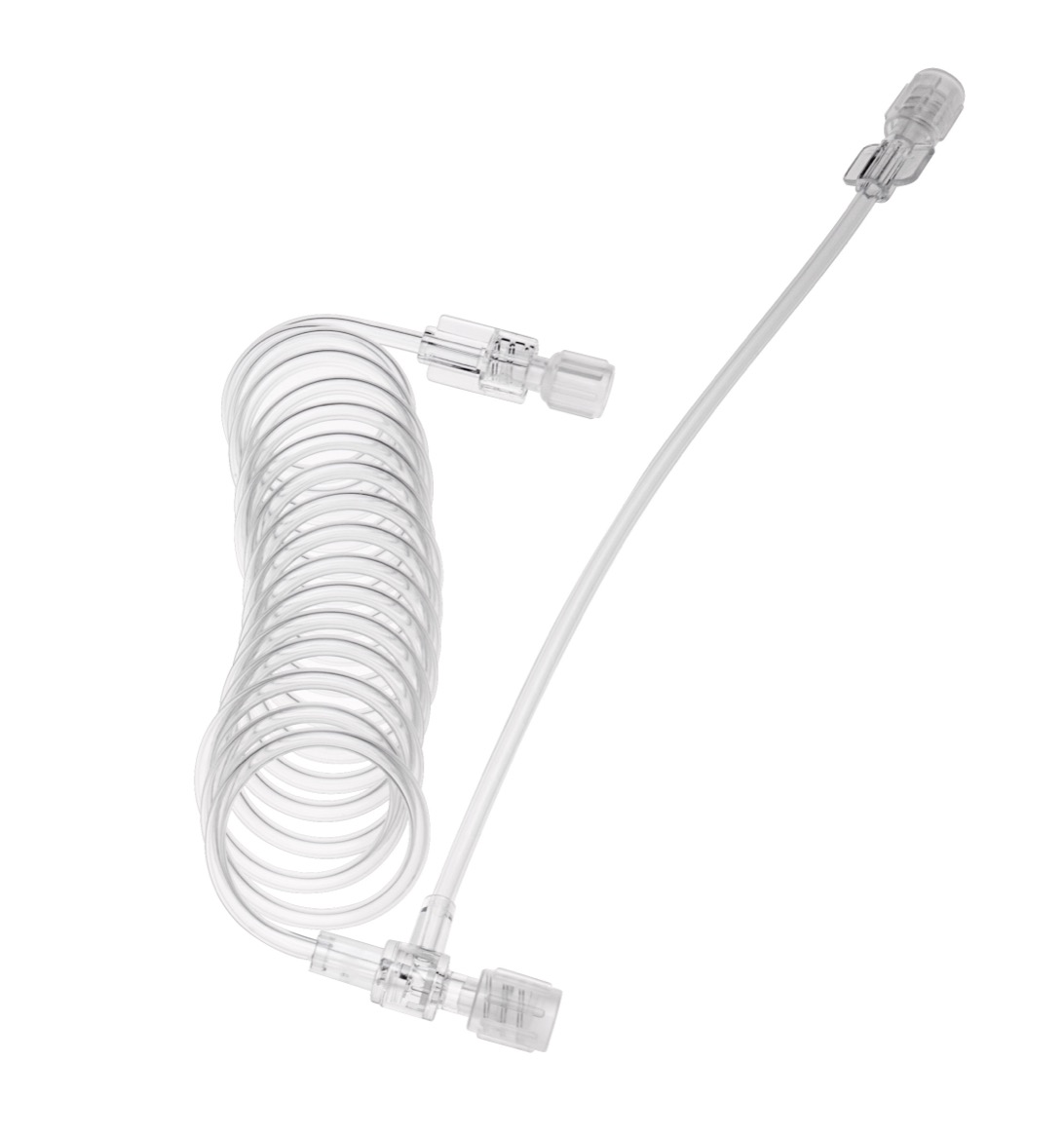
A pressure connecting tube, also called a high-pressure tube, pressure line, or pressure connecting line, is a specialized disposable tube designed to deliver contrast media, saline, or other diagnostic fluids under controlled pressure.
It connects the injector-side fluid source to the patient-side catheter, extension line, vascular access device, or angiography system. Unlike conventional IV tubing, a pressure-rated tube is engineered for the elevated pressure conditions created during powered contrast injection.
In a typical CT or MRI contrast injection workflow, the route is:
1. Contrast media and saline are loaded into the injector system.
2. The pressure connecting tube is attached to the injector outlet.
3. The patient-side end is connected to an approved vascular access device.
4. The system is primed to remove air.
5. The injector delivers the programmed volume and flow rate.
6. The contrast bolus travels through the tube and into the patient's bloodstream.
The tube may appear simple. However, its internal diameter, material composition, connector design, pressure rating, length, flexibility, and compatibility profile can all affect real-world performance.
A U.S. FDA-cleared pressure connecting tube example describes the device as a sterile, disposable line used during angiography to inject radiopaque dye, saline, or other diagnostic fluids between a fluid source and a catheter. The cited product family includes pressure ratings from 350 psi to 1,200 psi, illustrating why buyers must verify the rating for the exact product and application rather than treating all tubing as interchangeable.
Contrast-enhanced imaging depends on reliable delivery. In CT angiography, for example, the timing, rate, and concentration of contrast media can influence vessel enhancement and image quality. In MRI, injection protocols may require precisely controlled administration of gadolinium-based contrast agents and saline flushes.
The pressure connecting tube is central to this process because it must support a stable fluid pathway under injector-driven conditions.
A properly specified tube should help the imaging team achieve the following:
- Maintain system integrity during powered injection.
- Deliver contrast media consistently at the programmed flow rate.
- Connect securely to compatible injector systems and patient access components.
- Support efficient setup through clear, practical connector design.
- Enable appropriate priming to help remove air from the fluid path.
- Reduce the risk of leakage or disconnection when used within labeled conditions.
- Support infection-control workflow as a sterile, single-use consumable.
The difference between conventional IV tubing and pressure-rated tubing is especially important. A patient-safety advisory notes that typical CT power injector peak pressures can reach approximately 300 to 325 psi and may exceed those levels when vascular access is obstructed or poorly patent. By comparison, conventional IV tubing may tolerate only 10 to 15 psi in some applications.
That gap explains why a standard IV line must never be assumed suitable for a power injection procedure.
Although both products transport fluids, they are designed for very different clinical environments. Conventional IV tubing is intended primarily for gravity infusion, medication administration, or lower-pressure pump applications. A CT or MRI pressure connecting tube is engineered for contrast injection systems that may generate substantially higher pressures.
| Feature | Pressure Connecting Tube | Conventional IV Tubing |
|---|---|---|
| Primary purpose | Contrast media and saline delivery during powered imaging injection | Routine infusion and medication delivery |
| Pressure capability | Designed and labeled for high-pressure injection applications | Usually not intended for contrast power injection |
| Injector compatibility | May be designed for specific CT, MRI, or angiography injector platforms | Generally not injector-specific |
| Connector requirements | Often uses specialized luer-lock, rotating, or system-specific connections | Standard infusion connections are common |
| Clinical role | Supports controlled contrast bolus delivery | Supports routine fluid administration |
| Risk if misapplied | Leakage, disconnection, rupture, failed scan, or patient/staff exposure | Not suitable as a substitute for high-pressure tubing |
The Pennsylvania Patient Safety Authority reported 29 events involving IV tubing ruptures during contrast media injections between July 2004 and March 2008. It also identified 158 related device reports in the FDA's MAUDE database from 1996 to 2008 using relevant search terms. Many manufacturer narratives cited the use of conventional IV tubing instead of recommended high-pressure tubing designed for power injectors.
For procurement teams, the lesson is clear: compatibility and pressure rating are clinical requirements, not optional purchasing details.
CT and MRI both use contrast injection systems, but the clinical environments, injector designs, contrast agents, workflow expectations, and equipment constraints can differ. A tube that is appropriate for one system should not automatically be assumed suitable for another.
CT contrast injection often involves iodinated contrast media delivered at relatively high flow rates to achieve appropriate enhancement during fast image acquisition.
A CT pressure connecting tube may need to support:
- High-pressure power injection.
- Rapid contrast delivery protocols.
- Saline chase procedures.
- Single-head or dual-head injector systems.
- Patient-side extension configurations.
- Compatibility with CT injector brands and models.
- Secure luer-lock or rotating connector interfaces.
- Clear tubing for visual confirmation of fluid flow and air removal.
CT angiography can be particularly demanding because enhancement timing is closely tied to injection performance. A poorly selected tube, excessive tubing length, incompatible connector, or inadequate priming process can compromise the procedure.
MRI contrast injection commonly uses gadolinium-based contrast agents and saline flushes. While MRI injection pressure and flow requirements may differ from CT protocols, the consumable must also be suitable for the MRI environment and the relevant injector platform.
MRI pressure connecting tube selection may involve:
- Compatibility with MRI-specific injector systems.
- Appropriate tubing length for scanner-room workflow.
- Reliable contrast and saline pathways for dual-syringe systems.
- Clear identification of disposable components.
- Materials and components appropriate for the intended imaging environment.
- Secure connections that support controlled injection and priming.
The American College of Radiology's 2024 Manual on Contrast Media remains a major professional resource for contrast-media use in imaging, including CT and MRI practice considerations.
The most important difference is often not whether the procedure is CT or MRI. It is whether the pressure connecting tube is validated and labeled for the specific injector system, injection protocol, and patient-side connection configuration.
A high-pressure tube should be selected based on the complete setup:
Injector+Syringe System+Tube+Connector+Access Device+Protocol
If any component is outside its labeled operating conditions, the reliability of the complete fluid path may be affected.
Radiology teams often focus on the programmed flow rate. However, the injector's pressure limit, contrast viscosity, catheter characteristics, tubing geometry, and line patency all interact during an injection.
A useful practical principle is:
> Flow is programmed, but pressure is generated by resistance.
Resistance can increase when the contrast agent is more viscous, the tube is longer, the internal diameter is smaller, the catheter is narrow, the access site is suboptimal, or the line is kinked.
- High-viscosity contrast media.
- Low-temperature contrast media.
- Narrow-gauge catheters.
- Long tubing pathways.
- Small internal tube diameters.
- Kinked or compressed tubing.
- Partial obstruction in the line.
- Poor vascular access patency.
- Incorrect connector assembly.
- Incompatible patient access devices.
The patient-safety advisory explains that injector flow depends on factors including solution viscosity, solution volume, pressure, and the cross-sectional area of the tubing.
This is why a pressure connecting tube should never be chosen based on appearance alone. Two clear tubes may look similar while having very different pressure ratings, wall structures, connector configurations, or intended uses.
For hospital procurement teams, distributors, and OEM partners, a structured selection process can reduce uncertainty and simplify product evaluation.
Start with the injector platform.
Check whether the tube is designed for:
- CT contrast injector systems.
- MRI contrast injector systems.
- Angiography injector systems.
- Single-syringe systems.
- Dual-syringe systems.
- Multi-patient or single-patient configurations.
- Specific connector styles or proprietary interfaces.
Do not rely only on visual resemblance. Confirm the relevant compatibility statement, technical documentation, and product labeling.
The tube's pressure rating must be suitable for the clinical protocol and the equipment configuration.
Key questions include:
- What is the tube's maximum labeled pressure?
- Is the rating applicable to the complete assembled configuration?
- Does the injector pressure limit remain within the tube's labeled capability?
- Are all connected patient-side components also rated for the intended injection conditions?
The safety principle is straightforward: the injector pressure setting should not exceed the lowest labeled pressure capability of any connected component.
Tube length affects more than convenience.
A tube that is too short can create tension or restrict positioning. A tube that is excessively long may complicate setup, increase handling burden, and add unnecessary fluid-path volume.
Evaluate:
- Scanner room layout.
- Injector location.
- Patient positioning.
- Need for extension tubing.
- Technologist workflow.
- Infection-control procedures.
- Storage and packaging requirements.
Connector design deserves close attention. Depending on the system, users may need luer-lock, rotating luer-lock, quick-fill, spike, check-valve, or injector-specific connector configurations.
A good connector design should support:
- Secure engagement.
- Clear orientation.
- Easy assembly.
- Reduced twisting stress.
- Reliable sealing when correctly connected.
- Efficient removal after the procedure.
Pressure connecting tubes used in contrast injection are commonly supplied sterile and intended for single use. Sterile barrier integrity, packaging quality, traceability, and shelf-life documentation should be evaluated as part of supplier qualification.
For regulated markets, buyers should also review the manufacturer's quality-management credentials, technical files, labeling, and applicable registration or clearance status.
From an operational perspective, many preventable injection problems occur before the injector starts. A disciplined setup process helps protect the patient, staff, and imaging schedule.
1. Inspect the package for integrity, expiration date, and correct product identification.
2. Confirm compatibility with the injector system, syringe arrangement, connector type, and planned procedure.
3. Review the pressure rating of the tube and every component in the fluid path.
4. Connect the tube securely according to the product instructions and facility protocol.
5. Prime the system thoroughly to remove air from the syringe and tubing pathway.
6. Inspect for kinks, twists, loose fittings, or visible damage before connecting to the patient.
7. Verify vascular access suitability for the intended flow rate and pressure injection.
8. Confirm programmed injection parameters including volume, flow rate, pressure limit, delay, and saline flush settings.
9. Observe the injection closely and follow facility policy if abnormal pressure, leakage, swelling, discomfort, or alarm conditions occur.
Guidance summarized in the ACR materials emphasizes clearing air from the syringe and pressure tubing before contrast administration.
The most costly tubing mistakes are often not dramatic. They may appear as delayed scans, repeated setup, inventory confusion, or inconsistent user experience. Over time, these issues affect departmental efficiency and confidence.
The lowest price does not necessarily mean the lowest total cost.
A lower-cost tube may create hidden expenses if it causes:
- Incompatible connections.
- Setup delays.
- Training burden.
- Leakage events.
- Inventory duplication.
- Scan interruptions.
- High complaint rates.
- Poor distributor service outcomes.
The better purchasing question is: Does this consumable support reliable performance across the full clinical workflow?
Pressure rating alone is not enough. Buyers should compare:
- Intended use.
- Injector compatibility.
- Maximum pressure.
- Tube material.
- Internal diameter.
- Length.
- Connector types.
- Sterility method.
- Packaging format.
- Labeling.
- Regulatory documentation.
- Quality-system capability.
Even when the tube itself has an adequate pressure rating, the patient-side catheter, port, central line, or extension set may have a lower labeled limit.
The complete system must be evaluated together. The pressure connecting tube cannot make an incompatible or non-pressure-rated vascular access device safe for power injection.
For distributors and OEM customers, a standard tube may not be the optimal commercial solution.
Useful OEM considerations can include:
- Custom tube lengths.
- Private-label packaging.
- Customized connector combinations.
- Product coding and labeling.
- Procedure-kit integration.
- Market-specific regulatory documentation.
- Carton configuration.
- Multilingual instructions for use.
A capable manufacturing partner should combine production consistency with flexibility for market positioning and local procurement requirements.
A reliable supplier does more than produce clear tubing with connectors on each end. The manufacturer should demonstrate control across design, materials, assembly, testing, sterilization, packaging, and post-market support.
For medical imaging consumables, buyers should look for:
| Evaluation Area | What to Review |
|---|---|
| Quality system | ISO 13485 certification and quality-management documentation |
| Regulatory readiness | CE documentation, FDA 510(k) status where applicable, and market-specific compliance support |
| Product verification | Pressure testing, leak testing, connector performance, packaging integrity, and sterility validation |
| Compatibility support | Clear injector compatibility information and technical specifications |
| Manufacturing capability | Stable production capacity, traceability, clean manufacturing controls, and consistent quality |
| OEM service | Custom branding, packaging, configurations, and documentation support |
| Global supply | Export experience, communication responsiveness, logistics planning, and distributor support |
MAIWEI INC. develops and manufactures consumables for CT, MRI, and angiography high-pressure injection applications, including high-pressure injectors, pressure connecting tubes, and related accessories. With ISO 13485, CE, and FDA 510(k) credentials for applicable products, the company supports hospitals, distributors, and OEM partners in more than 60 countries and regions.
For buyers, this combination matters because product quality is not limited to the finished tube. It includes traceable manufacturing processes, reliable documentation, practical compatibility knowledge, and the ability to support different market needs.
A pressure connecting tube is a critical link between the contrast injector and the patient. It supports safe, accurate, and efficient contrast delivery when selected, assembled, and used within its labeled conditions.
For hospitals, the priority is dependable clinical workflow. For distributors, it is stable quality and reliable documentation. For OEM partners, it is a manufacturer that can combine technical performance with flexible product customization.
MAIWEI INC. can support your CT, MRI, and angiography contrast injection consumable requirements with high-pressure connecting tubes, injector accessories, and OEM solutions designed for global medical imaging markets. Contact our team to discuss injector compatibility, pressure requirements, customized configurations, regulatory documentation, and sample evaluation for your project.
A pressure connecting tube is designed to transfer contrast media or saline under injector-driven conditions. An extension tube may refer more broadly to a patient-side line extension and is not automatically suitable for power injection. Always verify the intended use, pressure rating, and compatibility of the exact product.
Conventional IV tubing should not be used unless it is specifically labeled and approved for the intended power injection conditions. Standard IV tubing may not withstand the pressure generated by a CT injector and can rupture or leak during injection.
There is no single rating that applies to every CT procedure. The required rating depends on the injector system, programmed pressure limit, contrast protocol, and all connected components. The tube's labeled pressure capability must be suitable for the complete injection configuration.
Not always. Some tubes may be designed for specific injector platforms, syringe systems, connector styles, or imaging workflows. Check the manufacturer's compatibility information before use rather than assuming a CT tube can be used in an MRI system.
Priming helps remove air from the syringe and tubing pathway before injection. Proper priming supports a controlled fluid path and is an essential part of standard contrast injection setup practices.
Hospitals should verify injector compatibility, pressure rating, tubing length, connector configuration, sterile status, packaging, regulatory documentation, quality-system certification, and the supplier's technical support capability.
Yes. Depending on the manufacturer's capabilities, OEM options may include customized tubing lengths, connector configurations, private-label packaging, procedure-kit integration, and market-specific labeling support.
1. American College of Radiology. [Manual on Contrast Media—2024 Update].
2. Pennsylvania Patient Safety Authority. [CT Contrast Media Power Injectors Can Rupture Conventional IV Sets Advisory].
3. U.S. Food and Drug Administration. [510(k) Summary K131770: Pressure Connecting Tube].
4. European Society of Urogenital Radiology. [ESUR Guidelines on Contrast Agents, Version 10.0].
5. Behzadi AH, Farooq Z, Zhao Y, Shih G. [Intravenous Contrast Medium Extravasation: Systematic Review and Updated ESUR Contrast Media Safety Committee Guidelines].
6. Gupta R, et al. [Pressure Injectors for Radiologists: A Review and What Is New].