


close
Choose Your Site
Global
Social Media
Views: 257 Author: Maiwei Biotech Publish Time: 2026-11-11 Origin: Site


Content Menu
● CT Syringe vs. MRI Syringe: A Quick Comparison
>> Why CT Injector Syringe Capacity Matters
>> Why the MRI Environment Changes Product Selection
● Five Important Differences Between CT and MRI Syringes
>> 1. Contrast Media and Fluid Compatibility
>> 2. Syringe Capacity and Delivery Requirements
>> 3. Pressure Ratings and Flow Performance
>> 4. Injector Mounting and Plunger Engagement
● Expert Procurement Insight: Evaluate the Entire Fluid Path
● A Practical CT and MRI Syringe Selection Checklist
>> Step 1: Identify the Installed Injector
>> Step 2: Match the Complete Kit
>> Step 3: Verify Operating Limits
>> Step 4: Review MR Safety Information
>> Step 5: Check Sterility and Traceability
>> Step 6: Complete Local Acceptance Procedures
● Reducing Waste Without Compromising Injection Safety
● What Quality Documents Should Buyers Request?
● How MAIWEI INC. Supports Imaging Consumable Sourcing
>> Can a CT Syringe Be Used in an MRI Injector?
>> Are MRI Syringes Always Smaller Than CT Syringes?
>> Do MRI Syringes Always Have Lower Pressure Ratings?
>> Is an MRI Syringe Automatically MR Safe?
>> Can CT and MRI Injector Syringes Be Reused?
>> What Is the Most Important Information When Requesting a Quotation?
The difference between a CT syringe and an MRI syringe lies in their intended imaging application, injector compatibility, capacity, and operating environment. A CT syringe typically delivers iodinated contrast for computed tomography, while an MRI syringe typically delivers gadolinium-based contrast for magnetic resonance imaging. Both may be used with power injectors, but they are not automatically interchangeable.
From a manufacturing and procurement perspective, the most important distinction is compatibility: the syringe must be validated for the specific injector, fluid pathway, operating limits, and intended environment. Barrel size or appearance alone cannot establish suitability.
For hospitals, distributors, and equipment manufacturers, understanding these differences helps prevent purchasing errors and supports reliable contrast delivery.
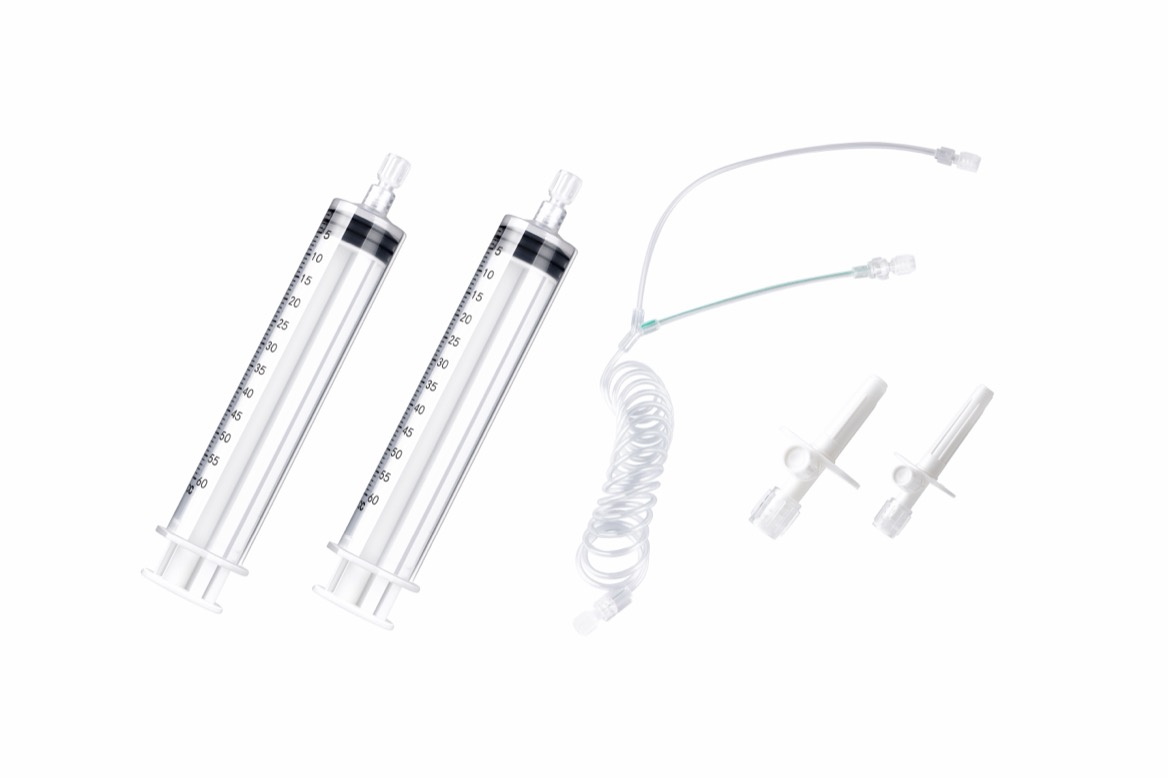
Here, "syringe" refers to a contrast injector syringe, rather than a standard hand-operated syringe.
| Comparison point | CT syringe | MRI syringe |
|---|---|---|
| Primary application | Contrast-enhanced CT, including CT angiography | Contrast-enhanced MRI, including some MR angiography examinations |
| Typical contrast medium | Iodinated contrast | Gadolinium-based contrast |
| Capacity | Model-dependent; some systems offer 150 mL or 200 mL syringes | Model-dependent; some systems use separate 65 mL contrast and 115 mL saline syringes |
| Pressure capability | Specified for the particular syringe and injector configuration | Also configuration-specific; not necessarily lower than CT |
| Environmental requirement | Suitability for the intended CT workflow | Appropriate MR safety labeling for components entering the MR environment |
| Mechanical interface | Must match the designated CT injector | Must match the designated MRI injector |
| Interchangeability | Requires explicit manufacturer documentation | Requires explicit manufacturer documentation |
These capacities are examples from specific commercial systems, not universal specifications.
A CT syringe is a disposable fluid reservoir designed for a compatible contrast injection system. During a contrast-enhanced examination, the injector advances the syringe plunger to deliver the programmed fluid volume.
Intravenous iodinated contrast improves the visibility of blood vessels and enhances differences between tissues. However, the syringe does not determine the clinical dose. Qualified clinicians select the contrast agent and injection protocol.
CT workflows may require sufficient contrast and saline capacity for the planned examination. For example, documentation for the MEDRAD Stellant FLEX system describes 150 mL and 200 mL syringe options.
Capacity affects preparation and workflow, but a larger syringe does not automatically improve performance.
Buyers should evaluate:
- Available syringe sizes for the installed injector.
- Contrast and saline requirements.
- Filling and priming procedures.
- Residual fluid after the examination.
- Packaging and storage requirements.
The correct choice supports the department's protocols without encouraging unnecessary filling or waste.
An MRI syringe performs a similar fluid-delivery function in a compatible MR injection system. It commonly holds gadolinium-based contrast, while a second syringe may hold saline.
For example, Bayer's MEDRAD MRXperion system uses a 65 mL contrast syringe and a 115 mL saline syringe. These sizes illustrate one system's design, not a requirement for every MRI injector.
MRI introduces safety considerations beyond fluid delivery. Components brought into the MR environment must have an appropriate, documented safety status.
The standardized labeling categories are:
- MR Safe: no known hazards from exposure to any MR environment.
- MR Conditional: demonstrated safety only under specified conditions.
- MR Unsafe: unacceptable risks in the MR environment.
"Nonmagnetic" alone is not an adequate substitute for formal labeling. Likewise, a plastic syringe does not establish the safety of an entire injector assembly, tubing accessory, or mounting arrangement.
Each relevant component must be assessed according to its own labeling and intended location.
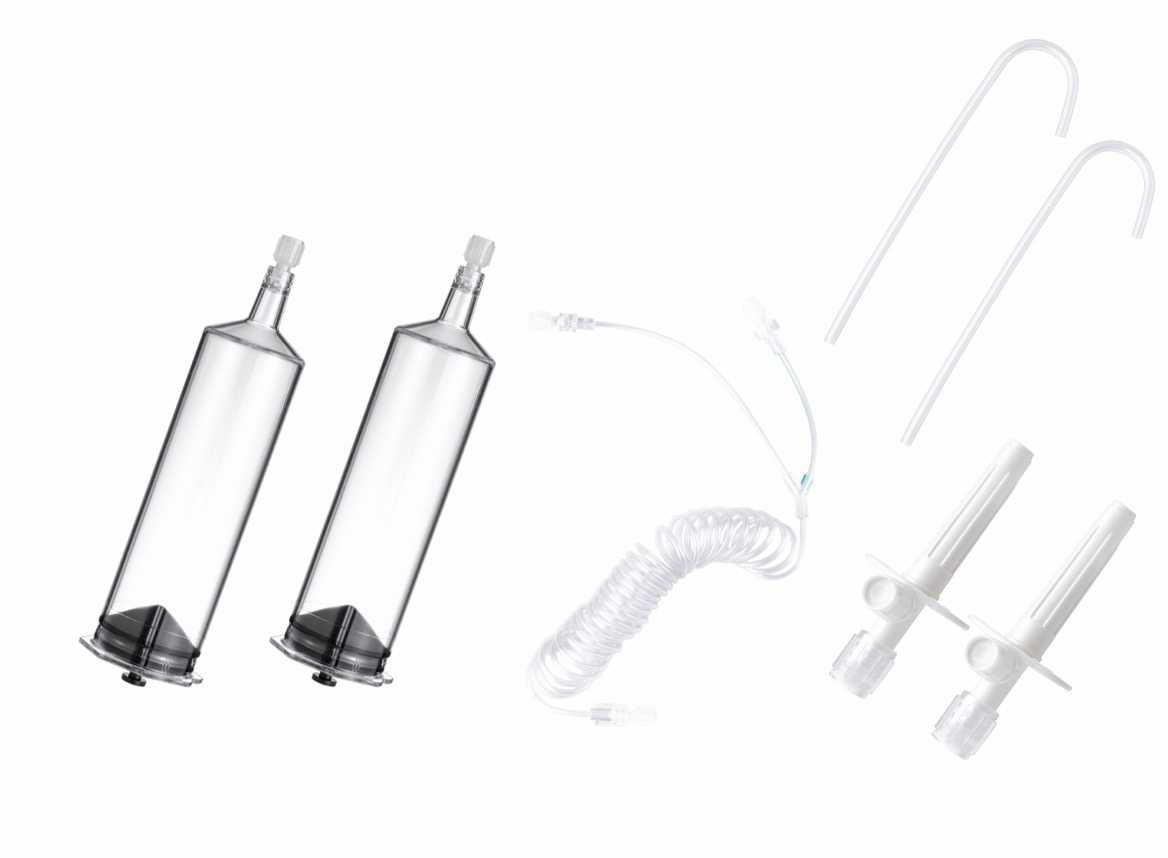
CT commonly uses iodinated contrast, whereas MRI commonly uses gadolinium-based contrast.
This distinction matters because manufacturers must establish that the fluid-contacting components are suitable for their intended use. Buyers should request documentation covering the applicable contrast agents, saline, and labeled operating conditions.
Do not assume that a syringe suitable for one contrast medium is automatically suitable for every other formulation.
Agent selection, concentration, and patient-specific precautions remain clinical decisions. Syringe selection must support those decisions rather than replace them.
CT and MRI syringe capacities often differ because their injection workflows differ. However, capacity should not be confused with administered dose.
A 65 mL MRI syringe does not mean every patient receives 65 mL of contrast. Similarly, a 200 mL CT syringe need not be filled completely.
When comparing products, distinguish between:
- Maximum syringe capacity.
- Programmed injection volume.
- Contrast concentration.
- Saline flush volume.
- Fluid remaining in the delivery pathway.
This prevents misleading comparisons based only on barrel size.
A common misconception is that every MRI syringe operates at substantially lower pressure than a CT syringe.
Commercial examples show why this is unreliable. Stellant FLEX documentation includes programmable pressure limits up to 325 psi. MRXperion specifications also list pressure settings up to 325 psi.
These figures describe specific systems. They do not authorize every compatible-looking disposable to operate at that pressure.
The allowable operating conditions must respect the labeled limits of the complete fluid pathway, including the syringe, connectors, tubing, and vascular access device. The most restrictive applicable limit governs use.
Syringes must interface correctly with the injector's mounting mechanism and drive system.
Two products may look similar while differing in:
- Barrel geometry.
- Mounting features.
- Plunger engagement.
- Outlet configuration.
- Filling accessories.
- Recognition or setup requirements.
A syringe that appears to fit is not necessarily validated for use. Procurement decisions should identify the exact injector model and disposable product code, rather than relying on a broad description such as "CT-compatible syringe."
Tubing is part of the delivery system, not a secondary purchasing detail.
Length, internal diameter, connectors, and valve configuration affect setup and fluid delivery. MRI room layouts may also influence the required tubing arrangement.
Longer tubing is not automatically better. It can increase the volume needed for priming and leave more fluid within the pathway.
Select the labeled configuration that supports the actual room layout and injection protocol.
When assessing an alternative supplier, I would start with the complete fluid pathway—not the syringe price.
A low-cost syringe offers little value if its tubing, documentation, or mechanical interface does not meet the department's requirements.
A practical evaluation has three stages:
1. Document review: confirm intended use, injector compatibility, operating limits, and market authorization.
2. Technical assessment: review manufacturer-supported evidence for the proposed syringe-and-tubing configuration.
3. Controlled introduction: follow institutional procedures for training, acceptance, and performance monitoring.
This approach separates commercial availability from demonstrated suitability.
For OEM projects, compatibility claims should be tied to documented configurations. Broad statements such as "works with all major injectors" provide less useful assurance than an exact model-by-model compatibility matrix.
Use the following checklist before approving a new contrast injector syringe supplier.
Record the manufacturer, exact model, and relevant configuration. Include existing disposable codes where available.
Confirm syringe capacity, tubing length, filling devices, connectors, and any valves. Verify whether the proposed item is a syringe alone or a complete injection kit.
Check labeled pressure and flow limitations throughout the proposed fluid pathway. Do not substitute the injector's maximum capability for a disposable's rating.
For MRI applications, obtain the relevant MR safety labeling and conditions of use. Confirm which components may enter the controlled MR environment.
Review packaging integrity requirements, expiry information, lot identification, storage conditions, and the labeled use period.
Have the appropriate clinical, engineering, infection-control, and procurement personnel review the product before routine use.
This checklist supports purchasing decisions; it does not replace manufacturer instructions or institutional clinical procedures.
Contrast management should consider more than unused fluid in the syringe.
An effective review also examines:
- Fluid consumed during priming.
- Residual volume in tubing.
- Kits discarded because of selection errors.
- Stock expiring before use.
- Preparation time and workflow interruptions.
For example, a department choosing between two validated tubing configurations should compare their documented priming volumes and operational suitability—not simply select the shortest or cheapest option.
Avoid universal savings claims. Meaningful comparisons require local usage data, actual acquisition costs, and equivalent clinical requirements.
Single-use components must not be reused to reduce expenditure. Where a system has a specifically labeled multi-patient configuration, its dedicated components and use limits must be followed exactly.
Quality documentation is valuable only when its scope matches the product being purchased.
ISO 13485 certification concerns the manufacturer's medical-device quality management system. It does not establish that every product fits every injector.
Similarly, CE documentation and FDA market authorization should be checked against the relevant product, intended use, and destination market.
For devices marketed through the U.S. 510(k) pathway, the appropriate term is "FDA-cleared," rather than "FDA-certified."
A supplier review should request:
- Current quality-system certification and scope.
- Applicable declarations and regulatory documentation.
- Relevant 510(k) numbers, where applicable.
- Product-specific instructions for use.
- Injector compatibility information.
- Sterilization and shelf-life documentation.
- Lot traceability and complaint-handling procedures.
Company-wide credentials should never substitute for product-specific verification.
MAIWEI INC. focuses on developing and manufacturing consumables for CT, MRI, and angiography injection applications, including high-pressure injector syringes, connecting tubes, and related accessories.
According to company-provided information, MAIWEI serves customers in more than 60 countries and regions and reports ISO 13485 certification, CE documentation, and FDA 510(k) clearances within its portfolio. Buyers should verify the current scope and applicability for each requested product.
For hospitals, distributors, and OEM customers, the most useful starting point is a precise technical requirement.
Contact MAIWEI INC. with your injector manufacturer and model, required syringe capacities, tubing configuration, destination market, and expected order volume. Request a product-specific compatibility review, applicable regulatory documents, and samples for assessment under your organization's acceptance procedures.
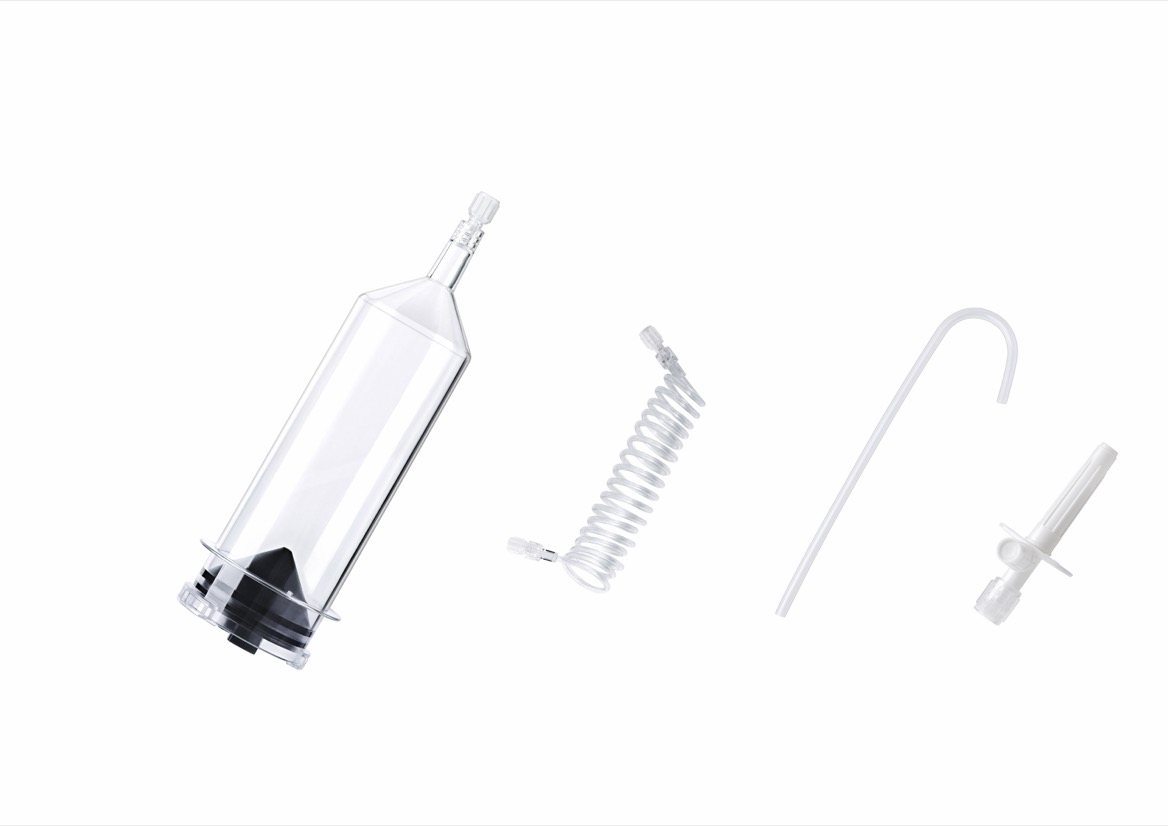
Not unless the manufacturer explicitly documents compatibility with that exact injector and intended use. Similar dimensions, matching capacity, or apparent mechanical fit are insufficient.
No. Some commercial MRI systems use smaller contrast syringes than common CT systems, but capacities vary by manufacturer and model. Select the specified product rather than relying on a general size rule.
No. Some MRI and CT injection systems both offer settings up to 325 psi. The applicable limit depends on the specific system and every component in the fluid pathway.
No. Verify the product's actual MR safety labeling. Do not extend a safety designation from one disposable component to the entire powered injector or accessory assembly.
Follow the exact labeling. Single-use syringes must not be reused. Specifically labeled multi-patient systems require their designated components and operating procedures; they do not justify reusing ordinary single-use kits.
Provide the exact injector model first. Then specify syringe capacity, kit contents, tubing requirements, destination market, and quantity. These details help suppliers identify an appropriate product rather than quote an unsuitable generic alternative.
1. RadiologyInfo.org, a patient-information resource from the American College of Radiology and Radiological Society of North America. "[Contrast Materials]." Supports the distinction between iodinated CT contrast and gadolinium-based MR contrast. [radiologyinfo]
2. U.S. Food and Drug Administration. "[MEDRAD Stellant FLEX CT Injection System with Certegra Workstation: 510(k) Summary, K173773]." Source for the cited CT syringe capacities and programmable pressure limits. [accessdata.fda]
3. Bayer in Radiology. "[MEDRAD MRXperion MR Injection System]." Source for the cited 65 mL and 115 mL syringe capacities and system pressure settings. [radiology.bayer.com]
4. U.S. Food and Drug Administration. "[Testing and Labeling Medical Devices for Safety in the Magnetic Resonance (MR) Environment]." Guidance on MR safety assessment and labeling. [fda]
5. U.S. Food and Drug Administration. "[Testing and Labeling Medical Devices for Safety in the MR Environment—Guidance Document]." Source for MR Safe, MR Conditional, and MR Unsafe terminology. [fda]
6. American College of Radiology. "[ACR Manual on Contrast Media]." Professional guidance addressing contrast administration, injection considerations, and extravasation. [acr]
7. U.S. Food and Drug Administration. "[510(k) Submission Process]." Explains that a device receiving a substantial-equivalence decision is considered cleared. [fda]