


close
Choose Your Site
Global
Social Media
Views: 219 Author: Maiwei Biotech Publish Time: 2026-10-16 Origin: Site


Content Menu
● Which CT Contrast Injector Syringe Specifications Should Buyers Prioritize?
● 1. Exact Injector Compatibility Comes Before Syringe Capacity
>> Match the Injector Model, Not Just the Brand
>> Verify the Complete Disposable Configuration
● 2. Working Pressure Matters More Than an Impressive Burst-Pressure Claim
>> Separate Operating Pressure From Burst Pressure
>> Review Every Component's Pressure Limit
● 3. Syringe Capacity Should Match the Protocol and Injector
>> Distinguish Nominal Capacity From Deliverable Volume
>> Evaluate Contrast and Saline Requirements Separately
● 4. Flow Performance Depends on More Than the Syringe
>> Contrast Viscosity Influences Injection Pressure
>> Tubing Geometry Can Change System Performance
● 5. Plunger Behavior, Sealing, and Volume Accuracy Deserve Evidence
>> Look Beyond a Smooth Manual Demonstration
>> Review Fluid-Contact Materials
● 6. Transparency, Priming, and Connections Affect Usability
>> Make the Fluid Path Easy to Inspect
>> Specify Connectors Precisely
● 7. Sterility and Regulatory Documentation Must Be Product-Specific
>> Inspect Packaging and Labeled Use
>> Separate Quality-System Certification From Market Authorization
● A Practical Supplier-Qualification Process for CT Injector Consumables
● An Illustrative Troubleshooting Scenario: When Pressure Limits Interrupt Delivery
● Request a Configuration-Specific Recommendation From MAIWEI INC.
>> What is the most important CT contrast injector syringe specification?
>> Are all 200 mL CT injector syringes interchangeable?
>> Does a higher pressure rating guarantee better injections?
>> Can a syringe prevent contrast extravasation?
>> What documents should a distributor request?
>> How should buyers compare residual volume?
The syringe specifications that matter most for CT contrast injectors are exact injector compatibility, validated working pressure, usable volume, delivery performance, connection integrity, and sterile fluid-path quality. Barrel transparency, residual volume, packaging, and traceability also deserve attention. The right syringe is not simply one that fits the injector; it is one documented to perform safely within the complete injection system.
From a manufacturing and procurement perspective, I would start with compatibility, then evaluate pressure and delivery performance before comparing price. A syringe can look suitable while having a different mounting interface, plunger geometry, or intended use.
For hospitals, distributors, and OEM buyers, the practical question is: which specifications demonstrate that this syringe can support the intended CT workflow?
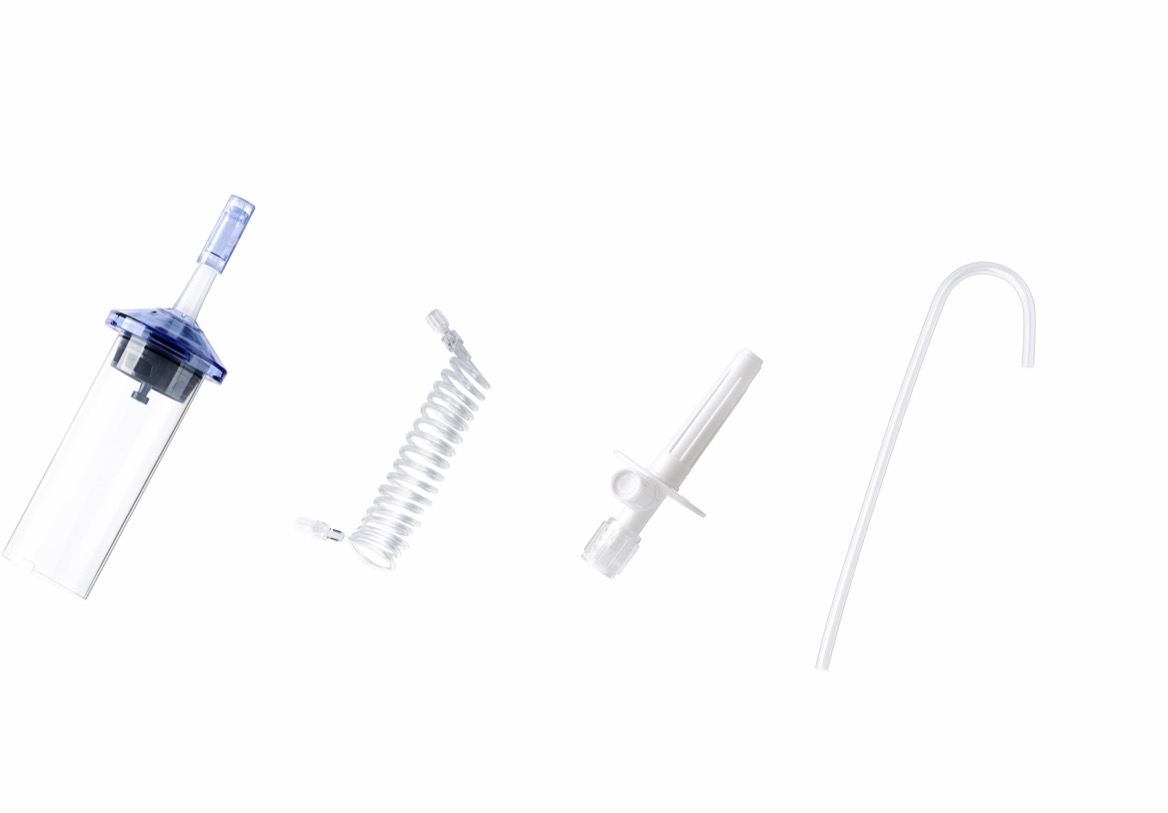
Evaluate the syringe together with its connecting tubing, accessories, injector, and patient-access device. An individual component's rating does not establish the capability of the assembled fluid path.
| Specification | What to verify | Why it matters |
|---|---|---|
| Injector compatibility | Exact manufacturer, model, syringe position, and required adapters | Determines correct mounting and operation |
| Working pressure | Validated operating rating and applicable conditions | Establishes the component's permitted pressure exposure |
| Usable capacity | Fill limits, protocol volume, and residual volume | Supports the intended contrast or saline delivery |
| Delivery performance | Volume accuracy, plunger movement, and leakage resistance | Supports predictable injection |
| Connections and tubing | Connector type, secure engagement, and pressure rating | Helps prevent leakage and disconnection |
| Sterile fluid path | Sterilization, packaging integrity, and labeled use | Supports contamination control |
| Traceability | Product code, lot, expiry, and regulatory documentation | Enables verification and complaint investigation |
Treat these as purchasing gates, not interchangeable benefits. A lower price cannot compensate for undocumented compatibility or an unsuitable pressure rating.
"Compatible with leading CT injectors" is not a sufficiently precise specification.
Request a compatibility matrix identifying:
- Injector manufacturer and exact model.
- Applicable syringe or consumable product code.
- Contrast-side and saline-side suitability.
- Required mounting adapters or accessories.
- Any relevant configuration restrictions.
A syringe's barrel, mounting flange, and plunger interface must work with the injector's loading and drive mechanisms. Visual similarity is not evidence of validated interchangeability.
Also distinguish CT products from MRI and angiography consumables. A supplier may manufacture all three categories, but their capacities, interfaces, and intended applications can differ.
Compatibility review should include the syringe, filling accessories, extension tubing, and any dual-head connector.
For example, Bayer lists a Stellant FLEX kit containing two 200 mL syringes, patient tubing with a T-connector, and sterile spikes. That illustrates why purchasing specifications should identify the complete kit rather than the syringe alone.
For alternative consumables, request documentation covering the proposed configuration. A successful loading demonstration is useful, but it does not establish all aspects of pressure performance or fluid delivery.
Working pressure describes the pressure permitted during intended operation under specified conditions. Burst pressure describes a failure threshold measured during testing.
These figures serve different purposes.
A high burst-pressure result does not authorize operation above the labeled working-pressure limit. Likewise, a supplier's phrase "high-pressure resistant" provides little purchasing value without a numerical rating, test conditions, and applicable product identification.
Ask whether the stated rating covers:
- The syringe alone or the assembled kit.
- Specified temperatures and fluids.
- The intended injection duration and operating profile.
- Every supplied connector and tubing segment.
Do not assume that all CT contrast injector syringes share one universal pressure rating.
The injector, syringe, connecting tube, connector, and vascular-access device each have applicable operating limits.
The lowest relevant limit constrains the configuration, but pressure alone is not the entire assessment. Flow restrictions, intended use, and manufacturer instructions also apply.
If a protocol repeatedly reaches the injector's pressure limit, selecting a higher-rated syringe may not solve the problem. The clinical team should investigate the complete fluid path and protocol rather than simply increasing the pressure setting.
A 200 mL syringe is a documented option for certain CT systems, not a universal requirement. FDA documentation for the Stellant FLEX system also describes 150 mL and 200 mL syringe options.
Capacity selection should consider:
- Planned contrast volume.
- Saline volume for a dual-head system.
- Fluid required for filling and priming.
- Labeled maximum fill level.
- Residual volume after injection.
A syringe that holds the prescribed dose may still require additional consideration for preparation losses and residual fluid.
Conversely, buying a larger syringe does not automatically improve accuracy or reduce contrast waste. Those outcomes depend on the product design and workflow.
Dual-head CT injectors may use different programmed volumes for contrast and saline.
Confirm that the selected consumables support each syringe position and the intended injection sequence. Do not assume that identical appearance means the syringes can be exchanged between positions without restriction.
For procurement teams, capacity should be tied to actual protocol requirements—not selected solely because a particular size is common in the market.
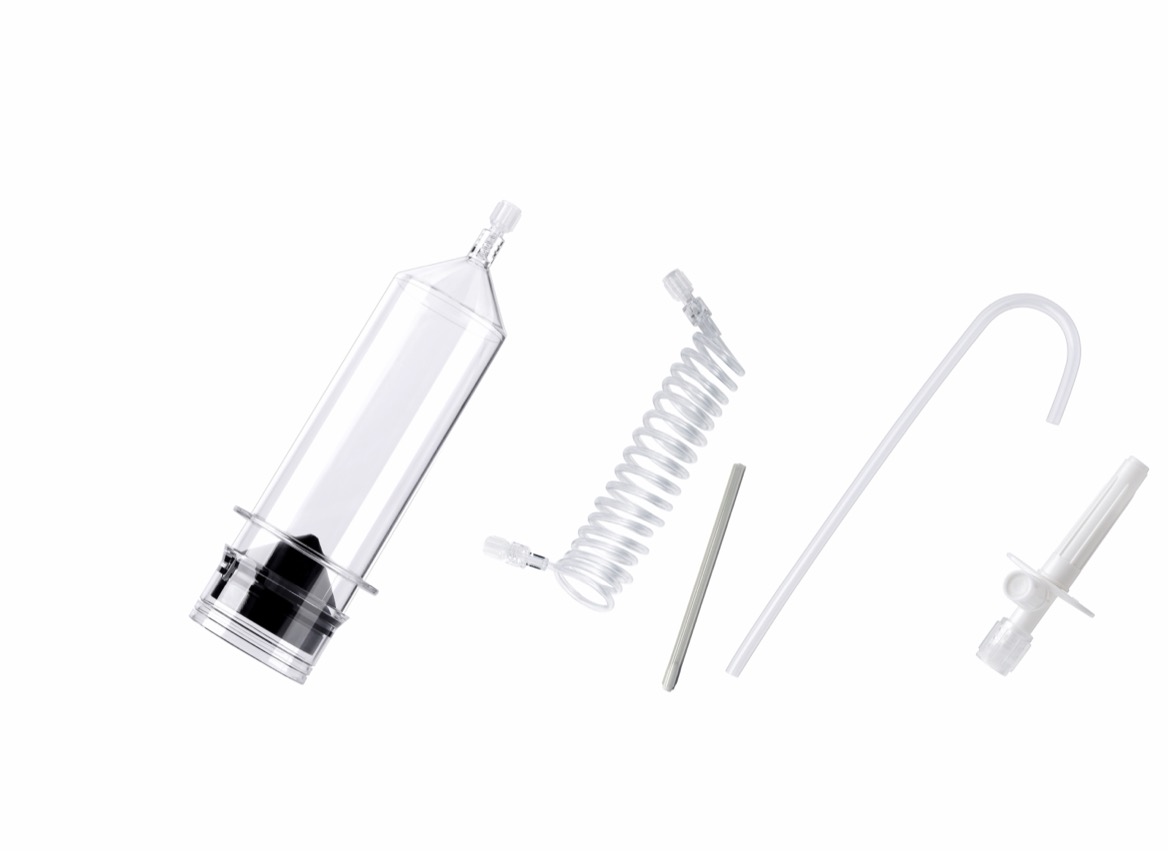
Contrast viscosity affects resistance to flow. Temperature also matters: warming iodinated contrast generally reduces viscosity.
However, this does not justify warming every contrast product indiscriminately. Follow the contrast manufacturer's labeling and the department's approved warming policy.
For syringe evaluation, request the conditions used in performance testing, including fluid properties, temperature, tubing configuration, and flow profile. Results obtained with one test fluid should not automatically be treated as representative of every clinical contrast formulation.
Longer tubing, narrower internal passages, and restrictive accessories can increase resistance. Therefore, a syringe's performance cannot be evaluated independently of its connecting line.
Request tubing specifications for:
- Length and internal diameter.
- Working-pressure rating.
- Connector configuration.
- Priming volume.
- Any included valves.
A longer line may improve positioning flexibility, but that benefit should be weighed against additional priming volume and resistance.
The useful purchasing question is not "What is the maximum flow rate?" It is "Under which documented conditions can this complete configuration deliver the intended protocol?"
A plunger that moves smoothly by hand does not establish performance under powered injection.
Request evidence addressing:
- Delivered-volume accuracy.
- Leakage under applicable pressure.
- Plunger movement and seal integrity.
- Mechanical engagement with the injector.
- Performance across the intended fill range.
Ask suppliers to distinguish design-validation evidence from routine production inspection. Both contribute to quality assurance, but they answer different questions.
A demonstration sample shows how one unit behaves. Controlled manufacturing and inspection help establish consistency across supplied lots.
Avoid treating a material name as sufficient proof of suitability.
The relevant assessment concerns the finished fluid-contacting device, including its materials, processing, sterilization, and intended exposure. Ask for applicable biological-safety and fluid-compatibility documentation.
Claims such as "medical-grade" should be supported by a defined material specification and appropriate finished-device evidence.
A clear barrel can help trained staff inspect the syringe during preparation. Useful features include readable graduations and a design that does not unnecessarily obstruct the fluid view.
Nevertheless, transparency is not a substitute for the injector's prescribed filling and air-removal procedures. Careful preparation of the syringe and pressure tubing remains essential.
Evaluate usability with the actual injector and normal preparation workflow, not only with an empty syringe on a desk.
"Luer connection" is not enough detail for a high-pressure purchasing specification.
Confirm the connector design, intended mating components, secure engagement, and validated pressure performance.
Clinical staff should also follow the relevant instructions for assembly. Improvised adapters or unapproved component combinations can invalidate the assumptions underlying the supplier's performance documentation.
Request the sterilization method, shelf life, storage conditions, and sterile-barrier information for the selected product.
At receipt and before use, check for damaged packaging, expired stock, and unclear identification.
Follow the labeled use designation. A single-use syringe is not made suitable for reuse by flushing it. Similarly, documented multi-patient systems have specific consumables and operating instructions; their existence does not authorize reuse of ordinary single-use kits.
ISO 13485 addresses a manufacturer's medical-device quality-management system. It does not independently establish compatibility with a particular injector.
FDA 510(k) clearance concerns a defined device and its substantial equivalence to a legally marketed predicate. Describe it as clearance, not approval.
For CE-marked products, request the applicable declaration of conformity and supporting documentation.
According to the supplied company background, MAIWEI INC. holds ISO 13485, CE, and FDA 510(k) credentials. Buyers should verify the current documents and their coverage for each selected product rather than assuming every credential applies to the entire catalog.
A structured qualification process turns technical claims into purchasing evidence.
1. Define the injector models and required protocols.
2. Identify the complete proposed syringe-and-tubing configuration.
3. Review compatibility, operating limits, labeling, and regulatory documents.
4. Evaluate samples through an institution-approved process under applicable instructions.
5. Record loading usability, priming, connection security, and any operating issues.
6. Approve the exact product codes and establish lot traceability.
Set acceptance criteria before sample evaluation. Otherwise, a convenient loading experience can overshadow missing documentation.
For OEM customers, include change-control requirements. Changes to materials, tooling, connectors, sterilization, or packaging should receive appropriate assessment and communication.
Consider a department that encounters pressure-limit interruptions after changing a disposable configuration.
It would be premature to conclude that the syringe is defective. The investigation should compare the previous and replacement configurations, including tubing length, internal diameter, connectors, contrast temperature, programmed flow, and vascular access.
The objective is to identify the changed condition, not merely purchase a component with a higher pressure claim.
This is an illustrative investigation framework, not a reported clinical case. It demonstrates the value of configuration-level documentation: without it, teams may struggle to distinguish product variation from workflow or protocol factors.
MAIWEI INC. develops and manufactures CT, MRI, and angiography injector syringes, connecting tubing, and related consumables. According to the supplied company profile, it serves hospitals, distributors, and OEM customers across more than 60 countries and regions.
Contact MAIWEI with your injector manufacturer and model, required syringe capacity, tubing configuration, intended market, and documentation needs. Request a model-specific compatibility review, applicable technical documents, and samples for your organization's qualification process.
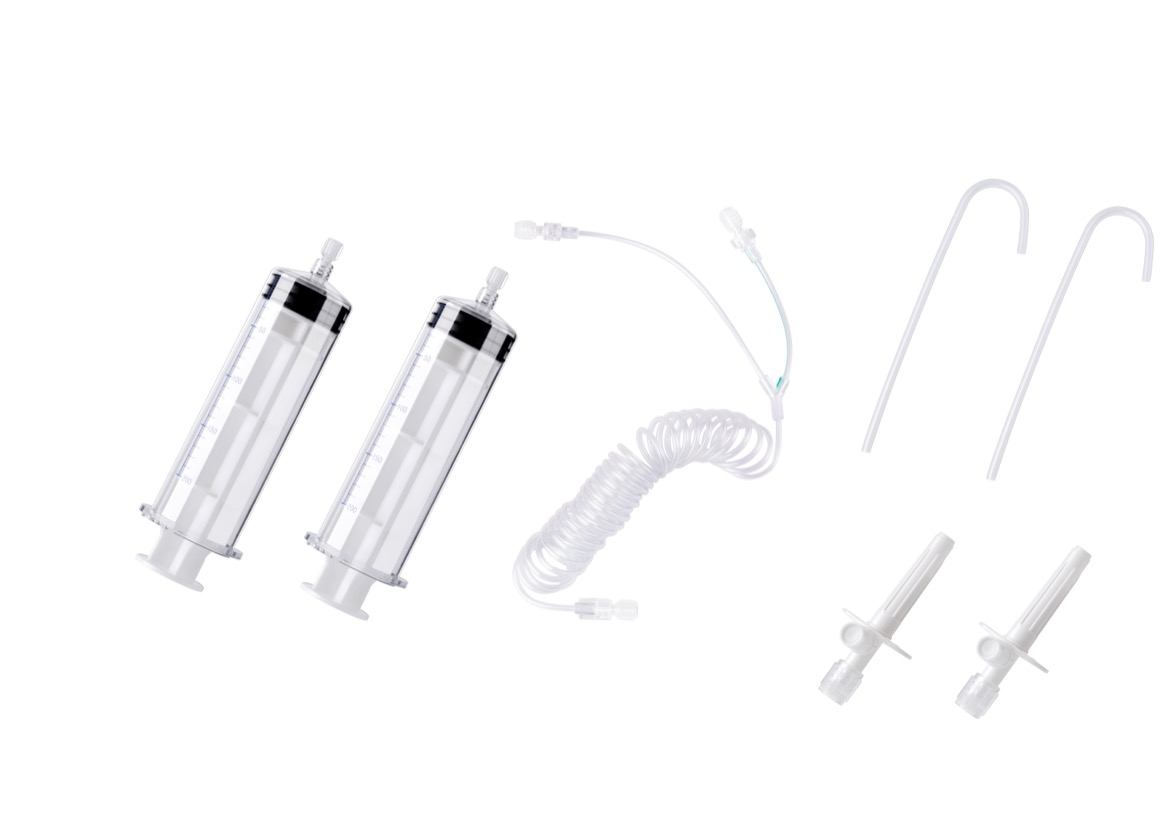
Exact injector compatibility is the first purchasing gate. Next, verify working pressure, usable capacity, delivery performance, and the complete fluid-path configuration.
No. Capacity does not establish identical mounting geometry, plunger engagement, intended use, or validated compatibility. Verify the exact injector model and product code.
No. A pressure rating establishes an operating limit, not guaranteed delivery quality. Contrast viscosity, tubing, programmed flow, and patient access also influence performance.
No syringe can eliminate extravasation risk. Appropriate vascular access, preparation, monitoring, and clinical procedures remain important. Syringe quality is only one part of the injection system.
Request product specifications, instructions for use, compatibility information, applicable regulatory documentation, quality-system certification, shelf-life information, and lot-traceability details.
Ask suppliers to define the measurement method and tested configuration. Syringe residual volume and complete-system residual volume are different measurements and should not be compared as though they were identical.
1. [American College of Radiology — Manual on Contrast Media]. Clinical reference covering contrast injection, warming, and extravasation. [acr]
2. [Roditi et al. — "Intravenous contrast medium extravasation: systematic review and updated ESUR Contrast Media Safety Committee Guidelines," European Radiology, 2022]. Supports discussion of viscosity, temperature, and extravasation risk. [pmc.ncbi.nlm.nih]
3. [Bayer — Syringes & Disposables]. Manufacturer information identifying CT syringe kits and their included components. [radiologysolutions.bayer]
4. [FDA — MEDRAD Stellant FLEX 510(k) Documentation, K173773]. Product-specific documentation describing 150 mL and 200 mL syringe options. [accessdata.fda]
5. [ISO — ISO 13485:2016: Medical Devices—Quality Management Systems—Requirements for Regulatory Purposes]. Establishes the scope of medical-device quality-management requirements. [iso]
6. [FDA — Premarket Notification 510(k)]. Explains substantial equivalence and clearance for commercial distribution. [fda]
7. [FDA — Guidance on the Content of Premarket Notification 510(k) Submissions for Piston Syringes]. Regulatory background for syringe submissions; applicability requires product-specific assessment. [fda]